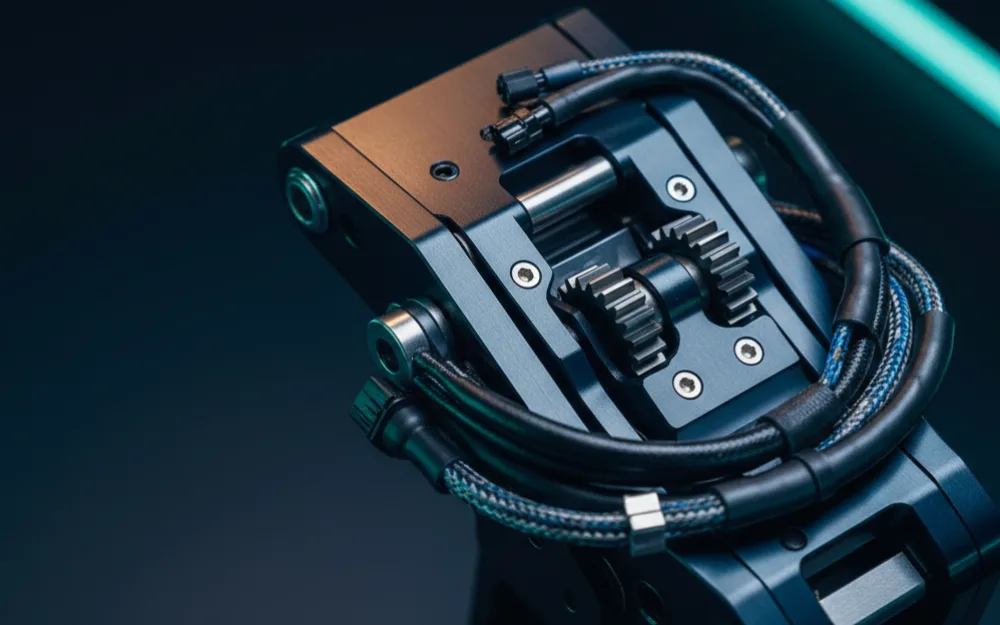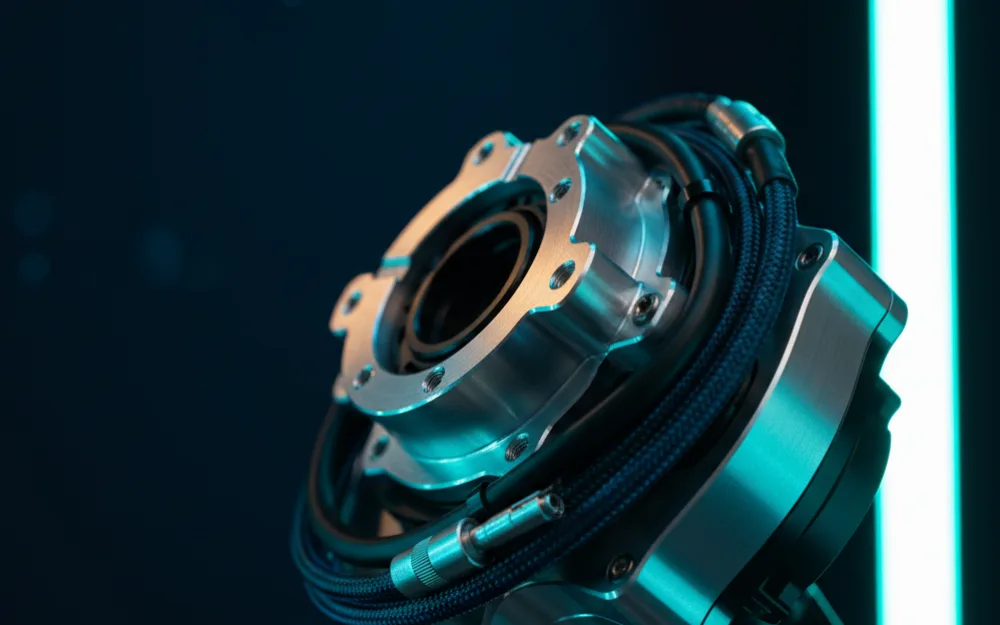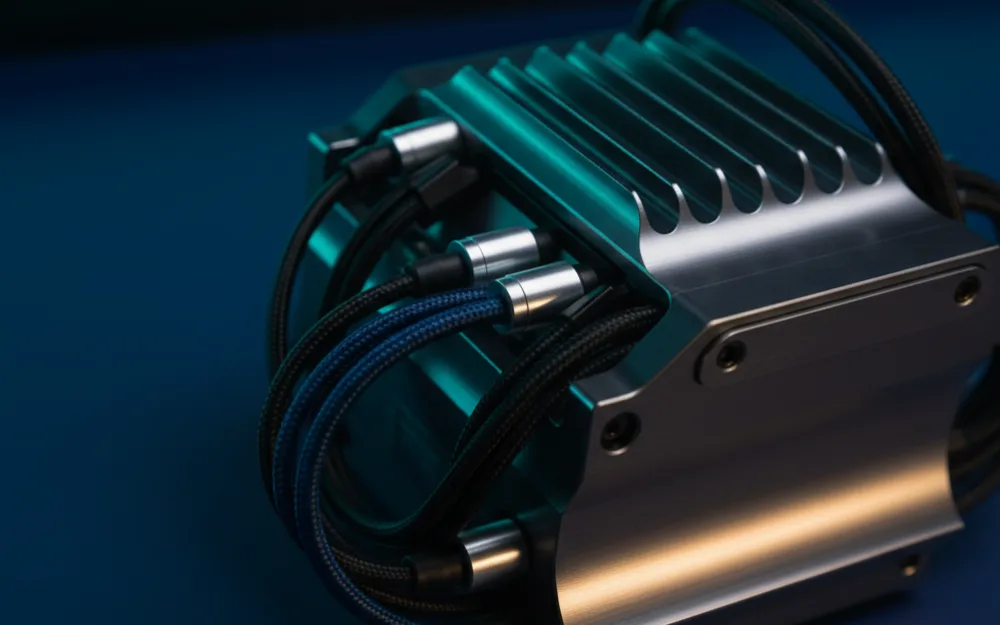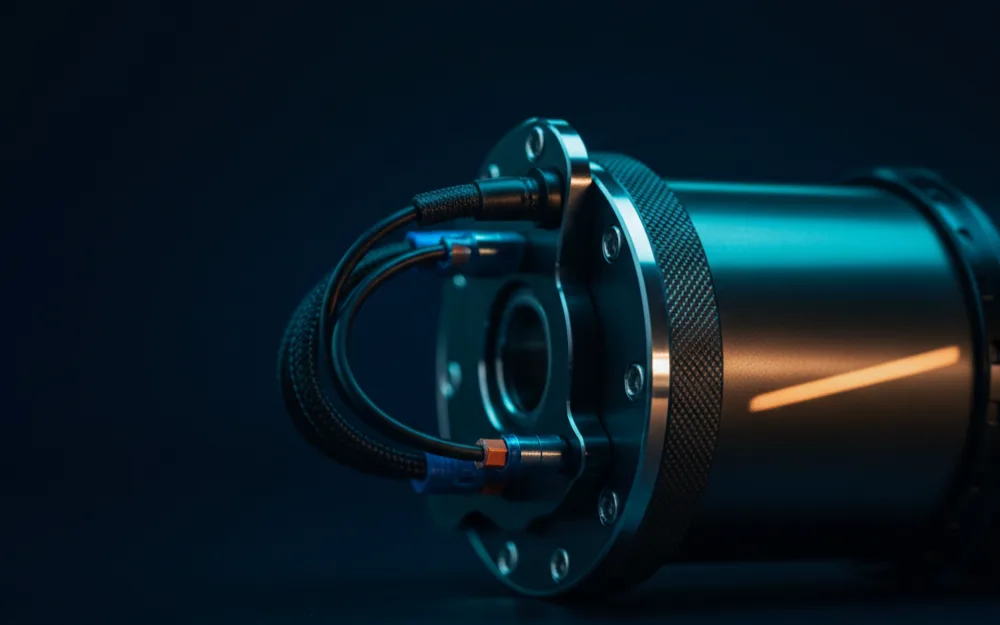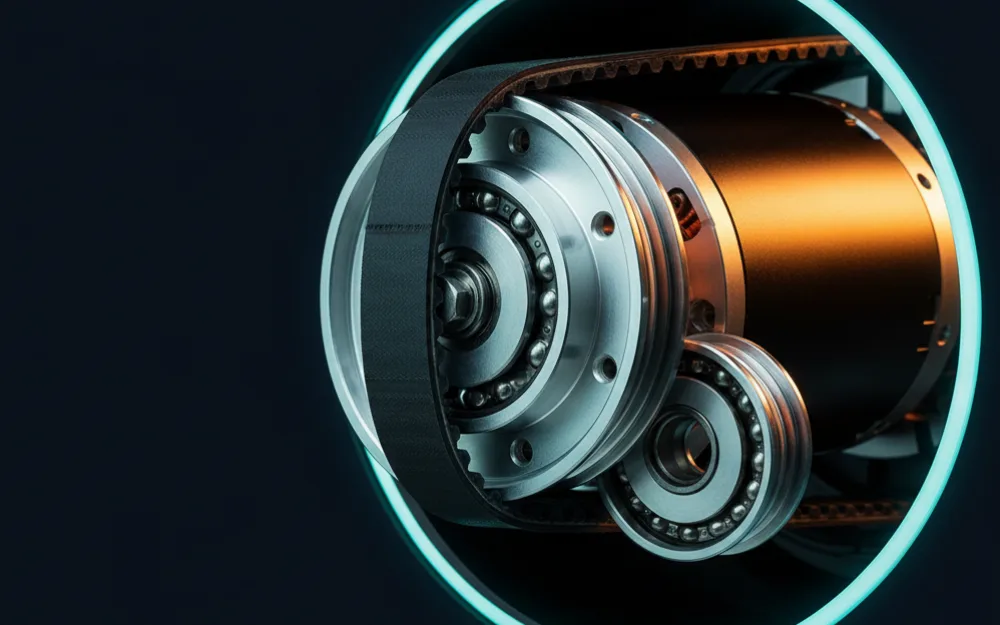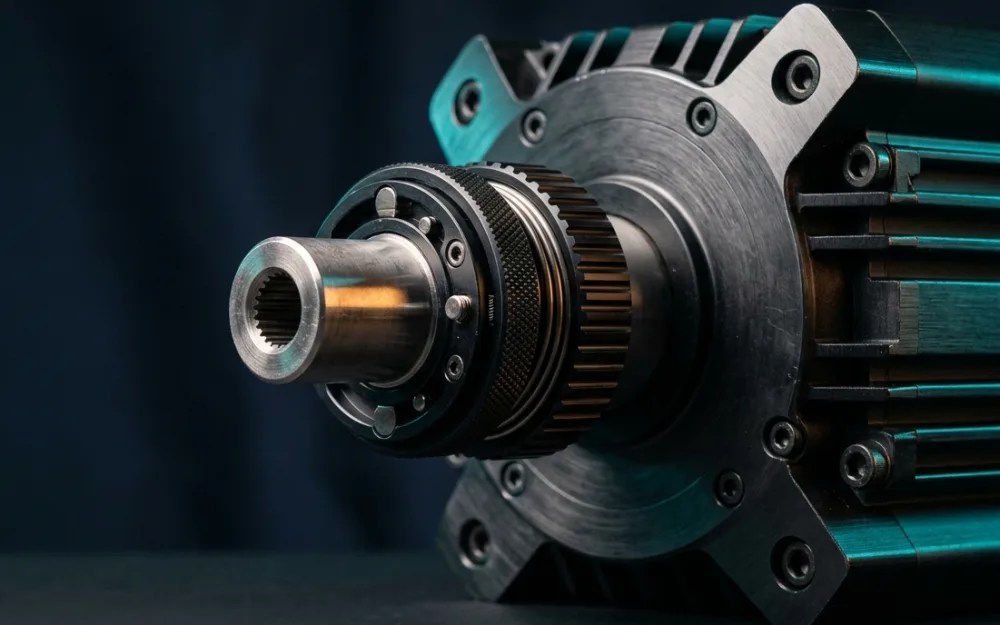


Rumble and haptic feedback are two ways sim racing hardware sends physical sensations to the driver: rumble uses spinning weighted motors to produce a broad, buzzing vibration, while haptic feedback uses precise transducers to reproduce specific frequencies, so you can feel distinct events like wheel lock, curb strikes, or engine tone rather than a single generic shake.
To understand the difference, it helps to separate both from force feedback. Force feedback moves the wheel itself to simulate steering forces. Rumble and haptics do not steer; they add texture and information through vibration. The distinction between the two comes down to precision: rumble is blunt, haptics are detailed.
How rumble works
Rumble, the kind found in a traditional controller such as an Xbox pad, relies on eccentric rotating mass motors, off-center weights that spin to shake the device. It is cheap, reliable, and effective at conveying that something is happening, but it cannot distinguish one event from another with much nuance. A curb, a slide, and a rev limiter all tend to feel like variations of the same buzz. For a casual player on a pad, that is often enough.
How haptic feedback works
Haptic feedback uses transducers, sometimes called bass shakers, that respond to specific audio or telemetry signals. Because they reproduce real frequencies, owners describe being able to feel the difference between front and rear tire slip, the texture of a rumble strip, or the exact moment the brakes lock. Mounted to a seat or pedals, they turn abstract data into cues your body reads instinctively, which many drivers find improves consistency. Some software lets you assign each shaker to a different channel, such as one for gear shifts and another for wheel slip, so the information stays separated rather than blending into noise.
How they compare
| Trait | Rumble | Haptic feedback |
|---|---|---|
| Source | Weighted spinning motors | Frequency-specific transducers |
| Detail | Broad, generic vibration | Distinct, identifiable events |
| Typical cost | Low, often built in | Higher, usually add-on hardware |
| Best for | Casual immersion | Drivers wanting precise cues |
Which is right for you
If you play casually and mostly on a controller, the built-in rumble already gives you a sense of the action with no extra spending. If you race often on a wheel and want to feel exactly what the car is doing, a haptic setup on your seat or pedals adds information that rumble cannot. Many drivers treat haptics as a mid-stage upgrade, after a wheel and pedals but before or alongside a motion platform. The two are not mutually exclusive, and some rigs use both.
Haptics rely on clean, well-timed signals, so their sharpness ties into system responsiveness, which our explainer on USB polling rate touches on. To plan where feedback hardware fits in a build, start with our Getting Started hub, and to see which wheels and games make the most of it, browse our best sim racing games for PC roundup.