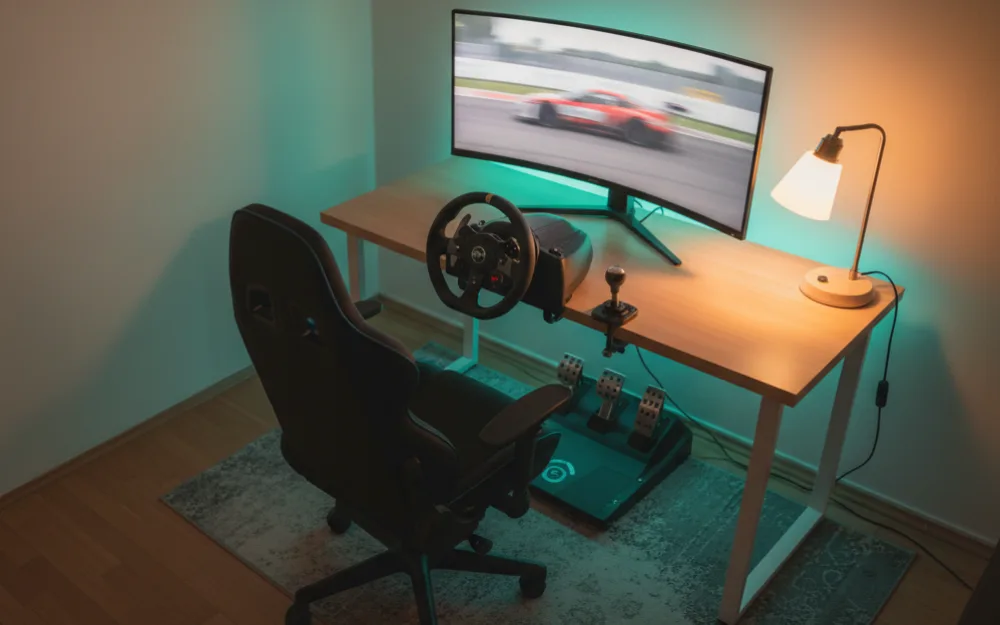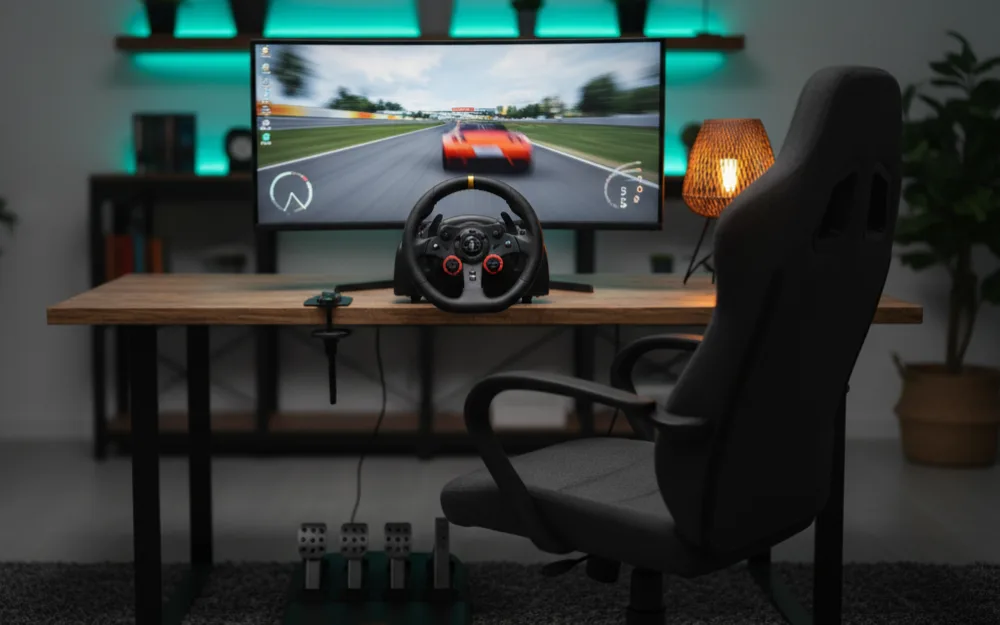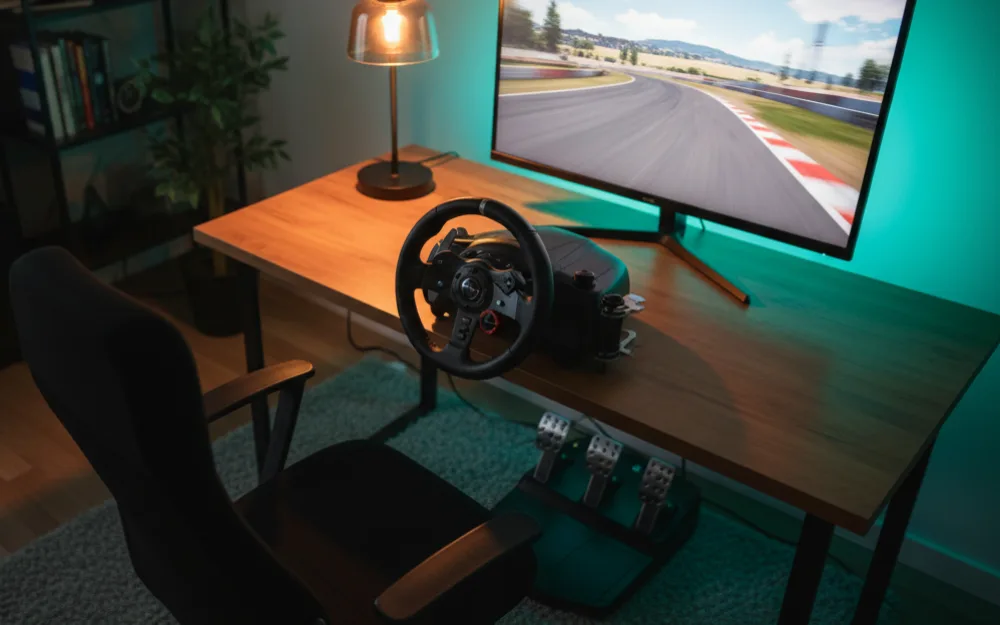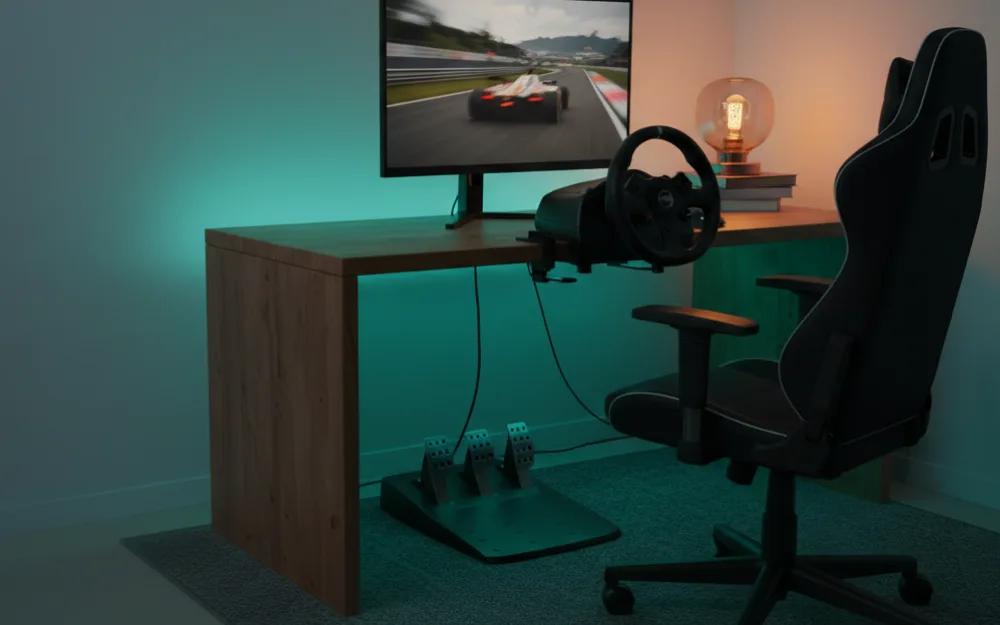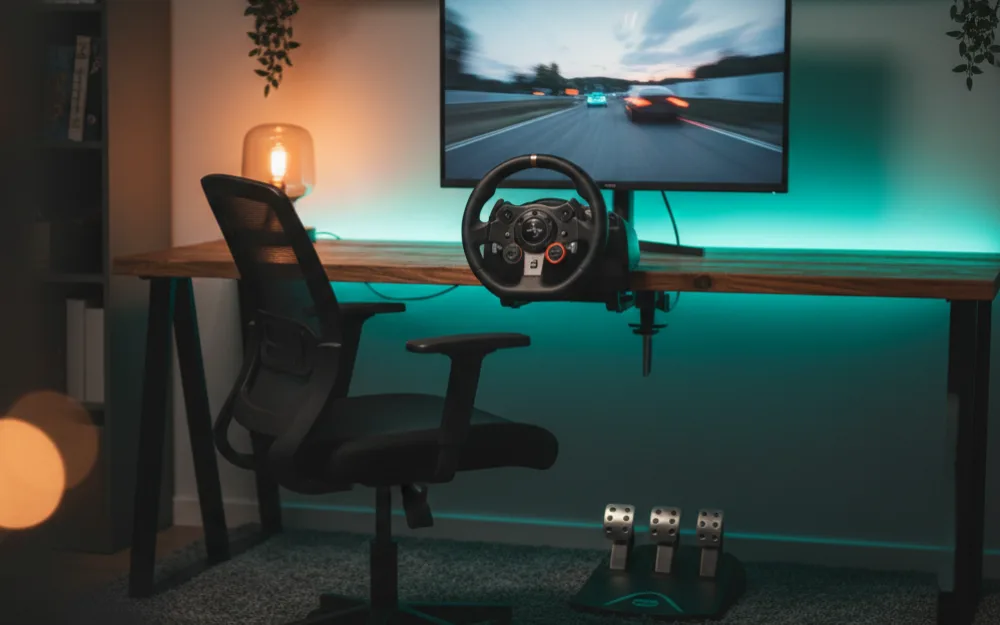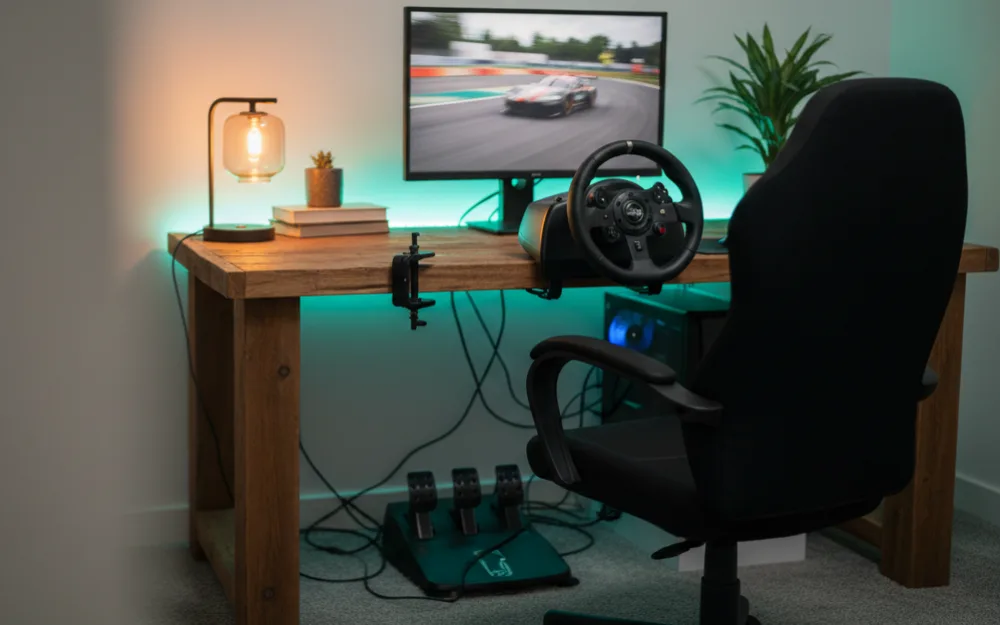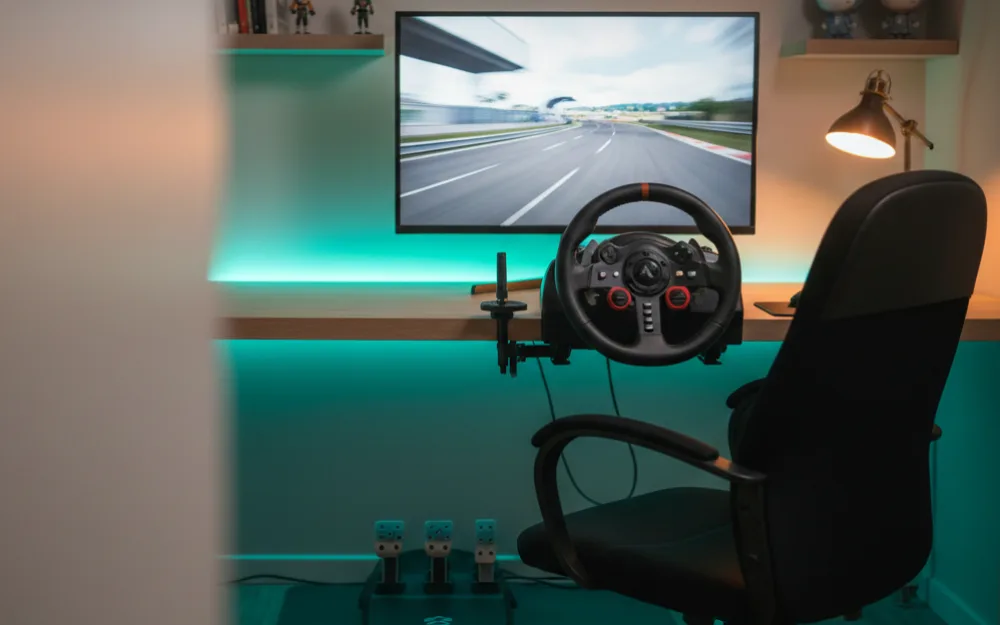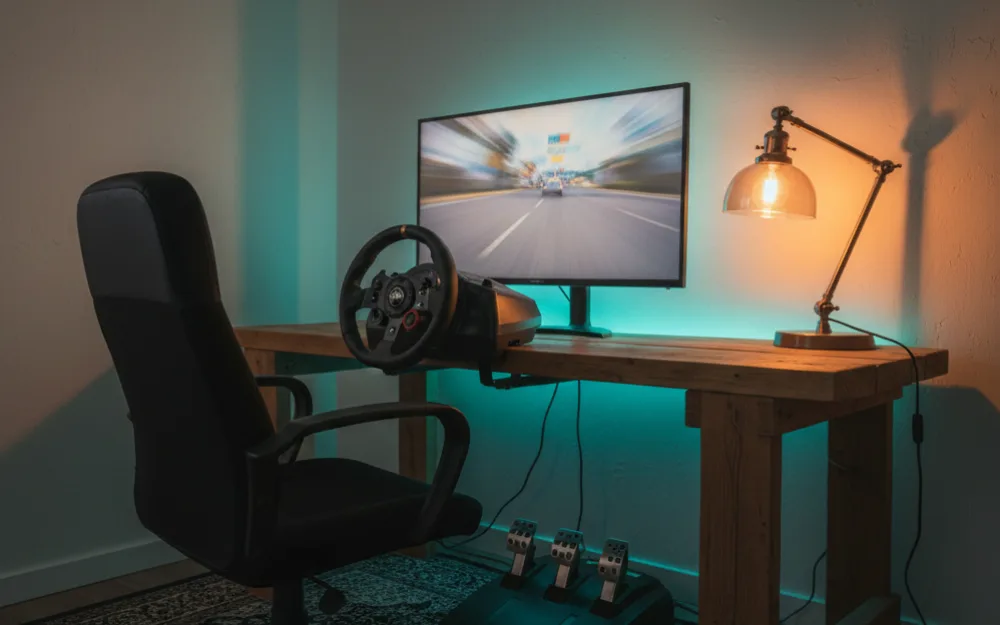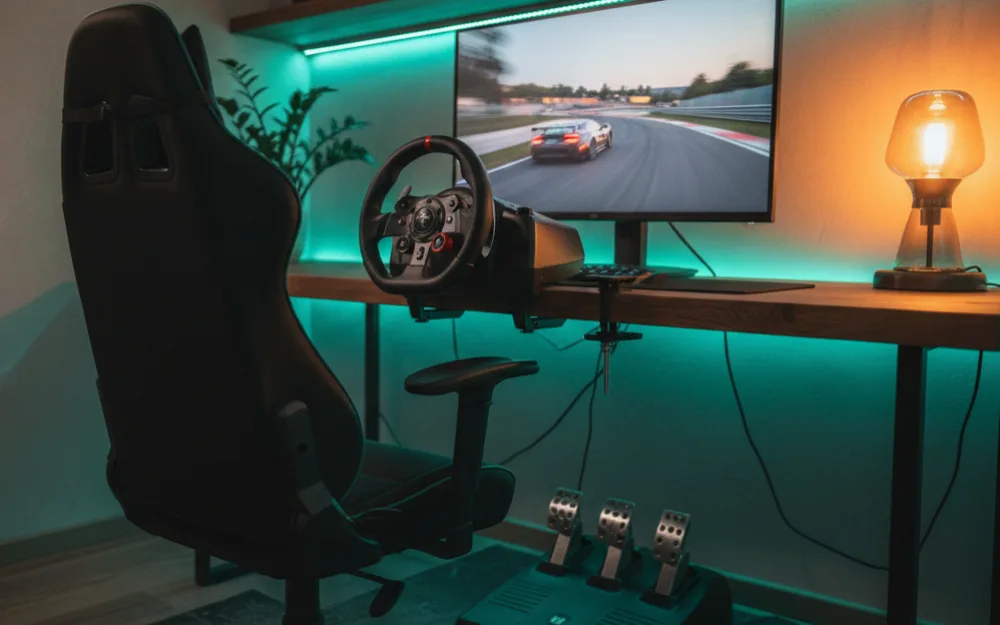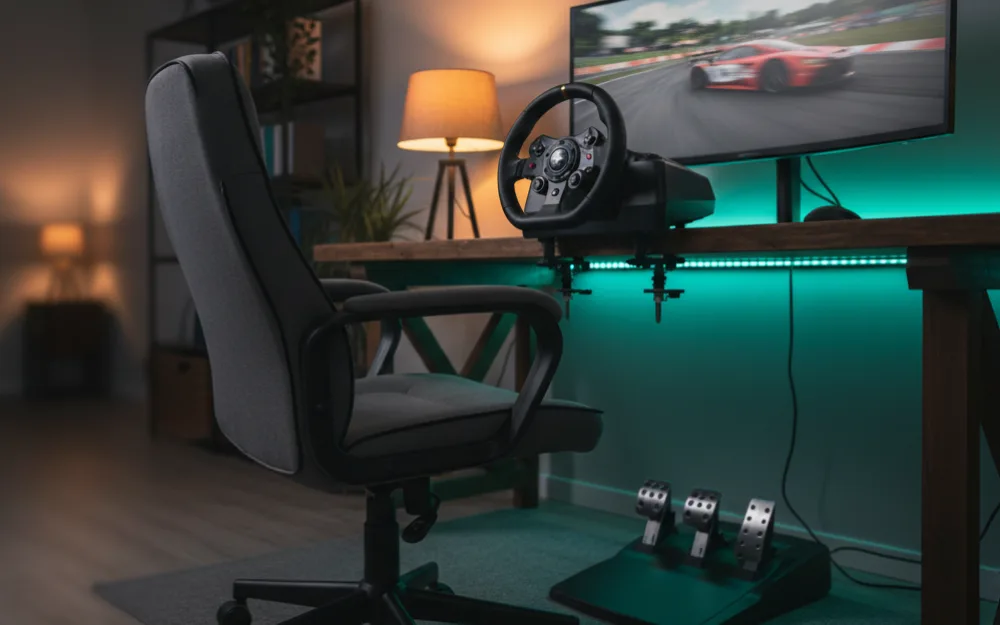

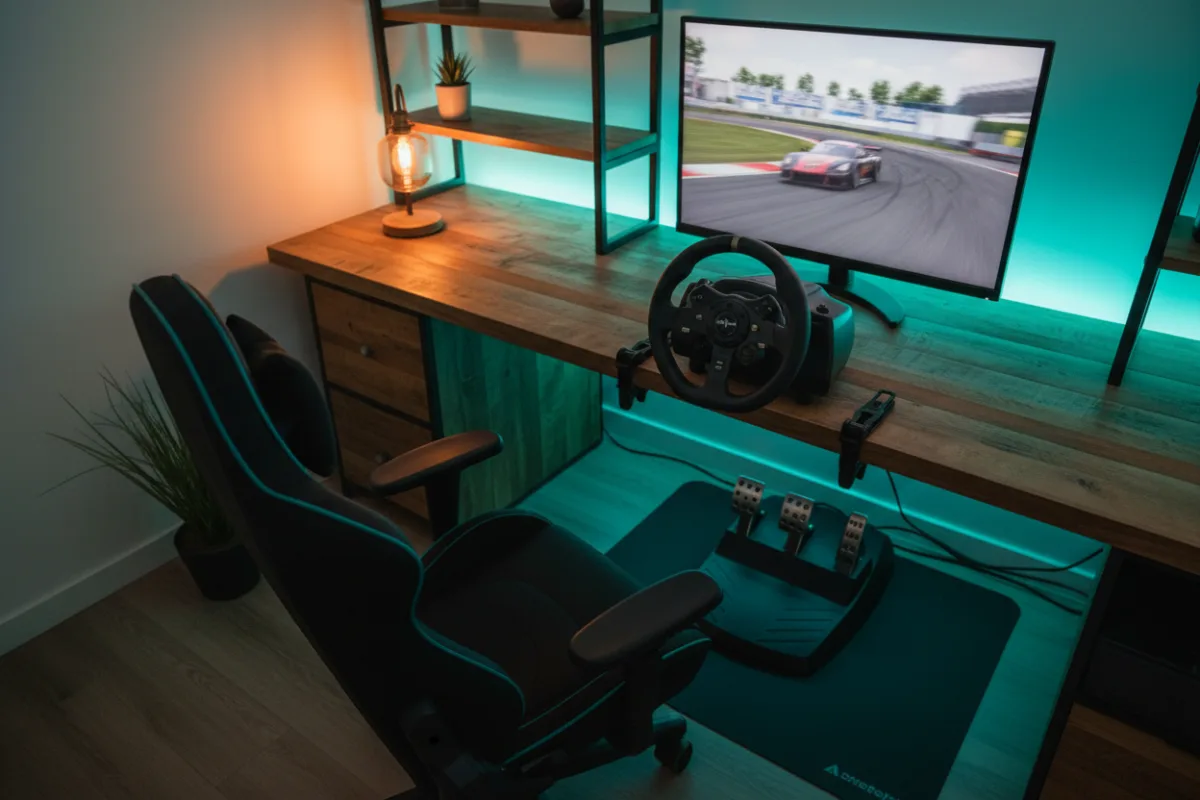

Le Mans Ultimate is an endurance and GT title where consistency over long stints wins races, so the right hardware is the kind that stays precise and comfortable hour after hour. Because it runs on PC, the full field of wheels is open to you, and the parts that matter most here are a direct drive base for clear feedback and a load cell brake for repeatable braking under pressure. This guide lays out a path from a strong entry rig to a serious one, so you spend on the parts that hold your pace deep into a race rather than the ones that only look good on a spec sheet.
These picks come from comparing manufacturer specifications against what owners who race endurance and GT report over long ownership, and you can read how we review before you trust the list. If you are new to the platform, start with Getting Started, then pick the tier that fits you.


What Le Mans Ultimate asks of your hardware
Endurance racing puts a premium on two things above all. First, clear force feedback, because over a long stint you need to feel the front tires losing grip early to protect them and stay off the barriers, which is why a direct drive base is worth prioritizing here. Second, a load cell brake, because braking the same way lap after lap into the same corners is where consistency lives, and a load cell measures pressure rather than travel so you can repeat it precisely. Comfort matters more than in a sprint too, since a base that fatigues your arms after twenty minutes becomes a real problem over a race. Get the base and the brake right, and the rim, cockpit, and screen support them.
The balanced base: Fanatec CSL DD
The Fanatec CSL DD is a mid tier direct drive base rated at 5 Nm, and it is a sensible heart for a Le Mans Ultimate rig. A direct drive base connects the rim straight to the motor, which is why the front tires communicate grip so much more clearly than a geared wheel can. That 5 Nm figure is strong enough to feel every meaningful cue yet controllable enough to race for hours without wearing you out, which is exactly what an endurance title asks for. Because direct drive produces real force, start at a lower strength and build up as you get comfortable, keeping both hands firmly on the rim during the startup calibration sweep. Buying the base on its own lets you choose the rim and pedals that suit your discipline.
The serious step up: MOZA R12 bundle
When you want more force and headroom, the MOZA R12 bundle steps up to a 12 Nm direct drive base paired with a wheel, giving you the kind of high resolution feedback that committed endurance drivers rely on. That extra torque reveals subtle shifts in grip that lighter bases smooth over, which helps in the fast, loaded corners where a GT car rewards a delicate hand. Treat the strength with respect: begin at a lower setting, keep a firm grip during startup, and never run it at full force with a child at the wheel. This is a destination tier, not a starting point, and it only makes sense bolted to a genuinely rigid cockpit that will not flex under the load. If you are unsure you need this much, the CSL DD will serve you well for a long time.
The brake that wins stints: load cell pedals
If you upgrade one thing beyond the base, make it the pedals. The Fanatec CSL Elite Pedals V2 use a load cell brake that reads up to 90 kg of foot force and ship with swappable elastomer springs so you can tune the firmness, which makes threshold braking far easier to repeat over a long race. They connect straight to a Fanatec base, so they keep a CSL DD rig in one ecosystem. If you prefer a different route, the Logitech G RS pedals pair a 75 kg load cell brake with a steel frame and a Hall effect throttle, with a clutch available as an add-on, and owners consistently describe the pressure based brake as a clear step toward real car feel. Whichever you pick, moving from a travel based brake to a load cell is the single biggest gain most endurance drivers feel.
The cockpit: a frame that holds its line
A direct drive base needs a frame that will not twist under it, and this matters even more across a long race where your reference points must stay put lap after lap. The Fanatec CSL Cockpit uses a steel reinforced aluminum chassis that holds the wheel and pedals solidly and supports a load cell brake without flexing, so the detail you paid for reaches your hands intact. Its wheelbase bracket adjusts for height, angle, and distance, which helps you settle into a GT driving position you can hold comfortably for hours. A frame that moves under a strong base blurs the feedback and shifts your seating over a stint, so rigidity here is not a luxury. Add the optional seat and monitor holder as your rig grows.
The screen: a wide, immersive view
Your screen matters less than the base and the brake, but a wide, smooth picture helps you place a GT car through long, fast corners and read traffic in the dark. The KTC 34 inch ultrawide is a curved 3440 by 1440 panel at 180 Hz, which widens your field of view and keeps motion clean at speed, both of which help over a race where fatigue creeps in. A single ultrawide gives you much of the immersion of triples without their cost and setup, and its higher refresh rate suits the quicker classes in the field. If you already own a capable monitor, keep racing on it and move the saving into the base or a load cell brake. Triples and VR add more immersion, but they belong to a later upgrade.
How the tiers compare
| Tier | Base | Best for | Pair it with |
|---|---|---|---|
| Balanced | Fanatec CSL DD (5 Nm) | Most GT and endurance racing without fatigue | A load cell brake and a rigid cockpit |
| Serious | MOZA R12 bundle (12 Nm) | Committed drivers wanting maximum detail | A stiff cockpit that will not flex |
| Pedals | Fanatec CSL Elite V2 or Logitech G RS | Repeatable braking over long stints | The base that matches your ecosystem |
| Screen | 34 inch ultrawide | Wide, smooth immersion on a budget | A capable PC to drive it well |
Who should adjust this build
| Reconsider a tier if | Do this instead |
|---|---|
| You are new to direct drive and unsure of your commitment | Start with the CSL DD rather than the 12 Nm base |
| You bought a strong base but kept a travel based brake | Add a load cell brake before anything else |
| You race short sessions rather than long stints | The R12 tier is more than most casual drivers need |
| Your cockpit flexes under the wheel | Fix the frame before spending on a stronger base |
How the WSR Score works
The WSR Score reflects verified buyer ratings gathered and normalized on a consistent scale, not an editorial rubric. You can read exactly what goes into it on How We Review. Treat it as one honest signal of how owners feel over time, read alongside the fit notes above.
Your next step
Prioritize a direct drive base and a load cell brake, then build the cockpit and screen around them. To weigh more bases and pedals, see the best direct drive wheels and the best sim racing pedals, and compare frames in the best sim racing cockpits. For a build tuned to a different discipline, our best sim racing setup for iRacing guide takes a similar approach. New drivers can always return to Getting Started for the fundamentals.