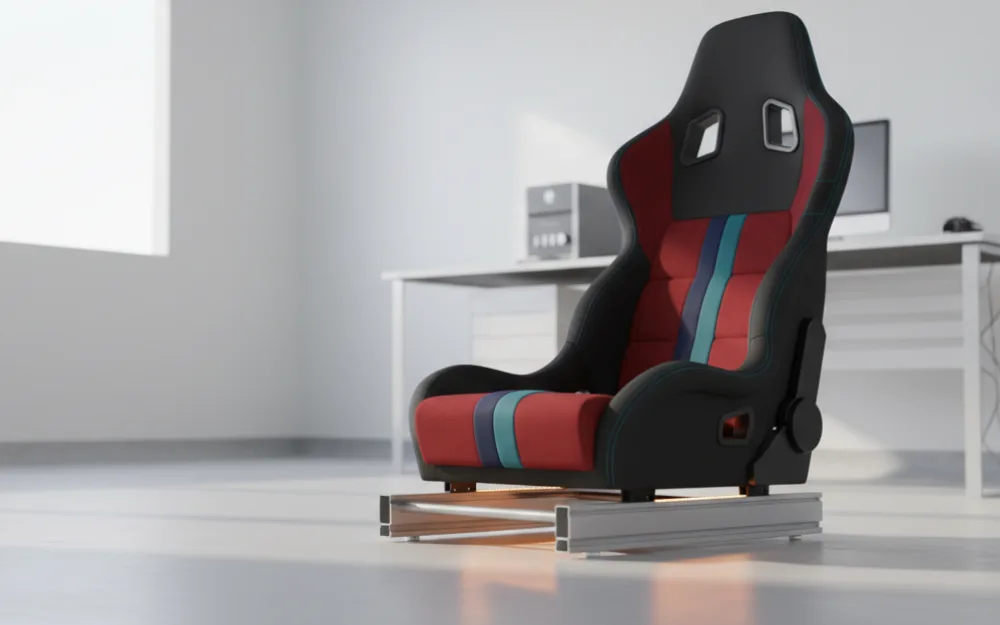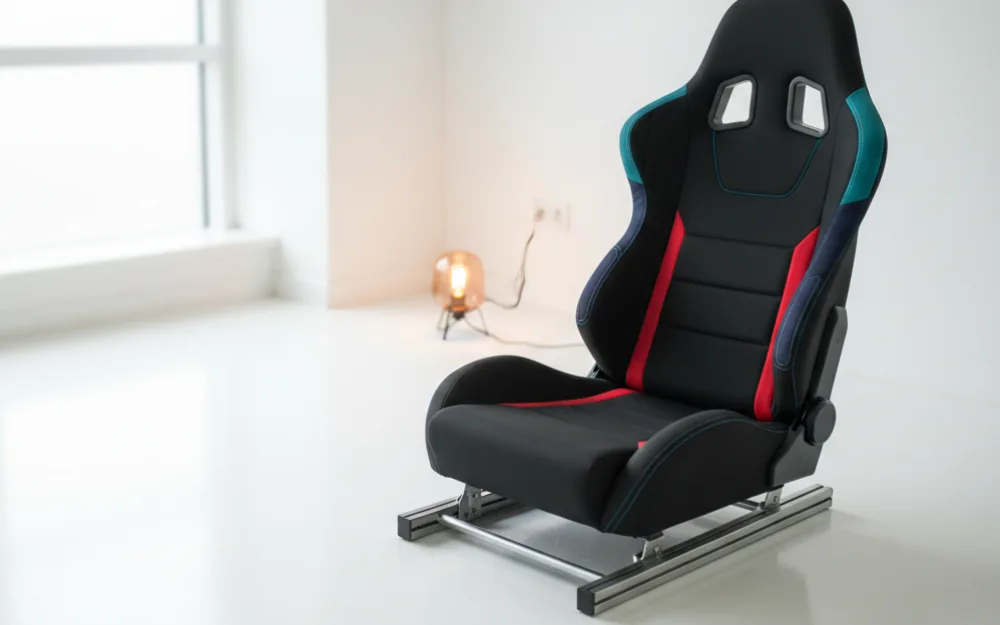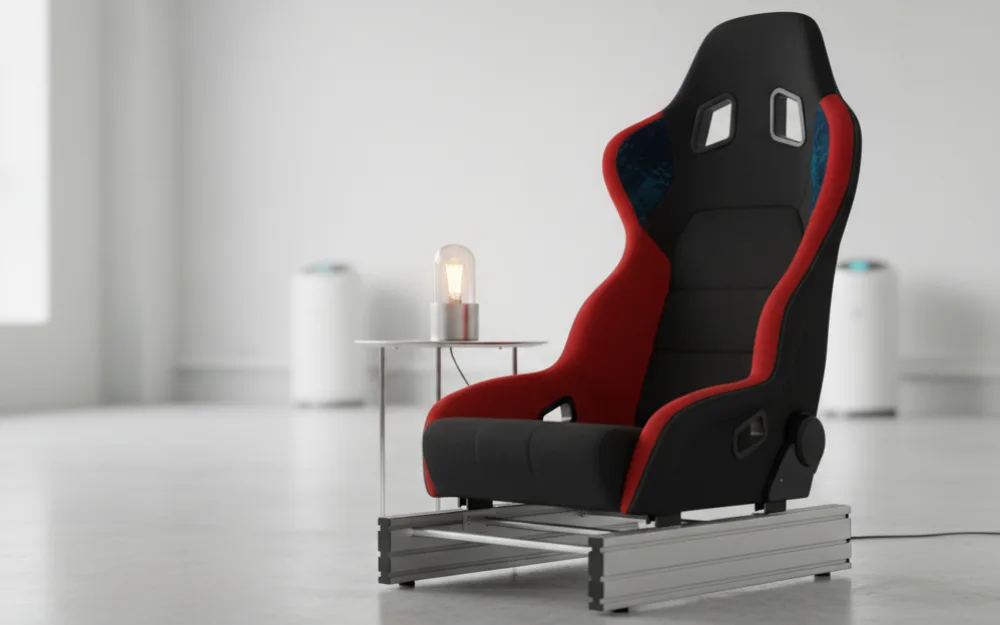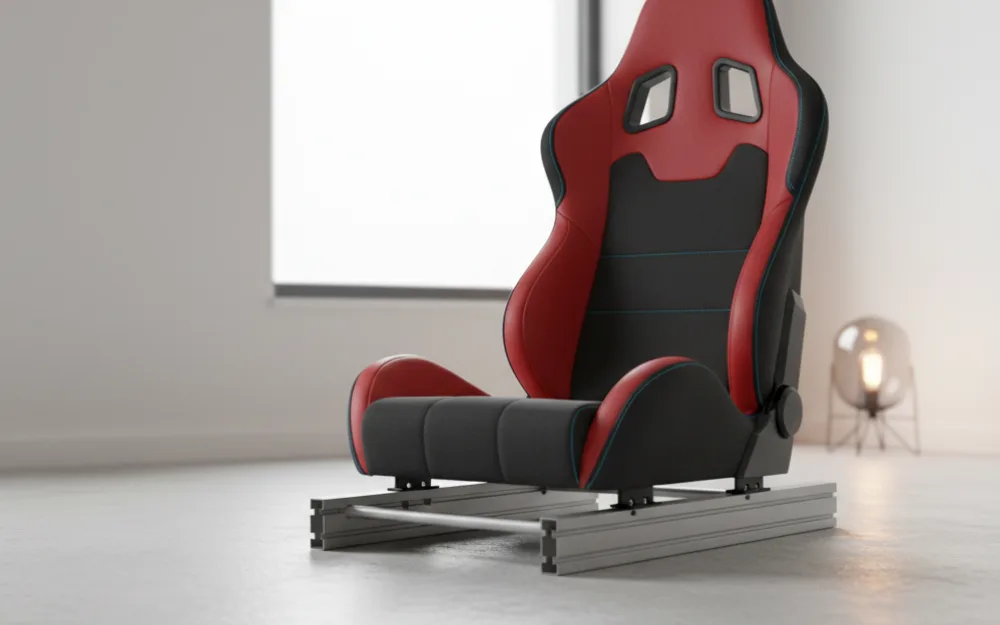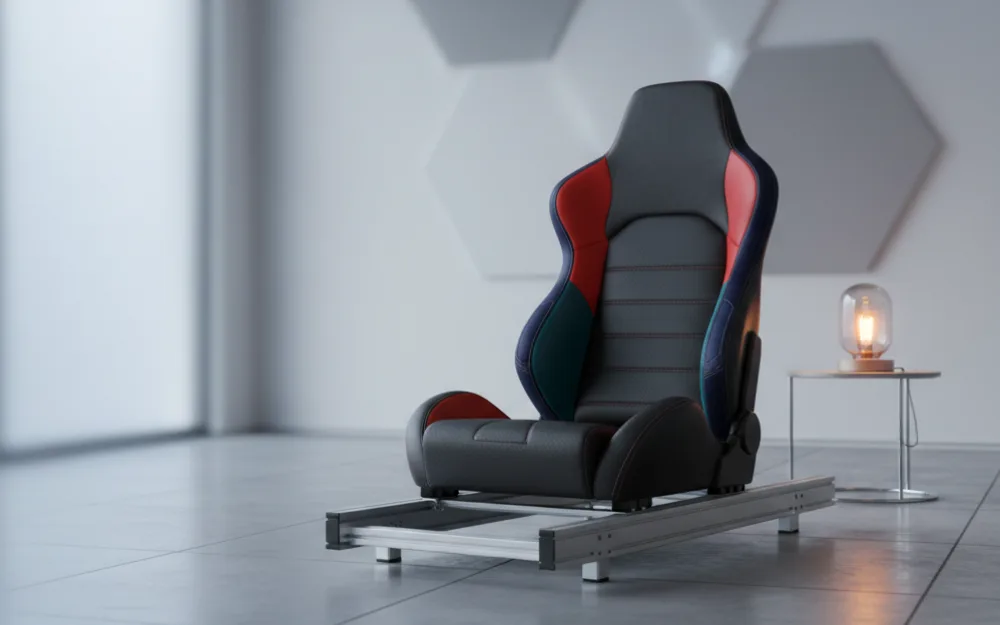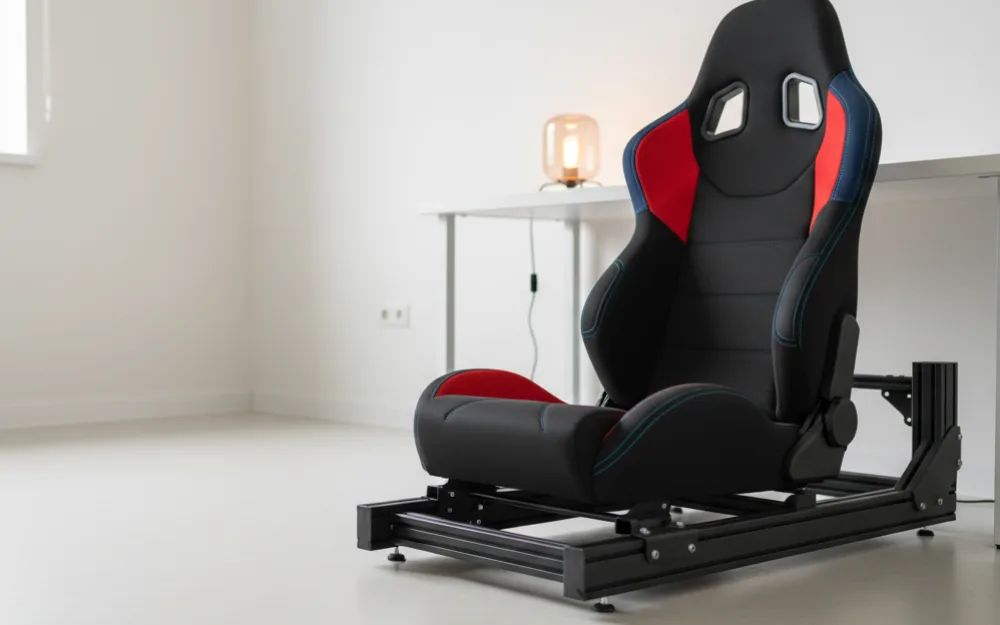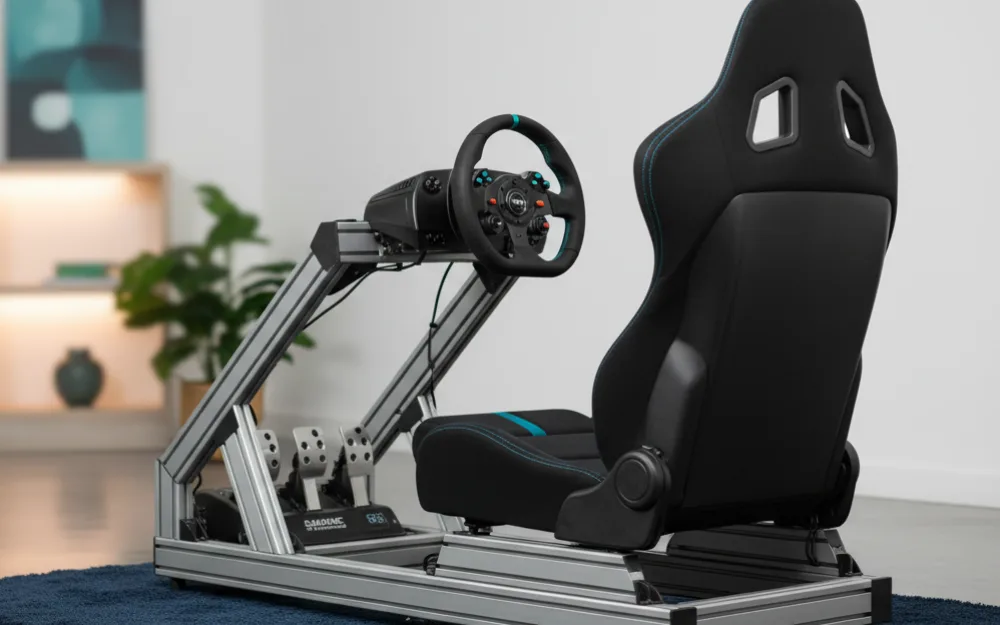

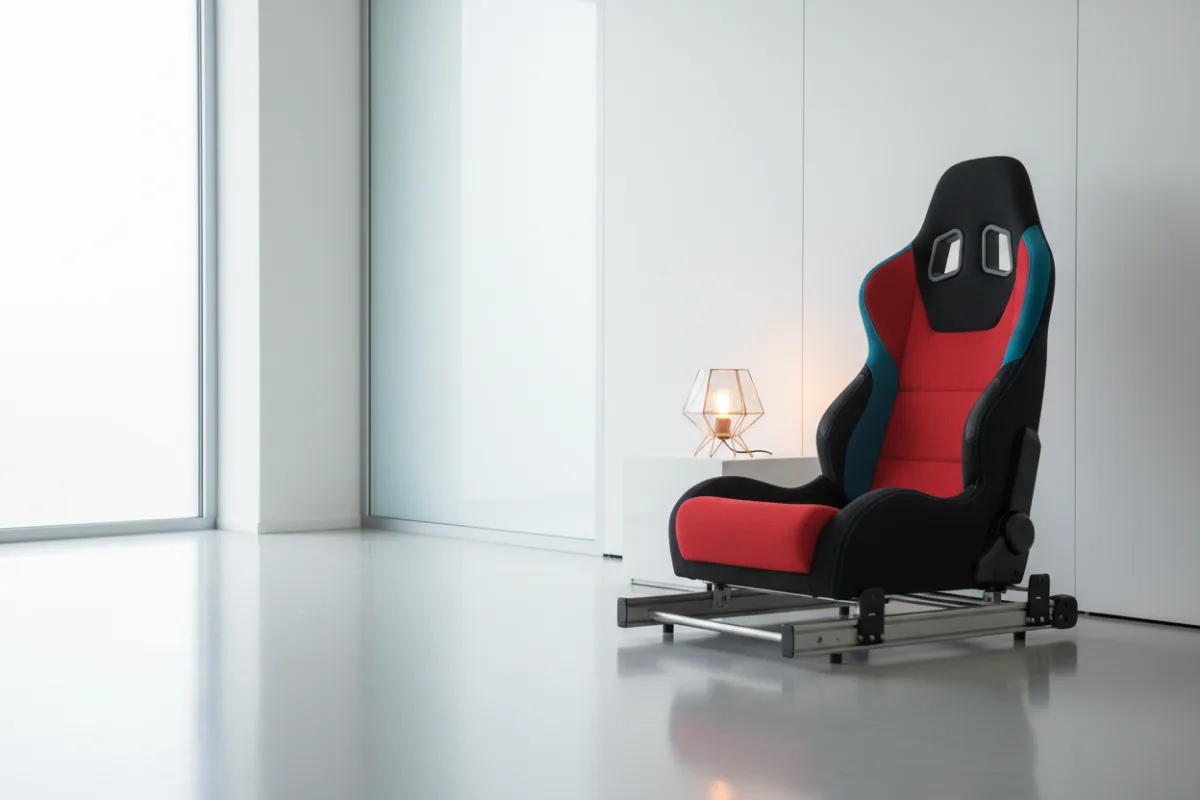

The NRG NRG-FRP-300BK is a fiberglass fixed back bucket seat borrowed from the automotive world and pressed into service on sim rigs, and that heritage explains most of how it behaves. It is a stiff one-piece shell with deep thigh bolsters and no recline mechanism, built to hold a driver planted rather than to cradle you between sessions. If you run a cockpit with real seat brackets and you want a fixed racing posture that will not squirm under hard braking, it earns a place on your shortlist. If you want a reclining chair to lounge in, look elsewhere.
This review weighs NRG’s published specifications against the pattern of verified buyer feedback in our database, where the FRP-300 holds a 4.2 out of 5 average across 141 reviews. You can read how we weigh maker claims against owner reports on how we review, and if a bucket seat is new territory, the wider field of frames and seats is laid out in best sim racing cockpits.

What it is and where it fits
The FRP-300 is a universal fit racing seat with a fiberglass reinforced shell, a black woven cover over injection molded foam, and a large sizing that NRG lists at 23 inches wide, 18 inches deep, and 35 inches tall. It is a genuine automotive style bucket, not a padded gaming chair, so it is a bottom mount shell with no base of its own. That matters for a sim build: you bolt it to seat brackets, and those brackets bolt to your cockpit’s seat rails or crossbars. Drivers stepping over from a foldable stand or an office chair should understand that this is the seat only, and it assumes you already own a frame with a proper seat mounting position. NRG lists the seat at 24 pounds, which is light for a seat this size and keeps the load off a frame’s seat mounts.
Shell, rigidity, and driving feel
A bucket seat’s job on a sim rig is to stay dead still while a wheelbase and a load cell brake try to shove you around, and a rigid shell is what makes that possible. The fiberglass construction here is the whole point. Unlike a fabric sling chair that flexes as you push, a molded shell holds its shape, so the reference frame under your body does not move when you stand on the brake. Owners who race with a load cell brake are the ones most sensitive to seat flex, because a shell that gives even a little smears the feedback your legs are reading from the pedals. Reviewers who run fixed back buckets consistently describe the payoff as a more connected, more repeatable braking feel, since your hips are anchored rather than sinking. The deep thigh and shoulder bolsters do the lateral half of that job, wedging you in place so you are not bracing with your arms through long corners.
The tradeoff is the same one every hard shell carries. There is no recline and no soft cushion to sink into, so comfort comes from fit rather than padding. Drivers who like a laid back GT posture may find the upright, aggressive seating position a big change, and it is not a seat you will want to sit in for a workday between races. That is by design. It is a competition shape, and it rewards a driver who wants to sit low and locked in.
Fit and ergonomics
NRG sells this as the large size, and the 23 inch shoulder width backs that up, so it suits broader and taller drivers better than a narrow formula shell would. Because the bolsters are fixed, fit is pass or fail rather than adjustable: the shell either matches your frame or it does not. Reviewers who carry more width report the large shell is roomier than many competition seats, while lighter and smaller drivers sometimes find the bolsters leave gaps that let them shift. There is no easy way to pad that out without adding your own foam, so body match is the first thing to weigh. The seat is cut for 4 and 5 point harnesses, with shoulder and lap belt routing built into the shell, which is worth knowing because it points to how the seat expects to be used. A harness is not required to sit in it, but the seat is happiest paired with one, and a lap belt alone will let you slide forward under braking.
Mounting and assembly
This is where a bucket seat asks more of you than a bolt together gaming chair, and NRG is upfront that installation instructions are not included and professional installation is recommended. On a car that warning is about safety. On a sim rig the stakes are lower, but the work is still real. You supply mounting brackets sized to the seat, then match those brackets to your cockpit’s mounting pattern, and rig frames vary enough that you may need to drill new holes or add adapter plates to line everything up. Builders who enjoy dialing in a rig will not mind, since fixed back seats are a known quantity in that world. Anyone expecting a seat that drops onto a frame with four factory bolts should budget extra time, hardware, and possibly a trip to the hardware store for the right length bolts. This is the part of the purchase most likely to surprise a first time buyer, so plan the mounting before the seat arrives.
Pros and cons
What works:
- Rigid fiberglass shell that holds its shape and keeps braking feel repeatable
- Deep thigh and shoulder bolsters that anchor a driver through hard cornering
- Large sizing at 23 inches wide that suits broader and taller drivers
- Cut for 4 and 5 point harnesses with belt routing built into the shell
- Light for its size at a listed 24 pounds, holding a 4.2 out of 5 average across 141 verified buyer reviews
What to weigh:
- No recline and no soft padding, so long comfort comes from fit rather than cushion
- Seat brackets and mounting hardware are a separate purchase and may need drilling
- Installation instructions are not included, so first time builders face a learning curve
- Fixed bolsters mean lighter drivers can find the large shell leaves room to slide
Who it is for
This seat suits a driver who already owns a rigid cockpit frame and wants a genuine fixed back bucket to lock into it, especially a broader or taller driver who values the large shell. It rewards owners running a load cell brake and a harness, since the stiff shell and belt routing are built for that combination. Builders who are comfortable sourcing brackets and hardware, and who want a competition posture rather than a recliner, will get the most from it. For a wider look at seats and the frames that carry them, see best sim racing seats, and if you are cross shopping a modern sim focused shell, compare it with the Cooler Master DYN X.
Who should skip it
If you do not already own a cockpit with seat brackets, this is not a starting point, and you would be better served by a complete frame from best sim racing cockpits. Drivers who want a reclining seat they can also relax in, or who want a chair that installs with no drilling, should look at a bolt together sim seat instead. Smaller and lighter drivers who need snug lateral support may find the large shell too roomy. Anyone building for a shared or tight room where the rig folds away will be happier with a compact setup from best sim racing cockpit for small spaces. You can browse the wider category in racing seats.
How it scores
The WSR Score reflects verified buyer ratings gathered and normalized on a consistent scale, not an editorial rubric. On that basis the FRP-300 rates solidly, which matches its standing as a stiff, no nonsense fixed back bucket that pays off for drivers who mount it properly and pair it with a harness. You can read what goes into the number on how we review.