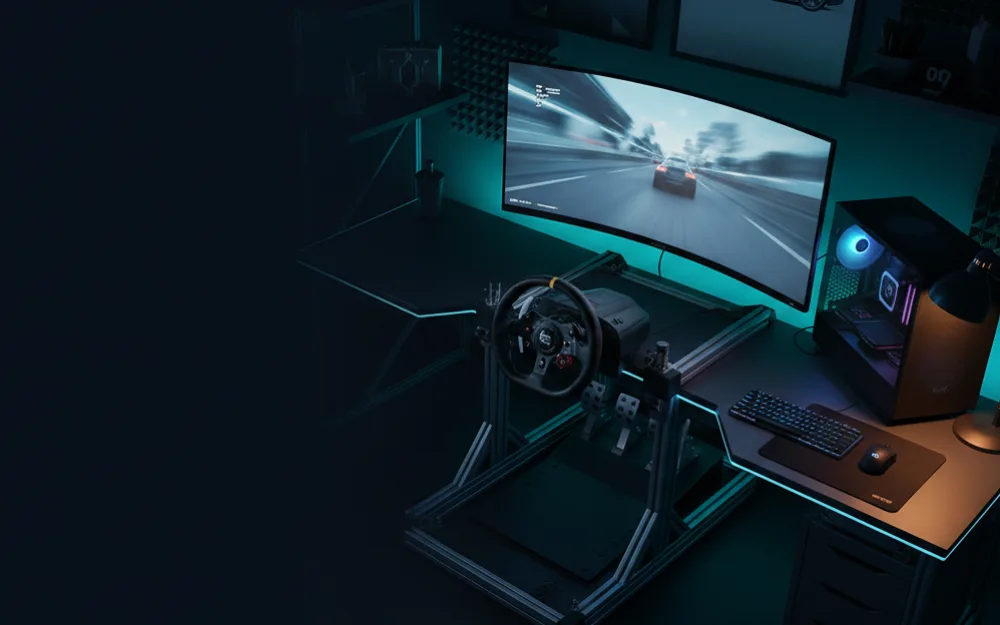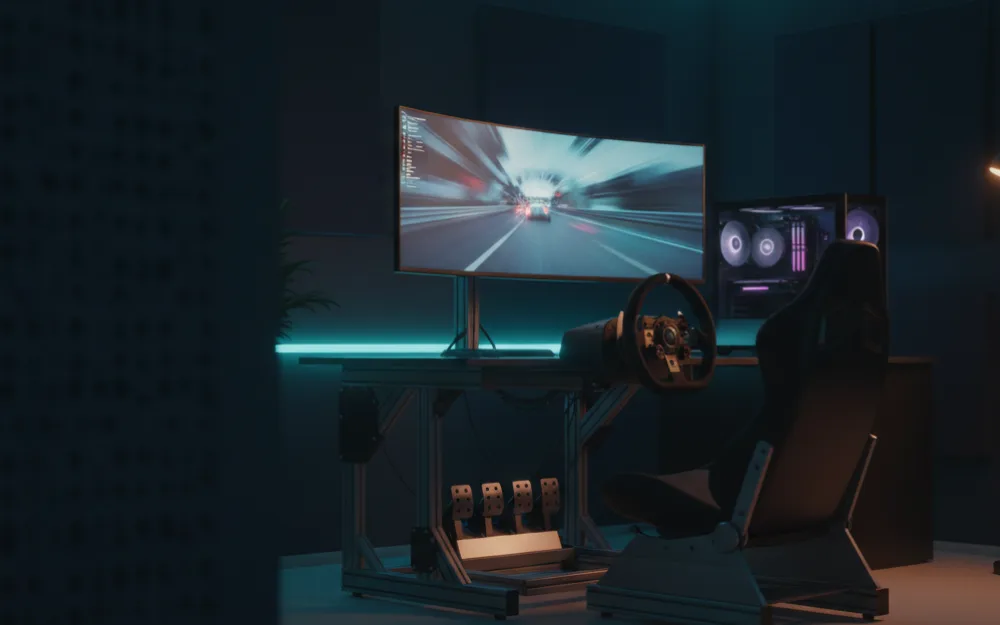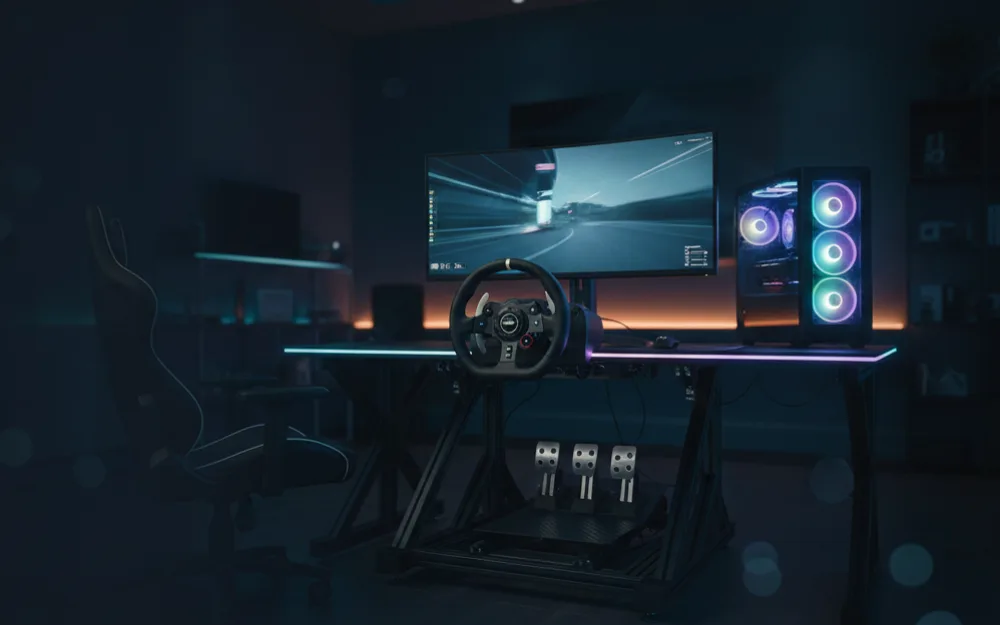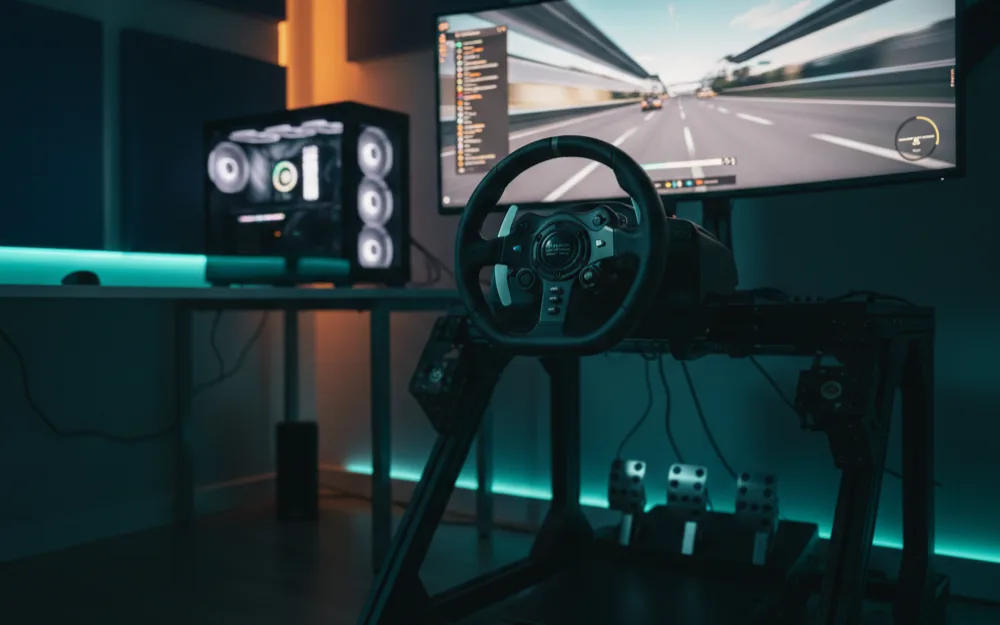


VR changes what sim racing asks of a game. Depth perception and scale replace a flat screen’s need for exaggerated visual cues, but the tradeoff is that a game’s VR implementation has to actually be good: stable frame timing, sensible menus in headset, and a driving model detailed enough to reward the extra immersion. Reviewers and VR racing communities consistently point to a small set of titles that get this combination right, spanning native support and community driven implementations built on flexible sim engines.
We compared editorial coverage with recurring feedback from VR focused sim racing communities rather than ranking these from our own headset time, and you can read how we review. Every title below is judged on how well its VR mode actually holds up in practice, since a VR checkbox in the settings menu says nothing about how it plays.
What matters for VR racing specifically
Before ranking titles, it helps to know what separates a strong VR sim from a game that merely supports a headset. Reviewers weigh frame timing stability over raw resolution, since a bumpy frame rate causes discomfort faster than lower detail ever will. They also weigh how well a game’s user interface and car setup screens translate into headset view, since a flat screen menu bolted onto VR without adaptation makes basic tasks frustrating. Finally, a driving model with genuine depth rewards VR’s added spatial awareness, while a shallow arcade model wastes the format’s biggest advantage.
Assetto Corsa
Assetto Corsa has one of the longest running VR track records in the genre, with both native support and an extensive set of community tools that refine performance and visual clarity well past the base implementation. Reviewers and longtime VR racers describe the combination of its communicative physics model and a mature VR setup as a particularly strong pairing, since the added depth perception plays directly to the car feel the base sim is known for. The tradeoff is that reaching the best VR experience typically means tuning graphics settings and possibly installing community tools rather than getting peak performance immediately out of the box. Our Assetto Corsa review covers the wider picture.
Automobilista 2
Automobilista 2 draws steady praise from VR racers for a driving feel reviewers describe as detailed and communicative across a wide range of disciplines, which matters in VR since the format rewards a car model with real depth to explore. Its VR performance is generally described as solid once graphics settings are matched to the headset and PC in use, though reviewers note it can ask more of a GPU than a flatter racing game would. It suits a VR driver who wants variety across car types rather than a single discipline focus, and less so a player chasing one very specific racing series.
iRacing
iRacing’s VR support is frequently cited by its community as a meaningful upgrade to race awareness, since judging distance to other cars in close, competitive racing benefits enormously from depth perception that a flat screen cannot replicate. Reviewers describe the visual presentation as less advanced than some rivals, but the tradeoff is offset by the platform’s structured, competitive online racing, which is arguably where VR’s spatial awareness matters most. It is a poor fit for a casual VR driver who is not interested in a subscription based, ranked racing structure.
Le Mans Ultimate
Le Mans Ultimate benefits from the same physics foundation that has made VR racing on other titles built with the rFactor 2 engine well regarded, and reviewers note that its multi class endurance racing is especially compelling in headset, where judging closing speed against faster Hypercar traffic becomes far more intuitive in three dimensions. The game left early access with its 1.0 release in July 2025, and it continues to receive updates, so its VR behavior can still change from one update to the next. Our Le Mans Ultimate review covers where the game stands overall.
How to choose
A driver who wants the deepest VR track record and a large modding community should start with Assetto Corsa, while someone who wants variety across disciplines is better served by Automobilista 2. A competitive racer who values structured online racing should look at iRacing, and an endurance fan drawn to multi class traffic should consider Le Mans Ultimate. A driver on modest hardware who is not ready for VR’s performance demands, or anyone who values peak visual sharpness above the sense of depth, is better off on a flat screen for now and can skip all four. Whichever title you pick, VR racing is demanding on hardware, so check our best VR headsets for sim racing guide before you commit, and browse our PC sims category for more reviews in this space.
Frequently Asked Questions
Can I play these VR racing games on a Meta Quest 3?
Yes, with a capable gaming PC. The Quest 3 runs these PC titles through a PC VR connection such as a USB-C cable or Wi-Fi link, so it does not replace the PC. Check each game for headset support and confirm the connection steps against Meta guidance. See our best VR headsets for PC sim racing for more options.