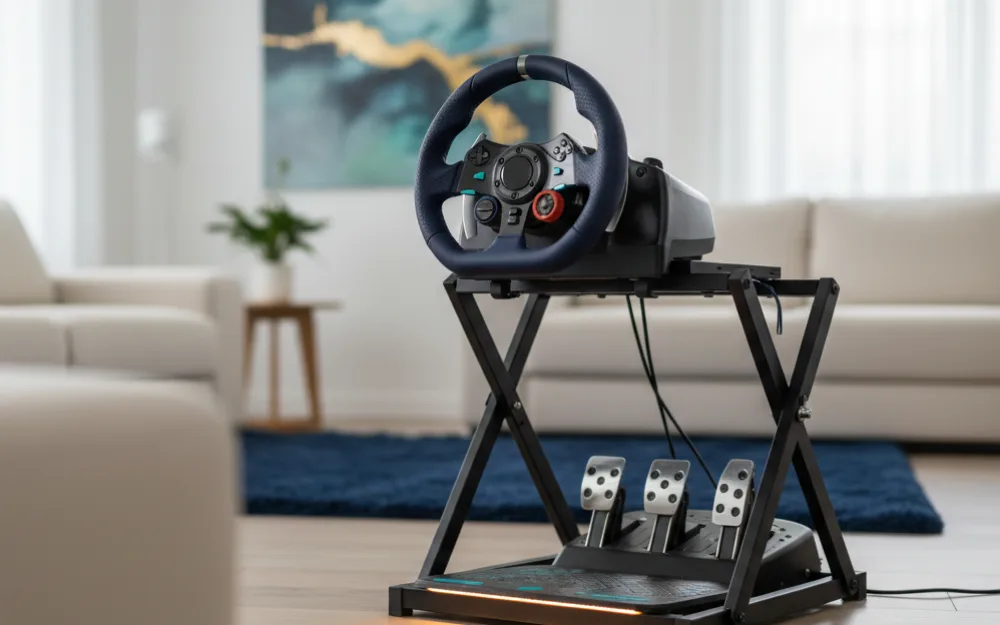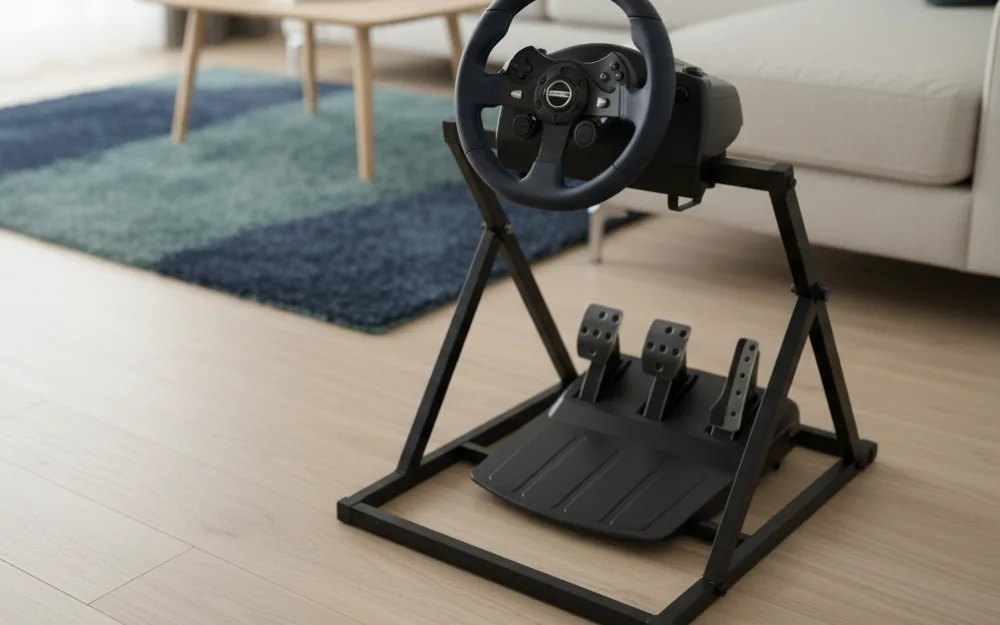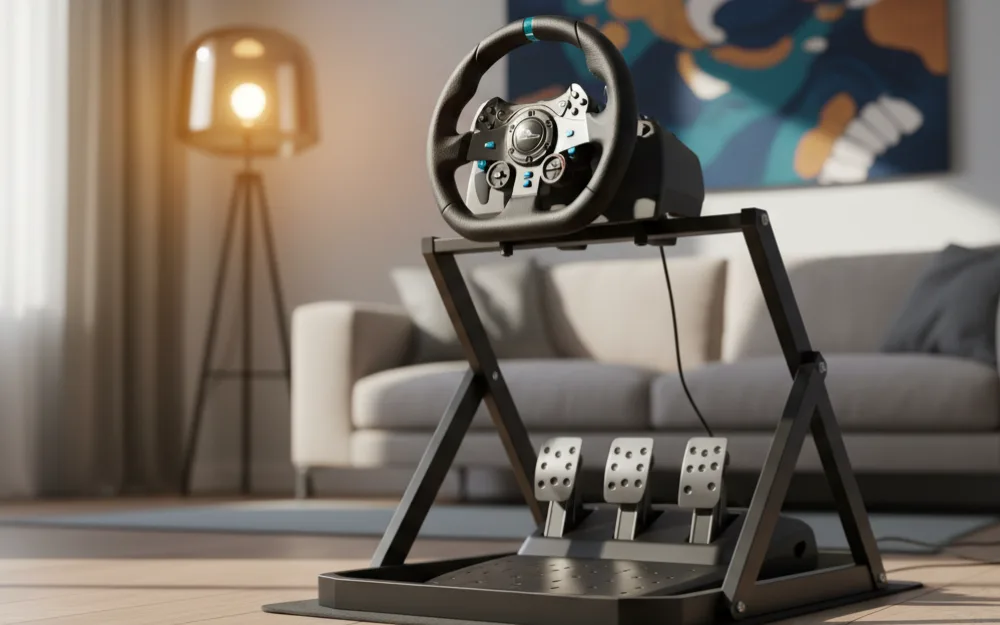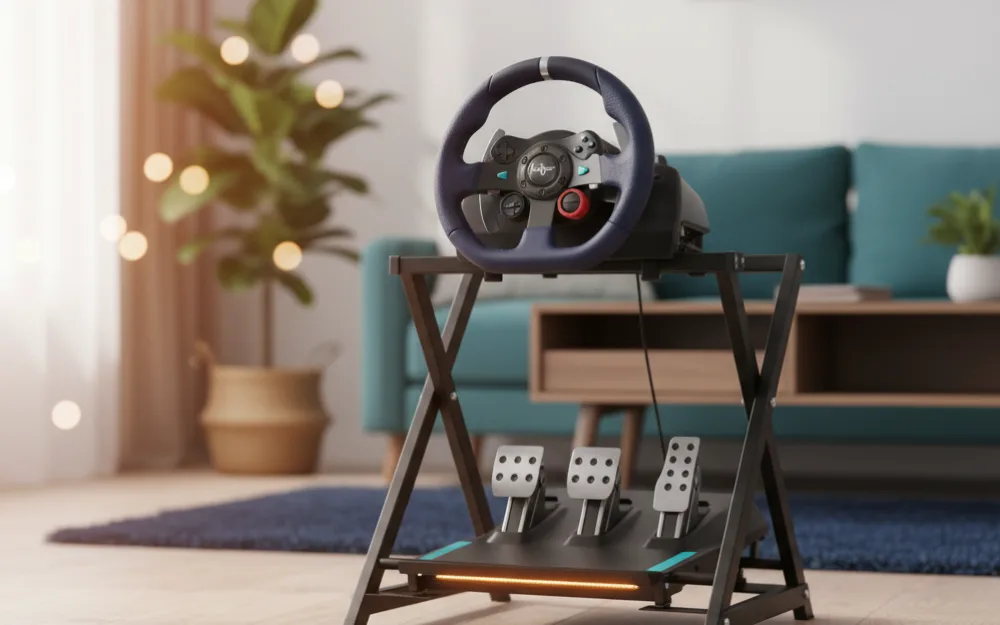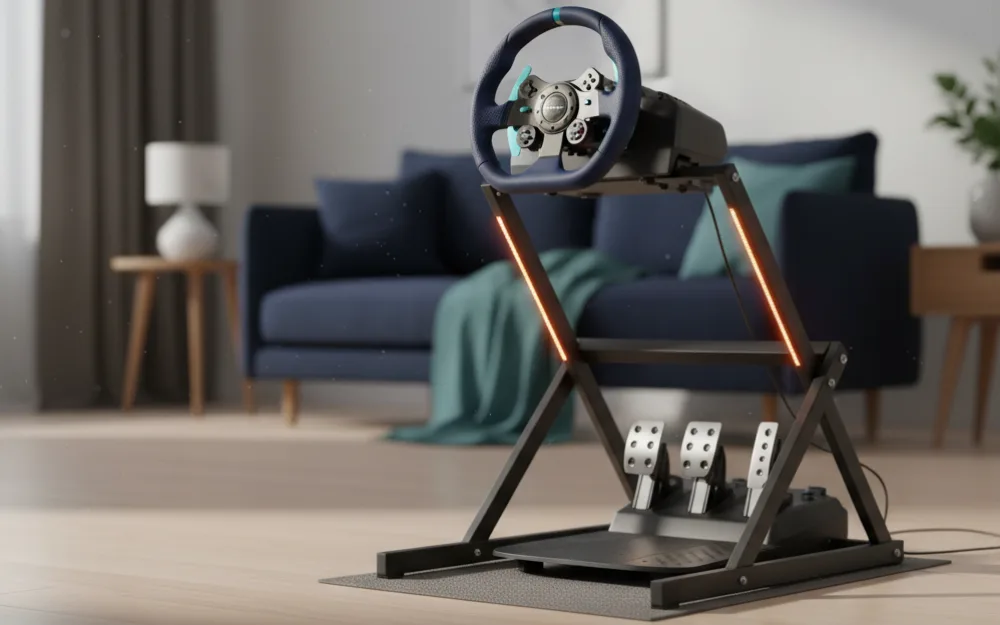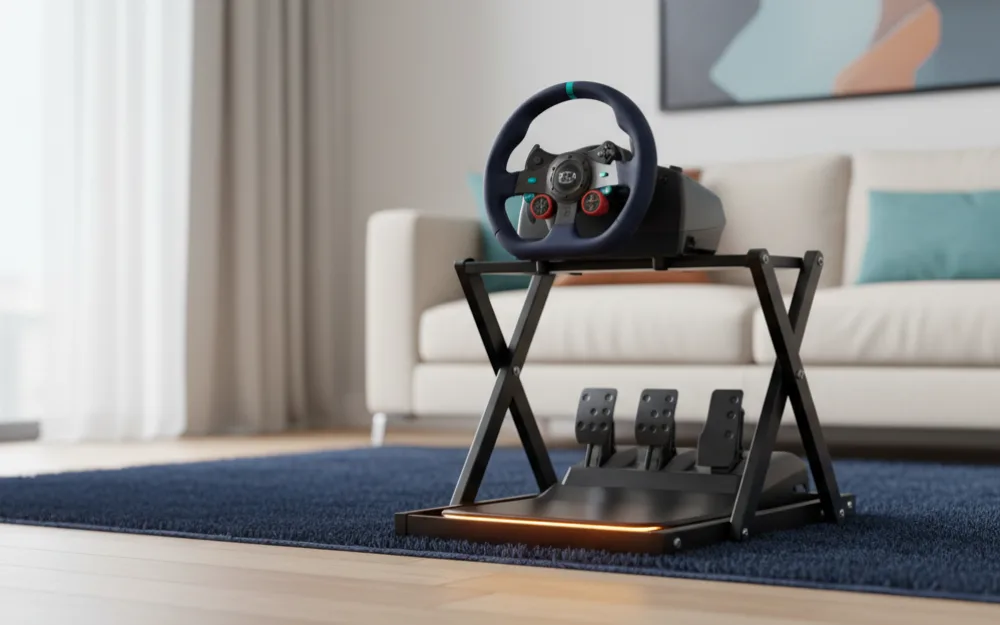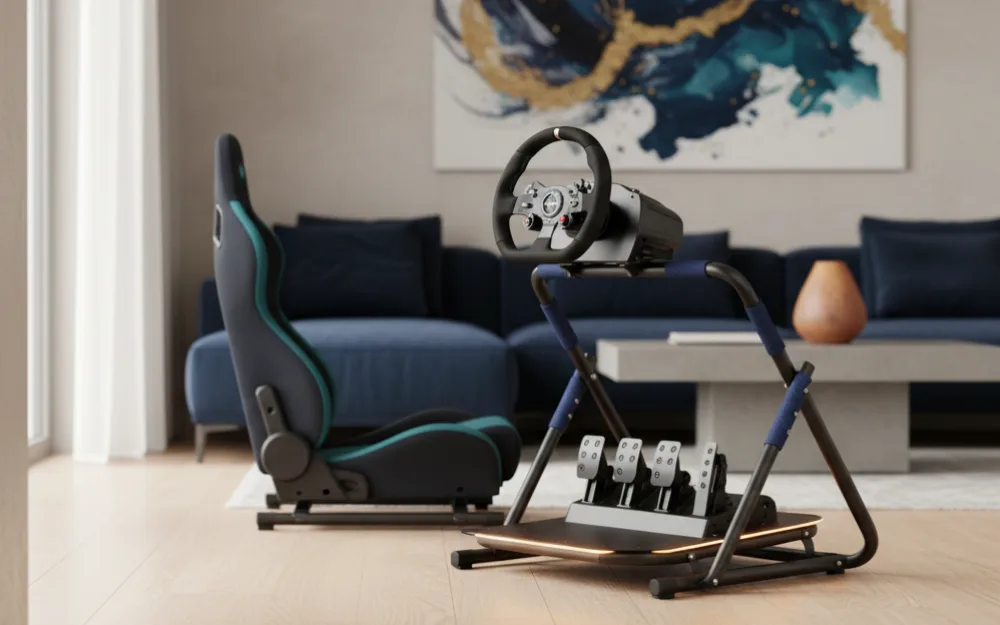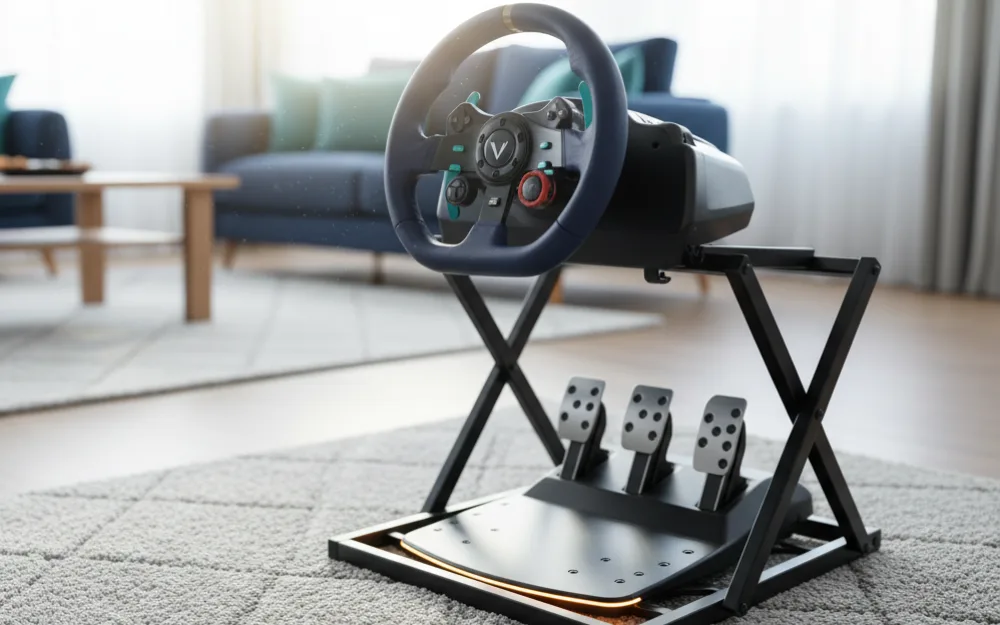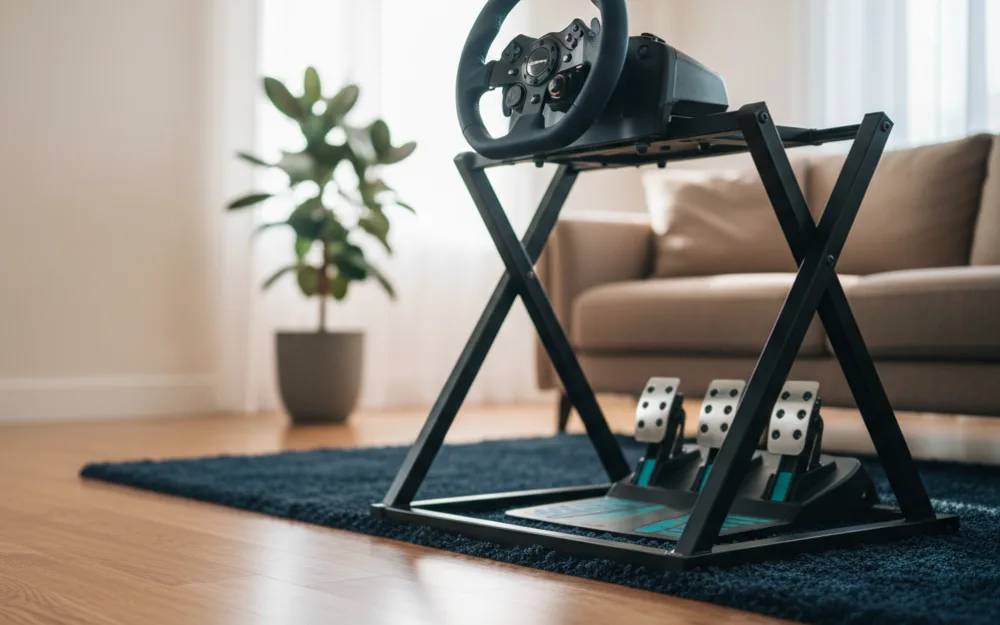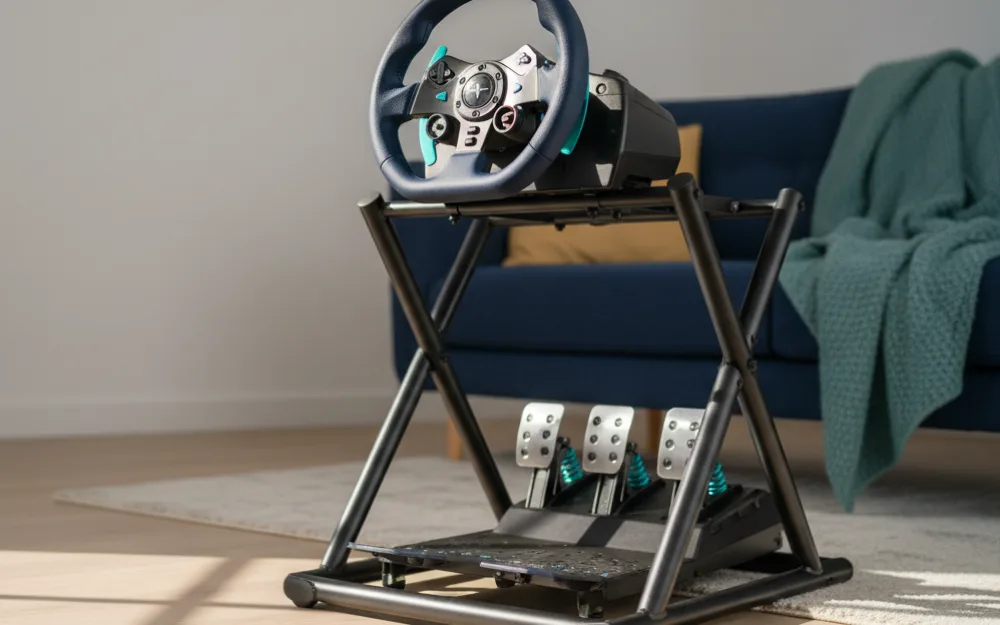

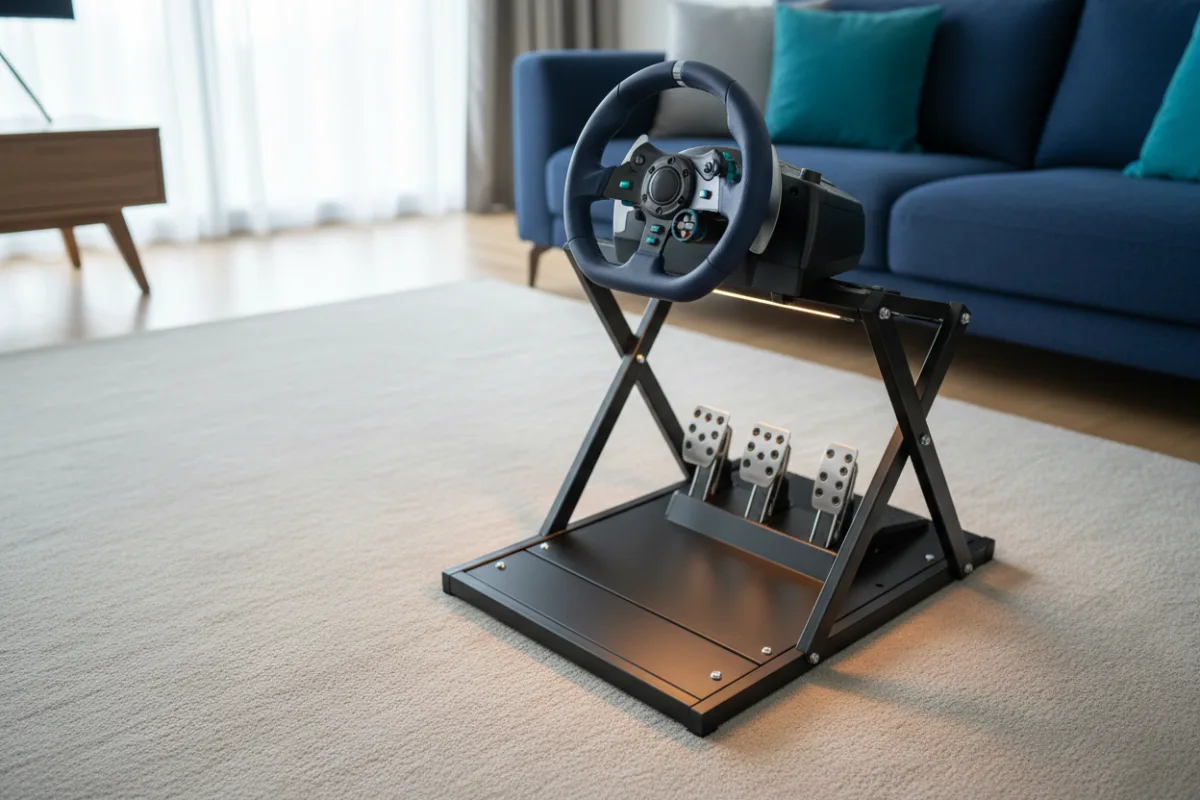

A wheel stand is the honest middle ground between a desk clamp and a full cockpit: it gives you a dedicated, adjustable mount for wheel and pedals without asking for the floor space or the commitment of a seated rig. The catch is that direct drive changes the math. A stand that felt planted with a geared wheel can shudder and creep under a strong motor, so if you are running direct drive, the question shifts from which stand is adjustable to which one is rated to hold that torque without flexing.
We weighed these picks on rigidity under load first, then on how far each one adjusts and how easily it upgrades later. Stability and long term durability come from verified buyer reports and maker specifications rather than our own driving time, and you can read how we review for the method. If you are still deciding between a stand and a full rig, our Getting Started guides frame that choice before you spend.


How we picked
We started from the WSR Score, which reflects verified buyer ratings normalized on a consistent scale, then judged every pick on what a stand has to do under direct drive. First, torque rating and frame stiffness: a stand meant for a strong base needs a wide, braced footprint and a stated torque ceiling, since a narrow tube stand will rock forward under a hard snap of the wheel. Second, wheel deck and pedal mount: the deck a base bolts to has to be thick and well braced, and the pedal plate has to resist a firm load cell push. Third, adjustment: angle and height range on the wheel deck and pedal tray decide who can set a comfortable position. Fourth, upgrade path: the best stands leave the door open to a seat frame later, so you are not throwing the stand away when you outgrow it. We kept a popular geared wheel stand in the group as a deliberate contrast, since it shows exactly where a stand not built for direct drive reaches its limit.
GT Omega DD-X Wheel Stand
The DD-X is the pick built for the job, and the name is not for show. Its fixed Y-frame design is engineered for rigidity, and the maker rates it to withstand forces up to 21 Nm, which covers the peak torque of most consumer direct drive bases a home rig will run, though the strongest flagship bases go past it. Owners report it stays planted under a strong wheelbase where a folding stand would walk, and the alloy steel construction backs that up. Adjustment covers angle and height at the wheel deck plus angle at the pedal tray, and it includes a shifter mount, so a rally or GT setup does not need extra brackets. Assembly is straightforward for a fixed frame stand: fewer beams than a full cockpit, and the maker states the wheel deck uses the same mounting holes as the GT Omega Apex, so brackets and wheel plates carry over cleanly if you already own that line. The detail that makes it a smart long term buy is the upgrade path: the same frame accepts a rear seat frame later, so the stand becomes a full cockpit when you are ready. Its limit is honest, it is a wheel stand, not a seated rig, so you supply your own chair. Our full GT Omega DD-X review covers the build.
ARES WING Wheel Stand with Monitor Mount
The ARES WING blurs the line between a stand and a compact cockpit, and that is its appeal. The maker built it on an upgraded strengthened frame the company states meets the force requirements of high torque direct drive wheels such as the Fanatec Pro, and the base carries eight non-slip support feet that owners credit for keeping it from shifting during hard use. It goes further than a bare stand by including a reclining seat that slides 7.1 inches and tilts from 90 to 150 degrees, plus a detachable monitor mount rated for screens up to 50 inches and 77 pounds. The wheel, pedals, shifter, and monitor arm all adjust. The tradeoff against a pure stand is footprint: once you add the seat and screen mount, it takes up nearly as much room as a small cockpit, so the space saving argument for a stand fades. It suits a driver who wants a seated, screen ready setup in one purchase and has the room for it.
Wheel Stand Pro Deluxe V2
The Wheel Stand Pro is the contrast pick, and understanding where it fits matters more than its rating. It is a long running, widely owned foldable stand, handcrafted in Europe, with a full and stepless adjustment range that owners praise for pairing with almost any chair. Its compatibility list centers on geared and belt driven wheels such as the Logitech G29, G920, and G27 and the Thrustmaster T300 range, and that is the key point: it is built for those wheels, not for a strong direct drive base. On a geared wheel it is stable, portable, and easy to fold away, which is exactly what a small space driver wants. Push a high torque direct drive base onto it and you are outside its design brief, where the folding joints and lighter frame will flex under load. It suits a driver on a geared wheel who values portability, not a direct drive owner chasing rigidity.
How the picks compare
| Pick | Frame | Direct drive fit | Best for | Watch out for |
|---|---|---|---|---|
| GT Omega DD-X | Fixed Y-frame alloy steel | Rated to 21 Nm | A rigid stand that upgrades to a cockpit | Seat not included |
| ARES WING | Strengthened steel with seat | High torque per the maker | A seated, screen ready setup in one buy | Takes nearly a cockpit’s footprint |
| Wheel Stand Pro | Foldable geared wheel stand | Built for geared wheels | Portability on a geared wheel | Not built for strong direct drive |
Who should buy which
A direct drive driver who wants a true stand, rigid under load and ready to grow into a full cockpit later, should buy the GT Omega DD-X and add a chair. A driver who wants a seated, monitor ready setup in a single purchase, and has the room, should look at the ARES WING. And a driver on a geared wheel like a G29 or a T300 who values a stand that folds away should choose the Wheel Stand Pro, which is built exactly for that use.
Who should skip a stand entirely
Two drivers should step past a stand. If you run a strong direct drive base at full strength and want the last measure of stiffness for a load cell brake, a wheel stand will always give up something to a heavy full cockpit, and you are better off clearing the space for one. And if you already know you want a fixed, seated GT position, buying a stand now and a seat frame later can cost more than a complete cockpit up front. A stand is the right answer when space or budget rules out a full rig, or when you want an upgrade path, not when a cockpit is already the goal.
Before you buy
Check the stated torque rating against your wheelbase before anything else, and give any stand a firm floor and fully tightened joints to work with. Treat the first setup as part of the product: snug every bolt in stages rather than tightening one corner fully before the next, and recheck the wheel deck bolts after your first few sessions, since a strong base can work a fresh joint loose before it settles. A stand that feels planted on day one but rocks a week later almost always just needs its hardware brought back to torque. If your base is a geared or entry wheel, our budget focused picks for the best wheel stand under $200 cover more affordable options. If you decide a seated rig is the better fit after all, our guide to the best cockpit for direct drive weighs full frames on rigidity. You can browse the wider field in wheel stands and desk mounts.
Frequently Asked Questions
Which wheel stand works with a MOZA base like the R3, R9, or R12?
The GT Omega DD-X is the pick here: its maker rates it to 21 Nm, well above MOZA’s published peak torque of 3.9 Nm for the R3, 9 Nm for the R9, and 12 Nm for the R12. Torque is only half the check. Confirm that the base’s mounting holes line up with the wheel deck before ordering.
Which wheel stand fits a Fanatec CSL DD?
The GT Omega DD-X is the better matched stand, rated by its maker to 21 Nm against the CSL DD’s 5 Nm, or 8 Nm with the Boost Kit 180. The ARES WING is built for Fanatec Pro class force, so it also has headroom and adds a seat and monitor mount. Check the base’s mounting pattern against the deck first. Skip the Wheel Stand Pro, which targets geared wheels.