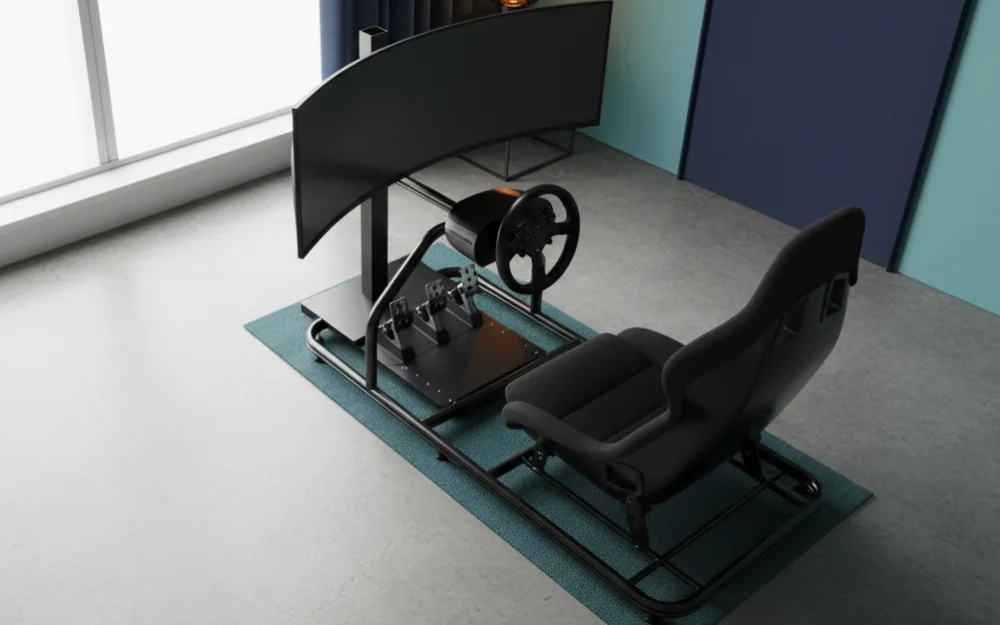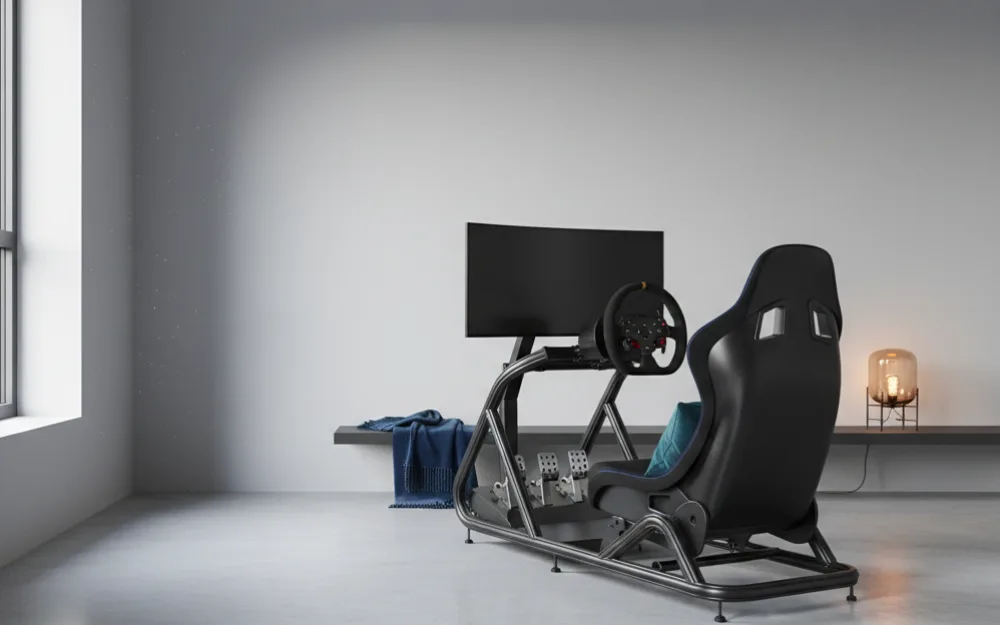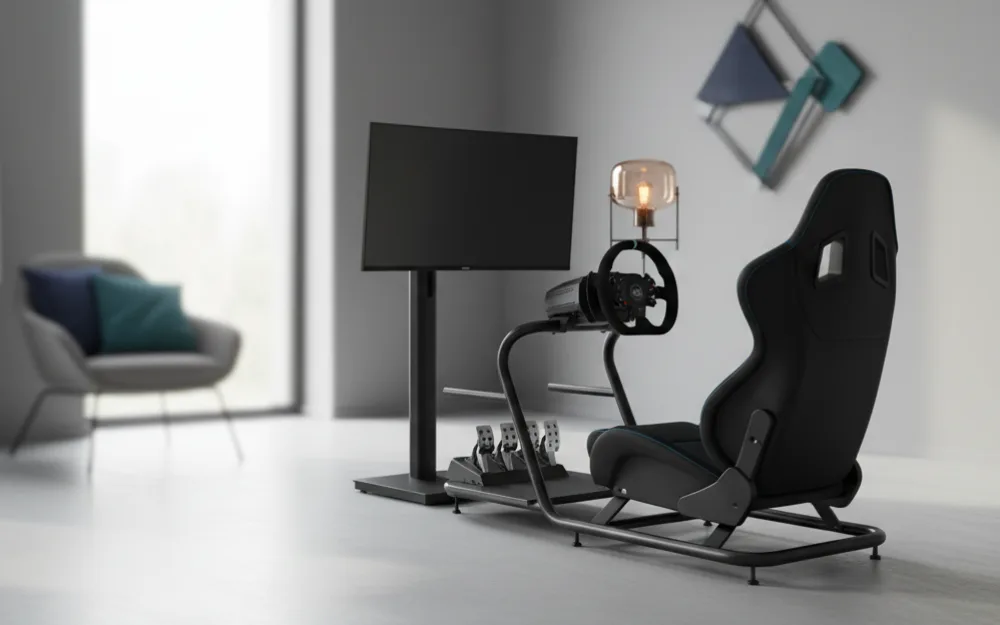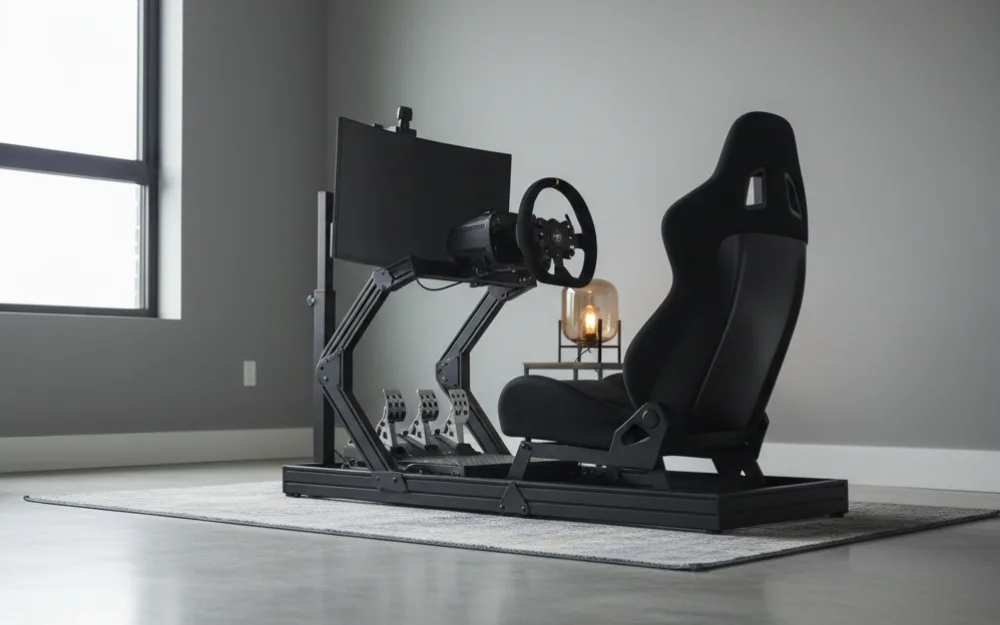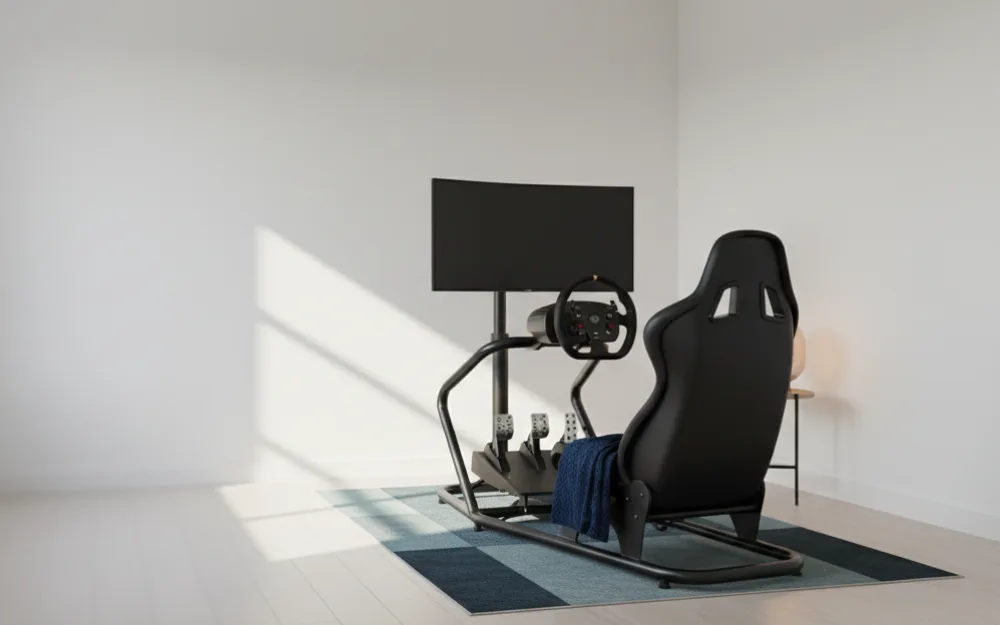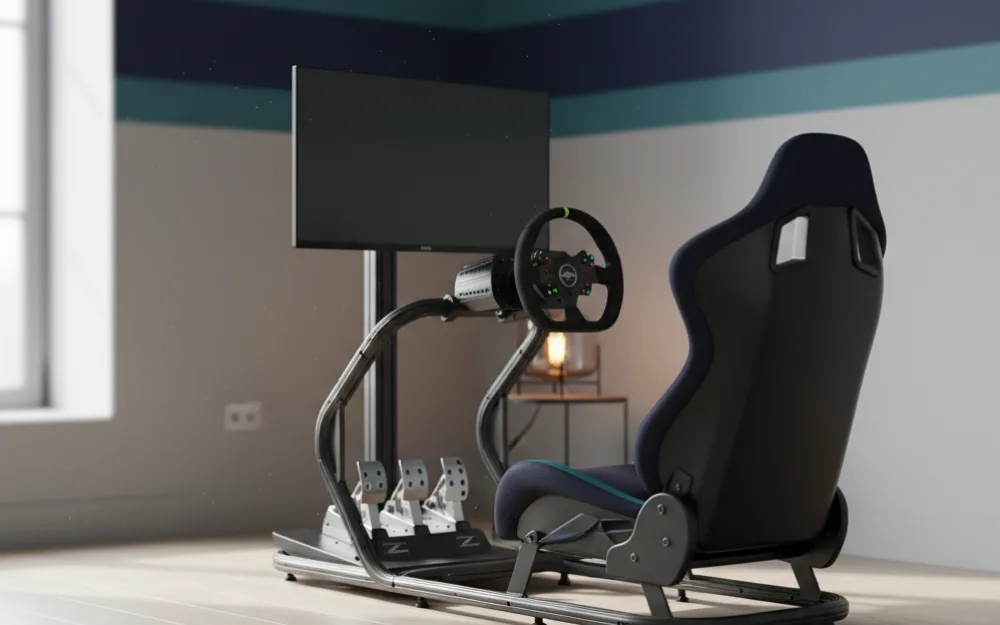

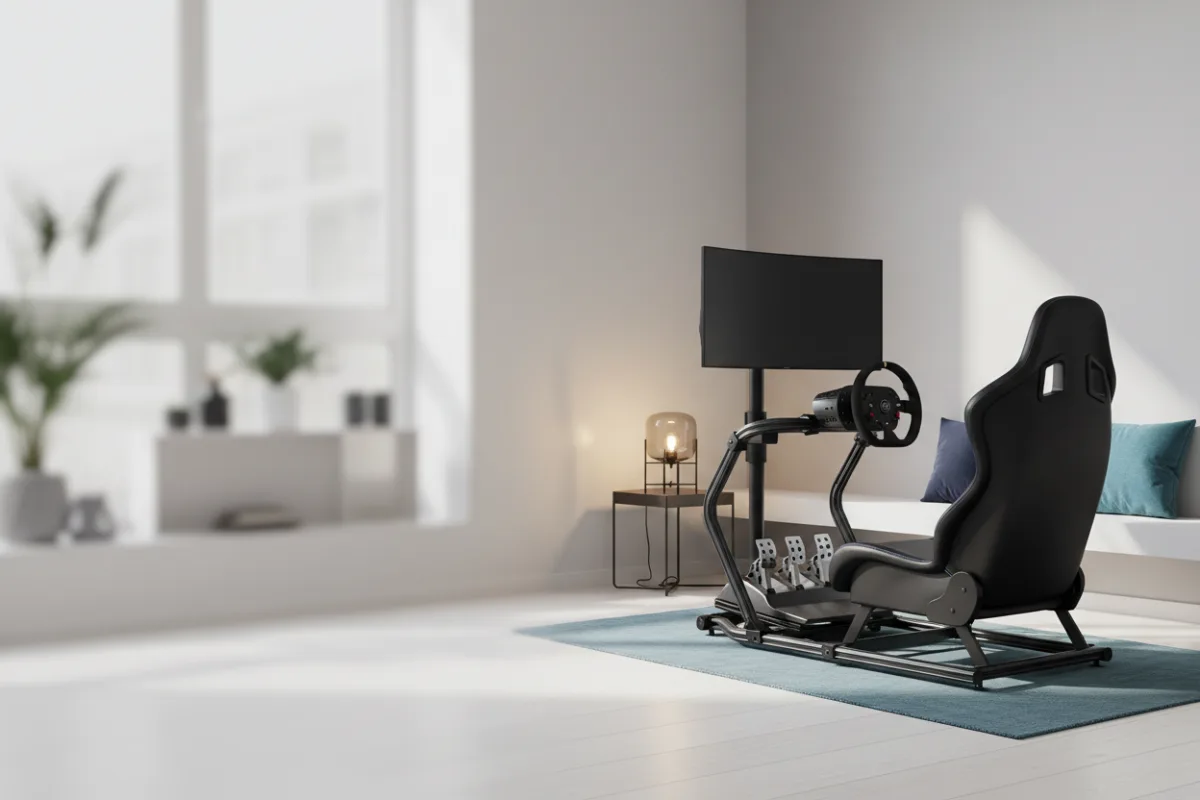

A cockpit lives and dies by what happens under load. A direct drive wheelbase delivers its torque straight from the motor into the frame, and a rig that flexes turns that clean signal into mush: the deck twists, the wheel deck shudders, and the fine detail you paid for in force feedback smears away. Once you move past a geared wheel, frame rigidity stops being a nice extra and becomes the whole point of the purchase.
We weighed these picks on stiffness first: how well the main frame resists twist, how solid the wheelbase mount is, and how planted the whole rig stays when a strong motor snaps the wheel. Feel under load comes from verified buyer reports and maker specifications rather than our own driving time, and you can read how we review for the method. If you are new to direct drive, start with our Getting Started guides so the torque numbers make sense before you commit to a frame.


How we picked
We started from the WSR Score, which reflects verified buyer ratings normalized on a consistent scale, then judged every pick against what direct drive actually demands. First, frame rigidity: whether the main structure resists twist under a hard snap of torque, since any give there blunts the signal at the wheel. Second, the wheelbase mount: a flimsy or thin mounting bracket flexes even when the frame is solid, so the plate the base bolts to matters as much as the beams. Third, the pedal deck: a load cell brake reads pressure, not travel, and a deck that flexes under a firm push softens the exact detail a load cell exists to deliver. Fourth, planted stability: mass, footprint, and floor contact decide whether the whole rig walks across the room under load. We deliberately left folding and desk clamp rigs out of this list, since their strength is convenience, not the stiffness a strong base needs.
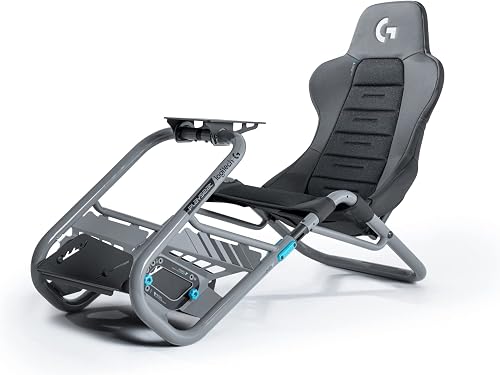
Playseat Trophy Logitech G Edition
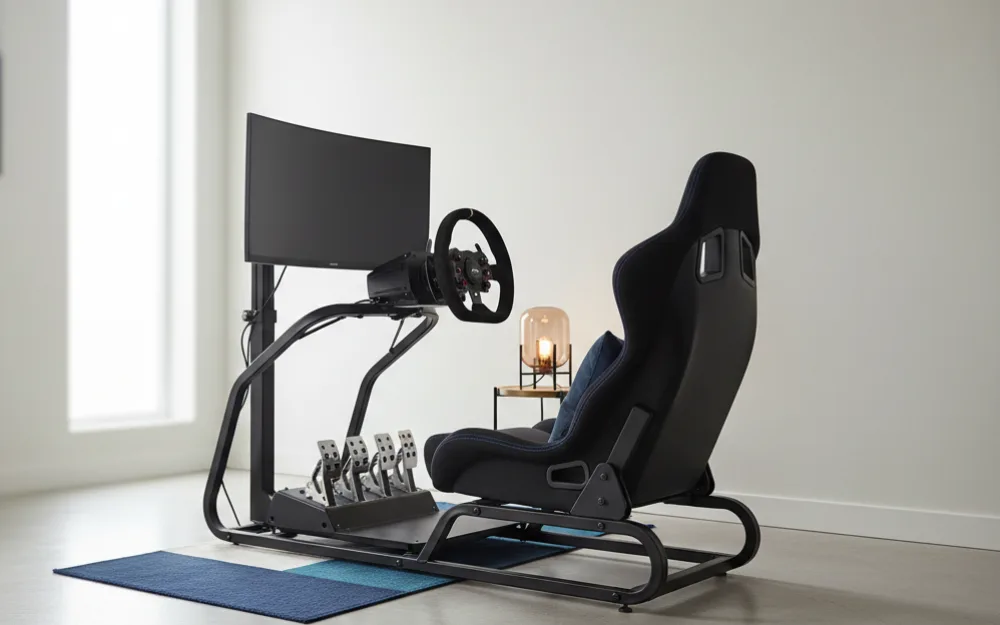
The Trophy was engineered around direct drive, and that focus shows. It uses a lightweight carbon steel frame that the maker rates for the full range of Logitech G hardware, and owners consistently describe it as rigid well beyond what its roughly 37 pound weight suggests. Fully adjustable pedal and steering plates tilt and slide, and every adjustment can be bolted down solid rather than left on a friction lock, which is the detail that keeps a strong base from working the mounts loose over time. The open chair design leaves your legs free for heel and toe work, and the seat reclines with adjustable lumbar support and a firmness option. Its main limit is footprint versatility: it is a fixed seat frame, not a foldable rig, so it wants a dedicated spot. For a driver on a strong wheelbase who wants stiffness without a heavy profile build, it is the standout here. Our full Playseat Trophy review covers the detail.
Marada 8040 Aluminum Profile Cockpit
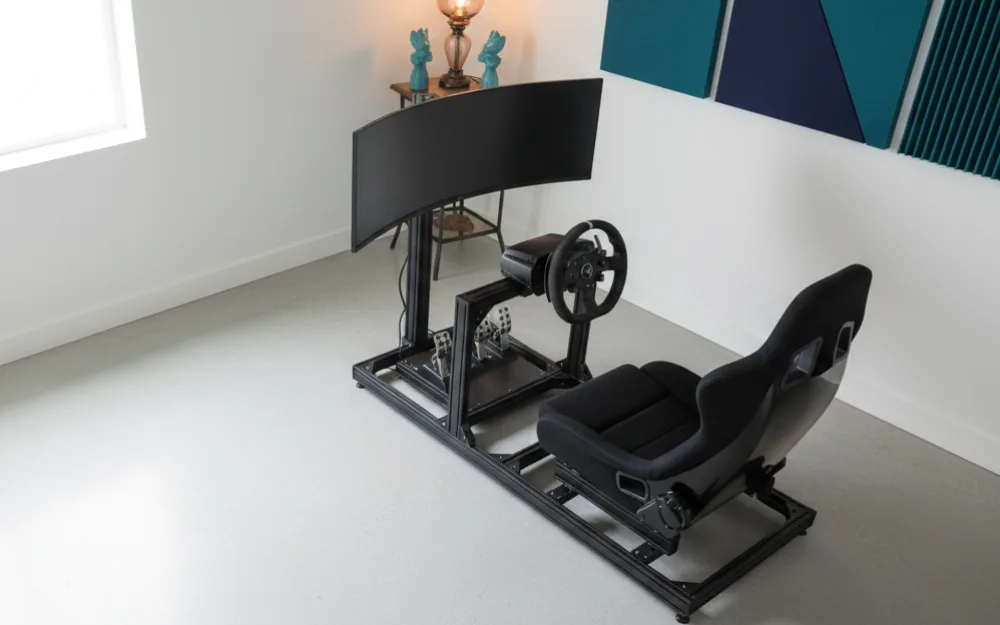
If your answer to flex is mass, the Marada delivers it. Built on a 40 by 80mm solid aluminum profile and listed at roughly 105 pounds, it is the most planted frame in this group, and the maker states plainly that the structure is meant to carry stronger force feedback motors without shaking or coming apart. That heft is the strength and the weakness: it will not move under load, but it also will not move across the room easily when you want it gone. Assembly is a real project, so budget an afternoon and a proper hex set. Verified buyer feedback on this listing is still thin, so treat the long term durability read as credible given the profile design rather than proven at scale. It suits a driver with a fixed space who wants the stiffest possible base and does not mind the weight. More detail is in our Marada 8040 cockpit review.
Fanatec CSL Cockpit V1.5
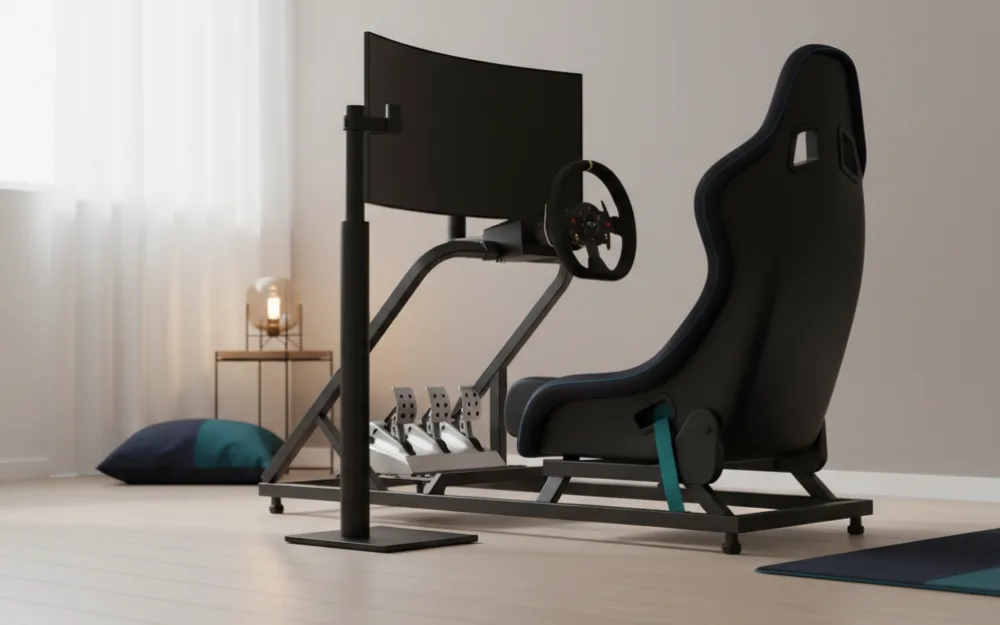
The CSL earns its place on the strength of its wheelbase mount. Its trapeze chassis pairs aluminum tubing with steel brackets, and the universal wheelbase bracket offers two height options with stepless angle and distance adjustment, plus a pedal plate the maker built to handle the high forces a load cell brake generates. That combination of a solid base mount and a stiff pedal deck is exactly what a direct drive setup asks for. A three year warranty backs it, and buyer feedback is broader than on the profile picks. The planning point is that the seat is sold separately, so the direct drive frame is a chassis first, and you add a seat to complete it. It fits a Fanatec driver who wants a rigid, endlessly adjustable base and will build the seat around it.
Next Level Racing GTRacer 2.0
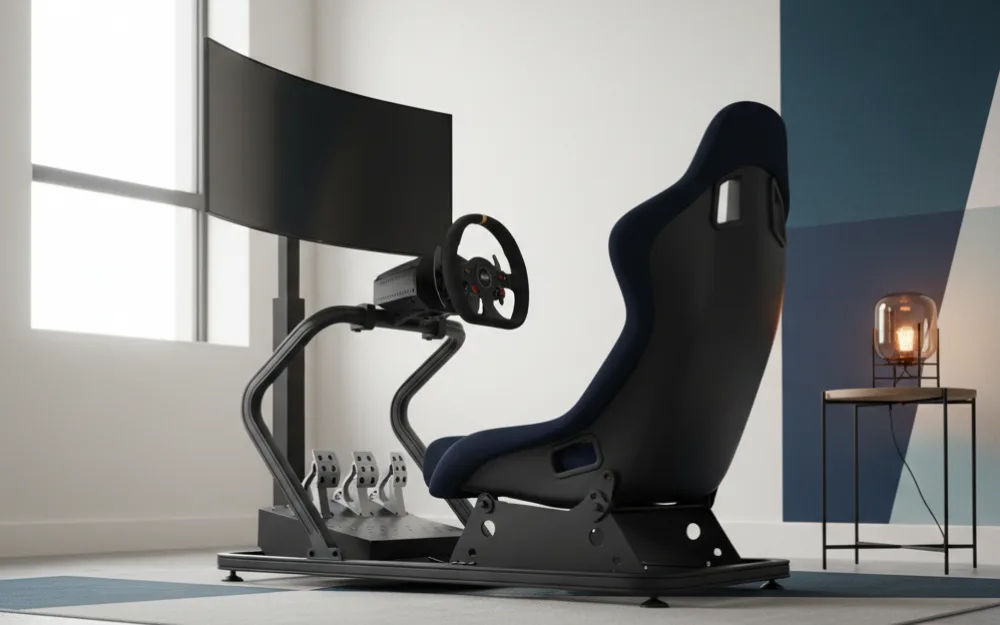
The GTRacer 2.0 is the ready to drive pick, designed for GT style seating and rated by the maker for direct drive wheels up to 13 Nm. It ships with a double recliner seat and a double seat slider that owners report keeps the seat planted rather than creaky, plus mounting support for a shifter, a handbrake, and a ButtKicker pole out of the box. That makes it the most complete package here for a driver who wants a full GT position without sourcing parts separately. The tradeoff is its ceiling: at a 13 Nm rating it comfortably covers mid tier direct drive, but a driver planning to run a 15 Nm or stronger base at full strength should look at a heavier profile frame. It suits GT drivers on mid tier direct drive who want a complete rig on day one. See our full Next Level Racing GTRacer 2.0 review for more.
How the picks compare
| Pick | Frame | Direct drive fit | Best for | Watch out for |
|---|---|---|---|---|
| Playseat Trophy | Lightweight carbon steel | Full Logitech G range | Stiffness without heavy mass | Fixed seat frame, not foldable |
| Marada 8040 | 40 by 80mm aluminum profile | Strong motors, planted by mass | Maximum rigidity in a fixed space | Very heavy, thin buyer feedback |
| Fanatec CSL V1.5 | Steel reinforced aluminum trapeze | Solid universal base mount | An adjustable Fanatec base | Seat sold separately |
| NLR GTRacer 2.0 | Recliner cockpit | Rated up to 13 Nm | A complete GT rig on day one | Ceiling below the strongest bases |
Who should buy which
A driver who wants direct drive stiffness without a heavy profile build should start with the Playseat Trophy. Someone with a fixed space who wants the most planted frame possible, and does not mind the weight or the assembly, should look at the Marada 8040. A Fanatec owner who values an endlessly adjustable base mount, and will add a seat, is best served by the CSL Cockpit. And a GT driver on mid tier direct drive who wants everything mounted and ready on day one should choose the GTRacer 2.0.
Who should skip these
The clearest warning here is about folding rigs. A foldable or desk clamp setup is built for convenience and small spaces, and pairing one with a strong direct drive base is asking a frame to do a job it was never built for: the flex undermines the very detail the base delivers, and the constant working of the joints wears them loose. If you cannot leave a rig standing and need to break it down between sessions, do not force a strong base onto a folding frame. Either step down to a wheelbase the folding rig can handle, or clear the space for a fixed cockpit. Match the frame to the torque, or the torque will find the weakest joint.
Before you buy
Before you commit, confirm the frame’s stated torque rating clears your wheelbase at full strength, including settings beyond what you run today. If you care most about the frame material and how far the rig can expand, our picks for the best aluminum profile cockpit weigh that side of the decision. If your space cannot hold a full cockpit, a rigid stand can still carry a strong base, and our guide to the best wheel stand for direct drive covers that route. You can browse the wider field in full cockpits.