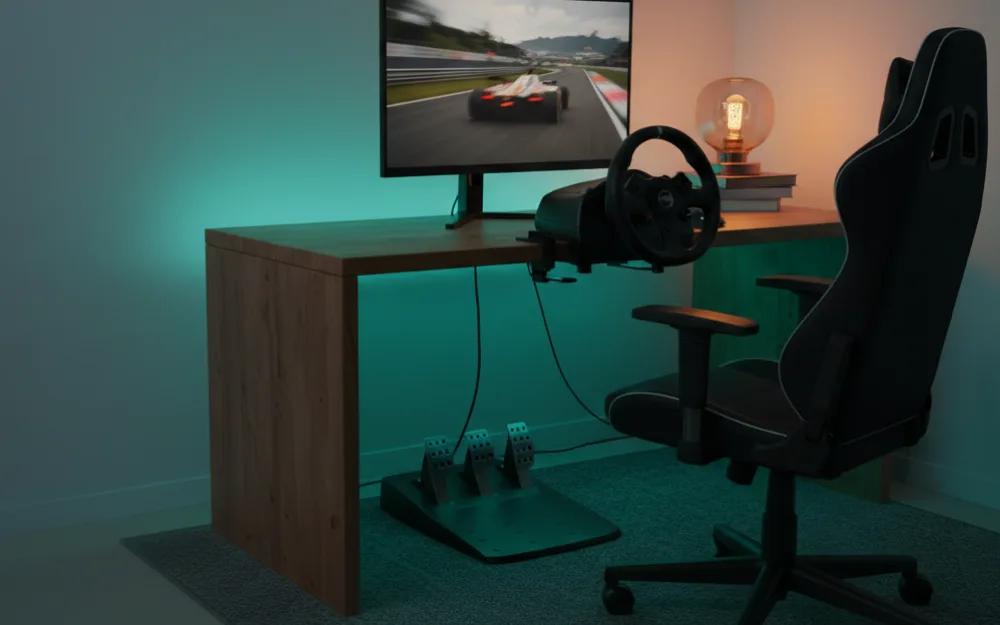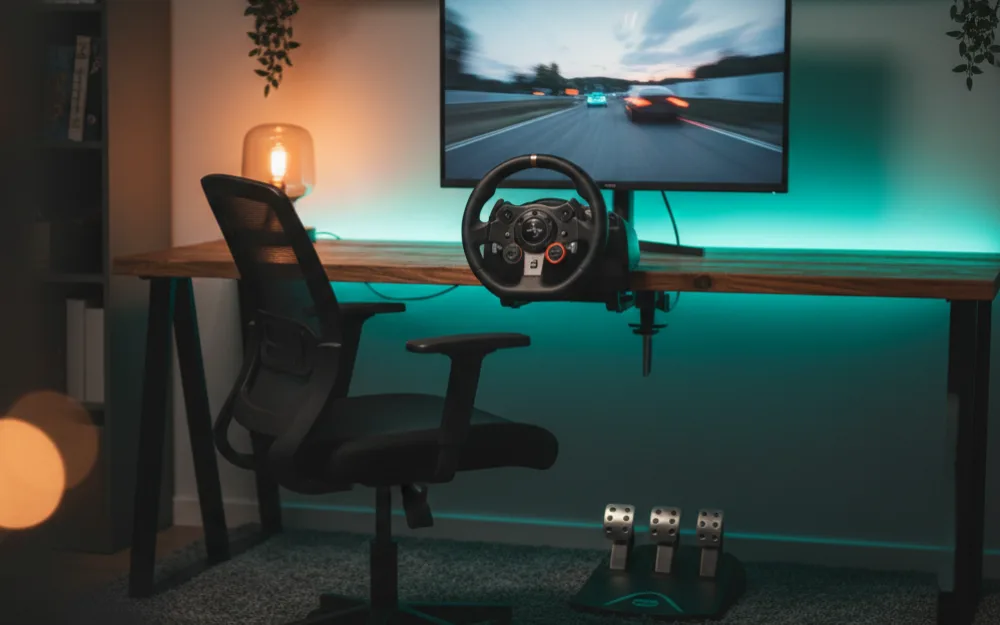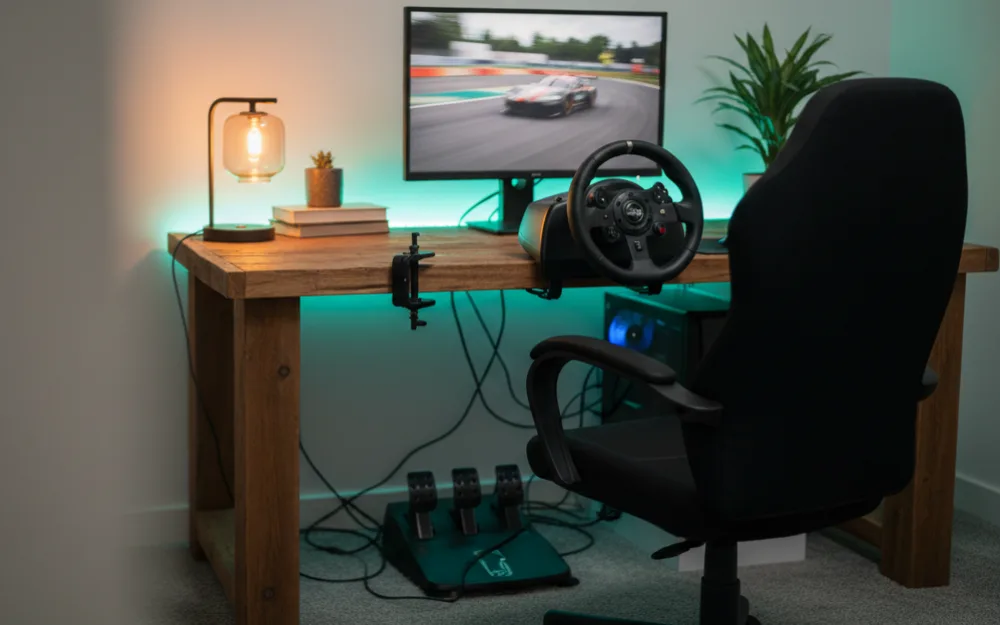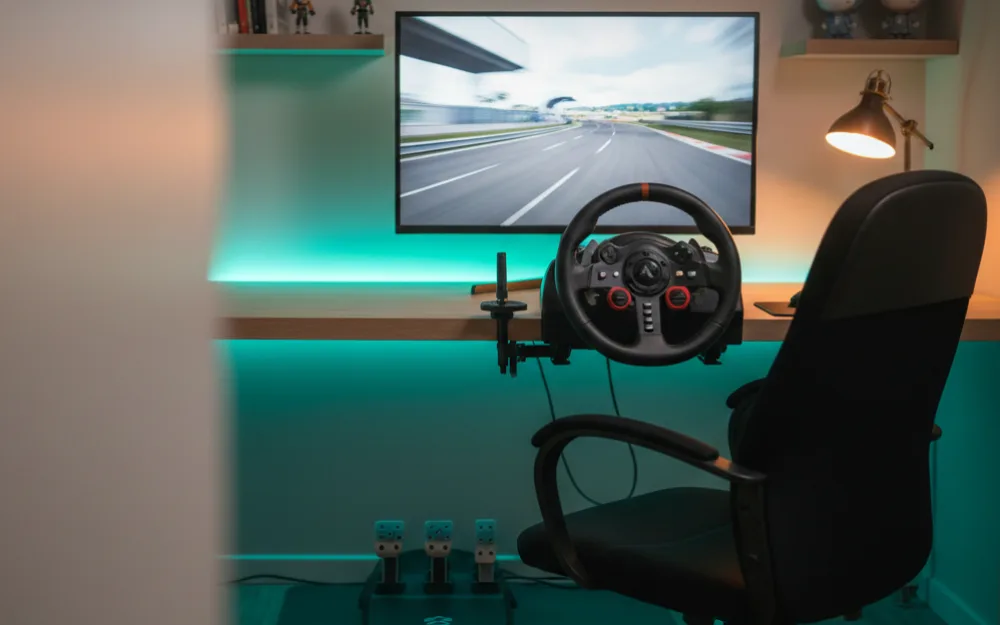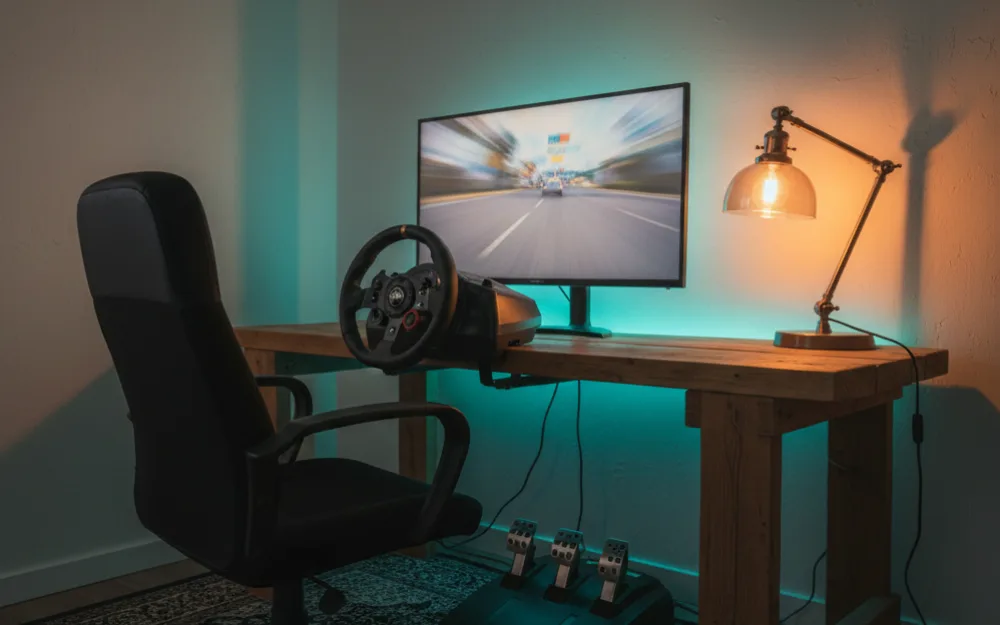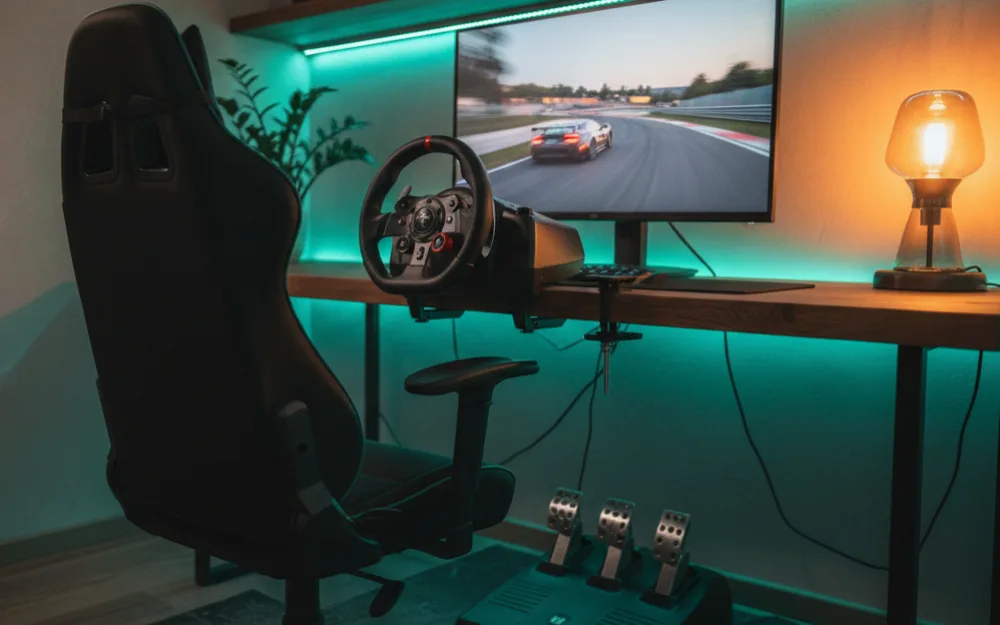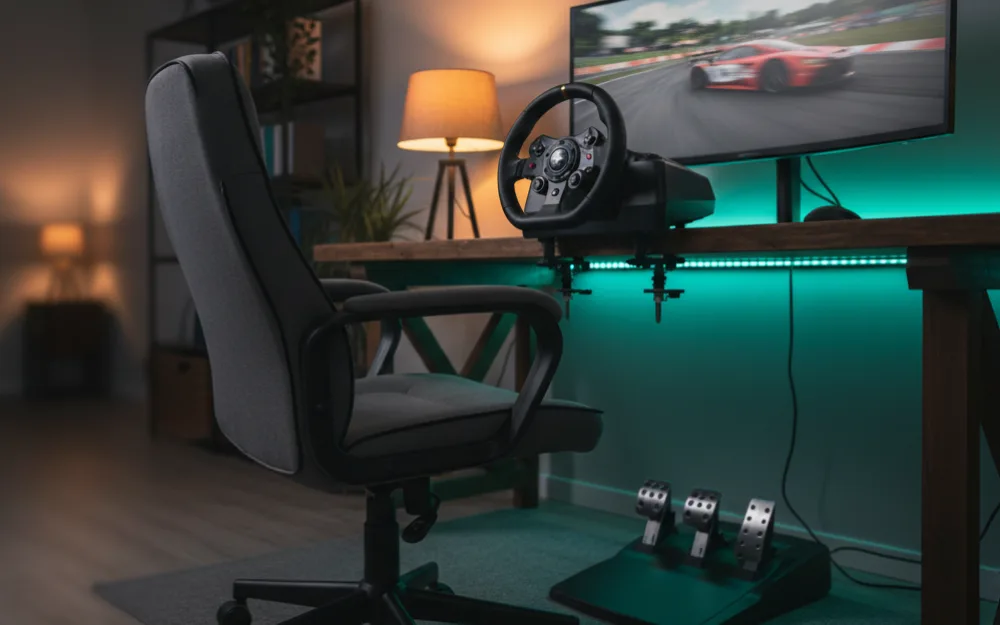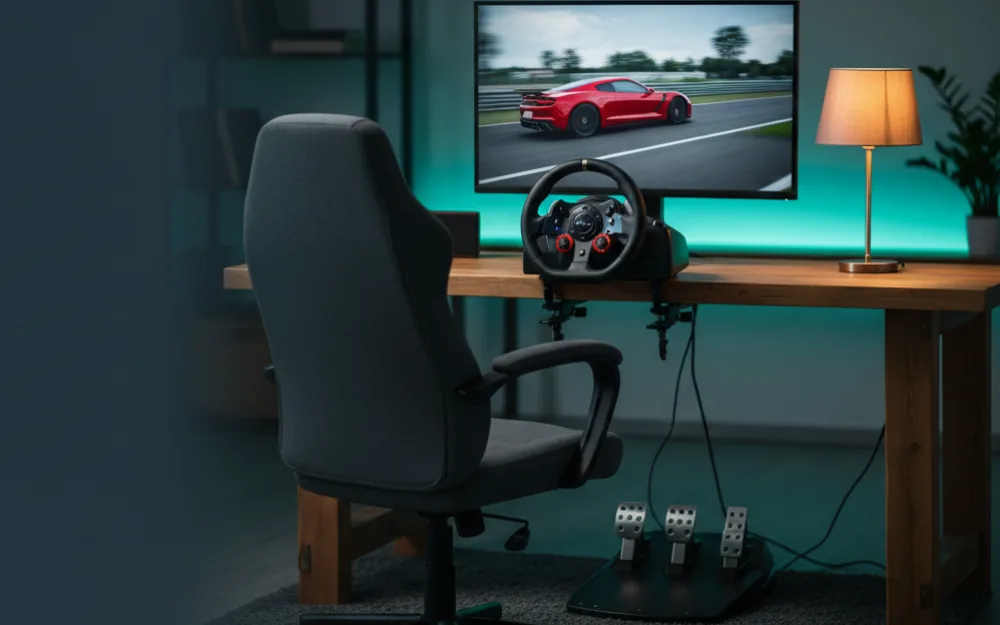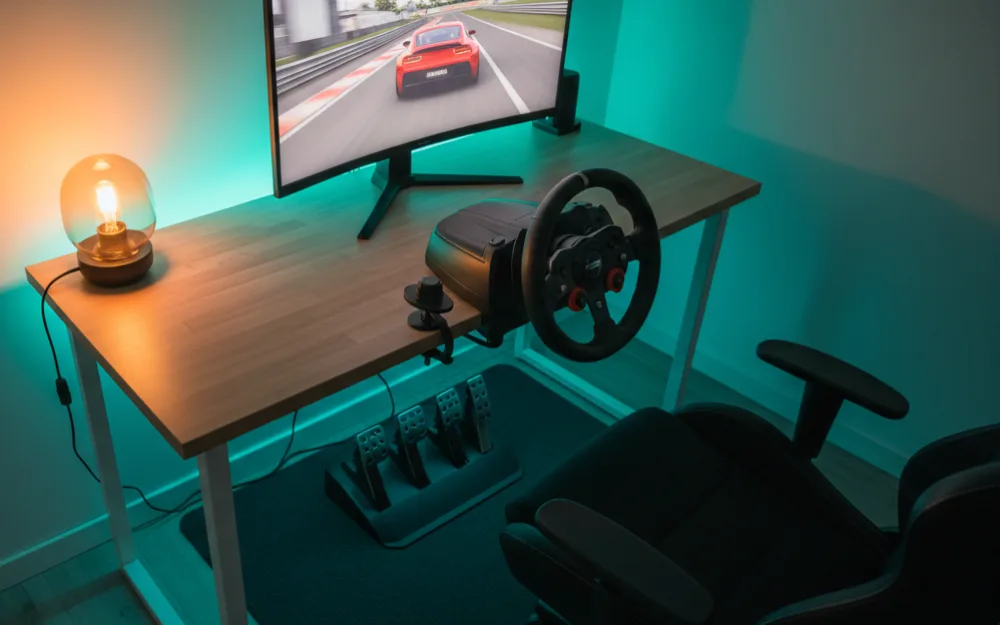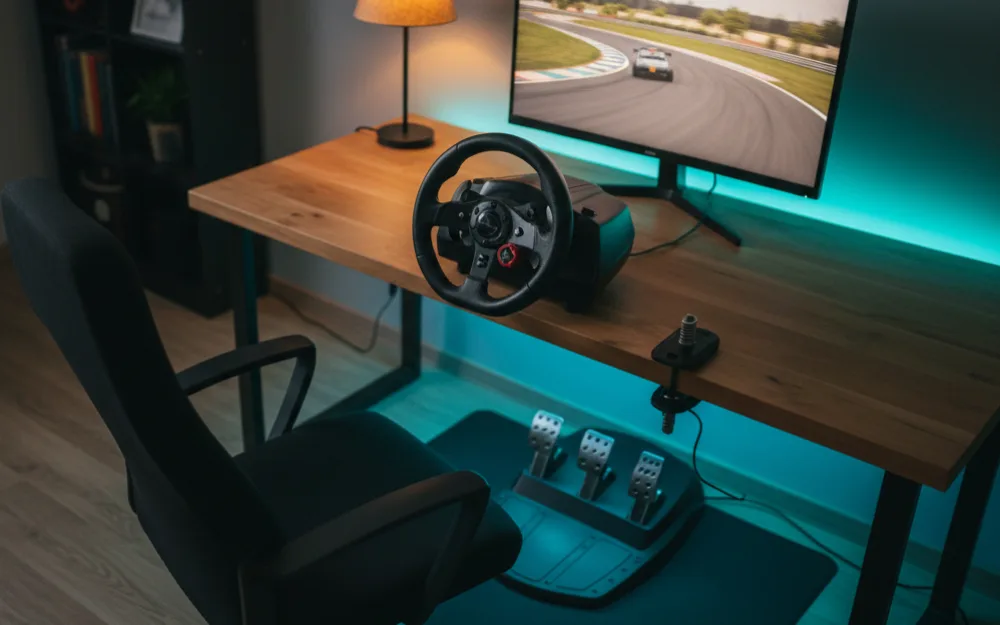

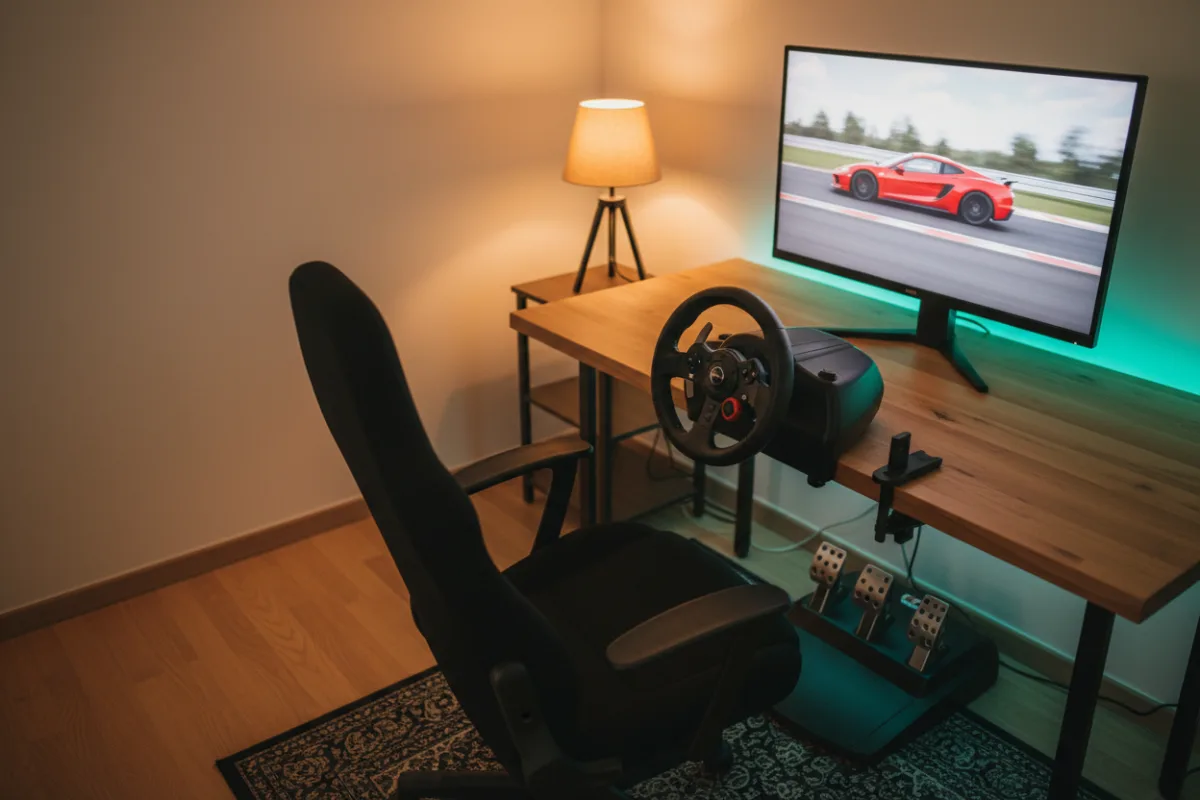

An entry level sim racing setup is the lowest sensible tier that still gives you real force feedback, proper pedals, and a mount that will not wobble, so you learn on honest gear rather than a toy. This guide covers what entry level actually means, which wheel and stand to start with, and where the tier ends so you know when to stretch to the next one. It suits anyone who wants to spend as little as possible without buying twice.
These picks come from comparing the entry tier against the gear experienced racers recommend to newcomers, and you can read how we review. If you are brand new, start with Getting Started, and if you want the full first setup walkthrough, see the best sim racing setup for beginners.


What entry level means, and what it does not
Entry level does not mean a plastic wheel with a rubber band motor. It means a wheel that produces genuine force feedback, comes with pedals, and mounts to something rigid, all at the lowest cost that still teaches car control. What you give up at this tier is not honesty, it is refinement: the fine surface detail and raw strength of direct drive, and features like a load cell brake. Those are worth having later, but they are not what a new driver needs to build the core skills of braking, turn in, and throttle control. Get the fundamentals honest first, then upgrade the parts that hold you back.
The wheel: two entry benchmarks
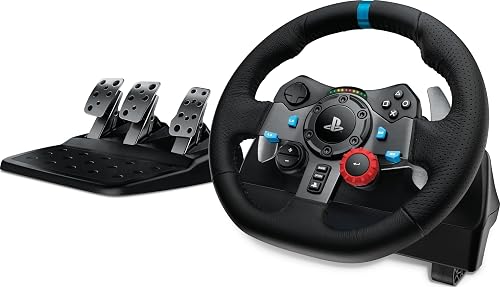
The Thrustmaster T128 is the leanest sensible way in. It delivers force feedback, uses magnetic paddle shifters and a magnetic two pedal set that resists wear over time, and is officially licensed for PlayStation 5 and PlayStation 4 while also running on Windows PC. Its quick attachment system clamps to a desk or table, so you can start racing with the least fuss. The Logitech G29 sits just above it and adds a third pedal, giving you a clutch alongside the throttle and brake. It drives the rim through helical gears for a firm center, offers 900 degrees of rotation, and covers PlayStation 5, PlayStation 4, and PC. Xbox players should choose the G920 version instead.
Decide between them on pedals and platform. If you want the lowest cost and two clean magnetic pedals are enough, the T128 is the pick. If you want a clutch for H pattern practice and the option to add a shifter down the line, the G29 is worth the small step up. Reviewers who race both consistently describe durable wheels that communicate the important cues clearly, with detail arriving softened rather than sharp, which is a fair place for a new driver to start. For the wider field, see the best racing wheels under $200 and the best racing wheels under $300.
The mount: a rigid stand at entry cost
At the entry tier, a wheel stand gives you the most rigidity for the least money, and it is the single upgrade that makes an entry wheel feel better than its price. The GT OMEGA Apex uses a steel box tubing Y frame, adjusts for height and tilt, folds away for storage, and fits the common entry wheels including the G29, G920, and the Thrustmaster T300 family. A rigid frame stops the wheel walking across a desk under braking, which is the fastest way to make even a good entry wheel feel vague. If you would rather have a seat and a fixed driving position, a foldable cockpit is the alternative, though a bare stand keeps the entry cost lower. Compare options in the best racing wheel stands and read cockpit vs wheel stand vs desk mount.
The screen: do not buy one yet
At entry level, the screen is the easiest place to save. Race on the monitor or television you already own, at a sensible distance, and put every spare dollar into the wheel and mount instead. A single decent display is completely fine to learn on, and a bigger or curved screen returns far less than a rigid mount does at this stage. When the core rig is solid and you want more immersion, the best monitors for sim racing covers where to go next.
A coherent entry build
| Part | What to get at entry level | Why |
|---|---|---|
| Wheel and pedals | The Thrustmaster T128 for lowest cost, or the Logitech G29 for a clutch | Real force feedback and pedals in the box, nothing wasted |
| Mount | A rigid GT OMEGA Apex wheel stand | Most rigidity for the least money, keeps the feel honest |
| Screen | A monitor or television you already own | The tier saves most by skipping a new display |
| Extras | Shifter and handbrake later | Not foundations, add them once you race consistently |
Where the entry tier ends
Knowing when to leave the tier saves you from buying twice. The signs are consistent: you want the smoother, more detailed feel of a direct drive base, you want a load cell brake that measures pressure rather than travel, or you find the entry wheel no longer teaches you anything new. When that happens, the next step is a budget direct drive bundle and a frame stiff enough to hold it. Until then, an entry setup is not a compromise, it is the right tool for building skill. When you are ready, our sim racing setup under $500 and sim racing setup under $1000 guides map the tiers above.
Who this setup suits, and who should skip it
| This setup is right if | Skip it and spend more if |
|---|---|
| You want the least money that still buys honest force feedback | You already know you want direct drive from the start |
| You race on PlayStation or PC and own a screen already | You need a load cell brake for serious braking practice |
| You are happy to add a shifter or handbrake later | You want a permanent, highly rigid cockpit right away |
| You value a rigid mount over a bigger display | You race on Xbox and need the G920 or an Xbox licensed wheel |
How these picks score
The WSR Score reflects verified buyer ratings gathered and normalized on a consistent scale, not an editorial rubric. You can read what goes into it on How We Review. At the entry tier these are the parts owners rate highly and keep, which is the reassurance you want when spending as little as possible.
Your next step
Choose the T128 or G29, bolt it to a rigid stand, and race on the screen you own. That is the honest entry setup, and it leaves your money where it matters. When the wheel starts to hold you back, direct drive vs belt vs gear driven wheels explains what the next step buys, and Getting Started has the fundamentals to build on.