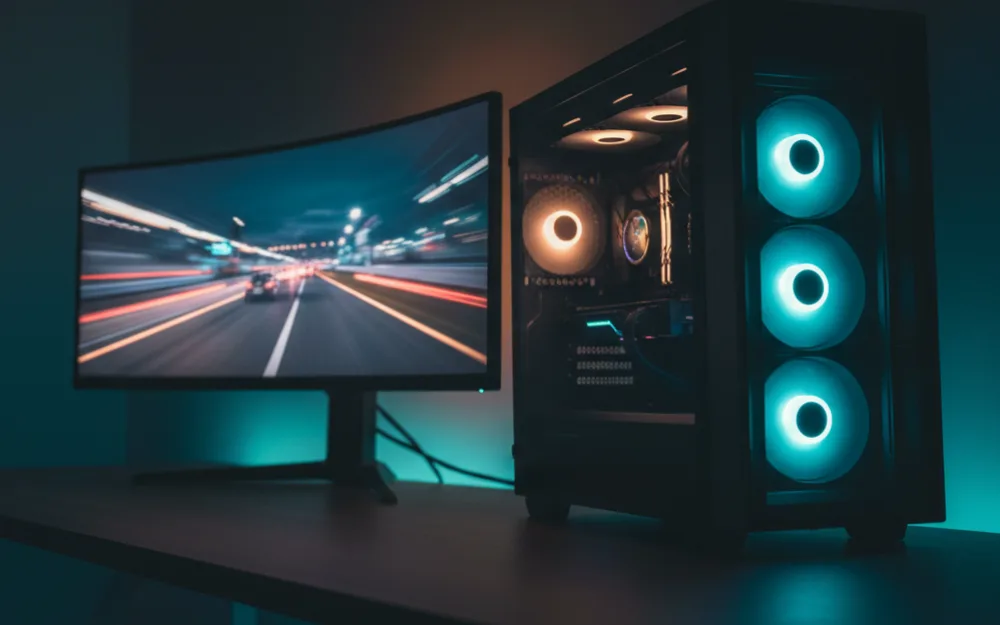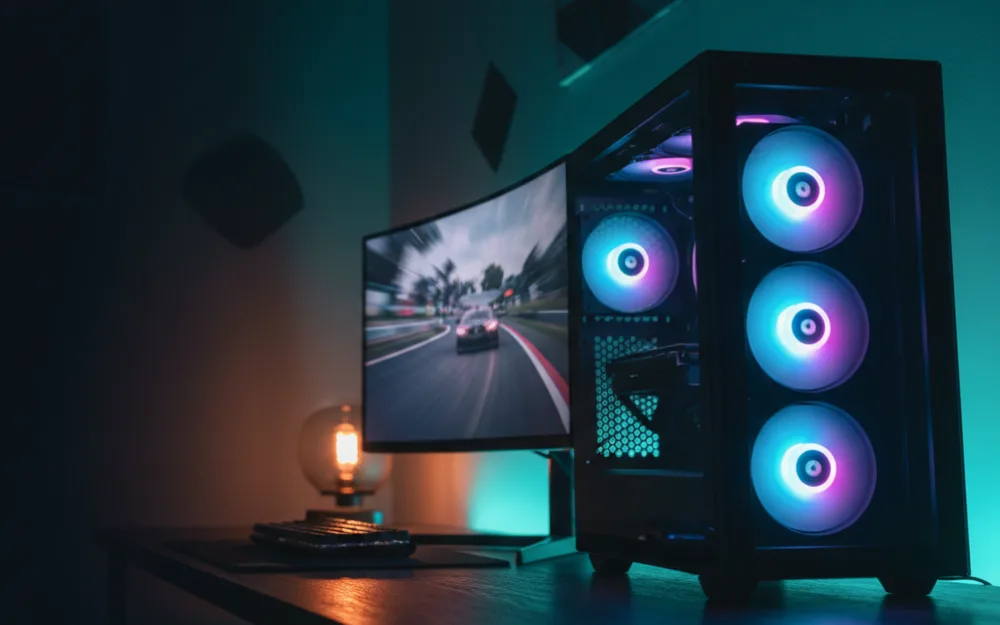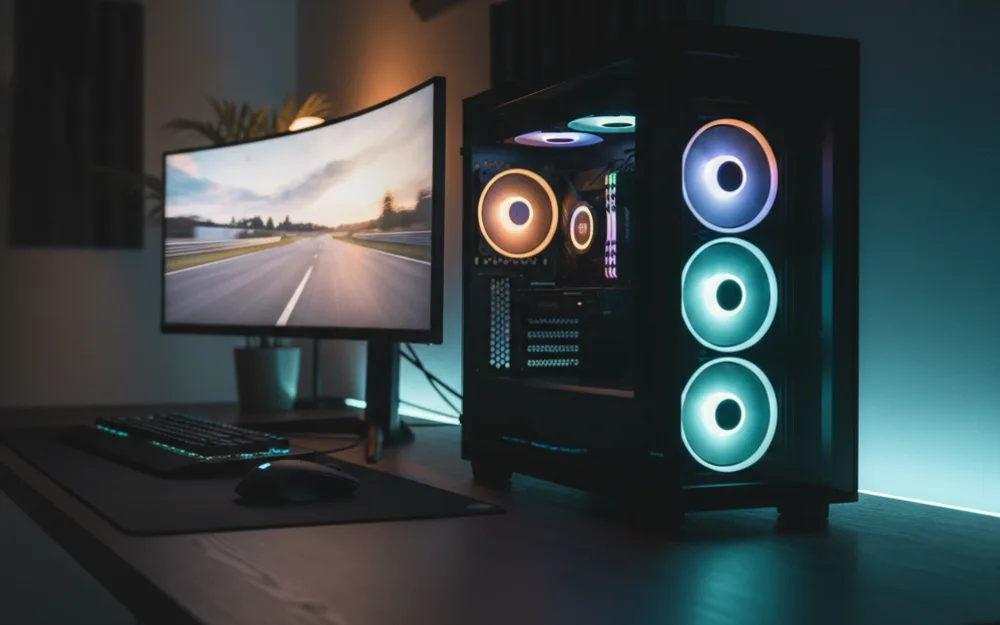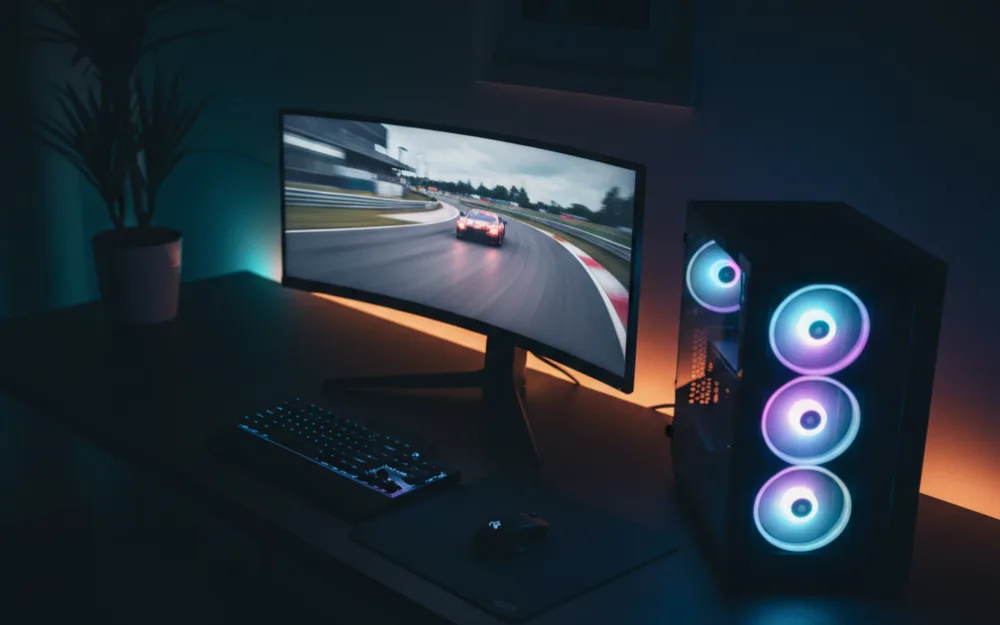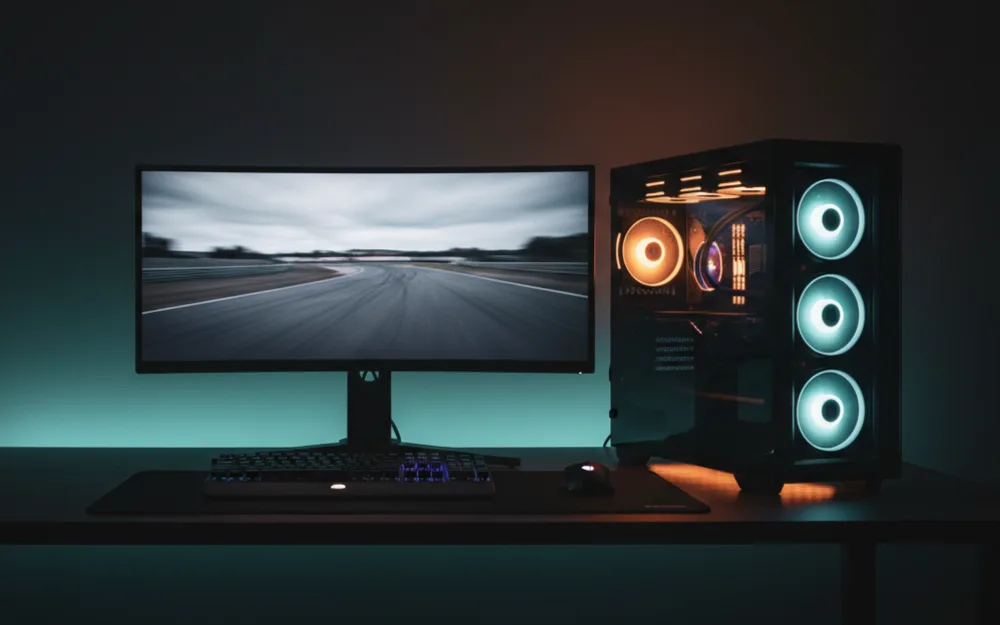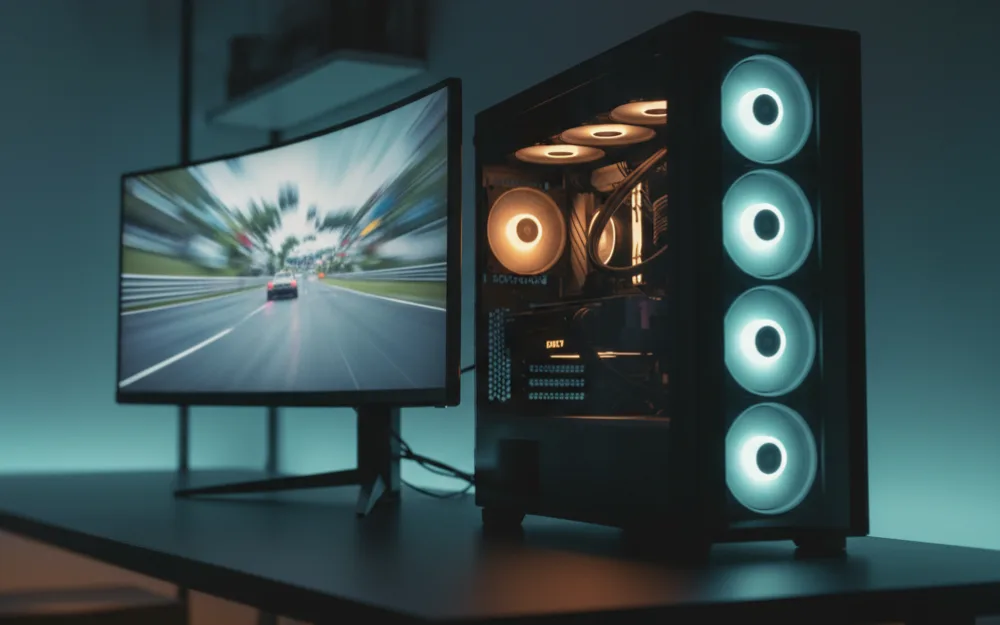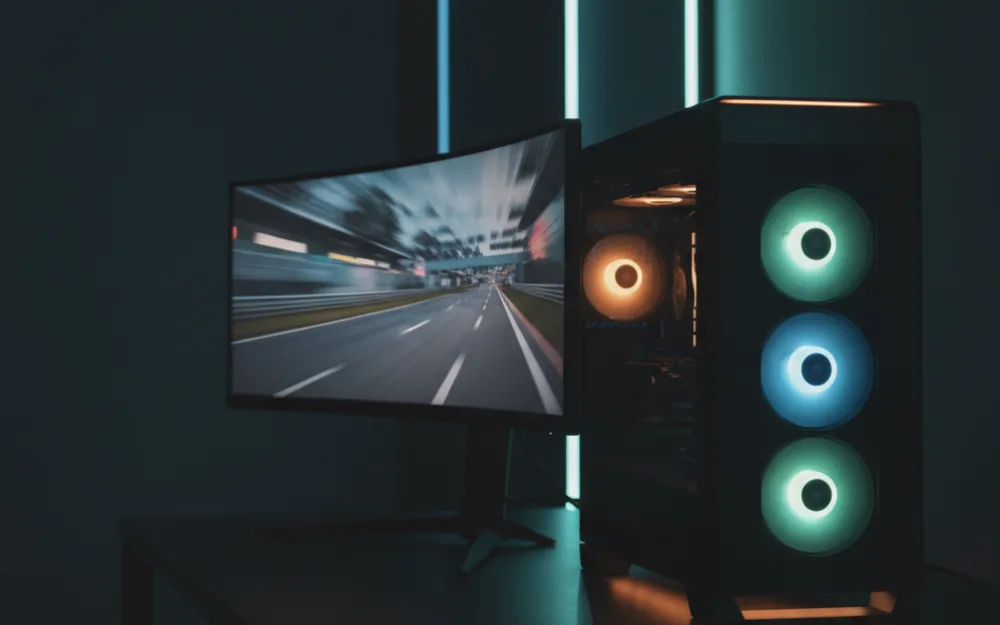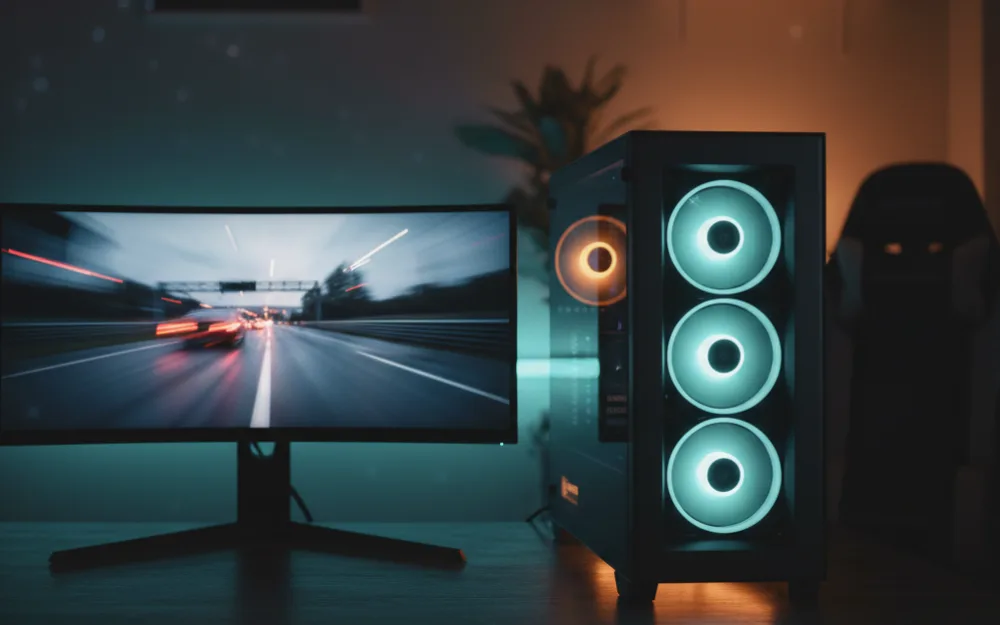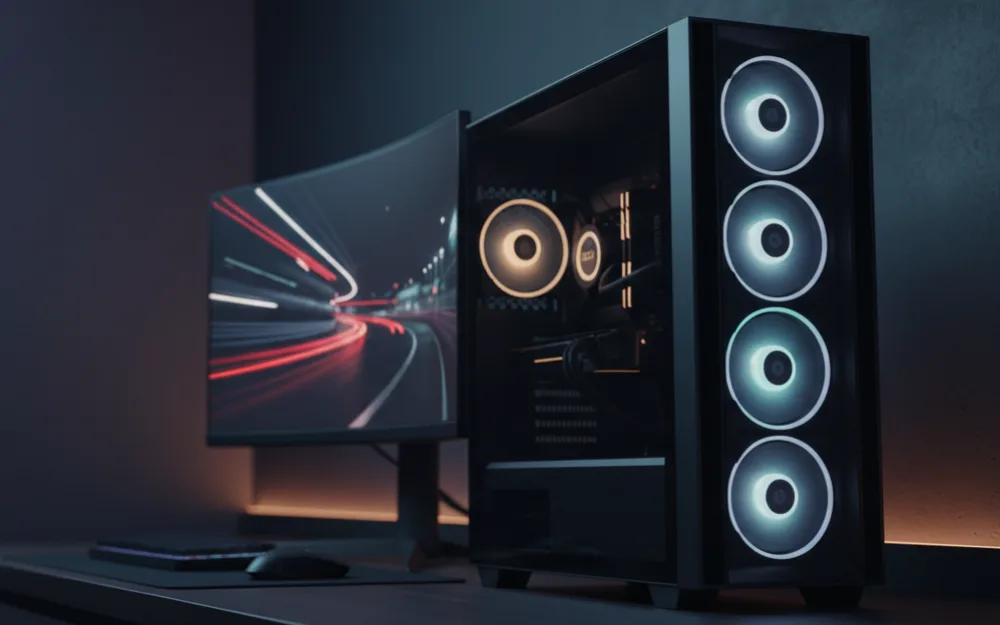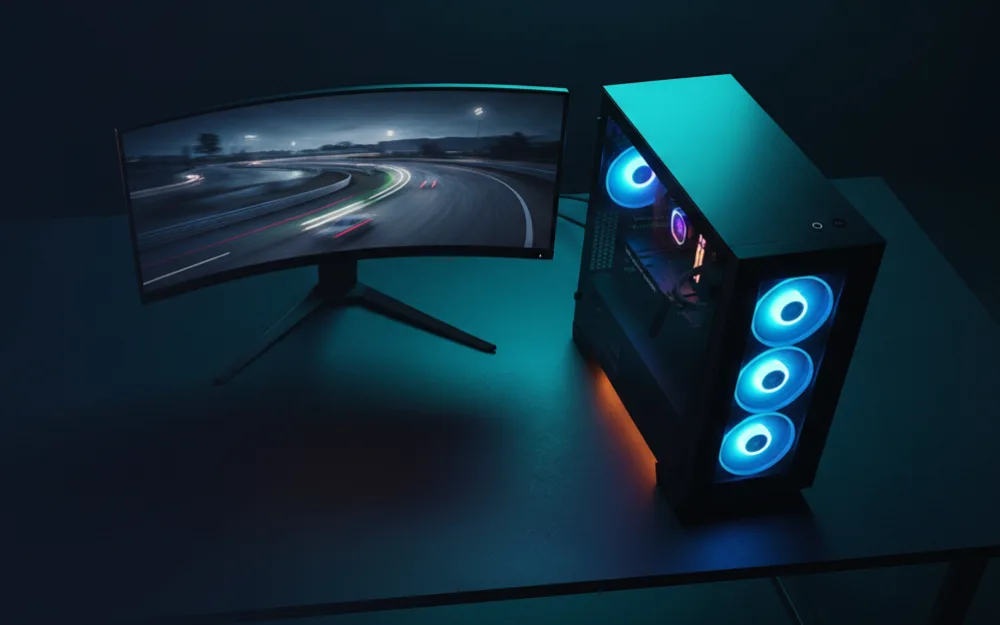

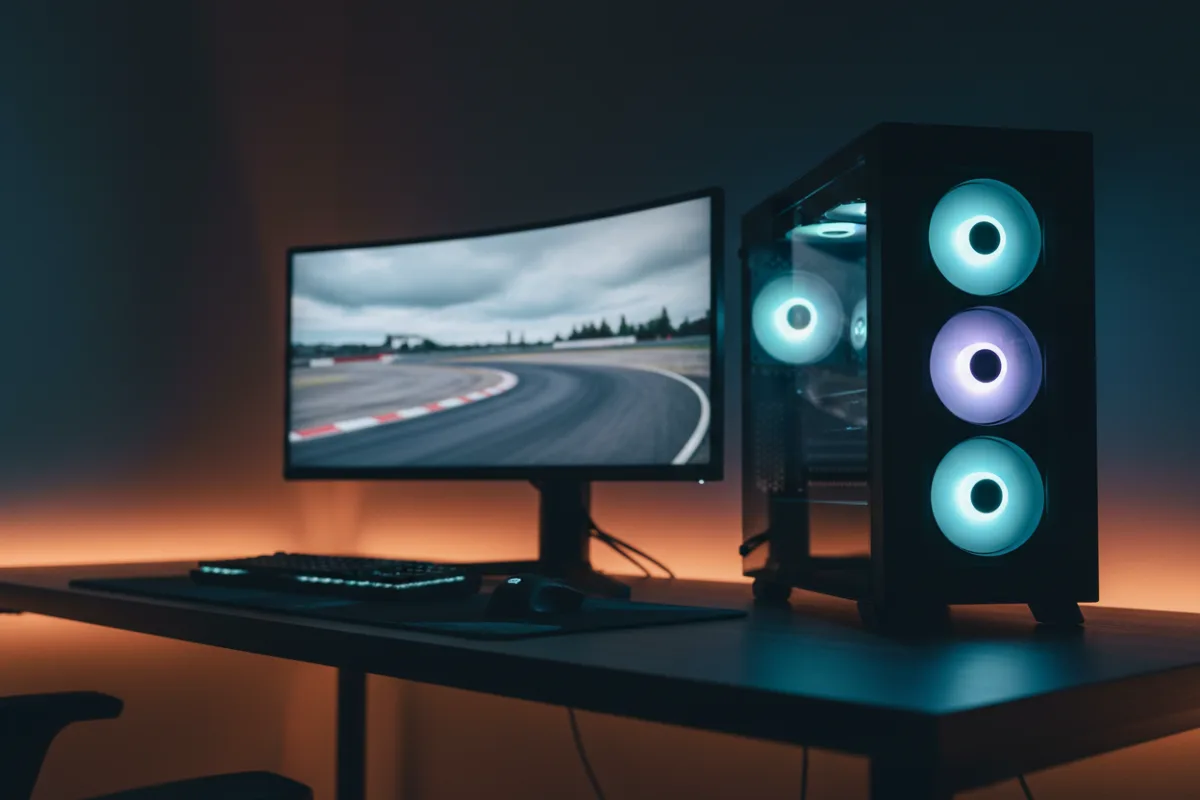

The Skytech Rampage pairs an Intel Core i7 14700F with an NVIDIA GeForce RTX 4070 12GB, positioned as a mid to upper tier prebuilt tower with 360mm liquid cooling and a large 2TB SSD. For a sim racer it lands in a useful spot: enough GPU for a single high refresh monitor at 1440p, with cooling and storage headroom that a lower tier build usually trims to hit its price. The trade off to weigh sits in the memory, which Skytech lists at 16GB, less than the 32GB many builds at this tier now ship with.
We compared Skytech’s listed specifications with measurements reviewers report for this CPU and GPU pairing and with recurring owner feedback, and you can read how we review. If GPU tiers and VRAM are unfamiliar, start with the Getting Started category.

At a glance
| Spec | Skytech Rampage |
|---|---|
| CPU | Intel Core i7 14700F, 20 cores and 28 threads, up to 5.4 GHz |
| GPU | NVIDIA GeForce RTX 4070, 12 GB (GDDR6X per Skytech; card brand may vary) |
| RAM | 16 GB DDR5 5200 MHz |
| Storage | 2 TB NVMe SSD |
| Cooling | 360mm liquid AIO, ARGB fans |
| Power and networking | 750W Gold PSU, Wi-Fi 802.11ac, Windows 11 Home |
| Warranty | 1 year parts and labor, lifetime technical support |
The RTX 4070 and Core i7 14700F: what resolution this drives
The RTX 4070 is a 40 series Ada card carrying 12 GB of memory (Skytech lists GDDR6X, though NVIDIA also permits GDDR6 versions of this GPU), and that extra VRAM over an 8 GB entry card is what lets it hold texture heavy sim tracks at higher settings without the memory pressure that forces compromises lower down the lineup. For sim racing this GPU tier is a comfortable match for a single monitor at 1440p and high refresh, and it has the headroom to push a demanding sim at that resolution in a full grid where a weaker card would start to stumble. Skytech backs it with the Core i7 14700F, a 20 core, 28 thread chip Intel rates up to 5.4 GHz, which is a strong pairing for sim racing since these titles lean on fast per core performance to keep frame pacing steady when the grid fills up. Reviewers who evaluate this class of build consistently note that a 14700F rarely holds back a 4070 in gaming workloads, so the GPU sets the ceiling here.
Cooling, storage, and the memory ceiling
The 360mm liquid AIO cooler is the standout inclusion at this tier, since a large radiator gives the 14700F room to hold its boost clocks through the long sessions sim racers run, where an air cooler on a hot chip can throttle back. The 2 TB NVMe SSD is generous as well, with space for several large sim titles plus their track and car content packs without the shuffling a 1 TB drive forces. The catch is the memory. Skytech lists 16 GB of DDR5, and the retail listing’s memory fields conflict (a 16 GB maximum alongside four slots), so confirm with Skytech how the modules are installed before planning an upgrade. 16 GB is workable for sim racing on its own, but it leaves less headroom than a 32 GB build if you run comms, telemetry overlays, and stream capture at the same time.
Connectivity and ports
Skytech lists 8 total USB ports across USB 2.0, 3.0, and 3.2 Gen 1, which is a healthier allotment than the entry tier towers in this class and leaves room for a wheel, pedals, shifter, and a headset without immediately reaching for a hub. Video output covers one HDMI and one DisplayPort to the RTX 4070, and both Wi-Fi 802.11ac and wired Ethernet are included. A free gaming keyboard and mouse ship in the box, and the tower is assembled in the USA with a front mesh panel feeding the intake. The 750W Gold rated power supply leaves comfortable headroom over what a 4070 build draws, which matters for stability during long sessions and gives some margin if you upgrade the GPU down the line.
Pros and cons
- RTX 4070 with 12 GB of VRAM is a comfortable match for 1440p high refresh sim racing
- Core i7 14700F brings 20 cores, 28 threads, and strong per core speed for steady frame pacing
- 360mm liquid AIO gives the CPU room to hold boost through long sessions
- 2 TB NVMe SSD fits several large sim titles and their content packs
- 8 USB ports leave room for a full sim rig without an immediate hub
- 16 GB of memory is modest for this tier, and the listing’s conflicting slot and maximum fields make the upgrade path unclear
- Wi-Fi is 802.11ac rather than a newer Wi-Fi 6 or 6E standard
Who it is for
This suits a sim racer running a single high refresh monitor at 1440p who wants an RTX 40 series GPU with the cooling and storage headroom to match. The 360mm AIO and 2 TB SSD make it a good fit for someone who values long session stability and space for a large sim library over the last increment of GPU tier.
Who should skip it
Skip this build if you plan heavy multitasking alongside your sim, since 16 GB of installed memory gives less room than a 32 GB tower for comms, overlays, and capture running together. It is also not the pick if you want the newest GPU generation, since a 50 series card brings features the RTX 4070 does not, or if triple monitors or a high resolution VR headset are your target, where more memory and a higher GPU tier both help.
How it scores
The WSR Score shown above reflects verified buyer ratings gathered and normalized on a consistent scale, not an editorial rubric. You can read what goes into it on How We Review.
Alternatives worth a look
If you want double the memory and a step to the newest GPU generation, our MSI Codex R2 review covers a 50 series build with 32 GB of RAM. For a brand tower with onsite service, see our Alienware Aurora R16 review. Browse the full field in best gaming PC for sim racing, or start with the Gaming PCs for Sim Racing category, and pair the right panel to this GPU tier with our best monitors for sim racing roundup.