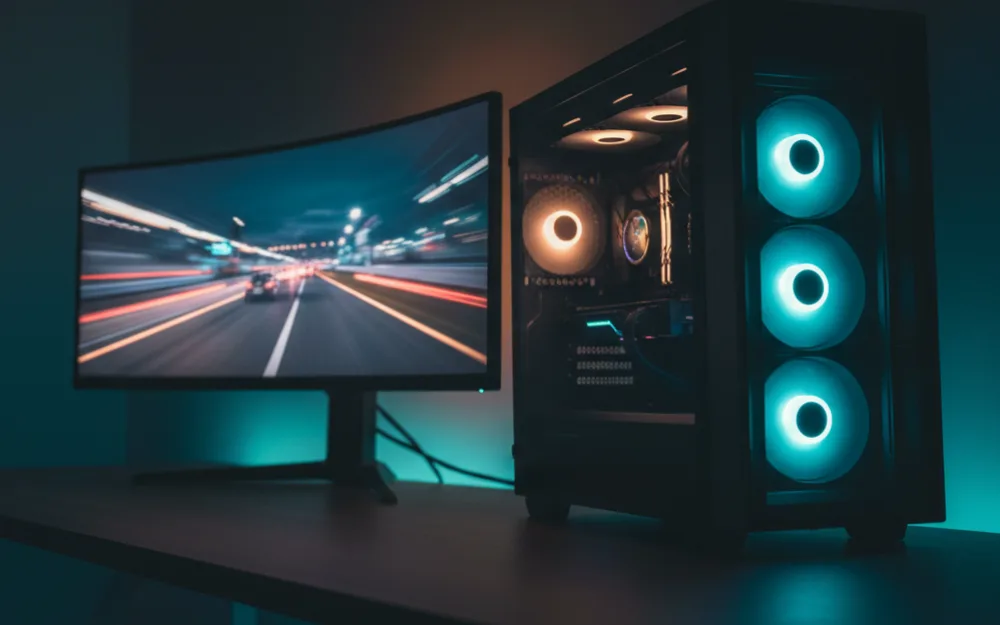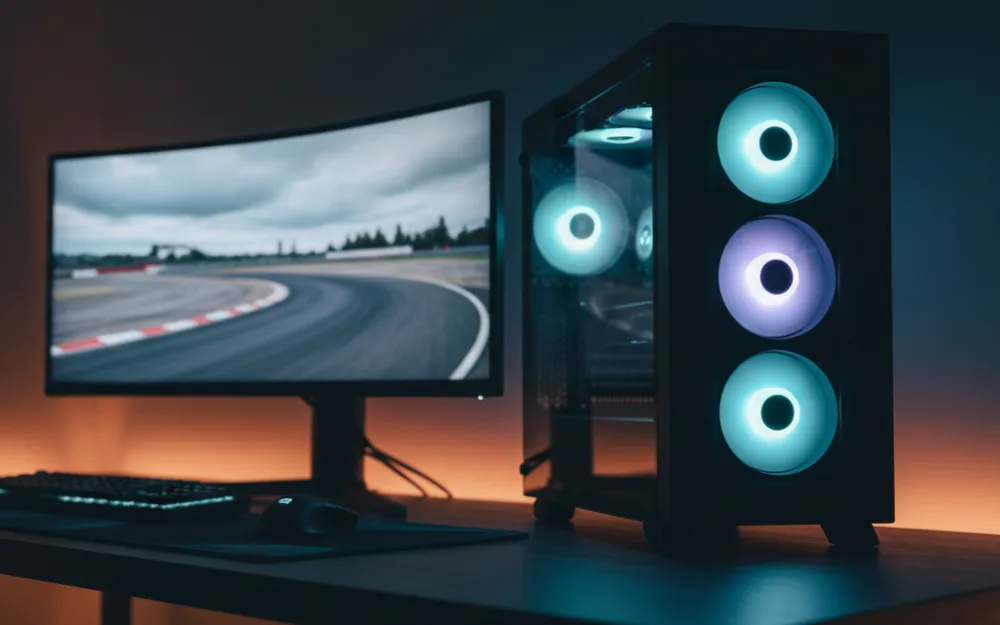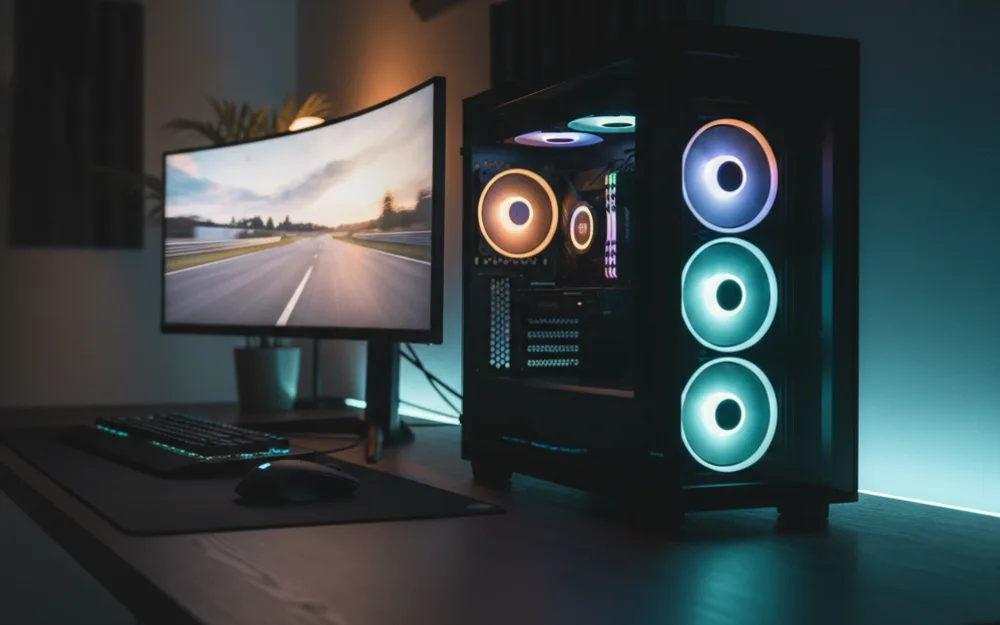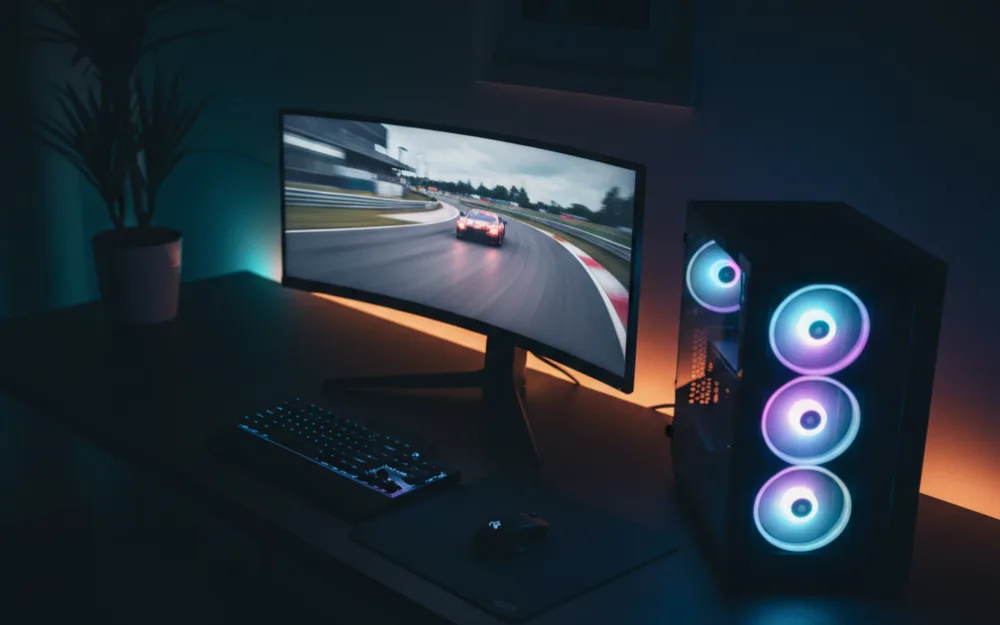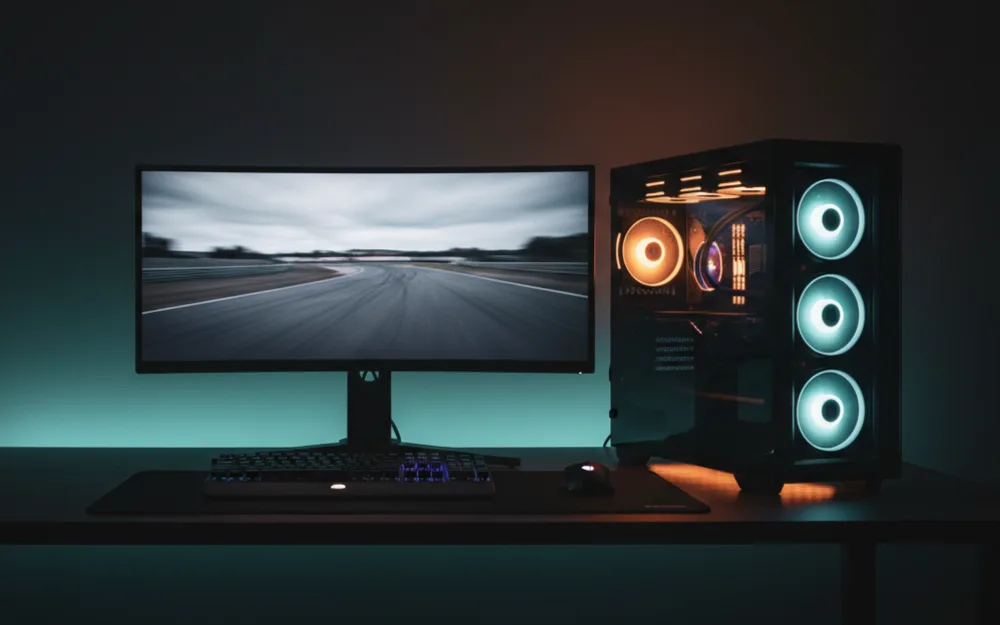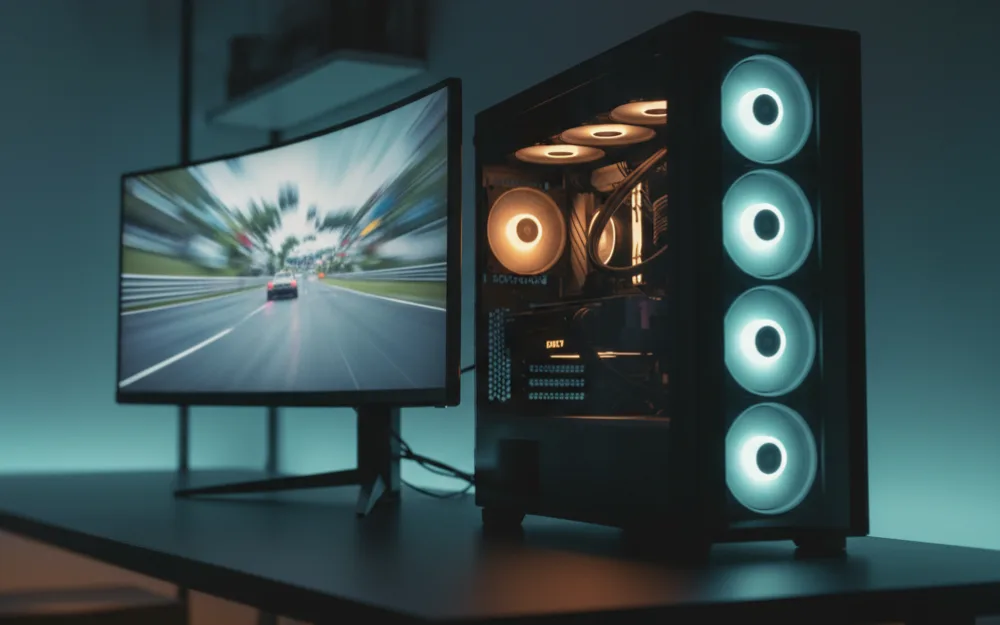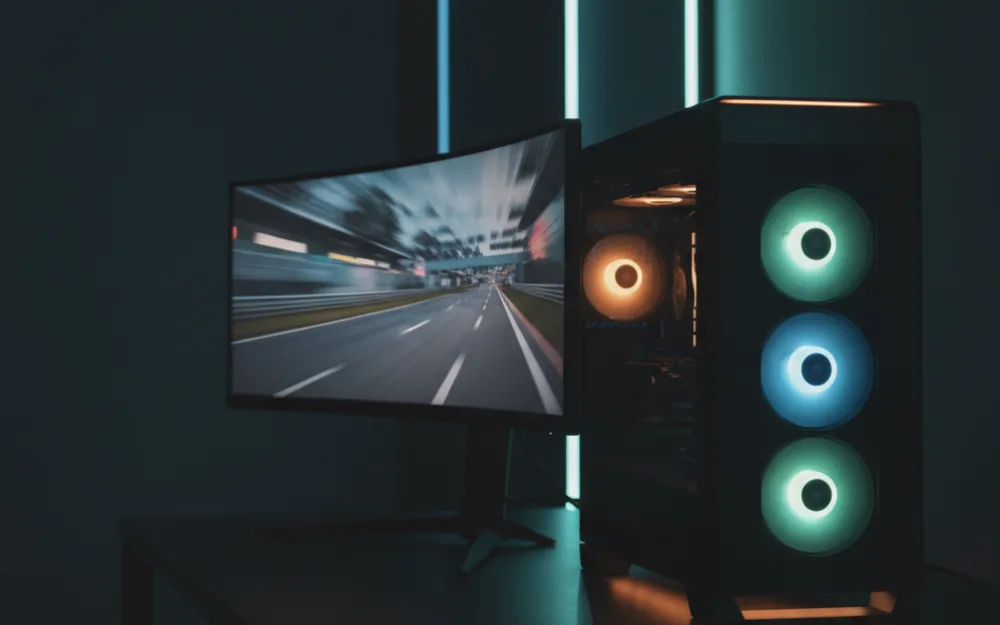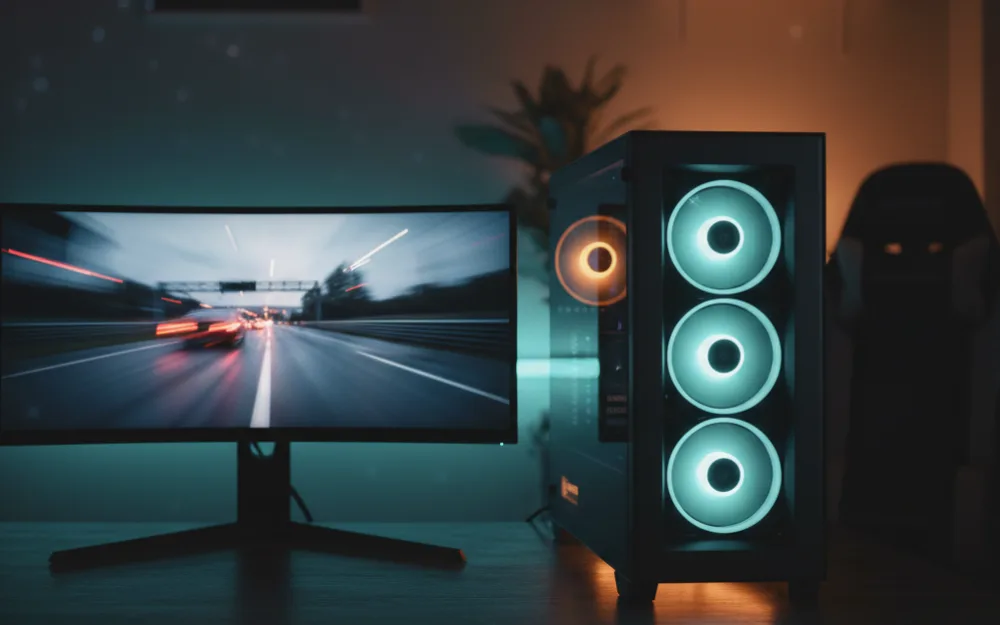


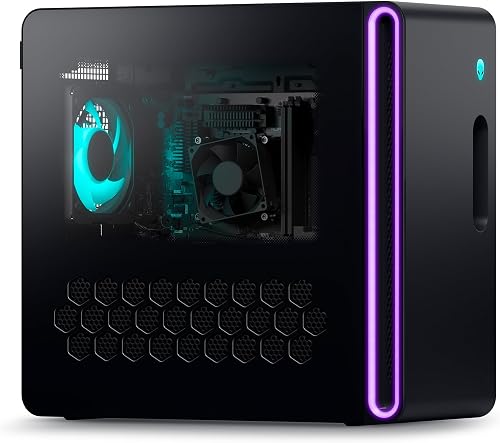
The Alienware Aurora R16 pairs an Intel Core i7 14700F with an NVIDIA GeForce RTX 4070 Super, 32 GB of DDR5 memory, and a 1 TB SSD, sold as a brand built tower with in home service rather than a boutique prebuilt. For a sim racer the draw is twofold: the RTX 4070 Super sits a tier above a plain 4070, and the 32 GB of memory gives real multitasking headroom. What you weigh against that is a premium brand price and a smaller starting SSD than some rivals ship.
We compared Alienware’s listed specifications with measurements reviewers report for this CPU and GPU pairing and with recurring owner feedback, and you can read how we review. If GPU tiers and VRAM are new terms, start with the Getting Started category.
At a glance
| Spec | Alienware Aurora R16 |
|---|---|
| CPU | Intel Core i7 14700F |
| GPU | NVIDIA GeForce RTX 4070 Super, 12 GB GDDR6X |
| RAM | 32 GB DDR5 |
| Storage | 1 TB SSD |
| Cooling and power | 12 phase voltage regulation, airflow focused chassis |
| Software and lighting | Alienware Command Center, AlienFX RGB |
| OS and warranty | Windows 11 Home, 1 year onsite and in home service |
The RTX 4070 Super and Core i7 14700F: what resolution this drives
The RTX 4070 Super is a step up from a standard 4070 within NVIDIA’s 40 series Ada lineup, carrying more compute cores while keeping the same 12 GB of GDDR6X memory. For sim racing that extra headroom makes it a confident match for a single high refresh monitor at 1440p, with enough margin to sustain frame rates in a full grid where a plain 4070 works harder to keep pace. Alienware pairs it with the Core i7 14700F, a chip whose fast per core performance suits sim titles that lean on the CPU to hold steady frame pacing as the field fills. Reviewers who evaluate this class of build note that the 4070 Super sits comfortably above the base 4070 for gaming, so the choice between them comes down to how much of a margin you want at 1440p and whether you plan to push toward higher resolutions later.
Memory, storage, and multitasking headroom
The 32 GB of DDR5 memory is the practical differentiator against 16 GB builds in this class. Sim racing on its own rarely fills 16 GB, but the moment you add voice comms, a telemetry overlay, and a stream capture tool running together, 32 GB is where the system stops feeling squeezed. That makes this a sensible pick for a racer who streams or runs a data overlay while driving. The offset is storage: Alienware ships a 1 TB SSD here, which is on the smaller side for a build at this level, so owners who install several large sim titles alongside their track and car content packs should plan on adding a drive sooner than a 2 TB build would demand.
Chassis, cooling, and the brand build
Alienware lists a 12 phase voltage regulation design meant to feed the 14700F clean, steady power under sustained load, and an airflow focused chassis with wider internal passages and managed cabling that the maker frames as quieter under load. Those are manufacturer claims worth treating as a starting point, but they point at the real advantage of a brand tower: a system engineered and supported as a whole rather than assembled from separate parts. The Alienware Command Center software handles performance profiles and monitoring, and AlienFX drives the RGB lighting across the case. The clearest brand benefit for many buyers is the warranty, which covers 1 year of onsite and in home service, a different proposition from mailing a tower back for repair. For a sim racer weighing where this GPU tier stretches, the 4070 Super and 32 GB of memory give it room to move beyond a single 1440p panel toward a triple monitor array or a mainstream VR headset, though those higher pixel loads are where you feel the difference against a higher tier card.
Pros and cons
- RTX 4070 Super sits a tier above a plain 4070 for a firmer 1440p high refresh margin
- 32 GB of DDR5 gives real headroom for streaming, comms, and telemetry alongside a sim
- Core i7 14700F brings the fast per core speed sim titles rely on for frame pacing
- 1 year onsite and in home service is a stronger support model than mail in repair
- 12 phase voltage regulation and an airflow focused chassis target steady sustained clocks
- 1 TB SSD is on the smaller side for a build at this level
- Brand pricing typically sits above a comparably specified boutique prebuilt
Who it is for
This suits a sim racer who wants a step above the base 40 series GPU tier for a single high refresh 1440p monitor, and who values 32 GB of memory for streaming or running a telemetry overlay while driving. The onsite and in home service also makes it a reasonable pick for a buyer who wants a supported brand system rather than a self serviced tower.
Who should skip it
Skip this build if storage capacity out of the box matters to you, since the 1 TB SSD will fill faster than a 2 TB rival with a large sim library. It is also not the pick if you want the newest GPU generation, since a 50 series card brings features the 4070 Super does not, or if you are working to a tight budget, where a boutique prebuilt often delivers similar core specs for less than the brand premium.
How it scores
The WSR Score shown above reflects verified buyer ratings gathered and normalized on a consistent scale, not an editorial rubric. You can read what goes into it on How We Review.
Alternatives worth a look
If you want more storage and liquid cooling at a boutique price, our Skytech Rampage review covers a 40 series tower with a 2 TB SSD and a 360mm AIO. For the newest GPU generation, see our MSI Codex R2 review and its 50 series card. Browse the full field in best gaming PC for sim racing, or start with the Gaming PCs for Sim Racing category, and match a panel to this GPU with our best monitors for sim racing roundup.