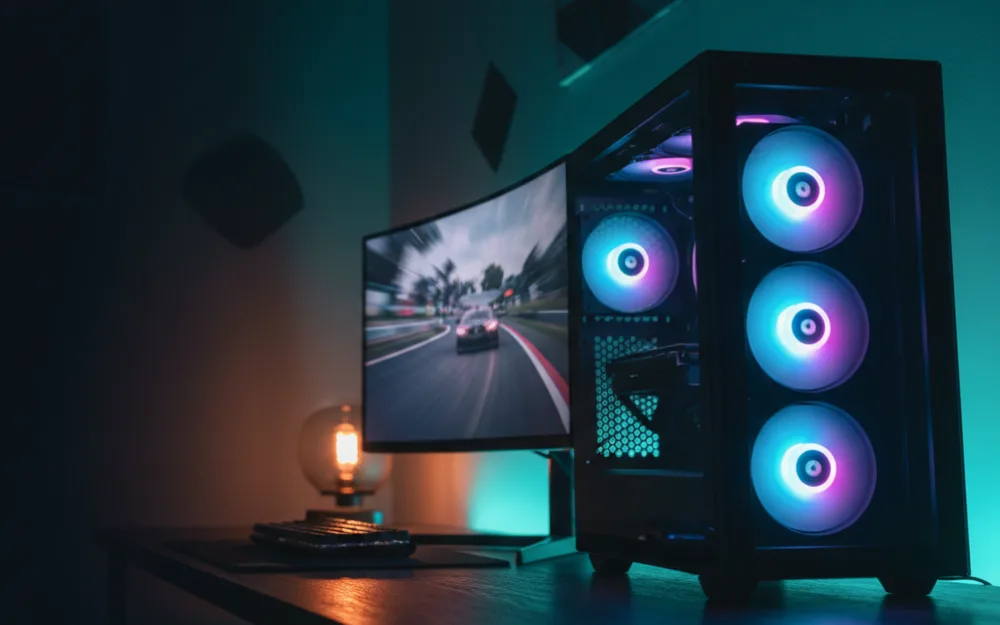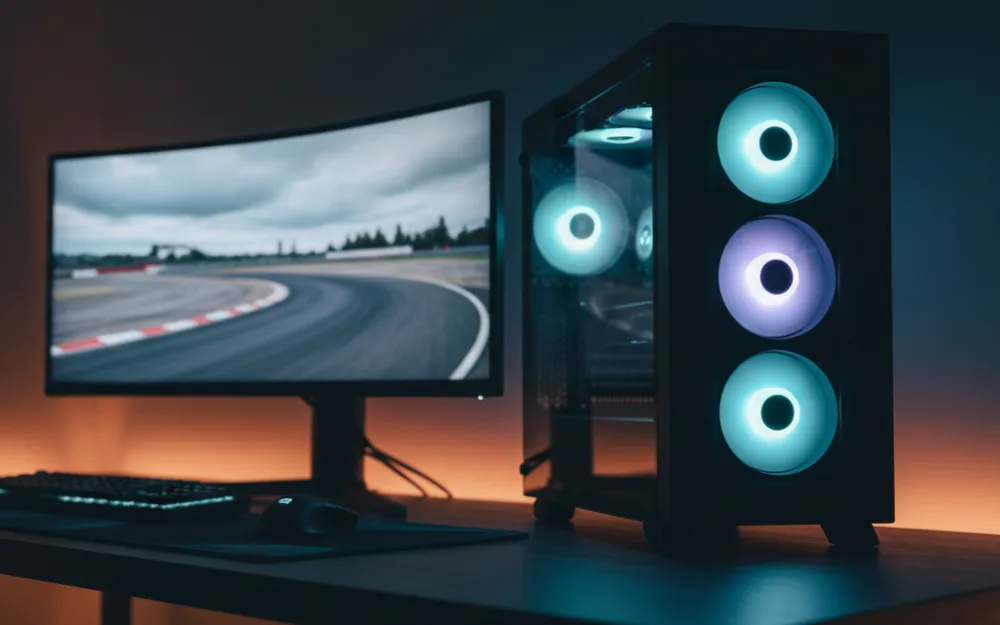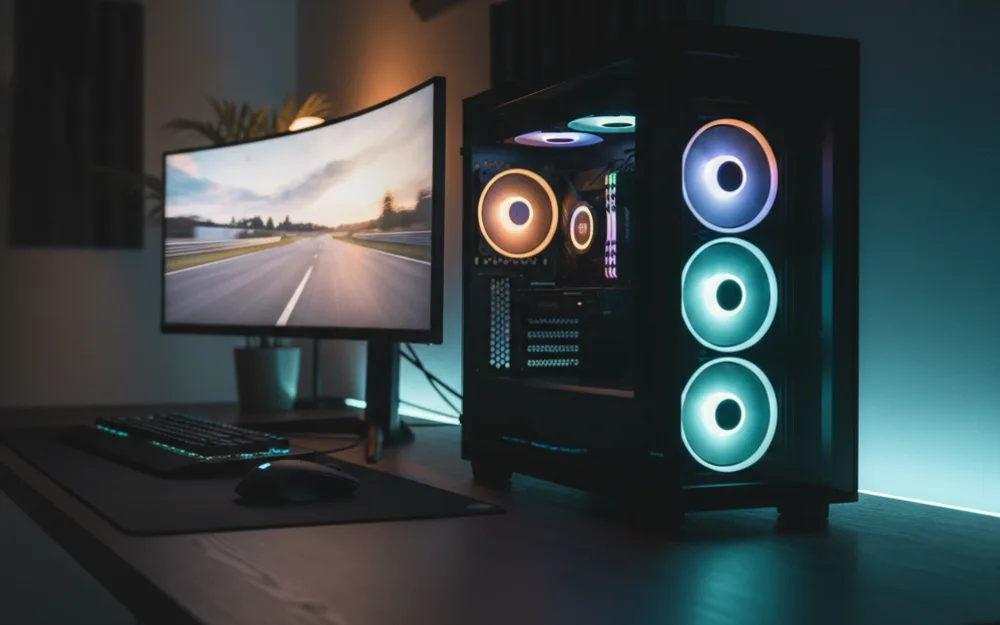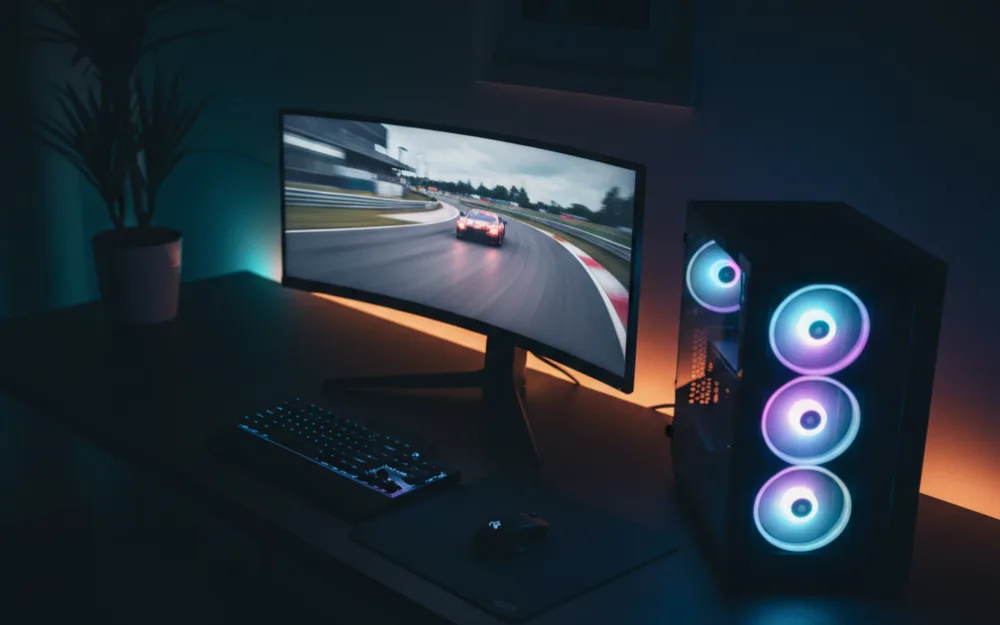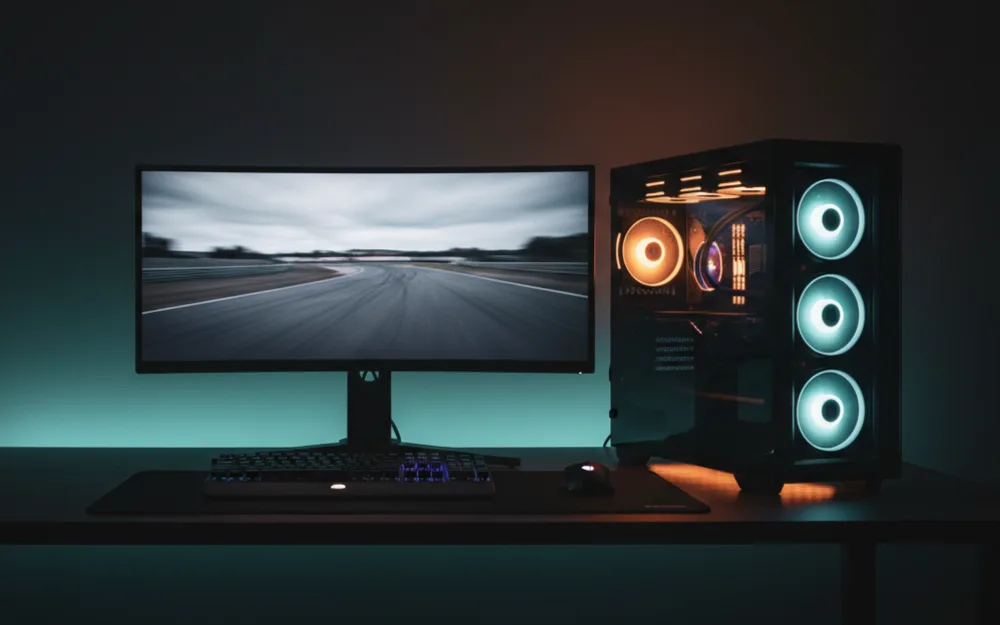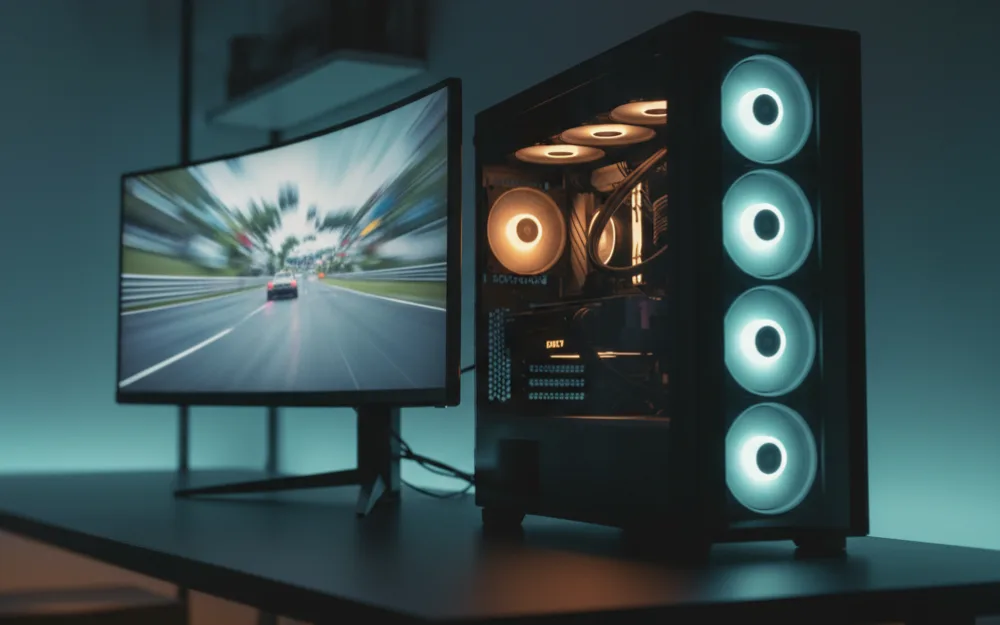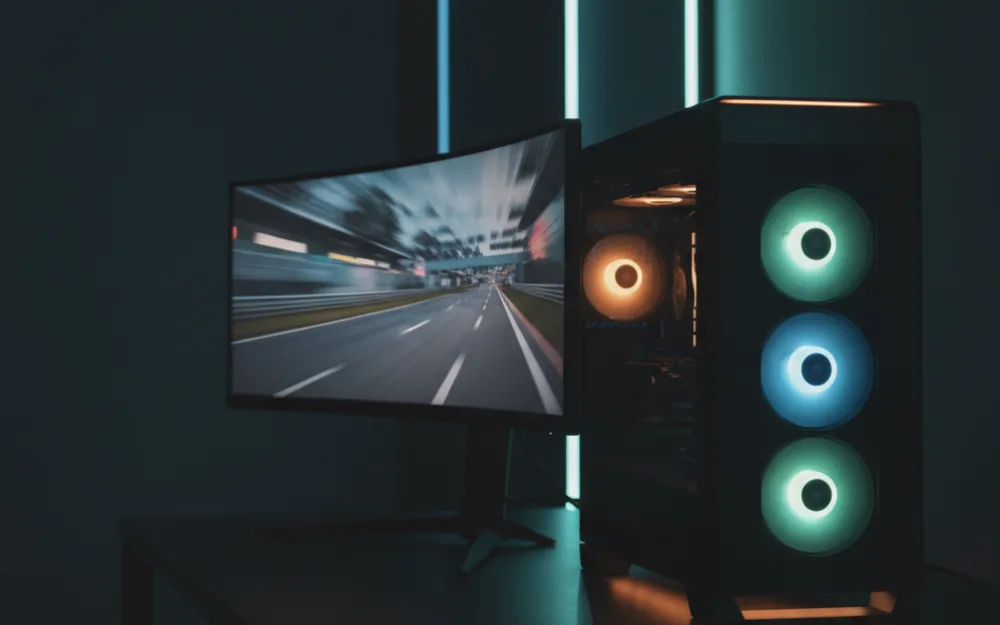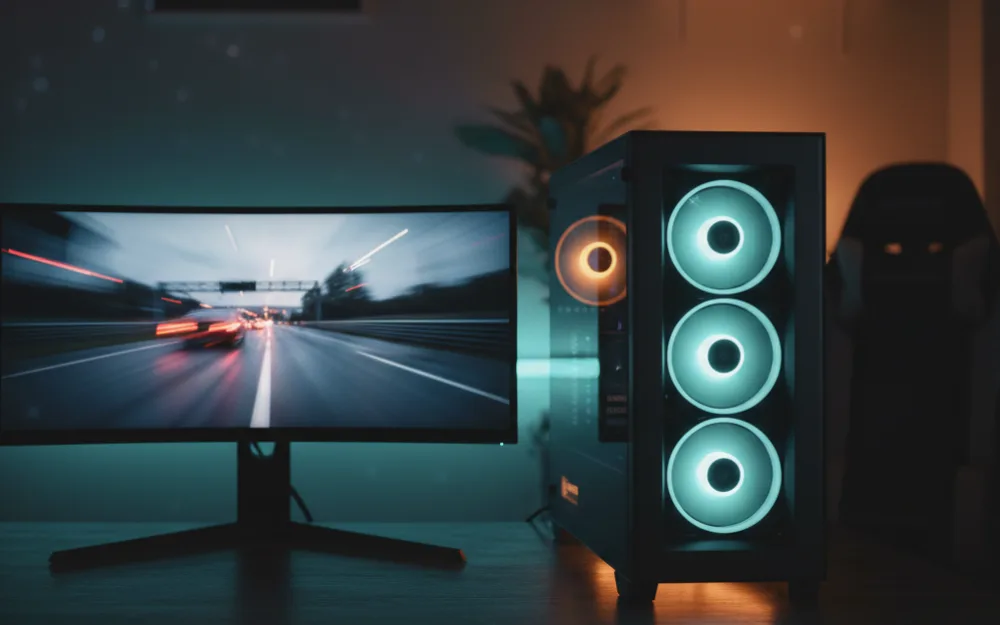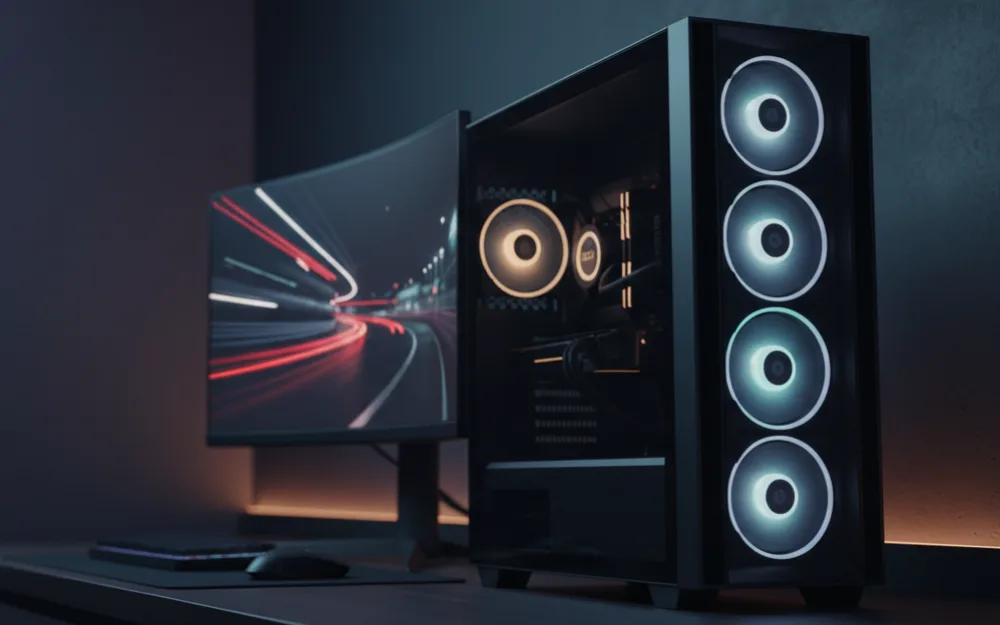


The MSI Codex R2 is a prebuilt tower built around an NVIDIA GeForce RTX 5070, MSI’s move to put a current 50 series GPU in a mainstream sim racing machine. It pairs that card with an Intel Core i5 14400F, 32 GB of DDR5 6000 memory, and a 1 TB NVMe SSD, cooled by a four fan air setup rather than liquid. For a racer the interest is the GPU generation: the RTX 5070 brings the newest NVIDIA feature set, including the DLSS 4 frame generation MSI lists, to a build that leads with the graphics card rather than the processor.
We compared MSI’s listed specifications with measurements reviewers report for this GPU and with recurring owner feedback, and you can read how we review. If GPU tiers, VRAM, and frame generation are new terms, start with the Getting Started category.

At a glance
| Spec | MSI Codex R2 |
|---|---|
| GPU | NVIDIA GeForce RTX 5070, 12 GB GDDR7 |
| CPU | Intel Core i5 14400F, up to 4.7 GHz |
| RAM | 32 GB DDR5 6000 MHz |
| Storage | 1 TB NVMe SSD |
| Cooling | Air, four fan airflow with RGB CPU cooler |
| Networking | Wi-Fi 6E, Windows 11 Home |
| Warranty | 1 year manufacturer limited |
The RTX 5070 and Core i5 14400F: what resolution this drives
The RTX 5070 is a 50 series card carrying 12 GB of newer GDDR7 memory, and its headline advantage over the 40 series is the feature set, including the DLSS 4 Multi-Frame Generation MSI lists for boosting frame rates. For sim racing this GPU tier is a strong match for a single high refresh monitor at 1440p, with the capability to reach toward 4K when settings are tuned. MSI pairs it with the Core i5 14400F rather than a Core i7, a choice that keeps the build focused on GPU spend. That i5 is a capable sim racing chip, since these titles reward fast per core speed more than a high core count, but it is a more modest processor than the Core i7 chips in higher tier towers, so the pairing leans on the GPU to set the ceiling. Reviewers who evaluate 50 series builds point out that an i5 rarely bottlenecks this class of card in gaming, though a heavier multitasker who also streams and captures may notice the difference.
Memory, cooling, and upgrade path
The 32 GB of DDR5 6000 memory is a genuine strength here, giving room for comms, telemetry overlays, and stream capture to run alongside a sim without the squeeze a 16 GB build feels. Retail spec sheets list a memory ceiling above the installed 32 GB, so there is headroom to expand later; check MSI’s current spec sheet for the exact maximum and slot count before you buy. Cooling is handled by a four fan air setup with an RGB CPU cooler, which MSI frames as holding consistent temperatures through long sessions. Air cooling on the i5 is a reasonable match, since the 14400F runs cooler than the hotter i7 chips that benefit most from a liquid loop. The 1 TB NVMe SSD is the tighter spec: it is quick, but a large sim library with several titles and content packs will reach that ceiling, so plan for a second drive if you keep many games installed.
Connectivity and networking
MSI lists 8 total USB ports across USB 2.0 and USB 3.2 Gen 1, enough for a wheel, pedals, shifter, and a headset without immediately reaching for a hub. Video output covers HDMI and DisplayPort to the RTX 5070, and networking steps up to Wi-Fi 6E, which adds the less congested 6 GHz band for lower latency than the older Wi-Fi standards in some rival towers. The build ships VR ready per MSI, with a keyboard and mouse in the box, and MSI Center collects the RGB, fan curve, and performance controls in one dashboard.
Pros and cons
- RTX 5070 brings a current 50 series GPU with 12 GB of GDDR7 and the DLSS 4 feature set
- 32 GB of DDR5 6000 gives strong headroom for streaming, comms, and telemetry
- A listed memory ceiling above 32 GB leaves an upgrade path
- Wi-Fi 6E adds the less congested 6 GHz band for lower latency
- Four fan air cooling is a sensible match for the cooler running i5
- Core i5 14400F is a more modest chip than the Core i7 in higher tier towers
- 1 TB SSD fills quickly with a large sim library, and warranty is a 1 year limited term
Who it is for
This suits a sim racer who wants the newest GPU generation and 32 GB of memory in a single high refresh 1440p build, without paying for a Core i7 the GPU does not strictly need for gaming. The Wi-Fi 6E and generous memory make it a fair fit for a racer who streams or runs a telemetry overlay while driving.
Who should skip it
Skip this build if you want the strongest CPU for heavy multitasking, since the Core i5 sits below the i7 chips in higher tier towers when you stack streaming, capture, and a sim together. It is also not the pick if a large out of the box SSD matters, since 1 TB fills faster than a 2 TB rival, or if you prefer liquid cooling and a longer warranty than the 1 year limited term. Buyers who lean on established owner feedback should note that this is a newer listing with limited reviews so far.
How it scores
The WSR Score shown above reflects verified buyer ratings gathered and normalized on a consistent scale, not an editorial rubric. You can read what goes into it on How We Review.
Alternatives worth a look
If you would rather put the spend into a Core i7 and liquid cooling on a 40 series card, our Skytech Rampage review covers that trade with a 2 TB SSD. For a brand tower with onsite service, see our Alienware Aurora R16 review. Browse the full field in best gaming PC for sim racing, or start with the Gaming PCs for Sim Racing category, and pair the right screen to this GPU with our best monitors for sim racing roundup.