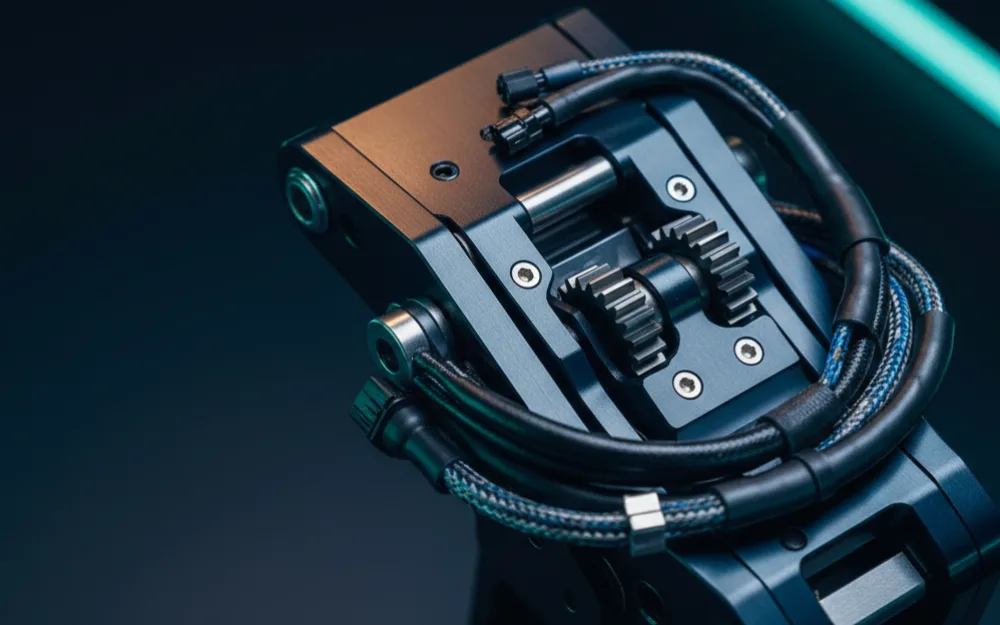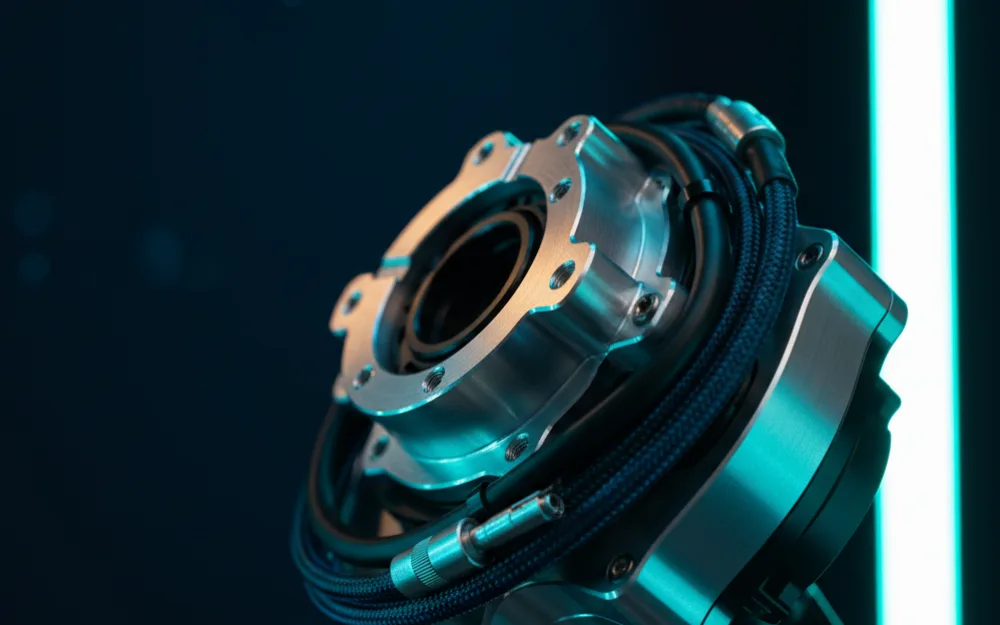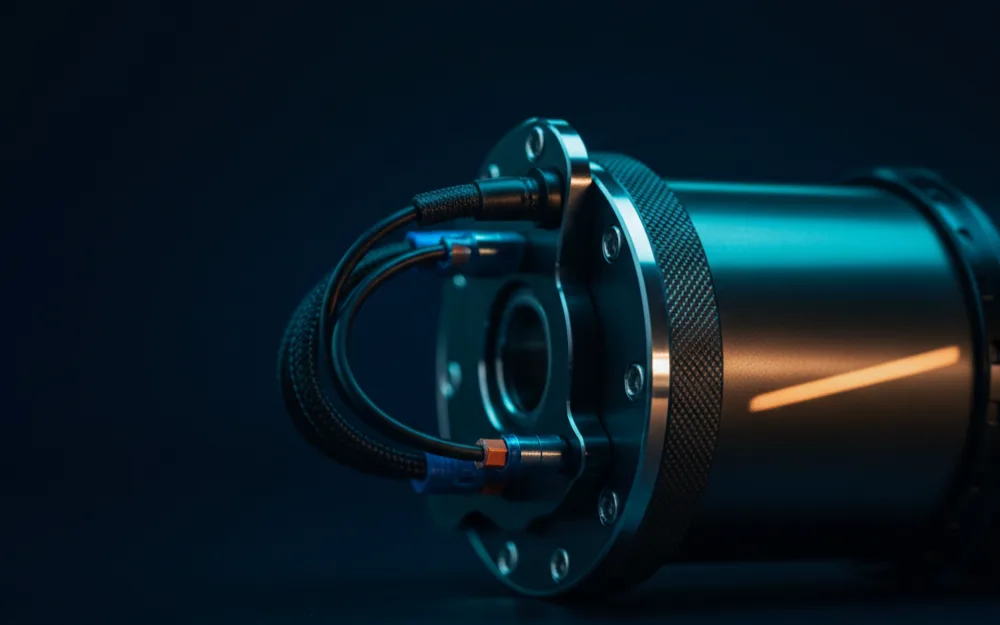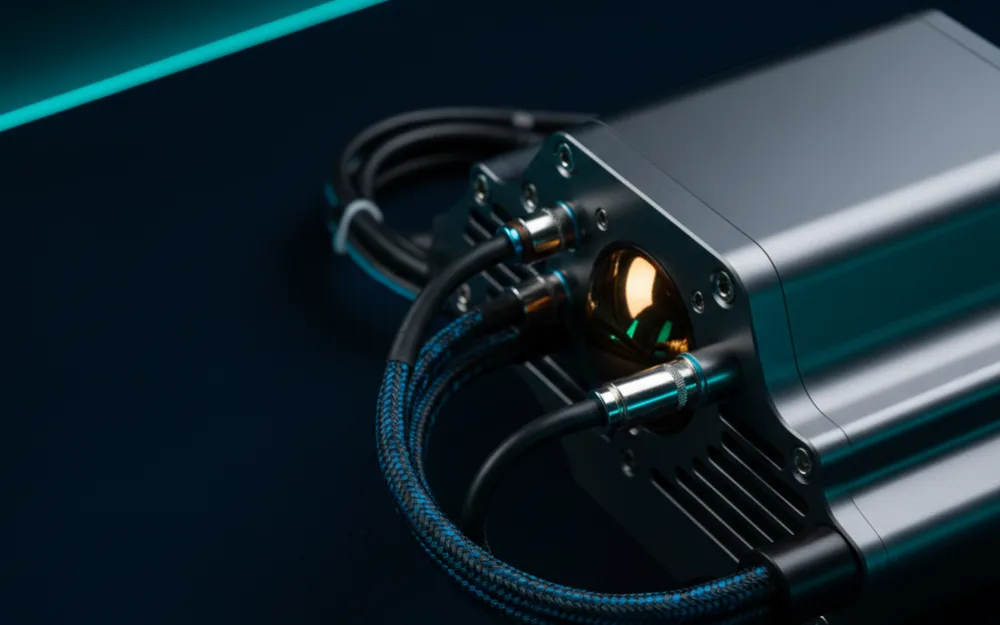

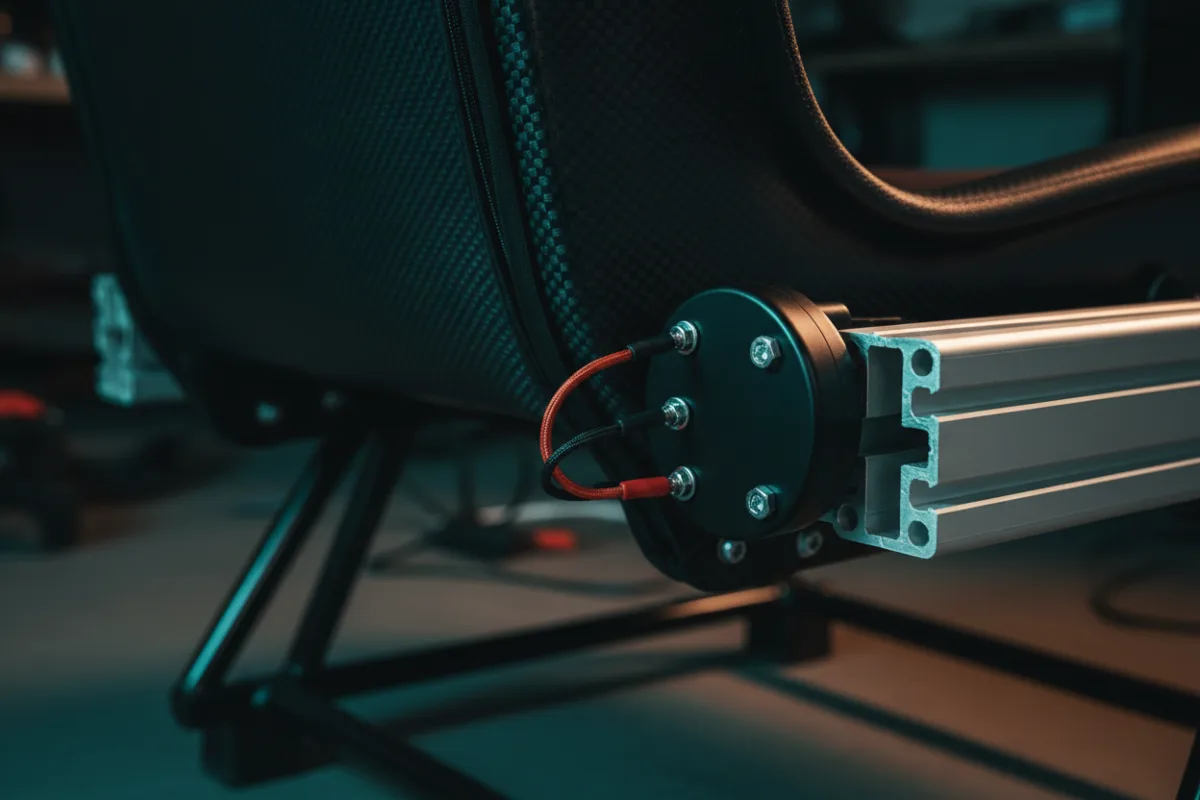

A bass shaker, also called a tactile transducer, is essentially a speaker with the cone removed: a voice coil moves a weight instead of moving air, and the vibration transfers into whatever the shaker is bolted to. Mounted under a seat or on a pedal plate, it turns low frequency signals into feedback you feel in your body rather than hear.
What it adds in sim racing
Engine RPM as a rumble that rises with revs, gear shifts as a thump, curbs and rumble strips through the seat, wheel lock and ABS through the pedals, and road texture through the wheel deck. On PC, software such as SimHub reads game telemetry and sends a specific signal to each shaker, so effects are precise and directional. On a console without a PC in the loop there is no telemetry access, so a shaker can only follow the game’s audio.
What you need
- One or more shakers: Dayton Audio BST-1 (50 W, 4 ohm) is the common starting point; the BST-300EX (300 W) is the high power option; ButtKicker units use a magnetic suspension design.
- An amplifier rated for the shaker’s impedance and power, such as a small mono amplifier for one unit or a two channel amplifier for stereo.
- On PC, SimHub or similar to generate effects from telemetry.
- Rubber isolation between the rig and the floor, or the whole house feels it.
Haptic pads
Products like the Next Level Racing HF8 use small vibration motors in a seat pad instead of a transducer. They need no amplifier and work on consoles through an audio jack, at the cost of a buzzing rather than thumping feel.
Related terms and guides
SimHub · Telemetry · Motion platform · Roundup: best bass shakers