
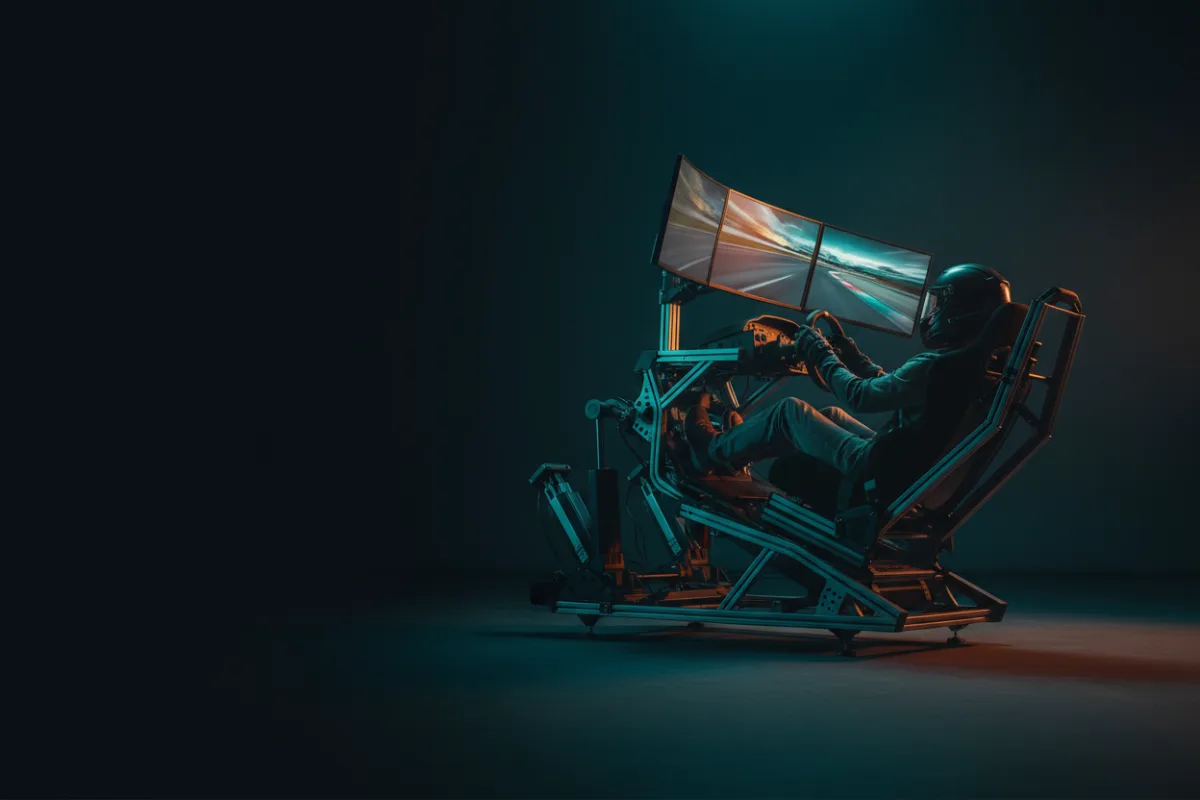

A motion platform is a set of motorized actuators that physically move the driver’s seat or the entire cockpit in response to game telemetry, simulating the pitch of braking and acceleration, the roll of cornering, and the jolts of curbs and bumps. It adds the body cues that a wheel and pedals cannot provide.
Types
- Seat movers: only the seat moves while the wheel and pedals stay fixed. Compact and less expensive, with a slightly artificial feel because the wheel does not move with you.
- Full platform: the entire cockpit, driver, wheel, and pedals move together. Next Level Racing’s Motion Plus, for example, is a two degree of freedom mover that sits under the whole cockpit; larger multi actuator rigs from specialist makers go further.
- Traction loss: a separate module that rotates the rear of the rig to simulate the back stepping out.
Degrees of freedom
Platforms are described by how many axes they move: two degrees of freedom (pitch and roll) is common at the entry level; three adds heave (vertical); six covers every translation and rotation. More axes cost more and need more space and a stronger PC.
What it needs
A cockpit designed to accept it, a PC (most motion software runs on PC, and only a few console games send telemetry out), software to map telemetry to movement, floor space and clearance, and a driver who accepts that the first sessions can be disorienting. Motion sits at the very top of the upgrade order; see our cost guide.
Related terms
Bass shaker · Telemetry · Aluminum profile cockpit · Roundup: best sim racing cockpits