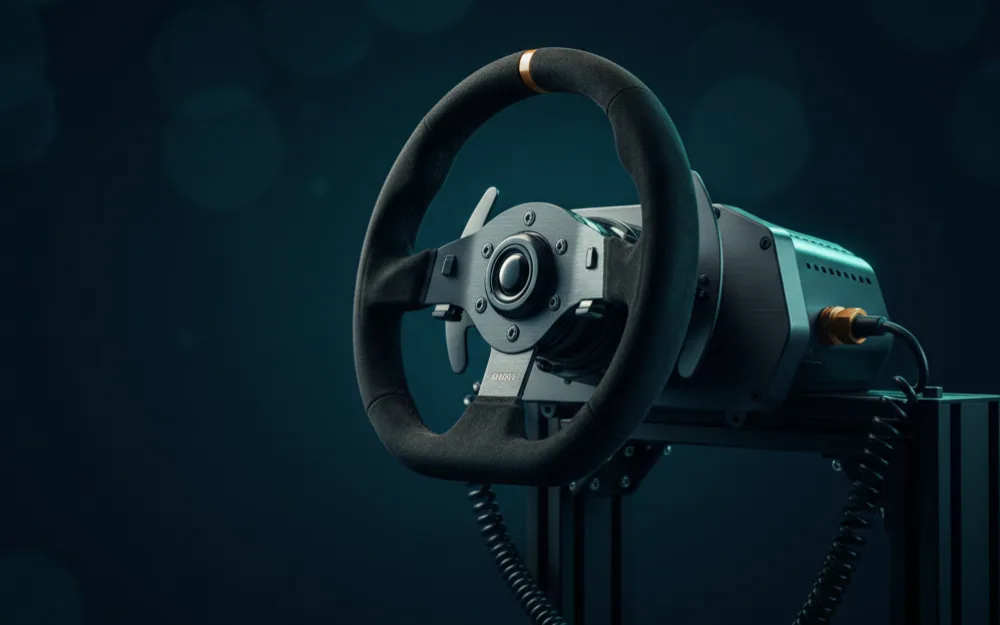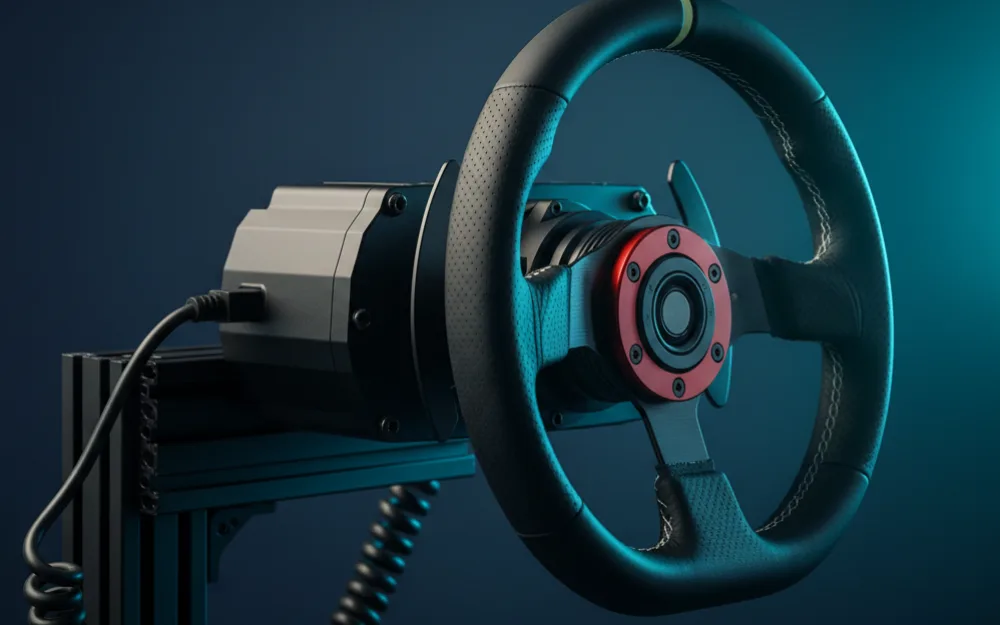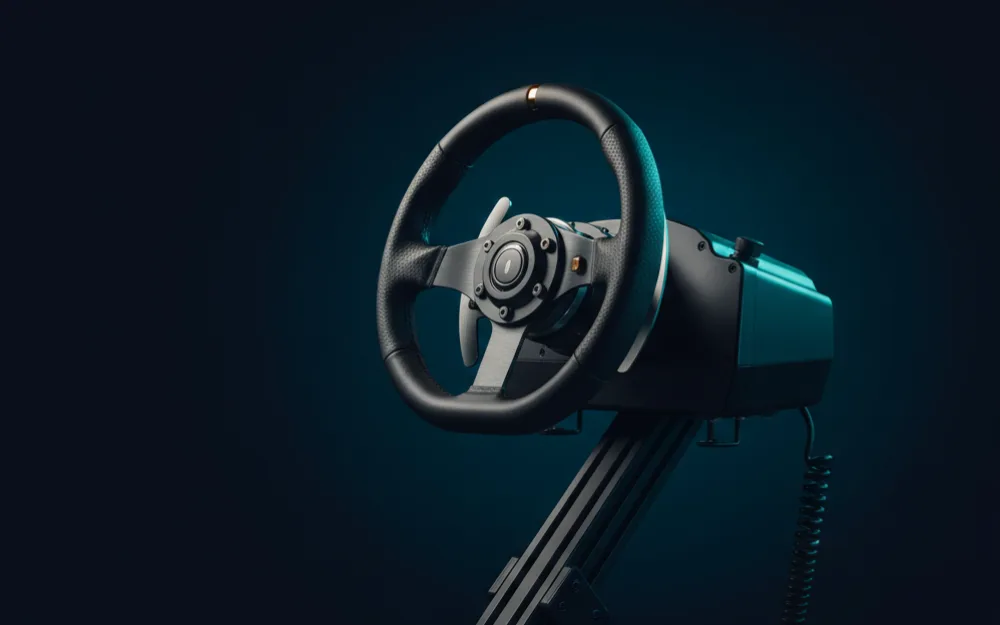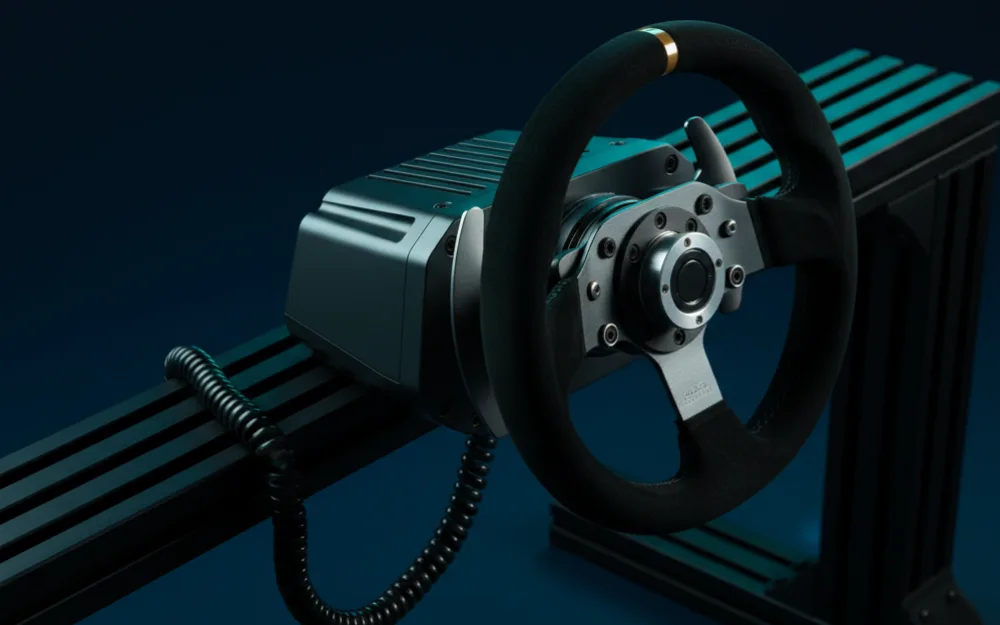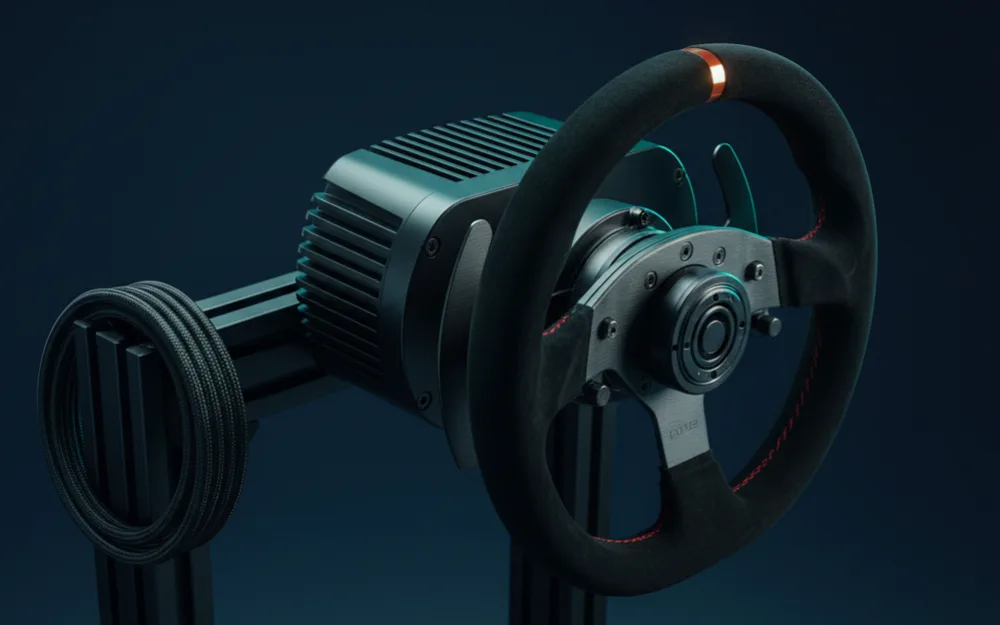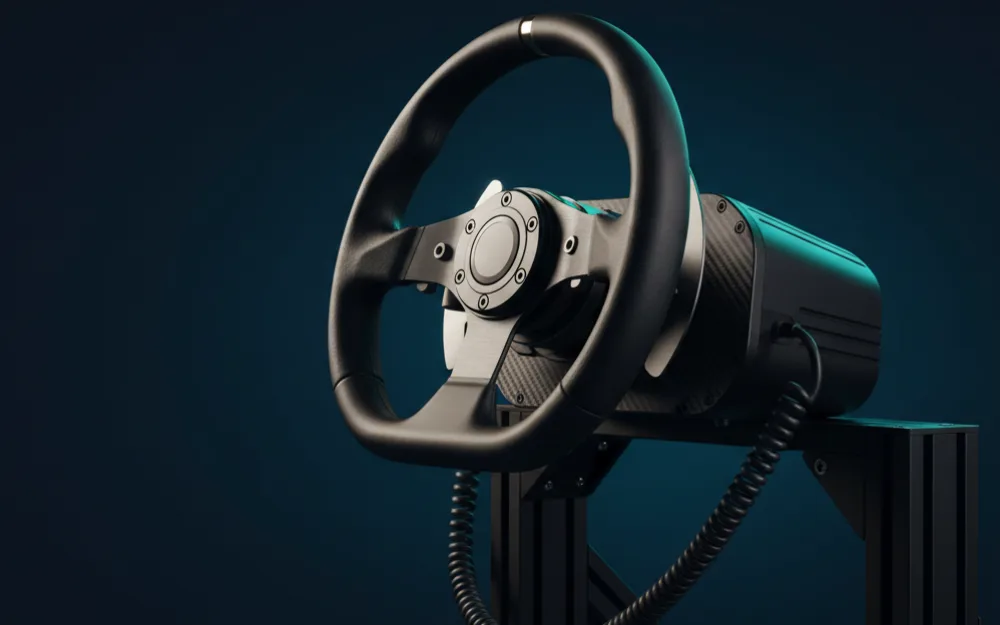

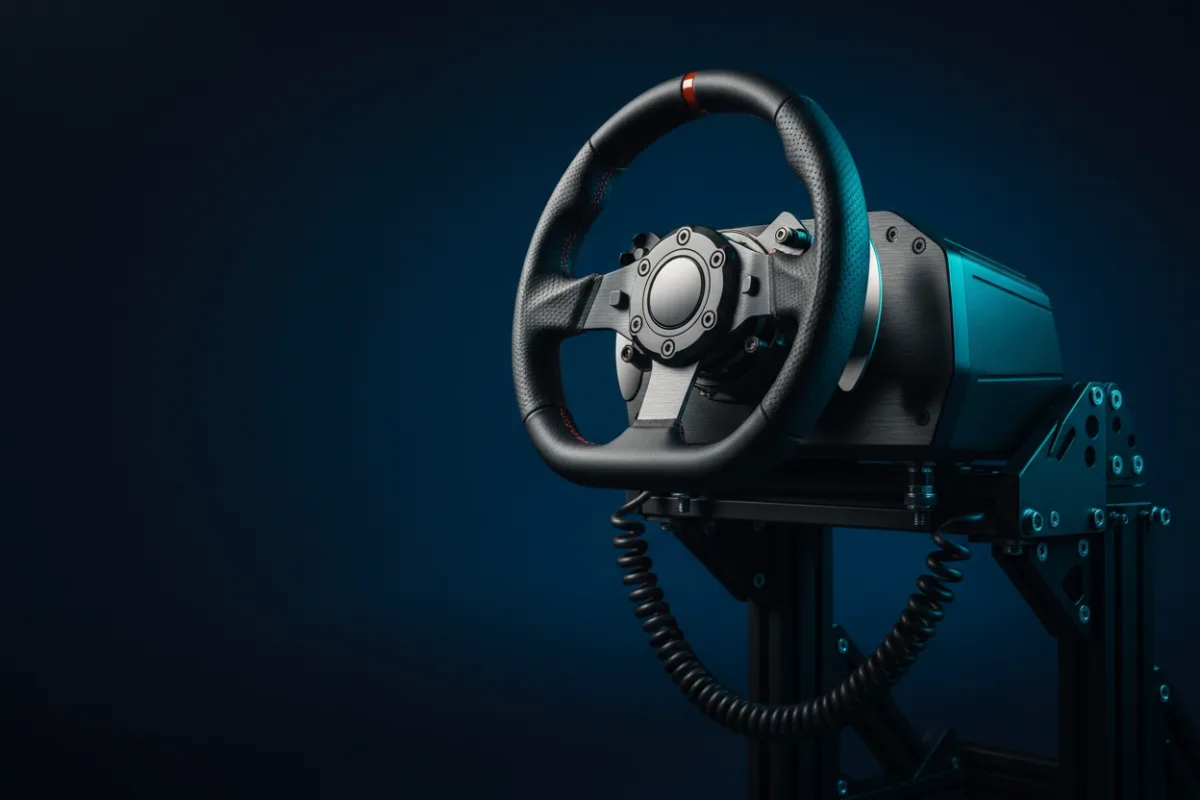

GT racing is where precision matters most. Whether you run Gran Turismo 7 on console or GT3 fields in the PC sims, you are chasing consistent lap times through medium and high speed corners, braking deep into a hairpin, and feeling the grip of the tires right at the edge. That rewards a wheel that delivers smooth, detailed, strong feedback so you can place the car precisely and hold it there lap after lap. Direct drive is the natural fit, and every wheel in this roundup is a direct drive setup chosen for the clean, precise feel a GT car deserves.
This guide covers three direct drive wheels that owners point GT racers toward, plus the higher torque bases worth knowing as you climb. We compared manufacturer specifications with recurring owner feedback rather than our own seat time, and you can read how we review. If direct drive is new to you, start with Getting Started, then see where these sit on price in our best direct drive wheels under $1000 roundup.


What GT racing asks of a wheel
Before the picks, it helps to know what GT driving actually needs. GT cars carry real grip and downforce, so the forces through the rim are strong and continuous, and the margin between a clean lap and a mistake is small. What you want is feedback that is smooth and highly detailed, so you can feel the tires load up in a fast corner and sense the exact moment the front or rear begins to slide. You want enough torque to make those forces meaningful, which is why direct drive suits GT better than lighter drive types. And because GT racing is often about long, repeatable stints, you want a wheel whose feel stays consistent as it warms. A GT or formula style rim keeps your hands in a natural fixed position, since you rarely need big rotation. Every option below is direct drive, and what separates them is torque, platform, and the depth of their ownership records.
How we picked
We set three criteria. Each wheel had to be direct drive, since GT precision depends on smooth, strong, detailed feedback. It had to deliver feel owners describe as clean and consistent under sustained load, with a rim suited to fixed hand positions. And we weighed the ownership record, naming the thin ones plainly, because a GT wheel is a serious purchase and buyer confidence over time is worth more than a spec. We did not assign weighted scores, and the WSR Score reflects verified buyer ratings gathered and normalized on a consistent scale, not an editorial rubric.
At a glance
| Wheel | Torque | Rim | Platforms |
|---|---|---|---|
| Fanatec GT DD Pro | 5 Nm | 280 mm, OLED display | PS5, PS4, PC |
| Logitech G PRO | 11 Nm max | Quick release, OLED | PS5, PS4, PC |
| Logitech G RS50 | 8 Nm | 11 inch round, quick release | Xbox, PC |
Fanatec GT DD Pro
The GT DD Pro is the wheel built for this discipline by name, and it is the pick most GT racers on PlayStation should start with. It is officially licensed for PS5 and PS4, works on PC, and its 5 Nm direct drive servo uses FluxBarrier technology for the linear, consistent feedback a GT car rewards. The wheel is designed by Polyphony Digital with a rubber grip, OLED display, and four directional sticks mapped to Gran Turismo 7’s quick adjustments for traction control, brake balance, and fuel mapping, which makes it feel purpose built for that game. It ships with a two pedal set, and owners describe a clean, detailed feel that suits precise GT driving. The pros are the console license, the tuned GT7 integration, and the settled ownership record. The cons are that 5 Nm sits at the modest end of direct drive and the two pedal set omits a clutch. It fits a GT racer, especially a Gran Turismo player, who wants direct drive that works on console out of the box.
Logitech G PRO
The G PRO is the strongest wheel in this group and the one for a GT racer who wants headroom. It delivers up to 11 Nm of direct drive force, and owners describe TRUEFORCE feedback that senses road conditions and motor detail almost instantly, exactly the resolution that lets you place a GT car on the limit through a fast corner. The magnetic shift paddles use contactless Hall sensors for a crisp, consistent change, the dual clutch analog paddles help launches, and the onboard OLED lets you adjust settings across profiles without leaving the seat. It runs on PS5, PS4, and PC, so it suits console and PC GT fields alike. The pros are the high torque, the precise magnetic paddles, and the strong ownership rating. The cons are that it ships as a base and hub without pedals, so you complete the setup separately, and it is a significant step up in commitment. It fits a serious GT racer who wants strength and precision and will build the rest of the rig around it.
Logitech G RS50
The G RS50 is the Xbox friendly direct drive pick here, running on Xbox Series X and S and PC, which the other two wheels in the cards do not cover. Its base puts out 8 Nm of direct drive peak torque with TRUEFORCE integration, sitting between the GT DD Pro and the G PRO on strength, and the setup includes an 11 inch round wheel, a hub with 13 buttons, and adjustable paddle shifters with a quick release for swapping rims. Owners describe a clean, strong direct drive feel that suits GT driving well, and the modular hub lets you fit other Logitech G and MOMO rims. The pros are the Xbox compatibility, the middle ground torque, and the quick release versatility. The cons are that its ownership record is still building, so its rating is an earlier read than the Fanatec or G PRO, and pedals are handled separately. It fits an Xbox GT racer who wants genuine direct drive. PlayStation and PC drivers can find the same base in a PS5 and PS4 compatible version.
Stepping up: higher torque bases
If you want more strength than the wheels above, two PC bases push higher. The Thrustmaster T818 delivers 10 Nm of constant torque with no saturation, sending game effects through unfiltered, and the MOZA R9 V3 offers 9 Nm with a 21 bit encoder and aluminum housing as the hub of the MOZA ecosystem. Both give an advanced GT racer more force to work with. We keep them out of the cards above because their verified ownership records are still very light, so a score would rest on a small or empty sample. That does not make either a poor base, but it makes them choices for a driver comfortable being early, and both are PC bases you finish with a rim and pedals.
Who should skip this class of wheel
| Buy a GT focused direct drive wheel if | Look elsewhere if |
|---|---|
| You want smooth, detailed feedback for precise lap work | You are on a tight budget, where a belt or gear wheel starts you off |
| You value strong, consistent force through fast corners | You mainly drift or run rally, where wide rotation matters more |
| You race on the platform each base supports | You want one box with pedals and no extra buying decisions |
How it scores
The WSR Score reflects verified buyer ratings gathered and normalized on a consistent scale, not an editorial rubric. You can read what goes into it on How We Review. The records vary here: the Fanatec GT DD Pro and Logitech G PRO rest on settled samples, the G RS50 on a lighter one, and the higher torque PC bases on very little yet, so read those numbers as early signals rather than final verdicts.
Where to go from here
For the full field across every tier, start with our best sim racing wheels guide. To weigh these bases by price, our best direct drive wheels under $1000 roundup lines them up, and if you also run ovals, the best racing wheels for NASCAR guide covers that discipline. You can read the full Fanatec GT DD Pro review or the Logitech G PRO review, and browse more options in direct drive wheels.