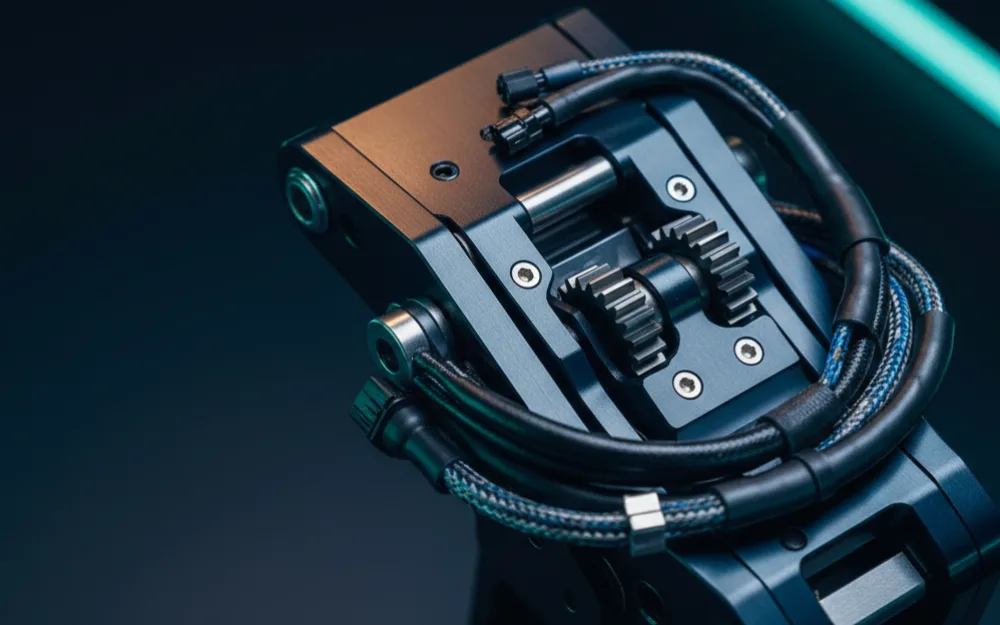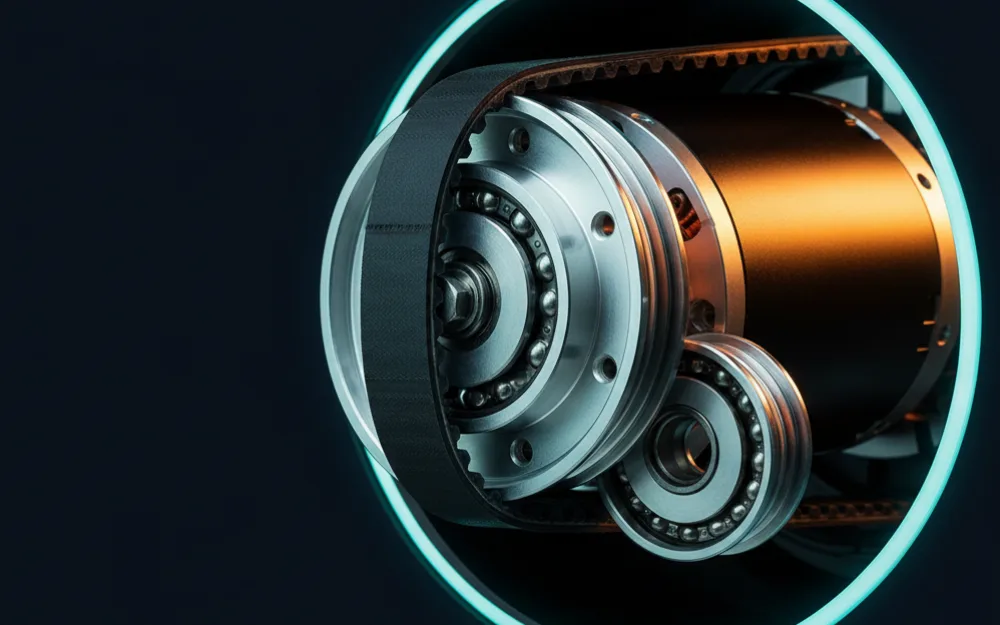

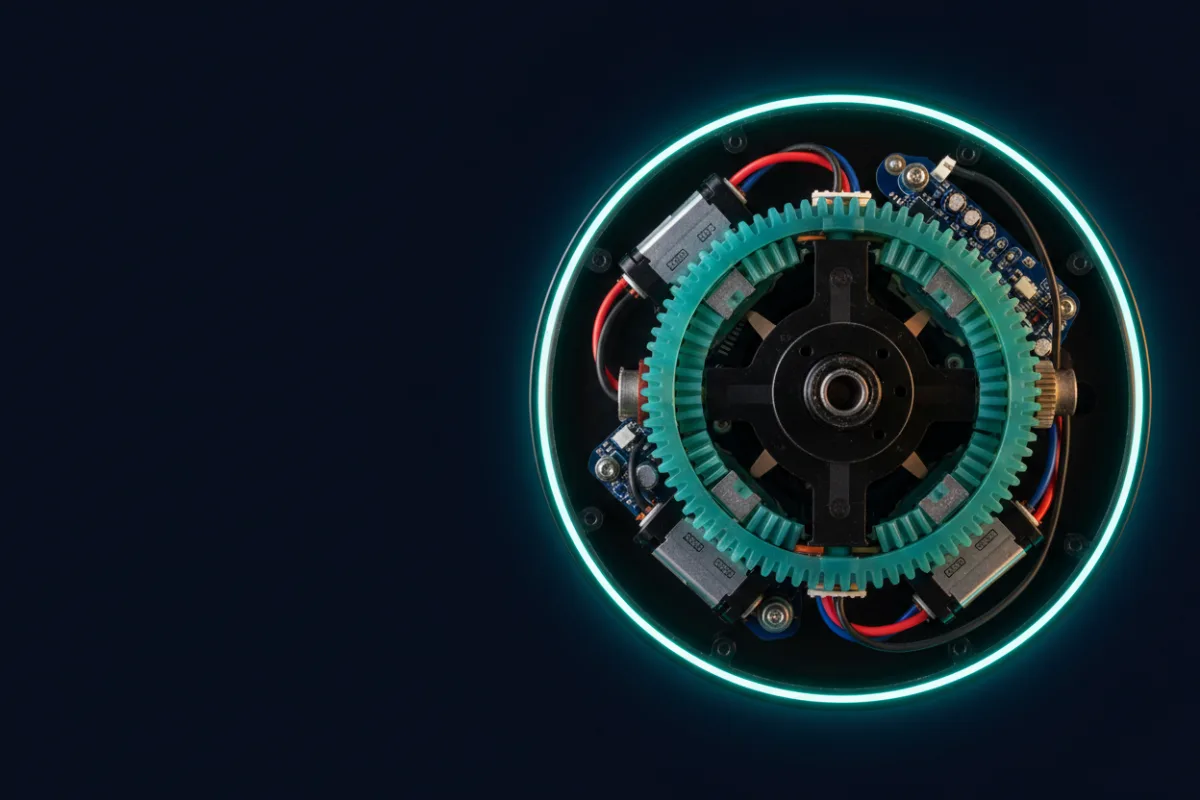

A gear driven racing wheel produces force feedback with one or two small motors that turn the steering shaft through a set of gears. It is the oldest and least expensive force feedback design, and it is the mechanism inside the Logitech G29, G920, and G923, which together account for a large share of all racing wheels sold.
How it feels
The gears are what you feel. Small effects arrive with a slight rattle or notchiness, there is a little play at center, and the wheel makes a mechanical noise under load. Logitech uses helical gears to reduce this and, on the G923, adds TRUEFORCE, which layers high frequency effects from supported games on top of the physics based forces.
Strengths
- Lowest price for a complete force feedback kit with three pedals.
- Supported by essentially every racing game released in the last decade.
- Durable, compact, and easy to clamp to any desk.
- Strong resale value.
Limits
- Coarse feedback compared with belt or direct drive.
- Fixed rim; no quick release.
- Torque is not published by Logitech.
- Limited upgrade path beyond a shifter and, with an adapter, Logitech’s newer pedals.
Who it suits
First time buyers who are not ready for direct drive prices, console players who want three pedals, and anyone who values game support and resale over feel. Our under $300 guide compares the current models.
Related terms
Belt driven wheel · Direct drive · Guide: drive types explained