
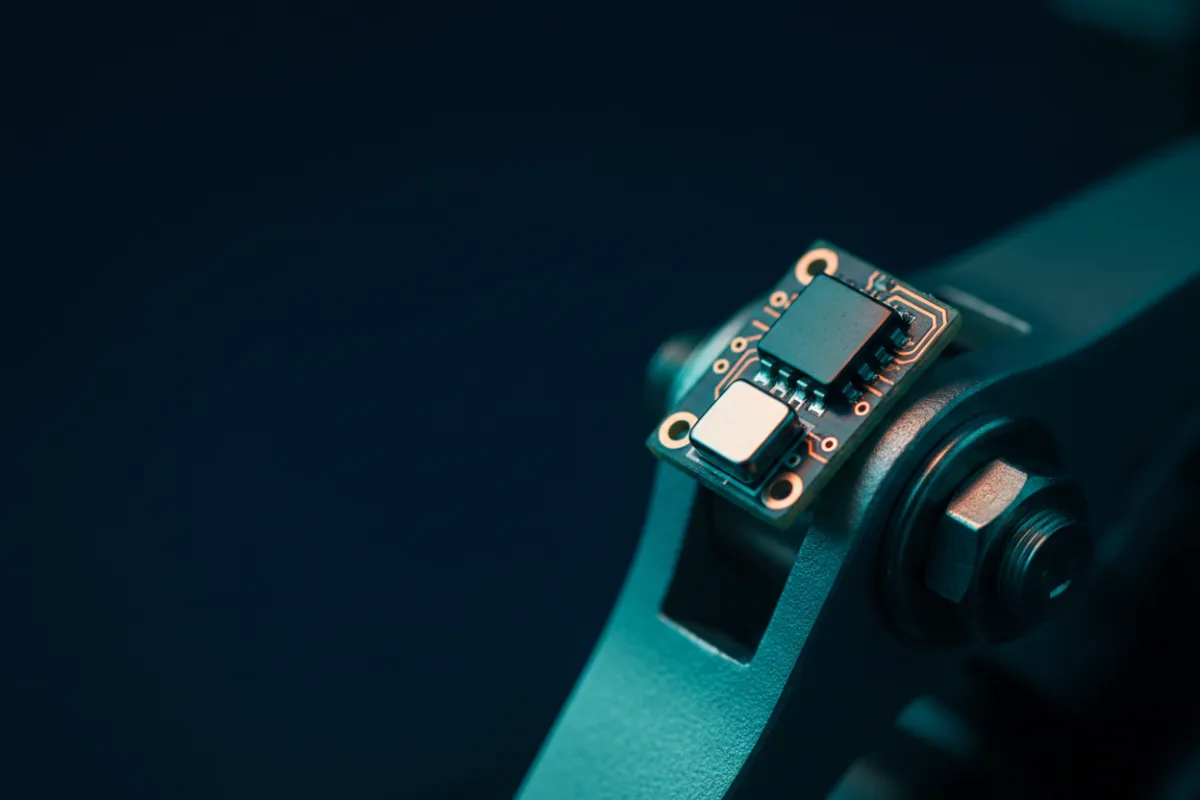

A Hall effect sensor measures the position of a magnet by detecting changes in its magnetic field, with no physical contact between the moving part and the sensor. In sim racing gear it replaces potentiometers in pedals, paddle shifters, handbrakes, and some shifters, because a sensor with no contact has nothing to wear out.
Why it matters
A potentiometer reads position through a wiper sliding on a resistive track. Over thousands of hours the track abrades, and the reading becomes noisy or drifts, which shows up as a throttle that flickers or a brake that never fully releases. A Hall sensor reads the same position for years. It still measures travel, not force; a load cell is a different sensor for a different job.
Where you will find it
- Pedals: Thrustmaster’s H.E.A.R.T (HallEffect AccuRate Technology) pedals, the throttle on Logitech RS and PRO Pedals, and the throttle and clutch on Fanatec CSL Elite Pedals V2.
- Paddle shifters: Logitech PRO, Thrustmaster’s magnetic paddles, Moza rims.
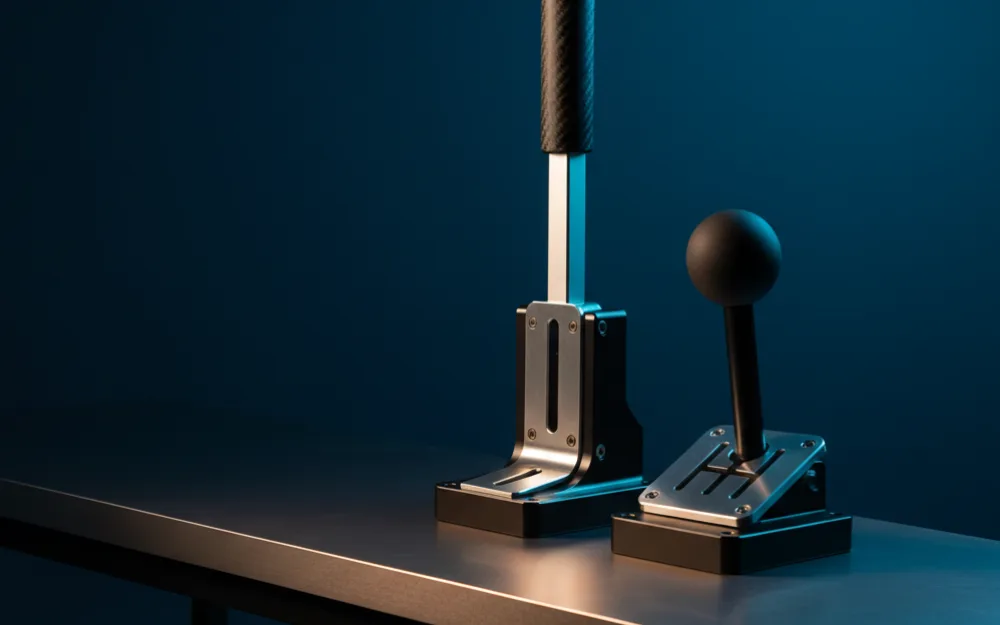
- Shifters and handbrakes: Thrustmaster TH8A and TSS, Moza SGP.
Magnetic versus Hall
Marketing often says “magnetic paddles” or “magnetic pedals”. That usually means a Hall sensor for position plus magnets that provide the click or return force on a paddle. Both parts are contactless, which is the point.
Related terms
Load cell pedal · Guide: load cell vs potentiometer · Roundup: best sim racing pedals