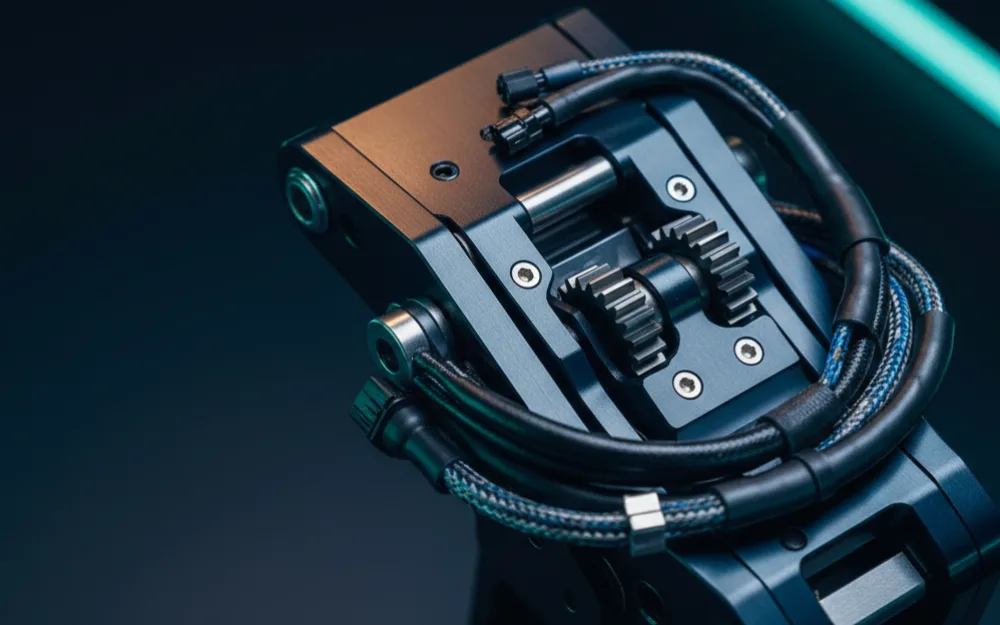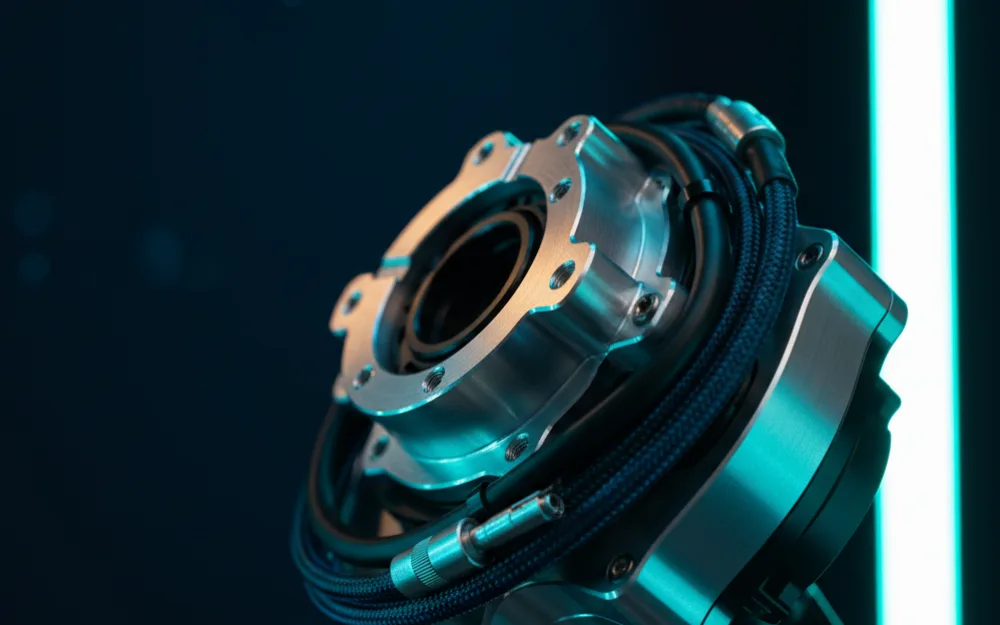


A load cell pedal uses a strain gauge sensor (a load cell) to measure the force applied to the pedal rather than the distance the pedal travels. It is used almost exclusively on the brake, because real brakes respond to pressure, and it is the single upgrade most experienced sim racers credit with improving their consistency.
How it works
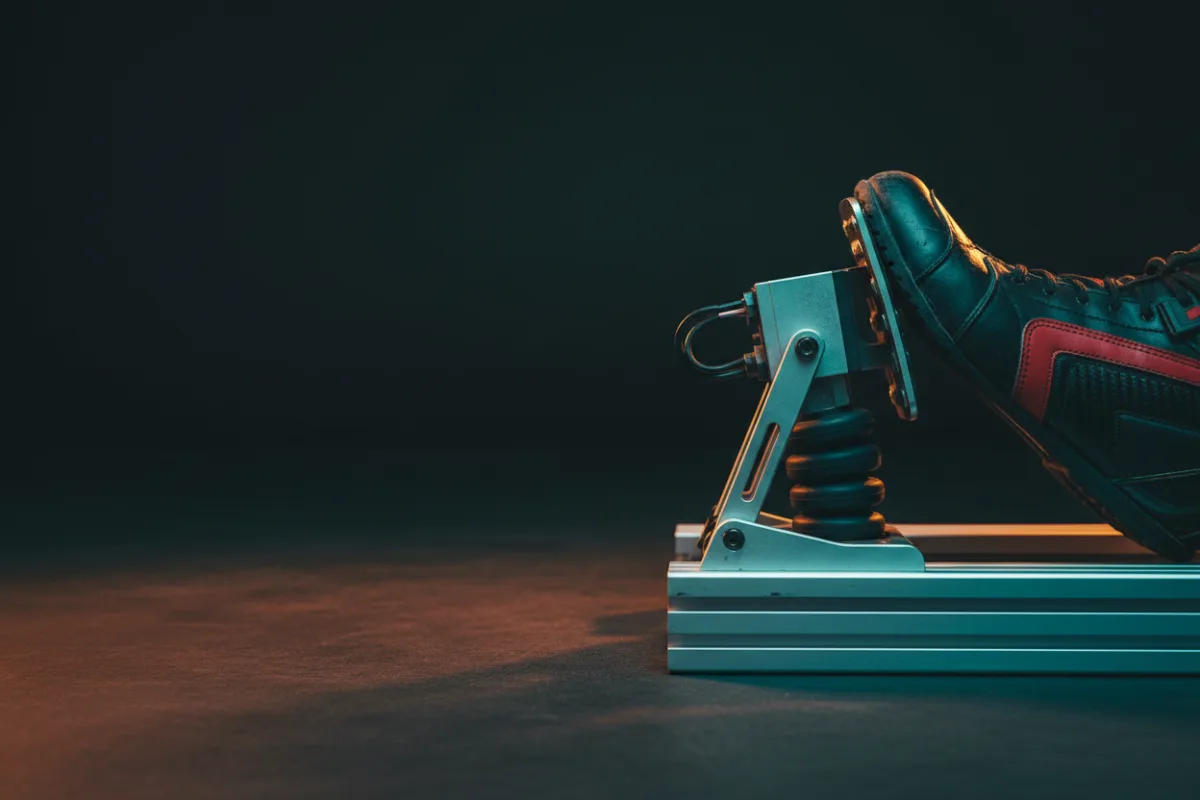
The pedal arm pushes against a stack of rubber elastomers or a stiff spring, and the load cell behind that stack reads the force. The pedal moves only a little; what changes is how hard you push. Capacity is quoted in kilograms (75 kg on Logitech’s RS Pedals, 100 kg on Thrustmaster’s Raceline III LC and Moza’s SR-P, 200 kg on the Simjack UT) and describes the sensor’s range, not the force you must apply. Software lets you set full braking at any fraction of it.
Why it matters
Your leg repeats a pressure far more accurately than it repeats a position, so a pressure based brake lets you hit the same braking force lap after lap. That means fewer lock ups, more confident trail braking, and later braking points. Potentiometer and Hall effect pedals measure travel and cannot offer this.
What it feels like
Stiff. New owners often find the brake heavy for the first week. Elastomers of different hardness (Fanatec ships 65, 75, and 85 Shore with the CSL Elite Pedals V2) tune the feel, and a rigid mount is essential because the pedal pushes back hard.
Related terms and guides
Hall effect sensor · Guide: load cell vs potentiometer · Roundup: best sim racing pedals