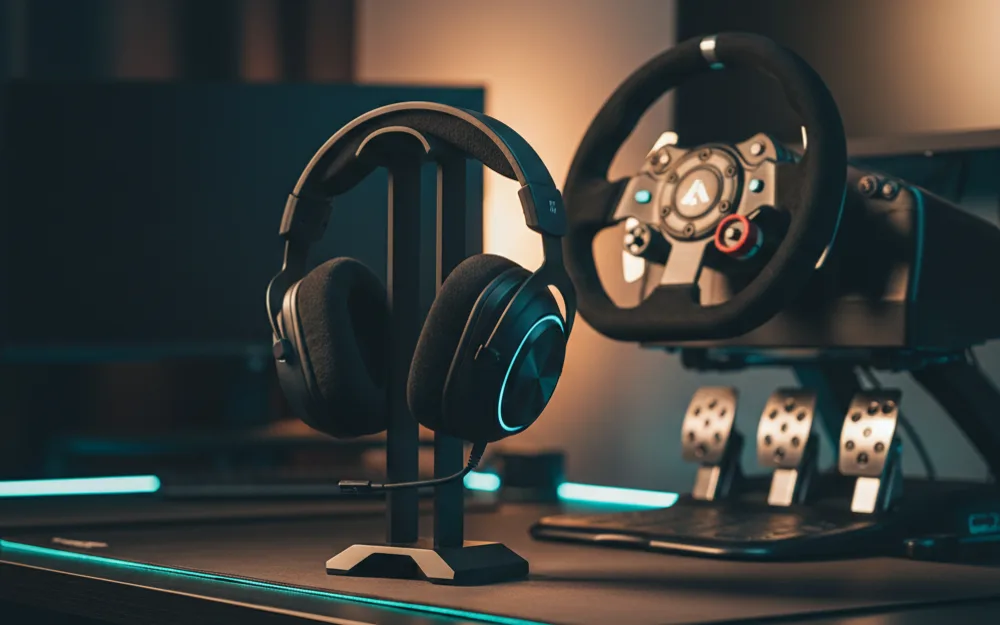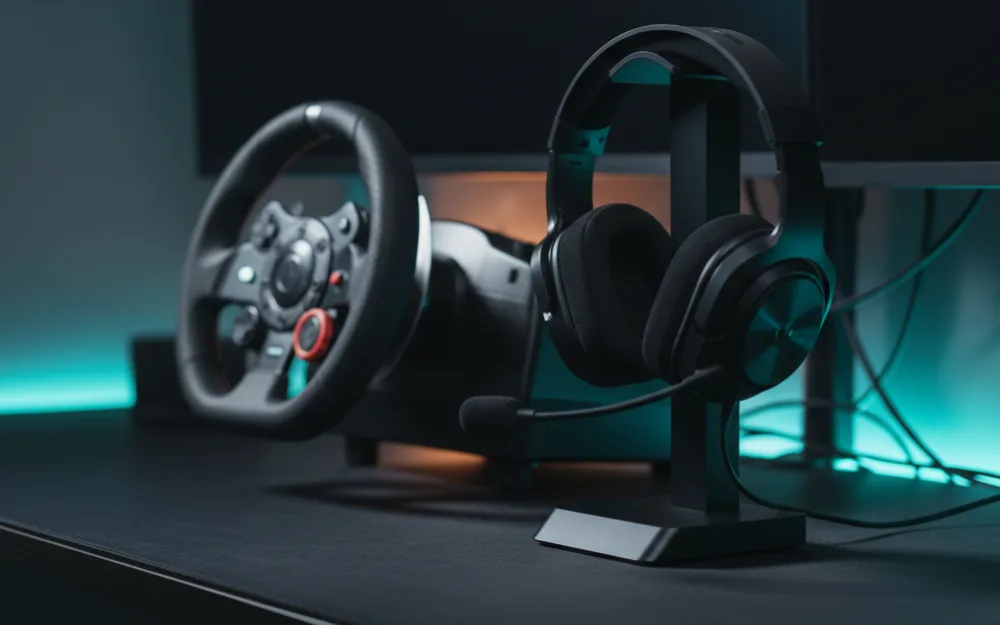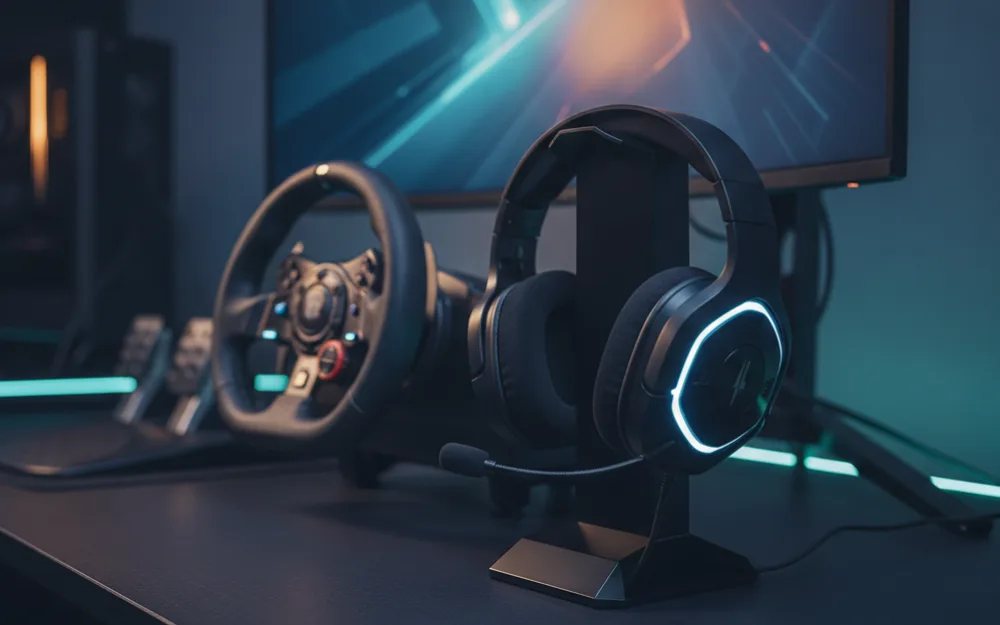

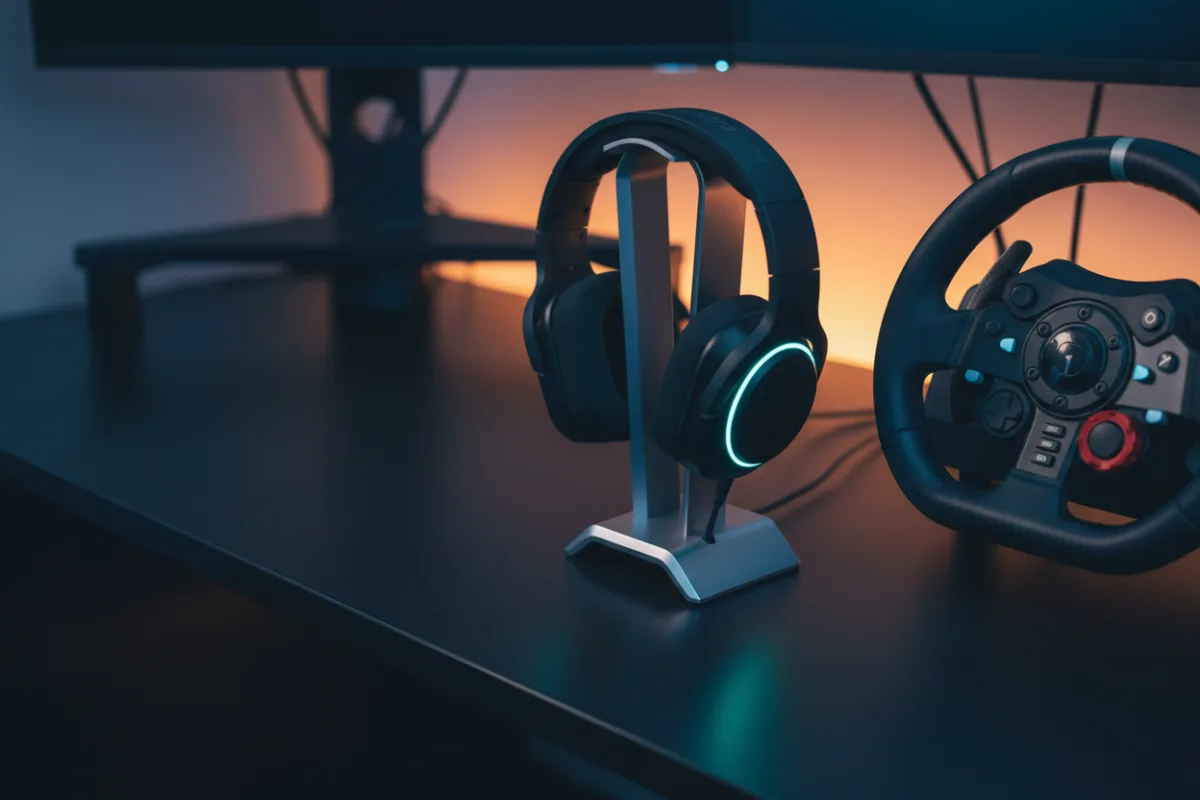

The Logitech G PRO X is a wired gaming headset that sim racers step up to when they want a sturdier build, a detachable microphone, and a USB sound card with saved audio profiles. It pairs 50 mm PRO-G drivers with an aluminum and steel frame, ships with both leatherette and velour ear pads, and bundles an external USB sound card that unlocks its surround and voice processing on a Windows PC. For a league racer who values clean comms and a headset that lasts, that fuller feature set is the draw, and how you connect it decides which of those features you actually get.
This review looks at how the G PRO X handles racing audio, where the extra money goes, and who is better served by a simpler headset. We compared Logitech’s listed specifications against recurring owner feedback rather than scoring it from our own bench, and you can read how we review. If headset terms are new to you, start with Getting Started.

At a glance
| Spec | Logitech G PRO X |
|---|---|
| Connection | Wired, 3.5 mm analog plus bundled USB sound card |
| Drivers | 50 mm PRO-G |
| Surround | 7.1 via USB sound card on Windows |
| Microphone | Detachable boom with Blue Voice on PC |
| Build | Aluminum fork, steel headband |
| Ear pads | Leatherette and velour, both included |
| Impedance | 35 ohm |
| Platforms | PC, PS4, PS5, Xbox, mobile via 3.5 mm |
What the USB sound card changes
The single most important thing to understand about the G PRO X is that its headline features live in the bundled USB sound card and the Logitech G HUB software, both of which run on a Windows PC. Plug the analog cable straight into a controller or a wheel base and you get a capable stereo headset. Run it through the USB card on a PC and you unlock 7.1 surround, the Blue Voice microphone processing, and a five band equalizer whose profiles save to onboard memory. For a PC sim racer that means you can tune the sound to lift the frequencies that carry tire and engine cues, then keep that profile even when you move the card to another machine. For a console racer the card does not apply, so the headset runs in analog stereo. Knowing which side of that line you sit on is the key to whether the G PRO X is worth its step up in price.
Build and comfort for long sessions
The G PRO X is built around an aluminum fork and a steel headband, and owners consistently point to that frame as the reason it holds up over years of use, which is a fair consideration for a headset that will live on a rig and get handled daily. Comfort is helped by the two pad choices in the box: the leatherette pads seal more firmly and block more room noise, while the velour pads breathe better and run cooler over a long stint. That is a genuinely useful option for sim racing, since a driver in a warm room can switch to velour for a long session, while one who wants maximum isolation from wheel and pedal clatter can keep the leatherette on. Owners describe the memory foam padding as comfortable across long sittings, though the sturdier metal build makes it a little heavier than the lightest budget headsets.
Microphone and league comms
The detachable boom microphone is the feature league and team racers will notice most. Run through the USB card on a PC, the Blue Voice processing adds a noise reducer, a compressor, and a limiter that owners credit for a cleaner, more even voice in team chat, which keeps wheel and pedal noise from washing into the channel. Because the boom detaches, you can also pull it off and run the headset as plain headphones away from the rig, flexibility the fixed booms on cheaper models do not offer. As with surround, the Blue Voice tuning is a PC feature, so a console racer gets the microphone but not the processing suite.
Connection and platform fit
The headset carries a 35 ohm impedance and drives easily from an analog jack, so the stereo experience works across PC, PlayStation, Xbox, and mobile through the 3.5 mm cable, with a separate mobile cable included for use away from the rig. It is a wired headset, so there is no battery to fade during a race, and the included carrying bag makes it easy to move between machines. The one caveat is the same one that runs through this whole review: the parts that separate the G PRO X from a simpler wired headset are the PC only USB card and software, so the value proposition is strongest for a Windows PC racer and thinner for someone racing on a console.
Pros and cons
- Aluminum and steel build owners rate for durability over years of use
- Two ear pad sets, leatherette for isolation and velour for cooler long sessions
- Detachable boom with Blue Voice processing sharpens league comms on PC
- USB sound card adds 7.1 surround and a saved five band equalizer on PC
- The signature surround and voice features are PC only, so console use is plain stereo
- Heavier than the lightest budget headsets and priced above them
Who should buy it, and who should skip it
| Buy the G PRO X if | Skip it if |
|---|---|
| You race on a Windows PC and want surround plus a saved equalizer | You race only on a console, where the USB card does not apply |
| You run league events and want processed voice comms and a detachable mic | You want the lightest possible headset for long stints |
| You value a metal build and swappable pads for the long haul | You want wireless freedom or the lowest price |
How it scores
The WSR Score shown above reflects verified buyer ratings gathered and normalized on a consistent scale, not an editorial rubric. You can read what goes into it on How We Review. On that basis the G PRO X rates well, backed by a large body of owner feedback that reflects its long run as a wired headset people keep.
Alternatives worth a look
If you want a lighter, cheaper wired headset and do not need the USB card, our Razer BlackShark V2 X review covers that simpler route. To see where the G PRO X sits against the rest of the field, start with our best sim racing headsets roundup, and browse more options in the audio and headsets category.