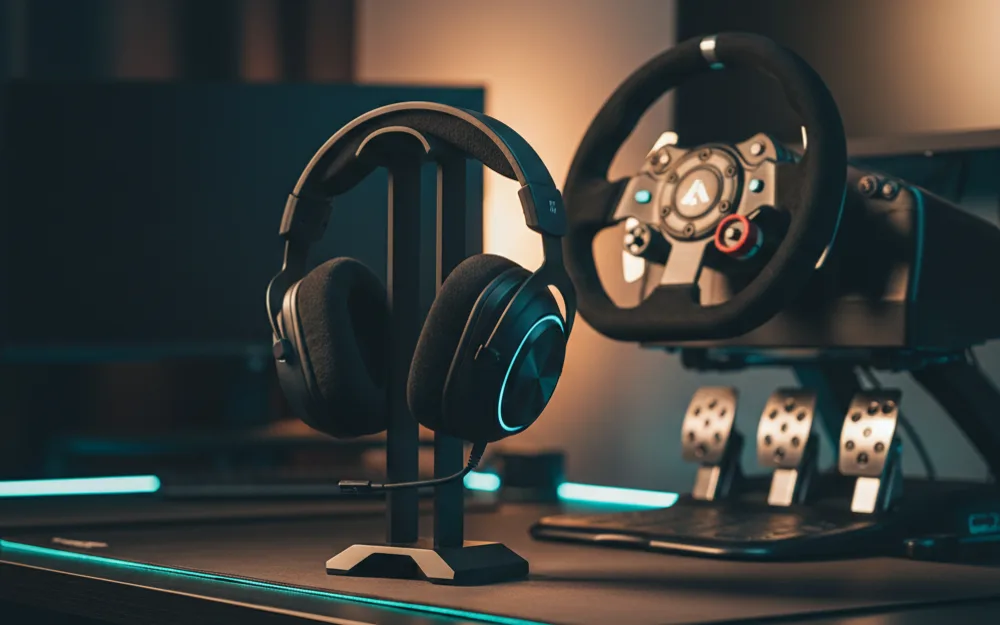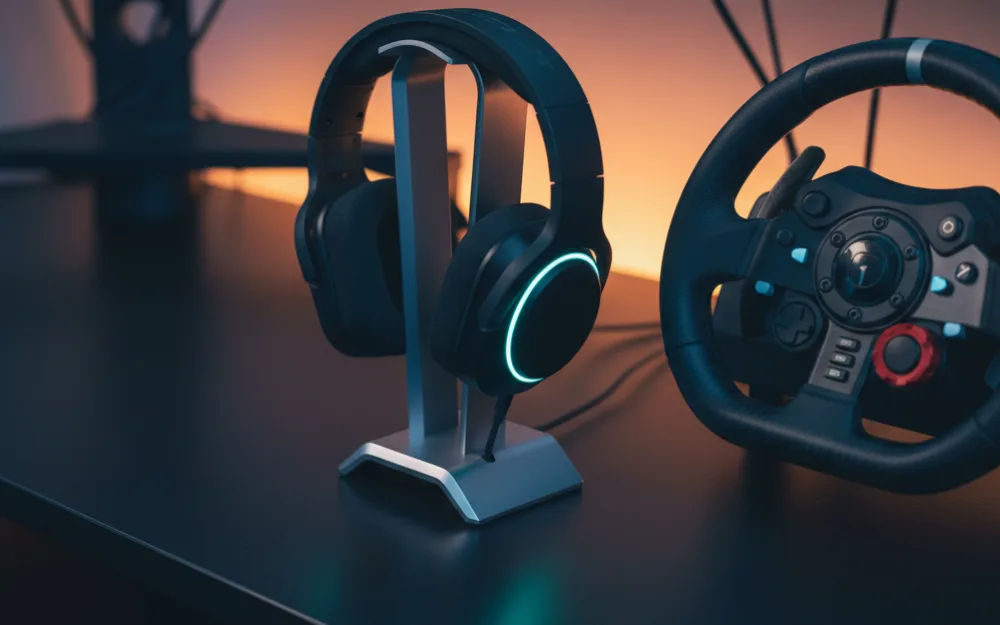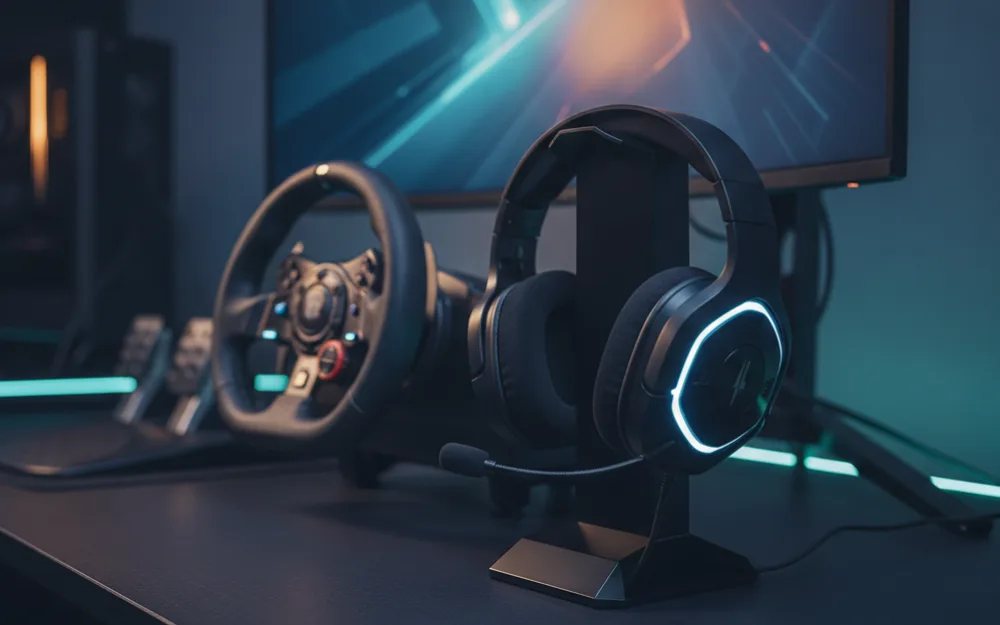

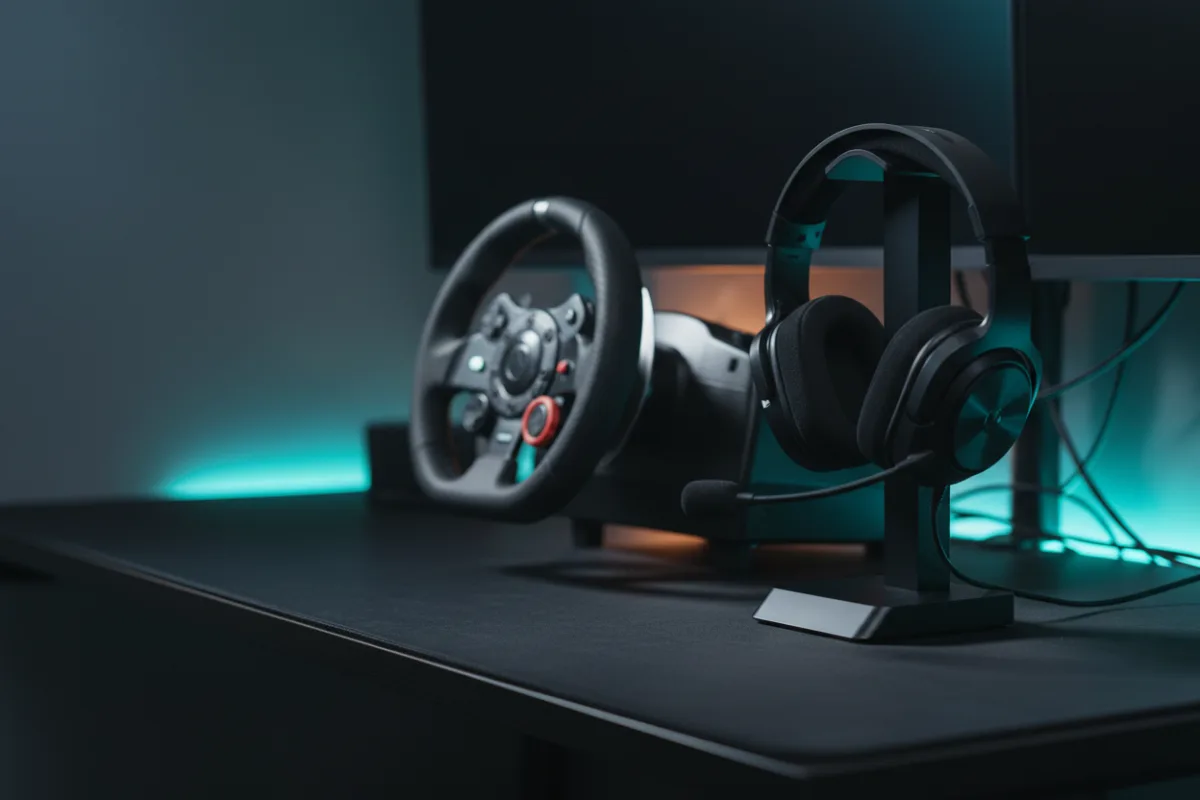

The Razer BlackShark V2 X is a wired, closed back gaming headset that sim racers reach for when the priorities are clear positional audio, all day comfort, and a low price. It runs on a plain 3.5 mm plug, weighs about 240 grams, and leans on 50 mm drivers and passive isolation rather than active noise cancellation or wireless features. For a driver who wants to place cars by ear and stay comfortable through a long stint without paying for extras, that focused, wired approach is the appeal, and the platform support is the detail that decides where it fits.
This review looks at how the headset handles racing audio, where it holds up, and who is better served by a different design. We compared Razer’s listed specifications against recurring owner feedback rather than scoring it from our own bench, and you can read how we review. If headset terms are new to you, start with Getting Started.

At a glance
| Spec | Razer BlackShark V2 X |
|---|---|
| Connection | Wired, 3.5 mm analog jack |
| Drivers | 50 mm Razer TriForce |
| Surround | 7.1 via software on Windows |
| Isolation | Passive, closed back earcups |
| Weight | About 240 grams |
| Microphone | HyperClear cardioid, fixed boom |
| Impedance | 32 ohm |
| Platforms | PC, Mac, PS4, PS5, Xbox, Switch via 3.5 mm |
What matters for racing audio
In sim racing the job of a headset is to turn engine note, tire scrub, and the position of nearby cars into information you can act on. The BlackShark V2 X uses 50 mm TriForce drivers, a design Razer splits into three tuned sections so highs, mids, and lows are voiced separately, and the practical aim is a clearer separation between the high frequency scrub of a sliding tire and the low rumble of the engine. Owners who race with it consistently describe clean positional cues, which is the quality that helps you sense a car drawing alongside before you see it. The 7.1 surround that sharpens that spatial read is a software feature available on Windows, so a PC racer gets the full benefit while a console driver runs the same headset in stereo. That is a fair distinction to know before buying, since the surround is not a hardware trait that travels to every platform.
Comfort over a long stint
Endurance races and long practice sessions punish a heavy headset, so the roughly 240 gram weight is one of this model’s strongest points for sim use. Owners repeatedly note that the light frame and memory foam cushions stay comfortable across long sittings, which matters more in a two hour stint than in a quick match. The closed back cups also seal passively against room noise, so wheel clatter and pedal thumps intrude less without any powered cancellation. The trade is warmth: a closed, sealed cup runs hotter over time than an open design, so a driver in a warm room may feel it. For most racers the comfort balance lands in the headset’s favor, and the low weight is the reason it suits marathon sessions.
Microphone and voice comms
Team races and league events lean on clear voice comms, and the fixed HyperClear cardioid mic is tuned to pick up your voice while rejecting sound from the sides and rear, which helps keep wheel and pedal noise out of the channel. Owners generally rate the mic as clear and dependable for team chat, which is what a league driver needs. It is a fixed boom rather than a detachable one, so you cannot remove it for desk use away from racing, a minor point for a headset that will mostly live on a rig.
Connection and platform fit
The wired 3.5 mm connection is the headset’s quiet advantage for sim racing. There is no battery to run flat mid race and no wireless link to drop, and the single analog plug works across PC, Mac, PlayStation 4, PlayStation 5, and Switch, so the same headset moves between a PC rig and a console with no adapters. Razer also lists Xbox for the same 3.5 mm plug and sells a separate Xbox edition, so an Xbox racer should confirm which version a listing covers before buying. The low 32 ohm impedance means the headset drives easily from a controller jack or a wheel base audio out without a separate amplifier, which keeps a cockpit setup simple.
Where it compromises
Buying at this price means accepting a focused feature set. There is no dedicated USB sound card, so the 7.1 surround is software driven on Windows rather than processed by external hardware, and there is no companion equalizer with saved profiles to tune the sound to a track. The analog connection that makes the headset so easy to run also caps it at stereo on consoles. None of that undercuts the core job of clear, comfortable racing audio, but a driver who wants processed voice, a detachable mic, or hardware surround will find those features on pricier models. The V2 X earns its place by doing the fundamentals well and leaving the extras out, which is exactly why it stays affordable.
Pros and cons
- Light 240 gram frame stays comfortable through long stints
- 50 mm TriForce drivers give clean positional cues owners rate well
- Wired 3.5 mm plug means no battery to die and broad platform support
- Cardioid mic keeps rig noise out of team comms
- 7.1 surround is a Windows software feature, so console use is stereo
- Fixed boom mic and a warm, sealed closed back cup in hot rooms
Who should buy it, and who should skip it
| Buy the V2 X if | Skip it if |
|---|---|
| You want light, comfortable wired audio with strong positional cues | You want wireless freedom at the wheel |
| You race across PC and PlayStation and want one simple plug | You need a detachable mic or a USB sound card with saved EQ |
| You value a low price and a long owner track record | You race on Xbox and would rather buy the dedicated Xbox edition |
How it scores
The WSR Score shown above reflects verified buyer ratings gathered and normalized on a consistent scale, not an editorial rubric. You can read what goes into it on How We Review. On that basis the V2 X rates well, and it carries one of the deepest pools of owner feedback in its class, which points to consistent results across many setups.
Alternatives worth a look
If you want a detachable mic and a USB sound card with saved profiles, our Logitech G PRO X headset review covers that step up. To see where the V2 X sits against the rest of the field, start with our best sim racing headsets roundup, and browse more options in the audio and headsets category.