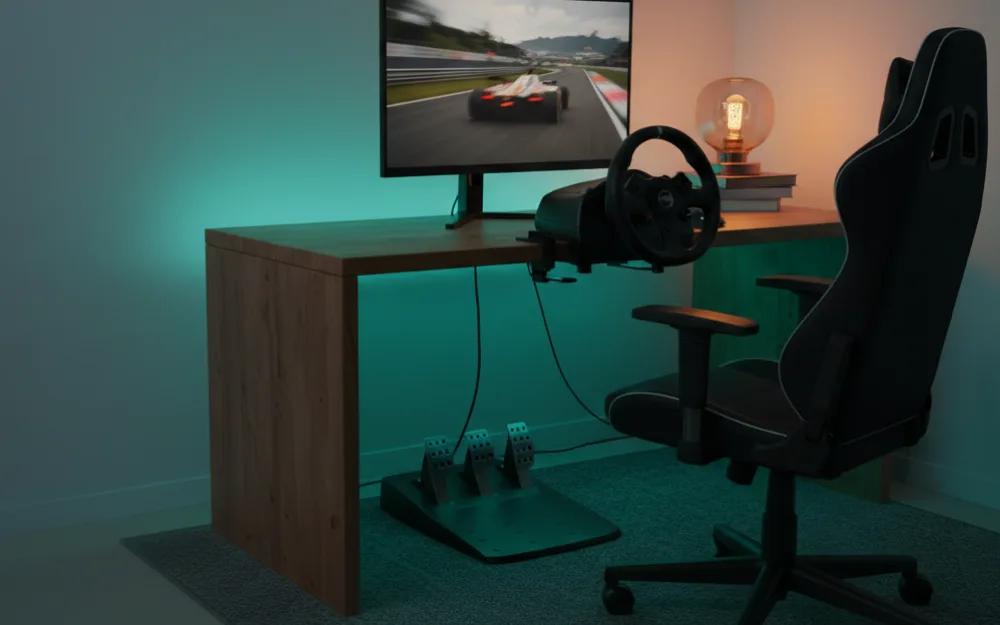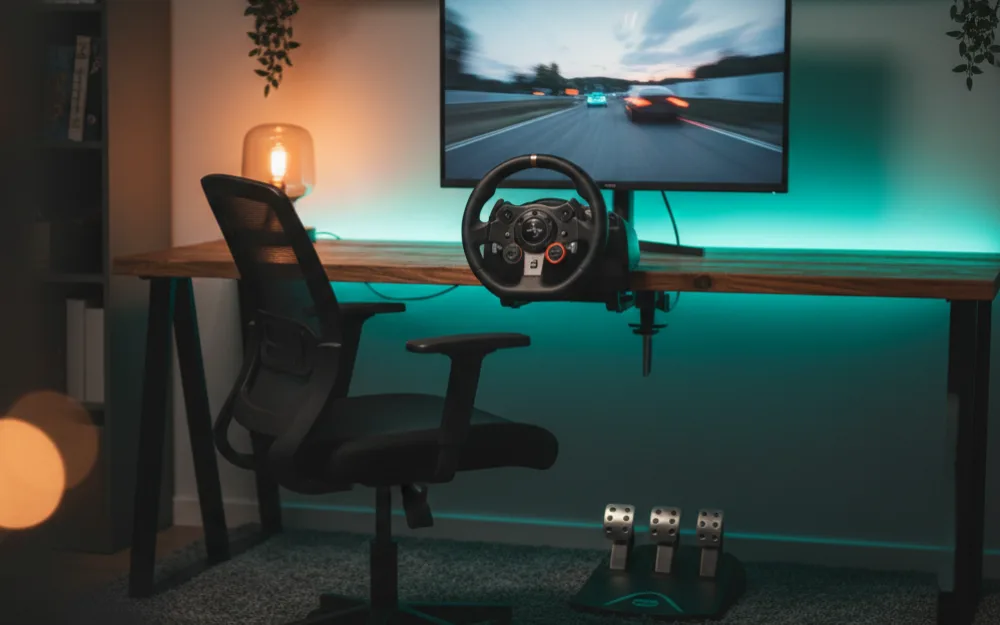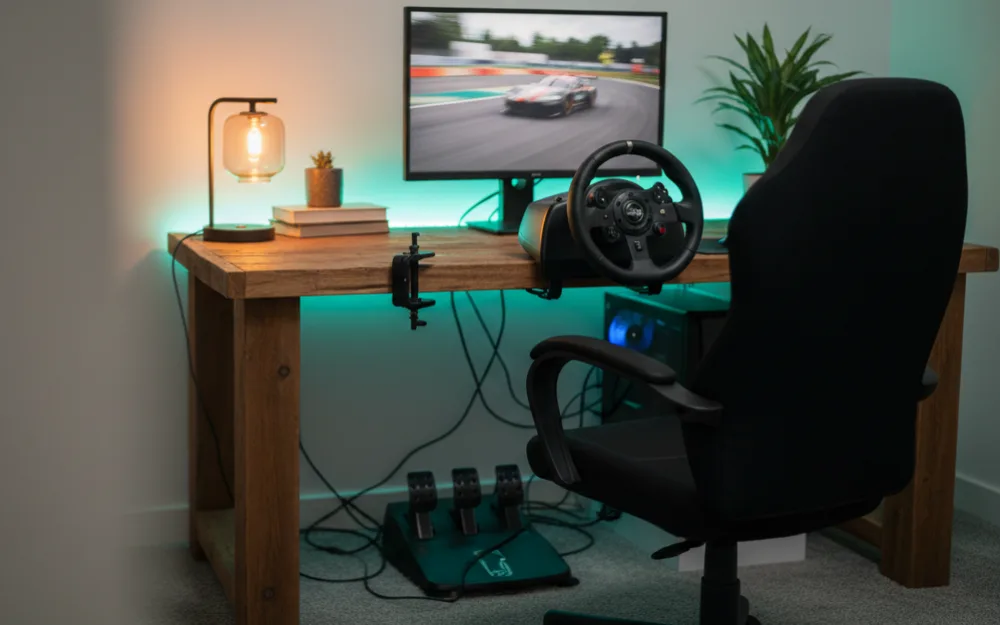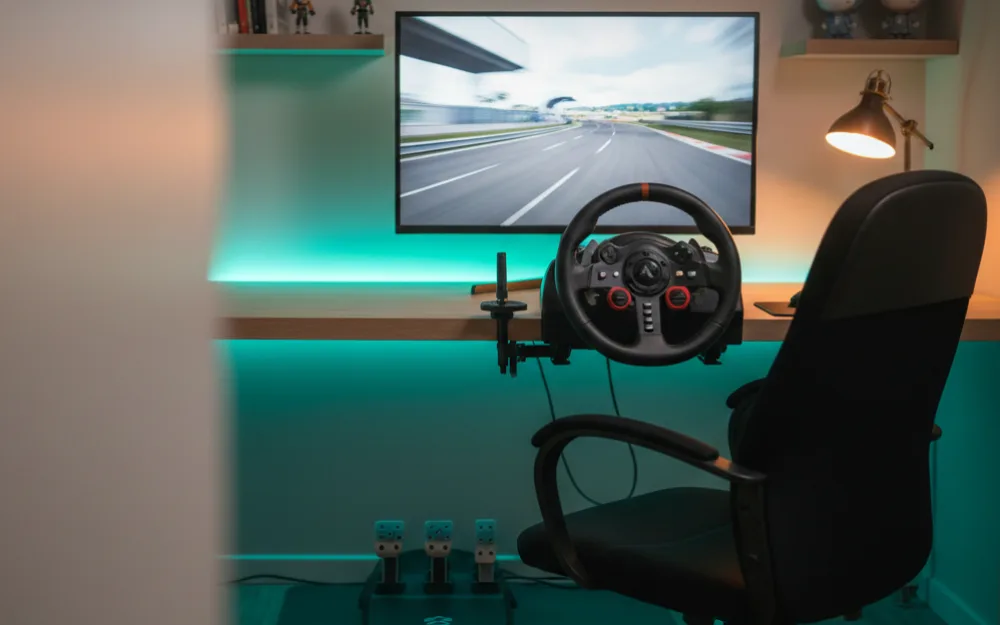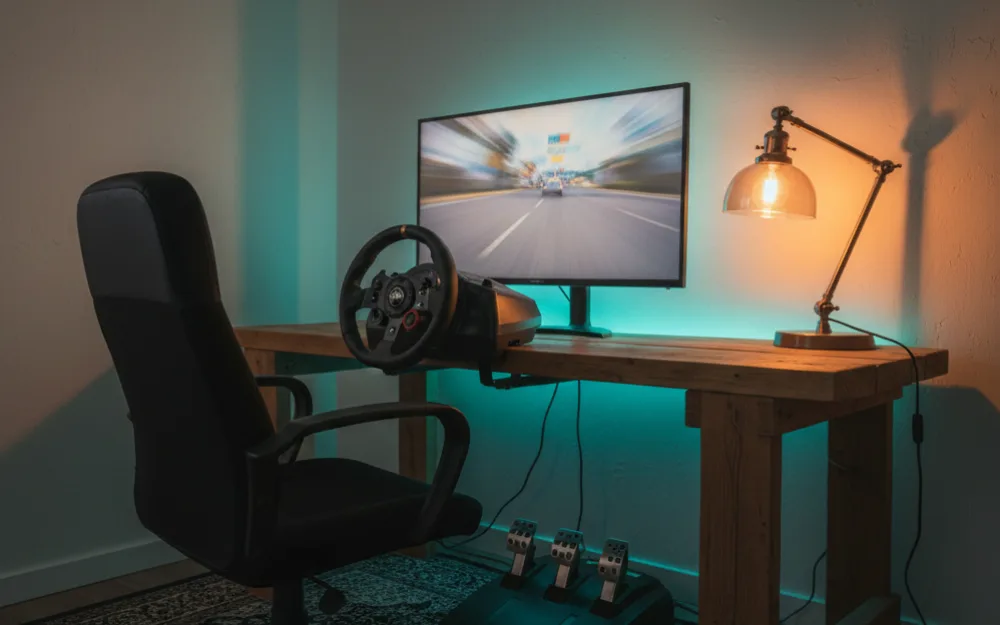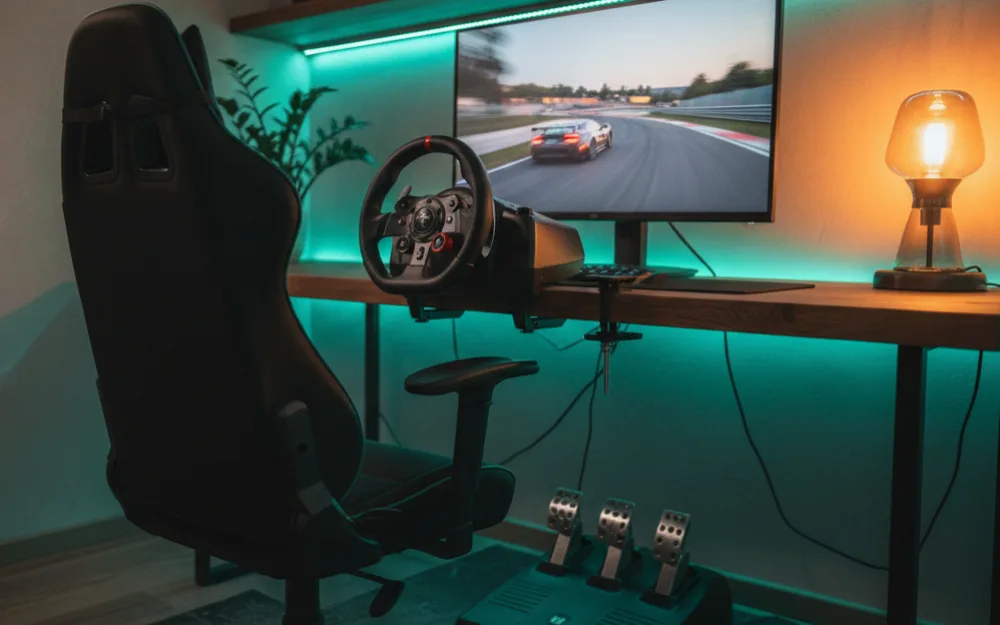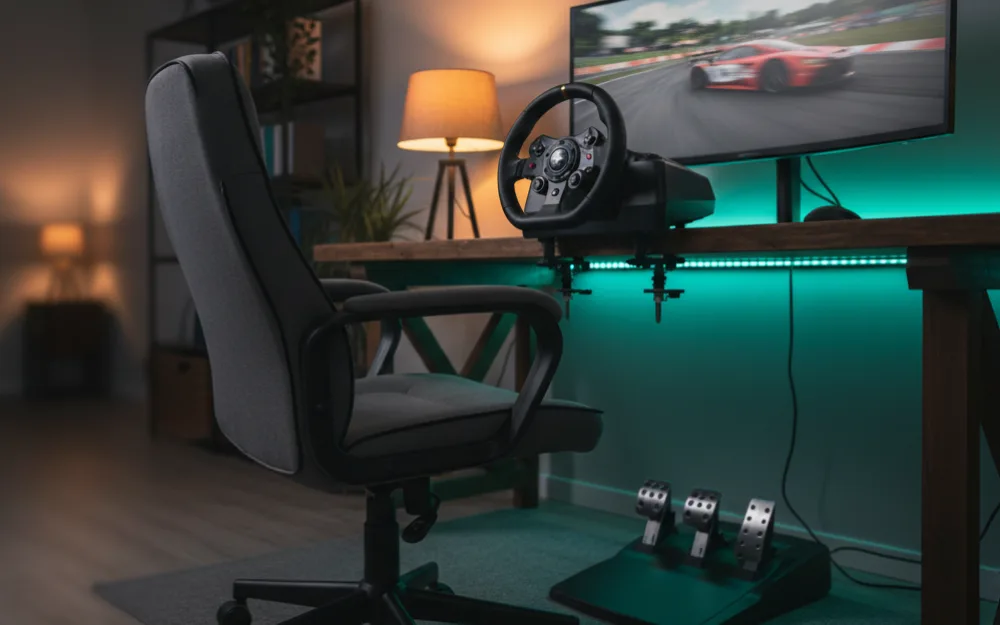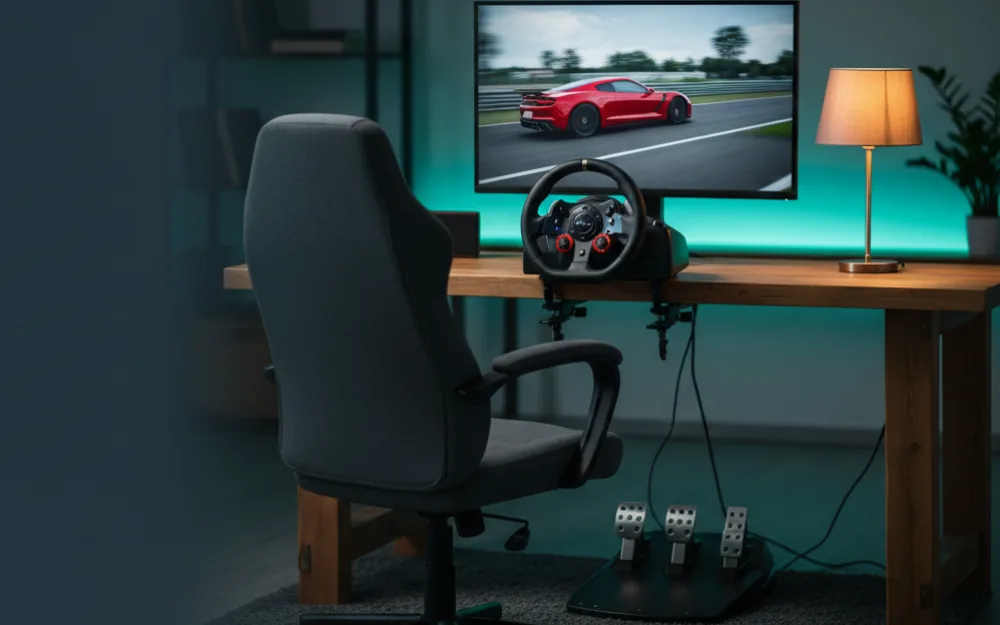


This guide helps you build a complete direct drive sim racing setup for under $1500, one where the wheel, pedals, cockpit, and screen grow together instead of leaving one weak link. By the end you will know how to split the budget so nothing holds back the rest, and where to spend more or save depending on how you race. Before you buy, answer three questions honestly: how serious are you about lap time, do you have room for a permanent cockpit, and how much of this can you upgrade later. Your answers decide whether the extra money goes into the wheel, the frame, or the display.
These recommendations come from comparing this budget against the parts experienced racers recommend at this level, and you can read how we review. If you are new to building a rig, start with Getting Started, and if this budget is a stretch, our sim racing setup under $1000 guide is the tier below.
What this budget unlocks
Under $1500 is the tier where a full direct drive rig comes together rather than being pieced out over years. A direct drive base connects the rim straight to the motor, which gives smoother, more detailed force feedback than a geared wheel, and reviewers who race these consistently describe a clear step up in how the front tires communicate grip. At this budget you can pair that wheel with a rigid cockpit, a load cell brake, and a large immersive screen without any single part dragging the others down. The smart approach is to spend on the wheel and the frame first, since those set the ceiling of the experience, then fit the pedals and screen around them.
A coherent build under $1500
The build below stays inside the budget while leaving each part room to breathe. It leads with a direct drive bundle so the wheel, base, and a starting set of pedals arrive matched, adds a rigid cockpit built to hold a strong wheel, upgrades the brake with a load cell set, and finishes with an ultrawide screen for immersion. Every piece here is chosen to work with the others rather than to win a spec sheet on its own.


The wheel: a direct drive bundle
Lead the build with an entry direct drive bundle, since buying the base, wheel, and pedals together stretches the budget further than sourcing each part alone. A bundle like the MOZA R5 gives you a genuine direct drive base with the clean, detailed feel geared wheels cannot reach, plus a rim and pedals to start racing right away. Because direct drive produces real force, start at a lower strength and build up as you get comfortable, keeping both hands on the wheel during the startup calibration sweep. To weigh other bases at this level, read the best budget direct drive wheel and the best direct drive wheels.
The pedals: add a load cell brake
The pedals in an entry bundle get you racing, but a load cell brake is the upgrade owners most often wish they had made sooner, and this budget has room for it. A load cell measures how hard you press rather than how far the pedal travels, which is much closer to a real car and makes consistent braking far easier to learn. A set like the MOZA SR-P adds that pressure based brake while keeping the rig in one ecosystem. If money runs tight after the wheel and cockpit, the bundle pedals are fine to start with and the load cell brake can come later. Compare options in the best sim racing pedals.
The cockpit: a rigid frame for direct drive
A direct drive wheel deserves a frame that will not twist under it, and a flimsy stand undoes the detail you paid for. A steel reinforced cockpit like the Fanatec CSL Cockpit holds the wheel and pedals solidly, supports a load cell brake without flexing, and gives you a consistent driving position lap after lap. Rigidity is the point here: a frame that moves under a strong wheel blurs the very feedback the wheel is sending. If you need to fold the rig away between sessions, a foldable cockpit still works, but expect to trade some stiffness for the convenience. Compare frames in the best sim racing cockpits and the best cockpit for direct drive.
The screen: one large immersive display
Displays can swallow a budget fast, so be disciplined here. At this tier a single large ultrawide monitor is a strong choice, since it widens your field of view for a more immersive view of the track without the cost and setup of triple screens. A curved ultrawide like the KTC 34 inch panel gives you a fast, smooth picture and a wide view in one screen. If you already own a capable monitor, keep racing on it and move the saving into the wheel or a better brake, since smoothness matters more than sheer size at this level. Triples and VR are lovely but they belong to the next budget up for most people. See the best monitors for sim racing for the full picture.
How the budget breaks down
| Part | What to get on this budget | Why it earns its place |
|---|---|---|
| Wheel and base | An entry direct drive bundle with rim and pedals | Smoother, more detailed feel than geared wheels, matched out of the box |
| Pedals | A load cell brake, added to or replacing the bundle set | Brake by pressure for consistent, repeatable stopping |
| Cockpit | A rigid steel reinforced cockpit, plus a seat if the frame ships without one | No flex under a strong wheel, and a consistent position |
| Screen | A large ultrawide monitor, or a capable screen you own | Wider view and smooth motion without the cost of triples |
Where to spend more, and where to save
This build balances the four parts evenly, but your racing may tilt it. If lap time and feel matter most to you, put more into a stronger direct drive base and keep the screen you already own for now. If immersion is what you are after, hold the wheel at entry direct drive and spend the difference on the display. If you drive classic cars, touring cars, or truck sims, budget for an H pattern shifter, and if rally or drifting appeals, a handbrake earns its place, but skip both if you mostly race modern GT and formula cars with paddles. Match the extras to what you actually drive rather than collecting hardware you rarely touch.
Common mistakes at this budget
The classic error at this tier is spending almost everything on the strongest wheel and bolting it to a flimsy frame, which loses the detail the wheel is sending. Balance the wheel and the cockpit instead. The second mistake is skipping the load cell brake to afford a bigger screen, when braking is where most of your lap time hides, so the brake usually returns more than extra inches of monitor. The third is buying triples or VR before the rig and PC are ready, which leaves you with a display you cannot drive smoothly. Build the base first, then reach for the screen once everything under it is solid.
Who this build suits, and who should adjust it
| This build is right if | Adjust it if |
|---|---|
| You want a complete direct drive rig without a weak link | You are on console and need officially supported hardware in each part |
| You have room for a permanent cockpit | Space is tight and a foldable rig is a must |
| You want immersion from a wide single screen | You already own triples or VR and want to build around them |
| You value balance across wheel, pedals, frame, and screen | You care most about raw wheel strength and will keep an existing display |
Your next step
Choose an entry direct drive bundle and a rigid cockpit first, add a load cell brake, then fit the screen that suits how you race. When you are ready to go further, our sim racing setup under $2000 guide covers triples, VR, and stronger wheels, and new builders can find the fundamentals under Getting Started.