
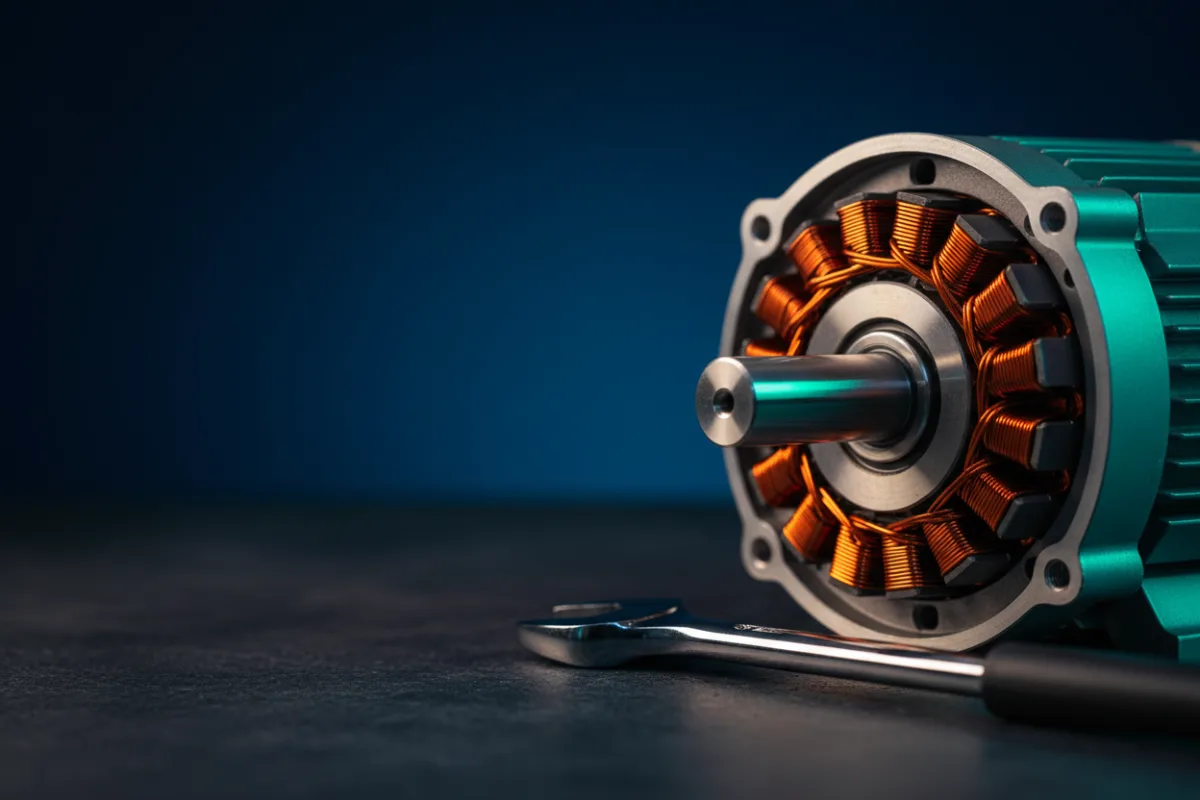

Torque, measured in newton meters (Nm), is the rotational force a racing wheel’s motor can apply to the rim. It is the number manufacturers use to describe how strong a direct drive base is: 3.9 Nm for the Moza R3, 5 Nm for the Fanatec CSL DD, 8 Nm for the Logitech RS50, 12 Nm for the Moza R12, and so on.
What the number means
One newton meter is one newton of force applied one meter from the axis of rotation. On a 280 mm rim, 5 Nm feels roughly like holding a heavy grocery bag at arm’s length against the wheel; 15 Nm can pull the rim through your hands. Higher torque means the wheel can reproduce heavier steering and keep detail clear during large forces, but it does not by itself make the feedback more detailed.
Peak, maximum, constant
Makers qualify the figure differently. A peak or maximum rating is a short burst the motor can produce but not hold; a constant rating is sustained output. Thrustmaster rates the T598 at 5 Nm constant and the T818 at 10 Nm constant, while Moza quotes 5.5 Nm peak for the R5 and Logitech 11 Nm maximum for the PRO. Compare like with like.
Why gear and belt wheels rarely quote it
Logitech does not publish torque for the G29, G920, or G923, and Thrustmaster publishes it only for some hybrid models (3.1 Nm for the T248). The mechanism between motor and rim makes the figure less meaningful, and the numbers would compare poorly with direct drive.
How much you need
Around 5 Nm is enough for road and GT cars for most drivers. Eight to 12 Nm adds headroom for formula cars and long races. Above that is enthusiast territory that demands a rigid cockpit. Our torque guide goes into the trade offs.
Related terms
Direct drive · Force feedback · FFB clipping · Aluminum profile cockpit