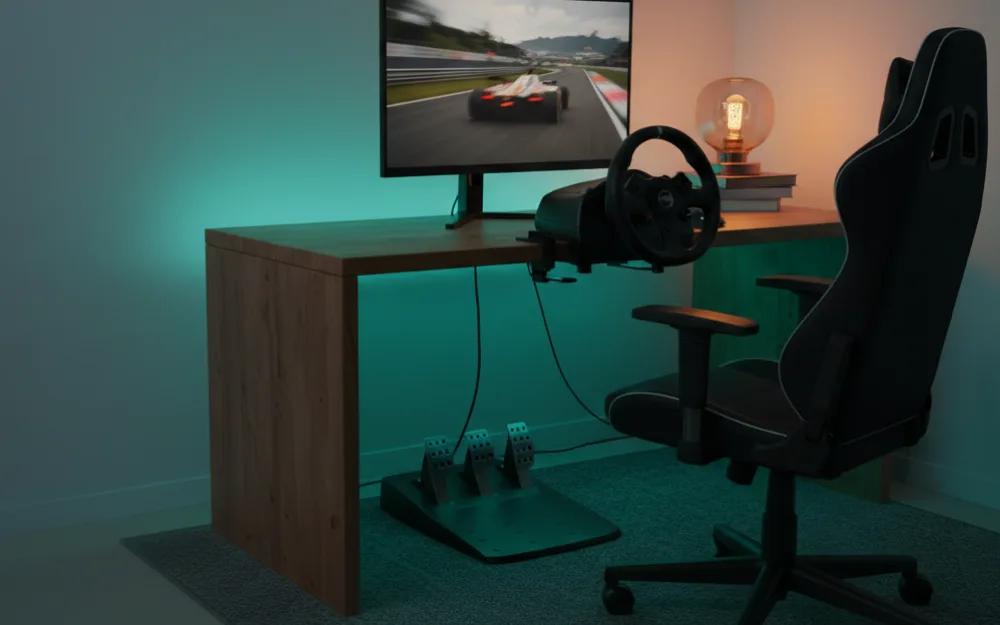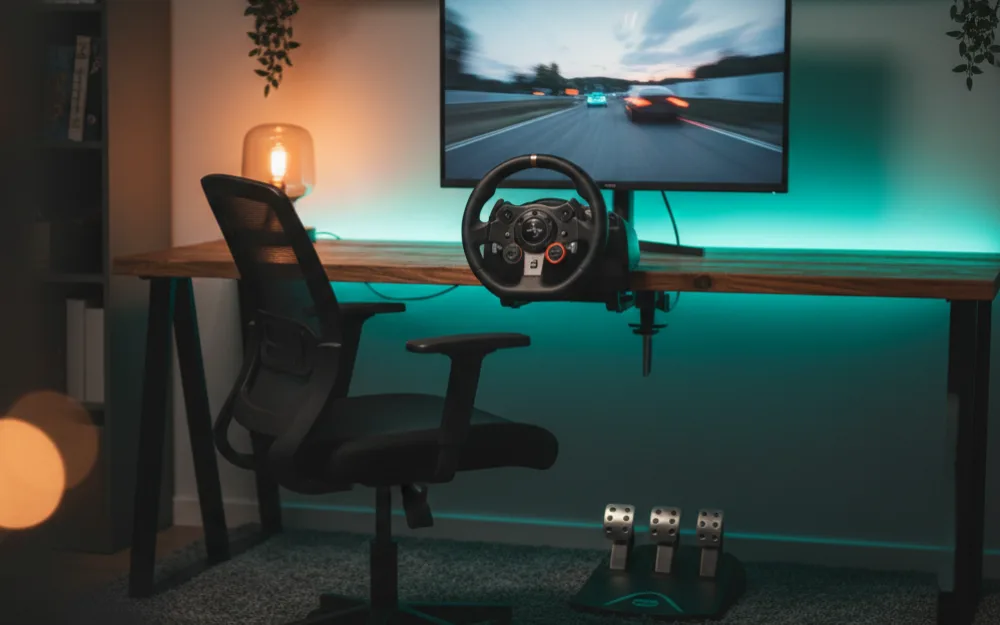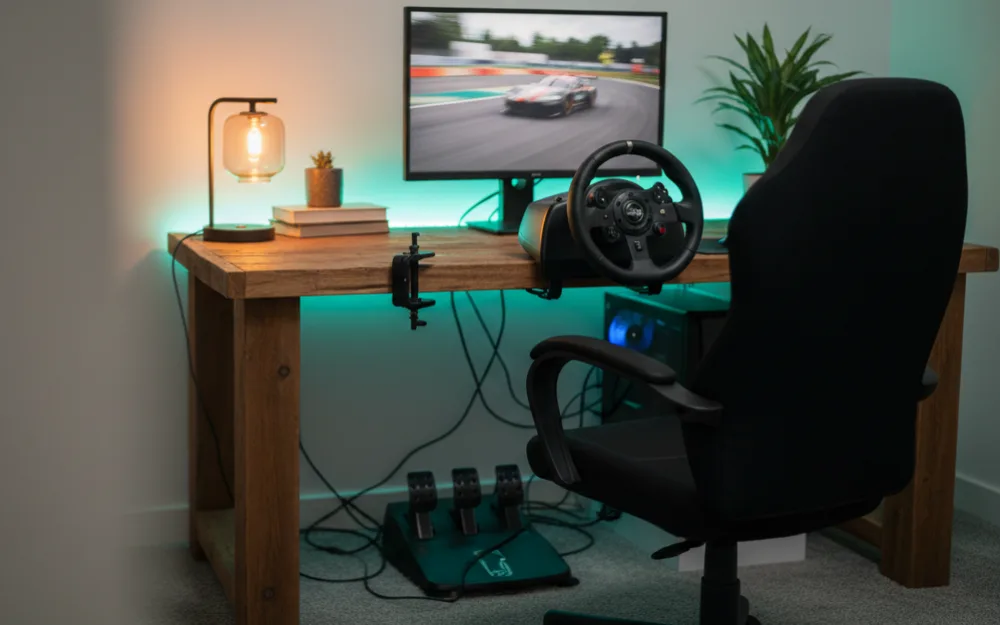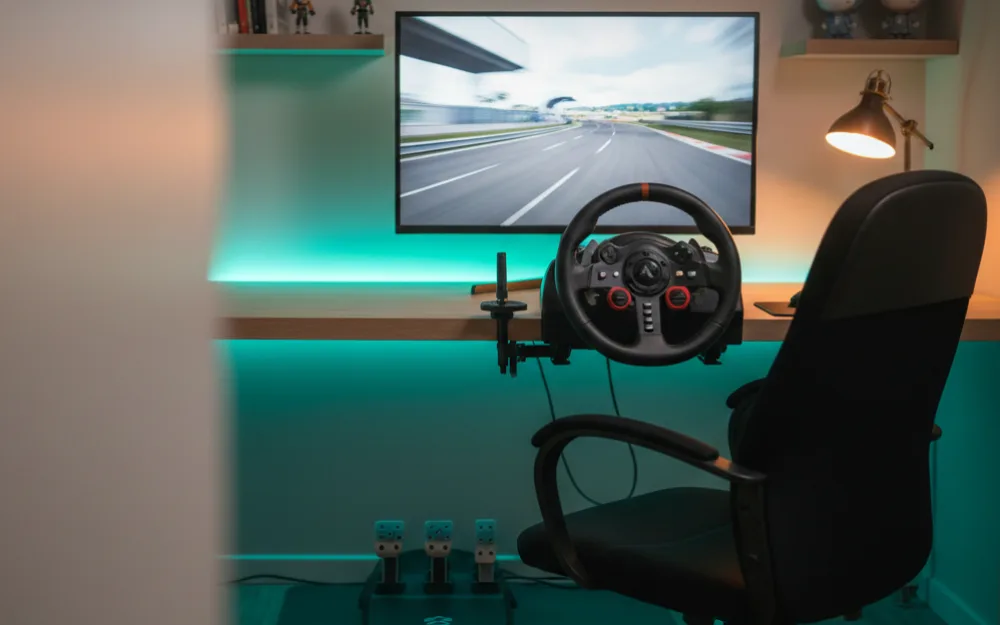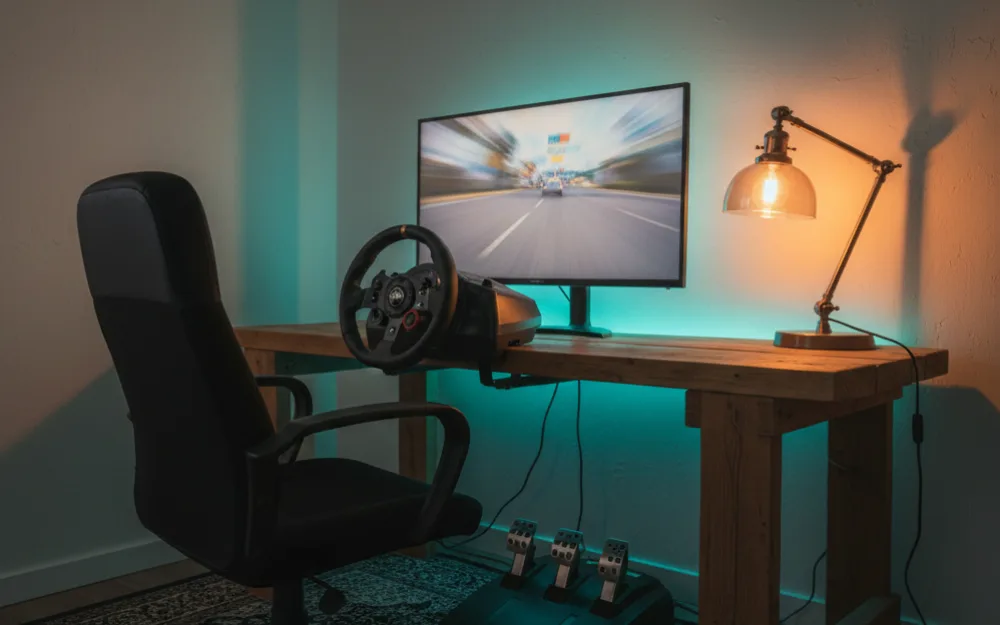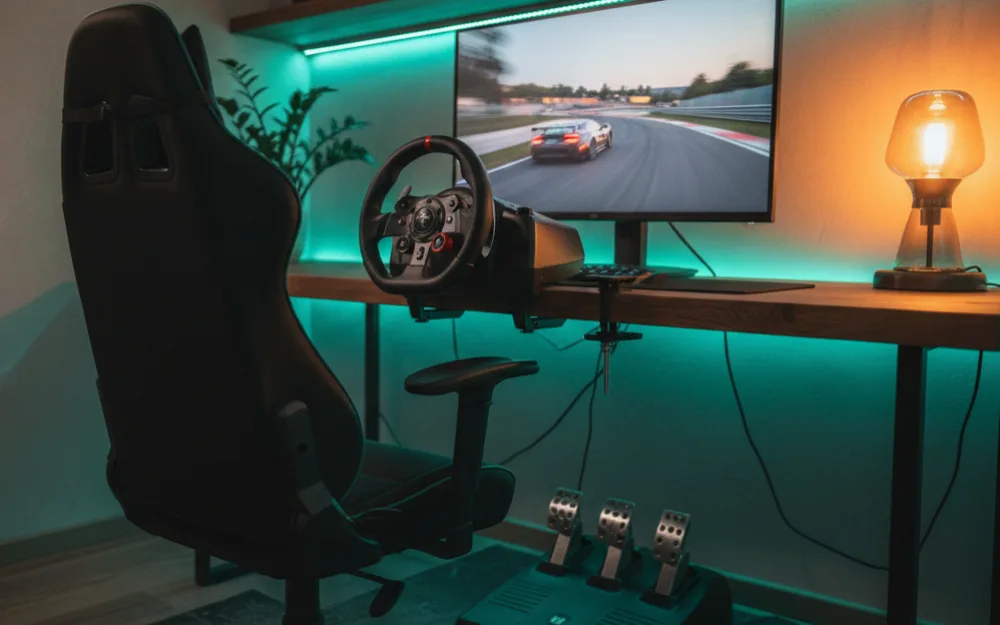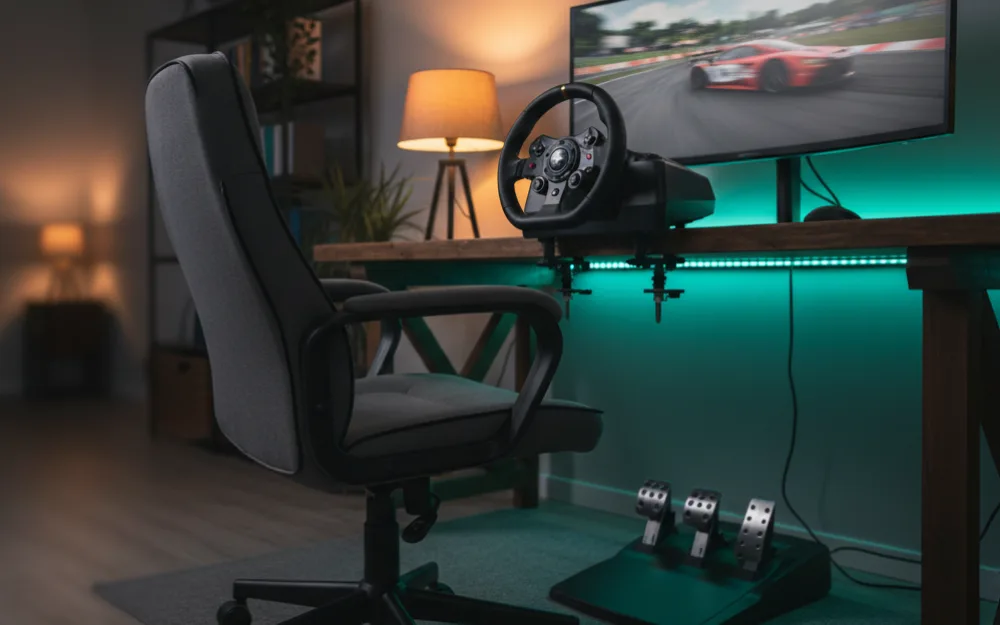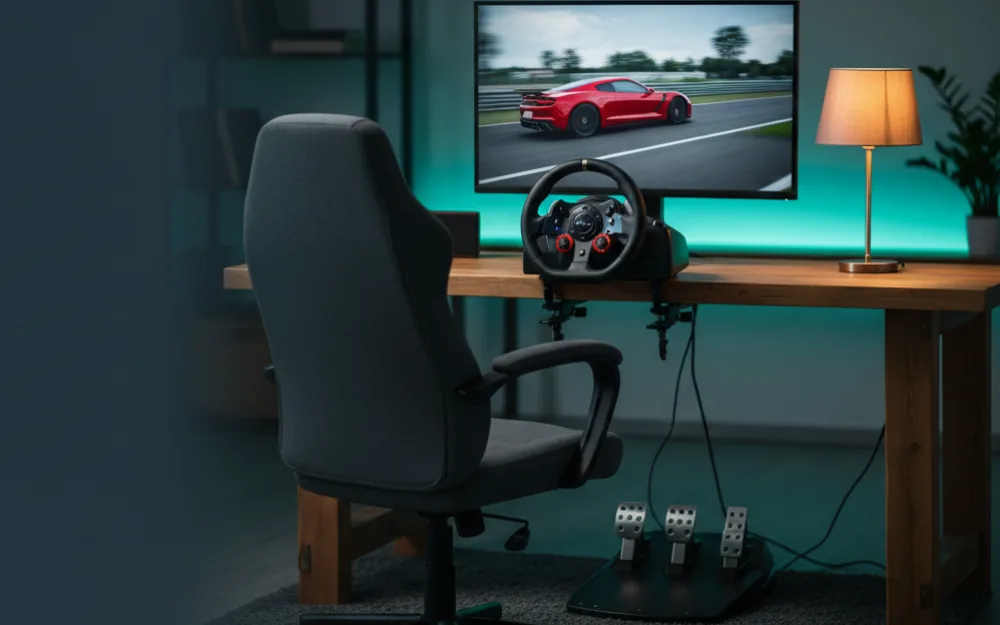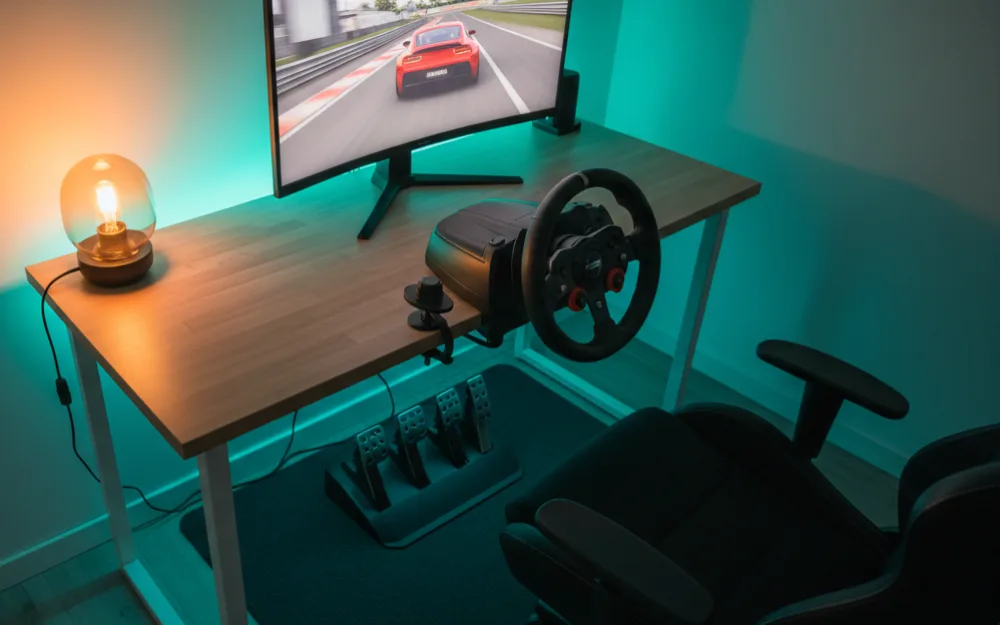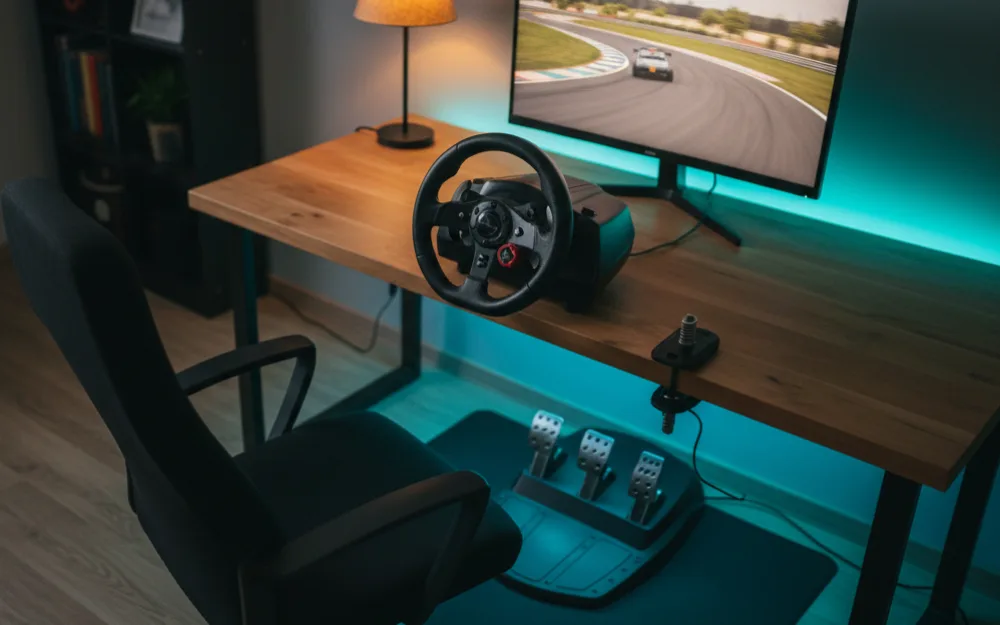

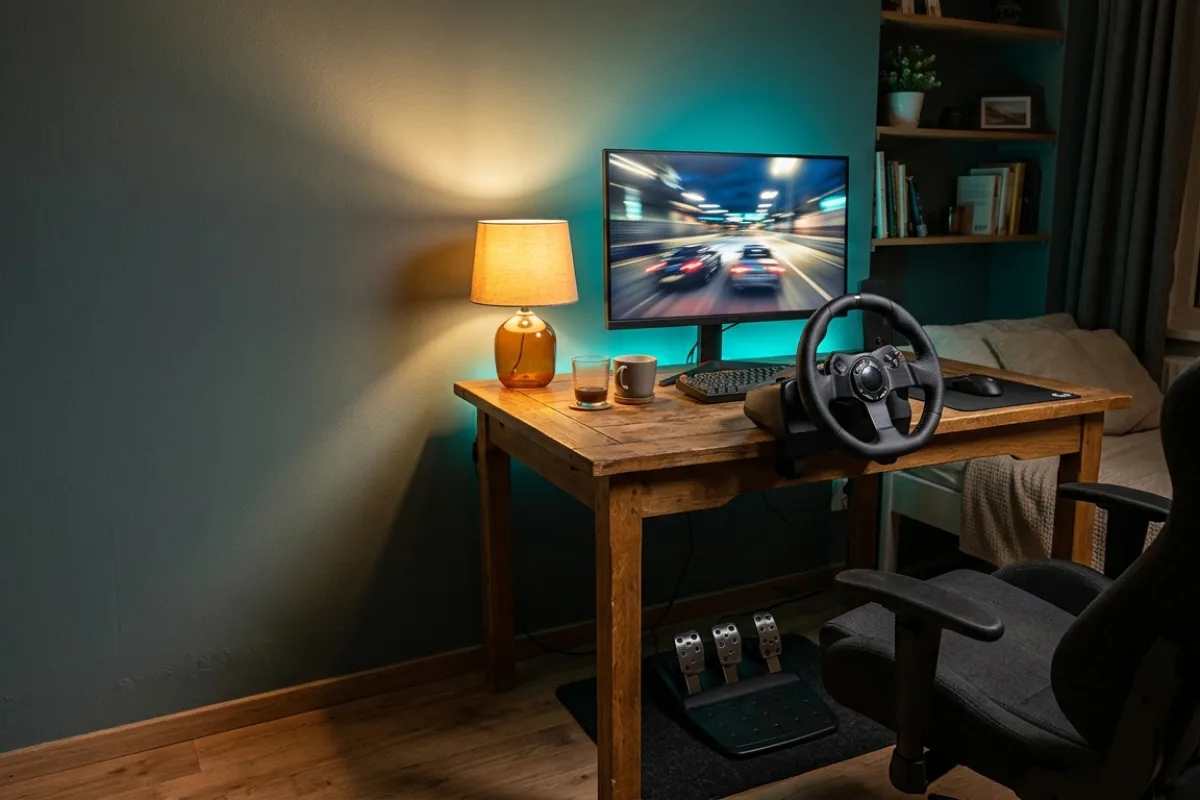

Sim racing has a reputation for being expensive, and it can be. It does not have to be. Most of the money people waste goes on buying the wrong tier first and replacing it within a year, or on buying accessories before the basics. This guide walks through the parts of a setup in the order they actually matter, what a sensible first purchase looks like on each platform, and what to leave for later.
What sim racing actually is
Sim racing is driving a physics based racing game with a steering wheel and pedals instead of a controller. The wheel pushes back against your hands (force feedback) to tell you what the tires are doing, and the pedals let you brake and accelerate with the precision a thumb stick cannot give. The games range from arcade friendly titles like Forza Horizon to full simulations like iRacing and Assetto Corsa Competizione, and the hardware ranges from a single clamp on wheel to a full cockpit with three screens.
You do not need the full cockpit. You need a wheel that gives real feedback, pedals that behave consistently, and something solid to mount them on. Everything else is an upgrade you can make once you know you enjoy it.
The parts, in order of importance
1. The wheel
The wheel (technically the wheel base plus the rim on it) is the part that changes the experience most. There are three motor types. Gear driven wheels are the cheapest and feel a little notchy. Belt and hybrid wheels are smoother. Direct drive wheels bolt the rim straight to the motor and give the most detail, and they now start at prices that used to buy a gear driven wheel. Our drive type explainer goes deeper; the short version is that direct drive is the better first purchase if the budget reaches it, and a gear driven Logitech is a perfectly good start if it does not.
2. Pedals
Every wheel bundle includes pedals, and for a first setup those are fine. The upgrade that matters later is a load cell brake, which measures how hard you press rather than how far the pedal moves. It is the single biggest improvement to lap time consistency and it is explained in our load cell guide. Do not buy it first.
3. Something to mount it on
A sturdy desk works for gear and belt driven wheels and for direct drive up to around 5 Nm. A folding wheel stand costs little, fixes wobble and sliding pedals, and is the most common second purchase. A cockpit with a seat is the long term answer for direct drive above 8 Nm. Our comparison of cockpit, stand, and desk covers when each one makes sense.
4. Display
Whatever screen you already own is fine to start. Ultrawide monitors, triples, and VR are upgrades for PC racers who already know they will keep at it; console players are limited to 16:9 screens anyway. See the monitor guide and VR guide when the time comes.
5. Everything else
Shifters, handbrakes, bass shakers, button boxes, gloves, and racing seats are all real improvements for specific kinds of driving. None of them belongs in a first order.
Platform decides half of it
PlayStation and Xbox each require licensed wheels, and a wheel licensed for one will not work on the other. PC accepts nearly everything. Decide where you will race before you buy anything, because a PlayStation wheel is a paperweight on an Xbox. Our compatibility guide has the matrix, and our platform specific roundups list only licensed hardware: PS5 wheels and Xbox wheels.
Three sensible first setups
The proven entry: a gear driven Logitech on a desk
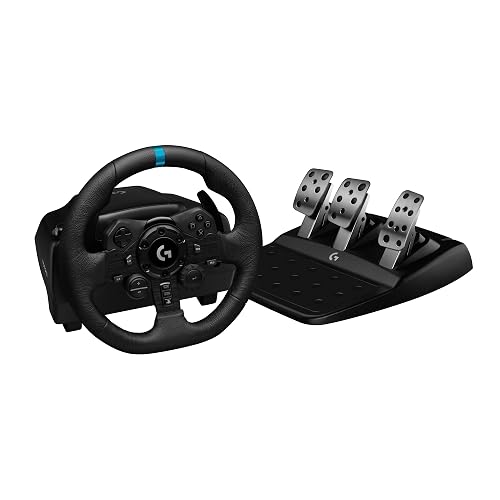
A Logitech G923 (PlayStation or Xbox version) or G29/G920 clamped to a solid desk, with the bundled three pedals, is how a large share of sim racers started. It works in every game, it is durable, and it holds resale value. What you give up is feedback detail; the gear mechanism adds a coarseness that direct drive does not have.
The modern entry: an entry direct drive bundle
Moza’s R3 Bundle (Xbox and PC) and R5 Bundle (PC) put a direct drive base, a quick release rim, two pedals, and a desk clamp in one box. On PlayStation the equivalent is the Fanatec GT DD Pro. These cost more than a Logitech but you will not feel the need to replace the base for years, and every accessory you add later fits the same ecosystem. This is the setup we recommend to most beginners who can reach it.

The cautious entry: a Thrustmaster T128 or similar
If you are not sure the hobby will stick, or the wheel is for a younger driver, an inexpensive force feedback wheel with two pedals is a reasonable way to find out. Expect to outgrow it within a season if you do stick with it. Our under $300 guide covers this tier.
Mistakes that cost the most
- Buying a wheel for the wrong console. Check licensing before anything else.
- Buying a high torque base first and mounting it to a desk. It will walk the desk and you will not use the torque.
- Buying accessories before a solid mount. A shifter on a wobbling desk is worse than paddles.
- Mixing brands on console. Pedals and shifters only connect to their own brand’s base on PlayStation and Xbox.
- Buying Amazon Renewed listings by accident. Several search results for popular wheels are refurbished units with short warranties; check the listing title.
Games to start with
On PlayStation, Gran Turismo 7. On Xbox, Forza Motorsport for circuit racing or Forza Horizon 5 for open world. On PC, Assetto Corsa is inexpensive and endlessly moddable, Assetto Corsa Competizione is the GT3 specialist, Automobilista 2 is broad and wheel friendly, and iRacing is the subscription service for organized online racing. All of them support every wheel in our guides.
Settings that matter on day one
Set the wheel’s rotation to match the car (most games do this automatically), lower force feedback strength until it never clips, and set the in-game field of view to match your real screen distance. These three settings matter more than any hardware upgrade, and they are free. Our Setup and Settings section covers them per wheel and per game.
Frequently Asked Questions
Is a wheel really better than a controller?
For learning car control, yes. Force feedback tells you when the tires are sliding before you can see it, which a controller cannot do. Some drivers are fast on a controller, but they are working around a handicap.
Should I buy direct drive as a beginner?
If the budget covers an entry bundle and you have a solid desk or stand, yes. It is the purchase you will not replace.
Do I need three pedals?
Only for an H-pattern shifter. Most modern race cars use paddles, and two pedal bundles are complete for them.
Can I use a wheel on a couch?
Yes, with a folding wheel stand. It holds the wheel and pedals in front of any chair or sofa and packs away afterwards.
- September 2026: first published.