
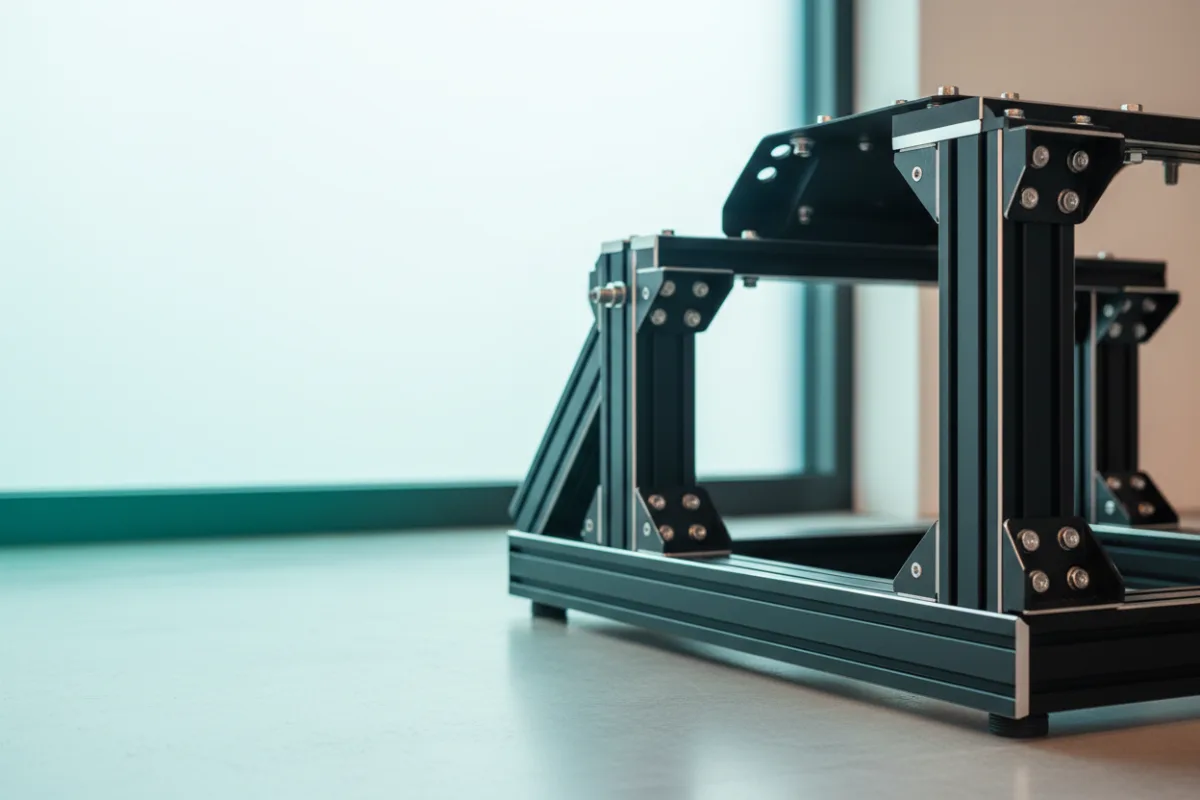

An aluminum profile cockpit is a sim racing rig built from extruded aluminum bars with T-shaped slots along each face, the material used for industrial machine frames and workbenches. Brackets and accessories attach anywhere along the slot with T-nuts, so the frame is stiff, heavy, and adjustable in a way welded tube frames cannot match.
What the numbers mean
Profile is described by its cross section in millimeters: 40 by 80 mm (written 4080 or 8040) is the common rig size, 40 by 40 (4040) is used for smaller members, and larger sections appear on the heaviest frames. “8020” is also the name of a well known American supplier and has become shorthand for the whole category. Larger sections are stiffer; a 4080 main rail is standard for direct drive bases up to and beyond 20 Nm.
Why sim racers use it
- Stiffness: high torque bases and load cell pedals need a frame that does not flex, and profile does not.
- Adjustability: every bracket slides along the slot, so wheel, pedal, and seat positions are continuous rather than fixed holes.
- Expandability: monitor stands, shifter mounts, bass shaker brackets, and keyboard trays bolt on anywhere.
- Longevity: the frame outlasts several wheel generations.
Trade offs
Profile rigs take longer to assemble, weigh more (the Marada 8040 lists over 100 pounds), rarely fold, and cost more than tube frames from established brands, although ARES WING and Marada have brought the price down. Some budget profile rigs come with a seat; premium ones often do not.
Related terms
Torque (Nm) · Motion platform · Guide: cockpit vs stand vs desk · Roundup: best cockpits