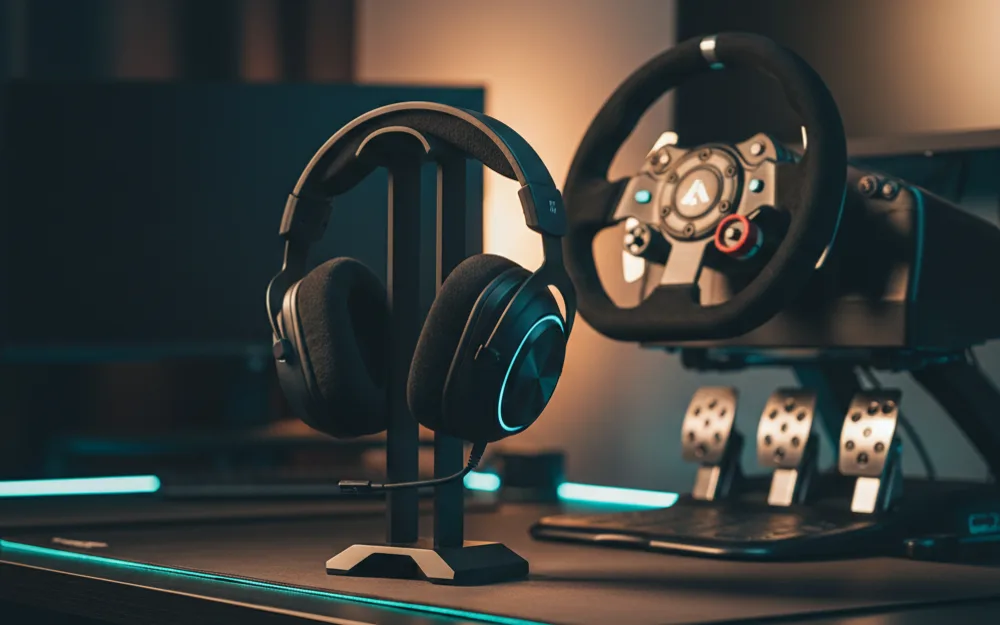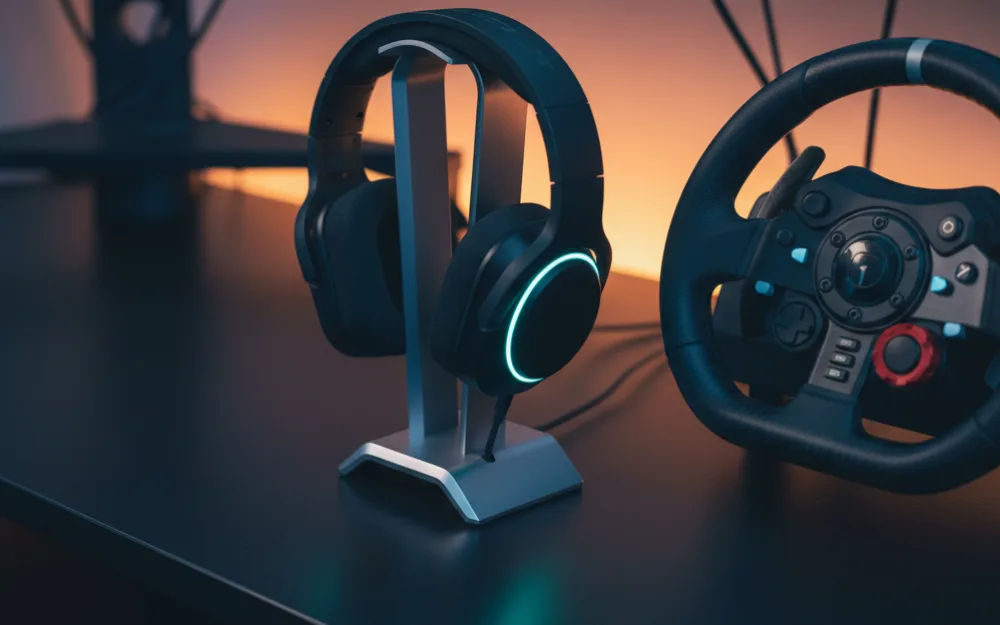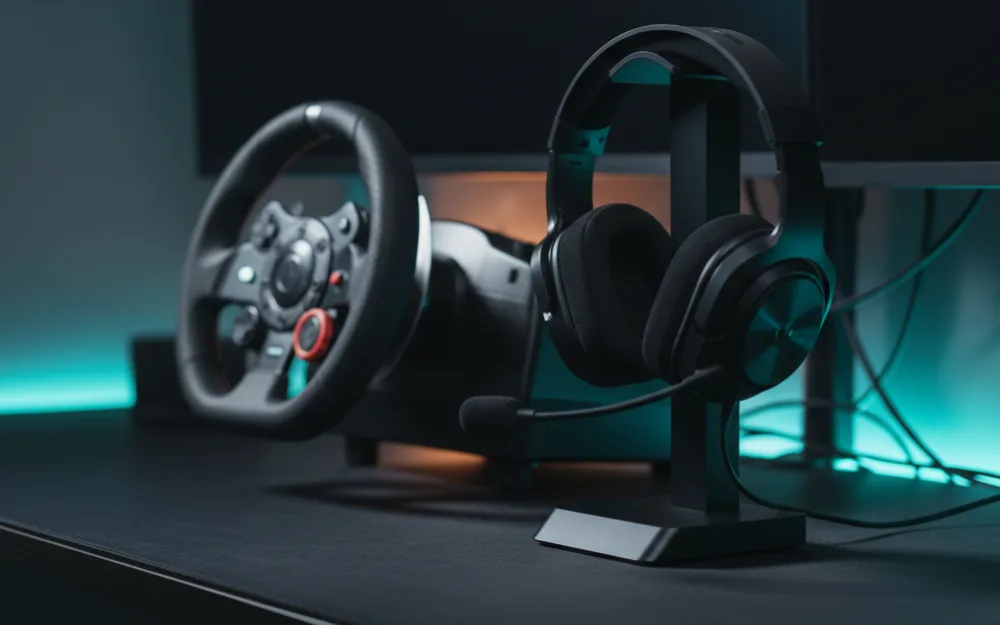


A headset does more for sim racing than most drivers expect. Good positional audio tells you where a car is before you see it, lets you hear the front tires start to scrub, and catches the change in engine note that signals a shift point. For a rig builder the practical questions are about comfort over a long stint, how the cable routes around your cockpit, and whether you need a microphone for team racing. This guide walks through what to look for so you can choose a headset that suits how you actually race.
We build our buying guidance from maker specifications and recurring owner feedback, and you can read how we review. New to the hobby? Start with Getting Started.


How to choose a sim racing headset
Racing asks different things of a headset than a shooter does. You wear it for long sessions, you sit in a fixed position, and the audio cues you care about are directional and subtle. Weigh these factors before anything else, because they separate a headset you forget you are wearing from one you take off after twenty minutes.
Comfort and clamp for long stints
Comfort outranks almost everything for sim racing, because an endurance stint can run for hours. Look for even weight distribution, a headband that spreads pressure rather than pinching the crown, and ear cushions that breathe. A strong clamping force feels secure at first and turns into a headache later, so owners who race long consistently favor a lighter, more relaxed fit. If you wear glasses, cushions that do not press the arms into your temples matter even more.
Open back versus closed back
This is the choice that shapes the sound. Open back headsets let air move through the ear cups, which tends to give a wider, more natural sense of space, useful for placing cars around you. The trade is that they leak sound both ways, so a noisy room bleeds in and your audio bleeds out. Closed back headsets seal better, block room noise, and suit shared spaces, at the cost of a slightly more closed in soundstage. Match the choice to your room: open back for a quiet dedicated space, closed back for a busy household.
Positional audio over raw volume
The cue that helps you race is direction, not loudness. A headset that reproduces a clean stereo image lets you hear a car drawing alongside and judge the gap by ear. Many sims and PC audio tools add surround processing on top, which can widen that image further. Treat aggressive bass boost with some caution, since it can mask the mid range detail where tire scrub and engine note live. A balanced, detailed sound serves racing better than a bass heavy tuning built for explosions.
Wired versus wireless around a rig
On a cockpit, cable management is a real consideration. A wired headset is simpler and never needs charging, but the cable has to route cleanly so it does not snag on a shifter or catch under your arm as you turn the wheel. A wireless headset frees you from that, at the cost of battery life to track and a charge to remember before a long session. Neither is wrong. If your rig already runs tidy cable channels, wired is a fine, cost effective route; if you move around or hate cables near the wheel, wireless earns its keep.
The microphone, only if you need it
If you race in a league, run team endurance events, or use voice chat, a clear detachable or flip up microphone matters. If you race alone, it is weight and cost you do not need, and a clean pair of headphones may serve you better. Be honest about how you race before paying for a broadcast quality boom you will never speak into.
What to look for at a glance
| Priority | What it does for racing | Who it matters most to |
|---|---|---|
| Long session comfort | Lets you race for hours without fatigue | Endurance and league racers |
| Open back sound | Wider, more natural car placement | Quiet dedicated rooms |
| Closed back isolation | Blocks room noise, contains leakage | Shared or busy spaces |
| Balanced, detailed audio | Reveals tire and engine cues | Every serious sim racer |
| Clear microphone | Team and voice communication | League and team racers only |
Who should skip a dedicated headset
If you race on desktop speakers in a quiet room and never use voice chat, a good pair of speakers may already serve you well, and a headset adds little. If you run a bass shaker or haptic setup, some of the low frequency immersion you might chase from a headset is already handled through the seat, so prioritize clarity over bass in that case. And if long headset sessions give you a warm or heavy head, an open back design or lighter frame is worth trying before you assume headsets are not for you.
Where to go next
Audio is one layer of immersion, and the rig itself is another. If you are still building, see our best sim racing cockpits under $500 for a frame that routes cables cleanly, and browse more gear in audio and headsets.
Frequently Asked Questions
Can I use a sim racing headset with a PS5 or Xbox?
Often yes, but it depends on the connection. A USB headset, a 3.5 mm wired headset, and a wireless dongle model each need a console port or controller jack that supports that connection. Check the maker listing for console support and microphone connection before buying, since a headset that works on PC may not carry voice chat on a console.
Do I need a special headset for sim racing, or will a regular gaming headset do?
A regular gaming headset can work fine. What matters for racing is comfort over long sessions, clear positional audio, and an open or closed back design that suits your room. A microphone only matters if you race in teams or leagues. If you race solo in a quiet room, dedicated sim racing branding adds little.