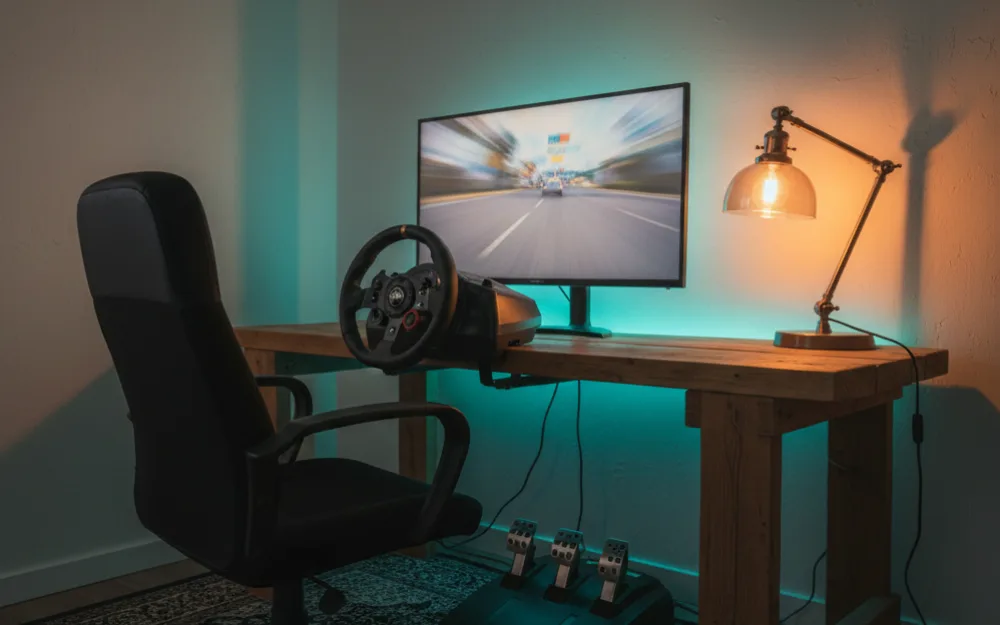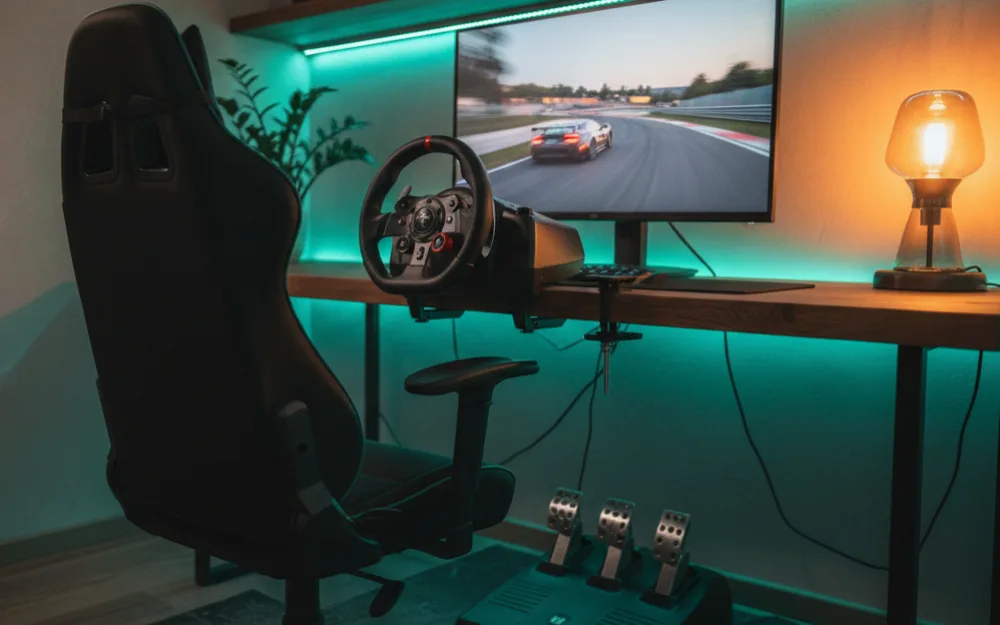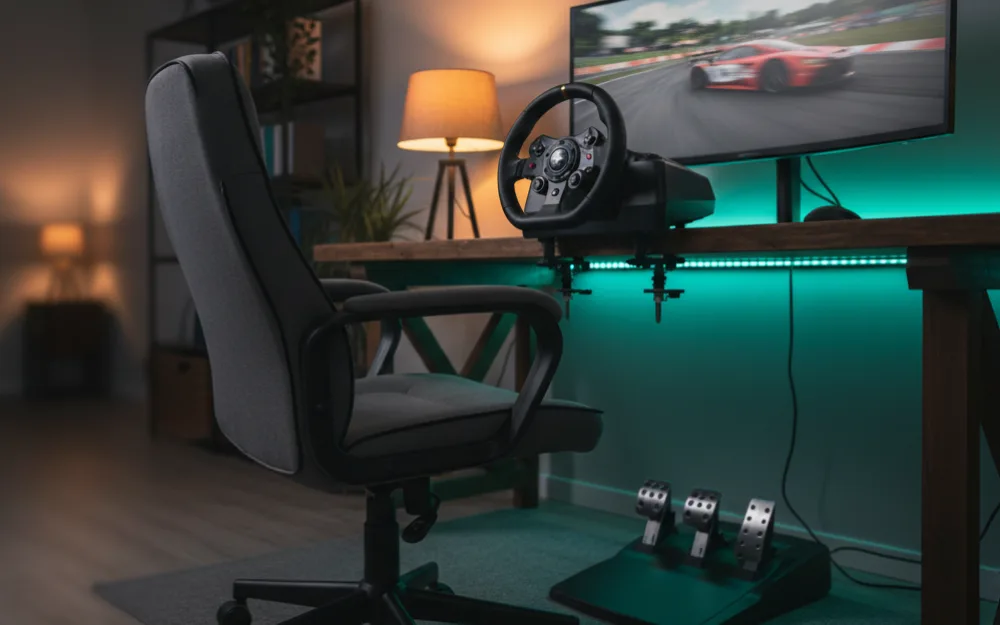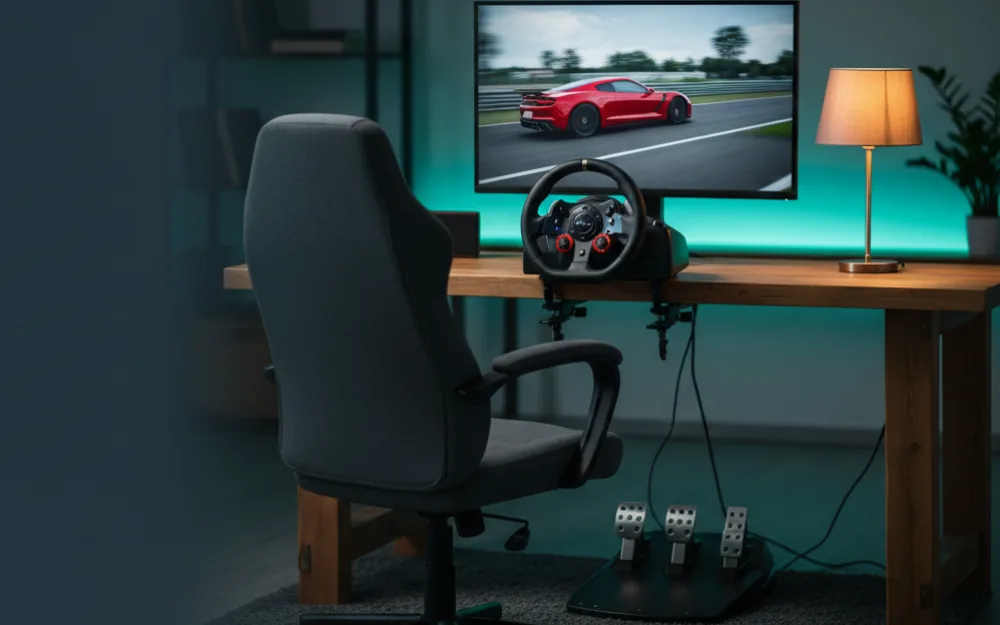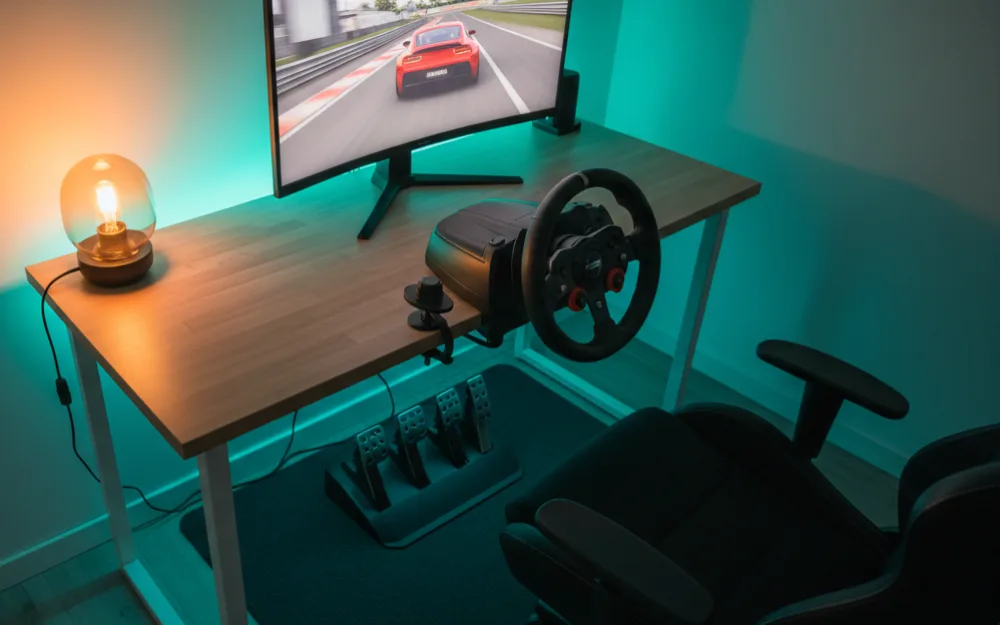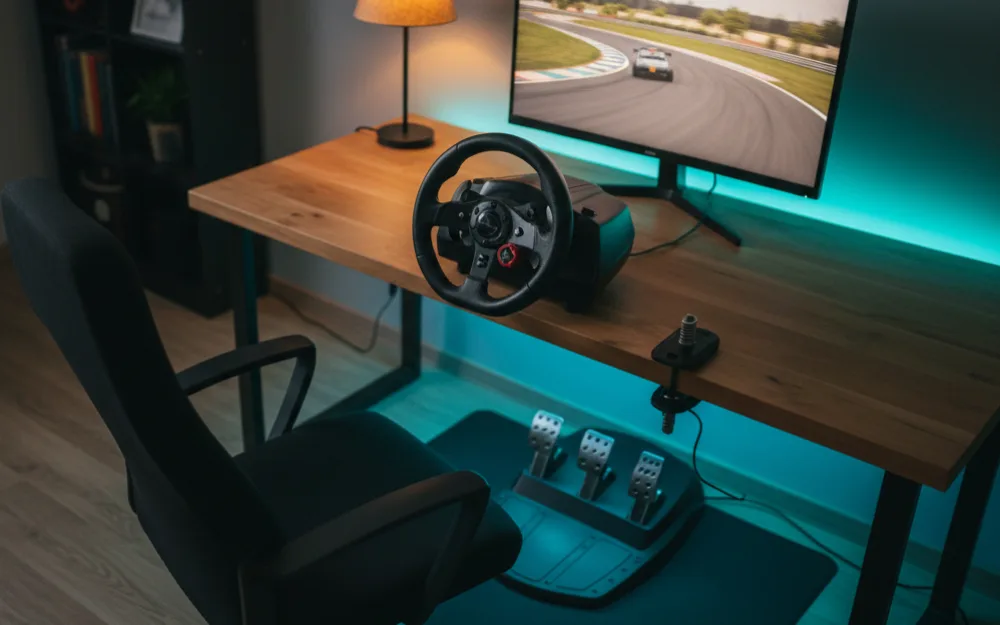

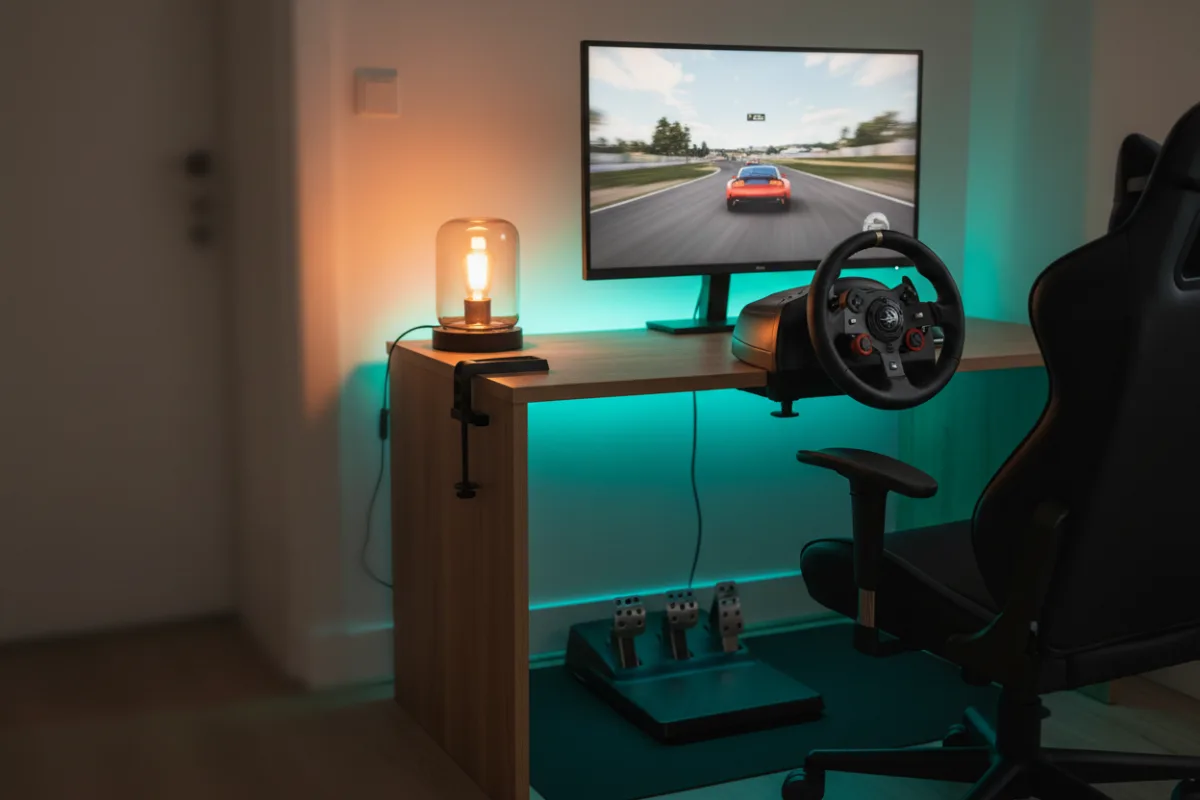

This guide helps you build a high tier sim racing setup where every part is strong enough that nothing holds the rest back. By the end you will know how to spend on a capable direct drive wheel, a load cell brake, a rigid aluminum profile cockpit, and the display path that suits you, whether that is triple screens or VR. Before you commit, answer three questions: do you value immersion or precision more, how much space and how strong a PC do you have, and are you buying for the long term? Your answers point you at the right screen and the right frame.
These recommendations come from comparing this budget with the parts experienced racers recommend at the high tier, and you can read how we review. For the wider picture, see how much a sim racing setup costs, and if you are stepping up, our sim racing setup under $1000 guide is the tier below.
What changes at this budget
At the high tier you are no longer making compromises to fit the parts together; you are choosing between very good options based on what you value. The wheel gets stronger and more detailed, the cockpit becomes a rigid aluminum profile frame you can extend for years, and you can afford a serious display path. The discipline here is different from the entry tiers: instead of spreading thin, you decide whether immersion or precision leads, and you weight the screen budget accordingly.
The wheel: a stronger direct drive base
This budget affords a capable direct drive base with more strength and detail than an entry unit, plus the option of a quality wheel rim to match. More strength means more information through the rim, but it also means more force, so the safety habits matter even more: keep both hands gripping the wheel, keep your thumbs outside the spokes, start at a reduced strength, and build up. Reduce the strength further for a lighter driver. To choose a base, read the best direct drive wheels, and to understand the numbers, how much torque do you need.
The pedals: a proper load cell set
At this level a load cell brake is not optional, it is the point. Brake by pressure against a firm stop and your braking becomes far more consistent and repeatable, which is where lap time and confidence come from. A quality three pedal set with a load cell brake pairs naturally with a strong wheel. Mount it to a solid frame, because a load cell asks for real pressure and will push a loose pedal set away. Compare sets in the best sim racing pedals and read what is a load cell pedal.
The cockpit: an aluminum profile frame
A strong wheel and a firm brake demand a rigid frame, and this is where an aluminum profile cockpit earns its keep. These frames resist flex under load, hold a strong wheel without twisting, and let you bolt on monitor stands, shifters, and button boxes as you grow. Owners consistently describe them as the last cockpit they need to buy, which is exactly why they suit a long term build. Compare them in the best sim racing cockpits and understand the material in aluminum profile cockpit.
The display: triples or VR, your choice
This is the fork in the road at the high tier, and it is genuinely a matter of preference rather than a single right answer. Triple screens give you a wide, sharp view with easy access to your surroundings and are simple to live with day to day. VR gives you the strongest sense of depth and scale, with correct one to one distance judgment, at the cost of asking more from your PC and adding a headset to put on. Neither is better in the abstract; it depends on whether you prize social, everyday convenience or maximum immersion. Compare them in the best monitors for sim racing, the best triple monitor stand, and the best VR headset for sim racing.
Do not forget the PC
A high tier display, triples or VR especially, asks a lot of your computer, so budget for a capable PC as part of the plan rather than an afterthought. VR in particular demands steady frame timing, since unstable frames are what make long stints uncomfortable. If your current machine is older, factor an upgrade into this tier. See the best gaming PC for sim racing for guidance.
A sample high tier build
| Part | What to get on this budget | Why |
|---|---|---|
| Wheel | A capable direct drive base and a quality rim | More detail and strength for serious driving |
| Pedals | A three pedal set with a load cell brake | Consistent, repeatable braking |
| Cockpit | An aluminum profile frame | Rigid under load and endlessly extendable |
| Display | Triple screens or VR, to taste | Precision and convenience, or maximum immersion |
| PC | A capable machine, upgraded if needed | Steady frames for triples or VR |
Where the extra money is and is not worth it
At the high tier, spending more does not always return more, so aim your money where it counts. A rigid cockpit and a quality load cell brake pay you back on every lap through consistency and feel, so they deserve a firm share of the budget. A stronger wheel is worth it up to the point where you can comfortably control the force; beyond that, extra strength you dial back down is money resting in a slider. The display fork is where personal value matters most: triples and VR cost similar amounts but deliver very different experiences, so choose the one that fits how you like to race rather than the one with the bigger number. A shifter, a handbrake, and a button box are worthwhile if your sims use them, and easy to skip if they do not.
Common mistakes at the high tier
The most expensive high tier mistake is buying a display your PC cannot drive smoothly, especially VR, where unstable frames turn a long stint uncomfortable. Confirm your PC is ready, or budget to upgrade it, before you commit to triples or VR. A second mistake is running a strong wheel at full force from day one; start reduced and build up, both for control and for the safety habits that matter with real force. A third is over buying the wheel while under building the frame, which blurs the detail you paid for. Balance the parts, and the whole rig rewards you.
Who this build suits, and who should hold off
| This build is right if | Hold off or adjust if |
|---|---|
| You want a long term rig with no weak links | You are still unsure sim racing will stick; start lower |
| You have space and a strong or upgradable PC | Your PC cannot drive triples or VR yet |
| You know whether you prefer immersion or precision | You have not tried both display types and cannot decide |
Your next step
Choose your direct drive base and aluminum profile cockpit first, add a load cell brake, then decide between triples and VR based on what you value, and make sure your PC can keep up. If this is more than you need right now, our sim racing setup under $1000 guide is a strong middle ground, and sim racing for beginners covers the fundamentals worth locking in first.