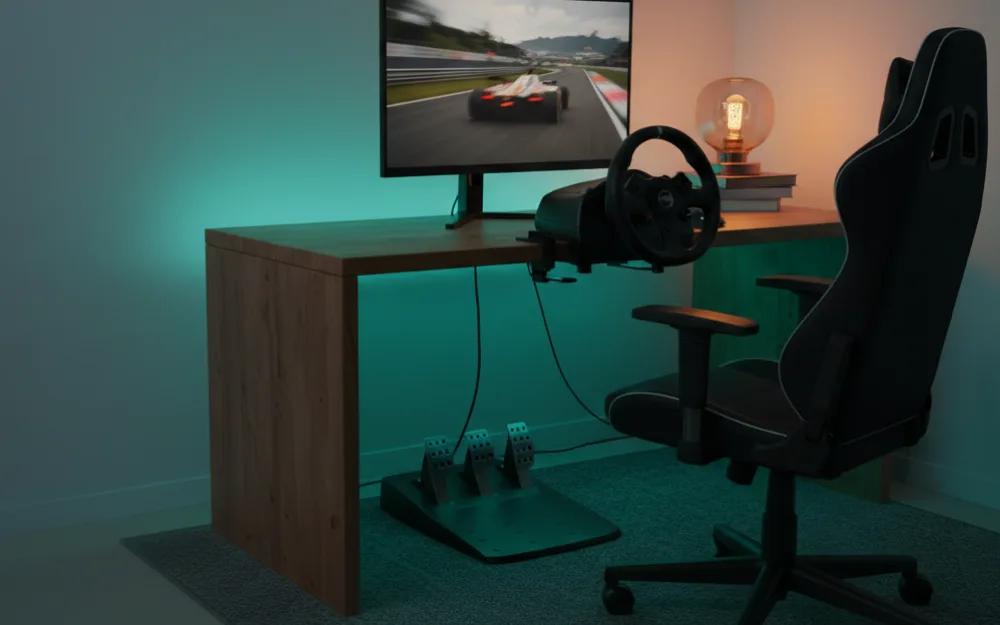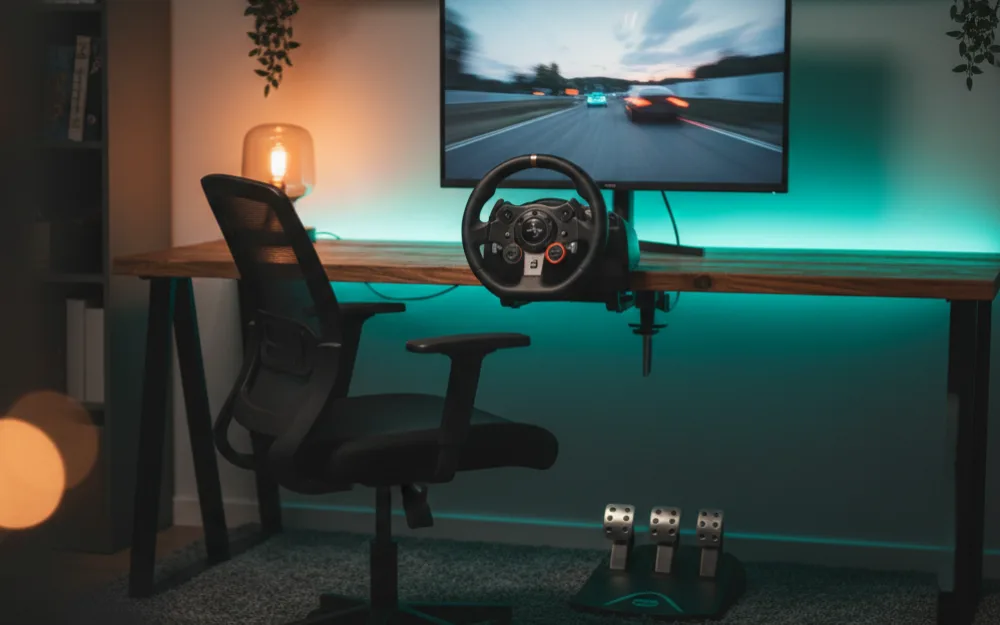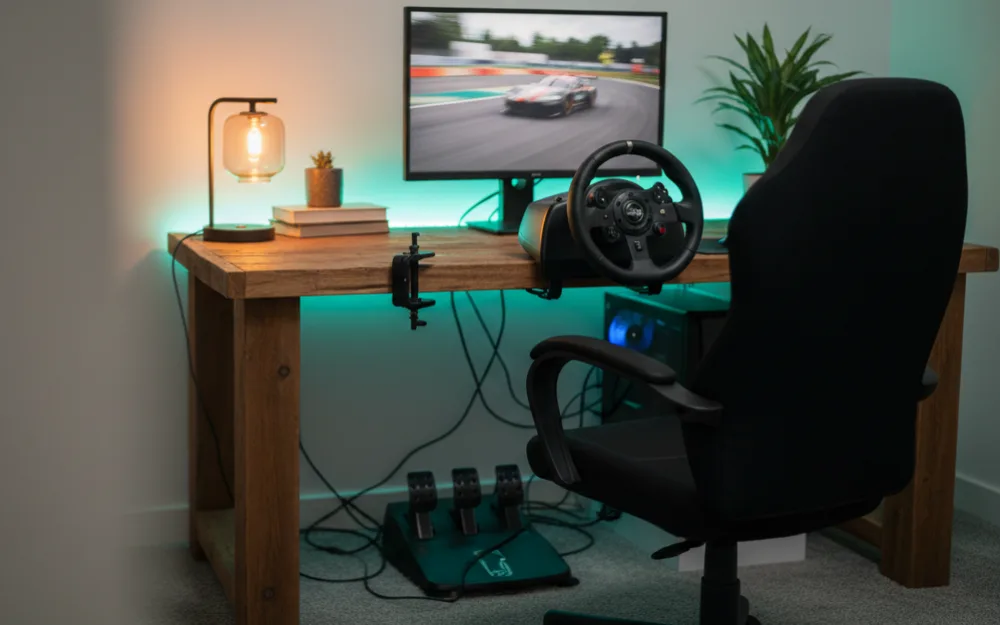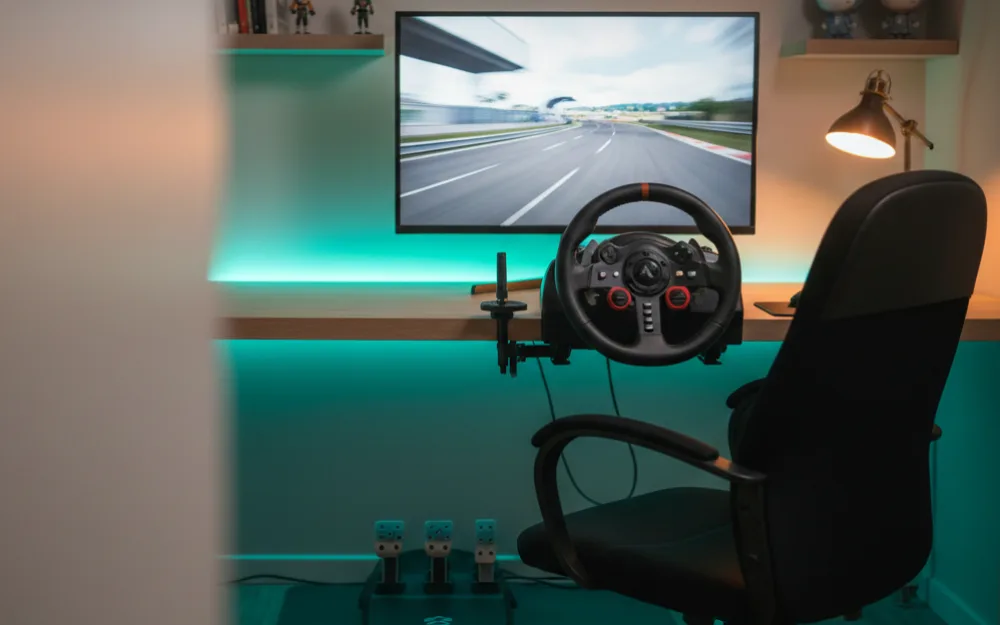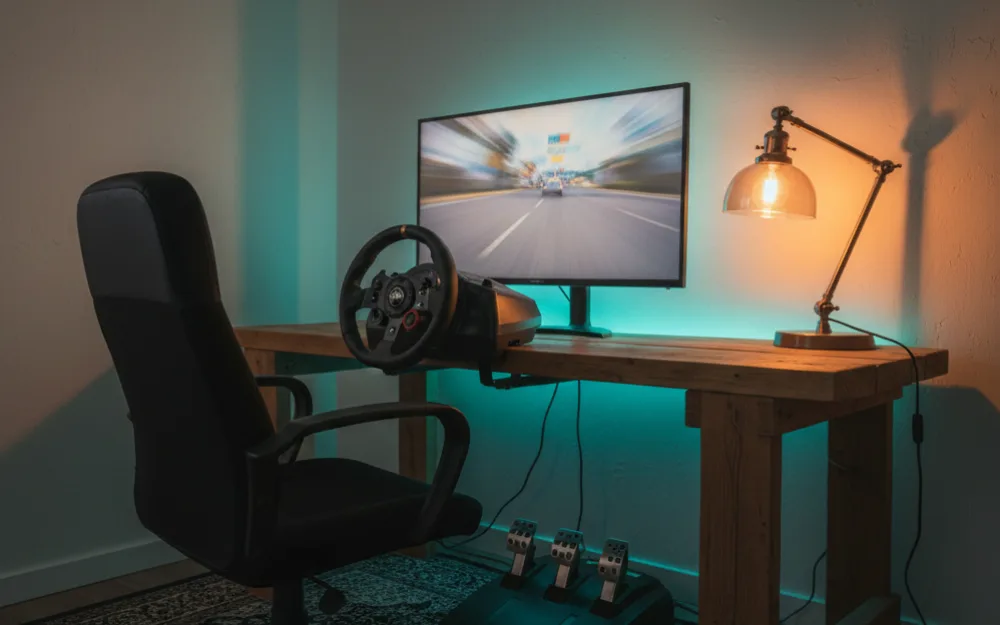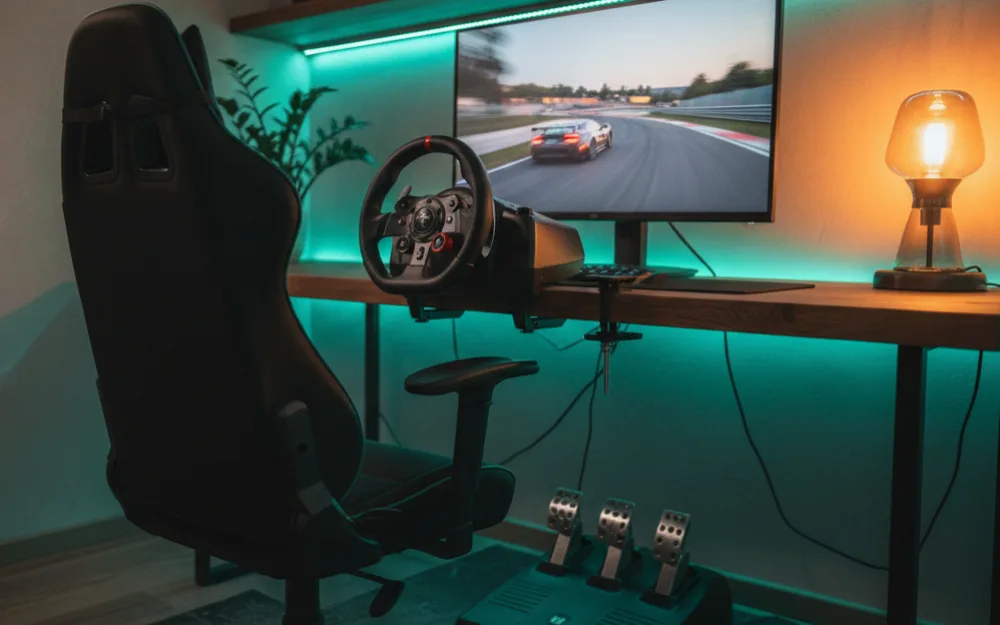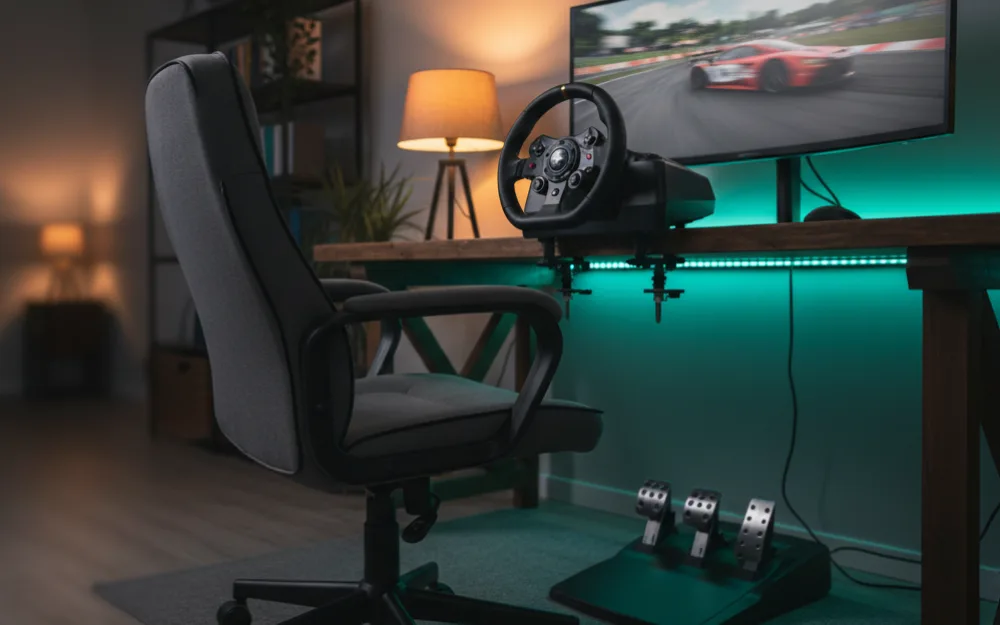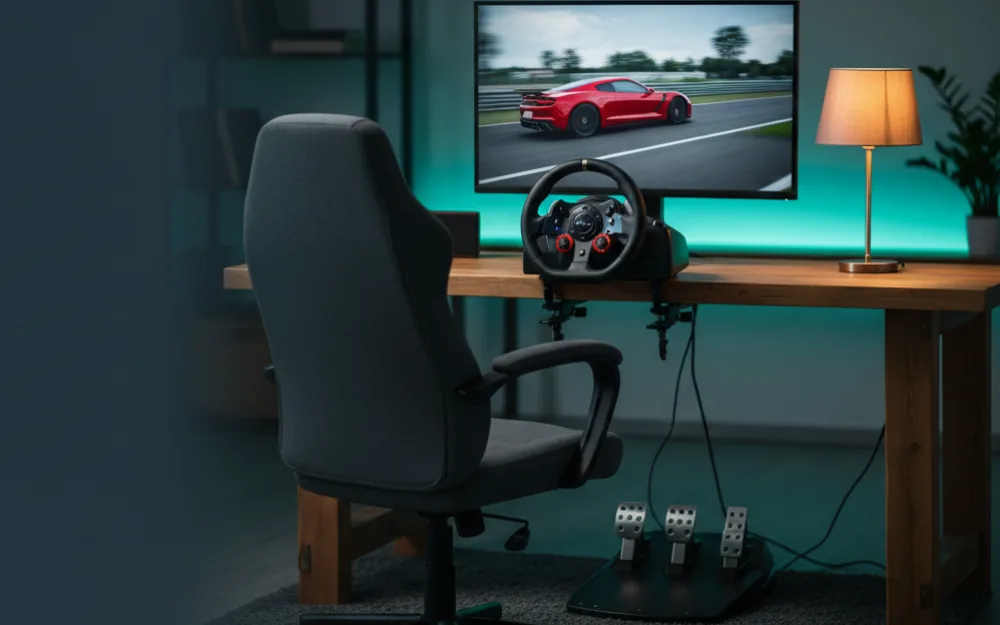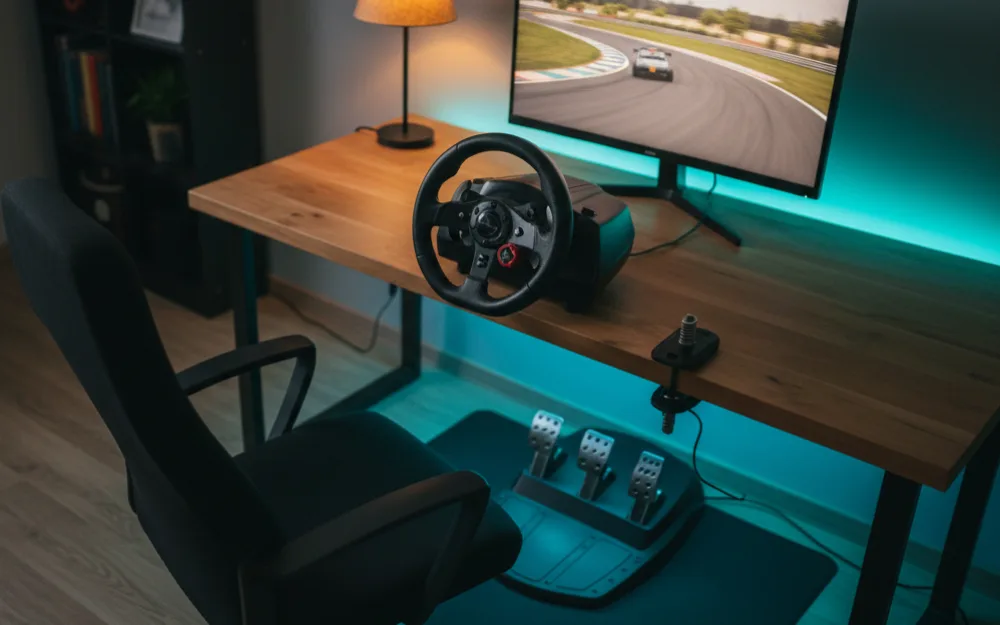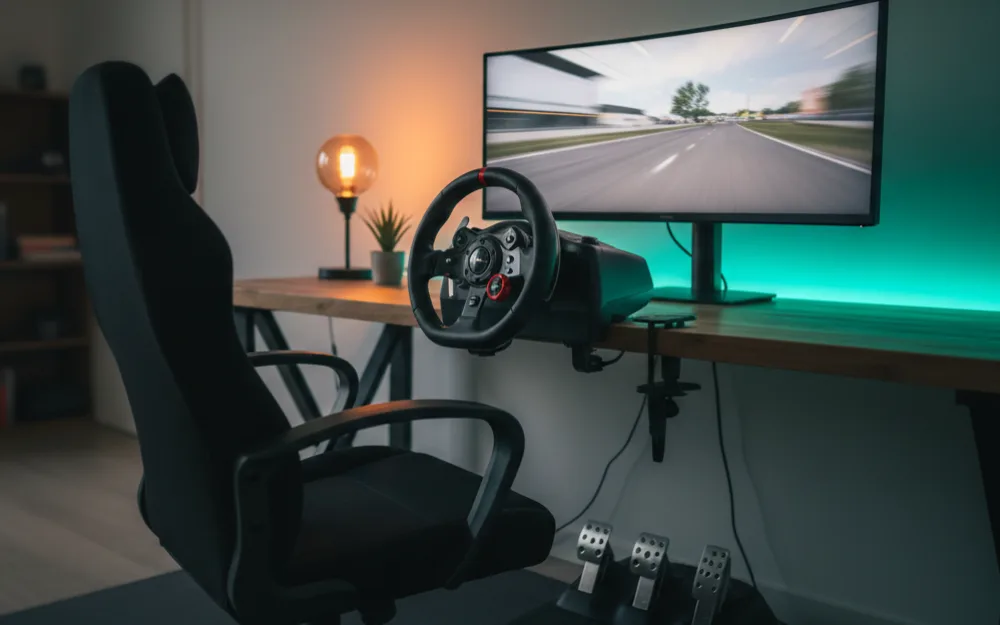

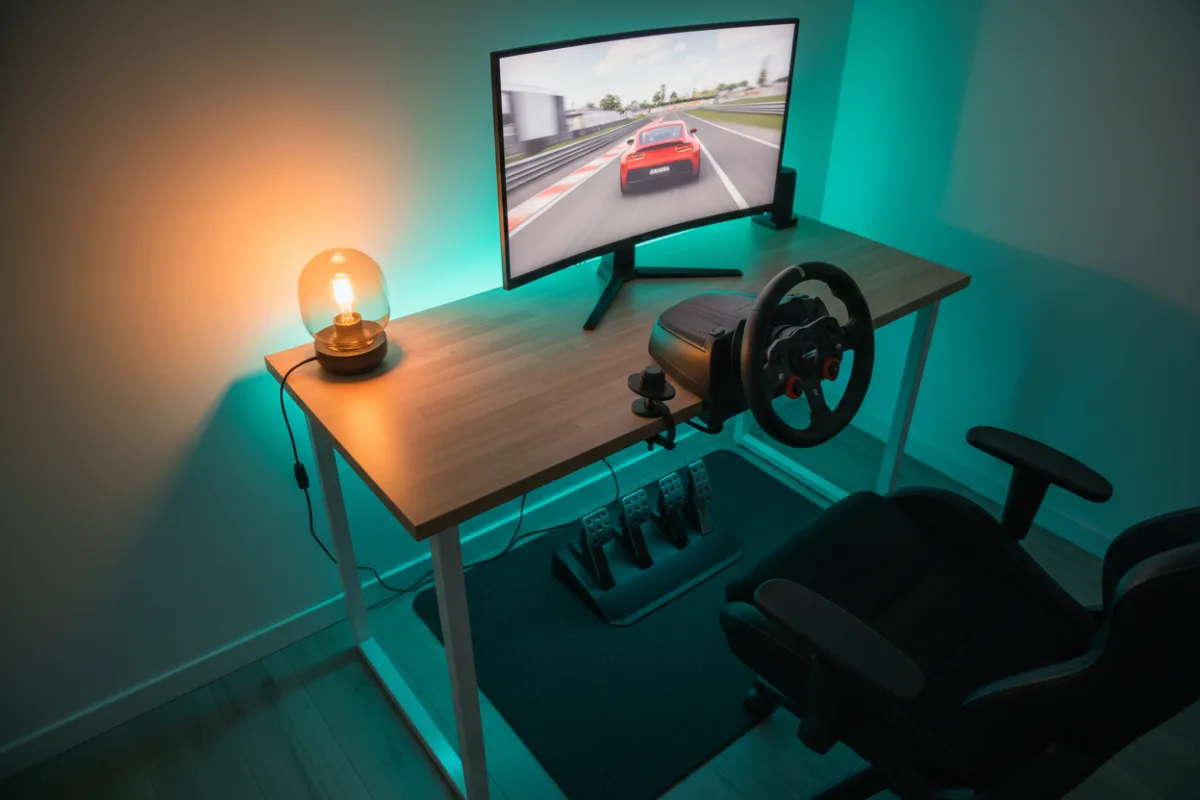

The PC is where sim racing has no ceiling and no licensing walls. Every wheel, every base, and every game is open to you, which is freeing and, if you are honest, a little overwhelming. This guide cuts through that by laying out a clear path across three tiers, from a first direct drive bundle to a strong high torque base, with the pedals, cockpit, and screen that keep each tier balanced. The goal is simple: build a rig where no single part holds back the rest, and where you can spend more or less depending on how you race.
These recommendations come from comparing manufacturer specifications against what owners report over long ownership, and you can read how we review before you trust the list. If you are new to building a rig, start with Getting Started, then choose the tier that fits you.



Decide your tier first
Before you compare parts, decide which tier you are actually building for. Ask yourself how serious you are about lap time, whether you have room for a permanent cockpit, and how much you intend to upgrade later. An entry direct drive rig is plenty for most people and leaves clear room to grow. A mid tier build adds a load cell brake and a rigid frame so the wheel can breathe. A high torque base is for drivers who already know they want the strongest feel and will invest in a cockpit stiff enough to hold it. Match the money to where you are standing, not to a spec sheet.
Entry direct drive: MOZA R5 bundle
Lead an entry PC build with a direct drive bundle, since buying the base, rim, and pedals together stretches the budget further than sourcing each part alone. The MOZA R5 gives you a genuine direct drive base with the clean, detailed feel geared wheels cannot reach, plus a rim and pedals to start racing right away. A direct drive base connects the rim straight to the motor, so the front tires communicate grip far more clearly. Because it produces real force, start at a lower strength and build up as you get comfortable, keeping both hands firmly on the rim during the calibration sweep. It is the smart foundation for a first serious PC rig. To weigh other bases at this level, read the best direct drive wheels.
Mid tier base: Fanatec CSL DD
The Fanatec CSL DD is a popular mid tier direct drive base rated at 5 Nm, which is a strong, controllable amount of force for most GT and formula racing without becoming a handful. Buying a base on its own lets you choose the rim and pedals that suit you rather than accepting a bundle, which is why so many PC racers build around it. Reviewers who race it consistently describe crisp, detailed force feedback that rewards a smoother driving style. Pair it with a rigid cockpit and a load cell brake and you have a rig that will keep up with your skill for a long time.
The pedals: add a load cell brake
A load cell brake is the upgrade owners most often wish they had made sooner. A load cell measures how hard you press rather than how far the pedal travels, which is much closer to a real car and makes consistent braking far easier to learn. The Fanatec CSL Elite Pedals V2 add that pressure based feel while keeping a Fanatec rig in one ecosystem, though any quality load cell set will transform your braking. If money runs tight after the base and cockpit, the bundle pedals are fine to start with and the load cell brake can come later. Compare options in the best sim racing pedals.
The cockpit: a rigid steel frame
A direct drive wheel deserves a frame that will not twist under it. The Fanatec CSL Cockpit is a steel reinforced frame that holds the wheel and pedals solidly, supports a load cell brake without flexing, and gives you a consistent driving position lap after lap. Rigidity is the whole point: a frame that moves under a strong wheel blurs the feedback the wheel is sending. If you need to fold the rig away between sessions a foldable cockpit still works, but expect to trade some stiffness for the convenience. Compare frames in the best sim racing cockpits.
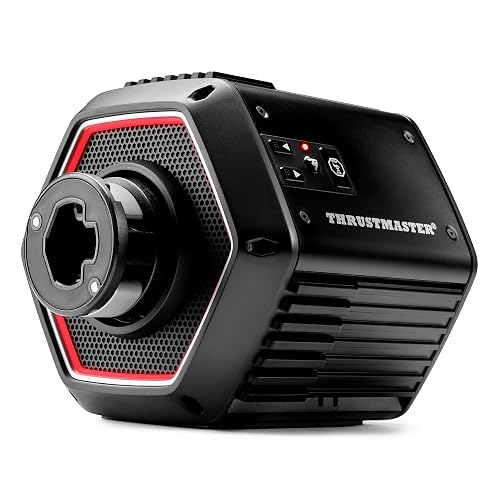
High torque base: Thrustmaster T818
When you know you want the strongest feel in this build, the Thrustmaster T818 is a 10 Nm direct drive base built for drivers who chase detail and immersion. That much force reveals subtle changes in grip and surface that lighter wheels smooth over, which is exactly what serious drivers are after. Treat the safety here as seriously as the performance: begin at a lower strength, keep a firm grip during startup, and never let a child use it at full force. A base this strong also demands a genuinely rigid cockpit, so budget for the frame at the same time. This tier is a destination, not a starting point.
The screen: one large immersive display
Displays can swallow a budget fast, so be disciplined. A single large ultrawide monitor, like the KTC 34 inch panel here, widens your field of view for a more immersive picture without the cost and complexity of triple screens. If you already own a capable monitor, keep racing on it and move the saving into the base or a better brake, since smoothness matters more than sheer size. Triples and VR are lovely, but they belong to a higher budget and a stronger PC for most people. See the best monitors for sim racing for the full picture.
How the PC tiers compare
| Tier | Wheel or base | Best for | What to pair it with |
|---|---|---|---|
| Entry | MOZA R5 bundle | A first real direct drive rig | The included pedals, a modest cockpit or stand |
| Mid | Fanatec CSL DD (5 Nm) | Balanced GT and formula racing | A load cell brake and a rigid steel cockpit |
| High | Thrustmaster T818 (10 Nm) | Maximum detail and immersion | A stiff cockpit and a load cell brake to match |
Where to spend more, and where to save
This build balances the parts evenly, but your racing may tilt it. If lap time and feel matter most, put more into a stronger base and keep a screen you already own. If immersion is your goal, hold the base at entry direct drive and spend the difference on the display. If you drive classic cars, touring cars, or truck sims, budget for an H pattern shifter, and if rally or drifting appeals, a handbrake earns its place. Skip both if you mostly race modern GT and formula cars with paddles. Match the extras to what you actually drive rather than collecting hardware you rarely touch.
Who should adjust this build
| Reconsider a tier if | Do this instead |
|---|---|
| You are unsure you will stick with the hobby | Start at the entry MOZA R5 tier and upgrade later |
| You bought a strong base but a flimsy stand | Rebalance toward a rigid cockpit before adding a screen |
| You race only casually a few times a month | The high torque T818 tier is more than you need |
| Your PC cannot drive triples or VR smoothly | Stay on a single ultrawide until you upgrade the PC |
How the WSR Score works
The WSR Score reflects verified buyer ratings gathered and normalized on a consistent scale, not an editorial rubric. You can read exactly what goes into it on How We Review. Read it as one honest measure of how owners feel over time, alongside the fit notes in this guide.
Your next step
Choose the tier that matches how you race, then add a load cell brake and a rigid cockpit before you reach for the screen. When your parts arrive, our guide to how to connect a racing wheel to PC gets you set up cleanly, and for full costed plans see our sim racing setup under $1500 and sim racing setup under $2000 guides. New builders can return to Getting Started anytime.