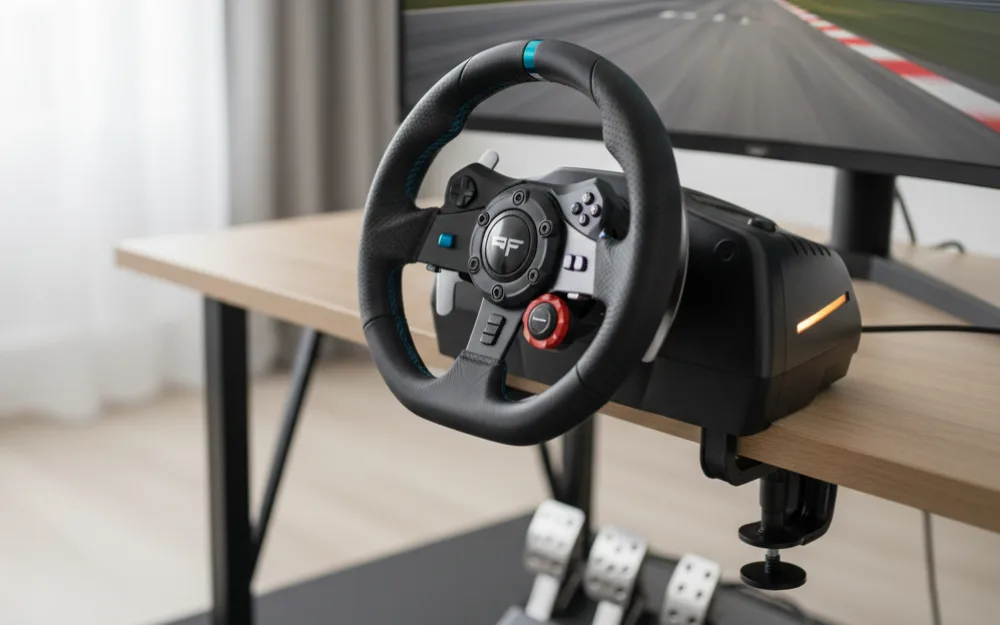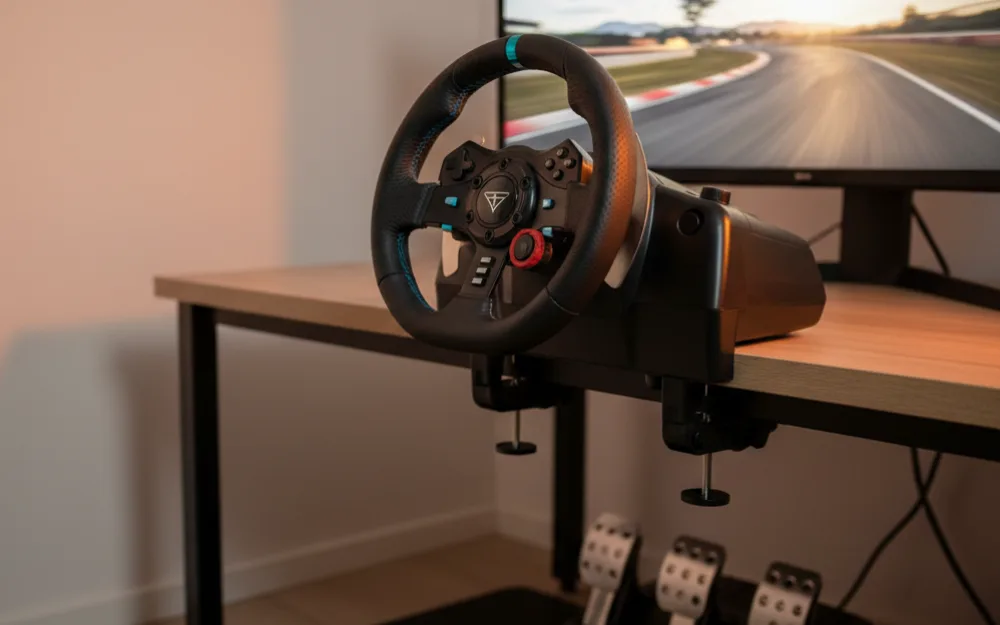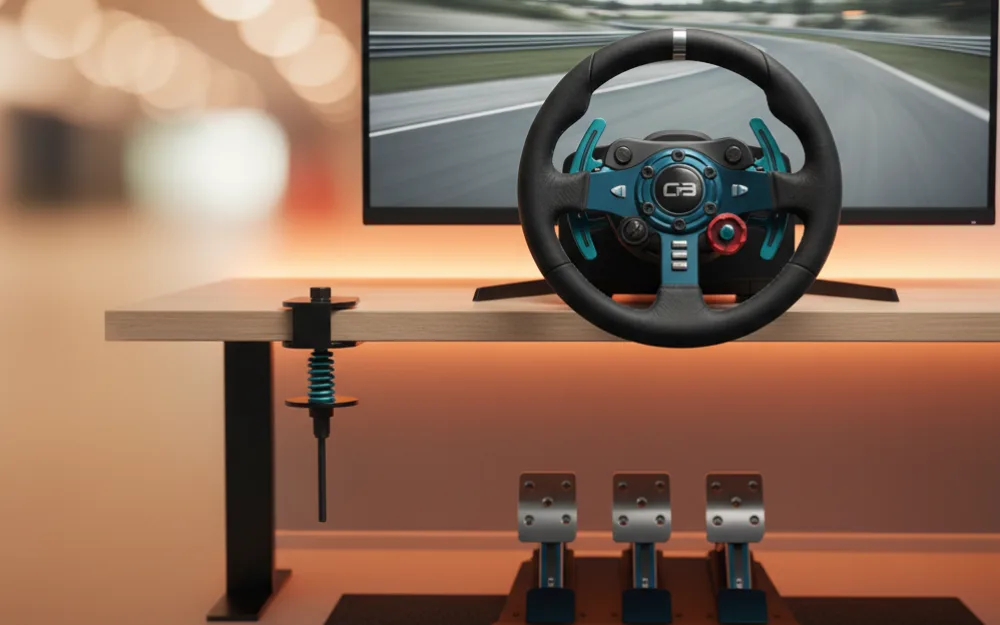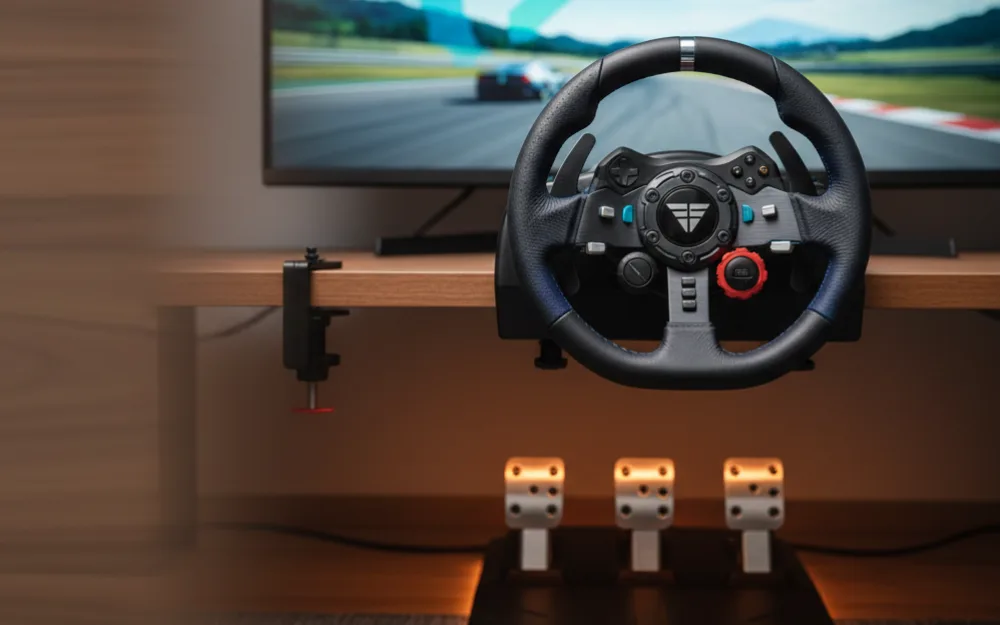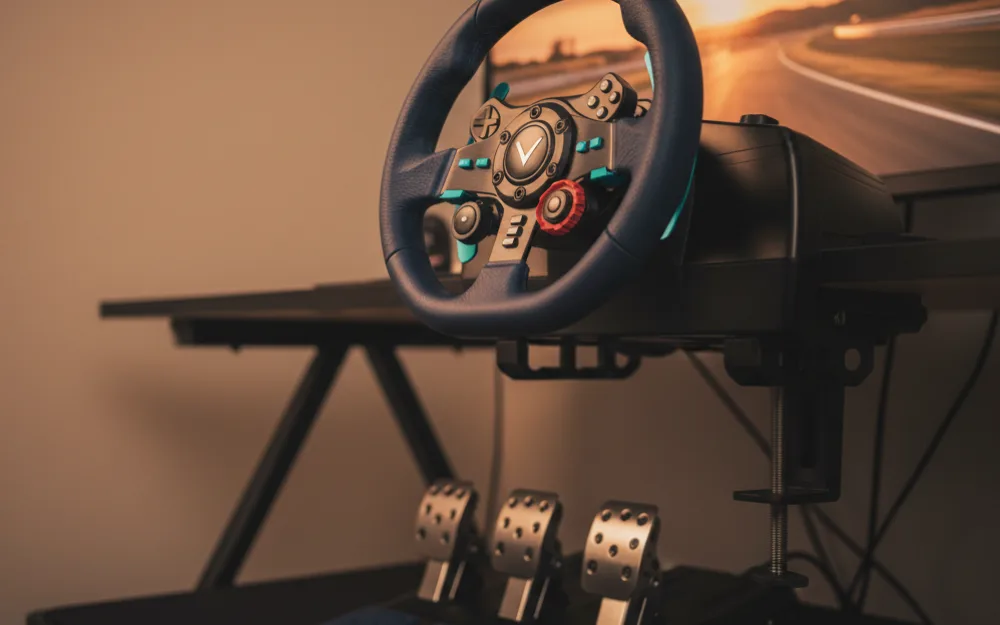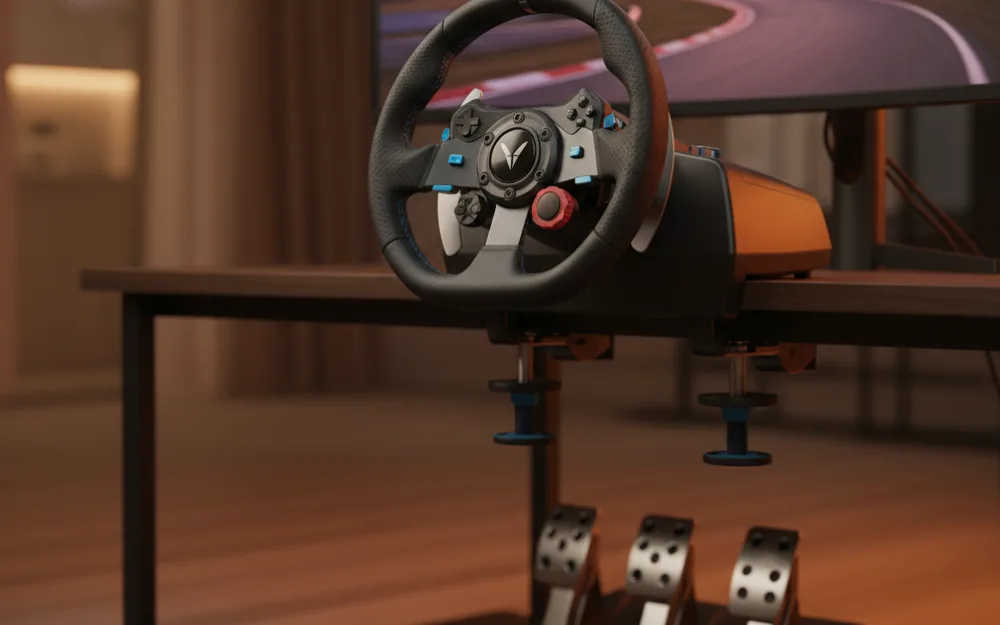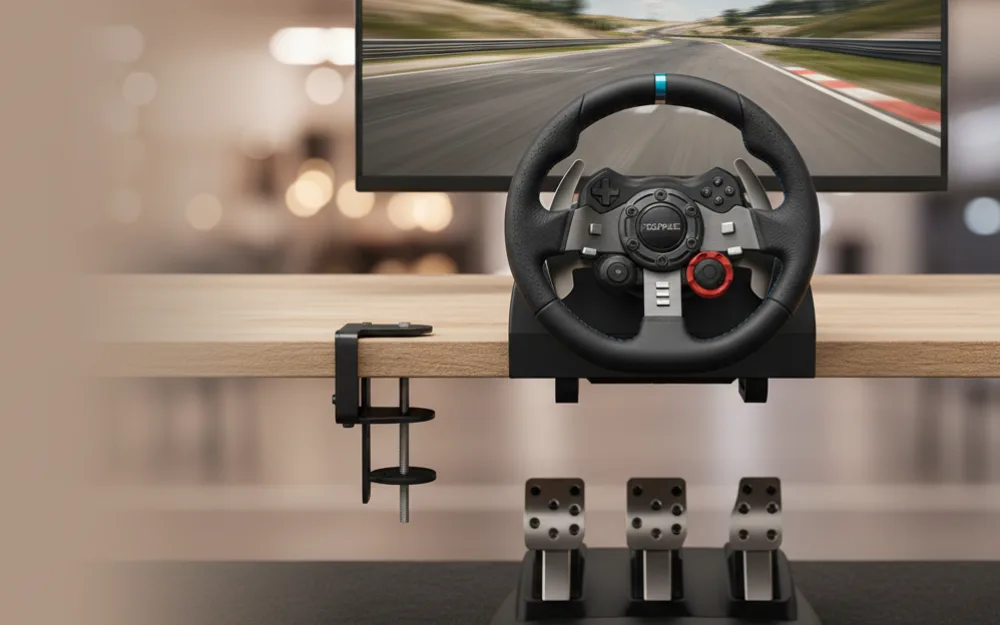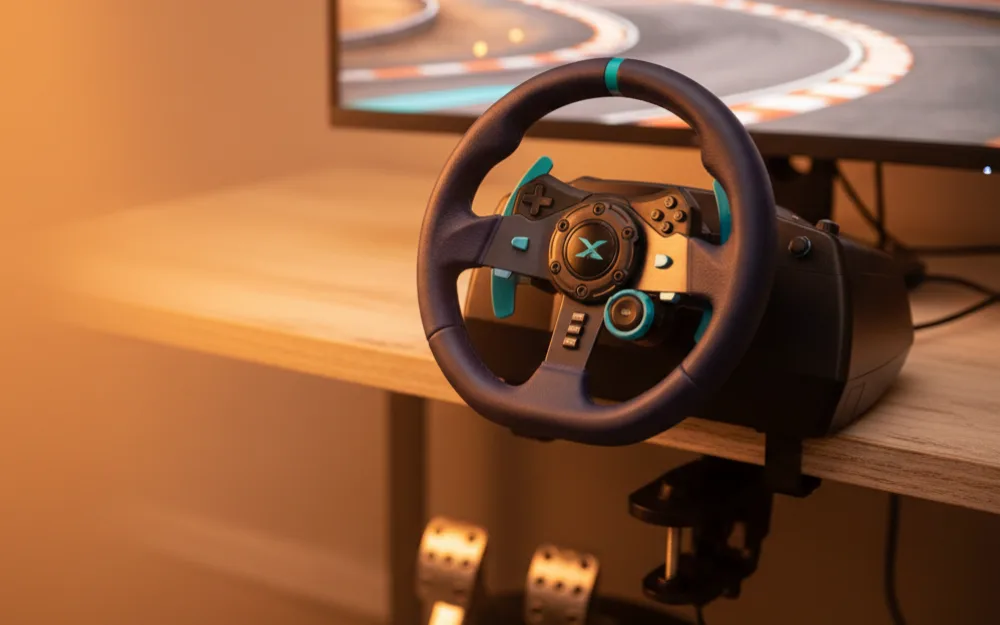


Under $400 is the first budget where sim racing hands you a real choice instead of a plain compromise. For years this money bought a proven belt or gear wheel and little else. Now it also buys your first taste of direct drive, the technology that bolts the rim straight to the motor for a cleaner, sharper signal. So the question at this price is no longer just which wheel, but which kind of wheel: a complete, proven belt package you can race the day it arrives, or an entry direct drive base that trades some of that completeness for detail. For most people the belt still wins here, but the answer is closer than it has ever been, and it starts with what the drive type actually changes.
This roundup covers five wheels that genuinely hold to a sub $400 budget, what each one asks you to accept, and who is better off spending differently. We compared manufacturer specifications with recurring owner feedback rather than our own driving time, and you can read how we review. If any of the terms here are new, start with Getting Started, and for the wider field across every price, see our best sim racing wheels guide.




Belt, gear, or direct drive: what the money actually buys
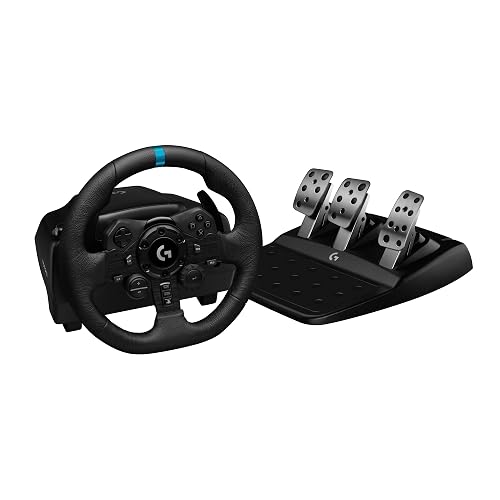
Before we judge any of these wheels, it helps to know how each one makes its forces, because the three approaches feel genuinely different. A gear driven wheel sends motor torque to the rim through helical gears, which is strong and durable but adds a faint mechanical texture you can sense when you turn slowly. A belt driven wheel replaces those gears with a belt and pulley, which soaks up that fine noise so the forces arrive smoother and quieter, closer to the fluid feel of a real car. Direct drive removes the middleman entirely and bolts the rim onto the motor itself, so every change in force reaches your hands cleanly and instantly. That is why a modest direct drive figure can feel sharper than a much stronger geared wheel: you are reading a clean signal rather than fighting a heavy one. The trade at this budget is that the cheapest direct drive options tend to arrive as a base only, or with lower torque, or on fewer platforms, while the best belts give you the whole kit at once.
How we picked
We set four criteria for this bracket. Each wheel had to hold under $400 on the merits rather than through a temporary discount. It had to be a credible way into serious sim racing, meaning real force feedback from a motor, not the spring or vibration systems covered in our best racing wheel under $150 guide. We weighed how complete the package is, because a wheel you can race out of the box is worth more to a first time buyer than a bare base that needs a rim and pedals added later. And we looked at platform fit and a credible ownership record, since a proven wheel on your console beats a stronger wheel that will not connect to it. We did not assign weighted scores, and the WSR Score on each card reflects verified buyer ratings, not an editorial rubric.
At a glance
| Wheel | Drive type | Platforms | Best for |
|---|---|---|---|
| Thrustmaster T300 RS GT | Belt driven | PS5, PS4, PC | The most complete package for most buyers |
| MOZA R3 | Direct drive (3.9 Nm) | Xbox Series X and S, Xbox One, PC | Your first direct drive wheel, especially on Xbox |
| Logitech G923 | Gear driven, TrueForce | PS5, PS4, PC | Value and the deepest ownership record |
| Fanatec CSL DD QR2 | Direct drive (5 Nm) | PC (Xbox with a licensed wheel) | A direct drive platform to grow into |
| Thrustmaster T248R | Hybrid drive (3.1 Nm) | PS5, PS4, PC | A feature rich starter with an onboard screen |
Thrustmaster T300 RS GT
The T300 RS GT is the wheel that best answers the question most people are actually asking at this price: what is the best complete package I can buy today. It pairs a belt driven brushless motor with the wide, adjustable T3PA three pedal set, and reviewers who race it consistently describe force feedback that flows rather than grinds, communicating weight transfer and the front tires beginning to slide more clearly than any geared starter. The belt keeps the whole experience quiet enough for late night sessions. The pros are the smooth belt feel, a genuinely strong pedal set for the tier, and a quick release rim that keeps your upgrade path open within Thrustmaster. The cons are that it is not direct drive, so a base like the MOZA R3 will surface small surface details the T300 rounds off, and it does not work on Xbox. It fits a PS5 or PC racer who wants proven belt smoothness and a strong pedal set in one box. Our full Thrustmaster T300 RS GT review goes deeper.
MOZA R3
The MOZA R3 is the clearest sign of how far direct drive has fallen in price. It is a complete bundle built around a compact 3.9 Nm direct drive servo, a base, an 11 inch wheel, and pedals, and it is officially licensed for Xbox as well as PC. That last part matters, because real direct drive on Xbox has been rare and expensive, and the R3 makes it approachable. Reviewers who race it describe feedback that is crisp and detailed in a way entry belt and gear wheels cannot match, with surface texture and cornering load coming through cleanly. The pros are that clean direct drive signal, the Xbox and PC licensing, and a complete kit with a real upgrade path in the MOZA ecosystem. The cons are strength and pedals: 3.9 Nm is a modest ceiling that drivers used to a strong geared wheel sometimes want more of in heavy cars, and the bundled pedals are the part owners most often earmark for a future upgrade. It fits a driver, especially an Xbox owner, who values a clean signal over raw muscle. Our MOZA R3 review covers what that torque figure really means.
Logitech G923
The G923 is the value anchor of this group and carries one of the deepest verified ownership pools of any wheel here, which makes its rating a settled read rather than an early guess. It is a gear driven wheel with Logitech’s TrueForce system layered on top, which adds an audio driven vibration channel that responds to engine and surface sounds, giving the rim more life than gears alone provide. Reviewers describe a wheel that communicates the important cues honestly and is built to last, with the familiar three pedal set that includes a clutch for H pattern practice once you add a shifter. The pros are proven durability, the huge ownership record, and strong platform support across PlayStation and PC. The cons are that gear drive carries that faint mechanical texture, and the feel leans on the TrueForce vibration to fill in detail rather than delivering it through pure motor force. It fits a first time buyer who wants a dependable, widely supported wheel and cares more about a proven record than the newest drive technology. See our Logitech G923 review for the full picture.
Fanatec CSL DD QR2
The CSL DD is the direct drive platform to grow into rather than a plug and play package, and it is important to be clear about that. What you buy here is a 5 Nm direct drive base only, with no wheel and no pedals, so the real cost of a raceable setup lands higher than the base alone suggests. What justifies its place is the motor and the ecosystem: reviewers describe the FluxBarrier motor as smooth and detailed for an entry direct drive base, and the QR2 quick release plus full Fanatec SDK support open a wide catalog of rims and pedals to build toward. The pros are a strong 5 Nm direct drive foundation, a serious quick release standard, and clear room to expand. The cons are that it is a base only purchase on PC, with Xbox support requiring a licensed wheel, and its verified ownership record is still thin, which shows in a rating below the belt options here. It fits a PC racer who wants to start a real direct drive ecosystem and is ready to budget for a rim and pedals on top. Our Fanatec CSL DD review lays out what to add.
Thrustmaster T248R
The T248R rounds out the group as a feature rich starter that leans on Thrustmaster’s hybrid drive, a design that blends belt and gear elements to deliver 3.1 Nm of force. The standout extras are an integrated color screen with more than 20 display modes for telemetry at a glance, fast magnetic paddle shifters that resist wear, and a generous 25 button layout. Reviewers describe a wheel that feels a step above pure gear starters thanks to that hybrid feel, with a leather grip and a wheel and pedal set in the box. The pros are the onboard screen, the durable magnetic shifters, and a complete package on PlayStation and PC. The cons are that 3.1 Nm is a modest ceiling, the hybrid drive still cannot match the clean signal of the R3’s direct drive, and its ownership record is smaller than the high volume belt options. It fits a beginner who wants a lot of features and a telemetry screen on PS5 or PC. Our Thrustmaster T248R review has more.
Should you stay belt, or jump to direct drive
| A belt or gear wheel fits you if | Step to entry direct drive if |
|---|---|
| You want a complete, raceable kit in one box | You want the cleanest possible signal at this budget |
| You race on PlayStation and want a proven record | You race on Xbox and want real direct drive (the R3) |
| You value the deepest ownership history and strong pedals | You are ready to build a base up with a rim and pedals |
The honest read at this price is that neither column is wrong. A belt wheel like the T300 gives most buyers more usable racing on day one, while entry direct drive rewards the driver who prizes signal quality or races on Xbox. What no longer makes sense here is a wheel without real motor feedback, since every option above teaches car control through force the rim feeds back. The one buyer who should skip this budget outright is the one who already runs heavy cars in demanding sims and knows entry torque will feel short within weeks, who is better served saving for the tier above.
How it scores
The WSR Score shown on each card reflects verified buyer ratings gathered and normalized on a consistent scale, not an editorial rubric. You can read what goes into it on How We Review. On that basis the belt and gear options carry the deepest ownership records in this group, the MOZA R3 rates well as an approachable entry into direct drive, and the Fanatec base sits a little lower on a thinner record. Keep the scale in mind: a strong score here measures how well a wheel satisfies buyers at this price, not how it stands against a high torque base.
Where to go from here
If this budget is a stretch, our best racing wheel under $150 guide covers the entry tier and is honest about what you give up there. If you have decided that direct drive is the only path you care about, skip the belts entirely and read our best direct drive wheels under $500 roundup, which lines up pure direct drive by torque. And when your budget grows, our best racing wheels under $1000 guide covers the next step up. You can also browse more options in belt and gear driven wheels.