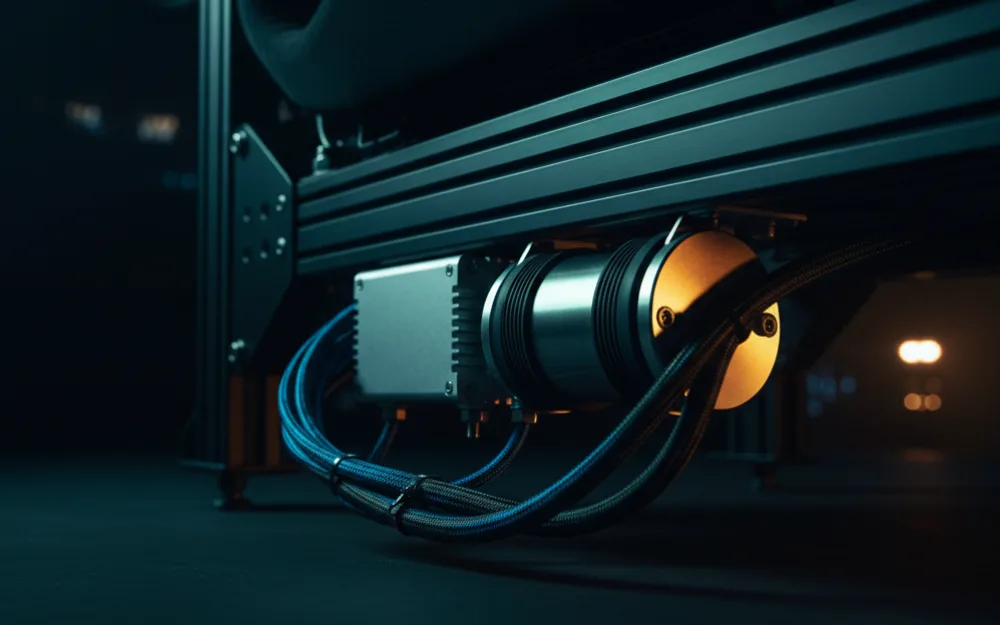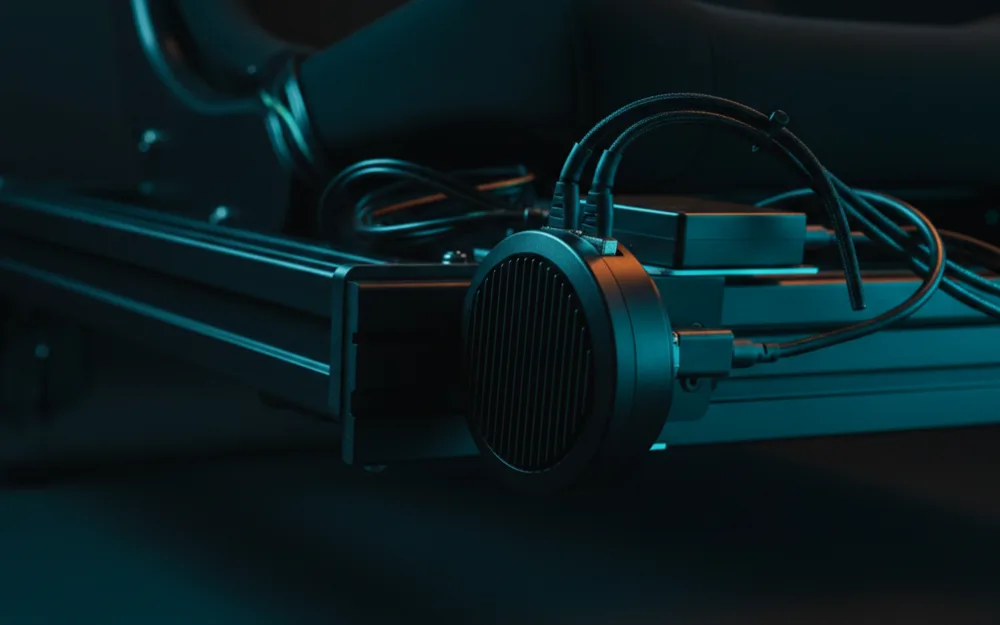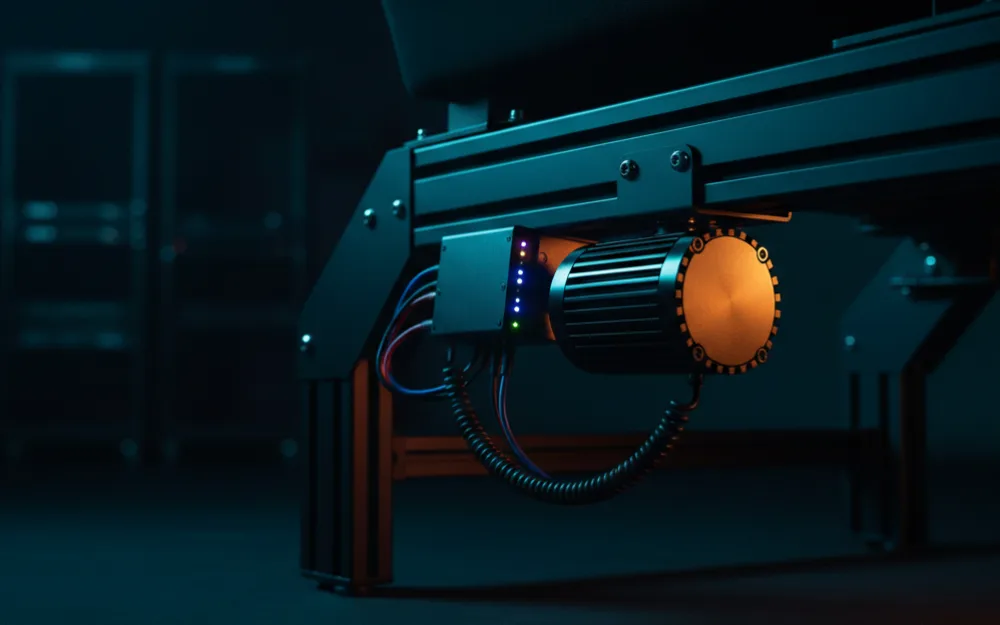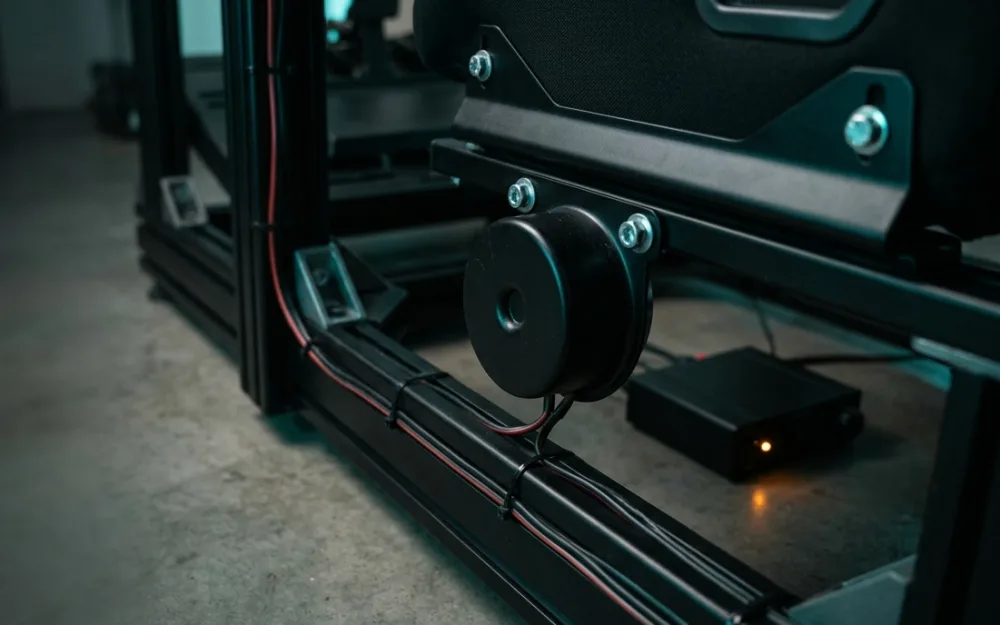

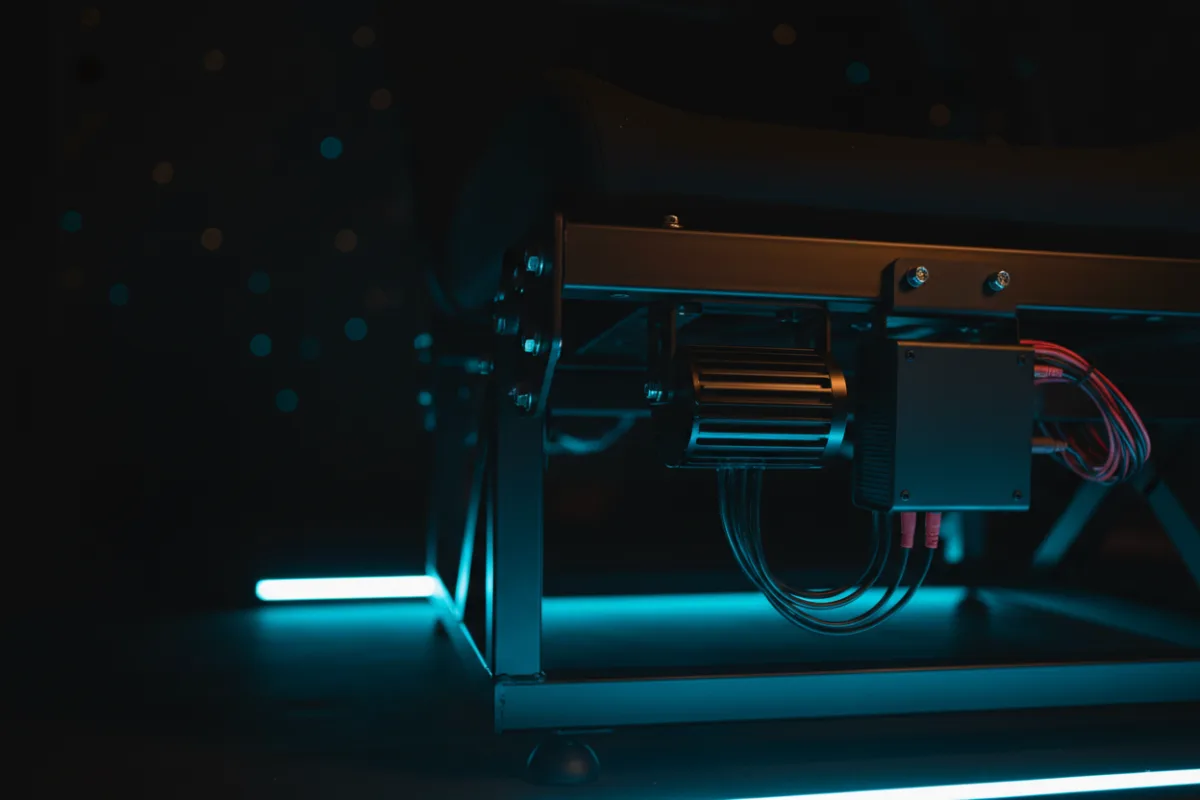

The Dayton Audio BST-1 is a tactile transducer, a bass shaker, rather than a self-contained haptic pad: it is a compact 50 watt unit built to bolt under a seat or into a frame and turn that surface into a speaker, converting your game’s audio signal into low frequency vibration you feel more than hear. Unlike a plug and play haptic pad, it needs an amplifier and a rigid mounting surface to actually do its job.
This review works from Dayton Audio’s published specifications weighed against the pattern in 1,080 verified buyer reviews, and you can read how we review for the method behind that.

What it is and how it mounts
At 2.34 inches tall and 5.7 inches wide (excluding terminals), the BST-1 is small enough to bolt into tight spots under a seat pan or inside a cockpit frame member, and Dayton Audio calls for four fasteners into a solid, flat surface, so it works bolted to a seat bracket or a frame crossmember as well. Rated at 50 watts RMS and 4 ohms impedance, it sits in the middle of Dayton’s shaker lineup, above the smaller 35 watt BST-2 and well below the 300 watt BST-300EX, which gives rig builders a clear upgrade path if one shaker at the seat is not enough output for their taste.
Build and what it takes to run one
A bass shaker only performs as well as what it is bolted to and what is feeding it a signal, and the BST-1 is no exception. Dayton Audio specs it to connect to a bass shaker amplifier, which is a separate purchase most first time buyers underestimate: the shaker itself is not the whole system, it is the transducer at the end of an amp chain that needs its own power and its own audio feed, typically split off from your game audio. Mounted to something that flexes, a seat pan with thin sheet metal or a loose bracket, the shaker will waste energy flexing the mount instead of transferring vibration into the surface you actually feel through your body, so a rigid mounting point matters here as much as it does anywhere else on a rig. Owners consistently rate the BST-1 well at 4.6 out of 5 across a large review base, and the recurring praise centers on the low end depth it adds once it is properly mounted and amplified, turning engine rumble and curb strikes into something felt through the seat rather than only heard.
Compatibility and mounting
The BST-1 is a wired, brand agnostic transducer, so it is not tied to any specific wheelbase or platform ecosystem the way some rig accessories are. What it does require is planning: a bass shaker amplifier, a way to split or route audio to it separately from your main speakers or headset, and a rigid bolt point on your seat or frame. Dayton Audio backs it with a 5-year warranty, longer than many rig hardware warranties, which is a reasonable hedge against a component that runs constantly during a session.
Pros and cons
What works:
- Compact body fits into tight mounting spots under a seat pan or inside a frame member
- 50 watt rating sits in a useful middle ground, with a clear upgrade path to Dayton’s higher output shakers if one unit is not enough
- Strong review base of 1,080 verified buyers backs a 4.6 average rating
- 5-year warranty is longer than most rig hardware offers
What to weigh:
- Requires a separate bass shaker amplifier, an extra purchase and setup step a self-contained haptic pad does not ask for
- Only performs well when bolted to a rigid surface, a flexing seat pan or loose bracket wastes the output
- Setting up audio routing to feed the amp is a step beginners can underestimate
Who it is for
Rig builders who already have a rigid seat or frame and want to add real low end feel are the clearest fit, especially those comfortable wiring an amplifier into their setup as part of the build rather than expecting a single plug and play box. It also suits drivers who want a scalable system, since Dayton’s shaker lineup runs from this 50 watt unit up to a 300 watt option for anyone who decides they want more output down the line.
Who should skip it
If you want haptic feedback working the same day it arrives with no amplifier or wiring to sort out, a self-contained pad like the Next Level Racing HF8 gets you there faster. Drivers without a rigid seat or frame bolt point should solve that first, since a bass shaker mounted to a flexing surface will not deliver the low end depth owners report. And if you are not ready to route a separate amplified audio feed, budget the extra setup time before committing to a shaker over a plug and play pad. Browse more options in best sim racing seats and see the wider field in haptics and bass shakers.