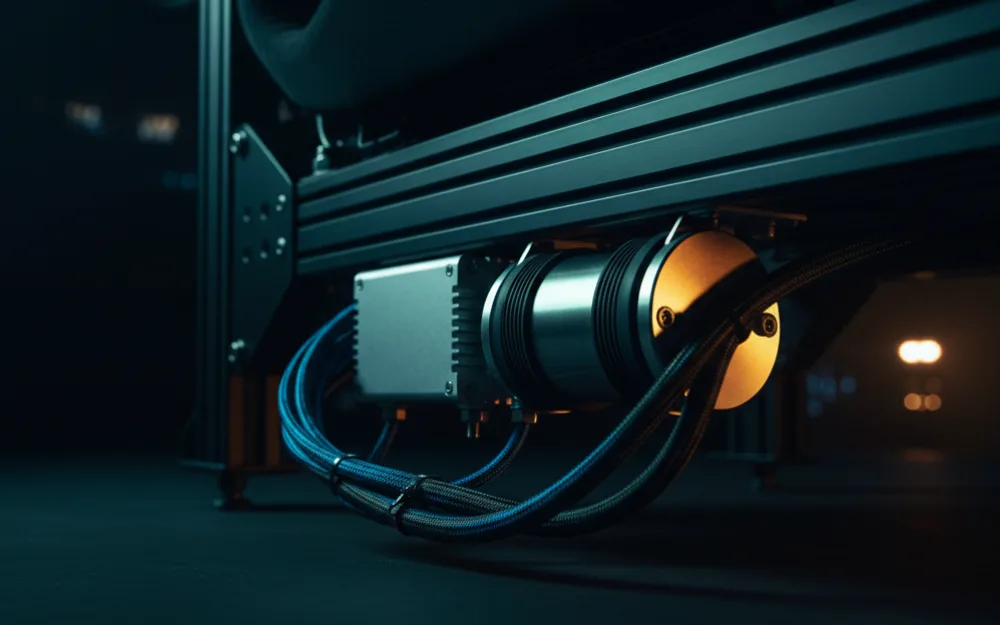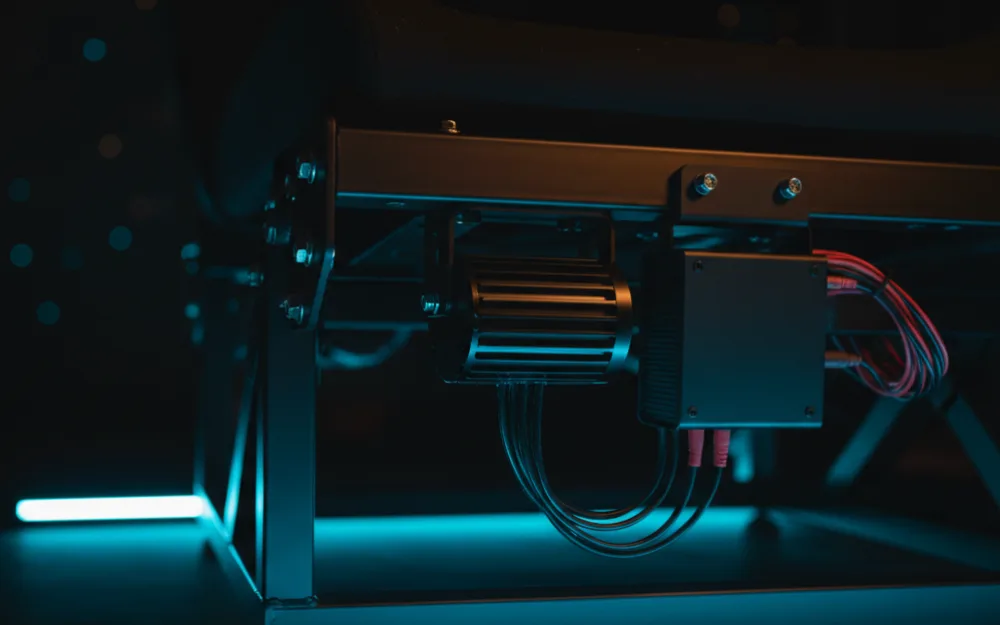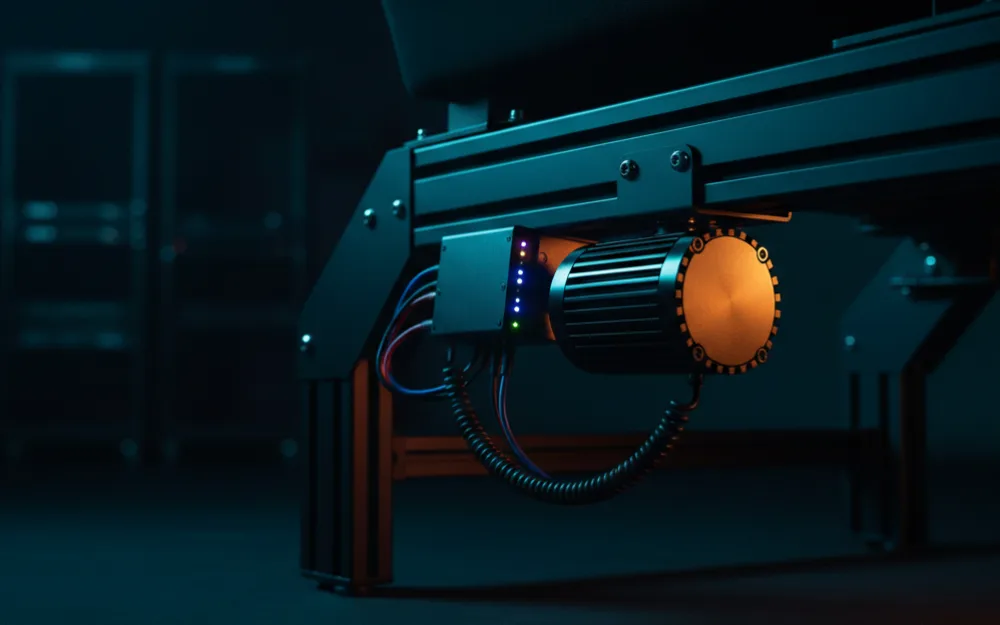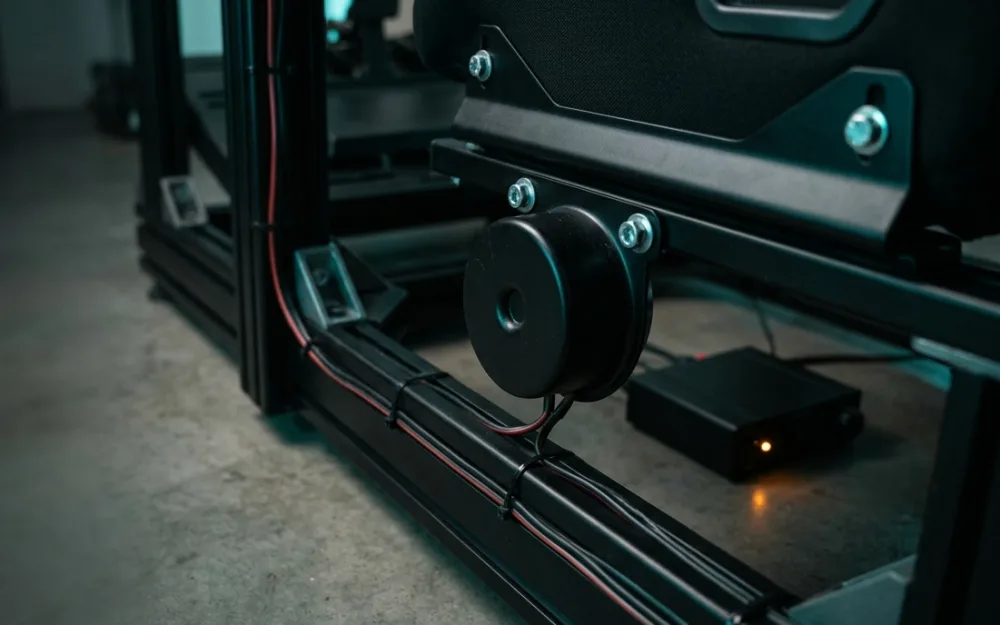

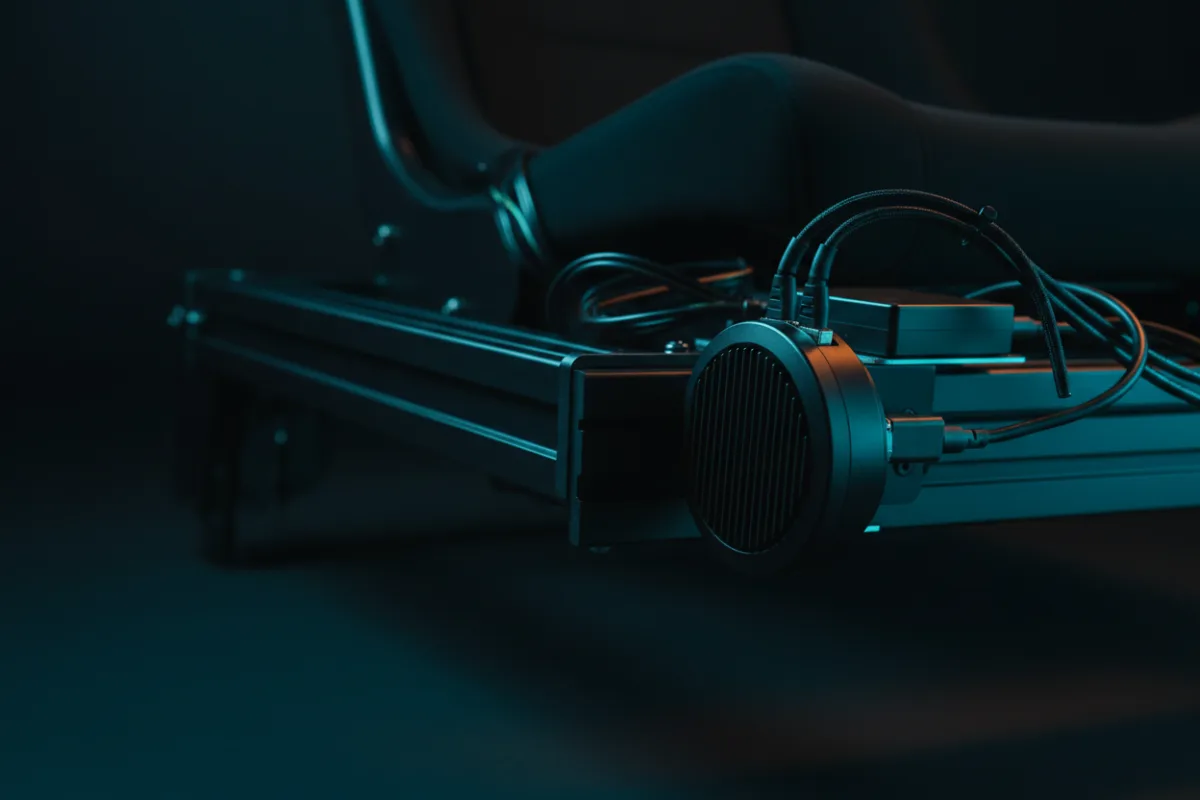

The Next Level Racing HF8 is a haptic pad, not a bass shaker: eight individual vibration motors built into a seat pad that reads game telemetry directly rather than a transducer bolted under a seat that converts an audio signal into buzz. That distinction matters for anyone weighing this against a shaker setup, since it changes what the HF8 needs from your rig to work at all.
This review works from Next Level Racing’s published specifications weighed against the pattern in 576 verified buyer reviews, and you can read how we review for the method behind that.

What it is and how it works
Next Level Racing built the HF8 as a universal pad rather than a seat: it is a flat panel designed to lay across whatever chair you already race in, gaming chair, dedicated sim racing seat, or flight seat, so it does not force you into a new seat purchase just to add haptic feedback. On PC, the plug and play HFS software reads telemetry data directly from the game and drives the eight motors based on what the car is actually doing, curbs, wheel spin, gear changes, rather than a generic rumble effect. On console, the HF8 connects over a 3.5mm audio jack instead, which means it is working from an audio signal there rather than telemetry, and PlayStation users specifically need a headset or speakers in the loop for that path to function.
Build and what owners report
At 7 pounds and a flat 2.4 by 17.3 by 44.5 inch footprint, the HF8 is light enough to move between a gaming chair and a dedicated seat without a permanent installation, which is the tradeoff against a bass shaker bolted directly to a seat frame. Owners rate it well overall, with a 4.0 average across a large review base, and the recurring theme in that feedback is that the eight motor layout gives a noticeably more granular sense of what is happening under the car than a single shaker point does, since each motor can fire independently rather than the whole pad buzzing as one unit. The tradeoff shows up in mounting: because the pad sits on top of a seat rather than bolting to the frame, how well it stays put depends on your seat’s shape and how snug the pad fits against it, and a seat with a slick or heavily contoured surface will let the pad shift more than a flat, grippy one will.
Compatibility and where it sits in a build
The HF8 is designed to work regardless of what seat or cockpit you are already running, which is its main advantage over a bass shaker that needs a rigid mounting point and its own amplifier. It works on PC through HFS software with full telemetry integration, and on consoles through the 3.5mm audio path with the PlayStation caveat noted above. Because it is a self-contained unit with its own motors, it does not compete for space with a shifter mount or a bass shaker amp the way some accessories can, and it can be added to a stand, a folding cockpit, or a full rig without changing the frame at all.
Pros and cons
What works:
- Eight independent motors driven by real telemetry on PC give more granular feedback than a single shaker point
- Universal design fits gaming chairs, sim racing seats, and flight seats without a dedicated seat purchase
- Self-contained unit needs no separate amplifier or rigid mounting point the way a bass shaker does
- Strong review base of 576 verified buyers backs a solid 4.0 average rating
What to weigh:
- Console use runs over a 3.5mm audio signal rather than telemetry, a step down from the PC experience
- PlayStation users need a headset or speakers in the signal path for console mode to work at all
- Sitting on top of the seat rather than bolting to the frame means how snug it fits depends on your seat’s shape
Who it is for
PC drivers who want telemetry driven haptic detail without committing to a bass shaker’s amplifier and rigid mount are the clearest fit, and anyone who moves between chairs or rigs benefits from a pad that travels rather than a shaker bolted to one frame. It also suits drivers early in a build who want haptic feedback now and a full cockpit later, since the HF8 does not depend on the frame underneath it.
Who should skip it
Console drivers who want the deepest, most detailed feedback should know upfront that they are working from an audio signal rather than telemetry here, and PlayStation owners specifically need to budget for a headset or speakers to make that path work. If your seat has a slick or heavily contoured surface, weigh how well a pad will actually stay put before buying, since a bass shaker bolted to the frame will not shift the way a top mounted pad can. And if you already have a rigid seat frame and want the deepest low end rumble rather than a broad motor array, a dedicated bass shaker may suit your build better. Compare more options in best sim racing seats and browse the wider field in haptics and bass shakers.