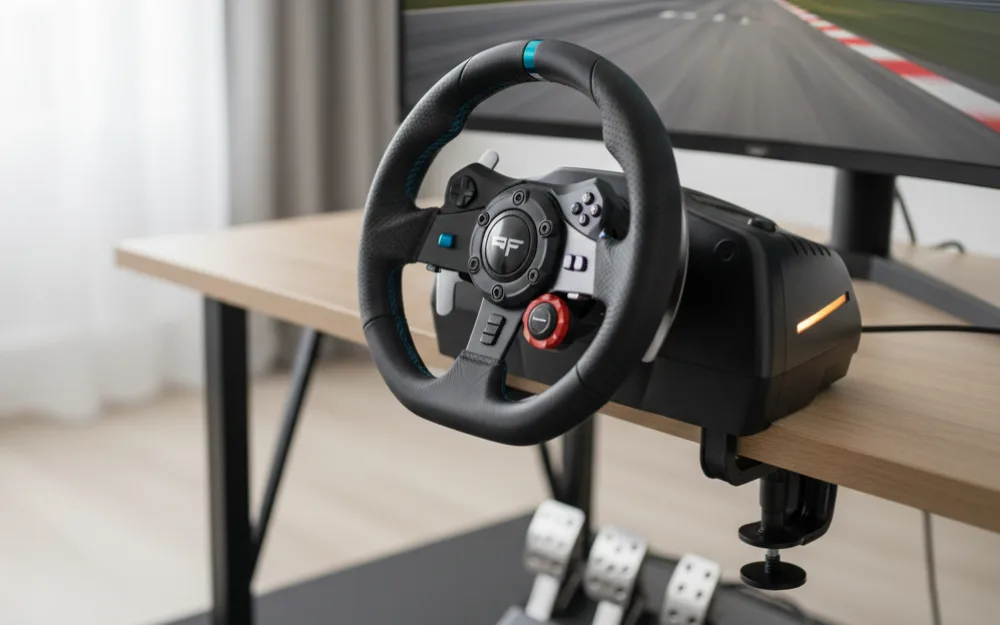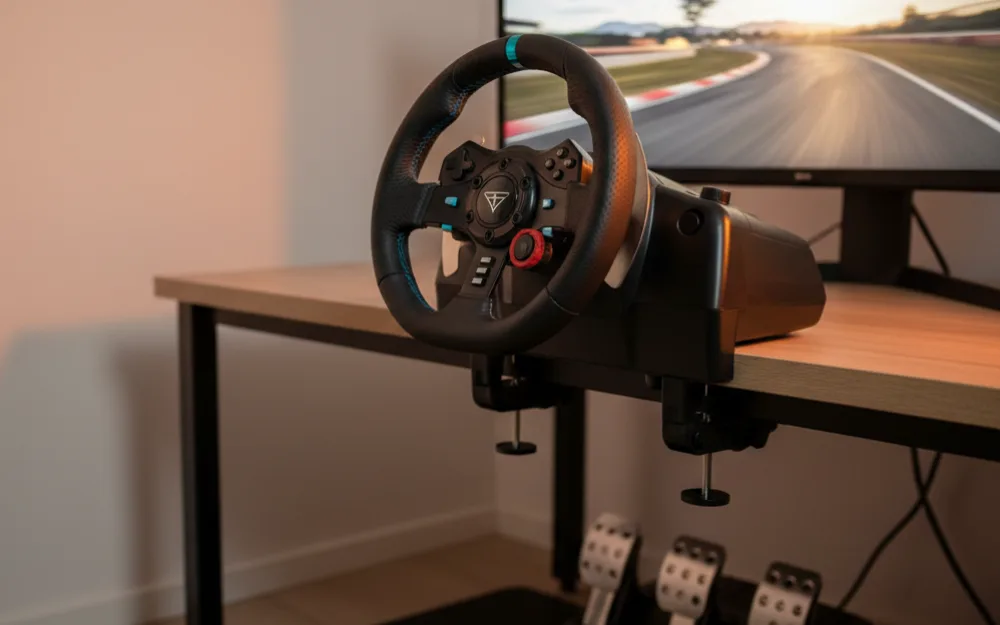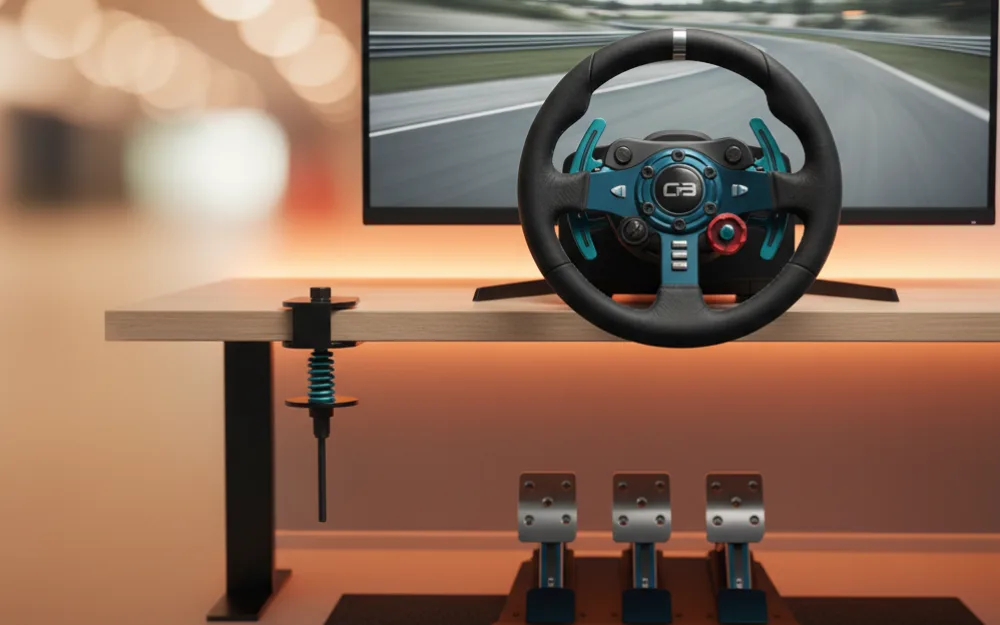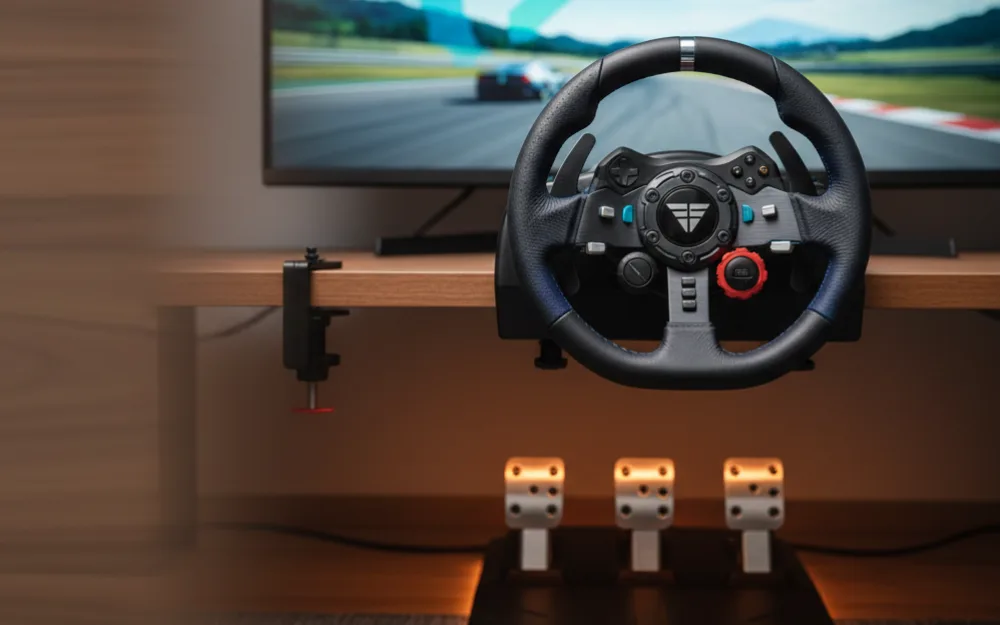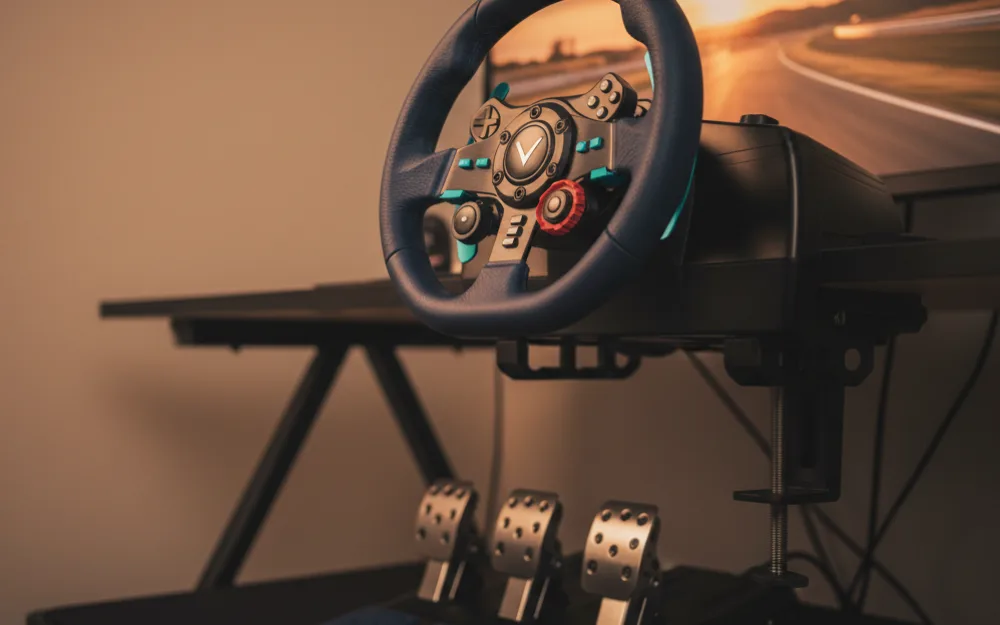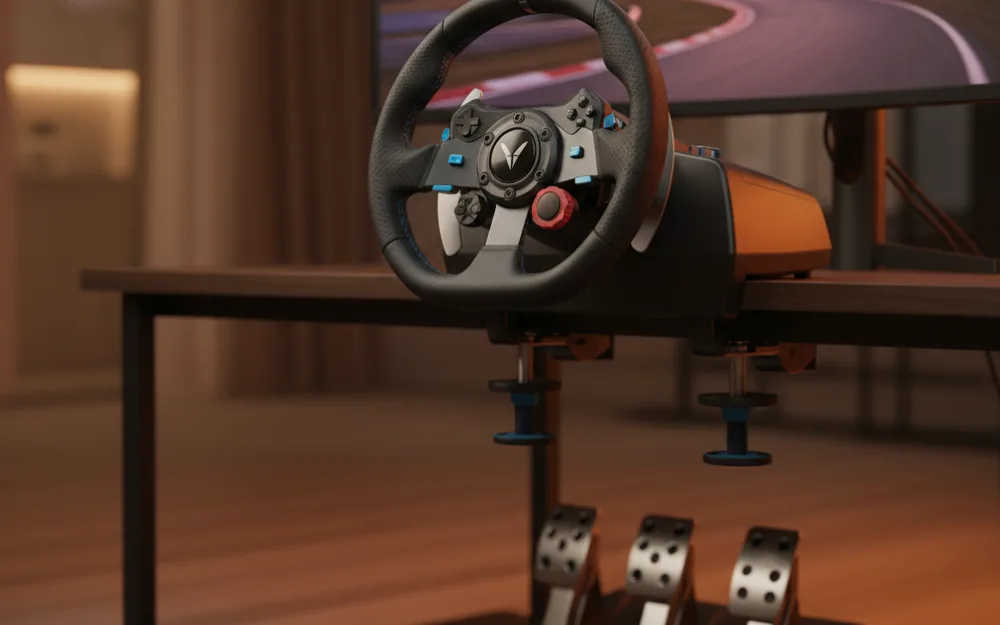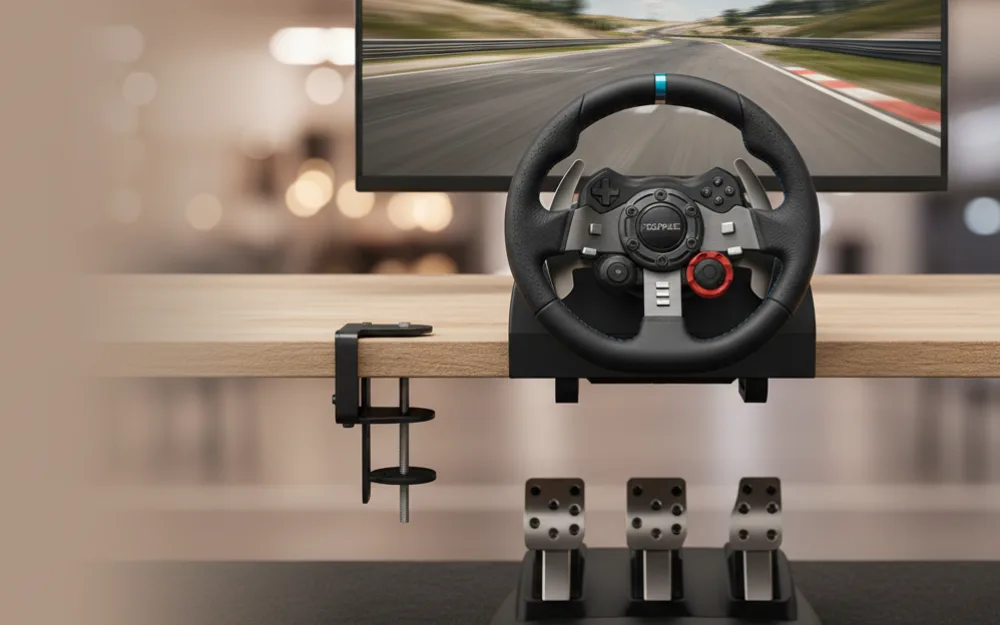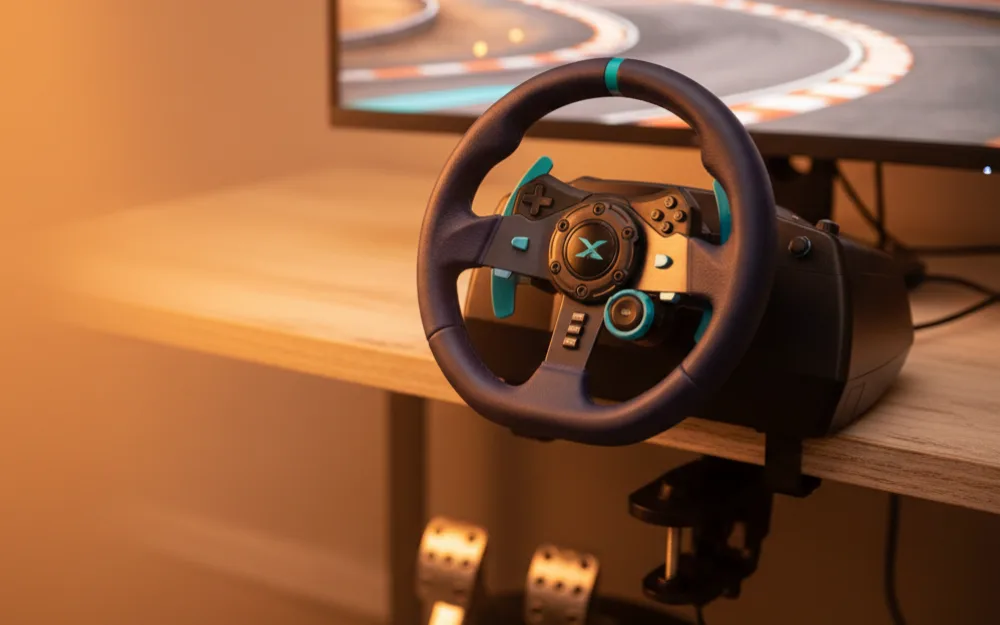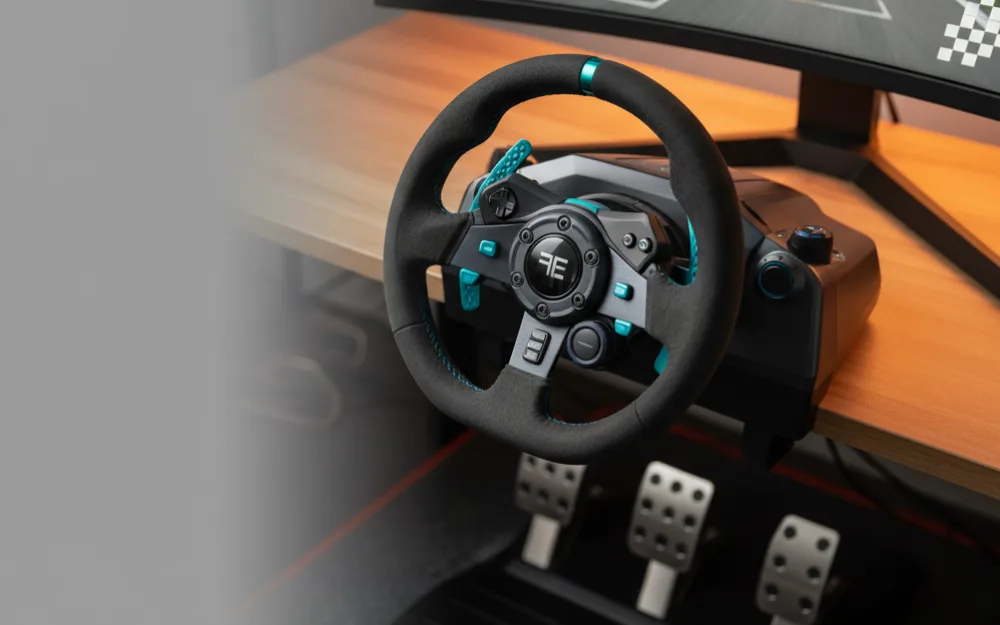

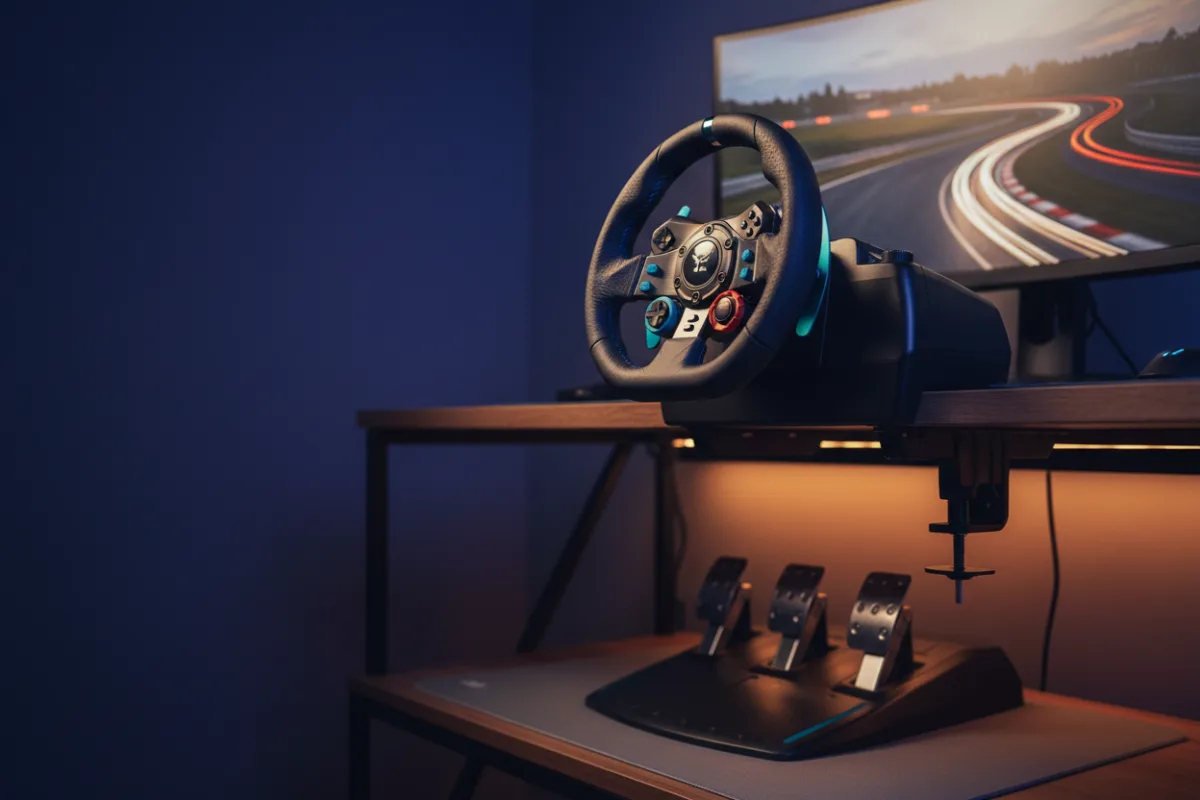

The HORI Force Feedback Racing Wheel DLX is a wheel and pedal bundle built specifically for Xbox Series X|S and Xbox One, officially licensed by Microsoft. HORI is better known for controllers than wheels, which makes this one of the few full-size force feedback options built ground up for Xbox rather than adapted to it. That console focus, more than any single spec, is what defines where it fits.
This review looks at what the DLX includes, how its force feedback is built, and who should look at a different platform’s wheel instead. We compared manufacturer specifications with recurring owner feedback, and you can read how we review.

What it is and where it sits
The DLX is a full-size wheel and pedal set officially licensed by Microsoft, compatible with Xbox Series X|S and Xbox One, with a PC mode as well. That licensing is the headline: buyers get a guarantee of console compatibility that a lot of third party wheels can only promise informally. HORI does not publish a torque figure for the DLX the way Thrustmaster or Logitech do for their wheels, so it is best understood as a dual motor force feedback system built for accessible pricing rather than a benchmark torque number. It sits in the same broad tier as other belt and gear driven wheels rather than competing with direct drive bases.
Force feedback and build character
Force feedback wheels use one or more motors to push back against your hands as you turn, simulating the resistance a car’s steering would generate. HORI describes the DLX’s feedback as realistic, and reviewers who own it consistently point to the mount system as the detail that makes that feedback usable: a sturdy clamp holds the wheel firmly against hard inputs, which matters more than raw torque if the base is loose on the desk underneath it. Without a published torque spec, the DLX cannot be measured directly against wheels that list a torque figure, such as Thrustmaster’s T248 family, so buyers should treat the feel here as solid for the tier rather than quantifiably strong. Metal paddle shifters sit behind the wheel, a build detail that typically outlasts plastic shifters under repeated use.
What’s in the box
The DLX ships as a full wheel and pedal set in one box, with the clamp mounting hardware needed to secure it to a desk. HORI’s companion apps (one for Xbox, one for PC) handle firmware updates, profiles, and settings such as dead zone, pedal sensitivity, and rotation angle, but there is no onboard display or telemetry screen, which keeps the package simple compared to wheels built around a dashboard feature. The pedal unit is a three pedal set with a clutch.
Pros and cons
What works:
- Officially licensed by Microsoft, so Xbox Series X|S and Xbox One compatibility is guaranteed
- Full wheel and pedal set included in one purchase
- Metal paddle shifters at an accessible price point
- A wide base of buyer reviews backs up the DLX’s WSR Score
What to weigh:
- No published torque specification, making direct comparison to named-torque wheels difficult
- No telemetry screen, unlike some competitors at this tier
- No PlayStation support; PC works, but the licensing and design are centered on Xbox
Who it is for
The DLX fits an Xbox Series X|S or Xbox One racer who wants an officially licensed wheel and pedal set without researching third party compatibility, and who values a simple, complete package over telemetry extras. It is a reasonable first wheel for a console racer stepping up from a controller.
Who should skip it
Skip the DLX if you race on PlayStation, since it supports only Xbox and PC, and PC-first racers have more choice elsewhere; see our best sim racing wheels guide for platform-specific picks. Skip it too if a published torque figure or an onboard telemetry display matters to your buying decision, since neither is part of this package. For a wider view of the belt and gear driven category, browse belt and gear driven wheels, and if you want to understand how this tier compares to direct drive, read direct drive vs belt vs gear driven wheels.