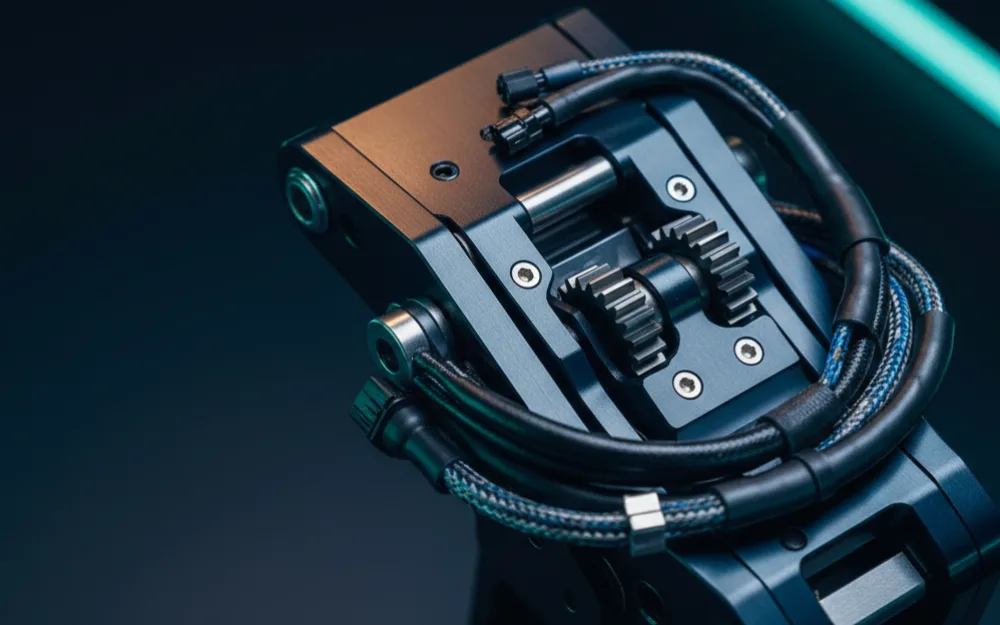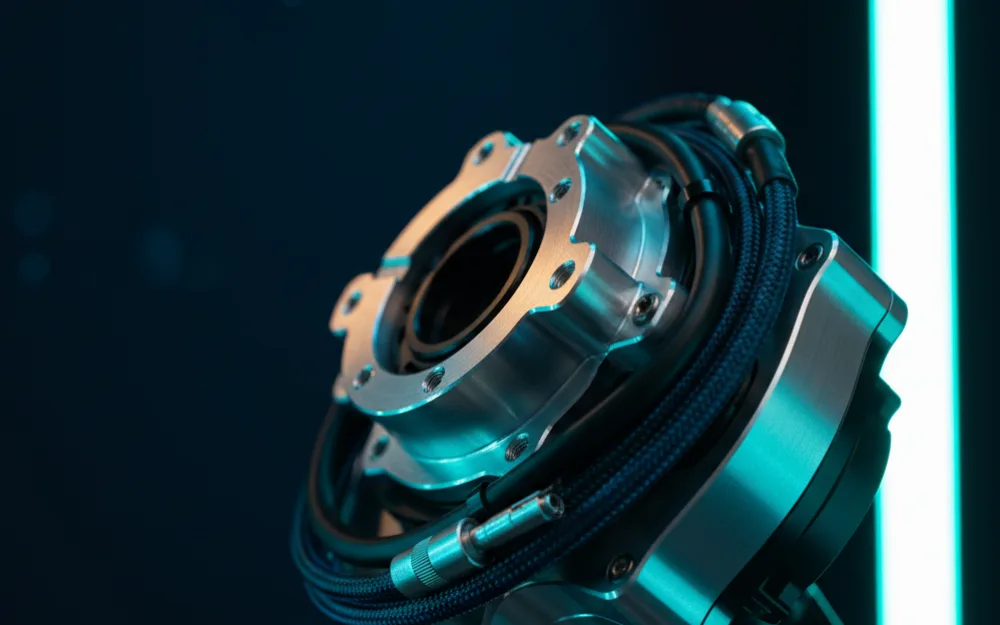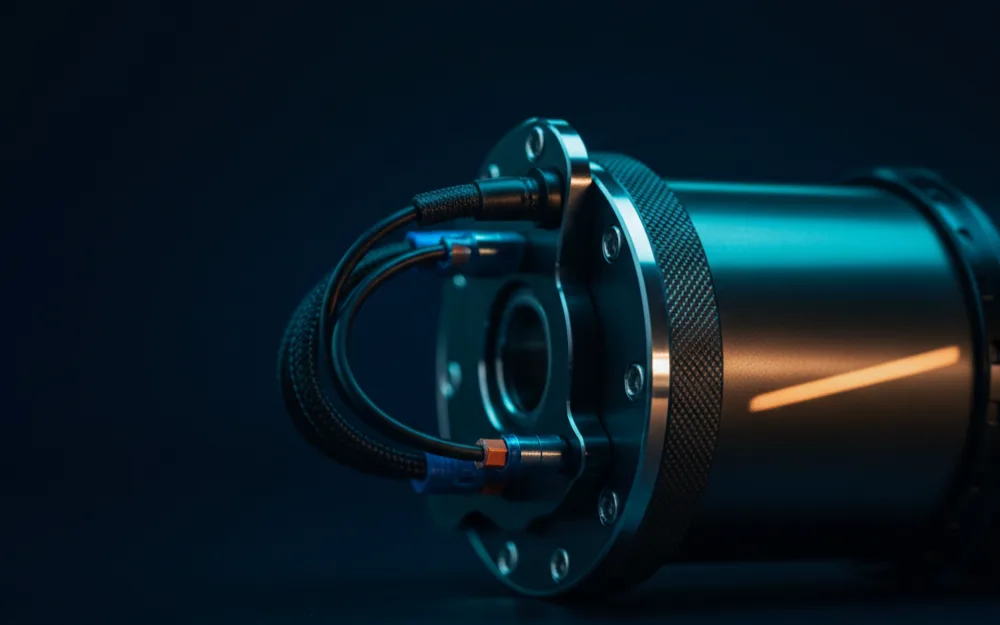

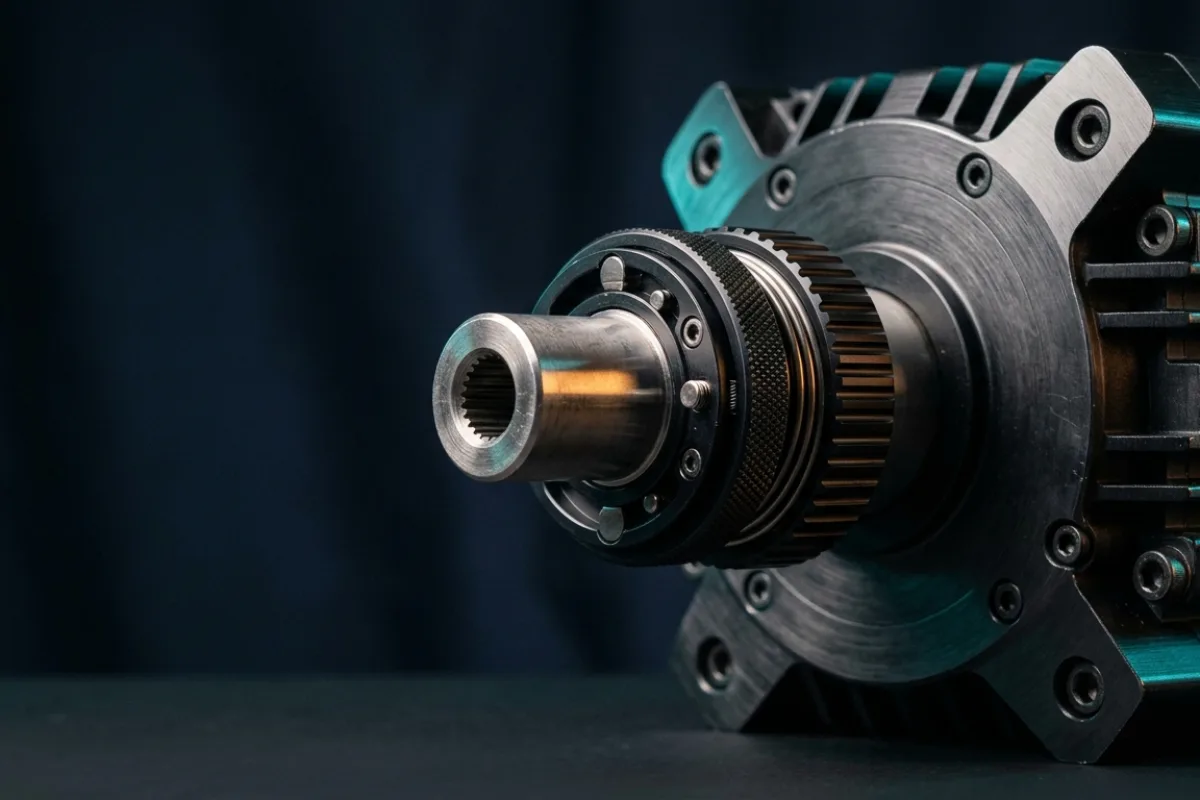

Direct drive (often shortened to DD) is a racing wheel design in which the steering wheel rim attaches directly to the shaft of the motor that produces force feedback. There is no gearbox and no belt between the motor and your hands, so every effect the game generates reaches the rim without being filtered, delayed, or softened by a mechanism in between.
How it works
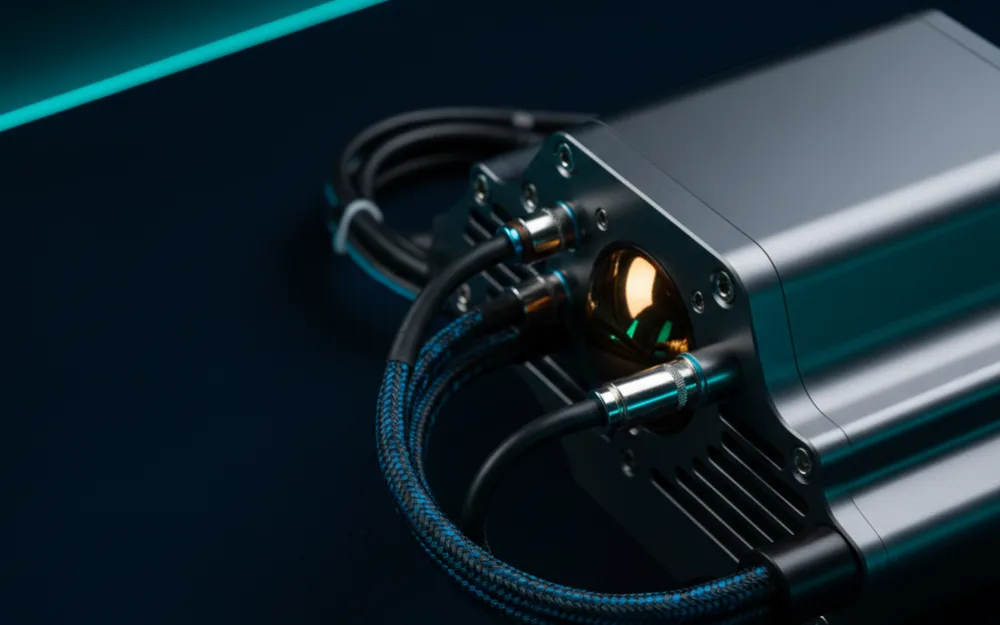
A direct drive base contains a servo motor with a high resolution encoder that measures the shaft position thousands of times per second. The game sends force instructions, the base’s controller drives the motor, and the rim moves or resists. Because the rim is on the motor shaft, the motor must be strong enough to produce all of the force itself, which is why direct drive bases are larger and heavier than gear or belt driven wheels and why they quote torque in newton meters.
Most direct drive bases use a quick release so the rim can be swapped, and most are configured through software on a PC (Moza Pit House, Fanatec’s control panel, Logitech G HUB, Thrustmaster’s panel).
Why it feels different
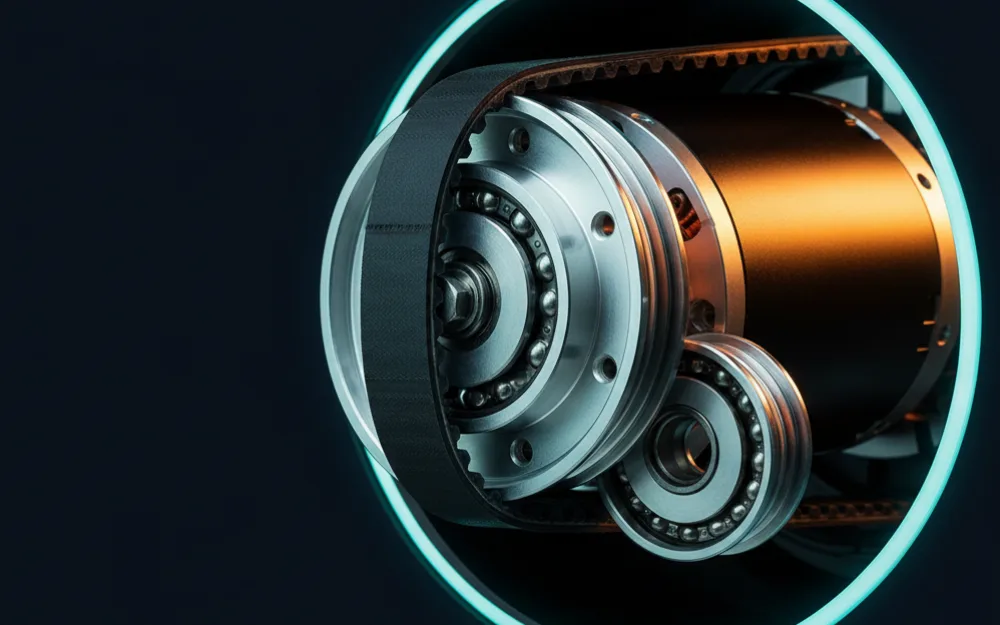
Gears add notchiness and play; belts absorb small effects. Direct drive removes both, so the moment a tire begins to slide, the texture of a curb, and the weight shift under braking arrive immediately and clearly. Drivers describe it as feeling the tire rather than feeling the wheel.
What to check before buying
- Torque and how it is quoted (peak, maximum, or constant); see torque explained.
- Platform licensing; most direct drive bases are PC only and console versions are specific models.
- What ships in the box; bare bases need a rim and pedals.
- A mount that can hold it; see cockpit versus stand versus desk.
Examples
Moza R3, R5, R9, and R12; Fanatec CSL DD and Gran Turismo DD Pro; Logitech G RS50 and PRO; Thrustmaster T598 and T818; Simagic Alpha EVO. Our direct drive wheel guide compares the current models.
Related terms
Force feedback · Belt driven wheel · Gear driven wheel · Quick release · Wheel base vs wheel rim