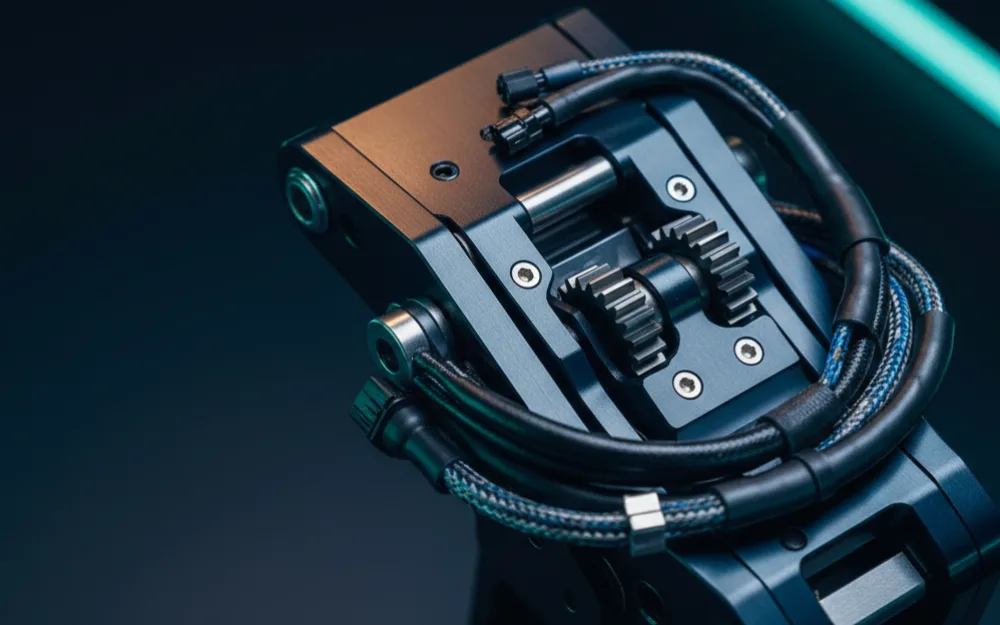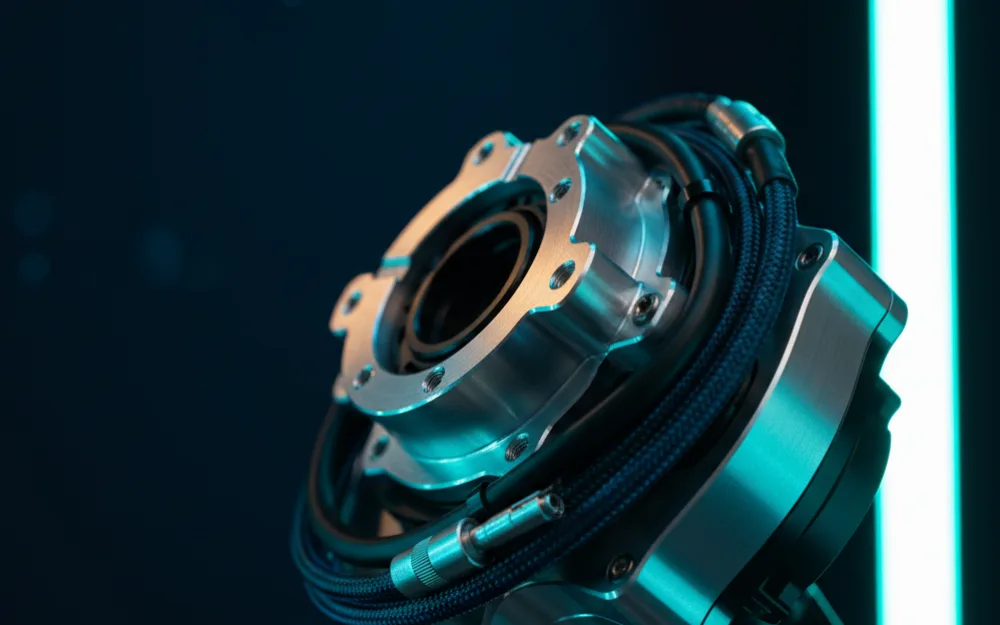

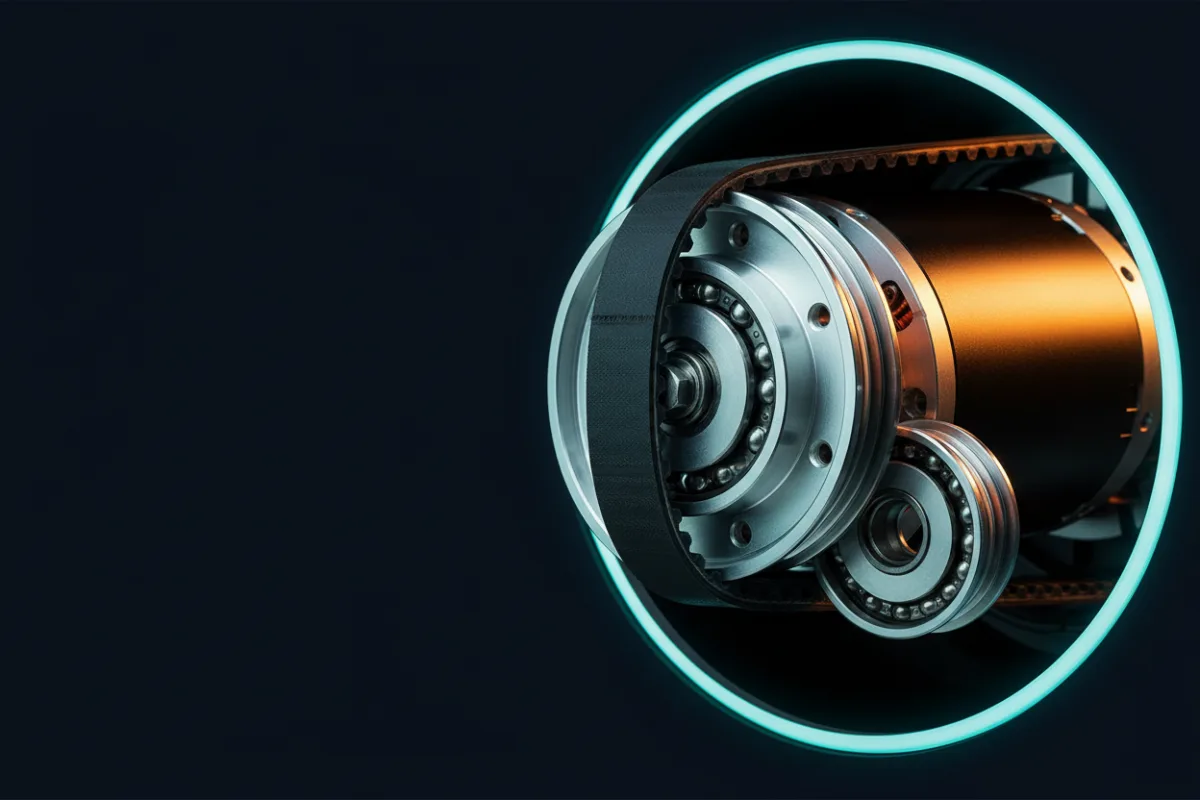

A belt driven racing wheel uses a toothed belt and pulleys to transfer force from the motor to the steering shaft. The belt increases the motor’s leverage while smoothing out the mechanical noise that gears introduce, which is why belt wheels feel quieter and more fluid than gear driven wheels at a similar price.
How it feels
Smooth, with little play at center and no rattle over curbs. The belt also absorbs the finest effects, so very small details can feel softened compared with direct drive. Belts can stretch or slip after years of hard use, though most owners never notice.
Hybrid drive
Thrustmaster’s T128 and T248 use what the company calls hybrid drive, combining a belt with gears. They sit between pure gear and pure belt designs in feel and price. Thrustmaster does not publish a torque figure for the original T248; the newer T248R is rated at 3.1 Nm.
Examples
Thrustmaster T300 RS GT (dual belt, PlayStation), Thrustmaster TX RW Leather Edition (dual belt, Xbox), and the hybrid T128 and T248. Most belt wheels have detachable rims, which gives them a rim ecosystem gear wheels lack.
Where it fits today
Entry direct drive bundles now cost about what a belt driven wheel used to, and they are better. Belt wheels remain worthwhile when found at a discount, for owners invested in Thrustmaster rims, and as the smoothest option on a console where the direct drive choices are limited. Our guide to drive types compares all three.