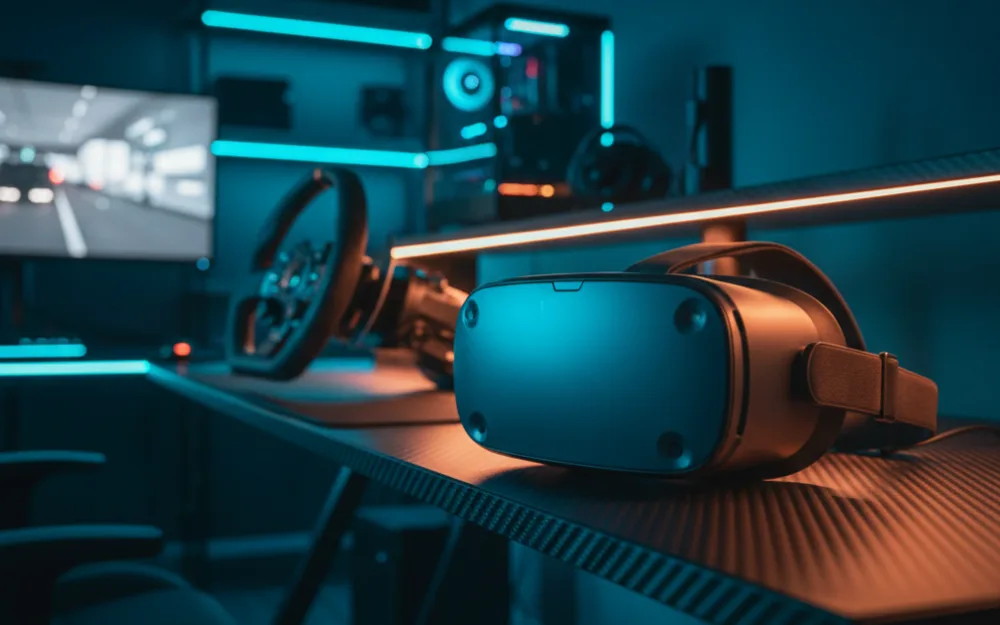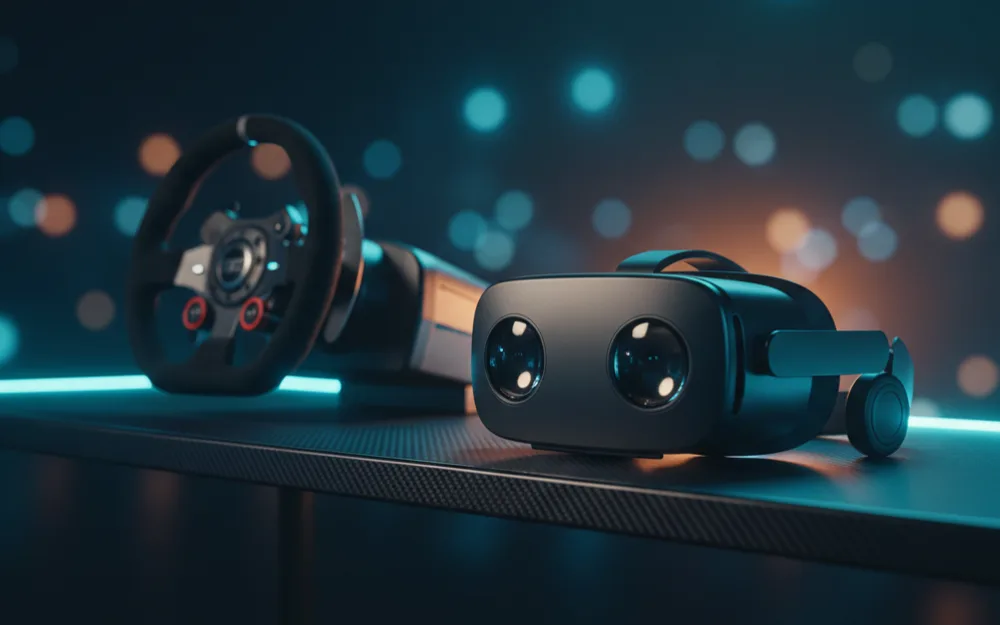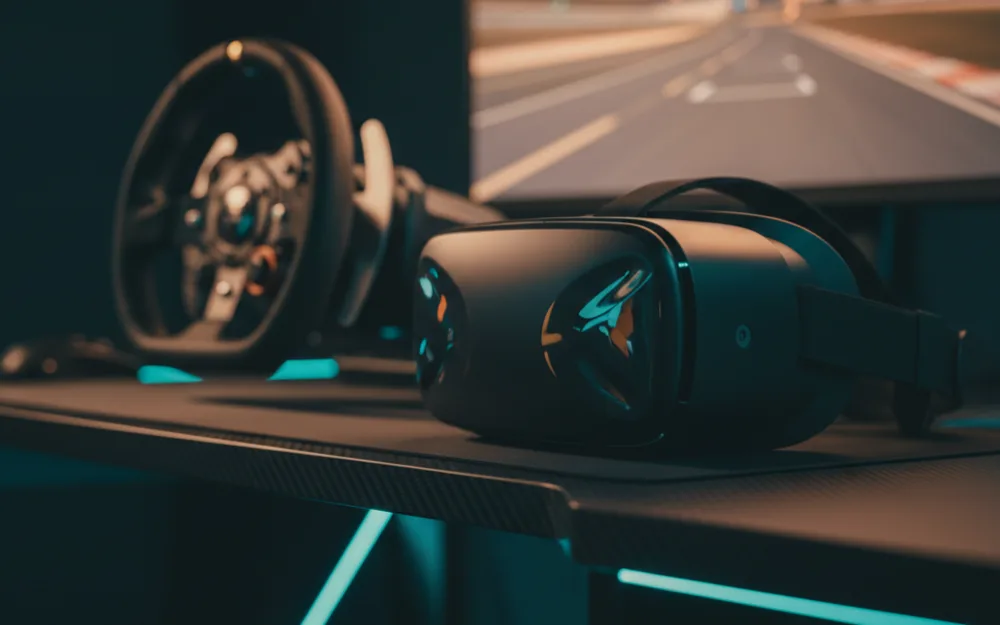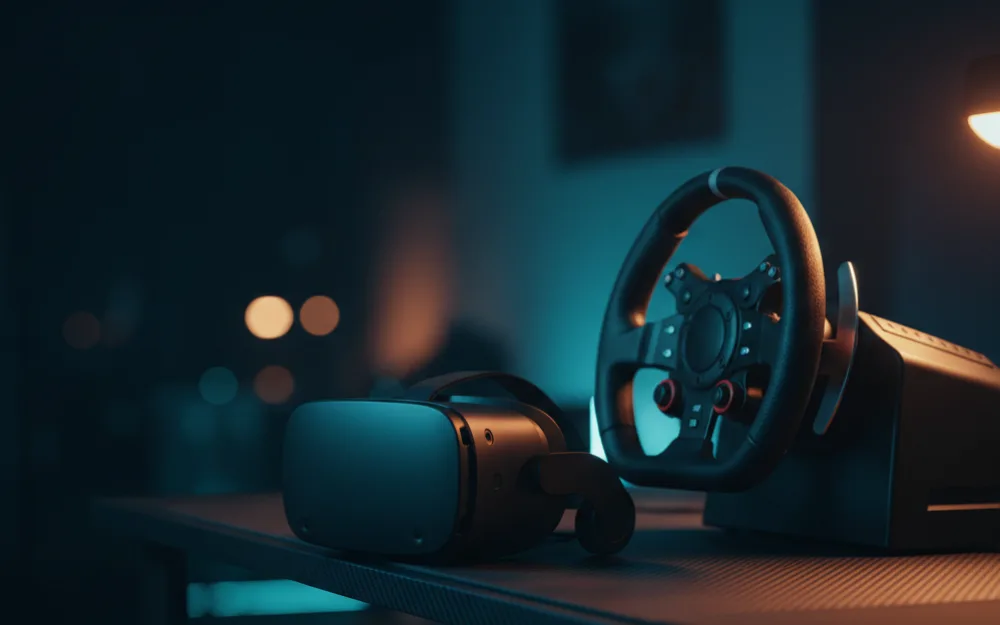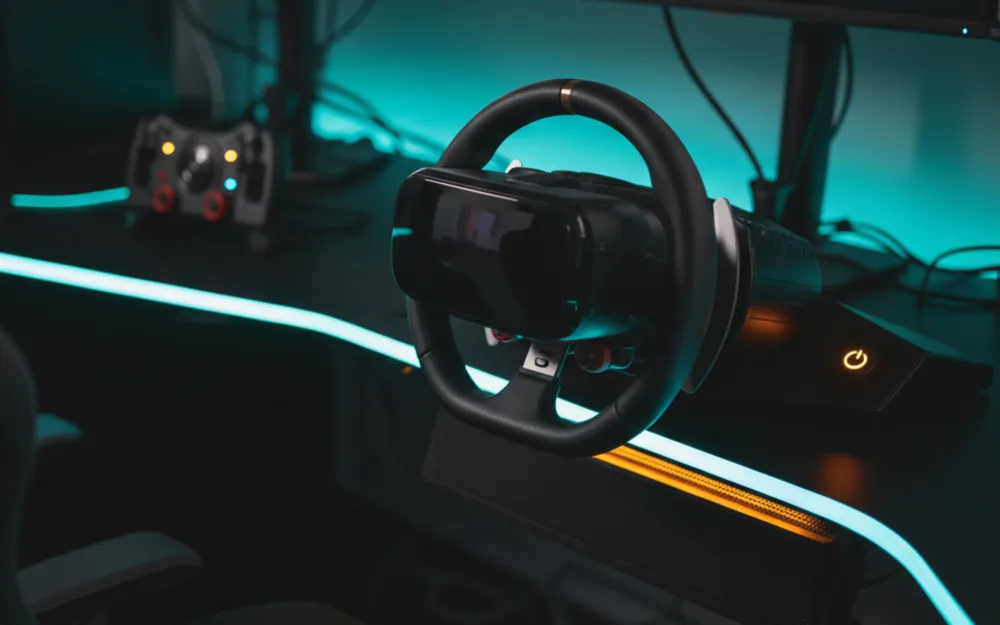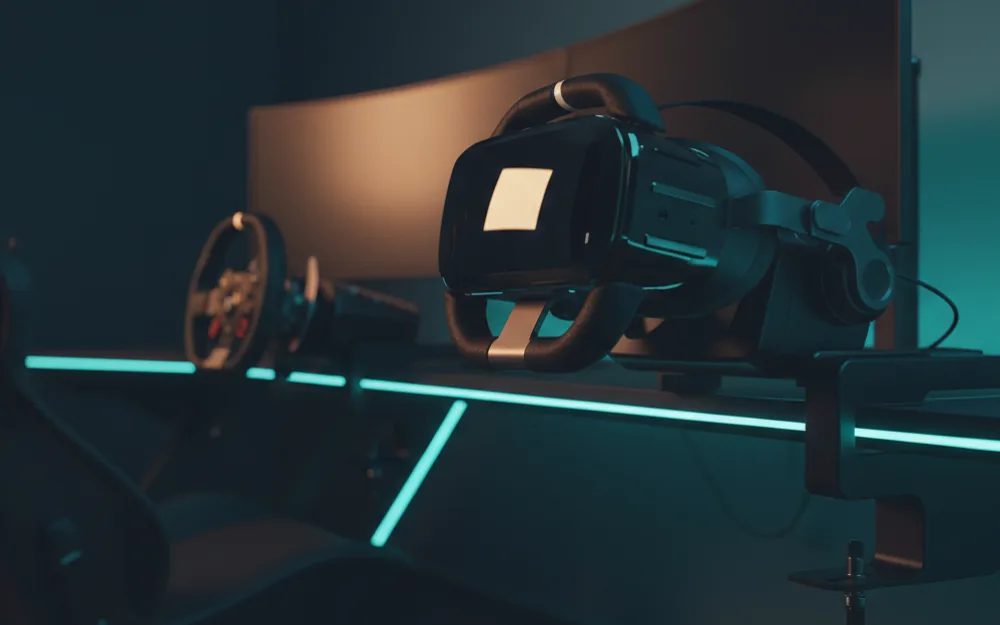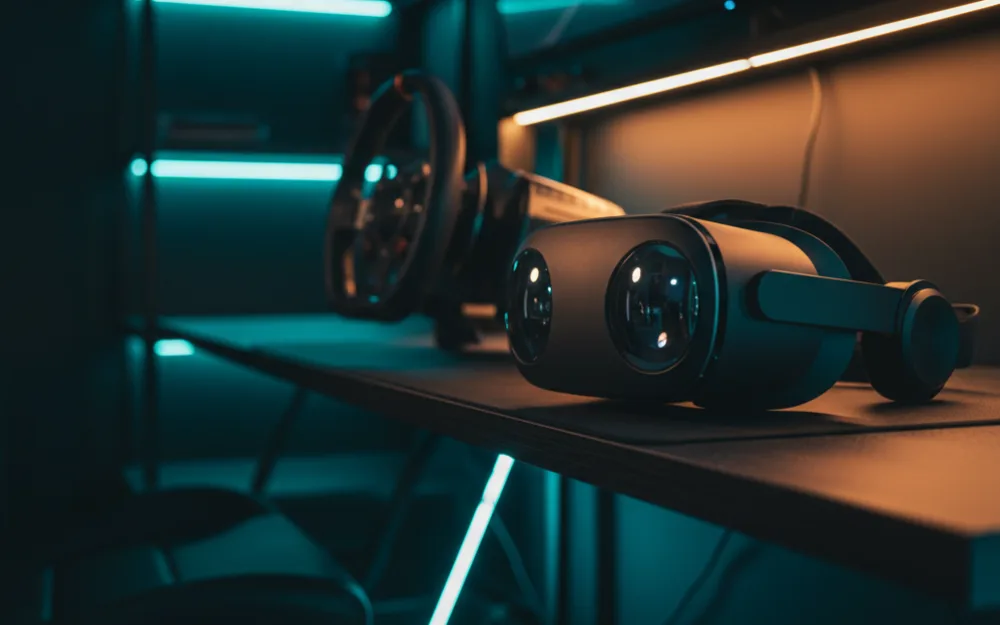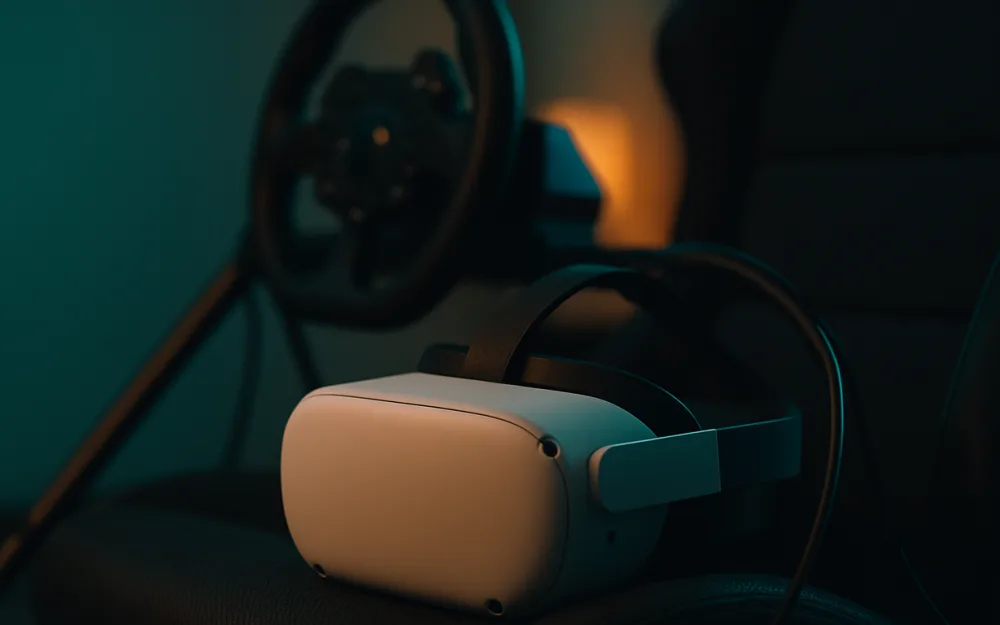

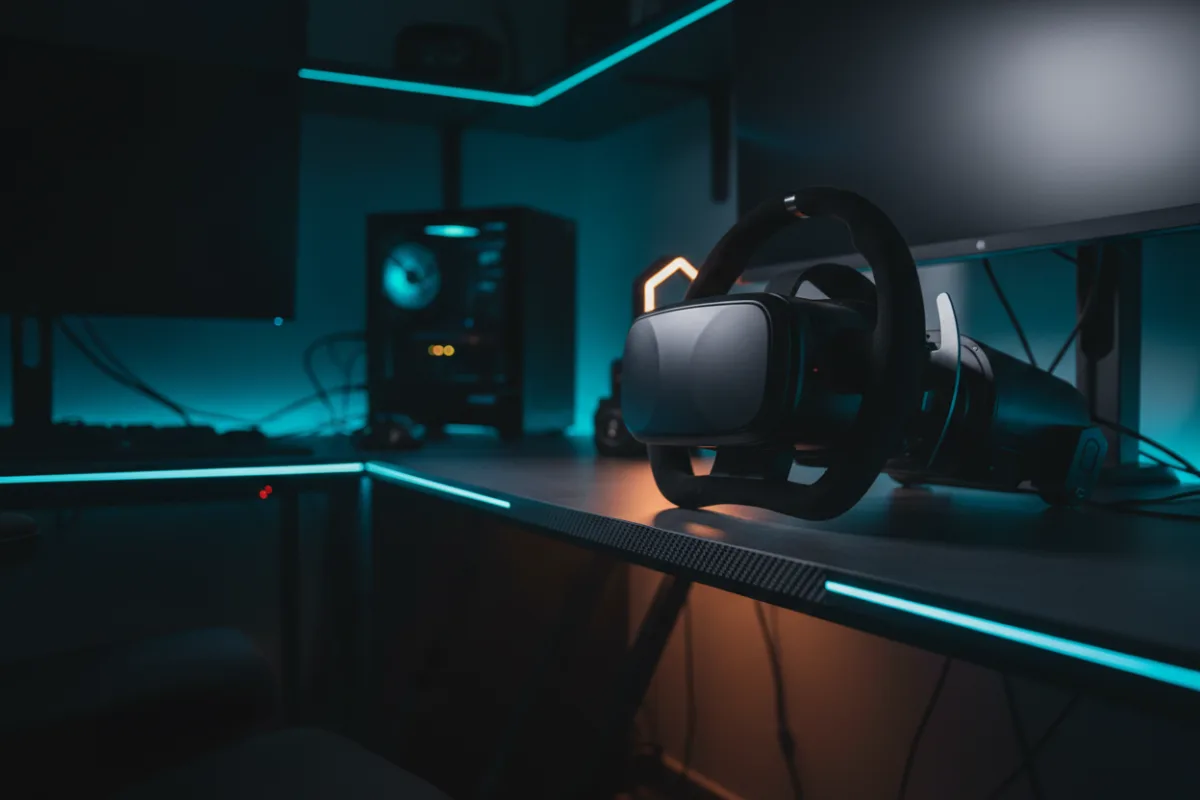

The Meta Quest 3 and the Pimax Crystal Light answer two different questions. The Quest 3 is a flexible standalone headset that also tethers to a PC, so it does a bit of everything. The Crystal Light is a PC only clarity instrument that does one thing, cockpit sharpness, very well. This is not a case of one being better across the board. The right pick depends on how you race, what PC you own, and whether you want VR beyond the sim.
We compared manufacturer specifications with measurements reported by independent review outlets and recurring owner feedback, and you can read how we review. New to VR terms? Start with Getting Started.


Specs side by side
| Spec | Meta Quest 3 | Pimax Crystal Light |
|---|---|---|
| Type | Standalone, with PC link | PC only, SteamVR |
| Resolution | 4K+ Infinite Display (Meta) | 2880 x 2880 per eye |
| Panel | LCD, pancake lenses | QLED with local dimming, glass lens |
| Refresh rate | Up to 120 Hz (per Meta) | Up to 120 Hz |
| Tracking | Inside out | Inside out |
| PC connection | USB Type C Link or Air Link | Wired PC only |
Clarity: where the Crystal Light pulls ahead
The single biggest difference is per eye resolution. The Crystal Light drives 2880 x 2880 pixels to each eye through a glass aspheric lens, and reviewers who compare high resolution headsets describe crisper distant detail and less screen door effect than mainstream panels show. For reading braking boards and apex markers at speed, that clarity is the Crystal Light’s reason to exist. The Quest 3 improved resolution over the Quest 2 by close to 30 percent on Meta’s own figure, and owners find it clean for cockpit use, but it is not built to match a dedicated PC panel on raw pixel density.
Flexibility: where the Quest 3 pulls ahead
The Quest 3 runs its own apps on the Snapdragon XR2 Gen 2 chip, plays wireless titles with no PC, and adds mixed reality passthrough through its cameras. The Crystal Light does none of that: it is a tethered simulator display and nothing else. If you want a headset that races on a PC one evening and plays a standalone game the next, the Quest 3 covers both. If VR beyond the cockpit does not interest you, that flexibility is weight you are not using.
The PC cost decides more than the price
Both headsets lean on your graphics card for sim racing, but not equally. Measurements reported by independent review outlets show that the Crystal Light’s higher per eye resolution asks considerably more from a GPU to hold a stable frame rate, and unstable frame timing is what turns a long stint uncomfortable. The Quest 3 is more forgiving because you can scale its render settings and because its panel demands fewer pixels. Judge this pairing by the rig you own: a high end card unlocks the Crystal Light, while a mid range card is a better match for the Quest 3.
Setup and comfort
Both headsets use inside out tracking, so neither needs external base stations, which keeps first setup simpler than older PC headsets. The difference is in the daily use. The Quest 3 is lighter and designed for quick, casual sessions as well as racing, and owners commonly add an aftermarket strap for longer stints. The Crystal Light is a more substantial headset built for seated simulator use, where a solid strap and good weight balance matter for the multi hour sessions endurance racers run. For a headset you will wear in long blocks at a wheel, weight and balance are worth as much attention as the panel, and both reward a little tuning of the fit.
Ecosystem and everyday use
The two headsets live in different worlds beyond the cockpit. The Quest 3 runs Meta’s own platform with a large library of standalone apps and games, plays wire free when you are not racing, and adds mixed reality passthrough through its cameras, so it doubles as a general VR device. The Crystal Light runs through SteamVR as a tethered PC display and does one job, so there is no standalone library and no wireless play. If you want a headset that earns its keep outside sim racing, the Quest 3’s ecosystem is a real advantage. If VR beyond the sim holds no interest, that breadth is capability you are paying to carry.
Which one is right for you
| Choose the Quest 3 if | Choose the Crystal Light if |
|---|---|
| You want one headset for PC sims and standalone VR | You race or fly only on PC and want maximum clarity |
| Your graphics card is mid range | You own or plan a high end graphics card |
| You value simple setup and mixed reality | You value per eye resolution and glass lens edges above all |
Who should skip both
If you prefer a screen you can share with people in the room, or you dislike wearing a headset for long sessions, a super ultrawide or triple monitor setup will serve you better than either headset here. VR immersion is real, but so is the comfort and simplicity of a panel, and neither of these is the right buy if headset fatigue is a dealbreaker for you.
Longevity and how you will use it
One last angle is how each headset holds up as your needs change. The Quest 3 is a broad device with a large software platform behind it, so even if your sim racing habits shift it remains useful for standalone play and mixed reality, which spreads its value across more than one use. The Crystal Light is a specialist, so its value stays tied to PC sim racing and flight, and it rewards a rig you plan to keep strong. Neither approach is wrong, but they suit different buyers. If you want one purchase that stays relevant across many kinds of VR, the Quest 3 is the safer long term pick. If you know exactly what you want the headset for and it is cockpit clarity on a capable PC, the Crystal Light’s focus is the point rather than a limit.
Read the full reviews
For the detail behind each pick, see our Meta Quest 3 review and our Pimax Crystal Light review. To weigh both against cheaper options, start with the best VR headsets for sim racing under $500, and browse more screens and headsets in the Displays and Immersion category.