

Once your budget reaches this tier, the sim racing wheel market stops asking whether you can afford real force feedback and starts asking a harder question: do you actually need direct drive, or is the best belt wheel still enough. This is the tier where direct drive becomes the default rather than a stretch, with strong torque, clean signal, and ecosystems built to grow. But a great belt wheel costs far less and still teaches car control honestly, so the smart move is to spend up only where it earns its keep. This roundup lines up the wheels worth your money at this ceiling, keeps one top gear driven wheel in the mix as a deliberate benchmark, and starts with what the jump from an entry setup really gives you.
We compared manufacturer specifications with recurring owner feedback rather than our own driving time, and you can read how we review. If you are arriving from a tighter budget, our best racing wheels under $400 guide covers the step below this one, and for the full field across every price, see our best sim racing wheels guide.



What the jump from an entry wheel really gives you
Before we judge these wheels, it helps to know what actually changes when you move up. On a belt or gear wheel the motor reaches the rim through a belt or gears, which softens fine detail on the way through. Direct drive bolts the rim onto the motor, so the forces arrive clean and instant, and more torque means the motor can push harder without saturating, which is the point where a wheel stops running out of strength in fast, high load corners. Torque is measured in newton meters, and the useful way to read it is against a reference: an entry direct drive base sits near 5 Nm, this tier runs from 8 Nm up past 10 Nm, and the real gain is headroom, so peaks stay sharp instead of flattening out. The honest caveat is that past a certain point more torque asks more of your rig and your arms, so the strongest number is not automatically the right one.
How we picked
We set four criteria for this bracket. Each wheel had to hold under $1000 as a usable setup, whether as a bundle or as a base you pair with a rim. It had to represent a genuine upgrade over the entry direct drive covered in our best direct drive wheels under $500 guide, in torque, signal quality, or build. It had to sit in an ecosystem with a credible path for rims and pedals, because at this price you are buying a platform, not a single object. And we deliberately kept one top gear driven wheel in the group as a benchmark, so the direct drive options have to justify their cost against the best of the tier below. We did not assign weighted scores, and the WSR Score on each card reflects verified buyer ratings, not an editorial rubric.
At a glance
| Wheel | Drive type | Peak torque | Platforms |
|---|---|---|---|
| Logitech G RS50 | Direct drive, TRUEFORCE | 8 Nm | PS5, PS4, PC |
| MOZA R9 V3 | Direct drive | 9 Nm | PC |
| Thrustmaster T818 | Direct drive | 10 N·m | PC |
| Fanatec CSL DD QR2 | Direct drive, FluxBarrier | 5 Nm | PC (Xbox with a licensed wheel) |
| Logitech G923 | Gear driven, TrueForce | Not published by Logitech | PS5, PS4, PC |
Logitech G RS50
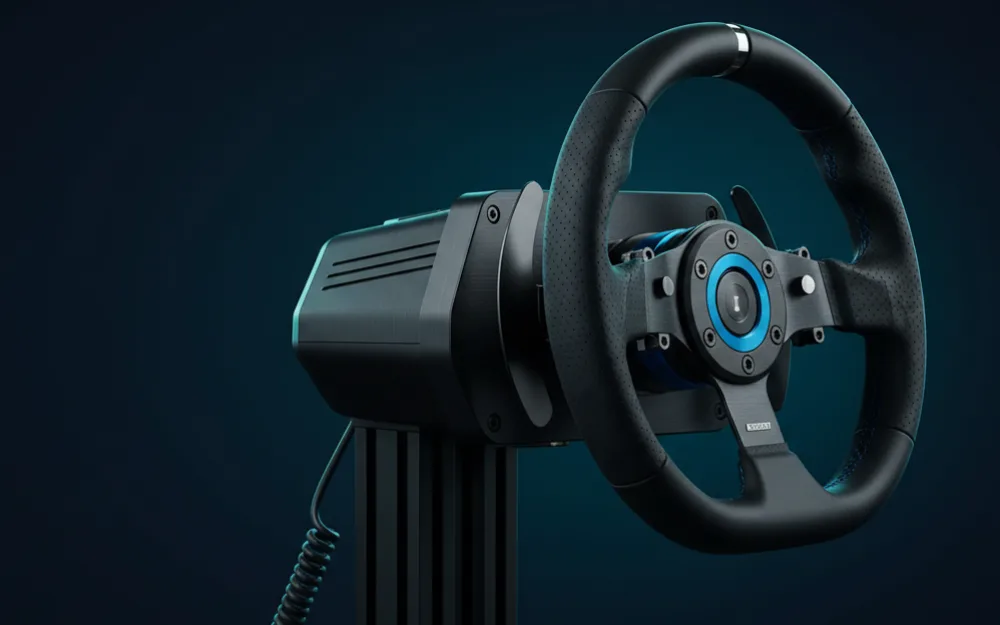
The G RS50 is the most complete answer in this group for a console racer, because it arrives as a base, hub, and round wheel together rather than a bare base, and it delivers 8 Nm of direct drive peak torque with Logitech’s TRUEFORCE feedback layered on top. It runs on PlayStation 5, PlayStation 4, and PC, which is rare for a direct drive wheel with this much torque, and the 11 inch round rim suits rallying and drifting where rapid hand over hand motion matters. The pros are strong 8 Nm direct drive, wide platform support, and a genuinely complete package with an integrated quick release for swapping rims. The cons are that the round wheel is a specific choice that some GT and formula drivers will want to replace, and TRUEFORCE support depends on the title, so the audio driven layer is not universal. It fits a PlayStation or PC racer who wants serious direct drive torque without assembling a base and rim separately. Our Logitech G RS50 review goes deeper.
MOZA R9 V3
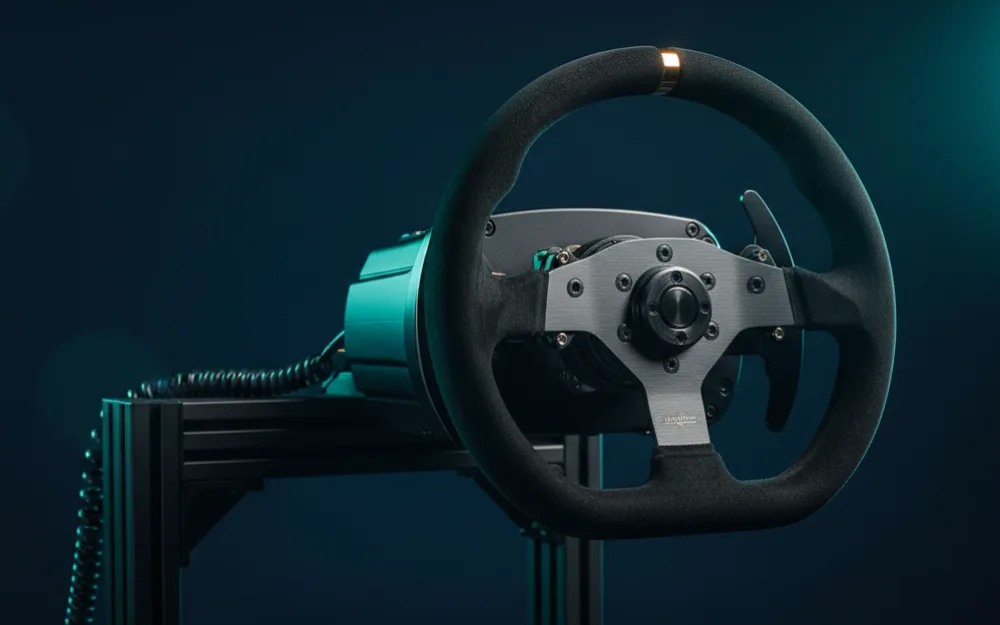
The R9 V3 is the torque per dollar standout, a 9 Nm direct drive base with a 21 bit magnetic encoder and MOZA’s NexGen force feedback algorithm, all in an aviation grade aluminum housing. For a PC racer building a setup piece by piece, it puts a lot of strength and a mature ecosystem within reach. Reviewers describe the MOZA feel as smooth and detailed, and 9 Nm gives real headroom over the 5 Nm entry class so peaks stay sharp in heavier cars. The pros are that generous torque figure, the deep MOZA catalog of wheels and pedals to grow into, and a solid metal build. The cons are that it is a base only purchase, so you add a rim and pedals to race, it is PC only, and its verified ownership record on this exact revision is still building. It fits a PC racer who wants the most direct drive strength for the money and is comfortable choosing the rest of the parts. Our MOZA R9 review covers the ecosystem around it.
Thrustmaster T818
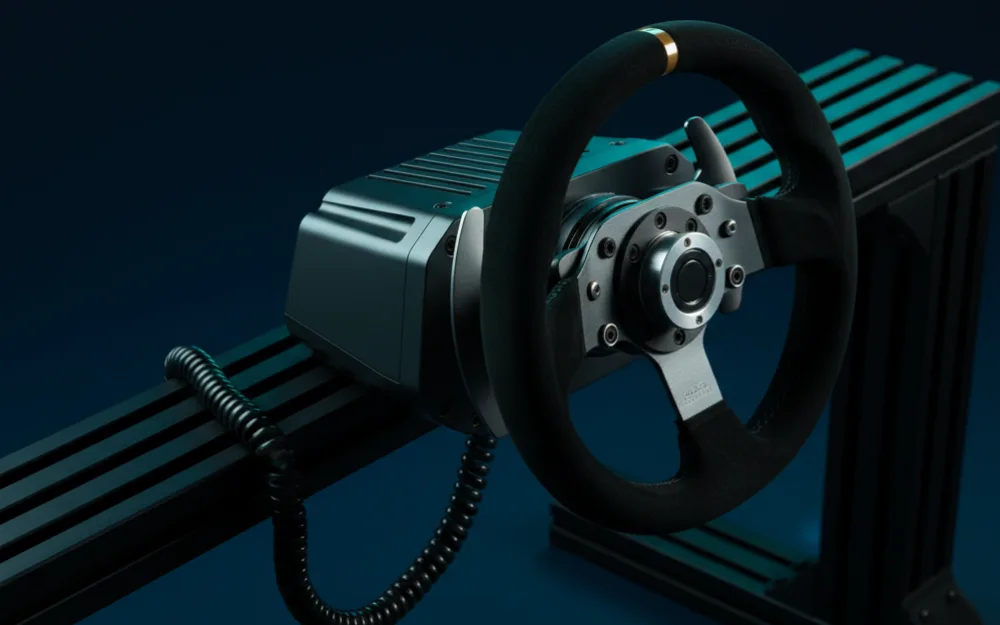
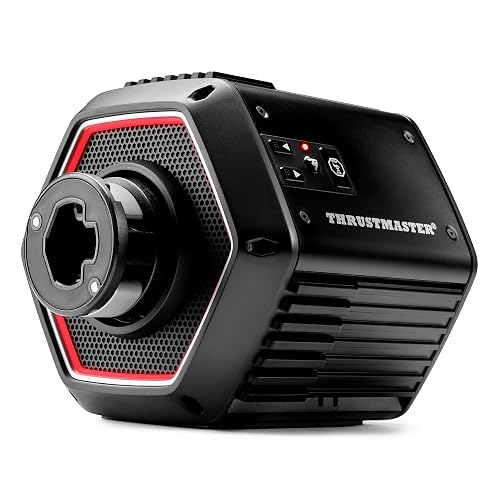
The T818 is the strongest wheel in this roundup on paper, a 10 N·m direct drive base that Thrustmaster states delivers its torque with no saturation, so the effects the game sends arrive without filtering. It carries a customizable ring of RGB LEDs that react to RPM, flags, and pit signals, and it slots into Thrustmaster’s full ecosystem of rims and pedals. Reviewers describe the feel as powerful and unfiltered, the kind of headroom that keeps detail intact when the load piles on. The pros are the 10 N·m ceiling, the unfiltered signal, and broad Thrustmaster compatibility. The cons are that it is a PC only base with no rim in the box, so the raceable cost climbs once you add a wheel, and that much torque asks for a firmly mounted rig to be enjoyable rather than tiring. It fits a committed PC racer who wants maximum strength and already owns or plans a solid cockpit. Our Thrustmaster T818 review has the full account.
Fanatec CSL DD QR2
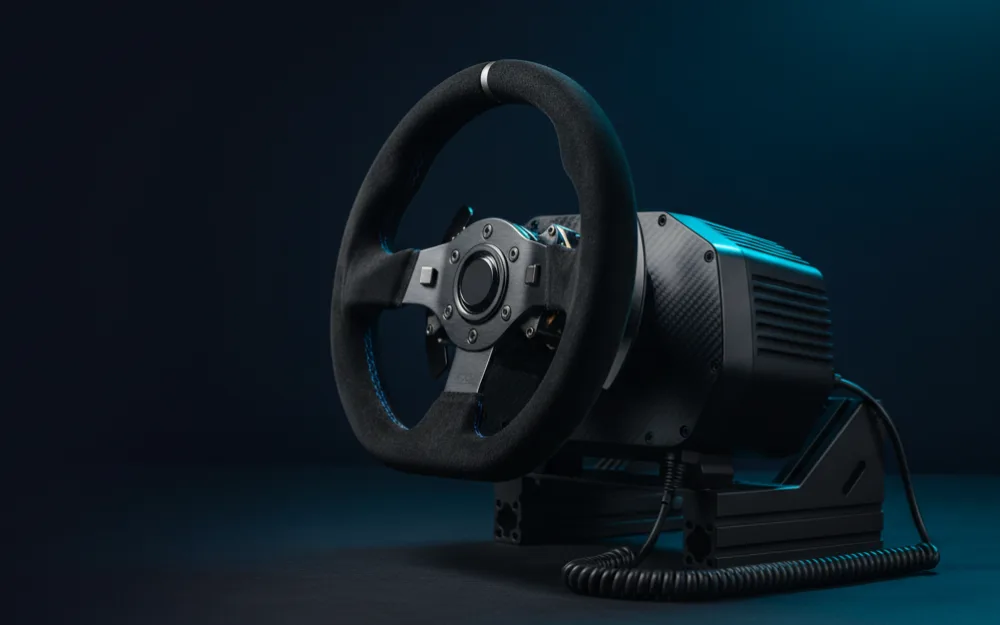
The CSL DD earns a place in this group not on raw torque but as the sensible entry into a serious ecosystem, and it is the wheel to consider if you want to spend less within this bracket and grow deliberately. Its 5 Nm FluxBarrier motor is smooth and detailed for its class, and the QR2 quick release with full Fanatec SDK support opens a wide catalog of motorsport style rims and load cell pedals. Reviewers rate the motor highly for the money while noting it sits below the muscular bases here. The pros are a refined entry direct drive signal, a strong quick release standard, and clear room to expand. The cons are the modest 5 Nm ceiling next to the 8 to 10 Nm options, a base only purchase on PC with Xbox needing a licensed wheel, and a thinner ownership record. It fits a racer who wants to enter the Fanatec ecosystem now and add torque later through the wheel and pedal path rather than paying for it all up front. Our Fanatec CSL DD review explains the build out.
Logitech G923, the gear driven benchmark
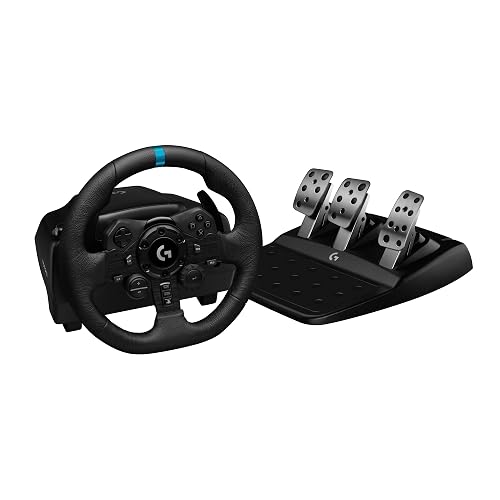
We kept the G923 in this roundup on purpose, because before you spend on direct drive it is worth seeing clearly what the best belt and gear tier still does for a fraction of the money. It is a gear driven wheel with TrueForce, a complete package with a three pedal set including a clutch, and it carries one of the deepest verified ownership records of any wheel we cover. Reviewers describe a durable wheel that communicates the important cues honestly, which is exactly the point: for many drivers, the leap to direct drive is a refinement, not a requirement. The pros are proven reliability, a complete kit, and broad platform support at a far lower cost. The cons are the faint mechanical texture of gear drive and a signal that leans on TrueForce vibration rather than pure motor force. It fits a racer who wants to be honest about whether direct drive detail will change how they actually drive, or whether a proven gear driven wheel already covers it. See our Logitech G923 review for more.
Do you actually need direct drive here
| Spend up on direct drive if | Stay with the gear driven benchmark if |
|---|---|
| You race often and want sharp detail under high load | You race casually and value a proven, complete kit |
| You are building a platform you will expand over years | You do not want to add a rim and pedals separately |
| You have or plan a firmly mounted cockpit | A desk clamp setup is as far as you want to go |
The wheel that is wrong for you here is the one bought for a number rather than a need. A 10 N·m base on a flexing desk is less enjoyable than a well matched 8 Nm setup on a solid rig, and a committed belt driver may barely notice the upgrade in the sims they actually play. Match the wheel to how you race and where you mount it, and the choice gets far easier. And if you race only now and then, this whole tier may be more wheel than you will use, so the tighter budget below is the honest starting point.
How it scores
The WSR Score shown on each card reflects verified buyer ratings gathered and normalized on a consistent scale, not an editorial rubric. You can read what goes into it on How We Review. On that basis the direct drive bases and the gear driven benchmark all rate well, with the differences here coming down to platform, torque, and how complete the package is rather than a gap in quality. A strong score at this tier reflects a wheel that satisfies committed racers, so read it alongside your platform and mounting before you decide.
Where to go from here
If you want to spend less and still get direct drive, our best direct drive wheels under $500 roundup covers the cheapest options worth buying. If you have settled on direct drive in this price range and want to compare the strongest performers head to head, our best direct drive wheels under $1000 guide ranks them by torque and ecosystem. For the step below this one, see best racing wheels under $400, and browse more in direct drive wheels.