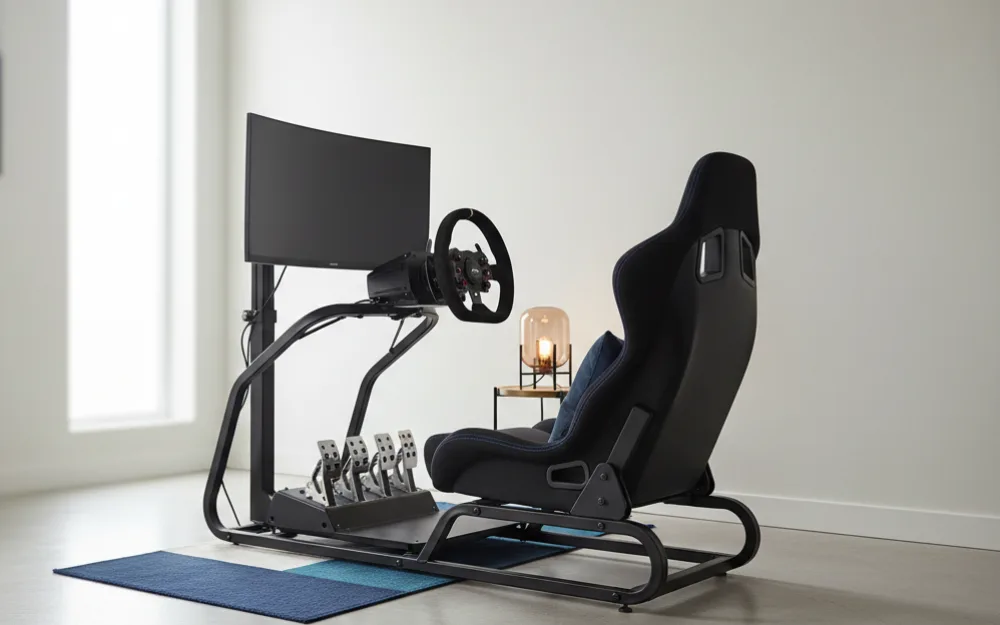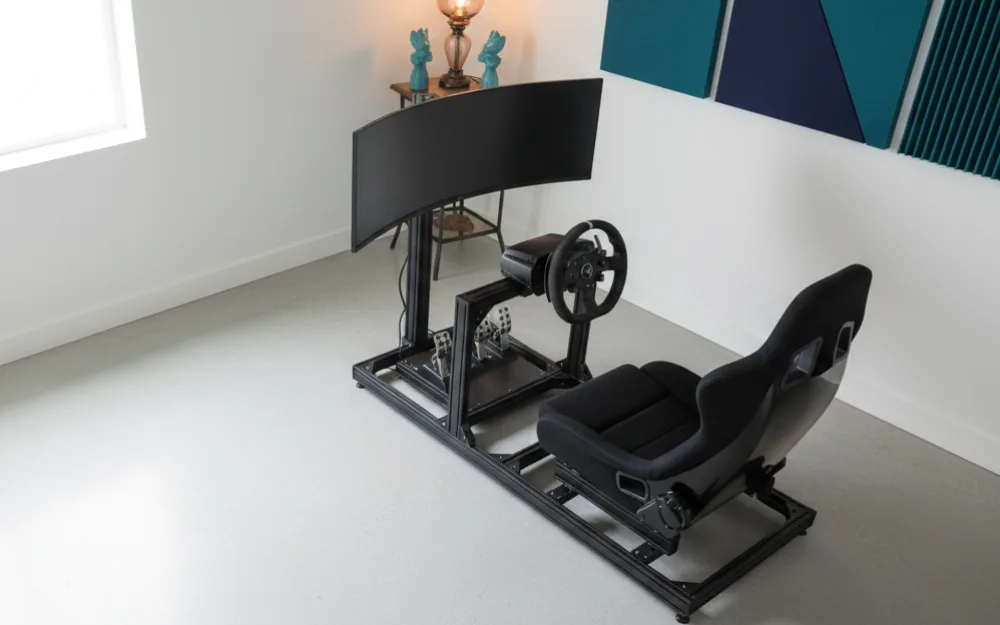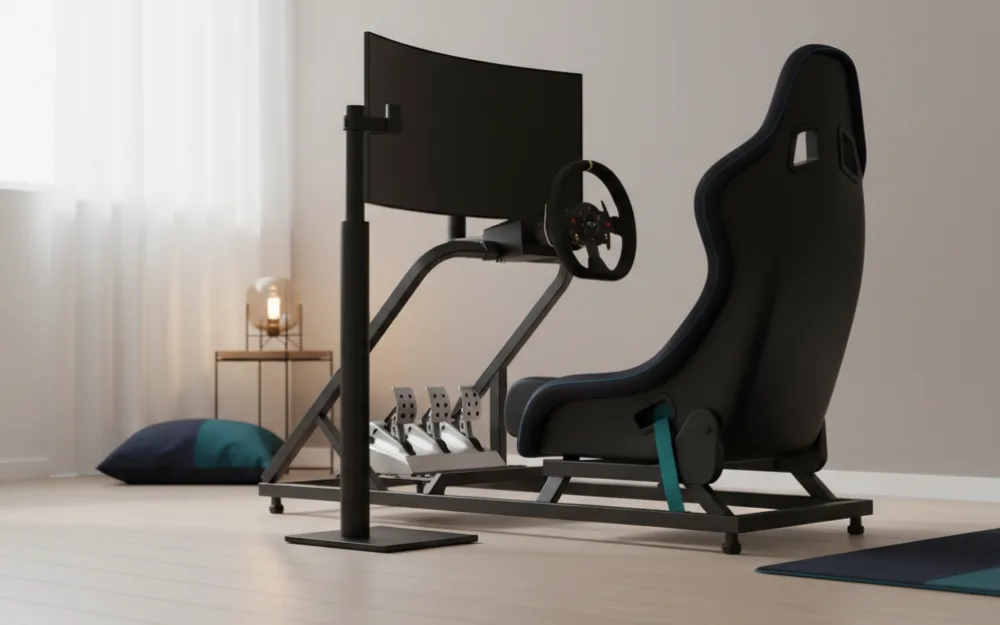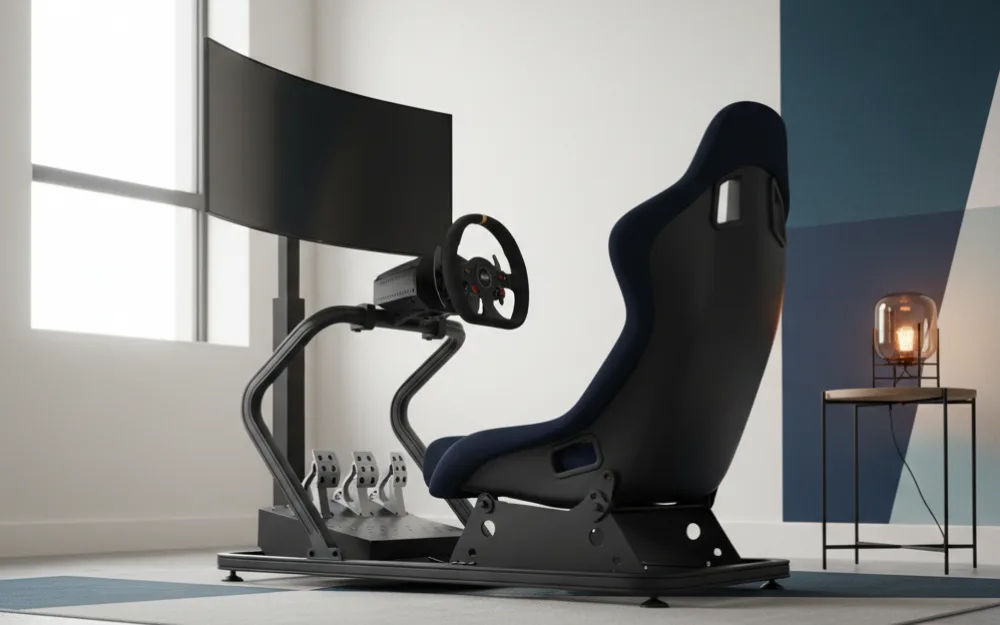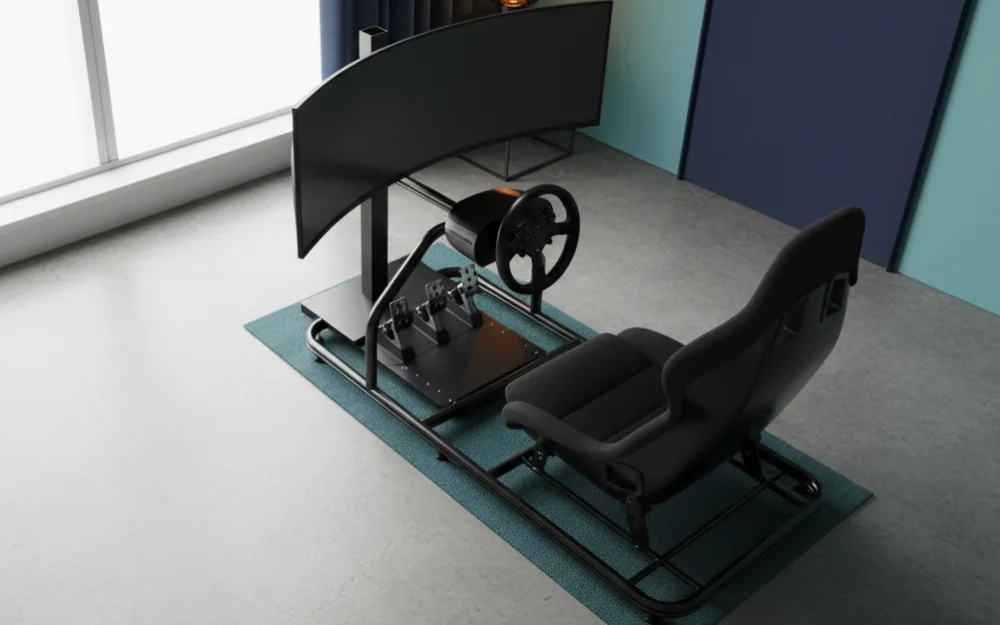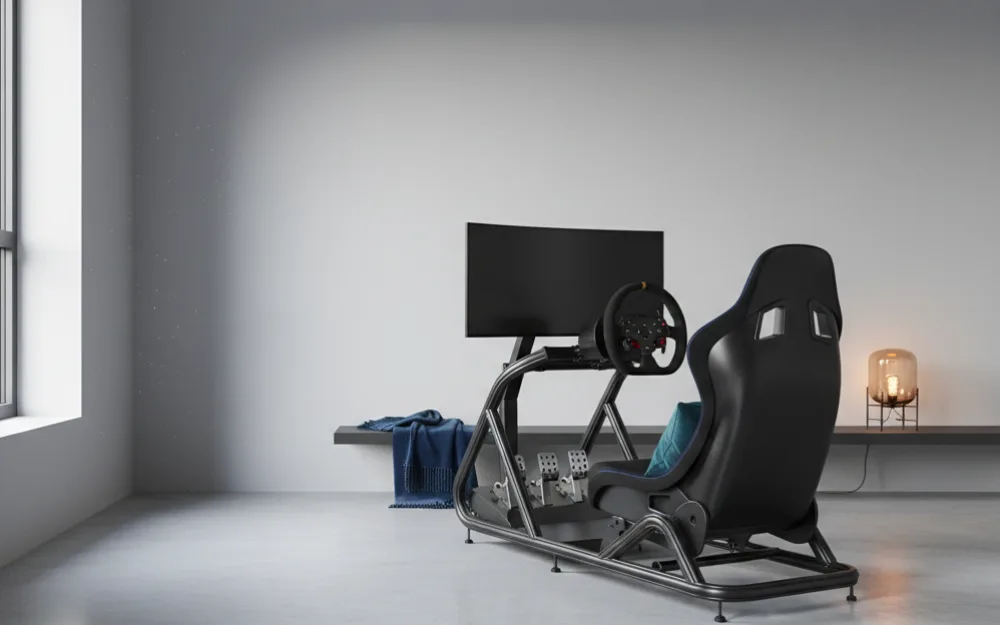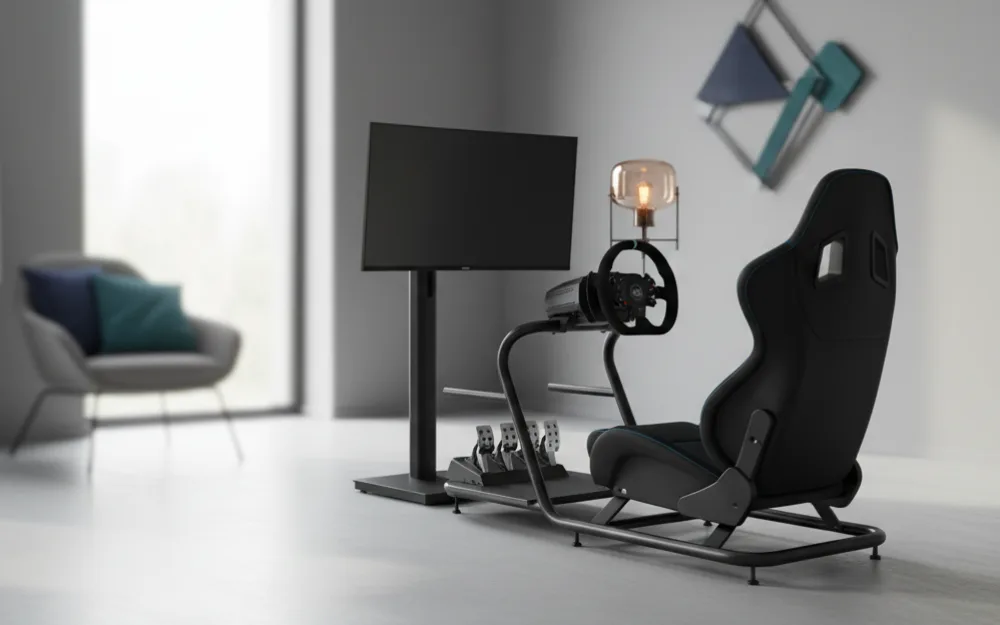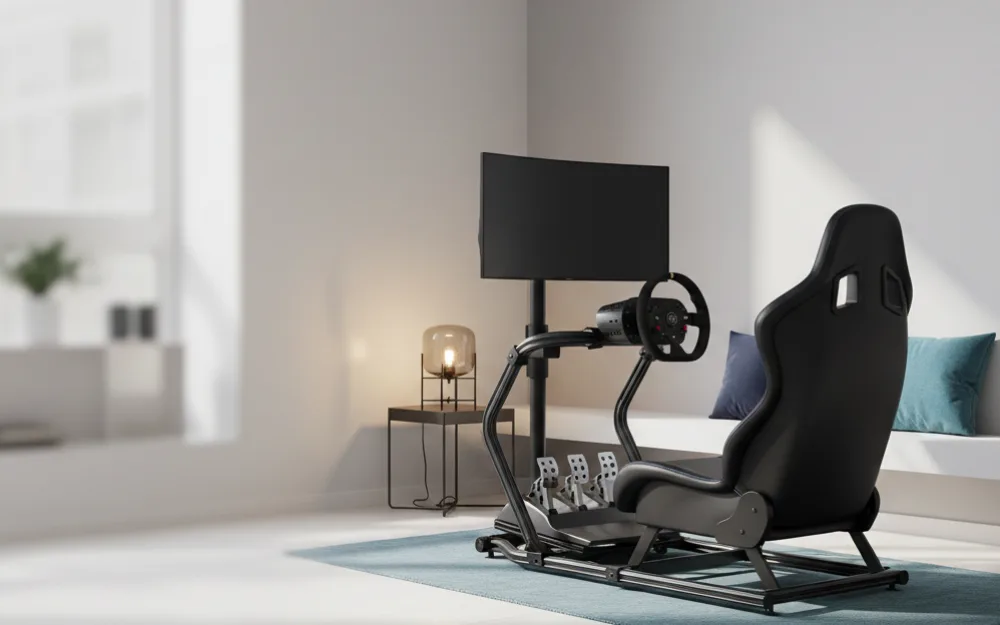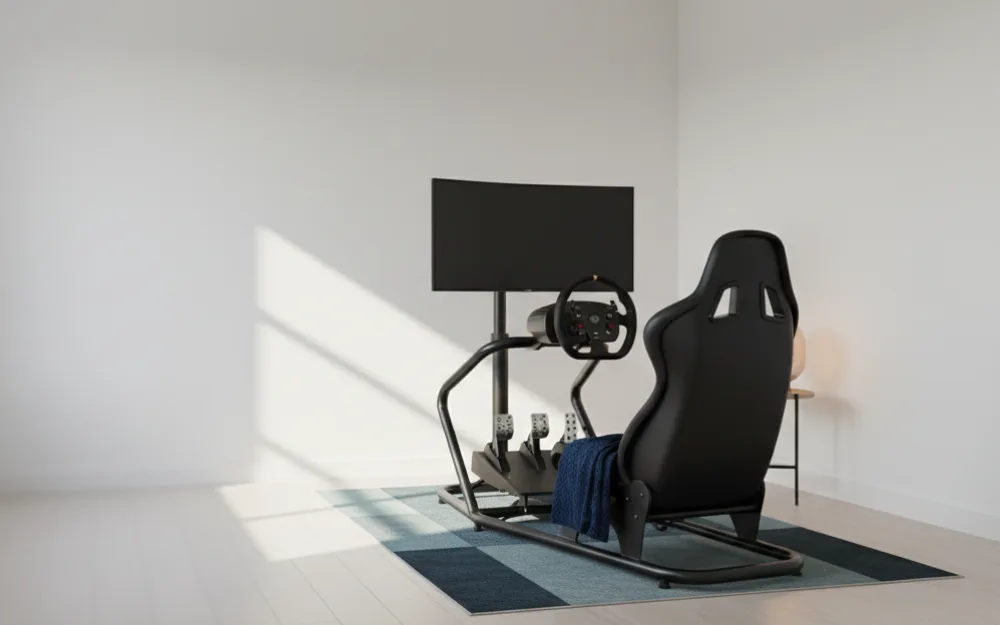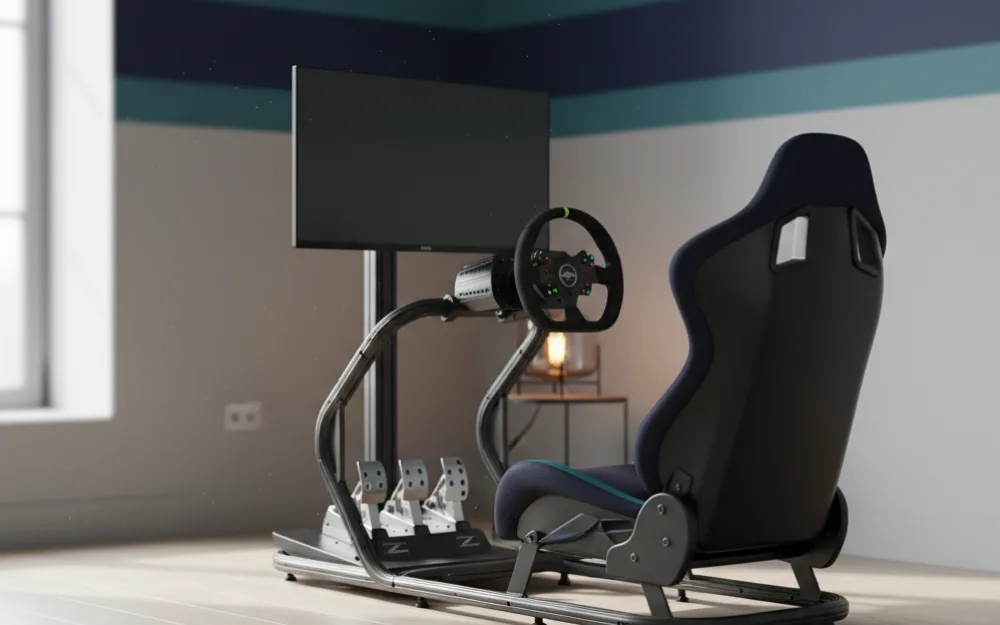

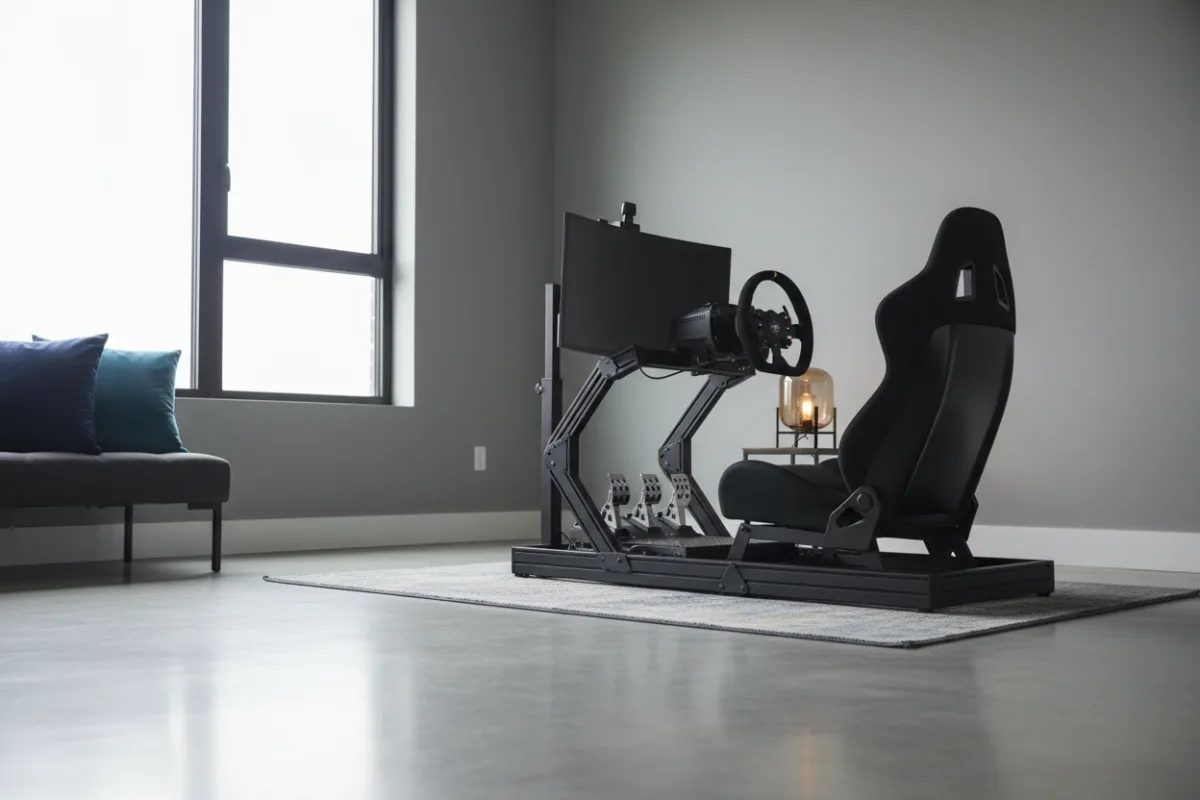

An aluminum profile cockpit is the frame a serious rig grows into. The 8040 extrusion at the core of these builds, a 40 by 80mm slotted aluminum beam, gives you a rigid spine and a channel of T-nut slots to bolt gear onto later, which is exactly what a direct drive wheelbase and a load cell pedal set need to feel honest. If you are choosing your first real frame and expect the setup to keep changing, the material of that frame decides how far it can carry you.
We weighed these picks on the things that decide a rig over years, not weeks: frame material and rigidity, the assembly you actually face out of the box, how far the seat and pedal plate adjust to fit your body, and how much you can expand later. Feel and long term stability come from verified buyer reports and maker specifications rather than our own driving time, and you can read how we review for the method. If this is your first rig, our Getting Started guides cover the wider picture first.



How we picked
We started from the WSR Score, which reflects verified buyer ratings normalized on a consistent scale, then cross checked every pick against four things that decide an aluminum profile rig. First, the frame itself: a true 8040 profile base carries a heavy wheelbase and resists twist under load, and that rigidity is what keeps force feedback detail from washing out. Second, expandability: profile extrusion earns its price through the T-nut channels that let you bolt on a shifter, a monitor arm, a keyboard tray, or a button box later, so we looked at how open each frame is. Third, assembly: profile rigs ship as a crate of beams and brackets, and the quality of the instructions, the bolts, and the tools included decides whether you lose an afternoon or a weekend. Fourth, fit: seat travel, wheel deck angle, and pedal plate range set who can drive comfortably. We included two steel counterpoints on purpose, since a steel reinforced or square tube frame can undercut a full profile rig on price while giving up some of that open expandability, and that tradeoff is the real decision here.
Marada 8040 Aluminum Profile Cockpit
The Marada is the most complete profile answer in this group, built on a 40 by 80mm solid aluminum profile and shipping with an ergonomic seat already in the box. At a listed weight of roughly 105 pounds it is a heavy, planted frame, and owners report that mass is the point: it stays put under a strong wheelbase where a lighter rig would shift. The sliding rails and embedded slots give what the maker calls infinite adjustment across seat, wheel bracket, and footrest, enough to set an upright truck position or a laid back single seater stance. Two cautions temper the concept. Assembly is a real project given the beam count and the weight, so budget an afternoon and keep a proper hex set within reach. And verified buyer feedback on this listing is still thin, so the durability read leans on the profile design and the material rather than a deep base of owner reports. Our full Marada 8040 cockpit review covers the build in detail.
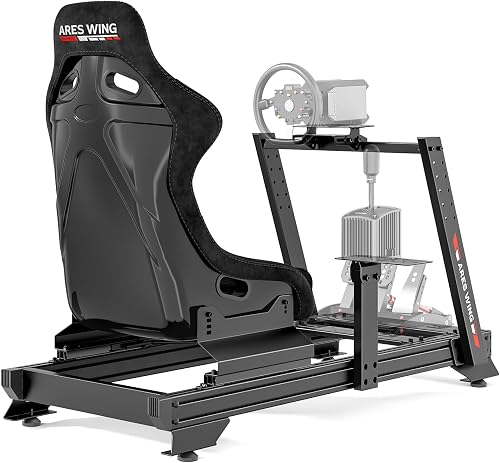
ARES WING 8040 Aluminum Profile Cockpit
The ARES WING 8040 takes the same profile approach but comes in far lighter at around 41 pounds, with a frameless layout the maker developed for an immersive seating position and a seat rated to 287 pounds. Where it stands out is fit: the maker lists a seat that slides 8.7 inches fore and aft, the wheel deck tilts from minus 8 to 32 degrees across six height settings, and the pedal plate swings from 8 to 53 degrees, which is a wide window for dialing in a comfortable posture. Integrated T-nut channels keep the door open for cup holders and added gear later. The tradeoff against the Marada is planted mass: a lighter profile frame is easier to move and store but leans more on how well you bolt it down to feel rock solid under the strongest bases. Owners pair it best with a firm floor and fully tightened joints.
ARES WING Square Tube Cockpit
This is the steel counterpoint, and it earns a place here to make the material tradeoff clear. Rather than 8040 profile, it uses a reinforced square tube frame the maker rates for direct drive bases up to 16 Nm, and the maker puts assembly at around one to one and a half hours, quicker than a full profile crate. It includes a reclining seat that swings from 45 to 90 degrees with a headrest and lumbar pillow, and it fits a wide range of body sizes up to 220 pounds. What you give up is the open T-slot expandability of profile: a welded and bolted square tube frame is rigid and cheaper to get into, but it does not offer the same channel to keep adding hardware wherever you like. It suits a driver who wants a stiff, seated rig now and does not plan to keep bolting on modules.
Fanatec CSL Cockpit V1.5
The Fanatec CSL splits the difference with a strong and lightweight trapeze chassis of aluminum tubing and steel brackets, which is why we treat it as steel reinforced rather than full profile. Its strength is the wheelbase mounting: a universal bracket with two height options, stepless angle and distance adjustment, and the option to invert for a karting position, plus a pedal plate the maker built to handle the high forces a load cell brake generates. A three year warranty backs it, and buyer feedback is broader here than on the profile picks. The catch a builder has to plan for is that the seat is sold separately, so the sticker frame is a chassis, not a ready to drive rig. It fits a driver already buying into the Fanatec ecosystem who wants a clean, adjustable base and will add a seat and accessories to taste.
How the picks compare
| Pick | Frame | Seat included | Best for | Watch out for |
|---|---|---|---|---|
| Marada 8040 | 40 by 80mm aluminum profile | Yes | A planted, heavy base that grows with T-slots | Heavy to move, thin buyer feedback so far |
| ARES WING 8040 | 8040 aluminum profile | Yes | Wide fit range and easy to move | Lighter frame leans on being bolted down firmly |
| ARES WING square tube | Reinforced square tube steel | Yes | A stiff seated rig at a lower entry | Less open expandability than profile |
| Fanatec CSL V1.5 | Steel reinforced aluminum trapeze | No | A clean, adjustable Fanatec base | Seat sold separately, plan for the extra cost |
Who should buy which
A builder who wants a permanent, planted profile rig that carries a strong wheelbase without a wobble should look at the Marada 8040, provided the space is fixed and the weight is welcome. Drivers who value a wide fit range and the ability to move or store the rig are better served by the lighter ARES WING 8040. Anyone who wants a stiff seated rig at a lower cost, and does not need open T-slot expandability, should consider the ARES WING square tube. And a driver already in the Fanatec ecosystem who will add a seat gets the cleanest, most adjustable wheelbase mount from the CSL Cockpit.
Who should skip these
If you race in a small apartment and break the rig down between sessions, a heavy profile frame like the Marada is the wrong tool, and a foldable rig will serve you better. If you want a ready to drive package for one price, skip the Fanatec CSL, since its seat is a separate purchase. And if your plan is to keep bolting on modules for years, a square tube steel frame will frustrate you compared with an open profile channel. Match the frame to how you actually live with the rig, not to the highest number on a spec sheet.
Before you buy
Whichever frame you choose, treat assembly as part of the product: budget an afternoon, keep a proper hex set within reach, and expect a few stubborn threads before everything lines up square. If your main worry is holding a high torque wheelbase steady, our guide to the best cockpit for direct drive weighs these frames on rigidity alone. You can browse the wider field in full cockpits, and if a budget frame is the priority, our picks for the best sim racing cockpit under $500 and the individual Marada 8040 review lay out the tradeoffs in more depth.