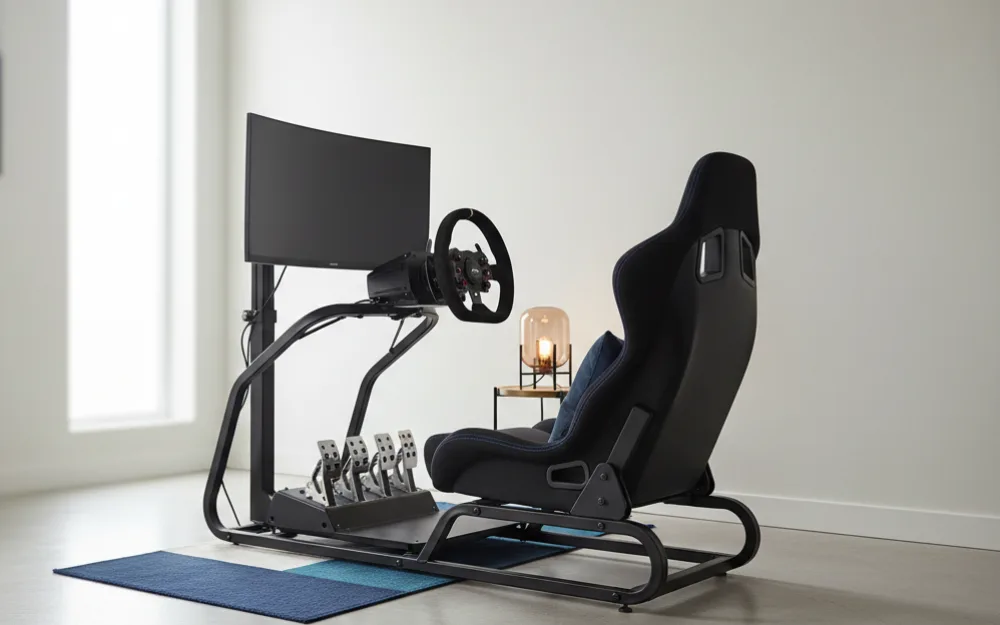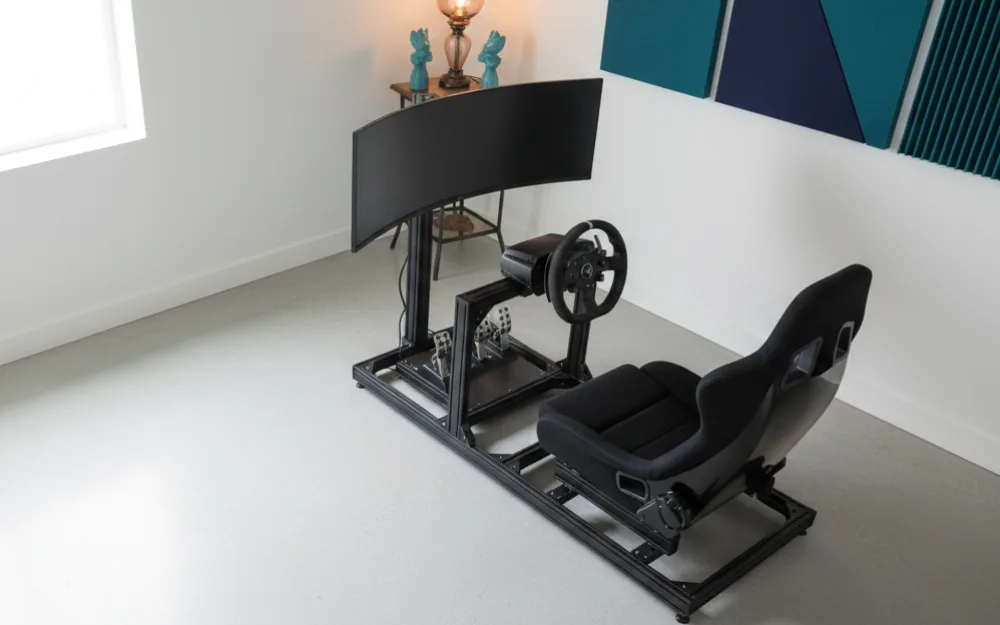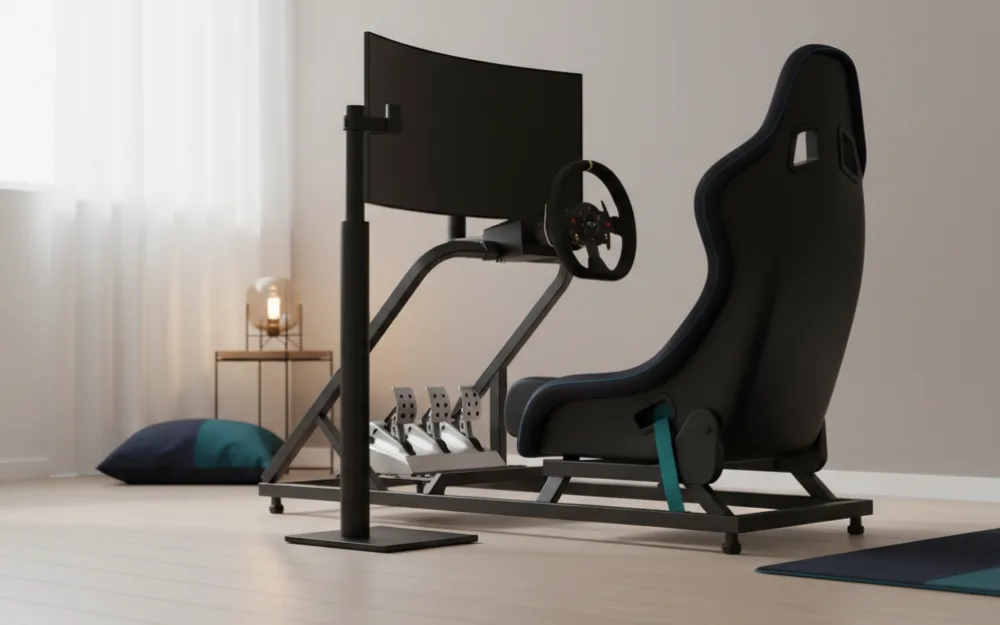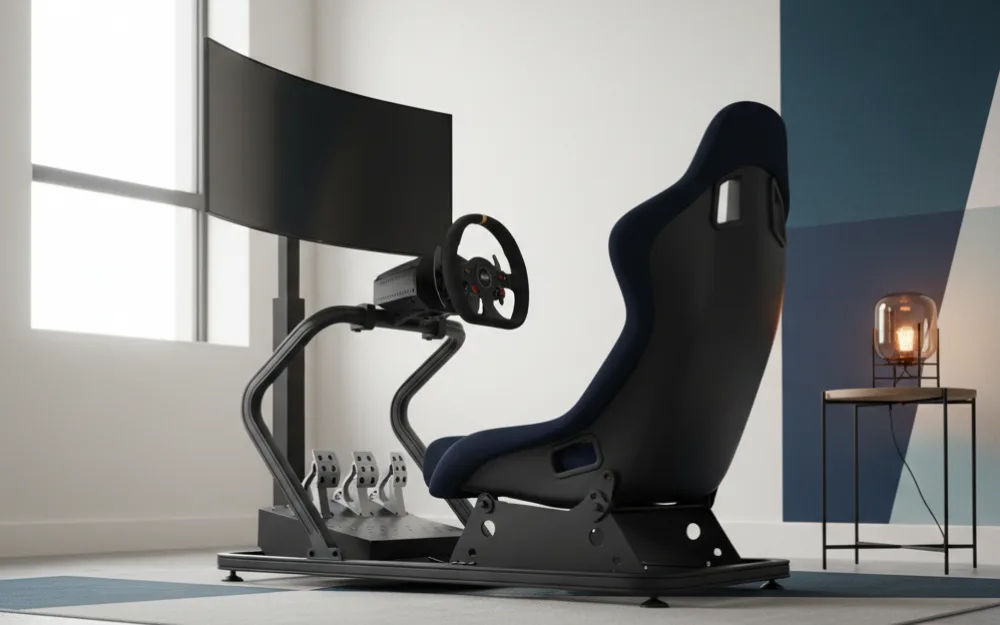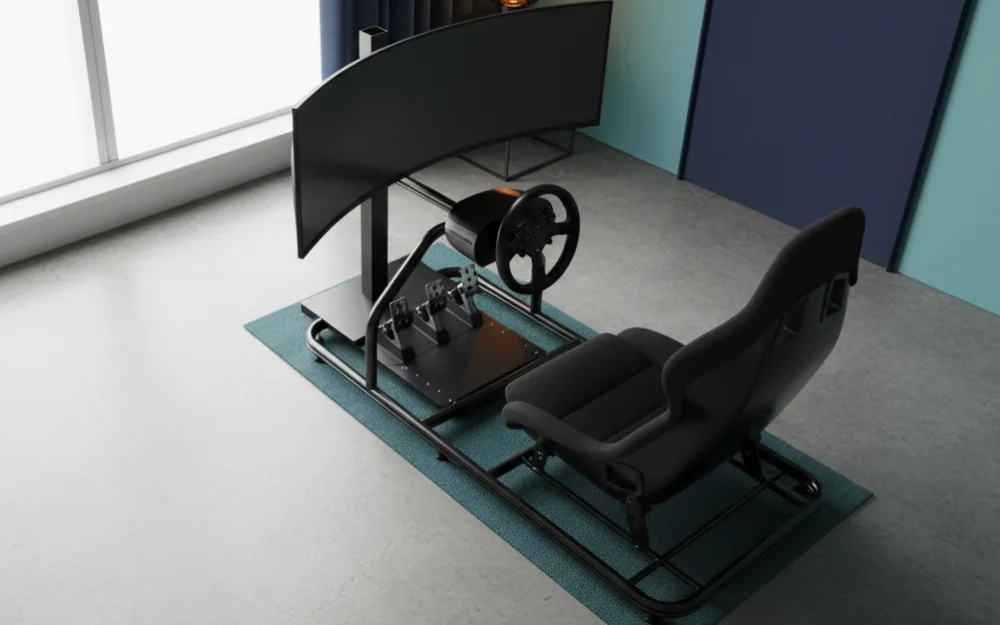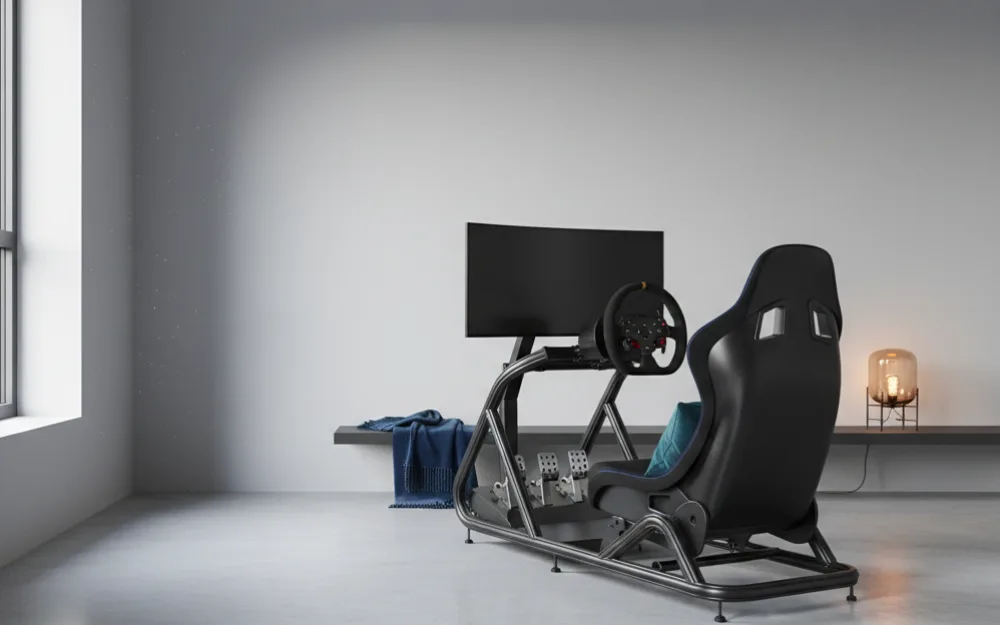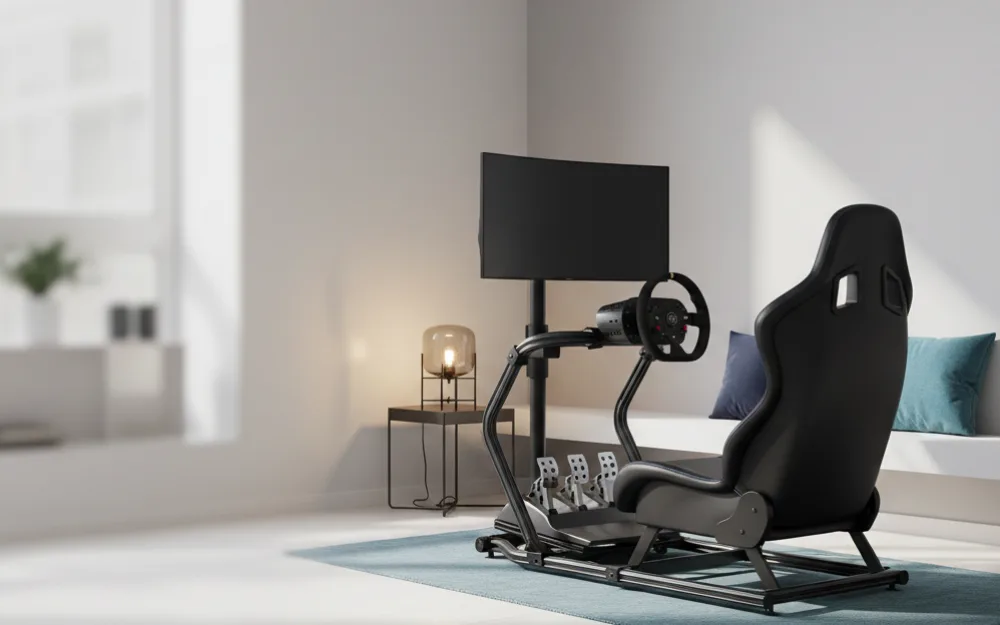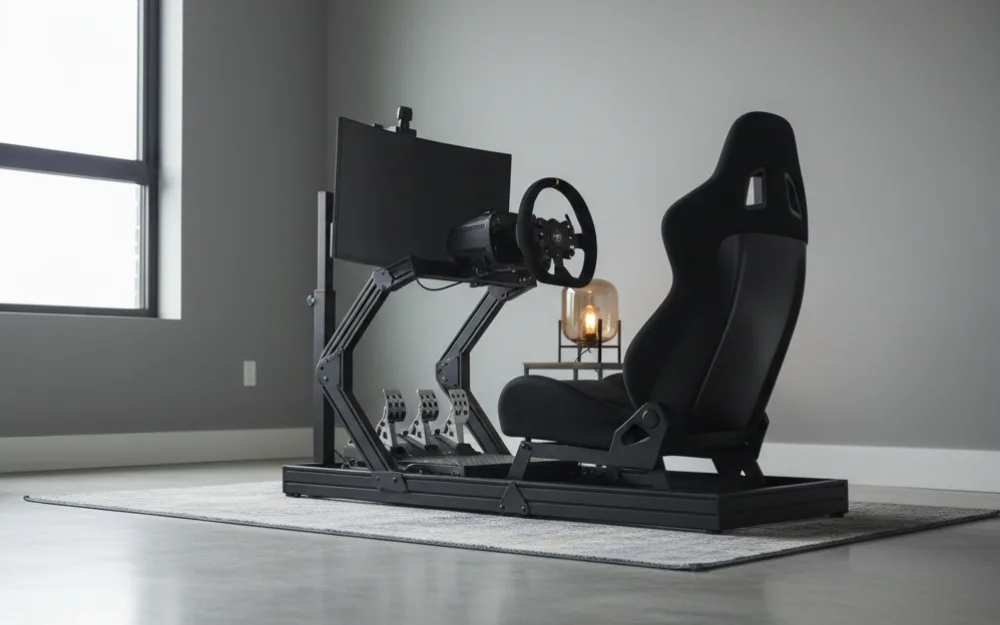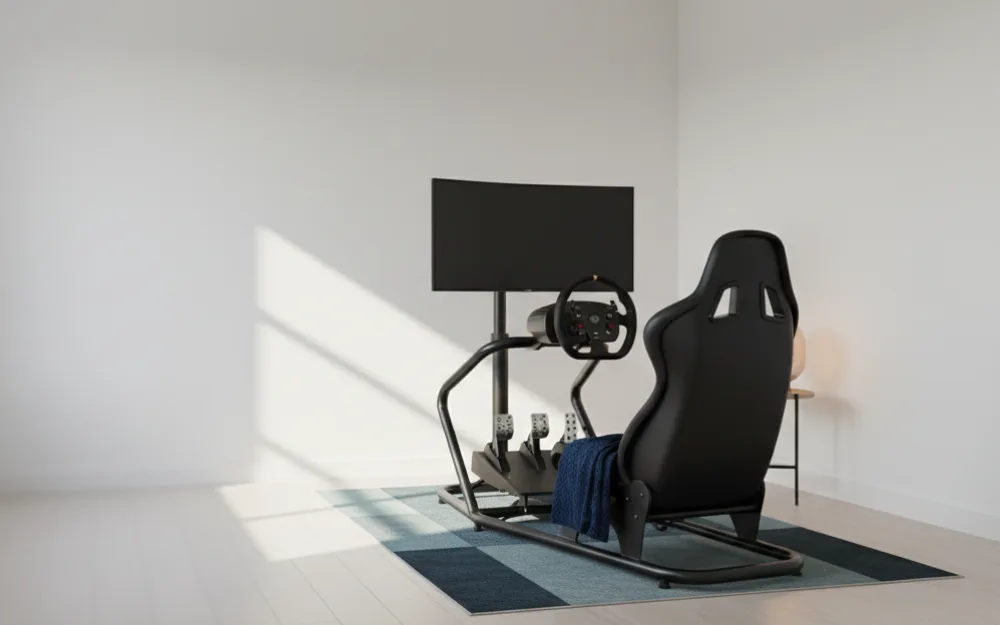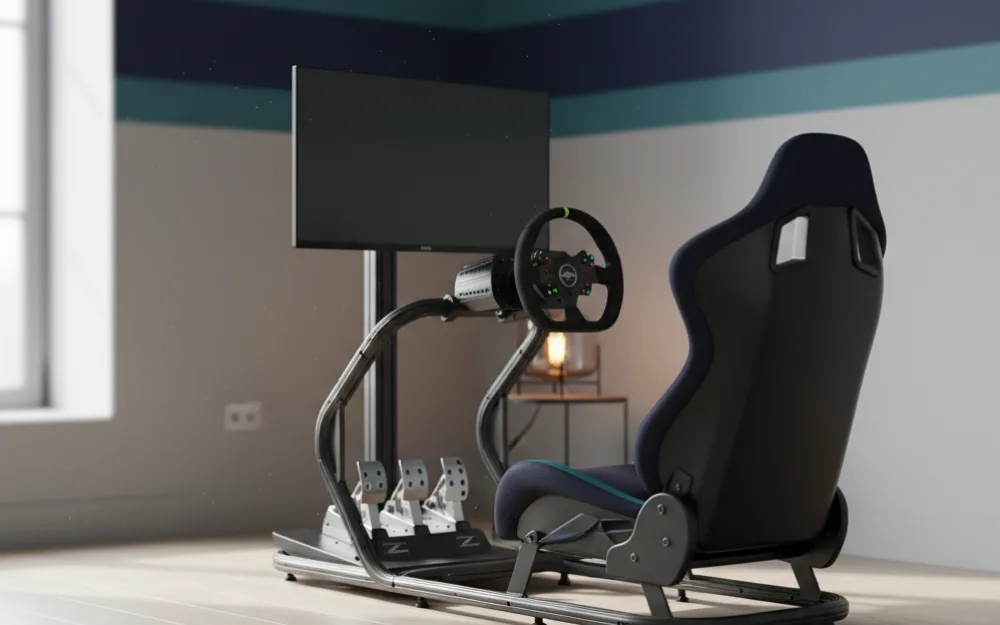

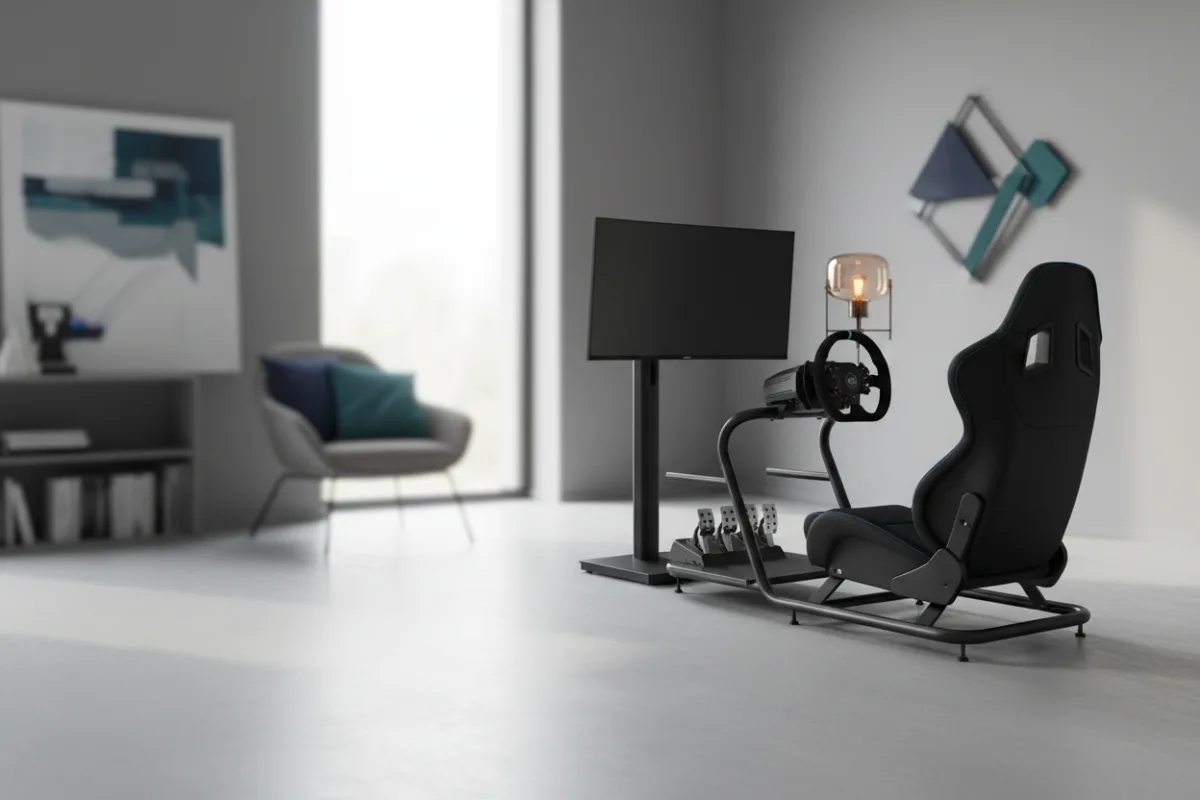

A cockpit under $300 is the tier where most drivers make the jump from a wobbling wheel stand to a real seat and driving position. At this level you are mostly choosing between folding frames that store flat and steel rigs that stay planted, and the right pick turns far more on your room, your body, and the strength of your wheelbase than on any feature list. This guide sorts the field by how each frame actually behaves when you load it, and it is honest about where a budget frame gives out.
We compared maker specifications with recurring owner feedback rather than our own driving time, and you can read how we review for the method. If rigs are new to you, start with Getting Started before you buy.




How we picked
We weighed four things a budget cockpit has to get right. First, stability under load, since a frame that flexes at the pedal deck softens the detail coming back through your wheel. Second, whether it folds or stores, because most drivers in this budget tier are fitting a rig into a shared room. Third, fit and load rating, because a frame that suits an average driver can leave a tall or heavy one cramped, and the stated weight limit tells you where the frame was engineered to stop. Fourth, the upgrade path, because a cockpit bought now should not box you in when the gear improves. Every pick below is judged on those, not on a longer spec sheet.
Next Level Racing GT Lite: the easy first cockpit
The GT Lite is the cleanest entry into a proper seat and driving position, and its huge owner record, 4.2 across 4,289 ratings, says how many drivers have started here. The folding tube frame holds up well with belt and gear driven wheels, and owners consistently describe a big jump in solidity over a wheel stand. Pre-drilled plates make mounting Logitech, Thrustmaster, or Fanatec gear straightforward, a gear shifter mount is included and fits either side, and at 31.7 pounds the whole rig folds flat against a wall between sessions. The limit is a strong direct drive base, where the folding frame starts to give at the deck. For an average height driver on entry or mid gear who needs to store the cockpit, it is the natural first choice.
RACGTING foldable cockpit: the value seat rig
The RACGTING covers the lower end of this budget tier with a steel framed folding seat rig that ships around 90 percent pre-assembled, so you are racing in minutes rather than losing an hour to a build. Tool-less adjustments cover pedal distance, shifter side, seat angle, and wheel tilt, which makes it easy to hand between drivers or swap between games. Compatibility is wide, spanning Logitech, Thrustmaster, Fanatec, Moza, and Simagic wheels, and owner feedback is generally positive at 4.2 across 717 ratings. Two honest notes: it is the frame and shifter mount only, so wheel, pedals, and shifter come from you, and like any budget folding frame it stays composed with entry and mid gear but shows some deck flex if you push it with a strong direct drive base. It is worth a look if you want a seated rig that folds away and installs fast.
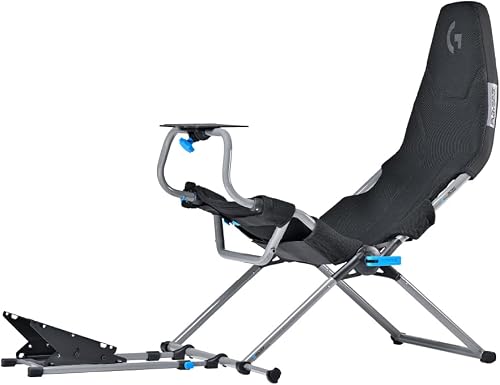
Playseat Challenge X: the small space champion
The Challenge X suspends a breathable ActiFit seat in a light steel frame, folds down to almost nothing, and moves with one hand at about 25.6 pounds (11.6 kg). Owners rate it highly, 4.3 across 839 ratings, and consistently praise the comfort and the tiny storage footprint, which makes it the pick when the rig has to disappear between sessions. It offers six seating positions, an included shifter mount, and a stated user weight limit of 120 kg (265 lb), wide enough for most drivers. The trade is seat flex: a suspended seat gives under a firm brake more than a hard bucket does, which can blur load cell feel. For entry and mid gear in a tight room it is hard to beat, and taller drivers often fit it better than they expect.
ARES WING cockpit: the stiff steel seat rig
The ARES WING trades the folding trick for rigidity. Its reinforced square tube steel frame is rated for direct drive bases up to 16 Nm, and the maker says assembly takes around one to one and a half hours, quicker than a full profile crate. It arrives well equipped for the money, with a reclining seat that swings from 45 to 90 degrees, a headrest and lumbar pillow, four wheel tilt angles, five pedal tilt positions, and a fit window the maker states runs from 4.3 to 6.9 feet and up to 220 pounds. The one caution is ownership depth: at 15 ratings, though they average a strong 4.6, this is a thin record next to the established rigs here, so the long term durability read leans on the frame design rather than a deep base of owner reports. For a driver who wants a stiff, seated steel rig now and does not need to fold it away, it is the most rigid frame in the group.
Fanatec CSL Cockpit V1.5: the upgrade minded chassis
The Fanatec CSL is a strong and lightweight trapeze chassis of aluminum tubing and steel brackets, and it is the pick for a driver already buying into the Fanatec ecosystem. Its strength is the mounting: a universal wheelbase bracket with two height options, stepless angle and distance adjustment, and the option to invert for a karting position, plus a pedal plate the maker built to handle the high forces a load cell brake generates. A three year warranty backs it, longer than the others here, and buyer feedback sits at 4.5 across 50 ratings. The catch a builder has to plan for is that the seat is sold separately, so what you are buying is a chassis, not a ready to drive rig. It fits a driver who wants a clean, adjustable base and will add a seat and accessories to taste.
Assembly and compatibility
At this price the build is part of the product, and it varies more than you might expect. The RACGTING arrives mostly pre-assembled and the Playseat folds out with little effort, while the steel rigs ask for more time, with the maker quoting around one to one and a half hours for the ARES WING with the included hardware. Keep a proper hex set within reach and expect a few stubborn threads before everything lines up square, since a joint that is not fully tightened is the most common source of a wobble owners later blame on the frame. Compatibility is broad across the group, with all five accepting the mainstream Logitech, Thrustmaster, and Fanatec wheels and the folding rigs adding Moza and Simagic, but confirm your exact wheelbase and pedal set against the listing before you buy, especially if you are already on a heavier direct drive base near the edge of what a frame is rated to hold.
At a glance
| Cockpit | Frame | Folds flat | Best for |
|---|---|---|---|
| NLR GT Lite | Foldable tube | Yes | Easy first cockpit |
| RACGTING | Foldable steel | Yes | Value seat rig, fast setup |
| Playseat Challenge X | Foldable suspended seat | Yes | Smallest storage |
| ARES WING | Reinforced square tube steel | No | Stiff seated rig now |
| Fanatec CSL V1.5 | Steel reinforced aluminum | No | Fanatec base, seat separate |
Who should skip a cockpit at this price
The clearest driver to skip this tier is the one running a high torque direct drive base. Push a strong wheelbase into a folding frame and the deck will flex, which washes out the very detail you paid the wheelbase to deliver, so that money belongs in a stiffer frame instead. If your worry is holding a powerful base rock steady, our guide to the best cockpit for direct drive weighs frames on rigidity alone, and if you expect to keep bolting on gear for years, an open extrusion frame from our best aluminum profile cockpit picks will carry you further than any budget rig here. And if you already have a good chair and only need a mount, a dedicated wheel stand costs less and takes less room than a full cockpit.
Where to go next
If your budget can stretch a little further, our picks for the best sim racing cockpit under $500 open up sturdier options, and for the rigid end of the market the best aluminum profile cockpit guide lays out what a profile frame buys you. You can browse the whole category in full cockpits.