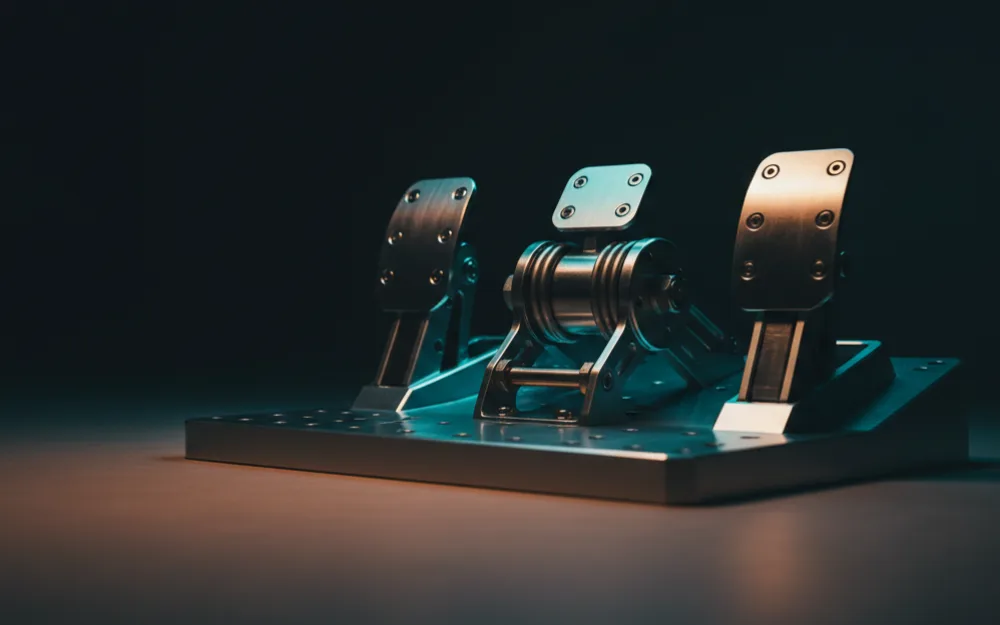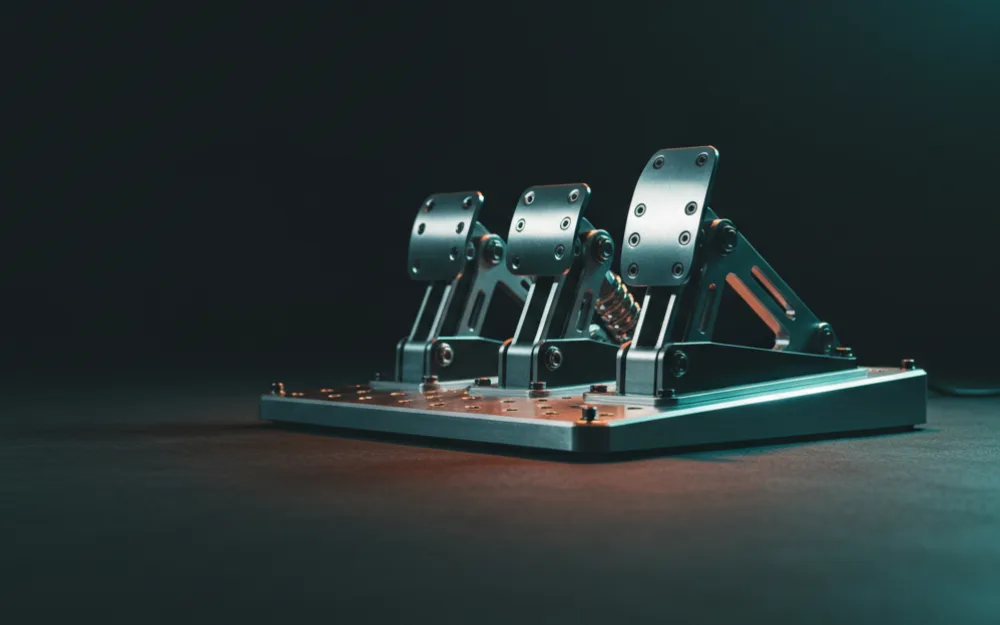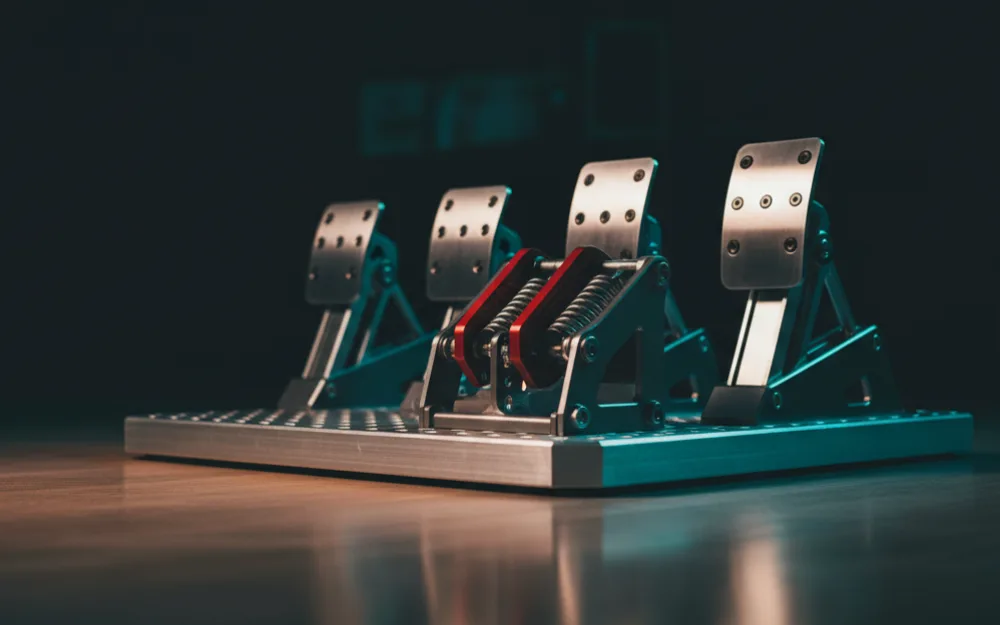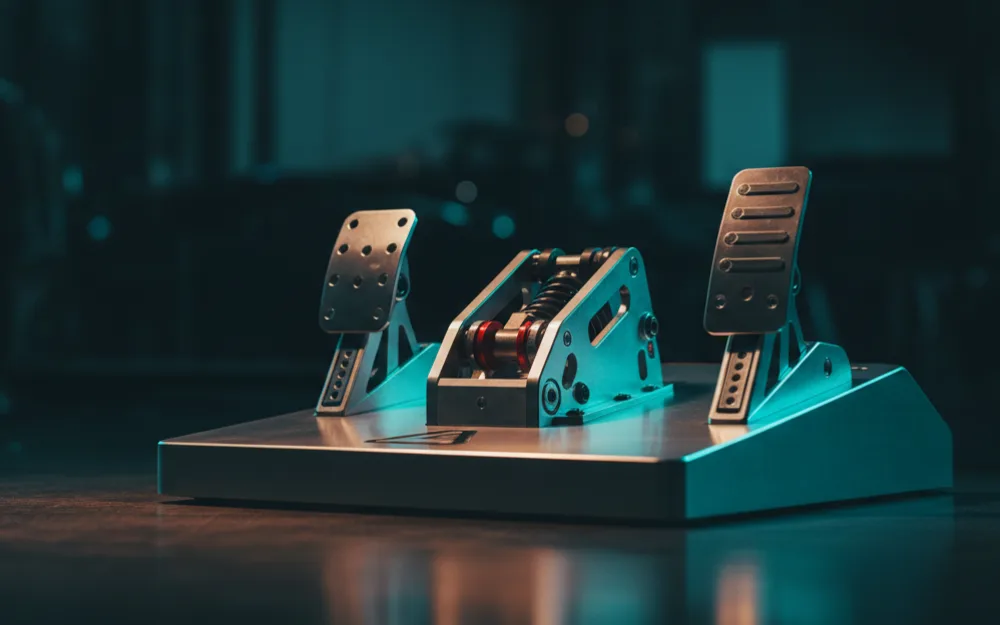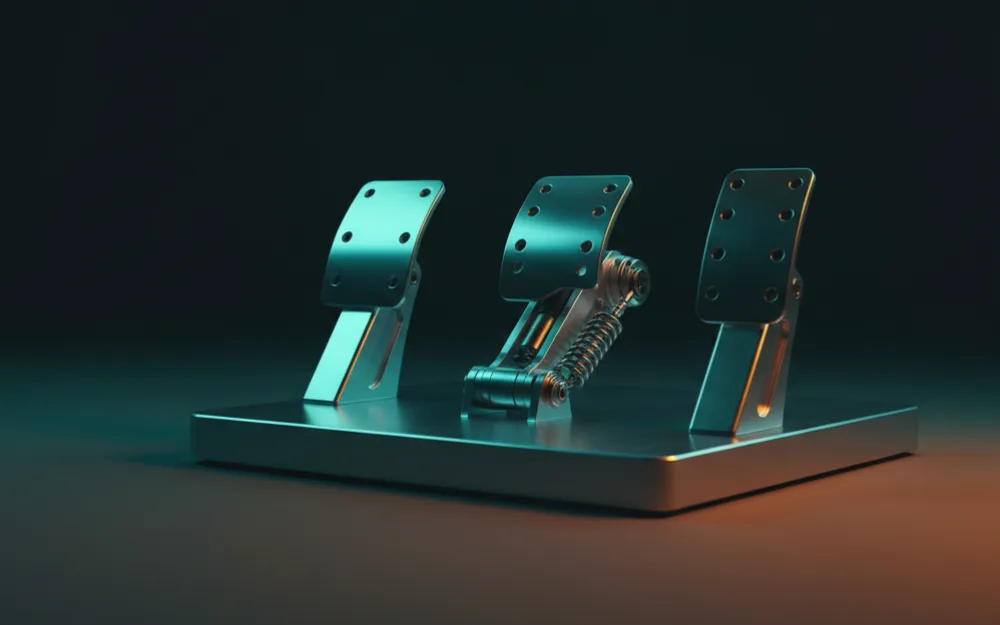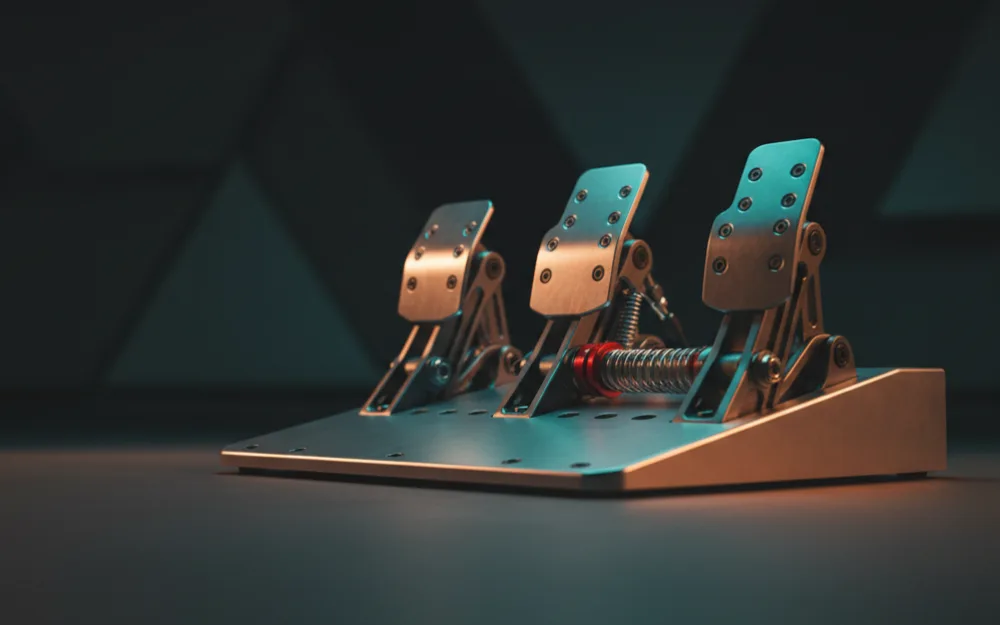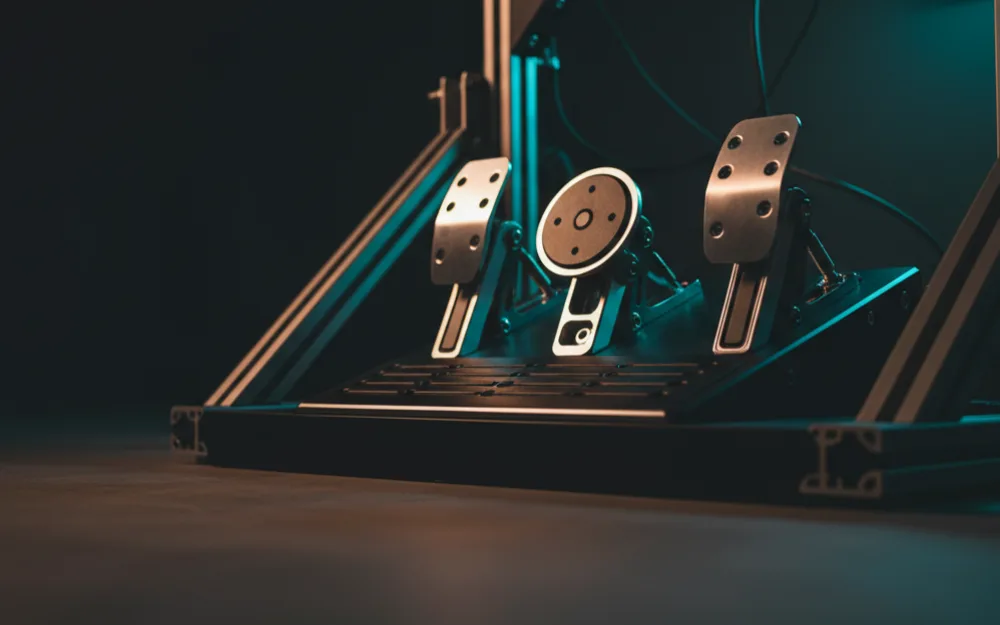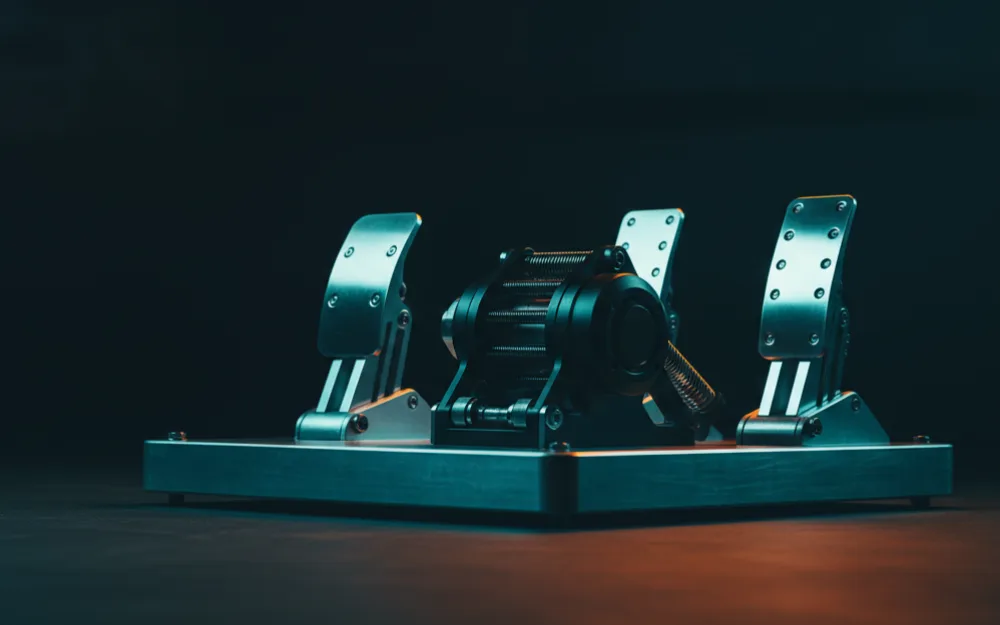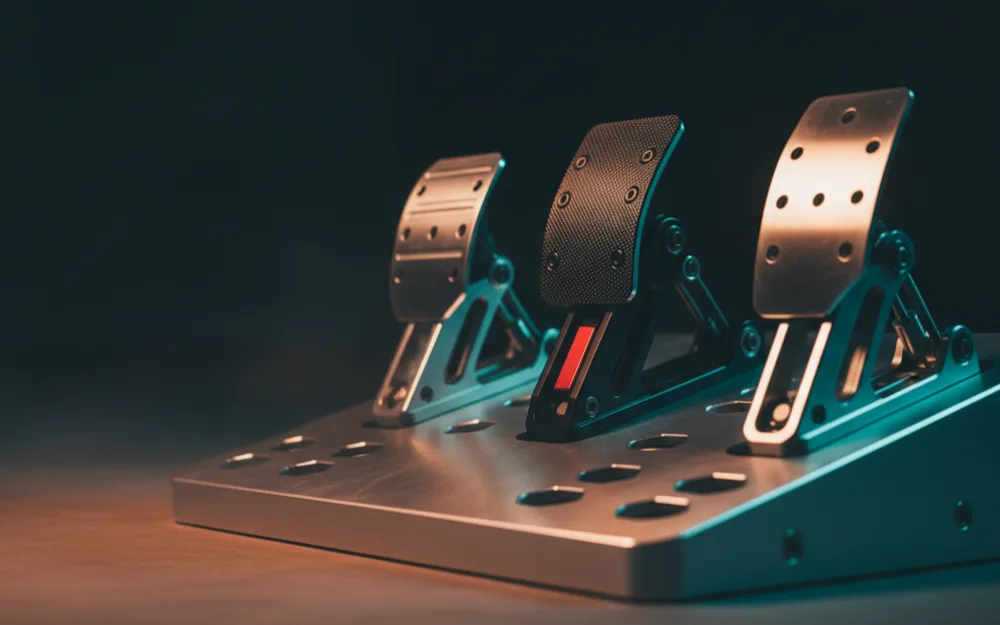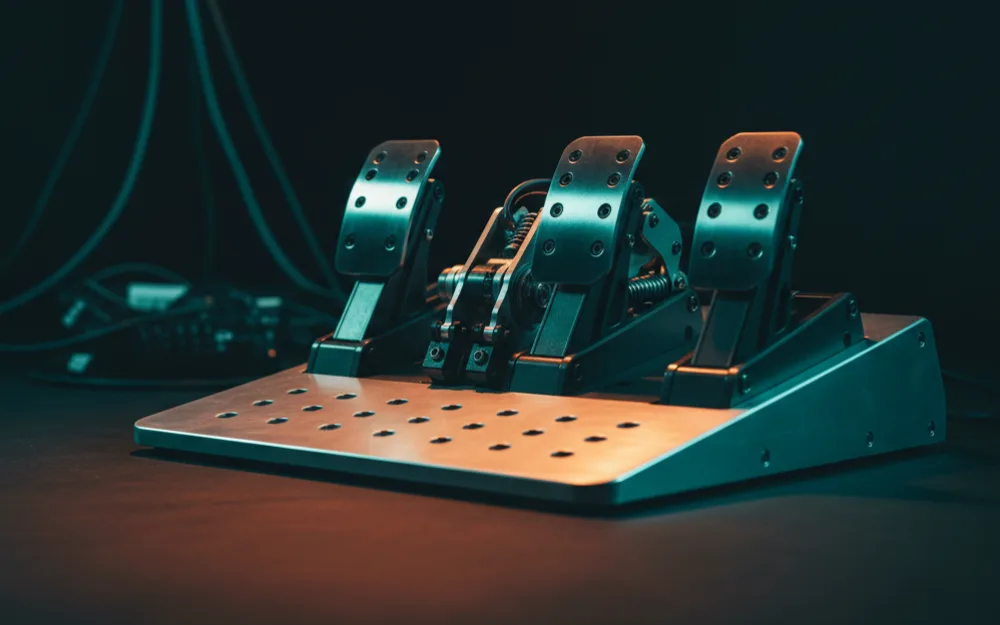

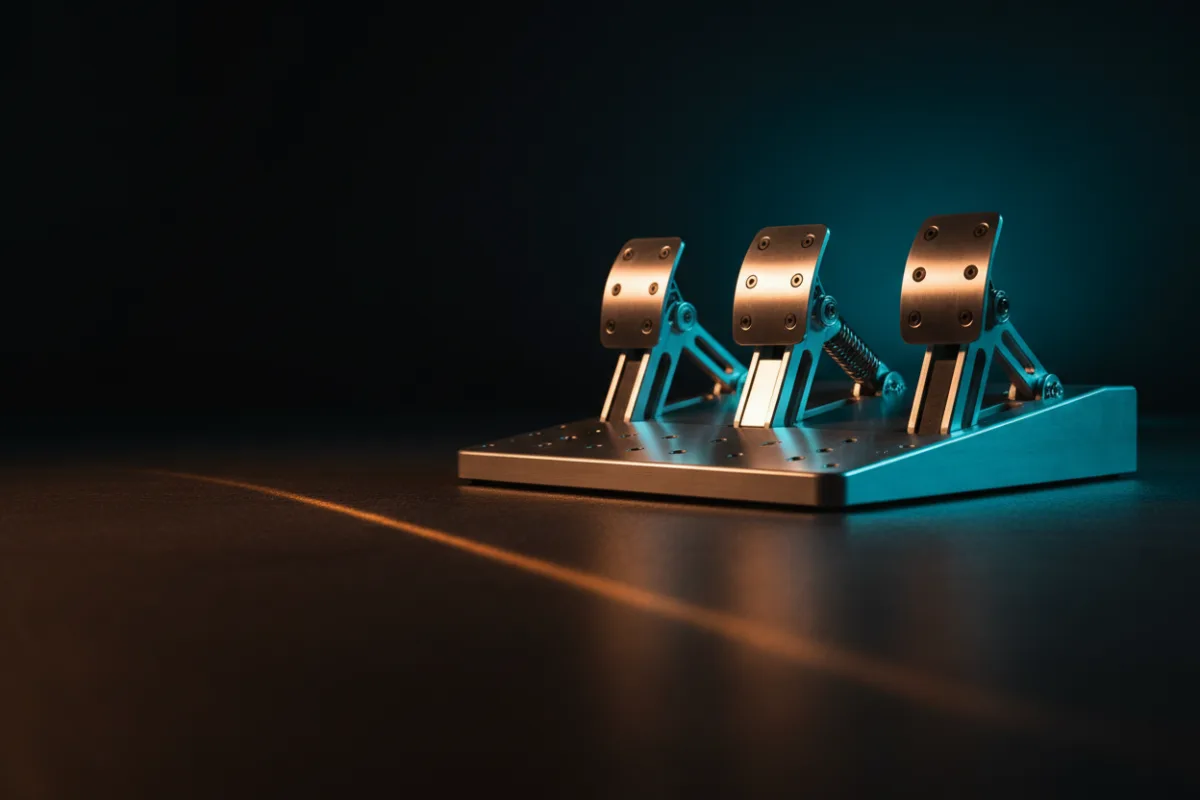

The Logitech G RS Pedals sit in an unusual spot: a load cell brake priced to compete with entry level potentiometer pedals, built by a brand with the widest platform reach in the business. Logitech lists compatibility across PC, PlayStation 4, PlayStation 5, Xbox Series S, and Xbox Series X (on console the pedals connect through a Logitech wheel), a spread that most load cell pedals at this price simply do not offer. Understanding how that reach is built into the hardware is the place to start.
This review looks at how the RS Pedals are built, what the 75 kg load cell brake and Hall effect accelerator change, and who does not need this much cross platform flexibility yet. We compared manufacturer specifications with recurring owner feedback, and you can read how we review.

What it is and where it sits
The RS Pedals ship as a throttle and brake set on an adjustable steel frame, with Logitech’s optional RS Clutch Pedal Module available separately for a driver who wants a third pedal later. That staged approach lets a buyer start with the two pedals that matter most for lap time and add a clutch only if their sim or car choice calls for it, rather than paying for three pedals up front. It carries a 4.9 average across 182 verified reviews, one of the stronger rating pools among pedals in this price range.
Build and load cell feel
The brake is where the RS Pedals earn their place: a 75 kg rated load cell that measures pressure rather than travel, which our load cell versus potentiometer guide covers in more depth. That distinction is what lets a driver learn to modulate brake force by feel instead of by how far the pedal has moved, a skill that carries over directly to trail braking and holding car balance into a corner. The accelerator and clutch module both use Hall effect sensors, which read position magnetically with no physical contact point to wear down, a detail that matters more after a few thousand laps than it does on day one. Reviewers who run the RS Pedals describe the 75 kg brake as firm without feeling artificially stiff, and note that adjustable pedal positions on the frame make it easier to match spacing to a driver’s own stance than a fixed deck allows.
Mounting and compatibility
The steel frame is built with an anti tip design, large rubber feet for hard floors, carpet grippers for carpet, and an extendable frame or wall brace to keep the whole set from sliding under a hard stop, which matters for a load cell brake that depends on a fixed point to measure against. Connectivity is the standout: the RS Pedals connect directly to Logitech’s PRO or RS50 racing wheel bases for console use, work with G Series wheels like the G29, G920, and G923 through a separately sold Racing Adapter, plug into a PC over USB on their own, and on PC, running as their own USB device, most titles will accept them alongside another manufacturer’s wheel. That is a rare amount of flexibility for a single pedal set to offer.
Pros and cons
What works:
- 75 kg load cell brake at a price usually reserved for potentiometer pedals
- Works across PC, PlayStation, and Xbox, with console use running through a Logitech wheel base
- Hall effect throttle sensor resists the wear that contact based sensors accumulate
- Anti tip steel frame with rubber feet, carpet grippers, and an extendable brace
What to weigh:
- The clutch pedal is not included; it is an optional module sold separately
- G Series wheel owners need a separately sold Racing Adapter to connect these pedals
- 75 kg is a solid brake rating but below the 100 kg and 200 kg cells in pricier sets
Who it is for
This fits a driver who is not locked into one platform, PC today and console tomorrow, and who wants a genuine load cell brake without paying flagship pedal prices. It is also a sound choice for anyone building around Logitech’s PRO or RS50 ecosystem, where the connection is direct with no adapter needed. See our Logitech G RS50 review for a matched direct drive base.
Who should skip it
Skip it if a three pedal set is required out of the box, since the clutch here is an added cost, not an included part. A G Series wheel owner who wants to avoid buying an adapter may also be better served by a pedal set built directly for that ecosystem. Compare against our Thrustmaster T3PA review if a traditional potentiometer set fits your budget better, or browse best sim racing pedals and pedals for the wider field.