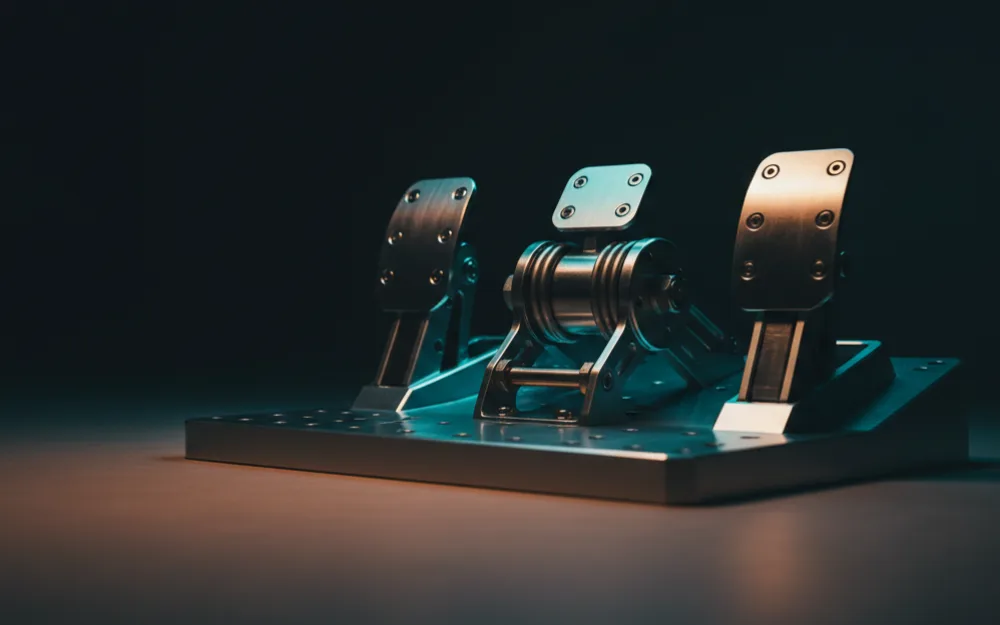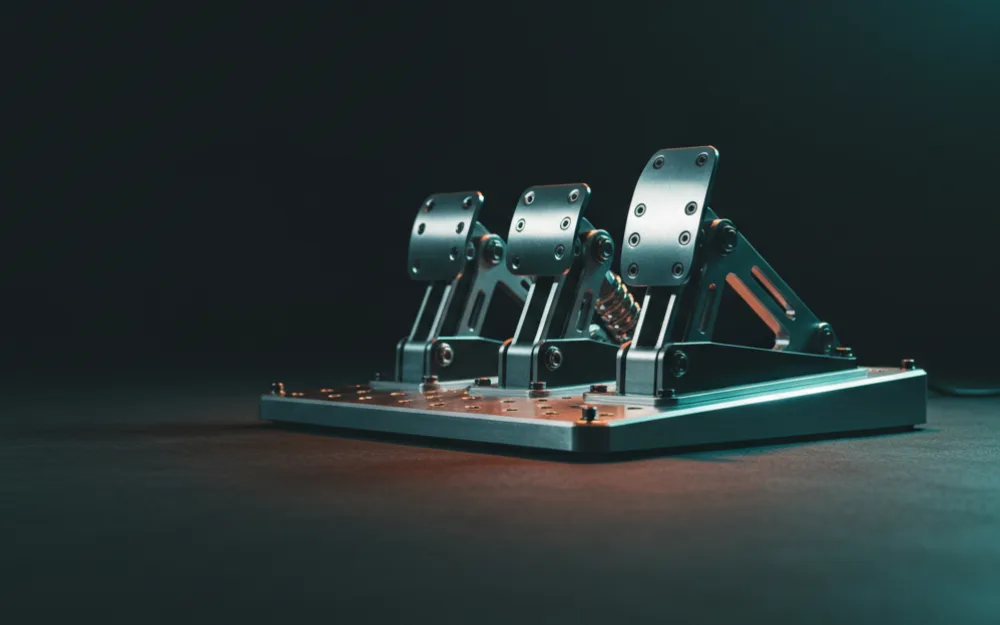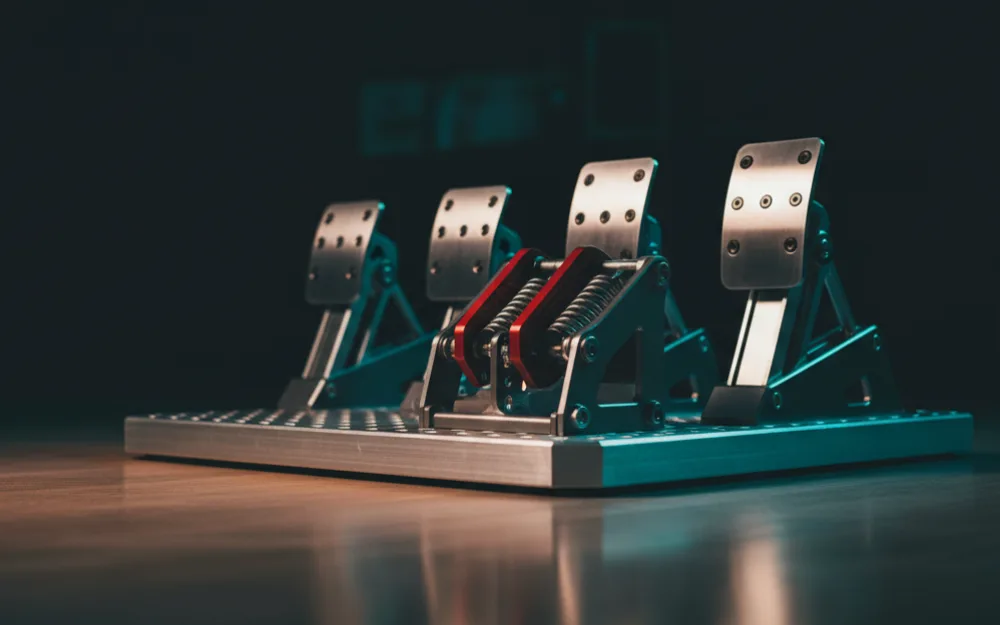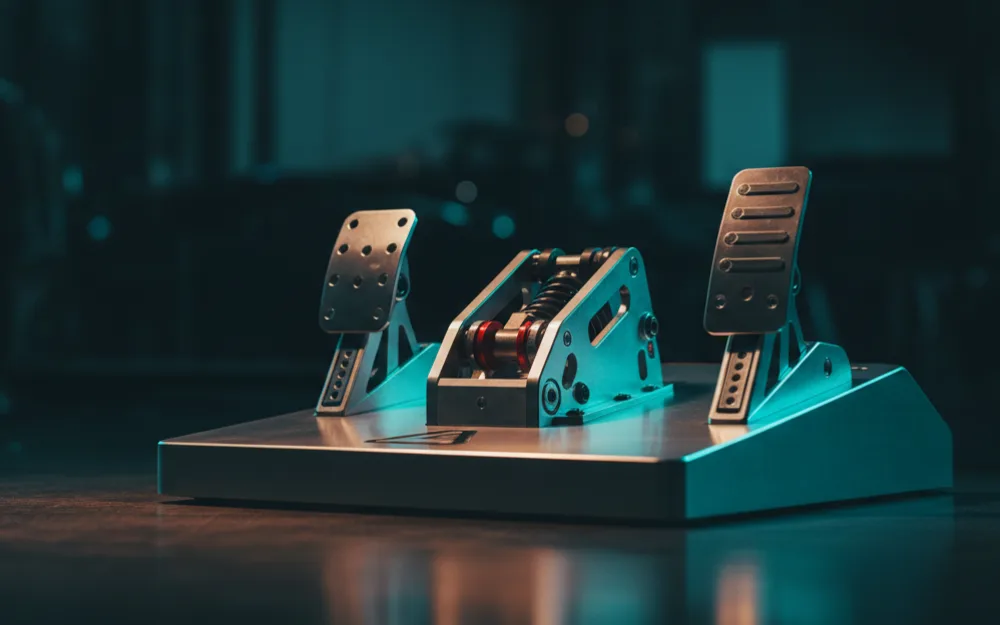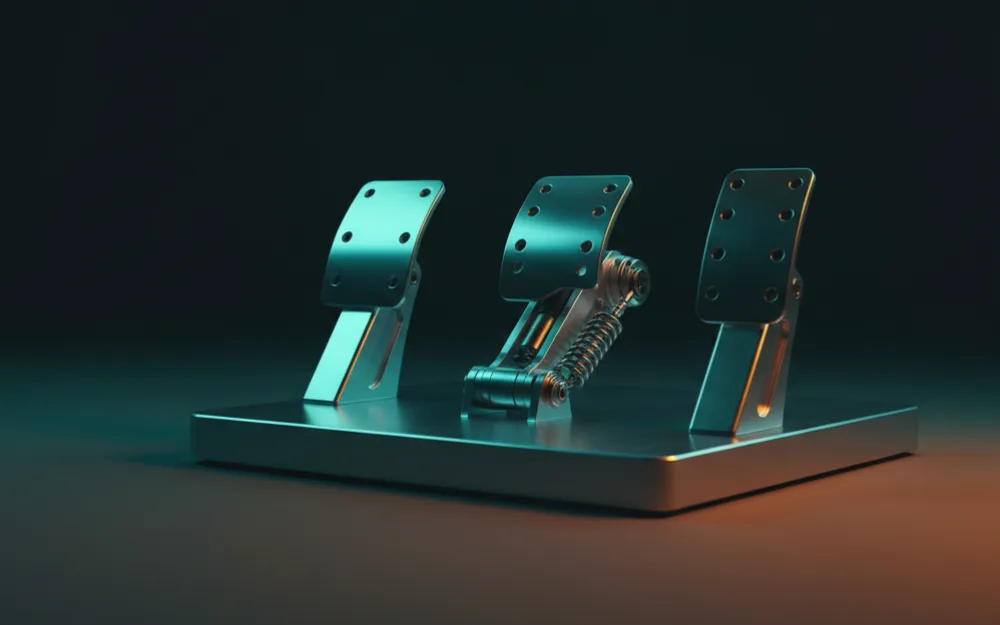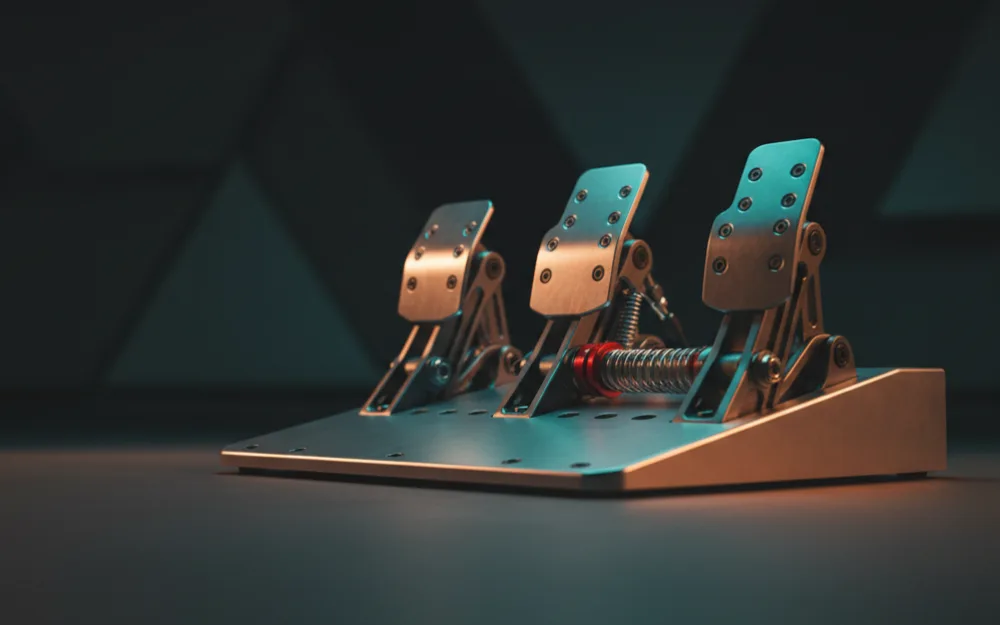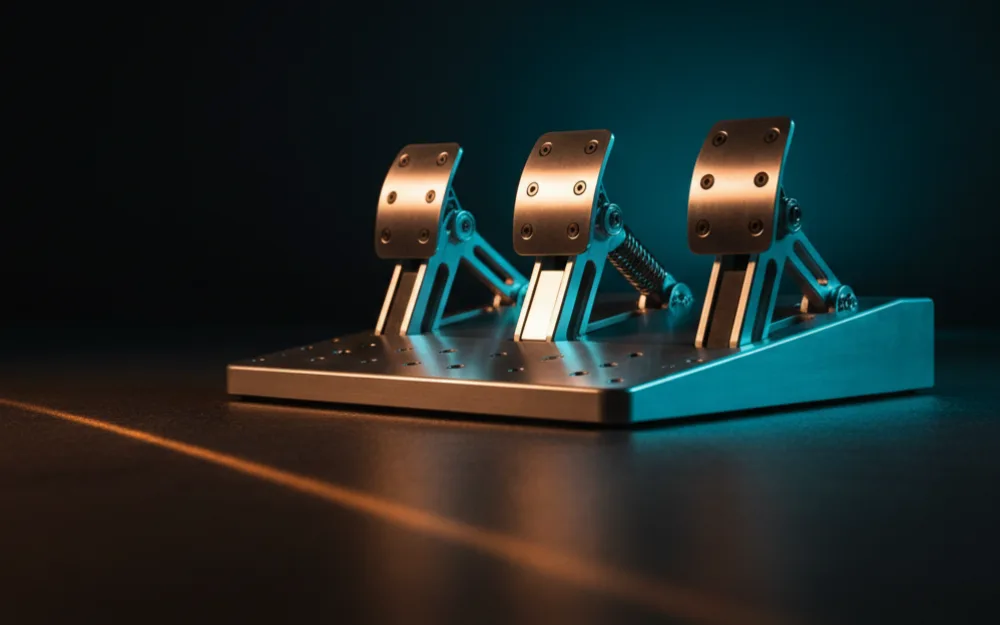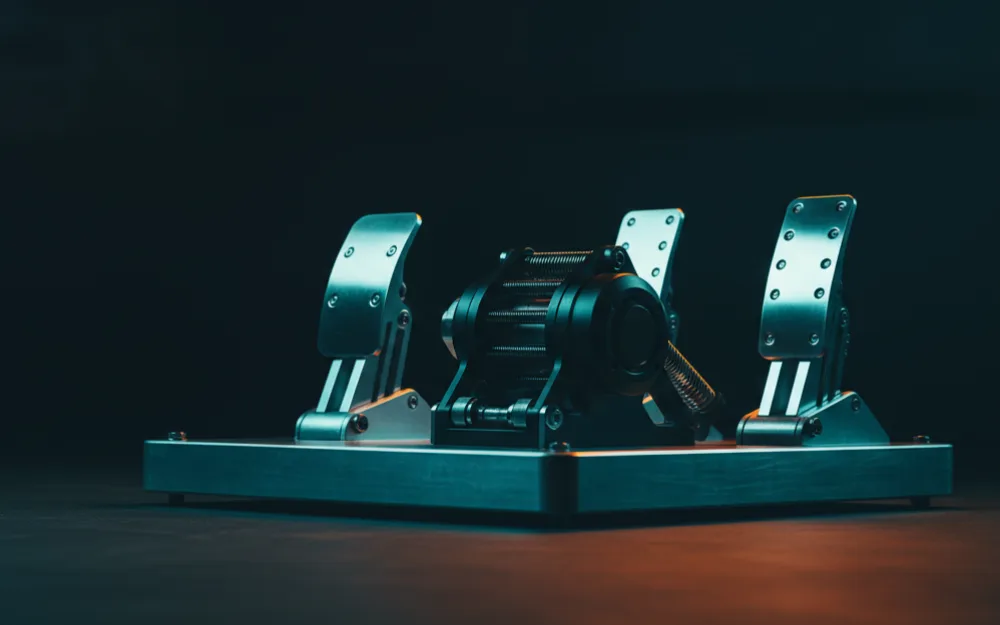


The Thrustmaster T3PA is a three pedal set built around potentiometers and springs rather than a load cell, and that single distinction shapes almost everything else about how it drives. Sold in this listing as an add on for Thrustmaster’s TX wheel base family, it plugs into a Thrustmaster wheel base through an RJ12 cable, and it runs as a standalone pedal set on PC only with the separately sold T.RJ12 USB adapter. It has 599 verified reviews behind it and a 4.5 average. Knowing what a potentiometer pedal measures, and what it does not, is the place to start.
This review looks at how the T3PA is built, what its adjustable spacing and pressure settings change, and who is better served by a load cell set instead. We compared manufacturer specifications with recurring owner feedback, and you can read how we review.

What it is and where it sits
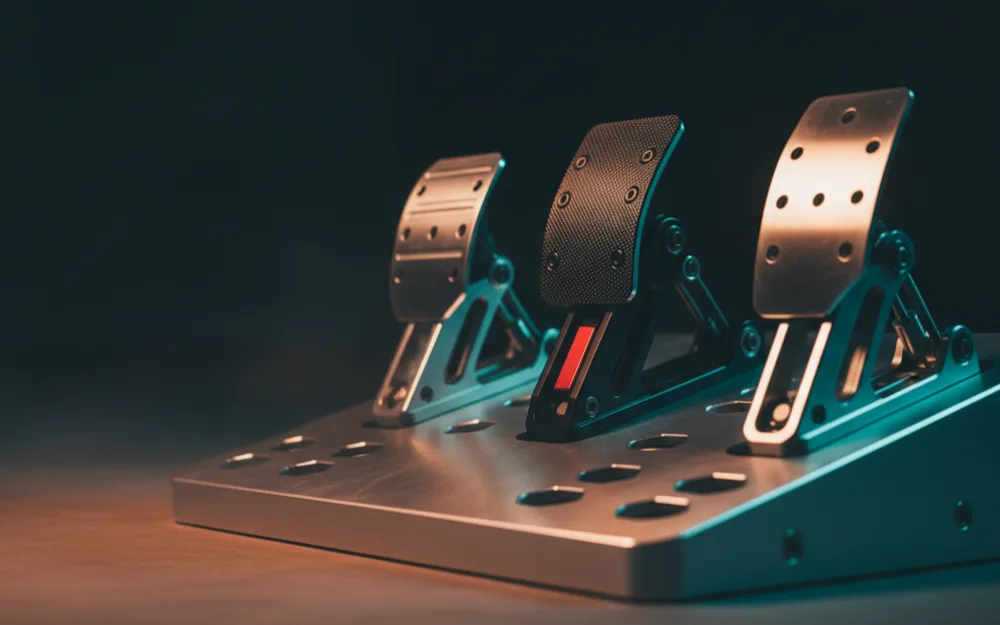
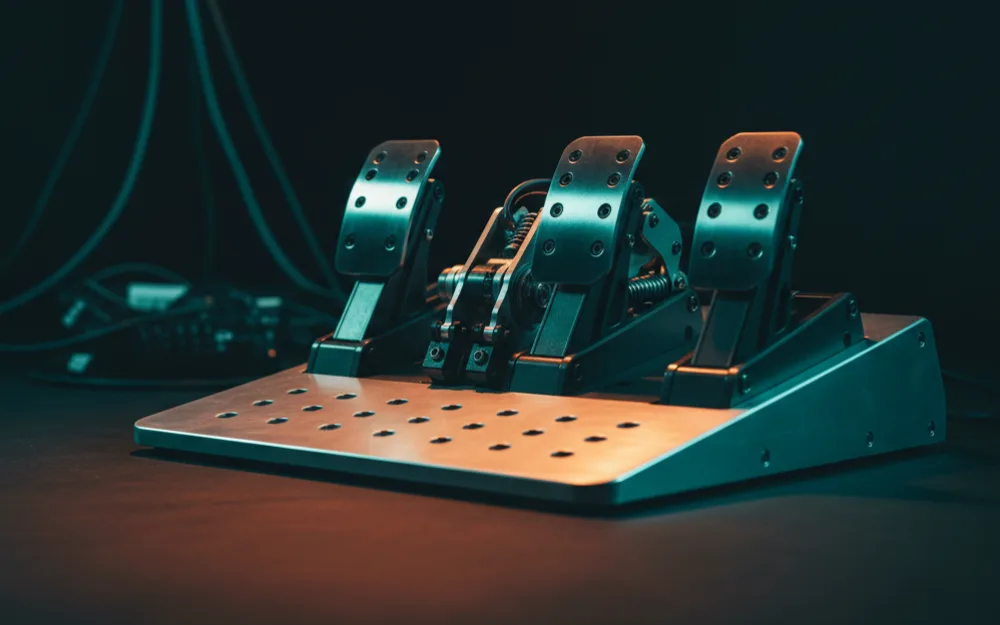
This is a full three pedal set, throttle, brake, and clutch, built entirely from metal for both the pedal faces and the internal structure. This listing is marked for PC and Xbox One, including the One S and One X, but Thrustmaster’s own compatibility list ties the T3PA to its wheel bases (TMX, T150, T300, TX, T-GT, T248, T598, T818 and others) over RJ12, so the platforms it works on follow the base it connects to. The T3PA carries one of the longer track records of any pedal set in our catalog, with 599 reviews logged at a 4.5 average, which says as much about its staying power as any single spec does.
Build and pedal feel
Unlike a load cell brake, which measures how hard a driver pushes, the T3PA measures how far each pedal travels, using a potentiometer paired with a spring to generate resistance. That means braking here is a function of distance and spring tension rather than raw pressure, a difference worth understanding before comparing it directly against a load cell set like our Logitech G RS Pedals. Thrustmaster lists individual pressure figures for each pedal: roughly 5.5 lbs for the accelerator, about 22 lbs for the brake in its base configuration, and around 11 lbs for the clutch. An included conical rubber brake mod raises that brake resistance into a 33 to 55 lb range depending on preference, effectively letting a driver stiffen the brake pedal without buying a separate load cell upgrade. Reviewers who have logged time on the T3PA describe the metal construction as feeling notably sturdier than the plastic pedal sets bundled with cheaper wheels, even though the underlying sensor technology is the same potentiometer approach.
Mounting and compatibility
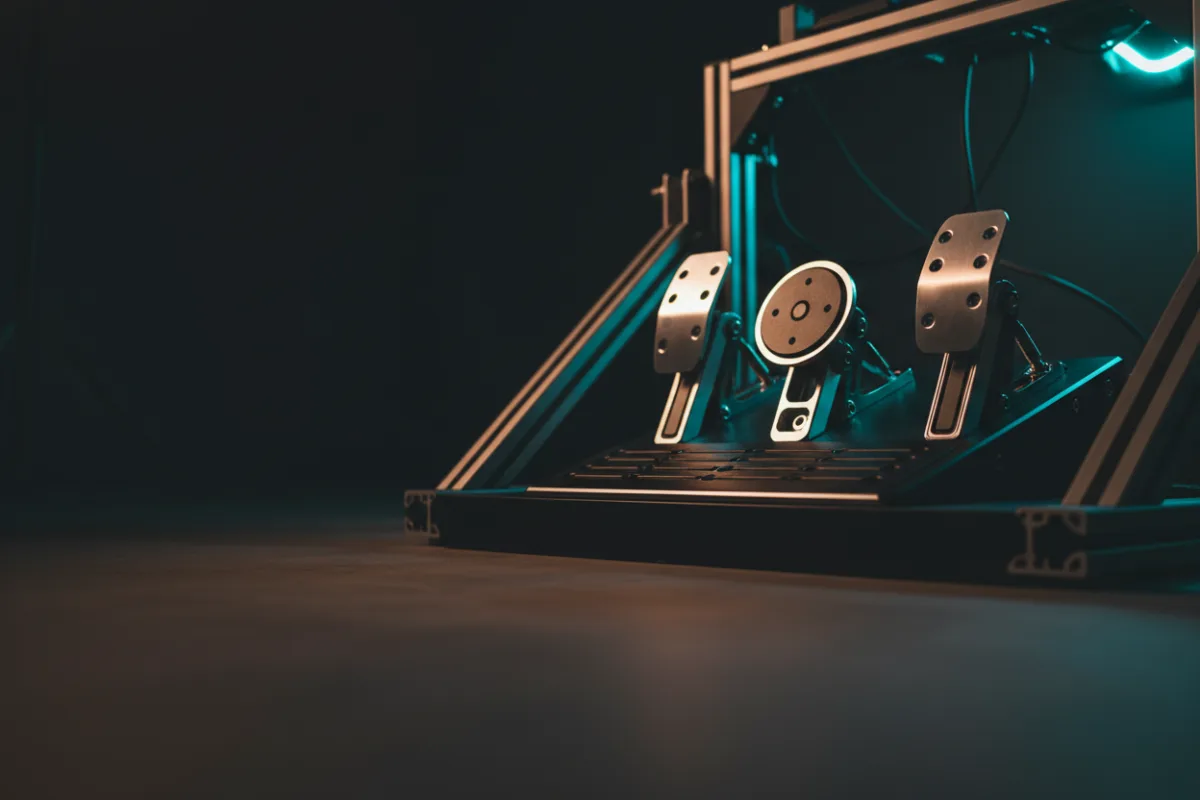
All three pedals offer adjustable spacing across three positions and an adjustable angle across two positions, and the accelerator adds its own two position height adjustment, giving a driver a real amount of control over stance before ever touching software settings. At 3.41 kg (7.5 lb), it is light enough to move between a desk setup and a mounted rig without much effort, though that same lightness means a soft surface will move under hard braking more readily than a heavier load cell frame would. It connects to a Thrustmaster wheel base over RJ12; running it without a base requires the T.RJ12 USB adapter, sold separately and supported on PC only.
Pros and cons
What works:
- Full metal pedal faces and internal structure at a price below most load cell sets
- Adjustable spacing, angle, and accelerator height across multiple positions
- Included conical rubber mod stiffens the brake from about 22 lbs up to 33 to 55 lbs
- 599 verified reviews at a 4.5 average, one of the longer track records available
What to weigh:
- Potentiometer and spring based, not a load cell, so braking is travel driven rather than pressure driven
- Needs a Thrustmaster wheel base, or the separately sold T.RJ12 USB adapter on PC, to connect
- A lighter frame than load cell sets, so it benefits more from a rigid mounting surface
Who it is for
The T3PA suits a Thrustmaster wheel owner who wants genuinely metal pedal construction and a long reviewed track record without paying load cell prices, and who is comfortable with travel based braking rather than the pressure based feel a load cell delivers. It is also a sound pick for a Thrustmaster TX owner looking for a direct upgrade path from a stock pedal set.
Who should skip it
Skip it if threshold braking by pressure is the priority, since that is what a load cell brake is built for; see our Simjack UT Pedals review or the Logitech G RS Pedals review for that approach instead. Racers without a Thrustmaster base should also look elsewhere, since the T3PA connects through a Thrustmaster base or, on PC only, a separately sold USB adapter. Browse best sim racing pedals and pedals for the wider field.