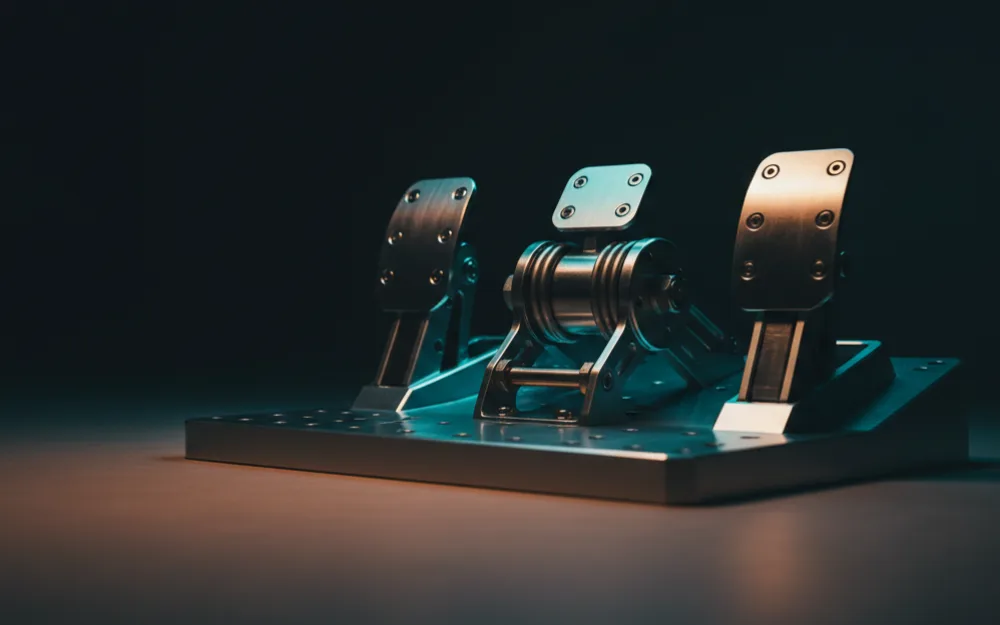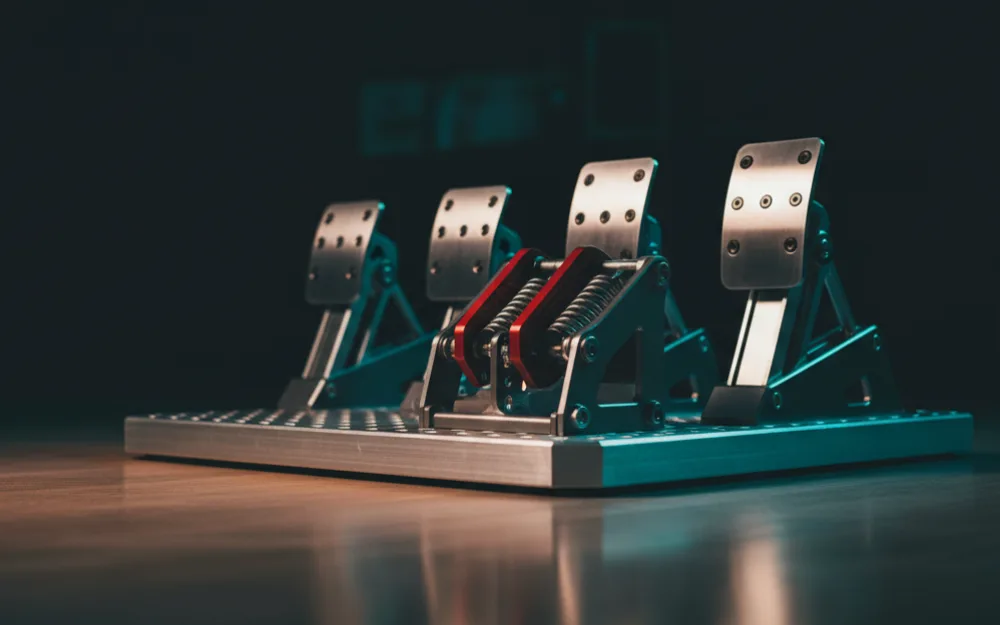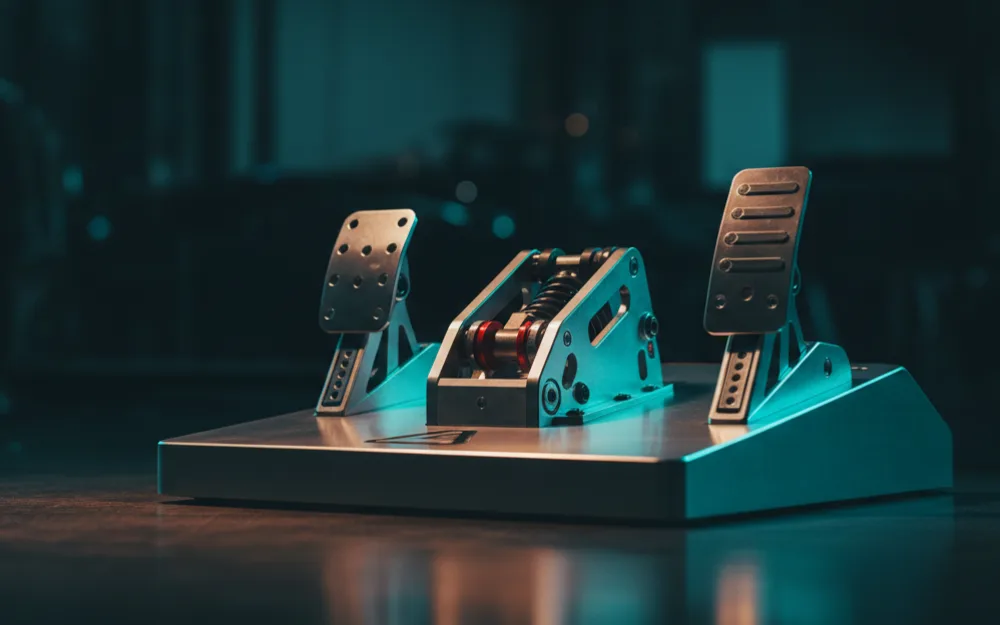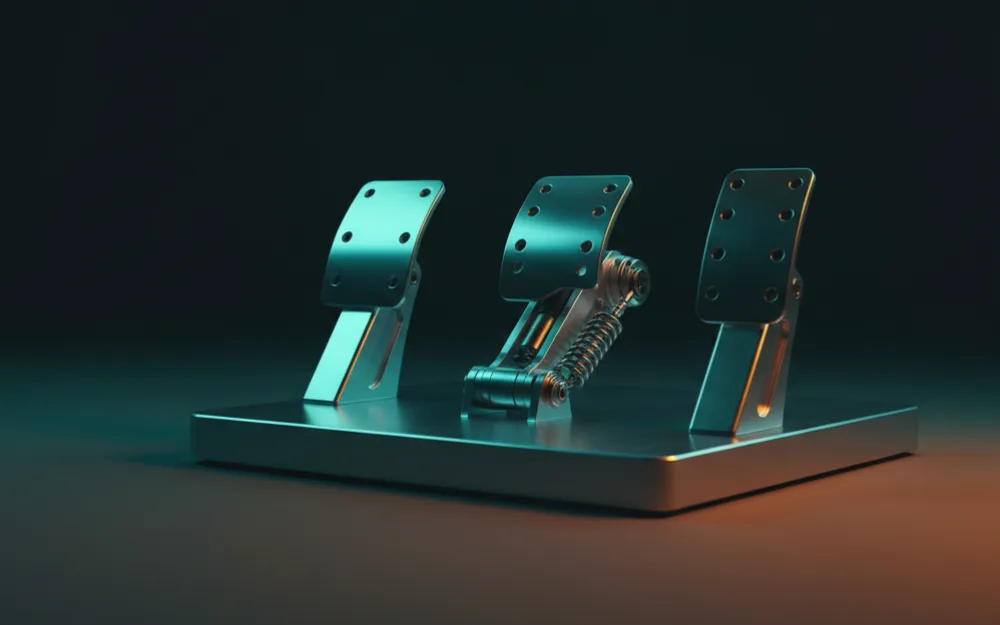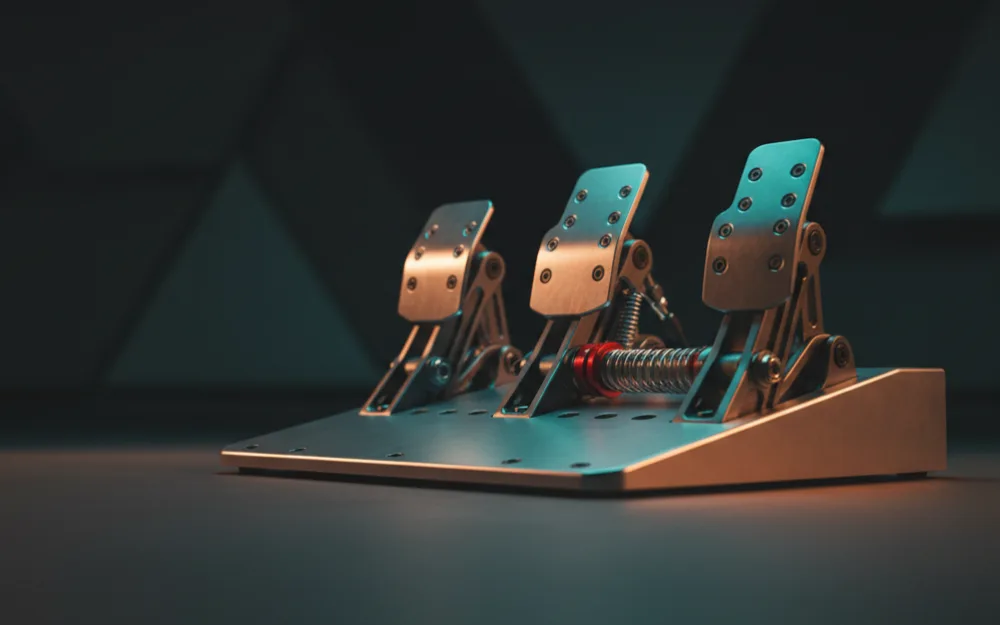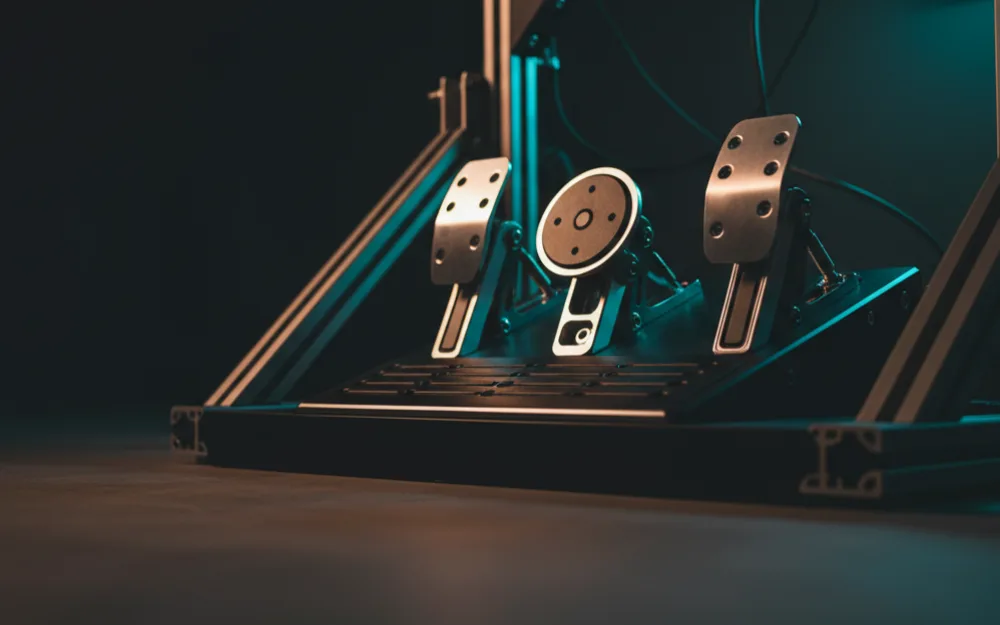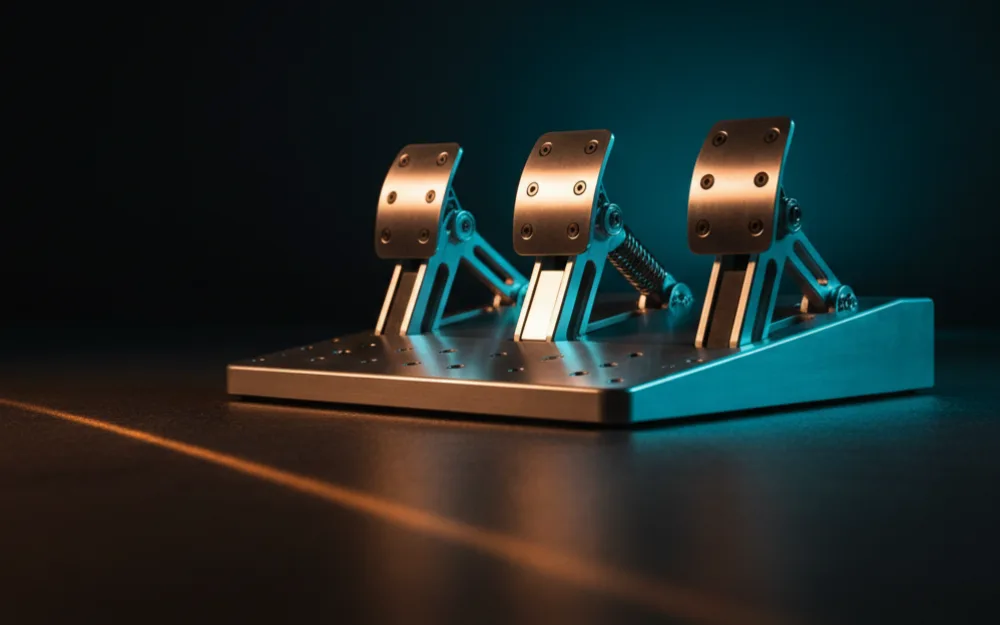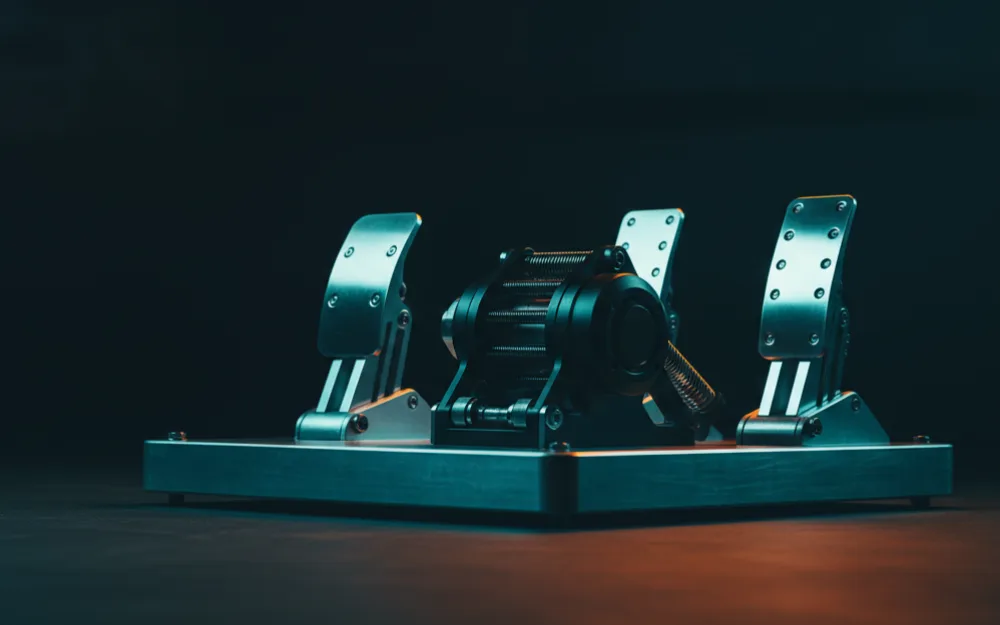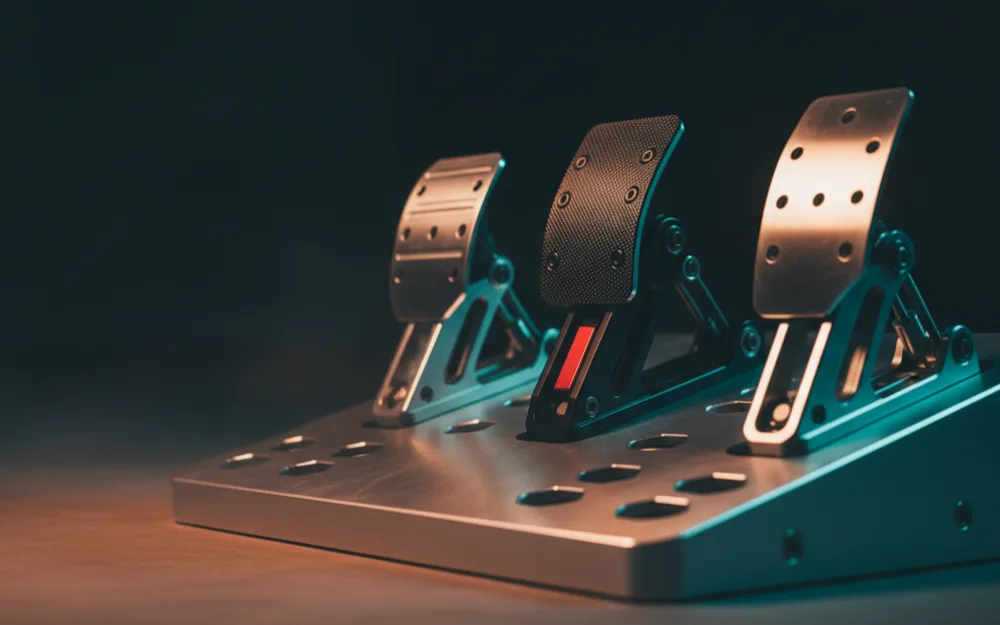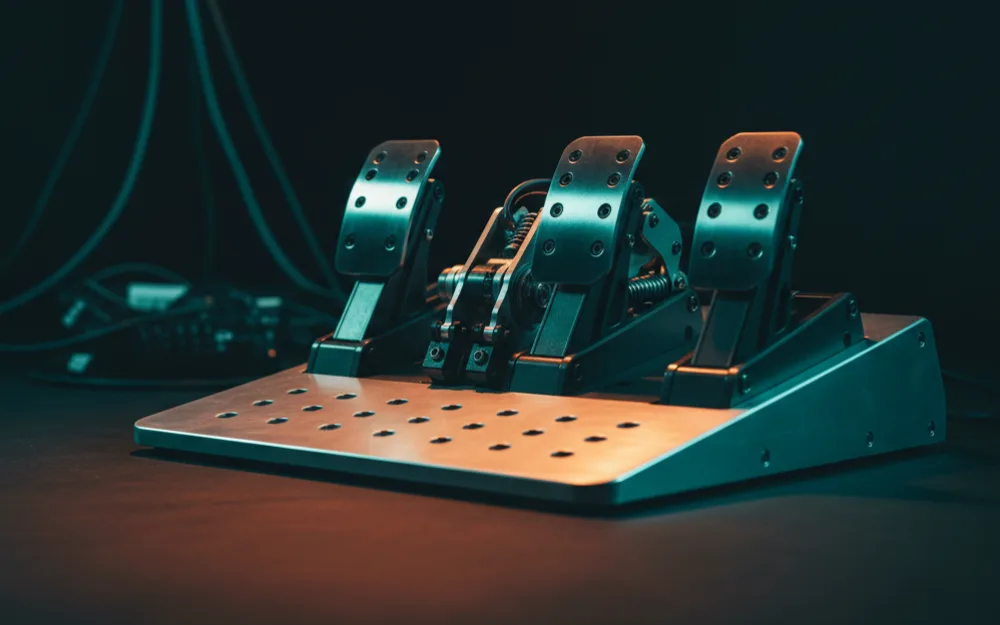

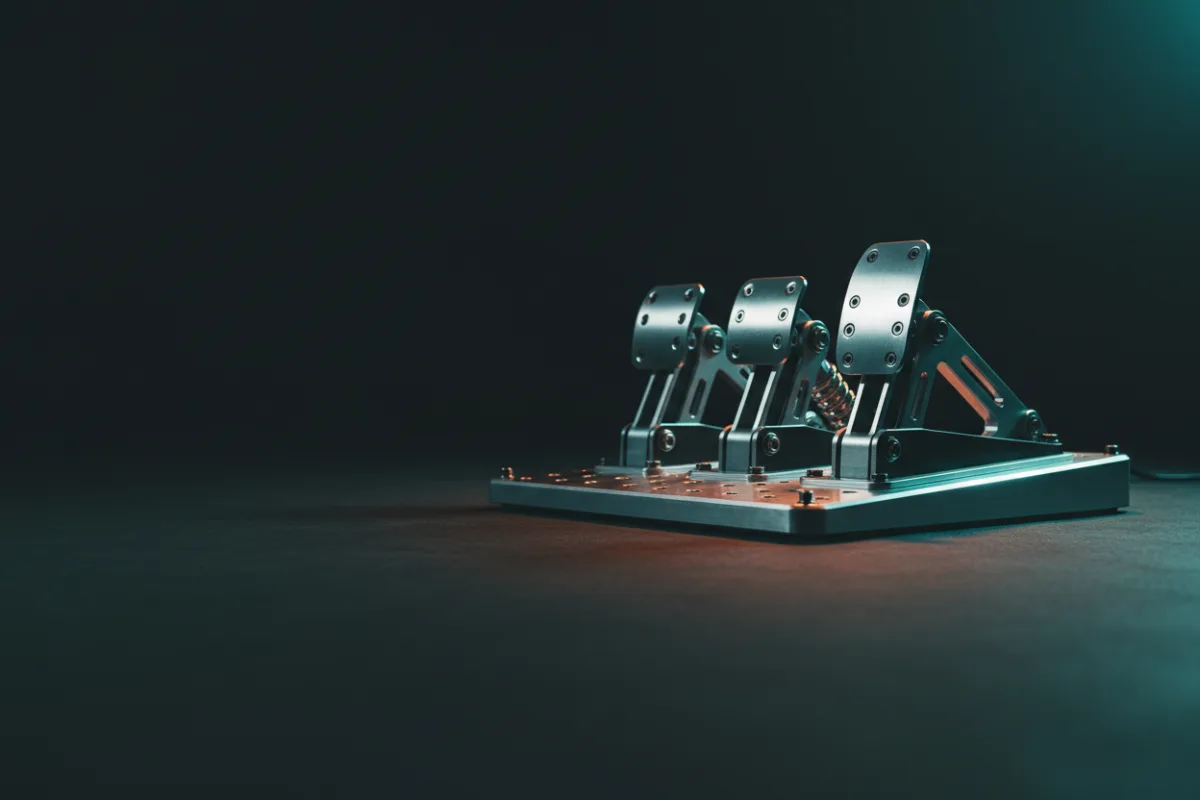

The Thrustmaster Raceline Pedals III Modular is the spring braked, upgrade ready version of Thrustmaster’s three pedal set, and it is aimed at the driver who wants a metal pedal base now and the option to add a load cell brake later. It shares the fully metal chassis and contactless Hall Effect sensors of its load cell sibling, but it reads the brake by travel rather than by pressure. That single difference shapes who it is for, and it starts with how the brake responds to your foot.
This review looks at how the Raceline Pedals III Modular is built, what its adjustment offers, and where a load cell set would serve you better from day one. We compared manufacturer specifications with recurring owner feedback rather than our own driving time, and you can read how we review. If terms like Hall Effect and load cell are new, start with Getting Started.

At a glance
| Spec | Thrustmaster Raceline Pedals III Modular |
|---|---|
| Pedals in set | Three (throttle, brake, clutch) |
| Brake sensing | Spring based, load cell upgrade ready (kit sold separately) |
| Sensors | Hall Effect (H.E.A.R.T), drift free |
| Brake adjustment | Three pressure notches, multiple included springs |
| Connectivity | USB |
| Construction | All metal, non slip support pads |
| Platforms | PS5, Xbox Series, PC |
| Warranty | One year per the Amazon listing, check regional terms |
What the modular design is really selling
Before we judge the feel, it helps to understand the pitch. This set brakes by travel, meaning the sensor reads how far the pedal moves rather than how hard you press it. That is the same principle a beginner wheel pedal uses, and on its own it would put this set in ordinary company. What lifts it is the platform: the chassis is metal, the sensors are contactless Hall Effect units, and Thrustmaster designed the brake to accept a load cell upgrade kit sold separately. So the honest way to see this set is as a metal foundation you can grow. You buy in with a spring brake, learn the fundamentals, and add pressure sensing later without replacing the whole set. Whether that path is cheaper than buying a load cell set outright depends on the upgrade kit, so plan the full route before you start it.
How reviewers describe the feel
Owners consistently praise the Hall Effect sensors, which are the drift free strength of this set. Because they are contactless, throttle and brake inputs register cleanly and should resist the wear that makes older potentiometer pedals go vague over time. Reviewers describe the three pressure notches and the swappable springs as enough range to firm up the brake beyond a stock beginner pedal, though owners coming from a true load cell note that a spring pedal, however stiff, still asks you to brake by position rather than by pressure. That is not a flaw so much as the nature of the design, and it is exactly the gap the upgrade kit exists to close. The all metal frame and non slip pads draw steady approval, with owners reporting the set stays planted on hardwood, carpet, and rig mounts alike.
Build and compatibility
The fully metal construction is the reason this set is worth considering over a plastic beginner pedal, since it handles aggressive heel and toe downshifts and hard braking without flexing under your leg. It connects over USB and works across PS5, Xbox Series, and PC. As with the rest of the Raceline line, console use pairs with the Thrustmaster force feedback ecosystem, so if you race on console with a different brand of wheel base, confirm compatibility before you buy. The Amazon listing gives a one year warranty, and Thrustmaster’s terms can vary by region. The mixed ownership rating this set carries appears to track the gap between what buyers expect from a metal pedal and the reality of a travel based brake, which is why setting the right expectation matters so much here.
Who should buy it, and who should skip it
| Buy the Raceline Pedals III Modular if | Skip it if |
|---|---|
| You want a metal three pedal base now and a load cell upgrade path later | You want pressure based braking from the first day |
| You value drift free Hall Effect sensors over a plastic beginner set | You do not want to buy a separate upgrade kit down the line |
| You already run Thrustmaster hardware and want to stay in the ecosystem | You are on console with a non Thrustmaster wheel base |
How it scores
The WSR Score reflects verified buyer ratings gathered and normalized on a consistent scale, not an editorial rubric. You can read what goes into it on How We Review. This set carries a broader ownership record than its load cell sibling, so its number rests on more buyer feedback, and that feedback reads as a solid metal foundation whose ceiling depends on whether you take the upgrade path. Read the score as a verdict on the platform, not on a brake you have not added yet.
Alternatives worth a look
If you would rather have the load cell brake built in from the start, our Thrustmaster Raceline Pedals III LC review covers the pressure sensing version of this exact platform. For the wider field, including sets from other brands, start with the best load cell pedals, and if budget is the deciding factor, our best load cell pedals under $300 guide maps the affordable end. Those upgrading a MOZA rig should also weigh our MOZA CRP2 review. You can also browse more options in pedals.