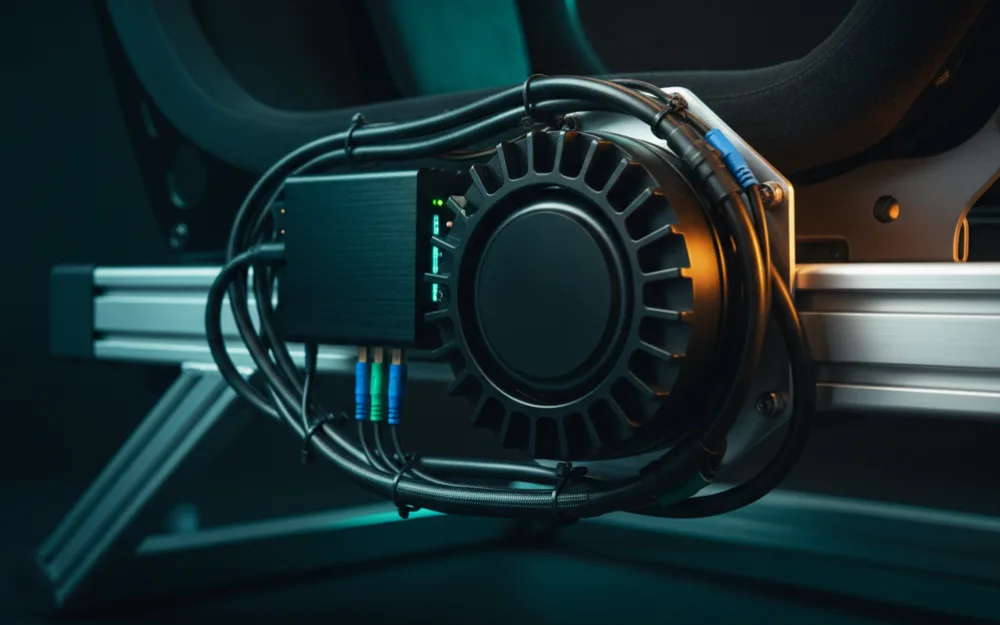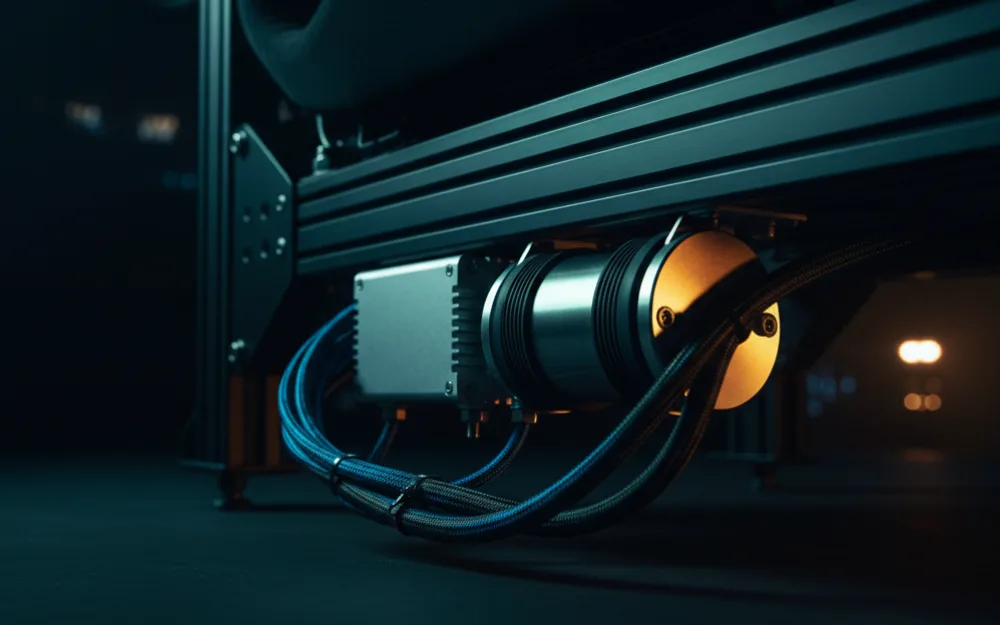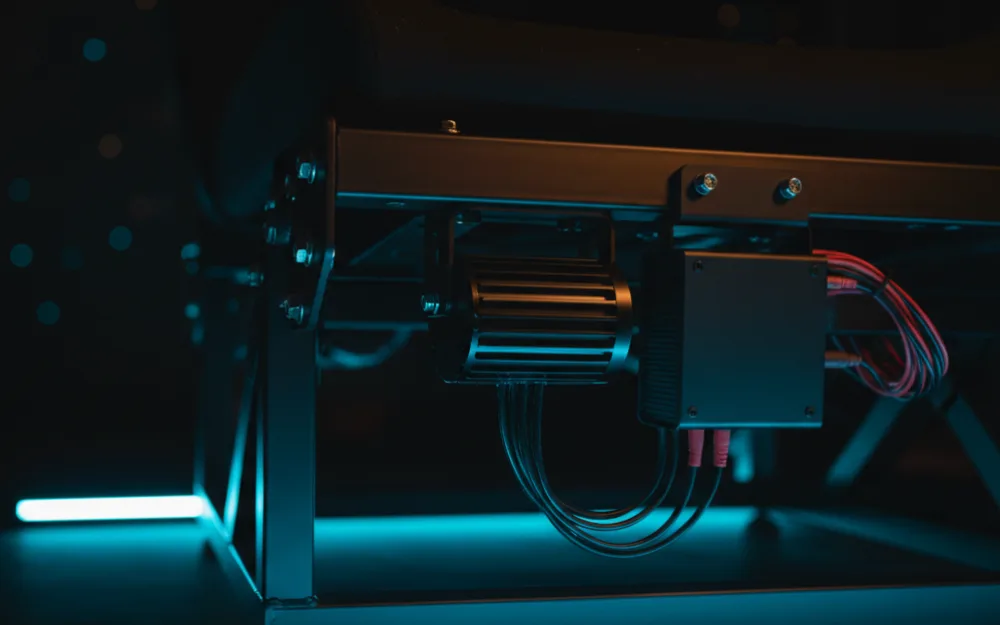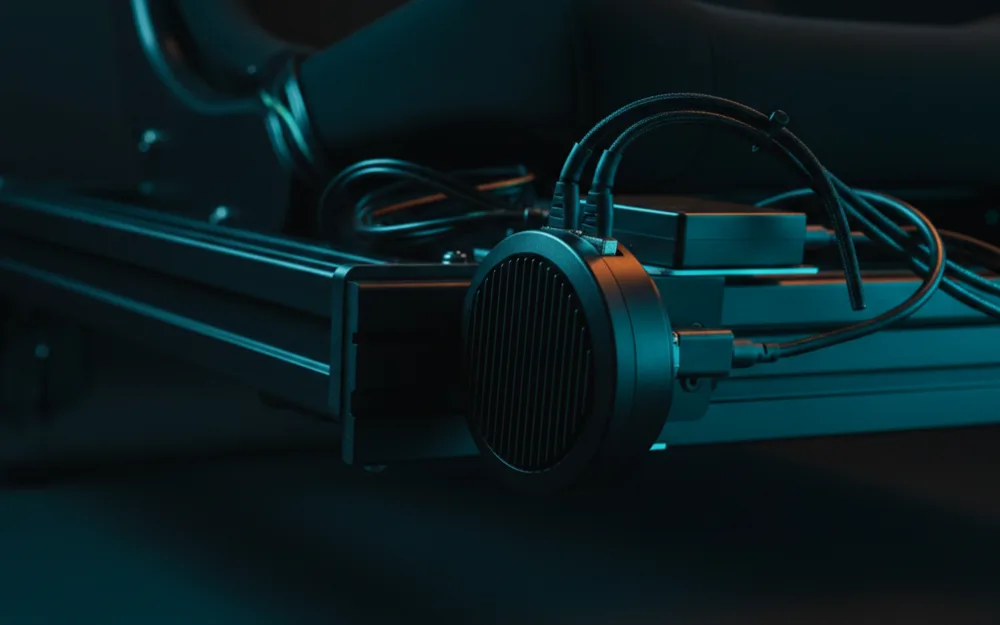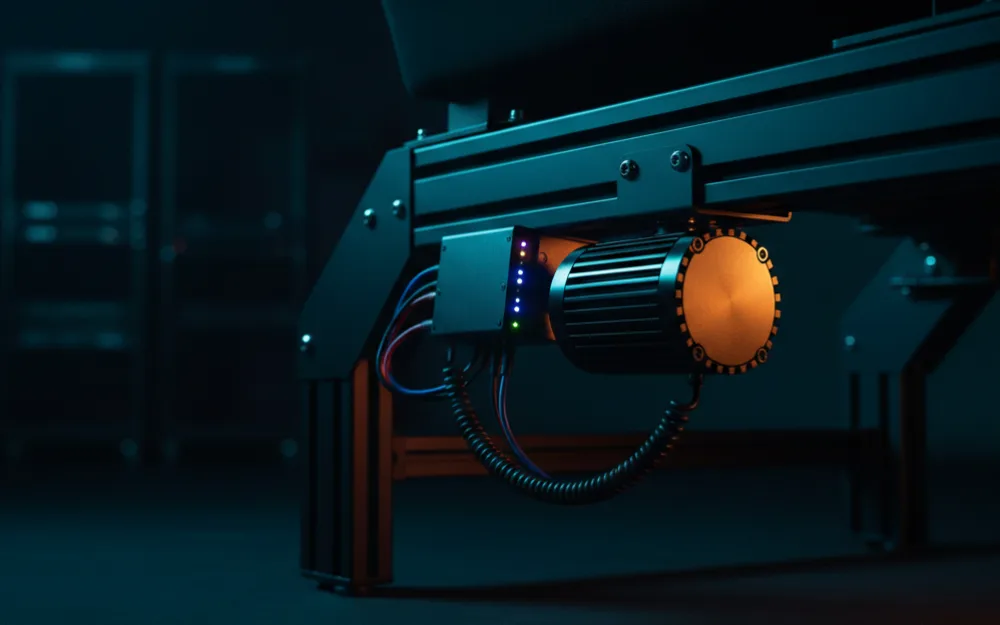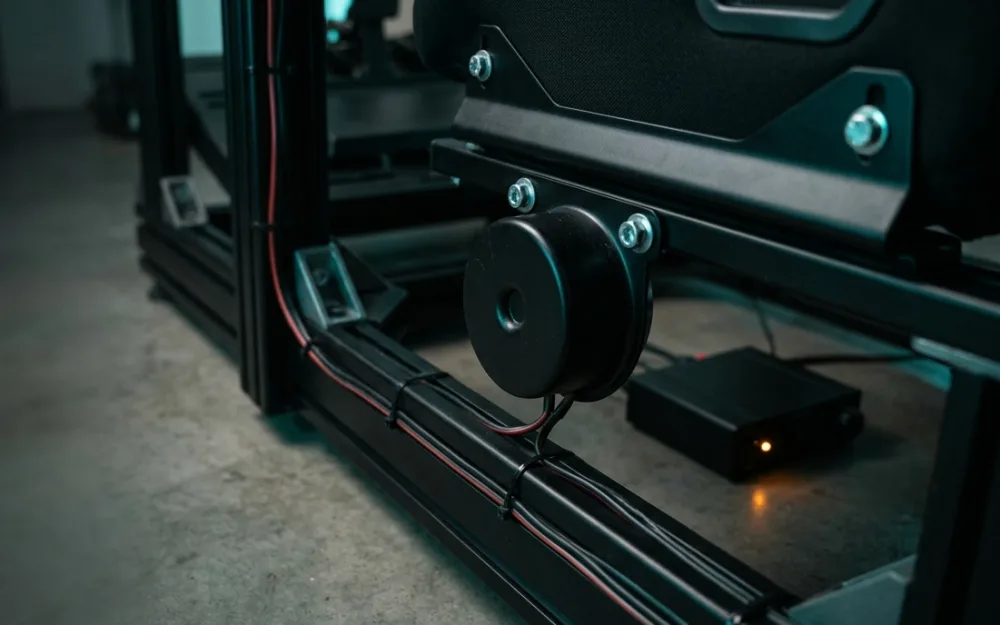

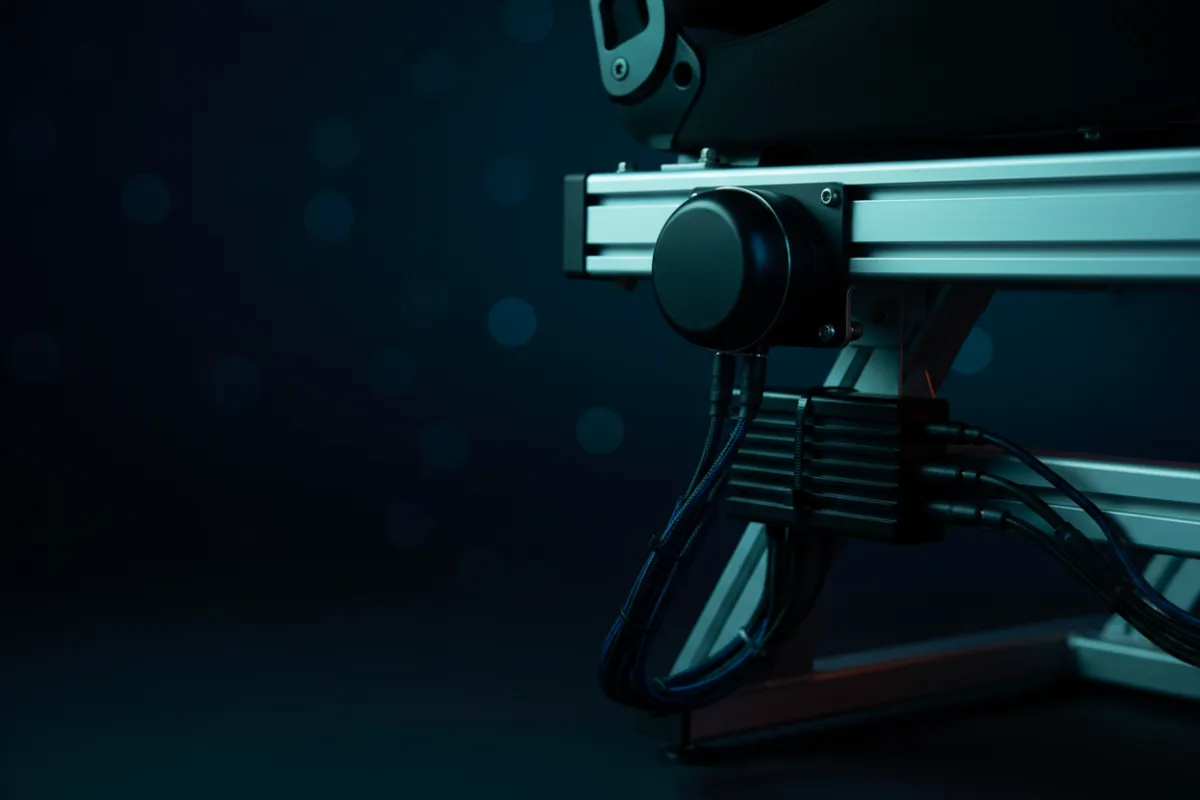

The AuraSound AST-2B-4 is a general purpose tactile transducer, a bass shaker, that the sim racing community has adopted rather than a device built for racing rigs from the ground up. It is a 50 watt unit you bolt to a seat or a frame to turn that surface into a source of low frequency vibration, so engine RPM, gear shifts, curb strikes, and ABS pulses arrive as something you feel through the seat rather than only hear. Being honest about what it is matters here: this is a component in a do it yourself haptics build, not a plug and play sim accessory, and it needs an amplifier and software to earn its place on a rig.
This review works from AuraSound’s published specifications weighed against the pattern in 603 verified buyer reviews, and you can read how we review for the method behind that. If haptics are new to your rig, start with Getting Started.

At a glance
| Spec | AuraSound AST-2B-4 |
|---|---|
| Type | Tactile transducer, bass shaker |
| Power | 50 watts |
| Impedance | 4 ohms |
| Resonance | 40 Hz |
| Frame | Round metal body, about 6.2 inch diameter by 2.5 inch tall |
| Mounting | Flush mount, hardware included |
What it is and how it mounts
A tactile transducer is not a speaker you listen to and not a self contained haptic pad you drop onto a seat. It is a device that takes a low frequency audio signal and converts it into physical vibration in whatever it is bolted to. The AST-2B-4 has a round metal body about 6.2 inches across and 2.5 inches tall, and it flush mounts to a flat surface with the included hardware, which means a seat pan, a seat bracket, or a rigid frame member is the target. Because the shaker turns its mounting surface into the thing that vibrates, that surface has to be rigid. Bolt it to thin, flexing sheet metal or a loose bracket and it wastes its output flexing the mount instead of driving vibration up into your body. A solid bolt point is not optional with a transducer, it is the whole game.
Build and what it takes to run one
Here is the part first time buyers underestimate: the shaker is only one piece of a chain. AuraSound rates the AST-2B-4 at 50 watts with a 4 ohm impedance and a 40 Hz resonance frequency, which places it as a mid power unit tuned low, where the deep rumble you want from a rig lives. But those 50 watts have to come from somewhere, so a bass shaker amplifier is a separate purchase, and you also need a way to route a low frequency signal to it, typically split off from your game audio rather than sharing your headset or speakers. On the sim side, most builders drive their shakers with software such as SimHub, which reads telemetry like RPM, gear changes, wheel slip, and surface effects and turns them into distinct vibration events rather than just echoing raw game bass. That is what separates a real sim haptics build from a shaker humming along to engine noise, and it is also why this is a project, not an unboxing. Owners rate the AST-2B-4 highly at 4.6 out of 5 across 603 verified reviews, and the recurring praise is the depth and strength of the low end it adds once it is properly mounted and amplified.
Compatibility and setup
Because it is a wired, brand agnostic transducer, the AST-2B-4 is not tied to any wheelbase, console, or platform ecosystem. That freedom comes with responsibility for the rest of the chain. You supply the amplifier sized to drive a 4 ohm, 50 watt load, the audio routing to feed it a separate signal, the telemetry software if you want event based effects rather than raw bass, and a rigid bolt point on your seat or frame. None of that is exotic, and the sim haptics community has well trodden paths for all of it, but it is real setup work to budget for before you buy. Plan the whole system rather than the shaker alone, and the payoff is haptic feedback tuned exactly the way you want it.
Pros and cons
Pros
- Strong verified review base of 603 buyers behind a 4.6 average rating
- 50 watt rating tuned to a low 40 Hz resonance, in the range rig builders want for deep rumble
- Brand agnostic and wired, so it works with any platform once the chain is built
- Compact metal frame with included hardware flush mounts to a seat or frame member
Cons
- Needs a separate amplifier, audio routing, and usually telemetry software, so it is a build rather than a plug and play device
- Only performs on a rigid mount, a flexing seat pan or loose bracket wastes the output
- Not a dedicated sim product, so the sim specific effects come from your own software setup
Who it suits
Rig builders who already have a rigid seat or frame and are comfortable wiring an amplifier and configuring telemetry software are the clear audience. It suits drivers who want to shape their own haptics rather than accept a fixed preset, since a transducer plus SimHub gives fine control over which events shake the seat and how hard. And for anyone weighing a scalable, component based approach over a sealed box, this is squarely that path.
Who should skip it
If you want haptic feedback working the same day it arrives with nothing to wire or configure, a self contained haptic pad gets you there without the amplifier and software, and our best haptic feedback pad roundup covers those. Drivers without a rigid seat or frame bolt point should solve that before buying a shaker, since a transducer on a flexing surface will disappoint no matter how good it is. And anyone who does not want to route a separate amplified audio feed or set up telemetry software should budget that effort honestly before committing. If you are comparing transducers, our Dayton Audio BST-1 review covers another popular shaker in this class, and best sim racing seats can point you to a rigid place to mount one. Browse the wider field in haptics and bass shakers.