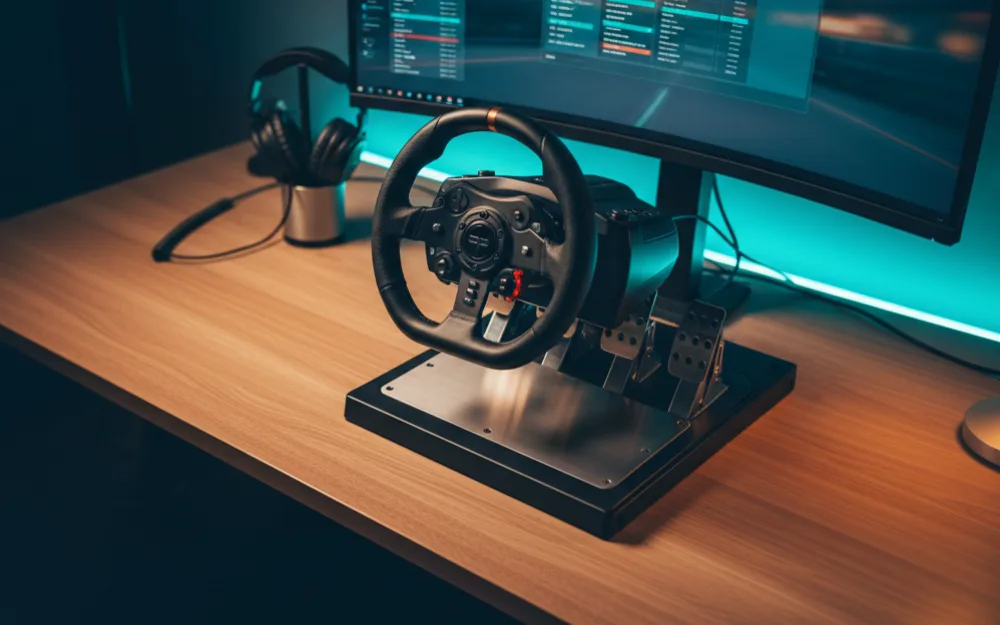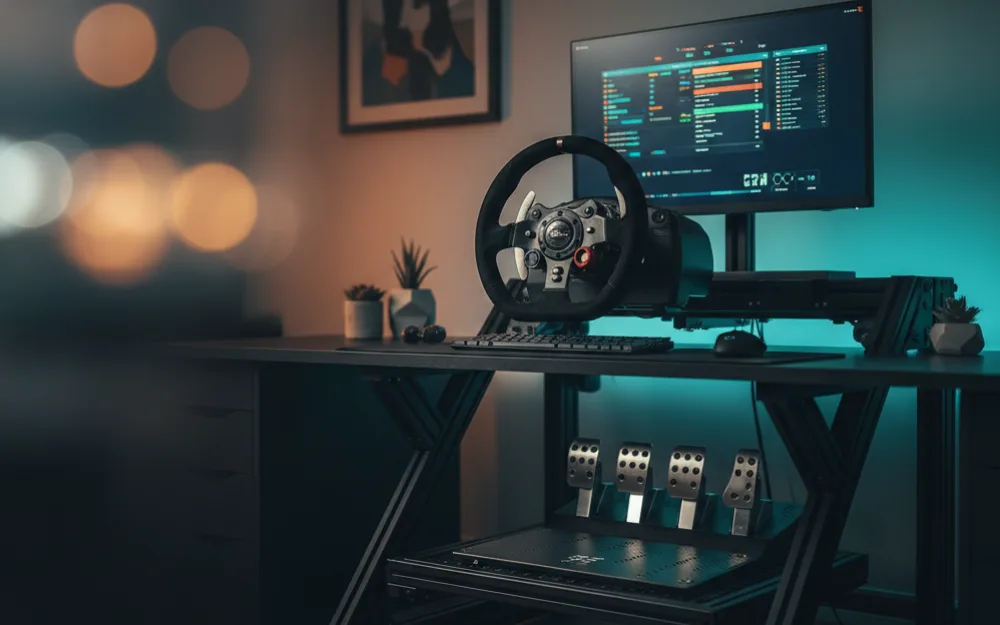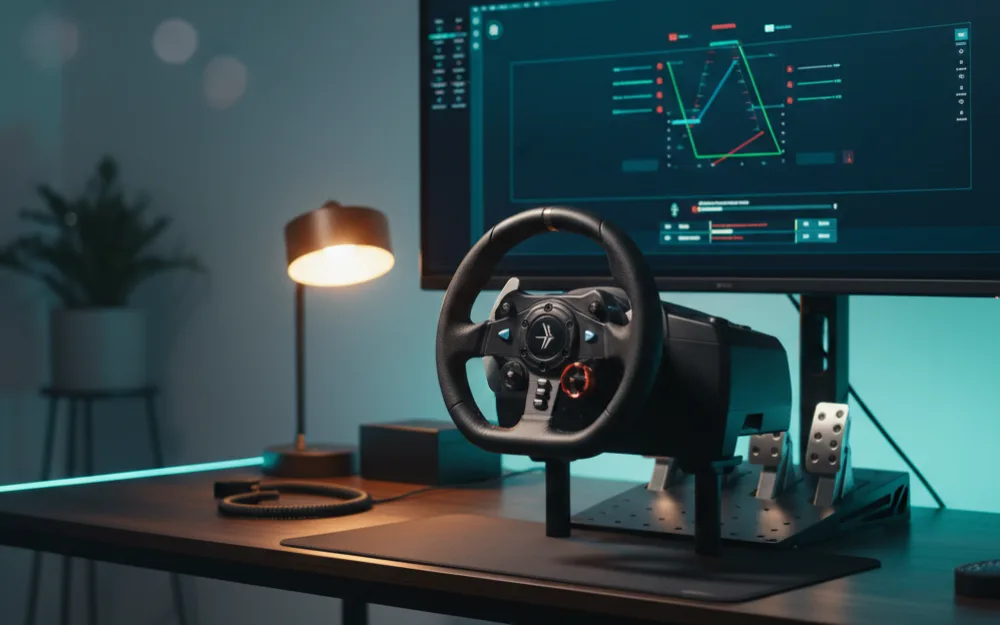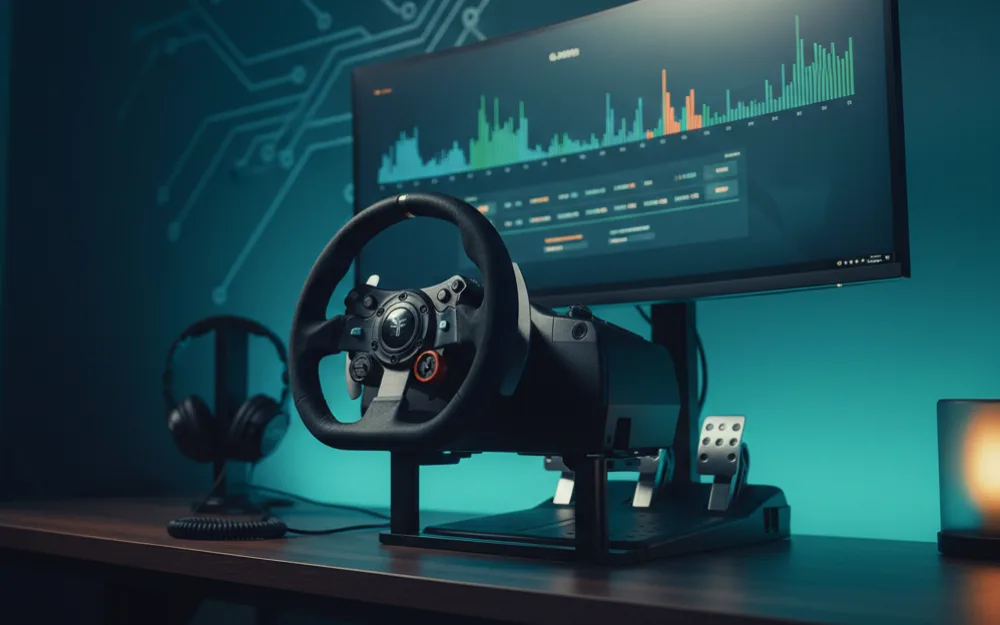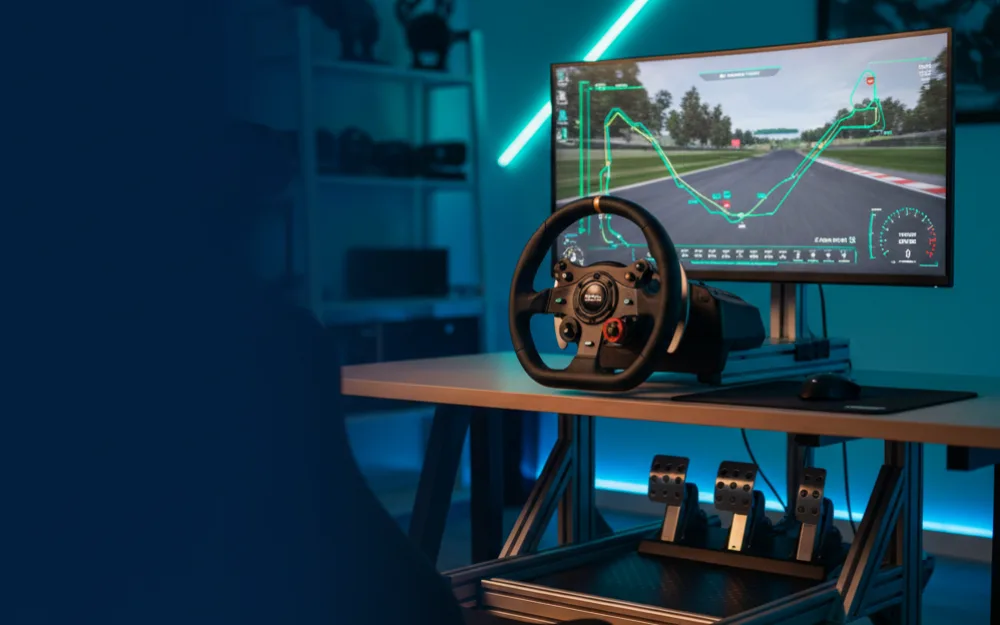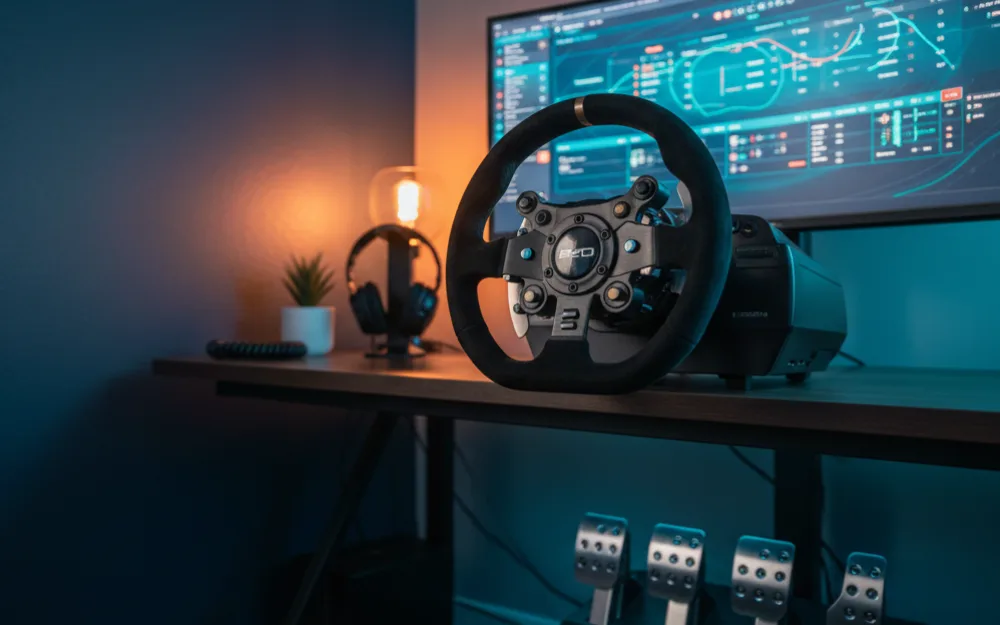



This guide walks you through a clean force feedback setup for the Moza R5 in Assetto Corsa Competizione, then hands you a method to sharpen it for any GT3 car on the grid. The R5 is an entry direct drive base, which means it connects the rim to the motor directly and can deliver more detail than a geared wheel. That also means it can build real force, so we will start controlled and work up rather than diving in at full strength.
We compared Moza’s recommended values with the settings experienced ACC drivers rely on, and you can read how we review. New to direct drive wheels? Skim what is direct drive and Getting Started before you begin.

Safety first with a direct drive base
A direct drive wheel can snap the rim quickly during a spin or a hard curb strike, more so than a belt or gear driven wheel. Keep both hands gripping the wheel through incidents, do not thread your thumbs inside the spokes, and start with the base at a lower strength while you learn its behavior. If a child or a lighter driver takes a turn, reduce the strength further. None of this is fragile advice; it is how you stay comfortable and in control while you dial the wheel in.
Set the base in Pit House before the game
Two layers control your force feedback: the Moza Pit House app that governs the base itself, and the in game sliders inside ACC. Get the base layer right first. In Pit House, set your wheel rotation to the full range so the game can request the correct steering lock, and set overall strength to a moderate level rather than the maximum. A common starting point is somewhere between a third and half of the base’s strength while you are learning, then raise it later once the car feels natural. For a full tour of the app, see our Moza Pit House guide.
Leave the smoothing, damping, and interpolation filters low to begin with. ACC produces a detailed signal on its own, and heavy filtering hides the very information you want, such as the front tires starting to slide. You can always add a touch of smoothing later if the wheel feels rough.
The ACC in game settings that matter
Inside ACC, open Settings, then Controls, and find the force feedback page. Three controls carry most of the feel.
Gain is your master strength inside the game. Raise it for more force, lower it to avoid clipping. Because the R5 already has real power, keep Gain moderate so the base and the game are not both pushing to the limit. Minimum Force lifts the very smallest forces so tiny details are not lost in the base’s deadzone. Add only a little; too much makes the center feel artificial and notchy. Dynamic Damping adds weight when the car is parked or slow, which can help at low speed but softens detail if you push it high, so keep it modest.
| ACC setting | A common starting point | What it does |
|---|---|---|
| Gain | Moderate, well below maximum | Master in game strength; too high clips detail |
| Minimum Force | A small single digit percentage | Lifts the faintest forces above the deadzone |
| Dynamic Damping | Low to moderate | Adds weight at low speed; softens detail if high |
| Road Effects | Modest, taste based | Adds surface texture; too much masks the tire signal |
Tune it with the clipping meter
ACC gives you a force feedback meter you can enable on screen, and it turns tuning into something you can watch rather than guess. Take a car onto a fast corner and watch the meter as you load the wheel. If the bar pins to the top and stays there through the corner, you are clipping, so lower Gain one step and drive again. If it barely moves off the bottom, raise Gain. Aim for a strong reading that briefly touches the peak on the very heaviest moments without living there. That balance gives you weight and detail at the same time, and it is far more reliable than any borrowed number.
Adjust for each car you drive
Every GT3 car in ACC loads the wheel a little differently. Rather than rebuild your whole profile each time, change only Gain when a car feels off: lower it if the new car clips, raise it if the wheel feels light. Keep your Pit House base strength and your filters where they are. This gives you a stable foundation with a single, quick adjustment per car, which is exactly the workflow experienced drivers recommend for a mixed garage.
Who this baseline suits, and who should change it
| Stick with this if | Change it if |
|---|---|
| You want detail and control over raw strength | You specifically want the heaviest possible wheel and accept some clipping |
| You are still learning the R5 and want a safe, calm base | You are experienced and want to run higher strength once comfortable |
| You race a mix of GT3 cars and want one quick per car tweak | You only ever drive one car and can tune it once and forget it |
Your next step
Enable the ACC force meter, run five laps, and adjust Gain until the peak just kisses the top on your hardest corner. Once the wheel feels right, read force feedback clipping to lock in why the method works. When you want to compare the R5 with other options, see the best racing wheel for Assetto Corsa and the best direct drive wheels. To understand the base’s power in context, torque in Nm explained is a short, useful read.