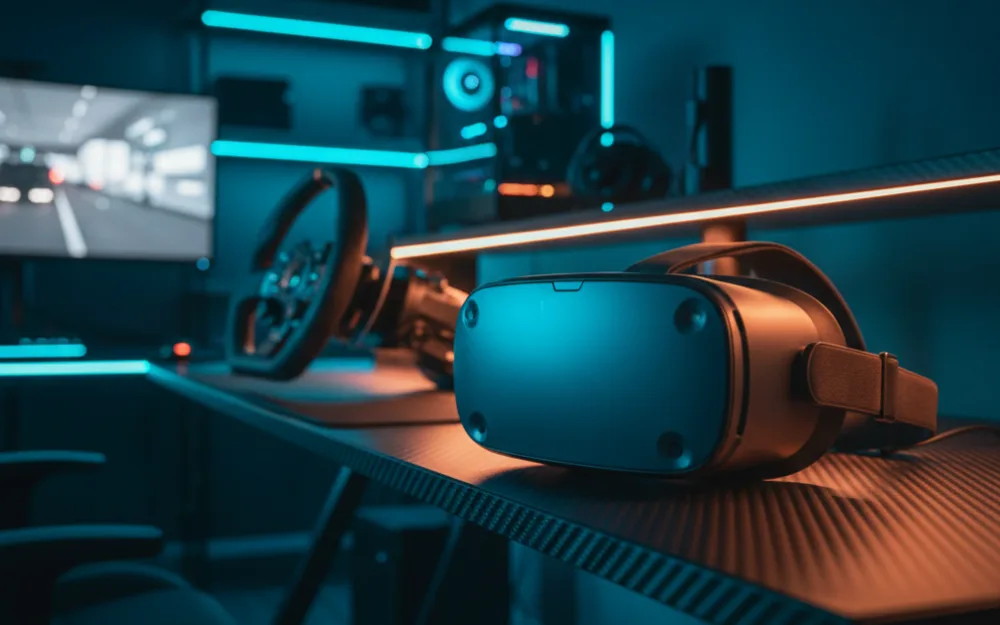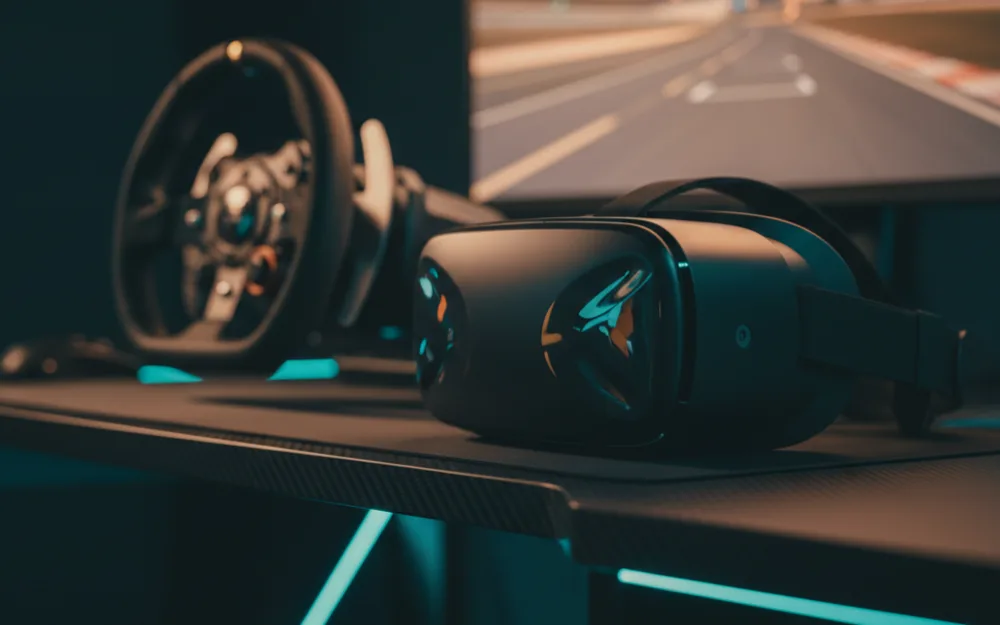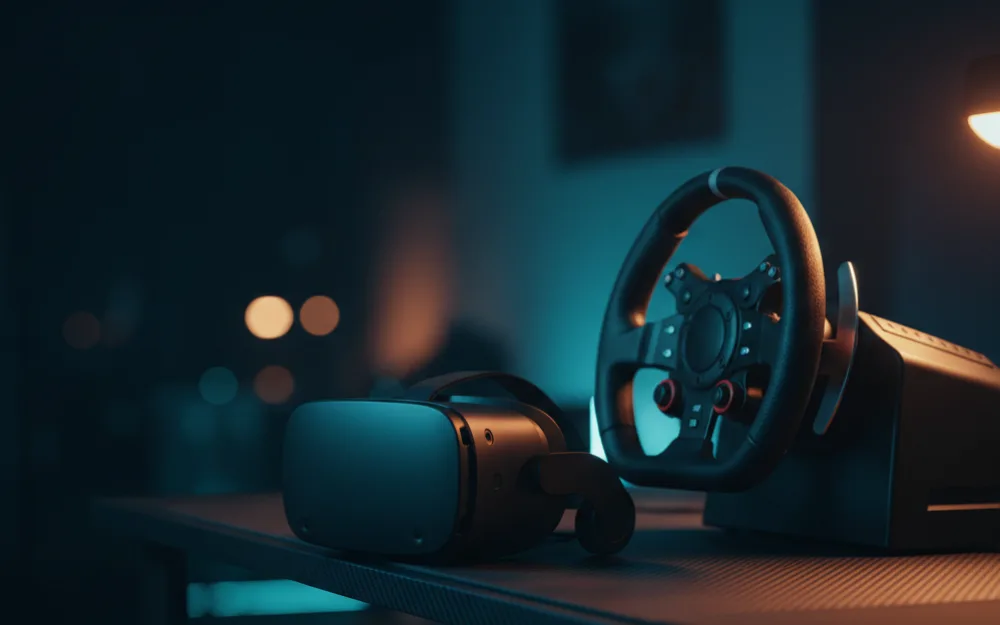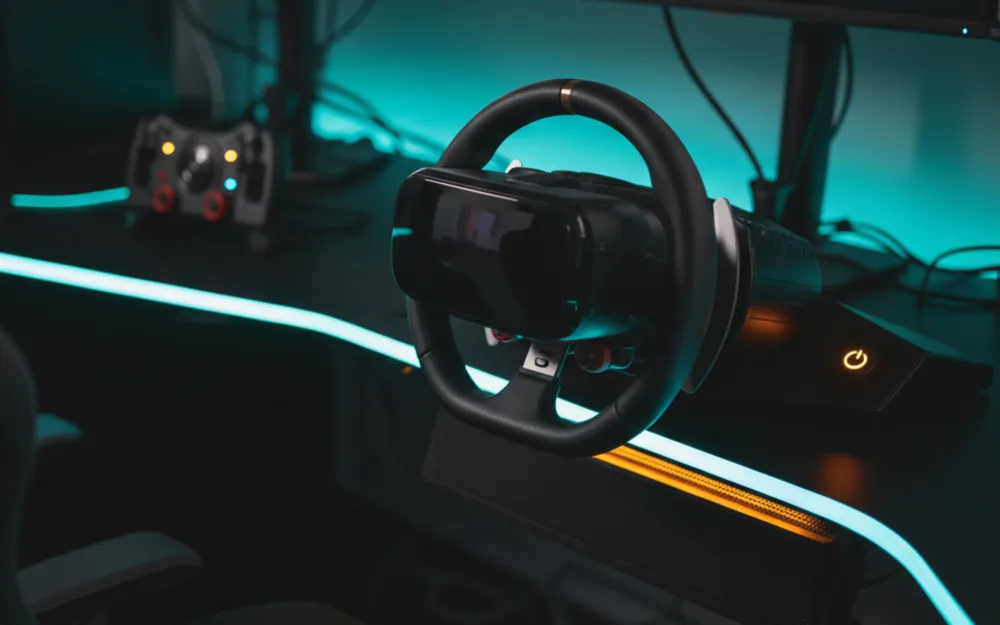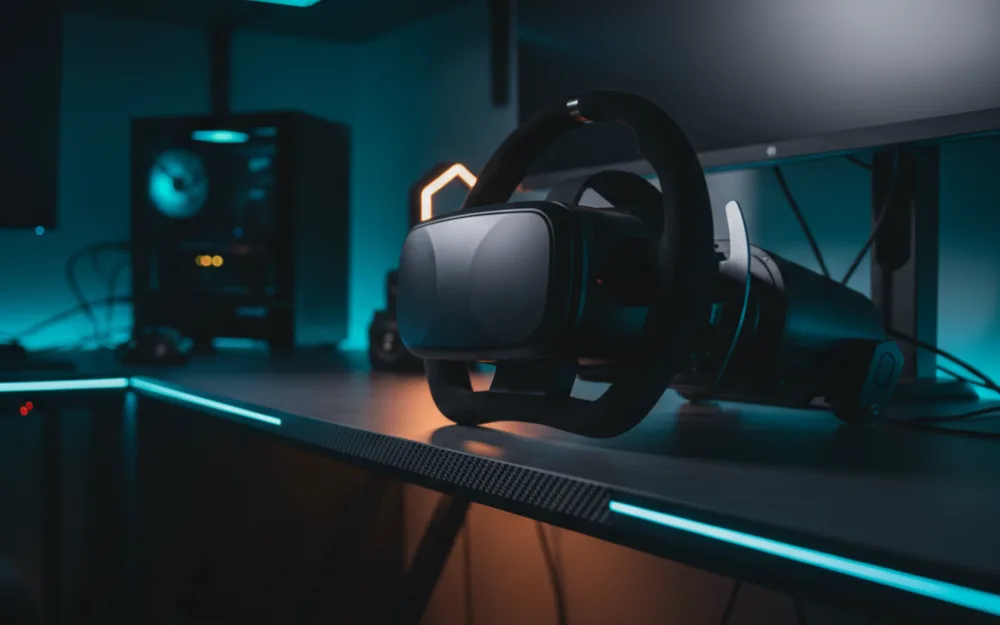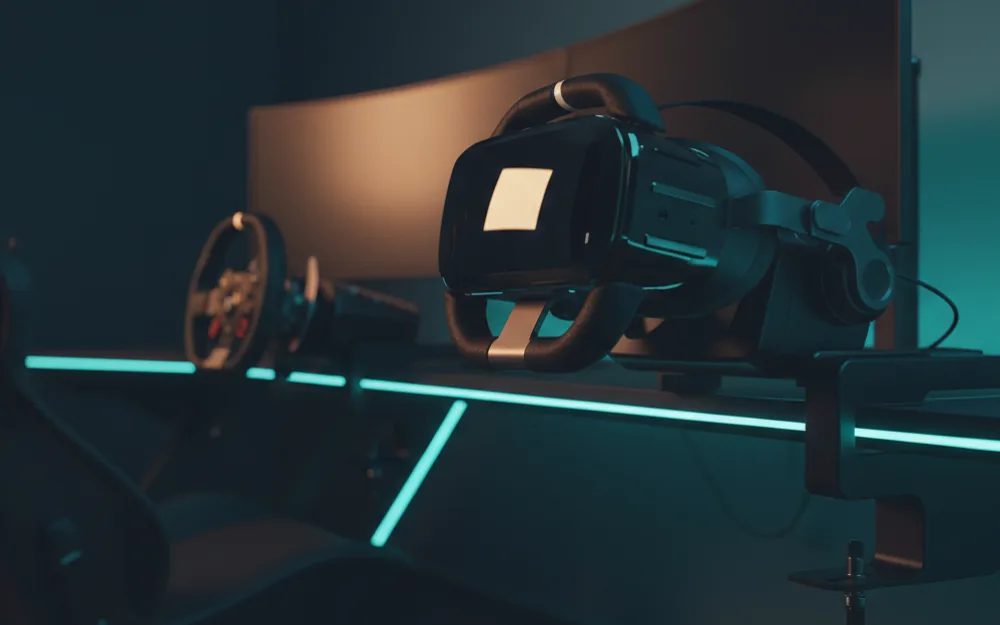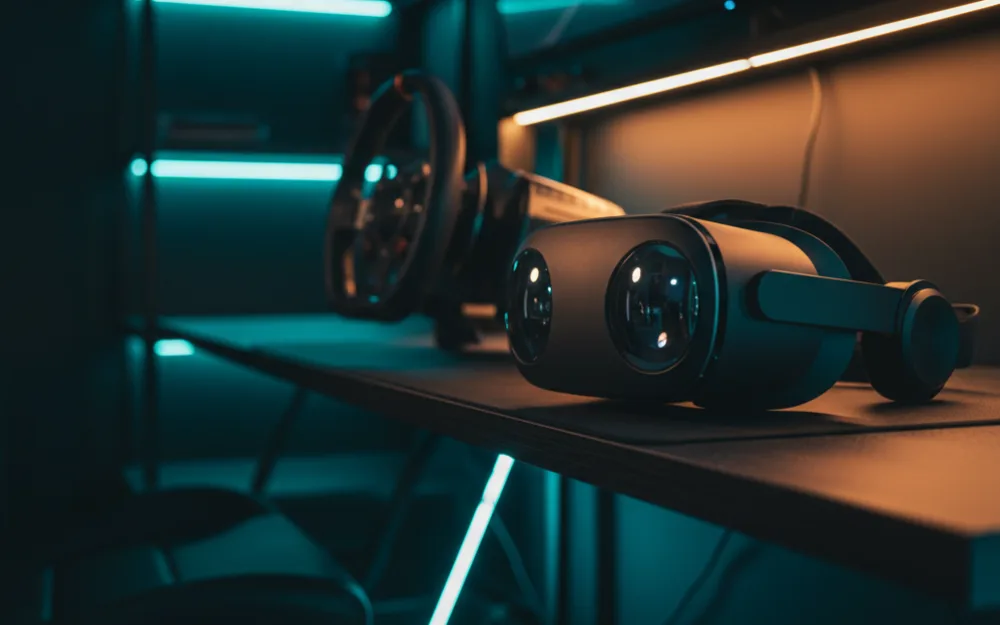

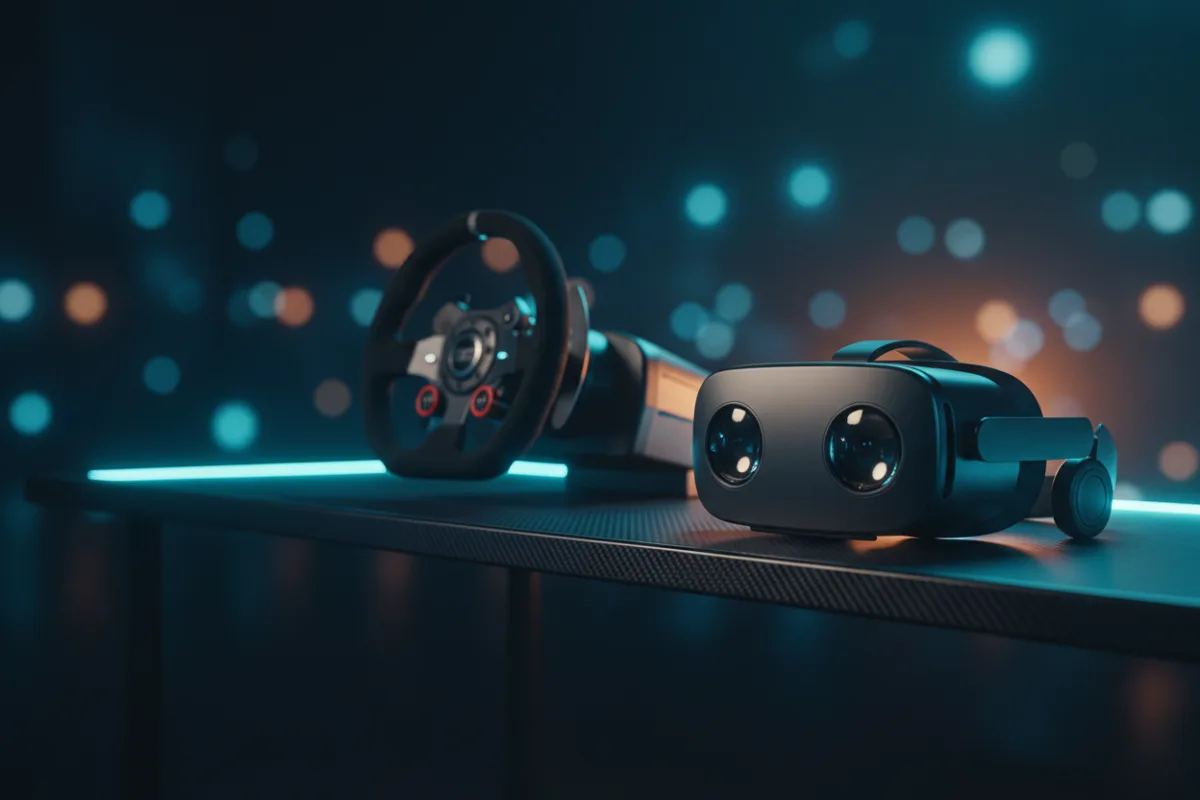

The Pimax Crystal Super is a PC only VR headset that pushes per eye resolution and field of view further than the Crystal Light sitting below it in Pimax’s range. It connects to a Windows PC over DisplayPort and USB rather than running any content on its own, and the pitch is the same specialist one Pimax headsets make: maximum clarity in the cockpit for iRacing, Assetto Corsa, and flight simulators, at the cost of asking a great deal from your graphics card.
We compared manufacturer specifications with measurements reported by independent review outlets and recurring owner feedback, and you can read how we review. If VR terms here are new to you, start with Getting Started.

At a glance
| Spec | Pimax Crystal Super |
|---|---|
| Type | PC only, wired |
| Resolution per eye | 3840 x 3840 |
| Field of view | 140 degrees |
| Refresh rate | 90 Hz |
| Tracking | Inside out |
| Platform | Windows 10, DisplayPort and USB |
What it is and the optics
Per eye resolution is the headline here: at 3840 by 3840, the Crystal Super sits well above the 2880 by 2880 panel in Pimax’s own Crystal Light and far above what standalone headsets offer. Pimax rates the aspherical lenses at 50 pixels per degree, a figure the company says eliminates the screen door effect, the faint visible grid that lower resolution panels can show, for edge to edge sharpness. The panel itself combines QLED color with Mini LED local dimming, which Pimax positions as pairing OLED level blacks with QLED brightness. For reading a braking marker or a distant apex, this density of pixels per eye is where the Crystal Super separates itself from mainstream VR.
Comfort, tracking, and PC requirements
Tracking is inside out, so there are no external base stations to mount, and Pimax describes the ergonomics as sim ready with balanced weight distribution and replaceable facial interfaces for long sessions. The real requirement sits with your PC. Rendering 3840 by 3840 pixels per eye at up to 90 Hz is a heavy load, and reviewers who evaluate high resolution PC headsets consistently note that frame timing, not peak resolution, is what keeps a long stint comfortable. Pimax includes a Dynamic FOV feature that adjusts rendered resolution based on your graphics card, a practical concession to the fact that few GPUs can sustain the full panel resolution at a stable frame rate in every scene.
Connectivity and compatibility
The Crystal Super connects over DisplayPort and USB to a Windows 10 PC, with no standalone mode and no console support of any kind. Pimax’s included DMAS earphones and an onboard microphone cover communications without a separate headset, which is a useful convenience for endurance racing where voice comms run for hours. Because this is strictly a PC VR device, confirming your graphics card and your sim’s VR support before buying matters more here than with almost any other headset in this review set.
Pros and cons
- 3840 by 3840 per eye resolution is well above the Crystal Light and standalone alternatives
- 140 degree field of view is the widest among the headsets in this review set
- Inside out tracking needs no external base stations
- Dynamic FOV helps balance resolution against your GPU’s actual capability
- Rendering this much resolution per eye demands a high end graphics card
- No standalone mode and no console support, PC only
- A small pool of verified buyer ratings makes the WSR Score an early signal rather than a settled verdict
Who it is for
This suits a PC sim racer or flight simmer who already owns, or plans to own, a high end graphics card and wants the sharpest cockpit clarity and widest field of view available rather than a mainstream compromise. It is a fit for someone who has already ruled out standalone convenience in favor of maximum image quality in a dedicated racing or flight rig.
Who should skip it
Skip this headset if your GPU is mid range and staying that way, since the resolution advantage does little if frame rate cannot hold steady. It is also not the pick if you want a standalone headset for casual, untethered play, if you need console support, or if you are an early adopter concerned about buying into a specialist product with a limited verified rating history so far.
How it scores
The WSR Score shown above reflects verified buyer ratings gathered and normalized on a consistent scale, not an editorial rubric. You can read what goes into it on How We Review. The Crystal Super is a newer, specialist headset with a limited pool of buyer ratings so far, so treat its score as an early signal and weigh it alongside the GPU and platform trade offs above.
Alternatives worth a look
If you want a more accessible entry into Pimax’s high resolution range, our Pimax Crystal Light review covers the model this headset sits above. If flexibility and a lower entry cost matter more than peak resolution, see our Meta Quest 3S review for a standalone alternative. Browse the full field in best VR headsets for sim racing and the Displays and Immersion category, and if you are still working out how much of your view VR should cover, our guide to field of view (FOV) explains the practical setup.