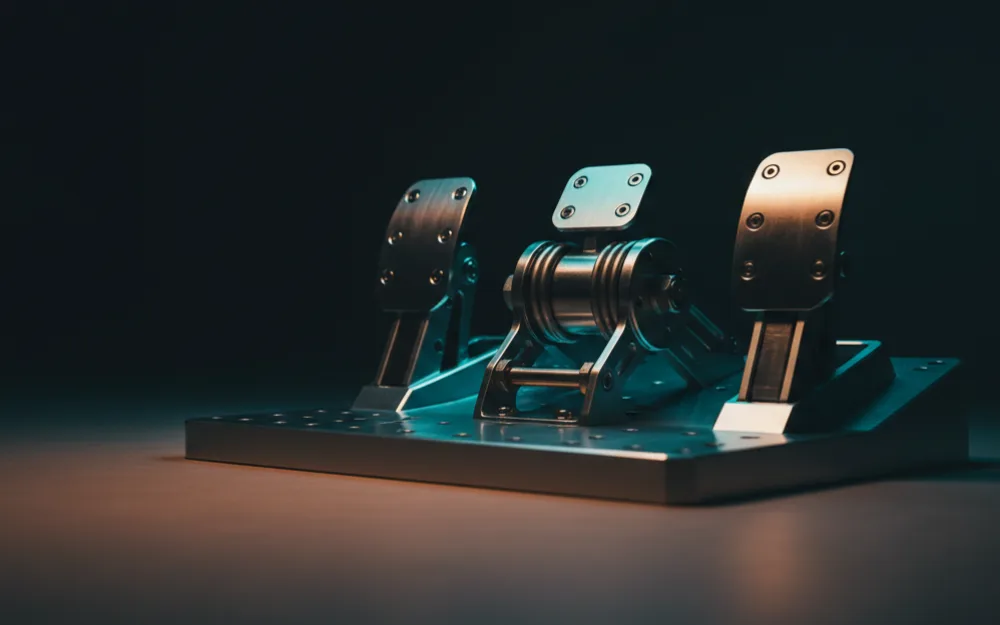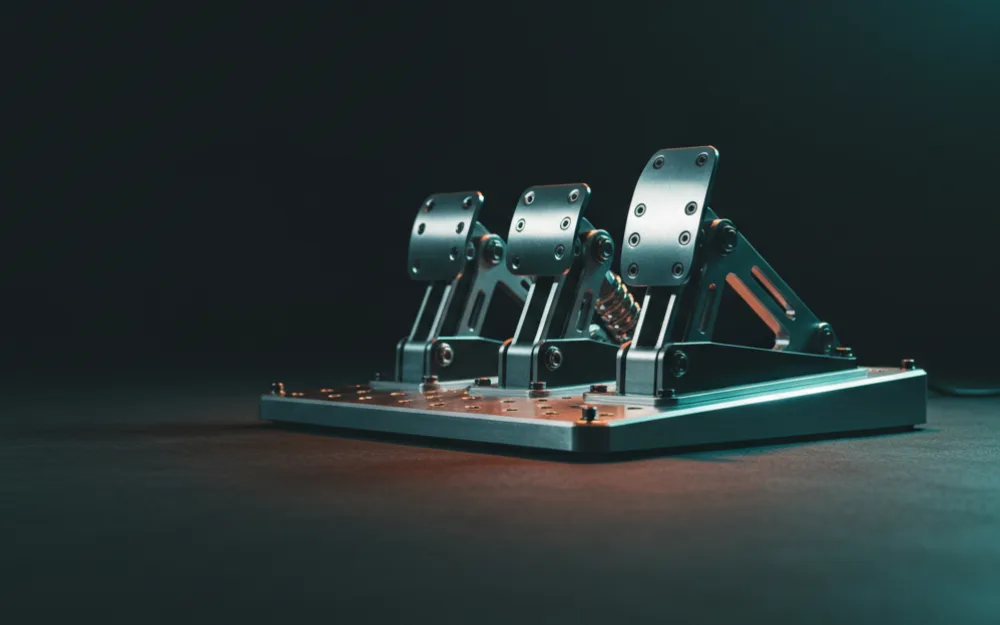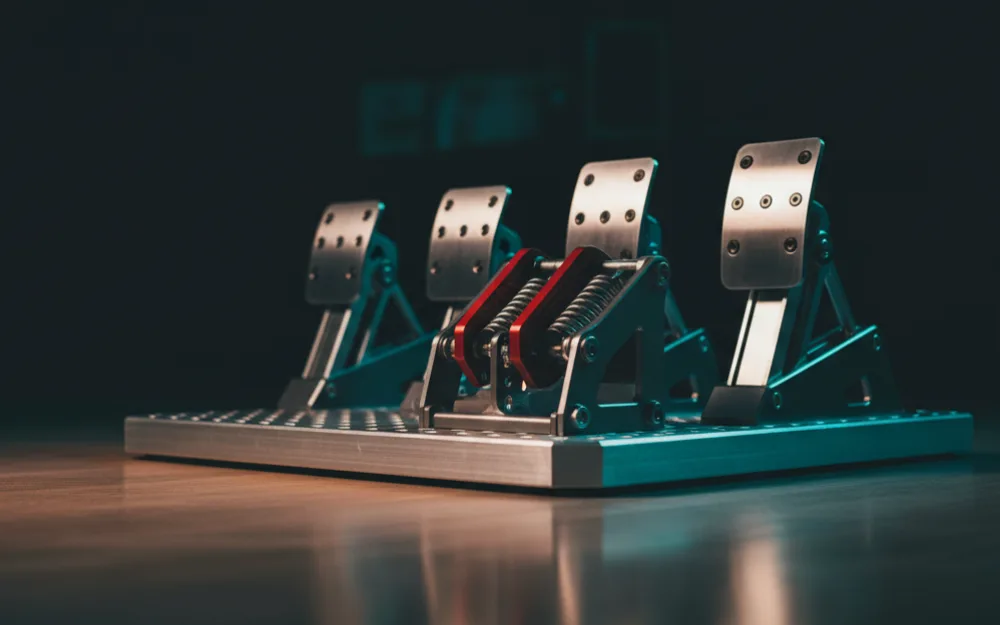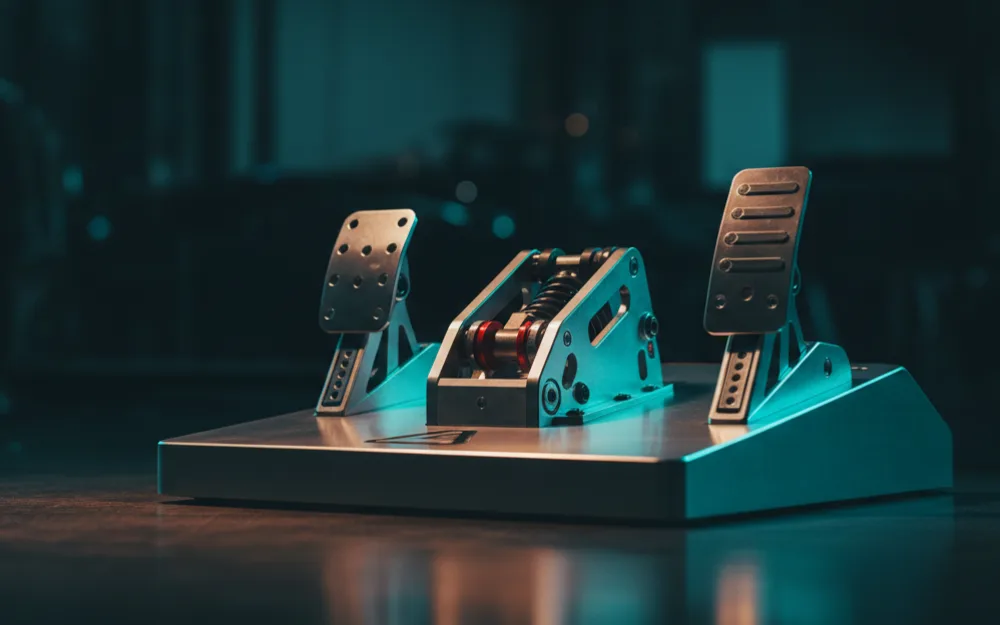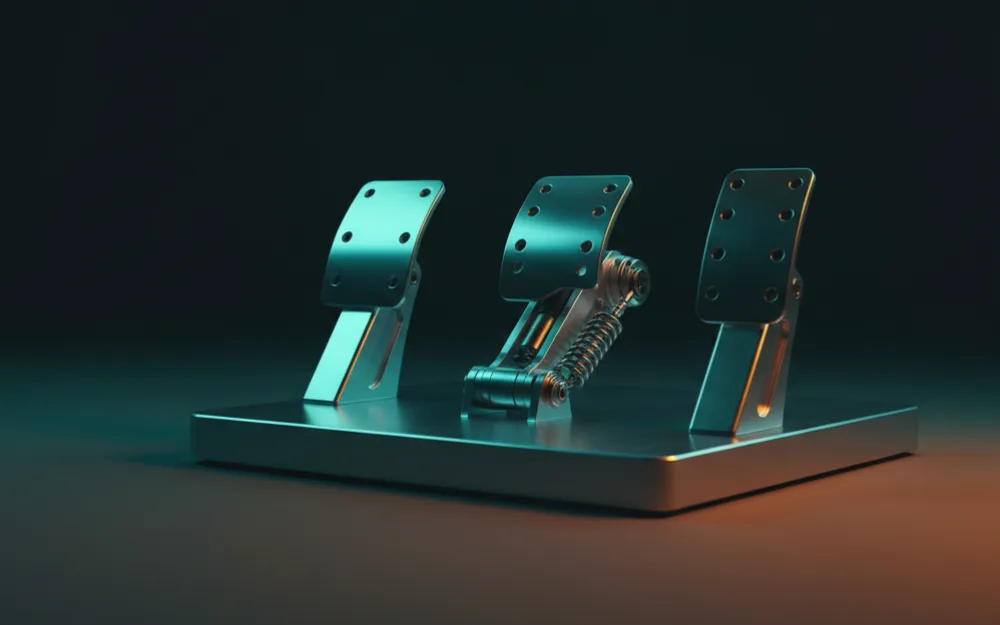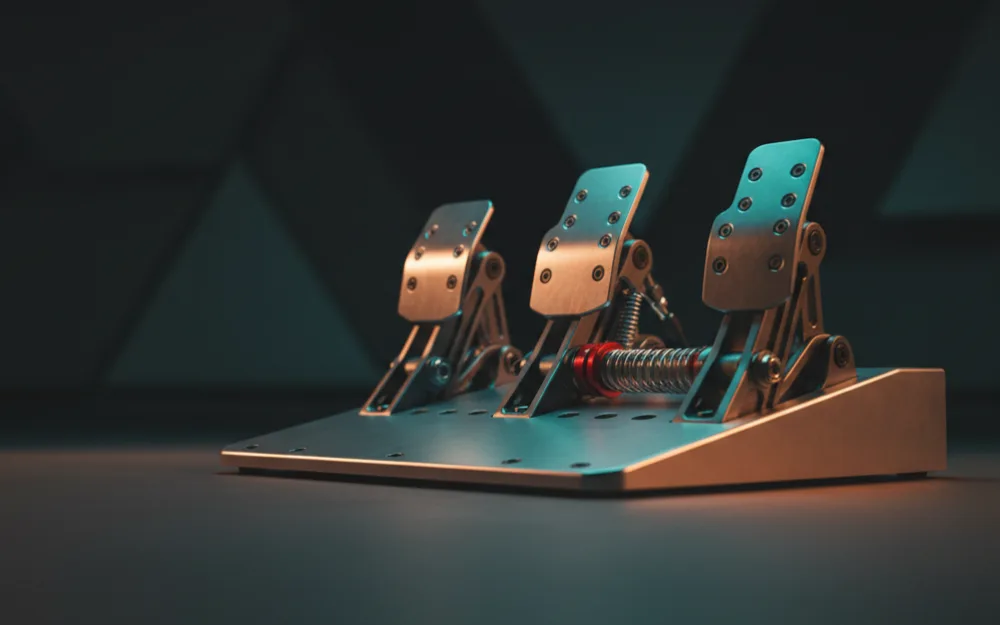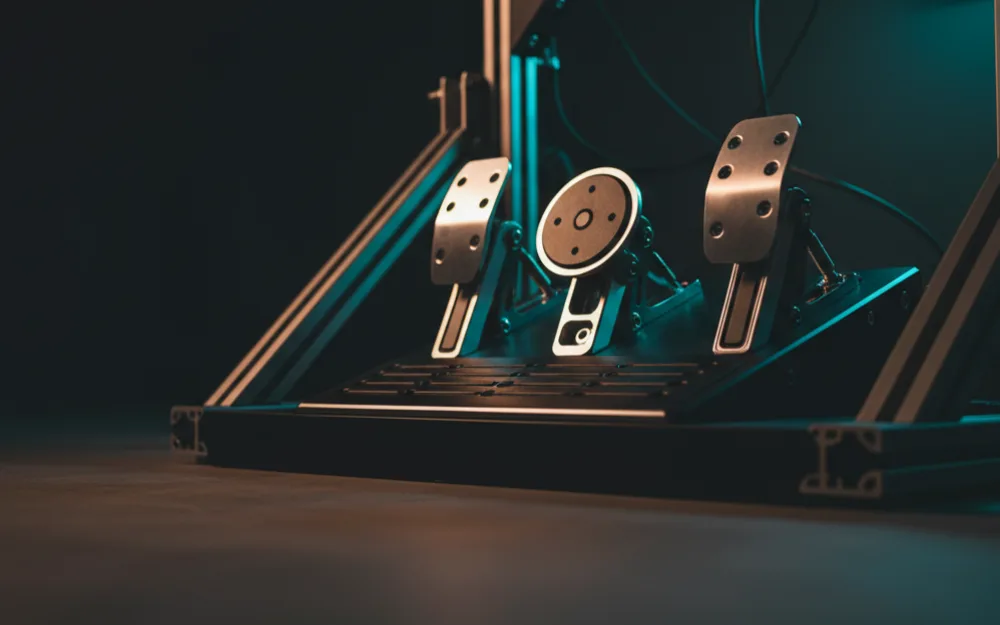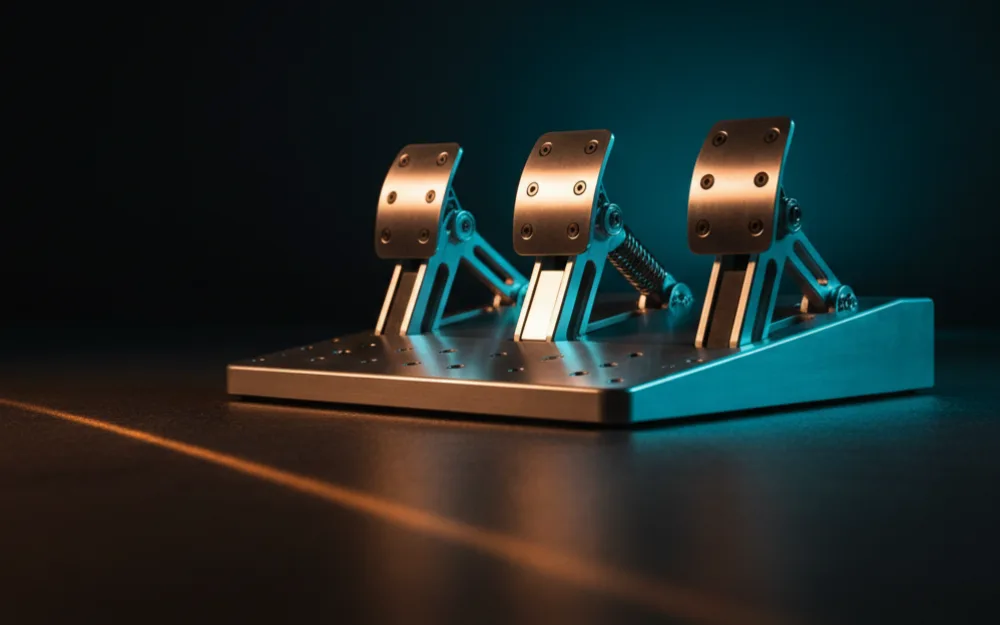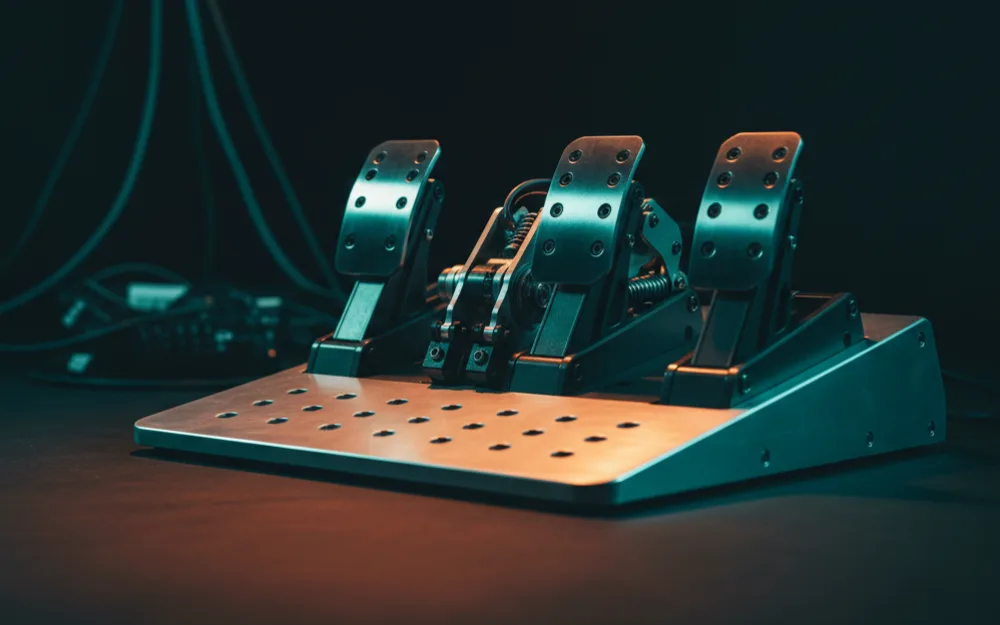

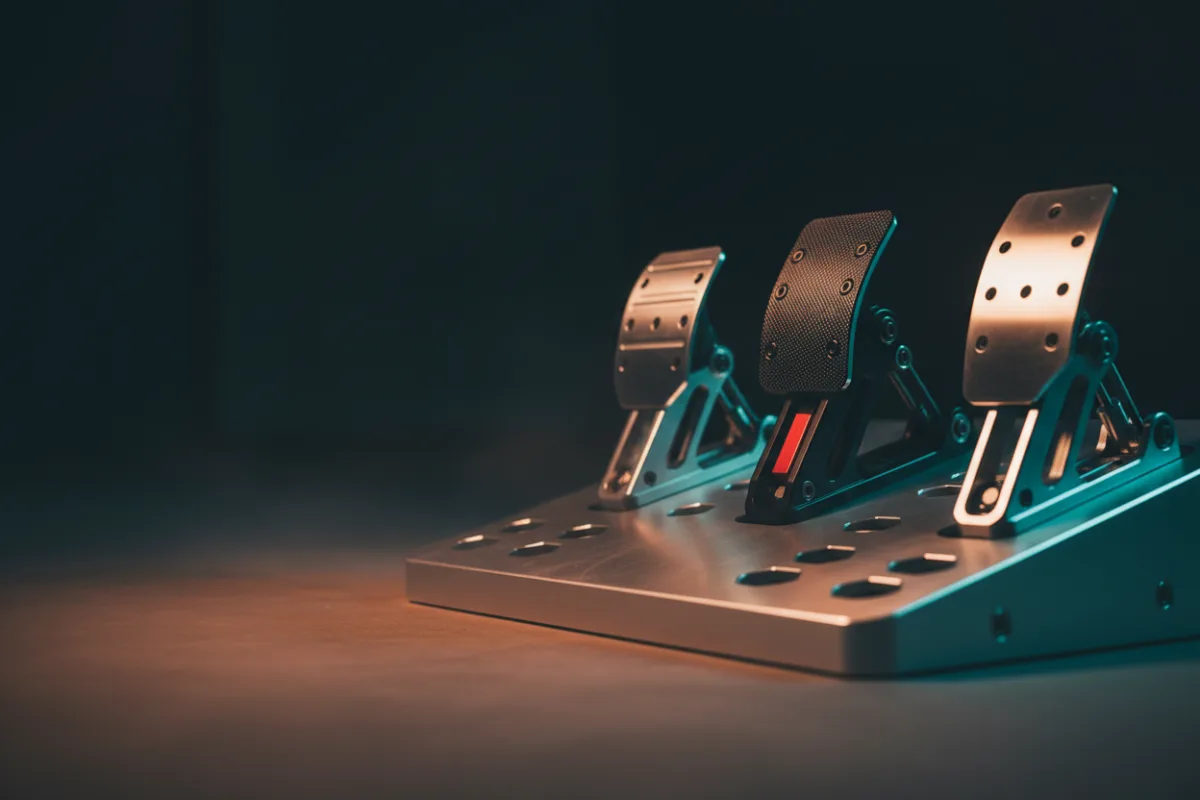

The Logitech G PRO Racing Pedals is a modular three pedal set built around a 100 kg rated load cell brake, sold as Logitech’s flagship pedal hardware and designed to sit alongside the brand’s PRO Racing Wheel. What sets it apart from most load cell pedals is reach: it works across PC, Xbox, and PlayStation, over USB on PC and through a Logitech PRO wheel base on console. That combination of a serious brake and broad compatibility is the place to start.
This review looks at how the PRO Racing Pedals are built, what the modular design and independent tuning change, and who does not need a three pedal set yet. We compared manufacturer specifications with recurring owner feedback, and you can read how we review.

What it is and where it sits
This is a full three pedal set (throttle, brake, clutch) built to pair with Logitech’s PRO Racing Wheel, though it works as a standalone purchase too. Each pedal sits on a modular tray that slides horizontally for spacing, or can be removed entirely if a driver only wants two pedals active. Platform reach is the headline feature: Logitech lists it as compatible with PC, Xbox Series X, Xbox Series S, Xbox One, PlayStation 5, and PlayStation 4, with console use running through the PRO Racing Wheel base the pedals plug into and PC use over USB. That is a rare spread for a set built around a brake this serious.
Build and load cell feel
The 100 kg rated load cell measures brake input by pressure rather than pedal travel, which our load cell versus potentiometer guide explains in more depth, and it is the same principle that makes threshold braking more repeatable once the muscle memory sets in. Logitech lets the brake’s elastomer be swapped independently from the springs on the throttle and clutch, so each pedal’s resistance curve can be reshaped on its own rather than tuning the whole set with a single setting. The throttle and clutch run on contactless Hall effect sensors, which read position magnetically and resist the wear that grinds down cheaper contact-based sensors over years of use. Reviewers who run the PRO Racing Pedals describe the brake as firm and consistent once the elastomer is matched to their braking style, and point to the fully modular tray as an easier way to set pedal spacing than a set with a fixed deck.
Mounting and compatibility
The modular tray is the main setup decision here: each pedal can slide for spacing or come out entirely, which matters if a driver wants only two pedals active for a stretch. It connects over USB on PC, and on console it plugs into a Logitech PRO Racing Wheel base, whose version (PlayStation or Xbox) sets the platform. As with any 100 kg rated brake, the payoff depends on a mount rigid enough to hold still under a hard stop, whether that is a bolted deck or a plate heavy enough to stay put on its own.
Pros and cons
What works:
- 100 kg load cell brake with independently swappable elastomers and springs on all three pedals
- Fully modular pedal tray, adjustable spacing or full removal per pedal
- Works on PC over USB, and on Xbox or PlayStation through a Logitech PRO wheel base
- Contactless Hall effect sensors on throttle and clutch resist long-term wear
What to weigh:
- A three pedal set adds cost and desk space over a brake-and-throttle-only pair
- Full tuning benefit depends on a mount rigid enough for a 100 kg rated brake
- A newer listing without an established owner rating pool yet
Who it is for
This fits a multi-platform racer, PC one day and console the next, who wants a full three pedal set with independent elastomer and spring tuning and who races on, or plans to buy, a Logitech PRO wheel base for console play. It pairs naturally with our Logitech G PRO Racing Wheel review for a matched setup.
Who should skip it
Skip it if only two pedals are needed, or if a simpler brake-and-throttle set fits the budget better; the modular tray and independent tuning across three pedals are features a beginner pays for without necessarily using yet. See best sim racing pedals for the wider field and pedals for more options.