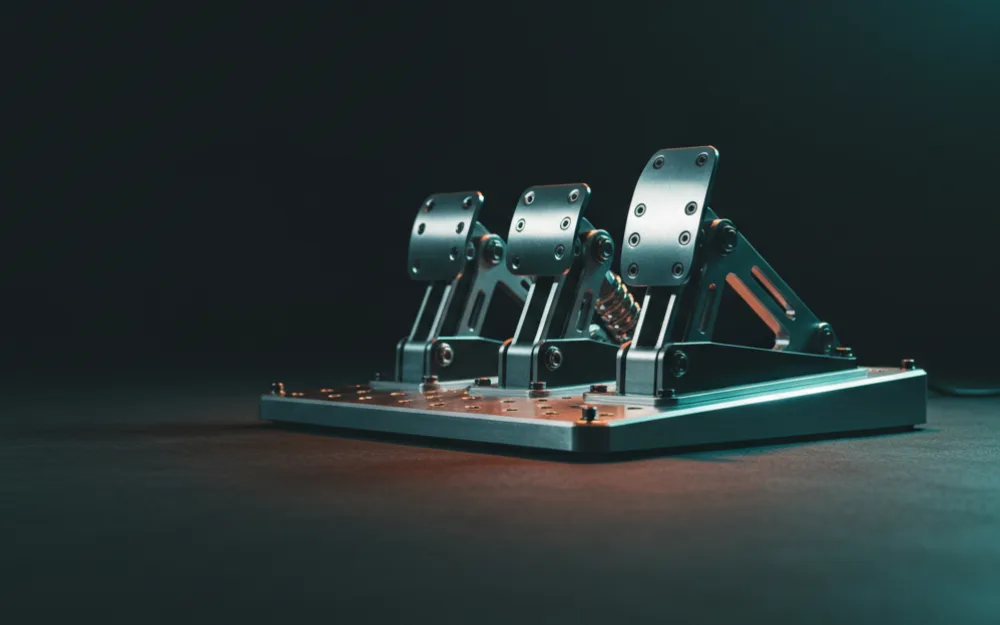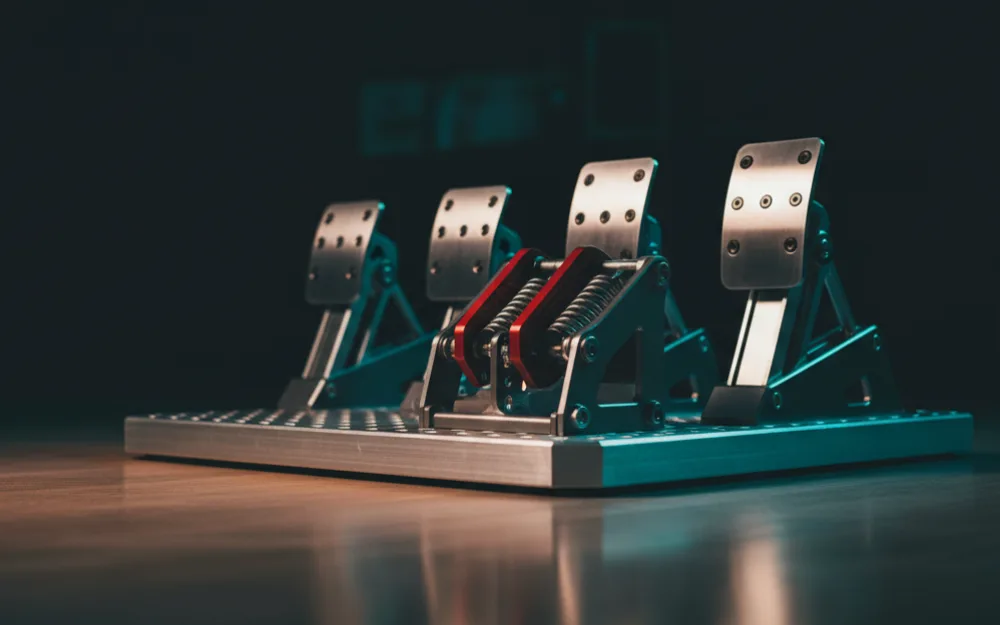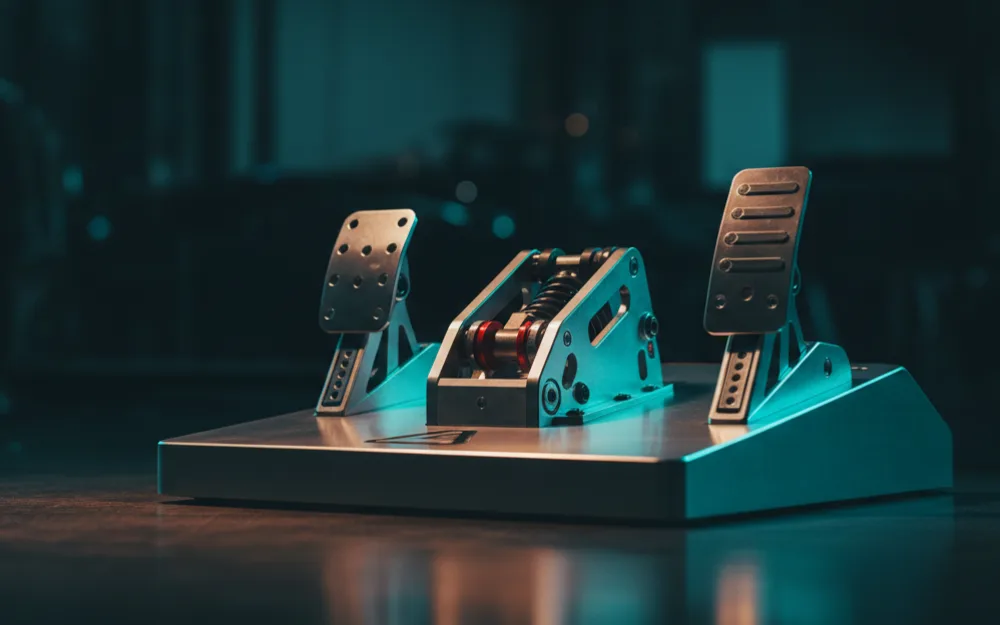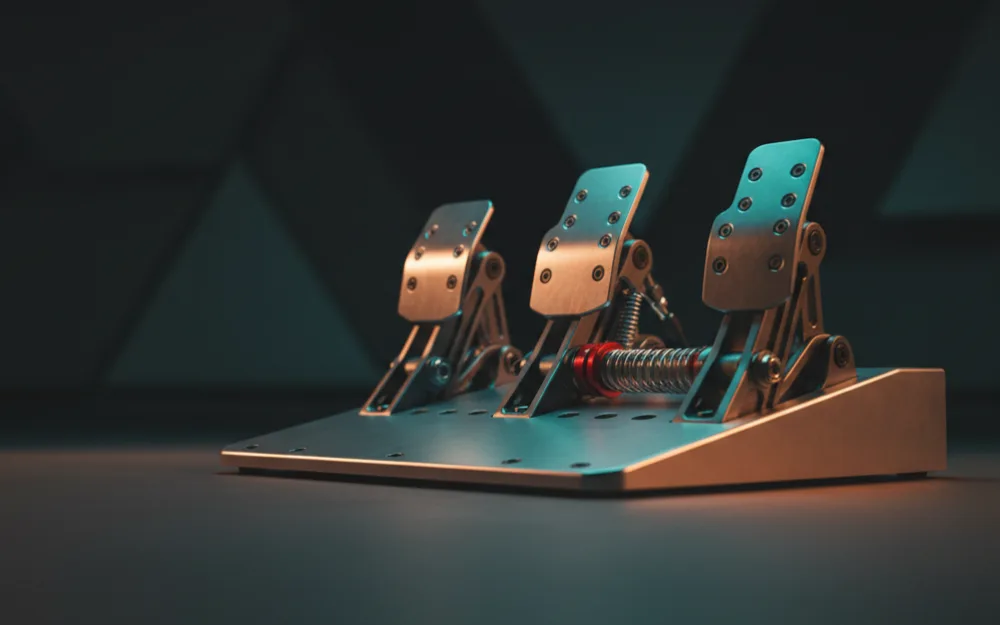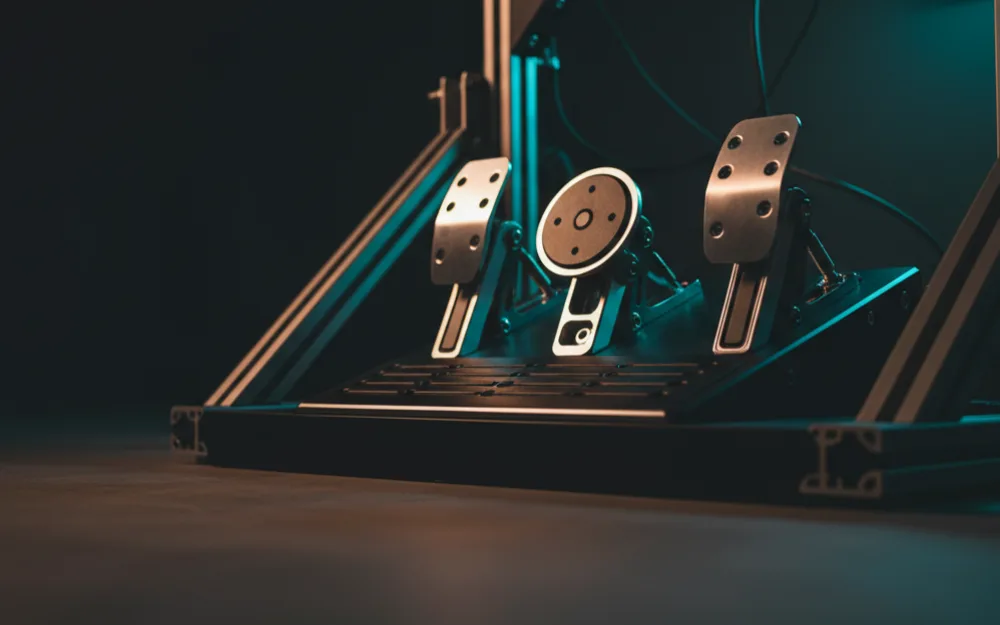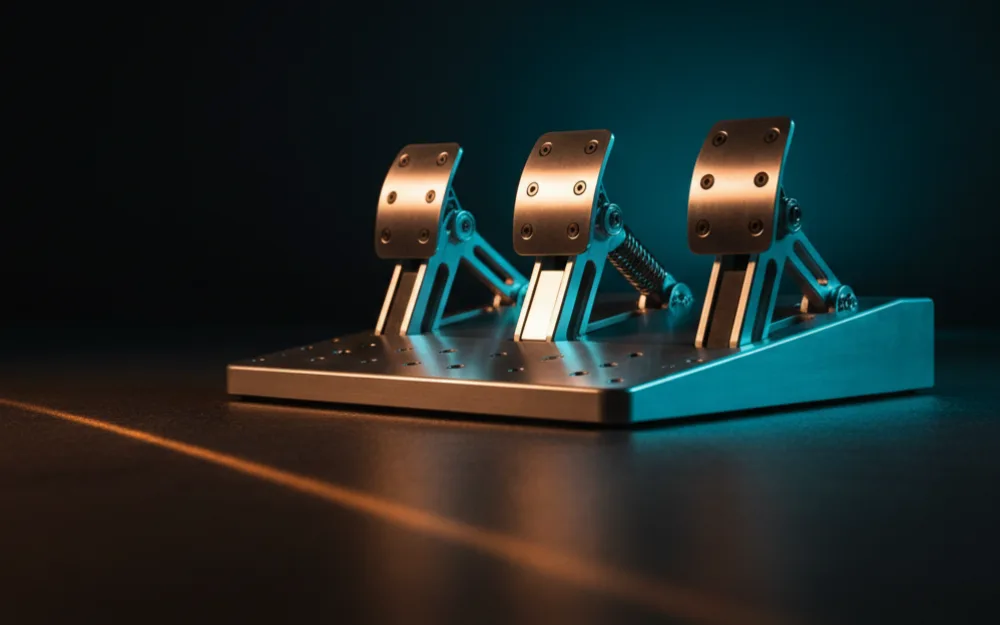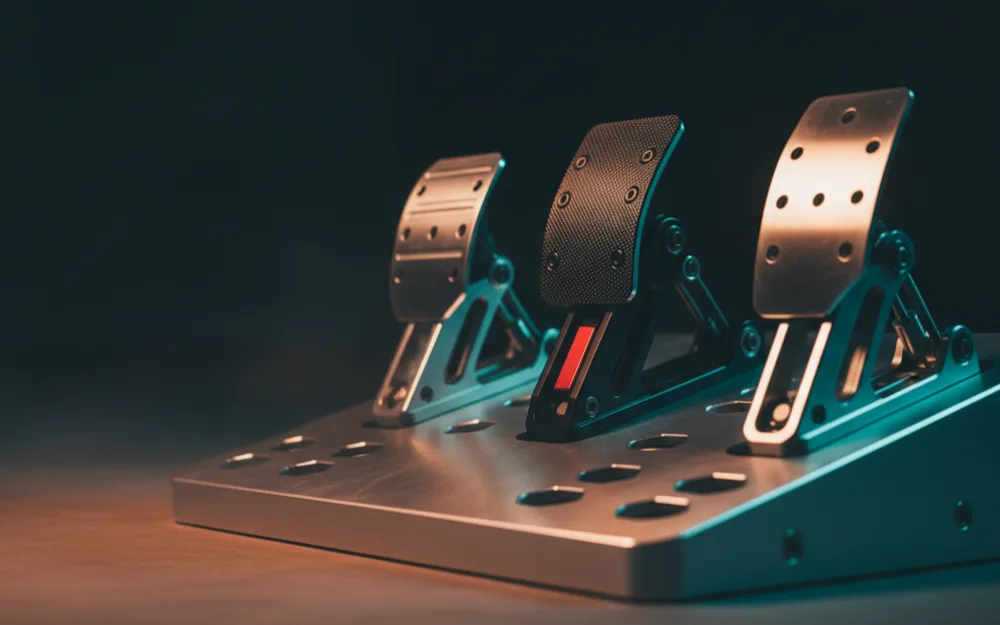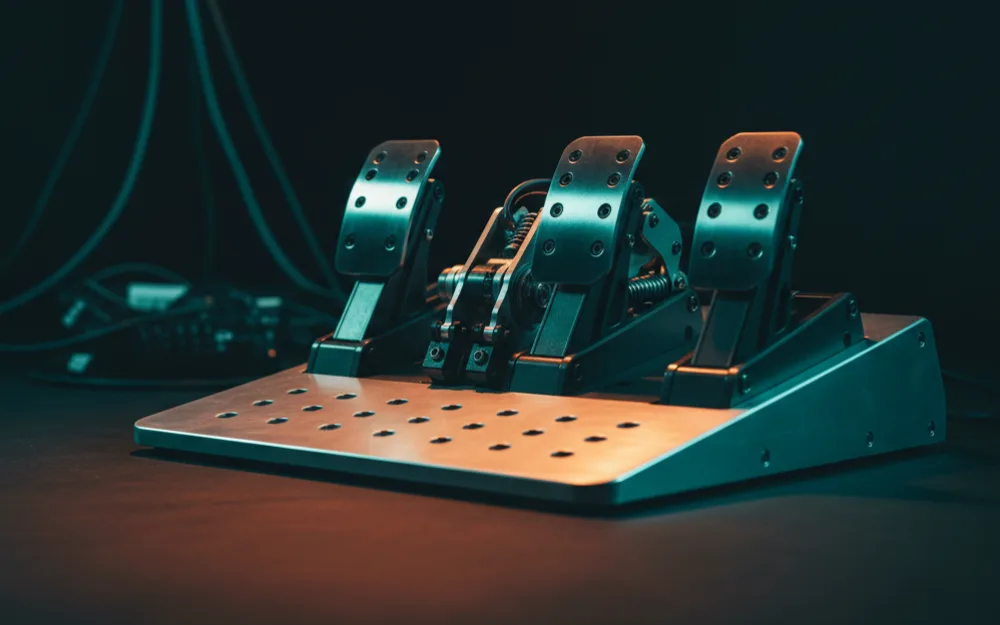



The Simjack UT is a three pedal load cell set from SimJackyin, a newer name in sim racing hardware, built around a brake cell rated to 200 kg. That number is worth pausing on: it sits well above the 75 kg and 100 kg load cells that anchor most mainstream pedal sets, and headroom like that is usually reserved for pedals costing several times as much. What that extra rating actually buys a driver, and what a newer brand asks you to accept in exchange, is the place to start.
This review looks at how the UT is built, what its load cell and tuning options change, and who should wait for a more established brand. We compared manufacturer specifications with recurring owner feedback, and you can read how we review.

What it is and where it sits
The UT is a full three pedal set (throttle, brake, clutch) built for PC only. It does not work on PlayStation, Xbox, or Mac, and SimJackyin is explicit about that limit rather than burying it in fine print. Inside the housing sits a 32 bit dual core processor paired with a 16 bit independent analog to digital converter, both wrapped in an aluminum casing chosen for interference resistance. The set is built to sample throttle, brake, and clutch input on three channels at once, which SimJackyin positions as steadier and less prone to cross talk from nearby motion bases or seats than a shared single channel design. It is a young product on the market, currently carrying 14 verified reviews at a 4.8 average, a small but consistently strong pool rather than a long track record.
Build and load cell feel
Before judging the brake, it helps to know what a load cell actually measures: pressure applied against a nearly fixed point, not how far the pedal travels. That is why load cell brakes reward a driver who learns to modulate force rather than push distance, and why a 200 kg rating matters less for everyday braking than for the ceiling it gives a driver who brakes hard and often. The UT’s brake damping uses imported rubber available in 60, 80, and 90 hardness, so the resistance curve can be swapped rather than fixed at one feel out of the box, similar in spirit to how other pedal makers let a driver change elastomers or springs. The frame itself is CNC laser cut stainless steel at 3mm thickness, with the brake’s load bearing section thickened to 6mm specifically to handle repeated hard stops. The throttle panel adds a raised heel and toe position, and the brake pedal face is built wider than the other two, both aimed at making left foot braking and heel toe downshifts easier to place accurately.
Mounting and compatibility
The UT connects over USB with no driver installation required on Windows 11 and earlier, and SimJackyin lists it as compatible with Steam ESR wheel stands and cockpits specifically, worth confirming against your own rig before buying. Tuning runs through the Simjack Control software, which lets a driver shape linear output curves, set pedal dead zones, and adjust the brake curve, then save the result as a profile that carries across different sim titles without remapping each time you switch games. At 5.97 kg for the set, a rigid mounting point still matters: a 200 kg rated brake will flex a soft plate before it ever reaches that ceiling, so the load cell’s real headroom depends on what it is bolted to.
Pros and cons
What works:
- 200 kg rated load cell brake, above the common 75 to 100 kg tier
- Swappable brake damping in three hardness options for a tunable feel
- Reinforced 3mm stainless frame with a 6mm thickened brake mount point
- Simjack Control profiles carry linear curves and dead zones across sim titles
What to weigh:
- PC only, with no PlayStation, Xbox, or Mac support
- A newer brand without the multi year review history of Logitech or Thrustmaster
- A small review pool so far, 14 at the time of writing, so long term durability is less proven
Who it is for
The UT fits a PC only racer who wants a load cell brake with real headroom and independently tunable damping, and who is comfortable backing a newer brand covered by a 12 month manufacturer warranty in exchange for a lower price than the established names charge for similar specs. Compare it against our Logitech G RS Pedals review if cross platform support matters more than raw brake rating.
Who should skip it
Skip it if you race on console at all, since the UT has no path to PlayStation or Xbox. It is also not the safest pick for a driver who wants years of accumulated owner feedback before spending, since the review pool is still small. See best sim racing pedals for the wider field and pedals for more options.