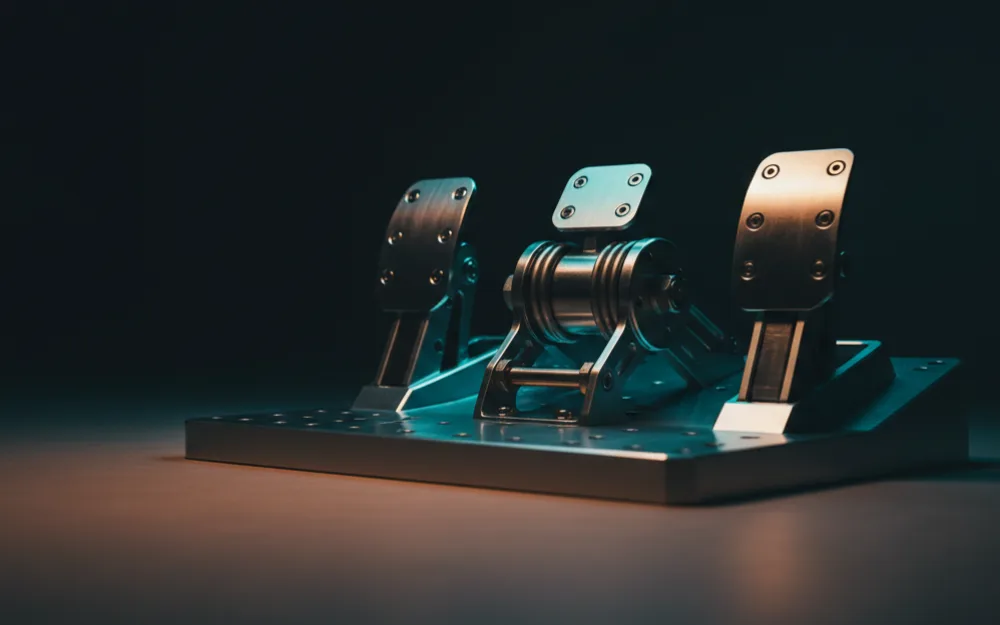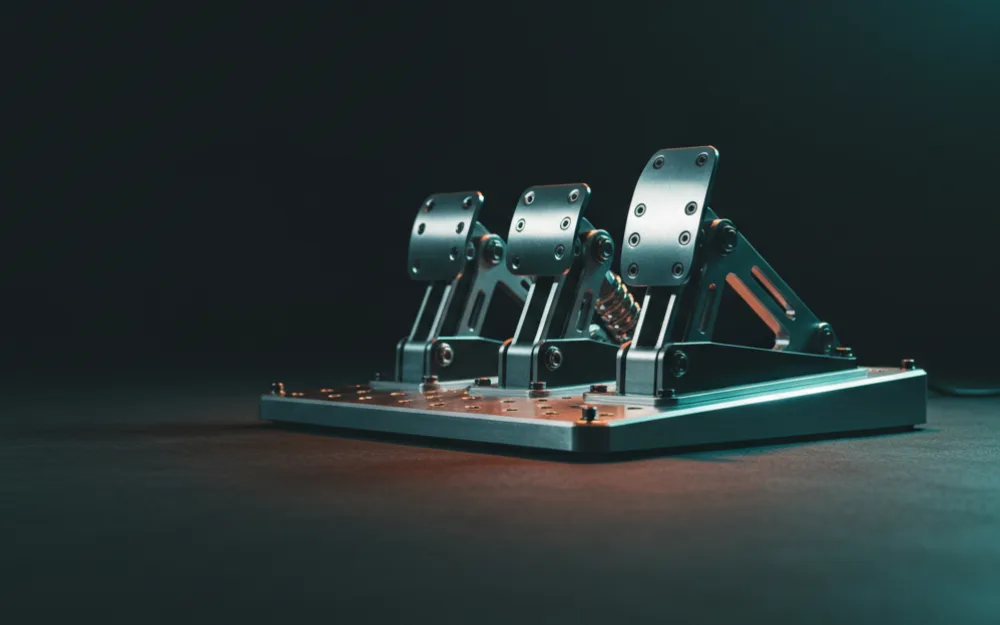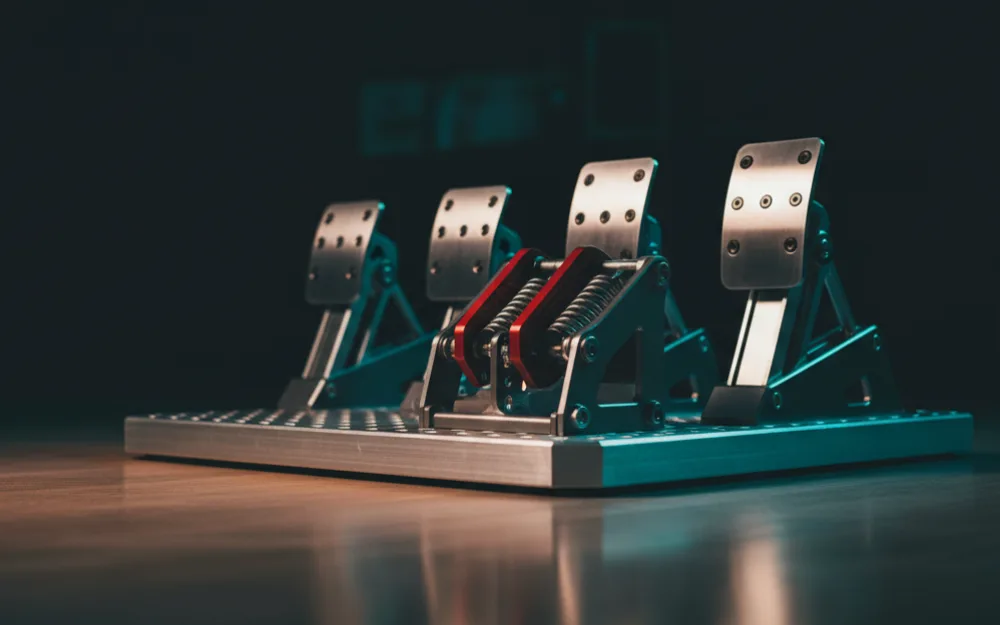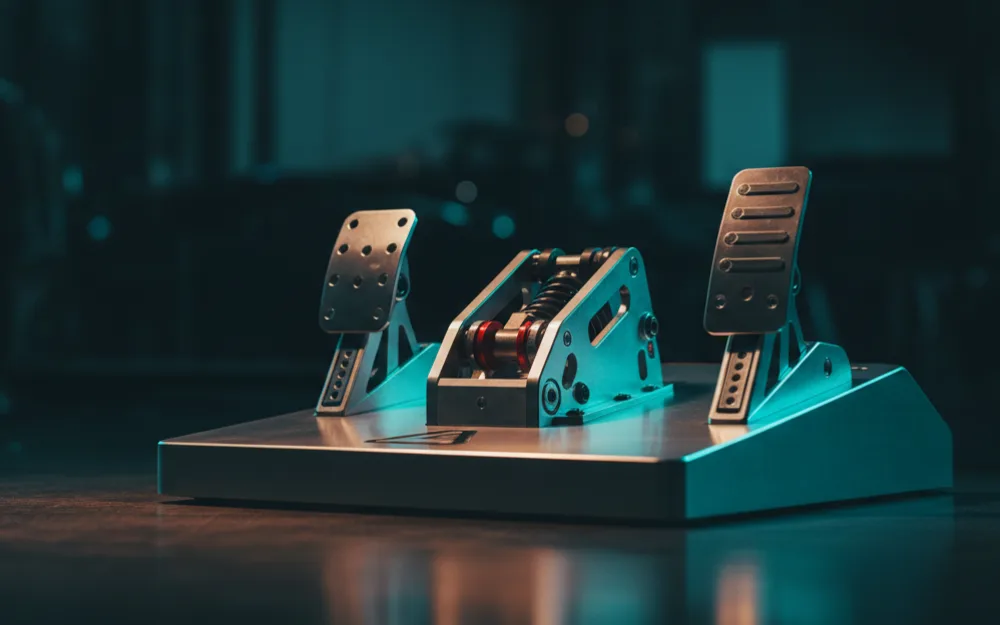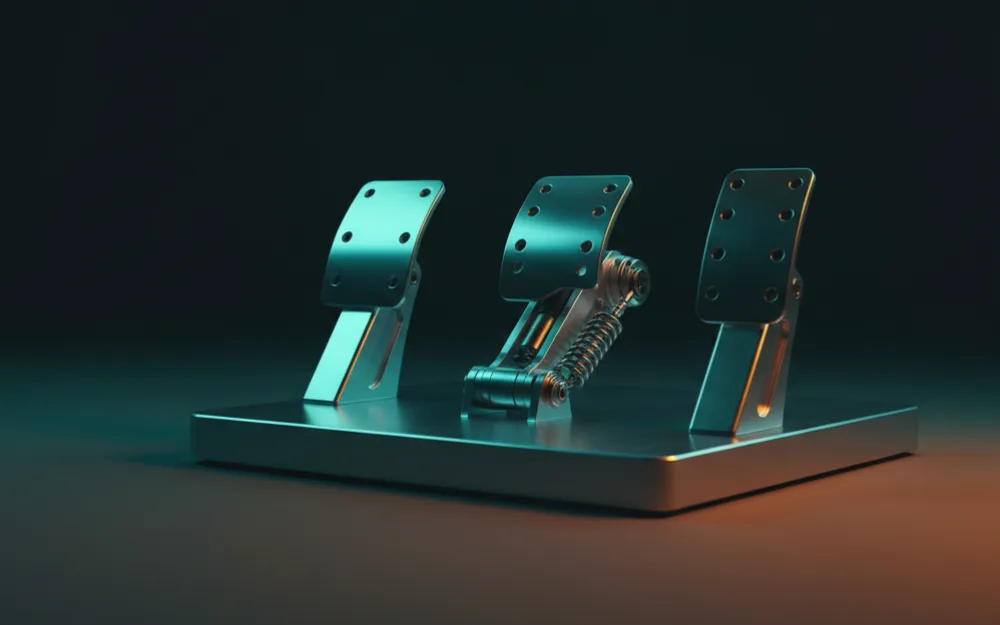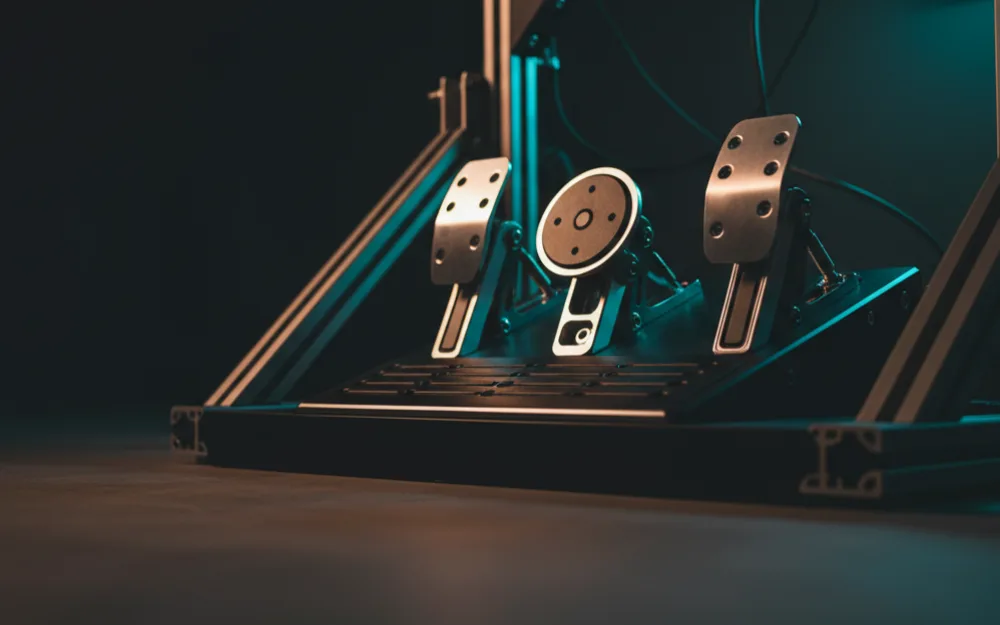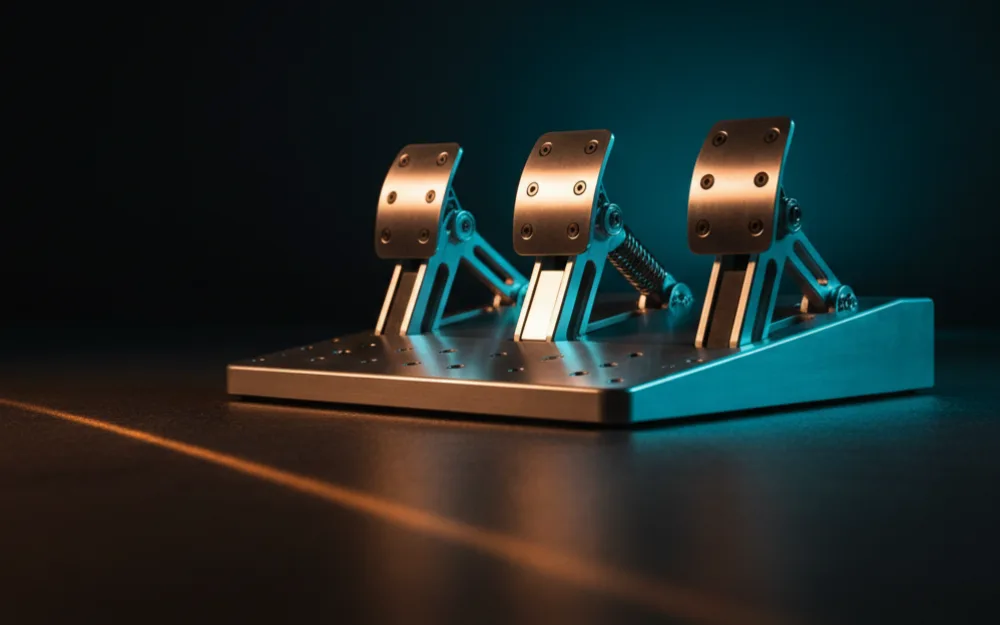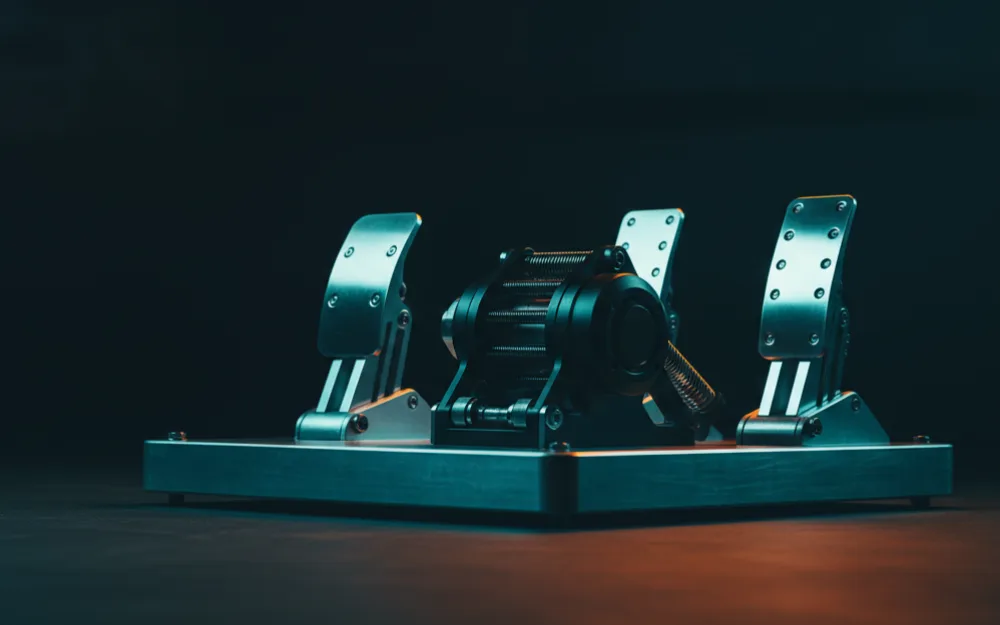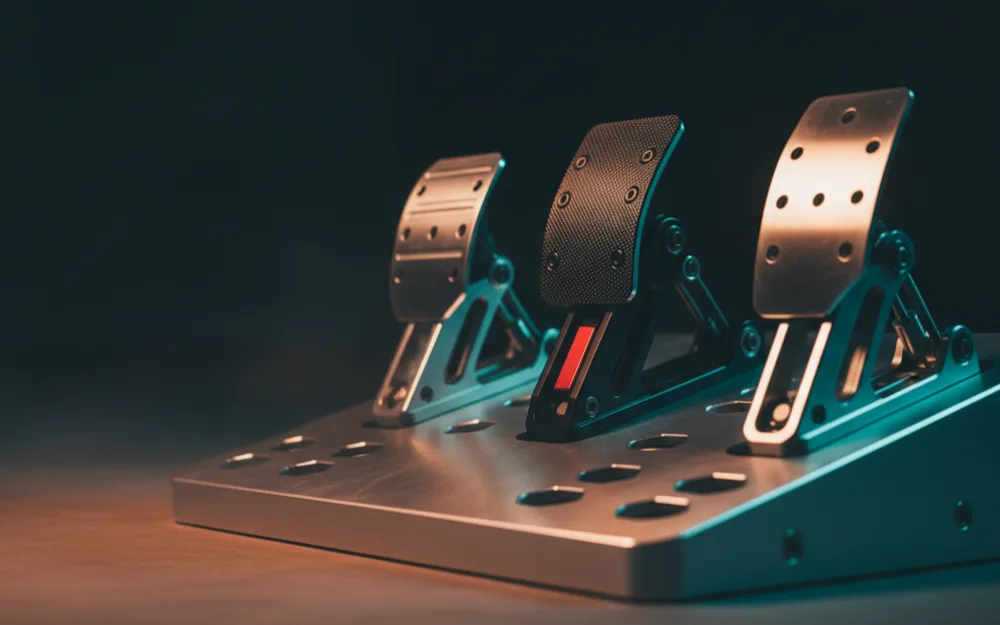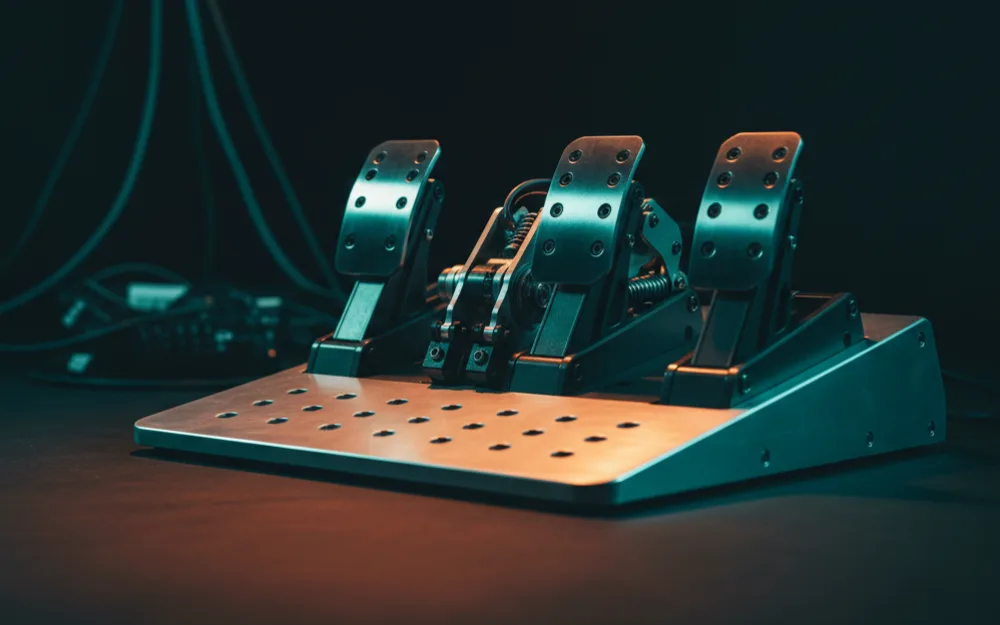

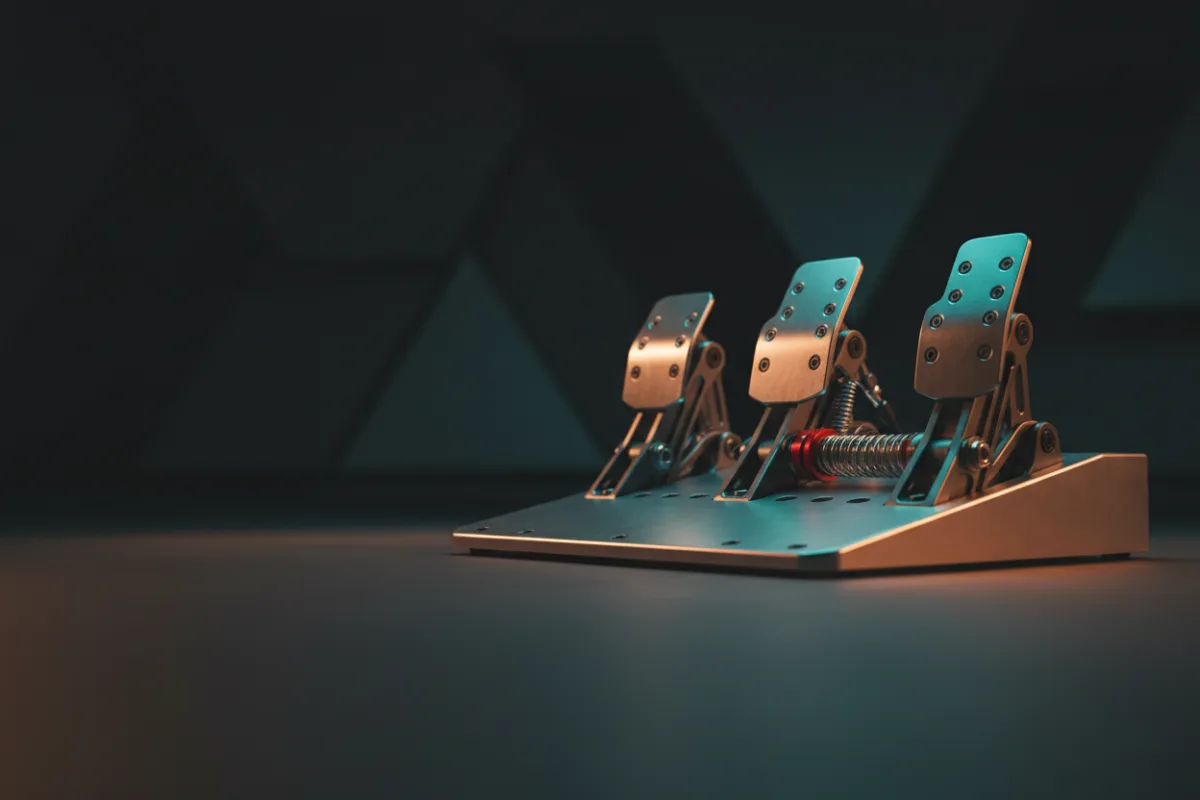

A load cell brake is the single upgrade that changes how you brake more than any other part of a sim rig, and this roundup is about choosing the right one for how and where you race. For most people building or upgrading a setup, the Logitech G RS pedals are the sensible starting point, because they bring a real load cell brake to a wide range of platforms with the deepest ownership record in this group. But the best set for you depends on whether you race on PC only, how much pedal force you want to push against, and how far you plan to grow, so it helps to start with what a load cell actually changes.
This roundup covers five load cell pedal sets worth your money, what each one asks you to accept, and who is better off spending differently. We compared manufacturer specifications with recurring owner feedback rather than our own driving time, and you can read how we review. If any of the terms here are new, start with Getting Started, and if your budget is tighter, our best load cell pedals under $300 guide covers the affordable end.


What a load cell brake actually does
Before we judge any of these pedals, it helps to know what a load cell changes, because it is a different way of braking entirely. A basic pedal measures travel: how far you push it down. A load cell measures force: how hard you press against it. That distinction matters because in a real car you brake by pressure, not by distance, so your foot learns to modulate against a firm resistance rather than chasing a moving target. The result is repeatable braking, the ability to trail off the brake smoothly into a corner, and threshold braking that arrives at the same point lap after lap. The force rating you see quoted in kilograms or pounds is the ceiling the sensor can register, and a higher number means you can lean into the pedal with more of your leg before it maxes out, which is why serious sets feel less like a switch and more like a brake in a car. Most quality sets also let you swap elastomers or springs to change how stiff that resistance feels, so you can tune the pedal to your leg strength and braking style.
How we picked
We set four criteria for this group. Each set had to use a genuine load cell on the brake rather than a potentiometer or a spring dressed up in marketing. It had to offer meaningful adjustment, whether through swappable elastomers, spring options, or software curves, because a load cell you cannot tune to your leg is only half the upgrade. We weighed platform fit honestly, since several of the strongest sets are PC only and that rules them out for console racers. And we looked at the ownership record, because a load cell is a mechanical part you press with your body weight thousands of times, and a proven record matters more here than almost anywhere else. Where a set has a thin ownership pool, we say so plainly. We did not assign weighted scores, and the WSR Score reflects verified buyer ratings gathered and normalized on a consistent scale, not an editorial rubric.
At a glance
| Pedals | Brake sensing | Pedals in set | Platforms |
|---|---|---|---|
| Logitech G RS | 75 kg load cell | Two (throttle, brake), clutch optional | PC, PS4, PS5, Xbox Series S and X |
| ASETEK Forte | Load cell, rated to 440 pounds of force | Two (throttle, brake) | PC |
| Fanatec CSL Elite V2 | Dual stage load cell, up to 90 kg foot force | Three (clutch, brake, throttle) | PC; PS5 and PS4 via a PlayStation-licensed Fanatec base; Xbox via an Xbox-licensed Fanatec wheel |
| ASETEK La Prima | Load cell, rated to 440 pounds of force | Two (throttle, brake) | PC |
| Simjack UT | 200 kg load cell, hydraulic dampers | Three (throttle, brake, clutch) | PC |
Logitech G RS
The G RS pedals are the most broadly useful load cell set in this group, because they pair a real 75 kg load cell brake with compatibility that reaches across consoles and PC, and they carry the deepest ownership record here by a wide margin. The brake registers force precisely enough to reward smooth trail braking, while the throttle and optional clutch use contactless Hall effect sensors that resist wear over long use. The steel frame has an anti tip design with rubber feet, carpet grippers, and an extendable brace, so it stays planted whether you push against it at a desk or on a rig. The pros are that genuine load cell feel, the cross platform compatibility that connects to a PRO or RS50 base for consoles or over USB on PC, and the modular frame with adjustable pedal positions. The cons are that the set ships as two pedals with the clutch module sold separately, and the 75 kg ceiling, while plenty for most drivers, sits below the heaviest sets here for anyone who brakes with real leg force. It fits the widest range of racers, especially anyone on a console who wants a proven load cell without going PC only.
ASETEK Forte
The Forte is the enthusiast choice in this group for a PC racer who wants a load cell that behaves like real racing hardware, built from die cast aluminum with a zero play brake and throttle. Its brake is rated to withstand 440 pounds of force with a durability rating of a million activations, and it ships with two interchangeable elastomers plus an integrated physical stop and an expansion chamber that shapes the resistance curve toward the feel of a racecar pedal. It can also be upgraded to ASETEK’s Invicta brake later, so it doubles as an entry into a deeper ecosystem. The pros are the solid metal build, the fine adjustment of the elastomer and expansion chamber system, and that upgrade path. The cons are real and worth stating: it is a PC only, two pedal set, so console racers are out and you add a clutch separately if you want one, and its verified ownership record is very thin, with only a handful of ratings so far, which means its high score is an early read rather than a settled one. It fits a committed PC racer who wants premium pedal feel and is comfortable being an early adopter.
Fanatec CSL Elite V2
The CSL Elite Pedals V2 are the most complete package here for a driver who wants three pedals and a strong load cell in one box, and they carry a healthy ownership record that makes their rating a settled read rather than a guess. The dual stage load cell brake registers up to 90 kg of foot force on the pedal plate, backed by a sensor rated beyond 200 kg, and Fanatec includes elastomer springs in 65, 75, and 85 Shore hardness plus an alternative metal spring, all adjustable without tools, so you can tune the brake firmness across a wide range. Contactless Hall sensors on the clutch and throttle keep those inputs precise over time. The pros are the strong, tunable brake, the full three pedal set including a clutch, and a long warranty. The cons are that console use requires a licensed Fanatec base rather than a direct connection, and the deepest features assume you are buying into the Fanatec ecosystem rather than treating this as a standalone set. It fits a racer who wants three pedals, serious brake adjustment, and is on PC or already in the Fanatec ecosystem.
ASETEK La Prima
The La Prima is ASETEK’s more approachable load cell set, and it shares much of what makes the Forte appealing in a lighter package. It uses the same die cast aluminum construction with a zero play brake and throttle, the same rating to withstand 440 pounds of force and a durability rating of a million activations, and the same two interchangeable elastomers, integrated physical stop, and expansion chamber for shaping the brake feel. It can be upgraded toward the Forte hardware later, so it is a genuine on ramp into the ASETEK line rather than a dead end. The pros are the metal build at a lower entry point in the ASETEK range, the tunable brake feel, and the clear upgrade path. The cons mirror the Forte: it is PC only and a two pedal set, so console racers and anyone wanting a clutch out of the box should look elsewhere, and its ownership record, while a little deeper than the Forte’s, is still modest. It fits a PC racer who wants ASETEK’s pedal feel and metal build as an entry into the ecosystem.
Simjack UT
The Simjack UT is the heavy hitter here for a PC racer who brakes with real leg force, a three pedal set with a 200 kg load cell brake, fitted with hydraulic dampers on all three pedals in this H3 version, that gives you far more resistance to press against than the lighter sets. The frame is CNC cut stainless steel, 3 mm thick with the brake load area thickened to 6 mm, and the brake damping uses imported rubber in 60, 80, and 90 hardness so you can shape the resistance to your leg. A 32 bit dual core processor with a 16 bit converter samples throttle, brake, and clutch at once, and the Simjack Control software lets you set output curves, dead zones, and brake curves you can save as profiles. It also ships from a United States warehouse, which shortens delivery. The pros are the very high brake ceiling, the stiff steel build, and deep software tuning. The cons are that it is PC only, its ownership record is still modest, and a 200 kg load cell brake is more pedal than a casual racer needs or will enjoy. It fits a serious PC racer who wants maximum brake force and full software control.
Who should skip a load cell set here
| Buy a load cell set here if | Skip these if |
|---|---|
| You want repeatable, pressure based braking that improves consistency | You are new to sim racing and want the most affordable entry, see our under $300 guide |
| You race on PC, or on console with a compatible or licensed base | You race on console and want a plug and play set with no base requirement |
| You want to tune brake firmness to your leg and braking style | You are happy braking by pedal travel and do not want to retrain your foot |
The racer who should wait is the beginner on a tight budget, because a load cell rewards a driver who is ready to work on braking technique, and a strong basic pedal set will serve a newcomer well first. If that is you, our best load cell pedals under $300 guide covers the affordable way in without overspending.
How it scores
The WSR Score shown on each card reflects verified buyer ratings gathered and normalized on a consistent scale, not an editorial rubric. You can read what goes into it on How We Review. Keep the ownership pool in mind as you read these: the Logitech G RS and the Fanatec set rest on deep records, while the ASETEK sets and the Simjack carry thinner pools, so their scores are earlier reads that may move as more owners weigh in. A high score on a small sample is promising, not proven, and we say so where it applies.
Frequently Asked Questions
Does Thrustmaster make load cell pedals?
Yes. Thrustmaster sells the Raceline Pedals III LC, which has a load cell brake the maker rates to 220 lb. On PC it connects over USB C and works with any racing wheel base. Console use depends on your wheel base, so confirm compatibility first, as our Raceline Pedals III LC review explains.
Where to go from here
If your budget is tighter, our best load cell pedals under $300 guide covers the affordable end of this category honestly. To match a set to a wheel, our best sim racing wheels guide lines up the full field across every tier. You can also browse more options in pedals.