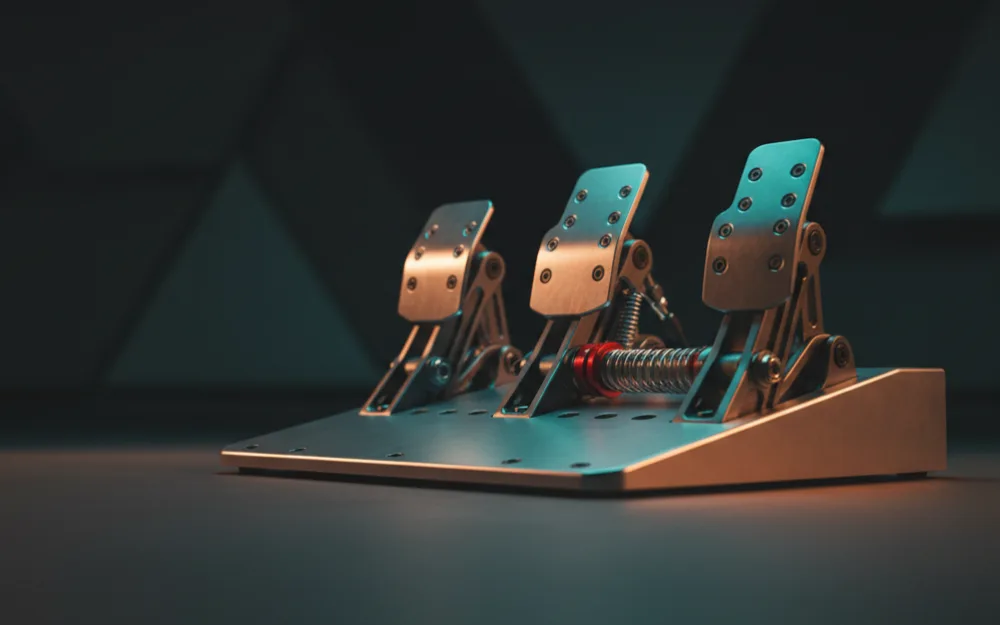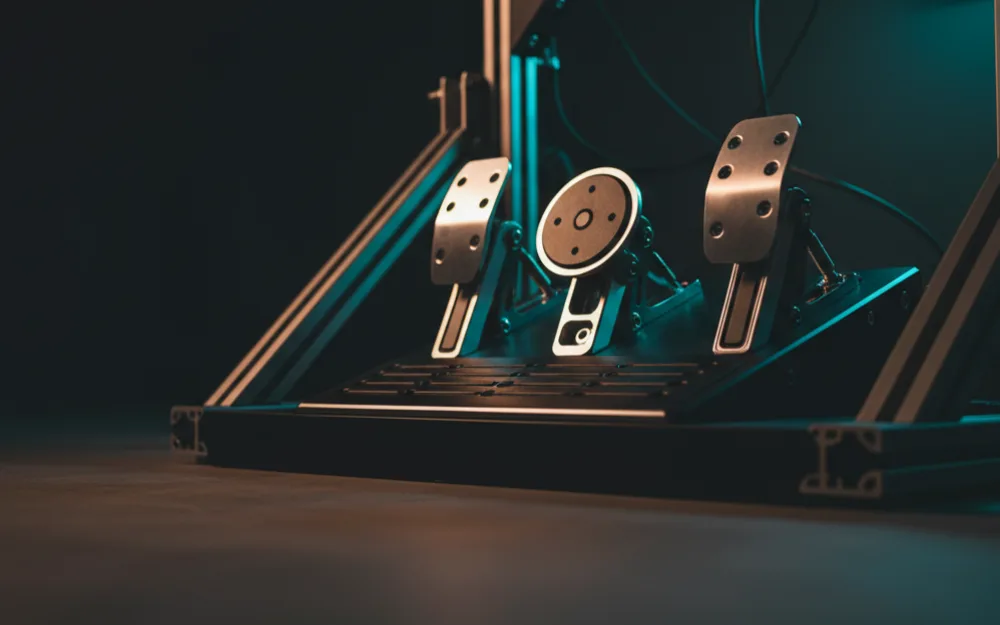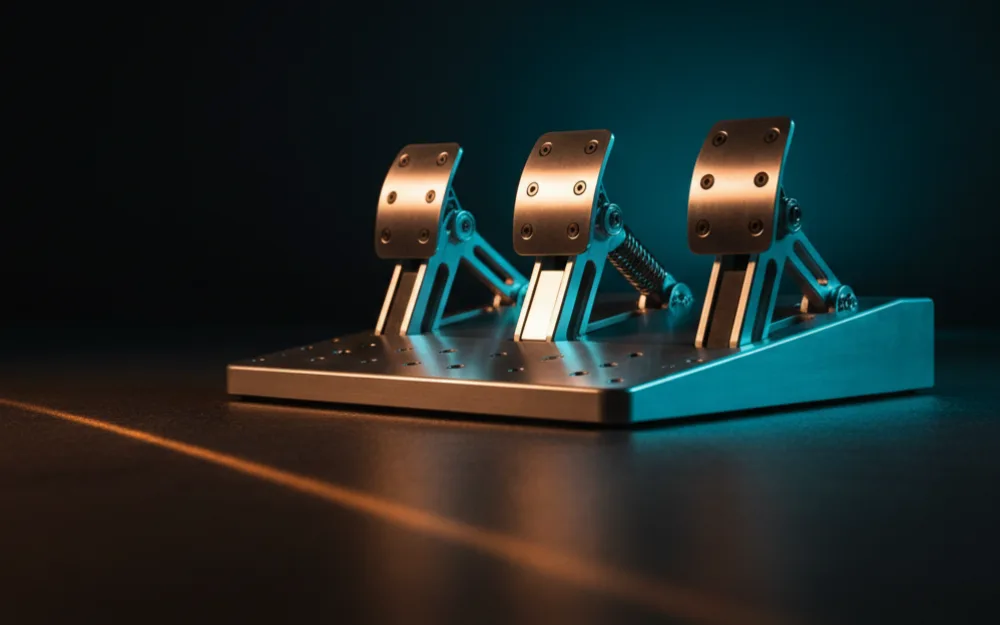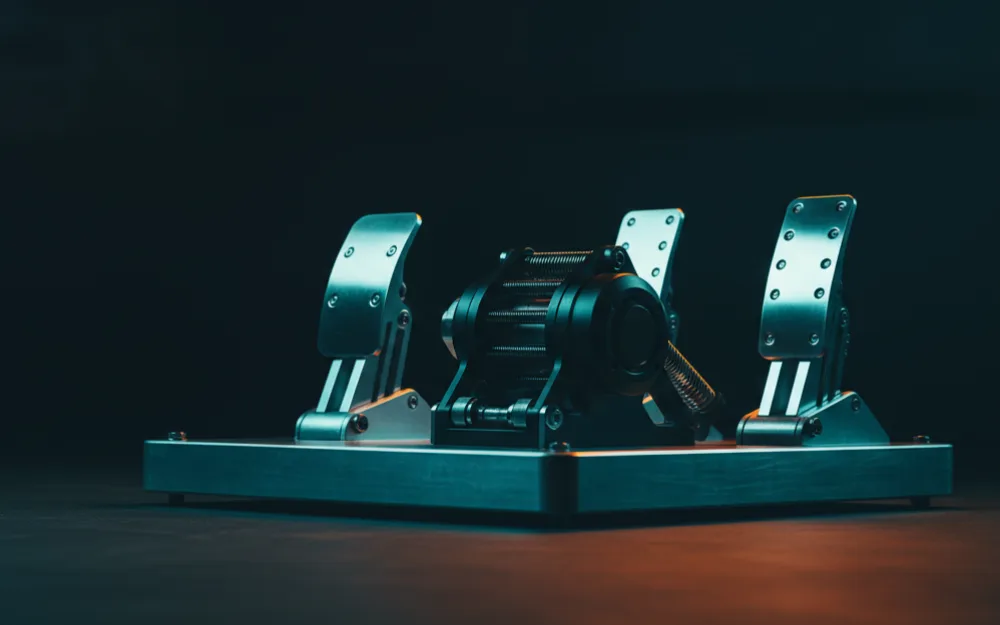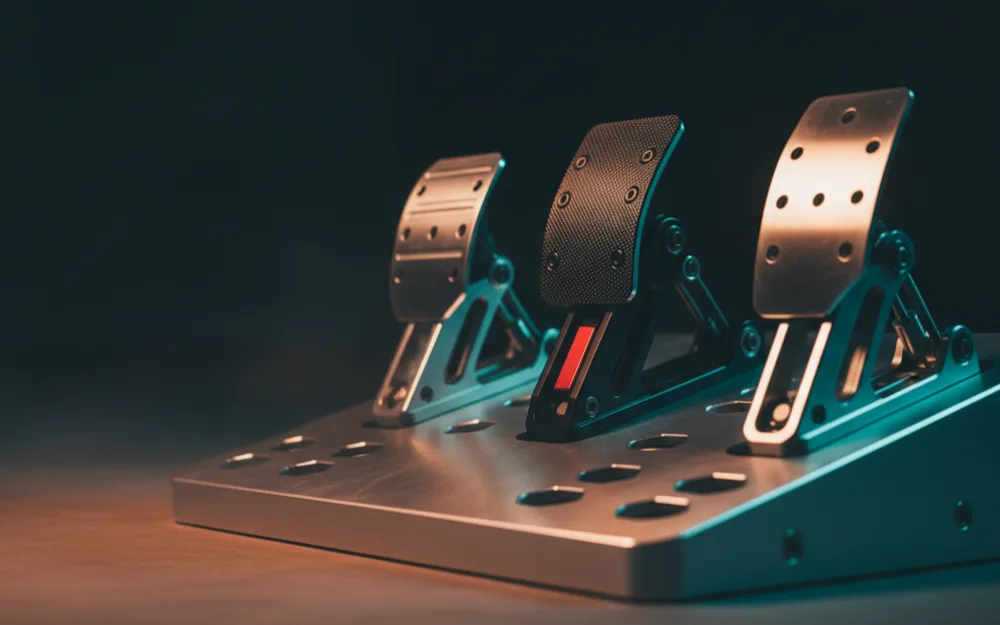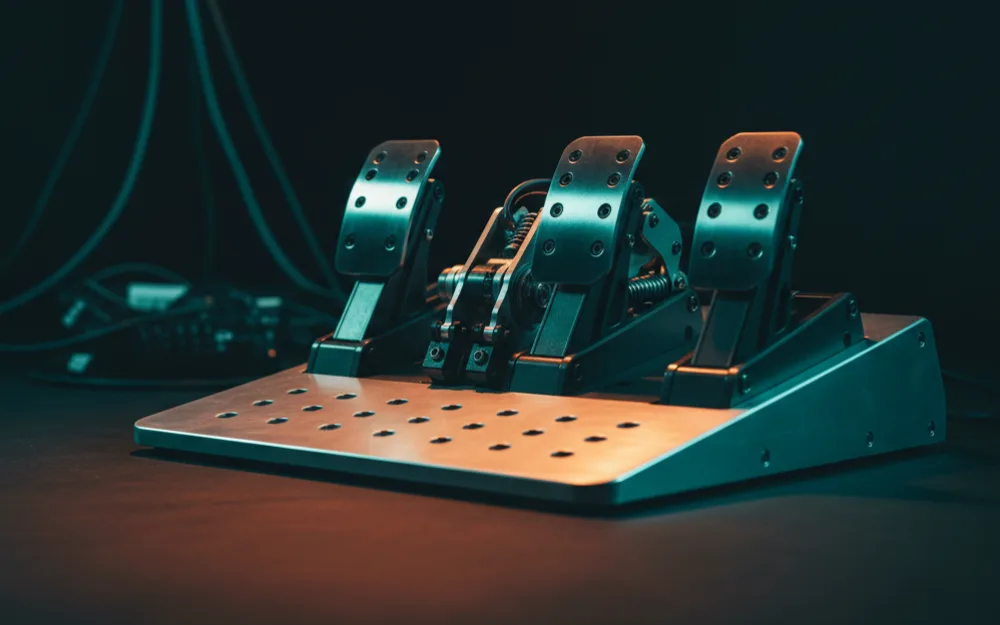


Under $300 is where a real load cell brake stops being a luxury and becomes something a first serious upgrade can reach, and this roundup is about the short list of sets that genuinely qualify. The honest headline is that this is a small field. Most respected load cell pedals live above this ceiling, so the affordable end is thinner than the wider market, and one set, the Logitech G RS, dominates it on the strength of a real load cell, wide platform support, and by far the deepest ownership record in the price class. This guide covers the three sets worth considering at this budget and is clear about which ones are proven and which are still early.
We compared manufacturer specifications with recurring owner feedback rather than our own driving time, and you can read how we review. If the idea of a load cell is new to you, start with Getting Started. And if you want the full field, including the premium metal sets that sit above this budget, our best load cell pedals guide covers every tier.


What a load cell buys you at this budget
Before we judge these sets, it helps to know what the load cell changes and what it does not at this ceiling. A load cell measures how hard you press the brake rather than how far you push it, so you brake by pressure the way you would in a real car, which makes threshold and trail braking far more repeatable. That core benefit is present in every set here. What you give up at this budget, compared with the premium tier, is mostly build material and pedal count: the affordable sets lean on steel frames rather than full die cast aluminum, and some arrive as two pedals rather than three. What you should not give up is a genuine load cell on the brake, and every set below has one. If a cheaper pedal set advertises only travel based sensing, it belongs in a different guide, because it will not teach your foot the pressure control that makes this upgrade worthwhile.
How we picked
We set three criteria for this bracket. Each set had to hold under $300 as a real load cell on the brake, not a spring or potentiometer marketed as one. It had to offer some adjustment of brake firmness, through elastomers, rubber dampers, or software, so you can match the pedal to your leg. And we weighed the ownership record heavily, because a load cell is a mechanical part you press with your body weight, and at this price the difference between a proven set and a brand new one is the difference between a settled choice and a gamble. We name the thin records plainly. We did not assign weighted scores, and the WSR Score reflects verified buyer ratings gathered and normalized on a consistent scale, not an editorial rubric.
At a glance
| Pedals | Brake sensing | Pedals in set | Platforms |
|---|---|---|---|
| Logitech G RS | 75 kg load cell | Two (throttle, brake), clutch optional | PC, PS4, PS5, Xbox Series S and X |
| Simjack UT | 200 kg load cell, hydraulic brake | Three (throttle, brake, clutch) | PC |
| MOZA SR-P | 100 kg load cell, hybrid brake | Two (throttle, brake) | PC |
Logitech G RS
The G RS is the pedal set that most people at this budget should buy first, and it is the reason the affordable load cell field feels settled rather than uncertain. It brings a genuine 75 kg load cell brake, contactless Hall effect sensors on the throttle and optional clutch, and a steel frame with an anti tip design, rubber feet, carpet grippers, and an extendable brace that keeps it planted when you press hard. Crucially for this price class, it is the only set here that reaches beyond PC, connecting to a PRO or RS50 base for consoles or over USB for PC, and it carries the deepest ownership record in the bracket by a wide margin, which makes its rating a settled read. The pros are that real load cell brake, the cross platform compatibility, and the proven record. The cons are that it ships as two pedals with the clutch module sold separately, and the 75 kg ceiling is comfortable for most drivers but modest next to the heavy hydraulic sets. It fits almost anyone entering load cell braking, and it is the only genuine option in this guide for a console racer.
Simjack UT
The Simjack UT is the surprise of this bracket, a three pedal set with a 200 kg load cell hydraulic brake that offers far more resistance to press against than anything else at this budget usually manages. The frame is CNC cut stainless steel, 3 mm thick with the brake area thickened to 6 mm, and the brake damping uses imported rubber in 60, 80, and 90 hardness so you can shape how stiff it feels. A 32 bit dual core processor samples throttle, brake, and clutch together, and the Simjack Control software lets you set output curves, dead zones, and brake curves saved as profiles. It also ships from a United States warehouse, which shortens delivery. The pros are the very high brake ceiling, the stiff steel build, and the three pedal count with real software tuning. The cons are that it is PC only, its ownership record is still modest so its rating is an earlier read than the Logitech’s, and a 200 kg brake is more than a newcomer needs. It fits a PC racer at this budget who wants three pedals and a genuinely heavy brake.
MOZA SR-P
The MOZA SR-P is the option to watch here, a two pedal set with a 100 kg load cell hybrid brake, an organ type accelerator, and 15 bit magnetic encoders, all designed to slot into MOZA’s wider ecosystem of wheels and bases. On paper it splits the difference between the Logitech’s 75 kg brake and the Simjack’s heavier ceiling, and the organ style throttle, hinged at the floor like a real car pedal, is a feature owners of pricier sets often prize. The honest caveat is the one that matters most at this price: its verified ownership record is essentially empty right now, with no ratings yet, so there is no settled buyer feedback to lean on. That is why we have left it out of the comparison cards above rather than show a score with no buyer ratings behind it, and cover it here in words instead. That does not make it a bad set, but it does make it an early adopter choice rather than a proven one. The pros are the 100 kg hybrid brake, the organ throttle, and a clear path into the MOZA ecosystem. The cons are that it is PC only, a two pedal set, and unproven by owner feedback so far. It fits a PC racer already in or heading toward the MOZA ecosystem who is comfortable being early.
Who should spend above this budget
| Buy at this budget if | Spend above this ceiling if |
|---|---|
| You want your first real load cell brake without overspending | You want a full die cast aluminum set built like race hardware |
| A steel frame and a proven set matter more than premium materials | You want three high end pedals with deep elastomer and spring tuning |
| You race on console (the Logitech is your realistic option here) | You want to buy into a premium pedal ecosystem you will upgrade within |
The racer who should step up is the one who wants full metal construction, three premium pedals, or the deep adjustment of a high end brake, because those sets sit above this ceiling for a reason. If that is you, our best load cell pedals guide covers the ASETEK and Fanatec sets that live in the tier above, and explains what the extra money actually buys. Just as clearly, a driver who only races casually and is not chasing repeatable threshold braking may not need a load cell yet, and a standard progressive pedal set will do until that changes.
How it scores
The WSR Score shown on each card reflects verified buyer ratings gathered and normalized on a consistent scale, not an editorial rubric. You can read what goes into it on How We Review. The gap in ownership records is the thing to keep in mind at this budget: the Logitech G RS rests on a deep, settled record, the Simjack on a modest one, and the MOZA on essentially none yet. Read the scores accordingly, because a number on a small or empty sample is a starting signal, not a verdict.
Where to go from here
If you want the premium metal sets and three pedal options above this budget, our best load cell pedals guide covers the full field. To pair a set with the right wheel, our best sim racing wheels guide lines up wheels across every tier. You can also browse more options in pedals.