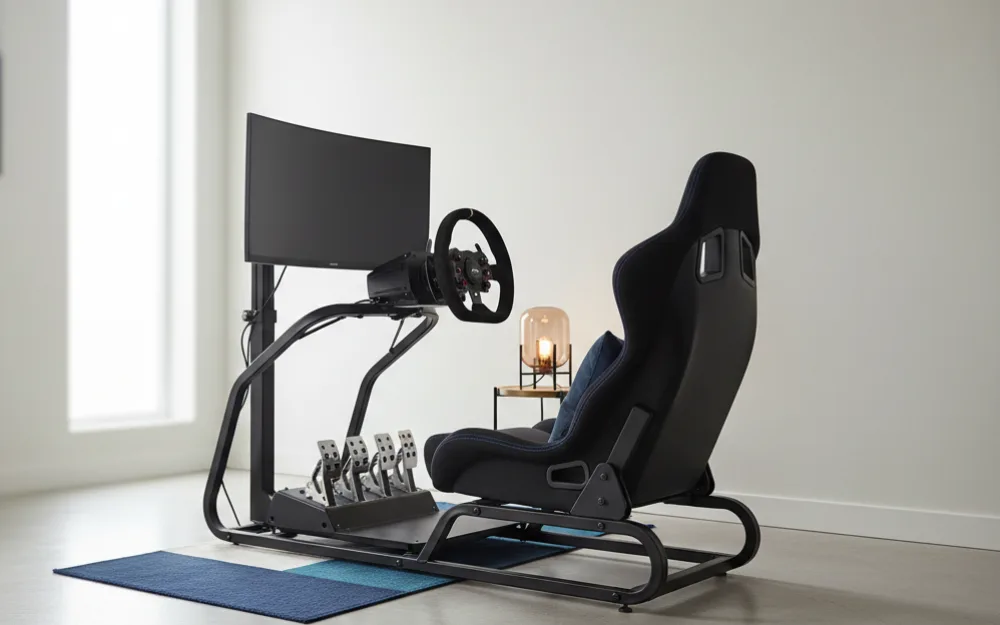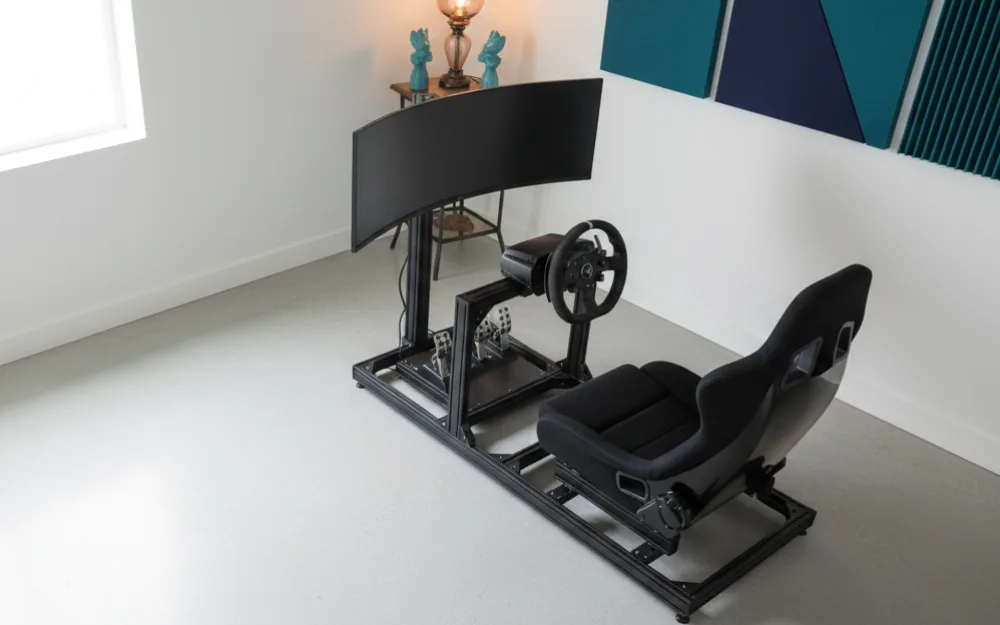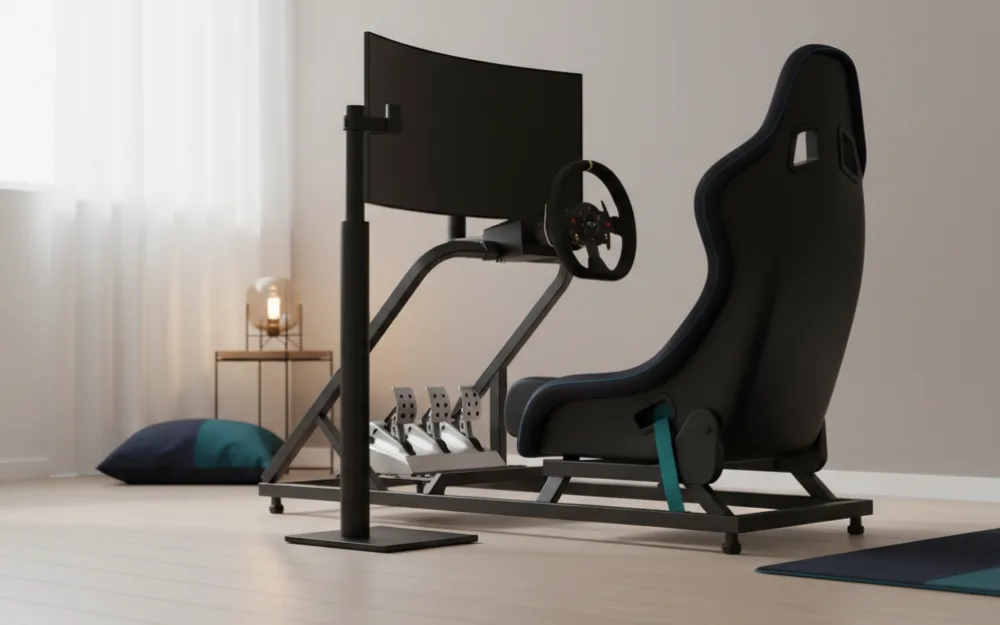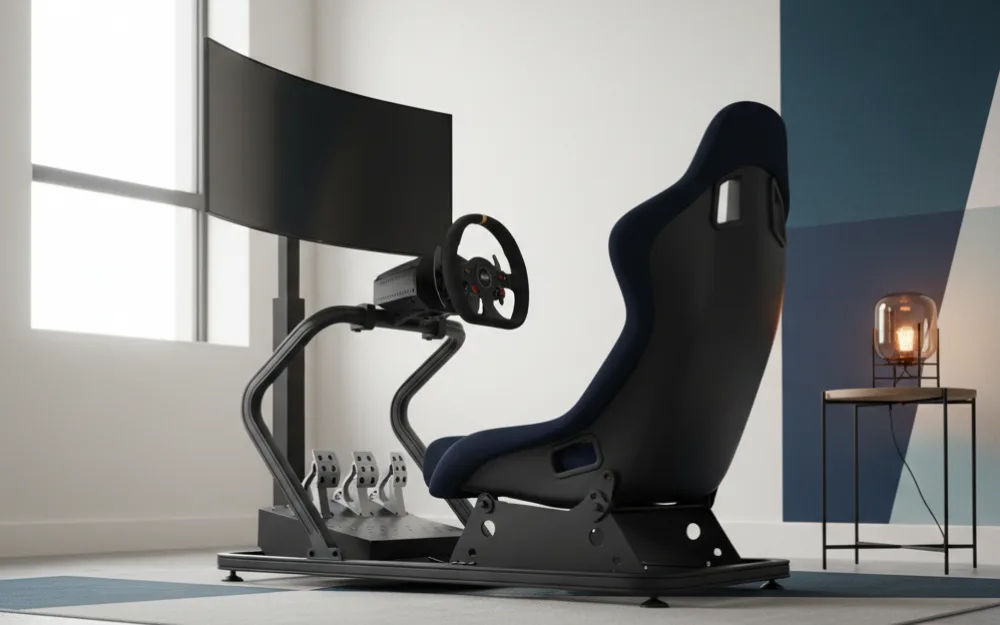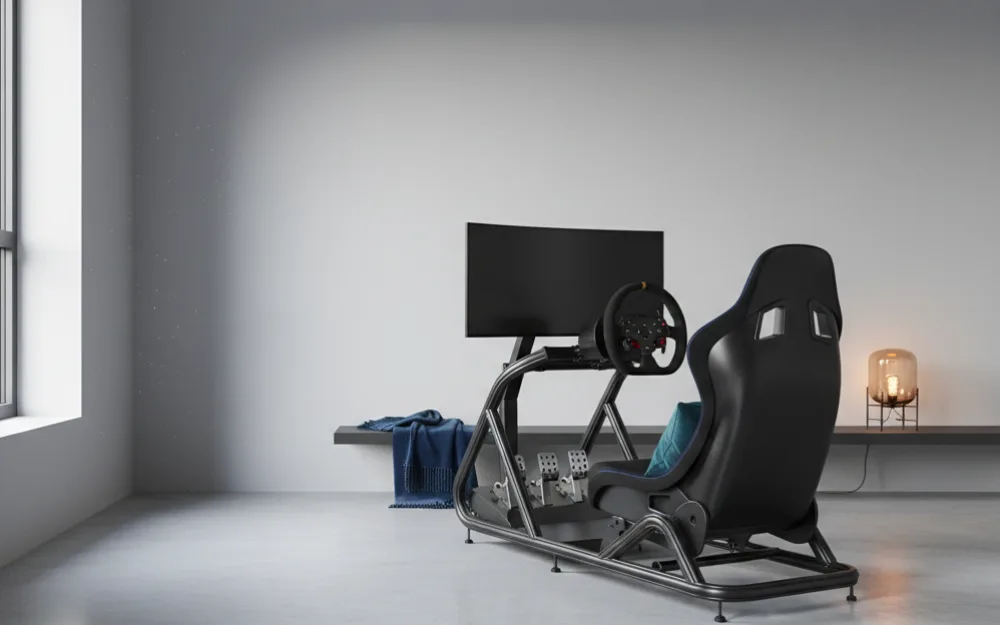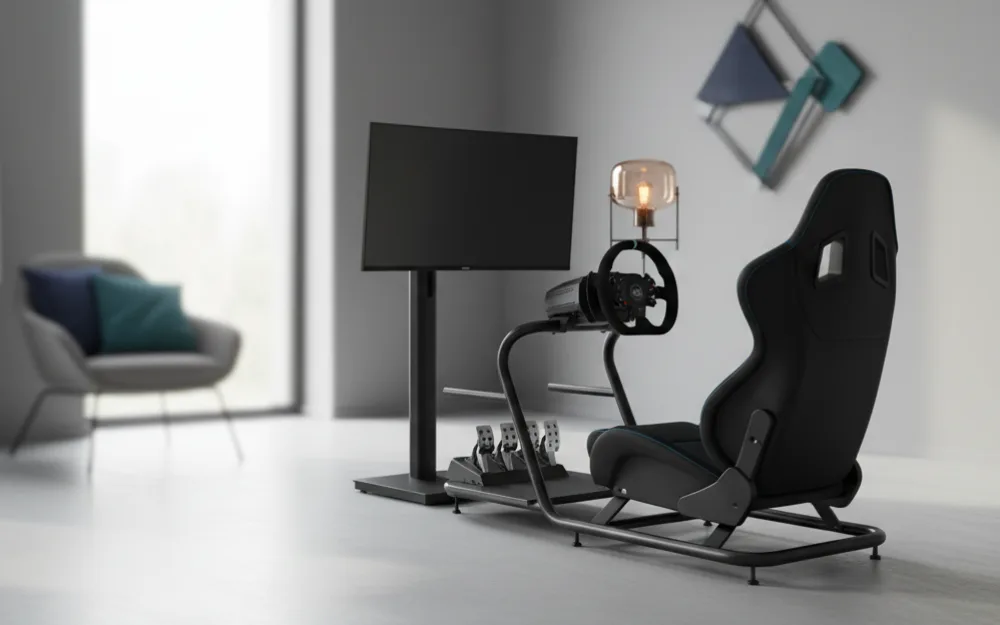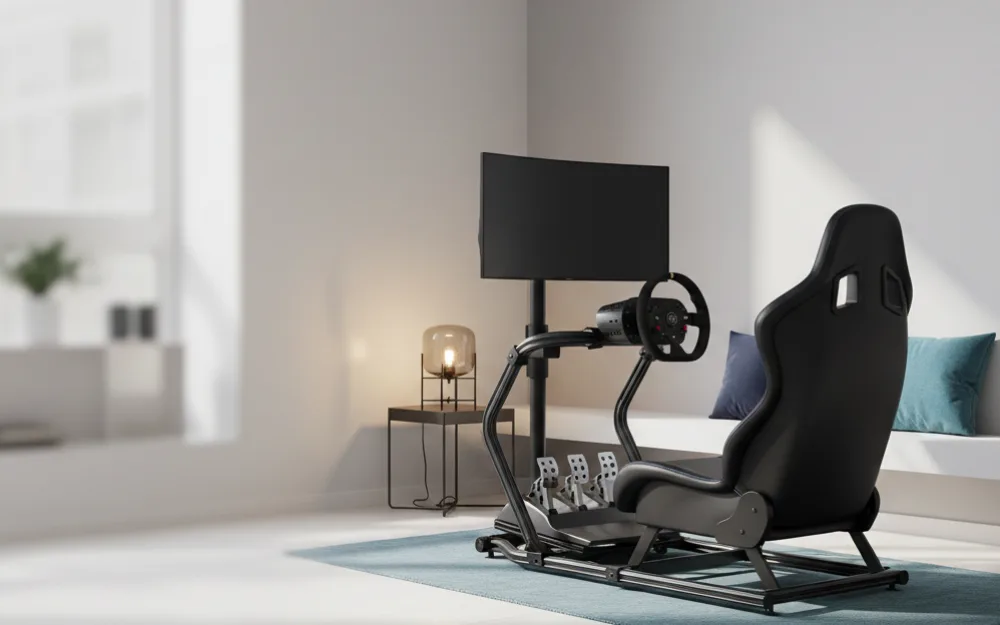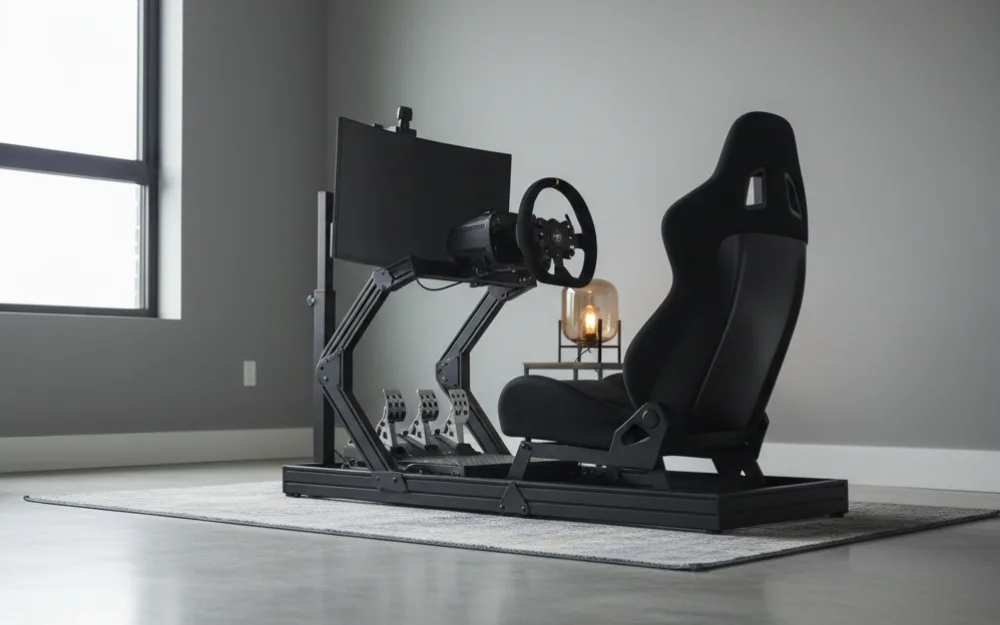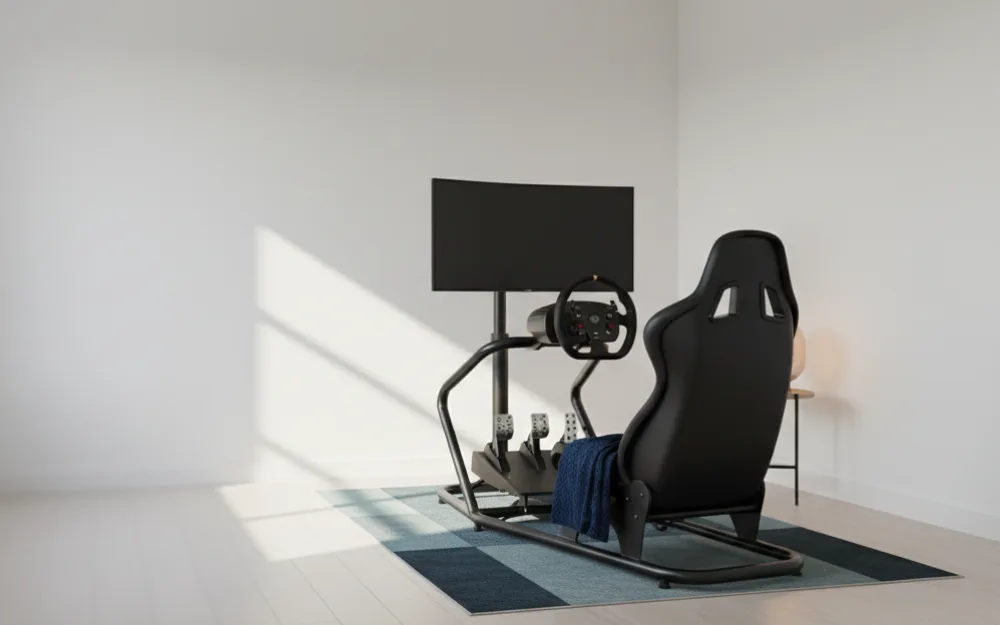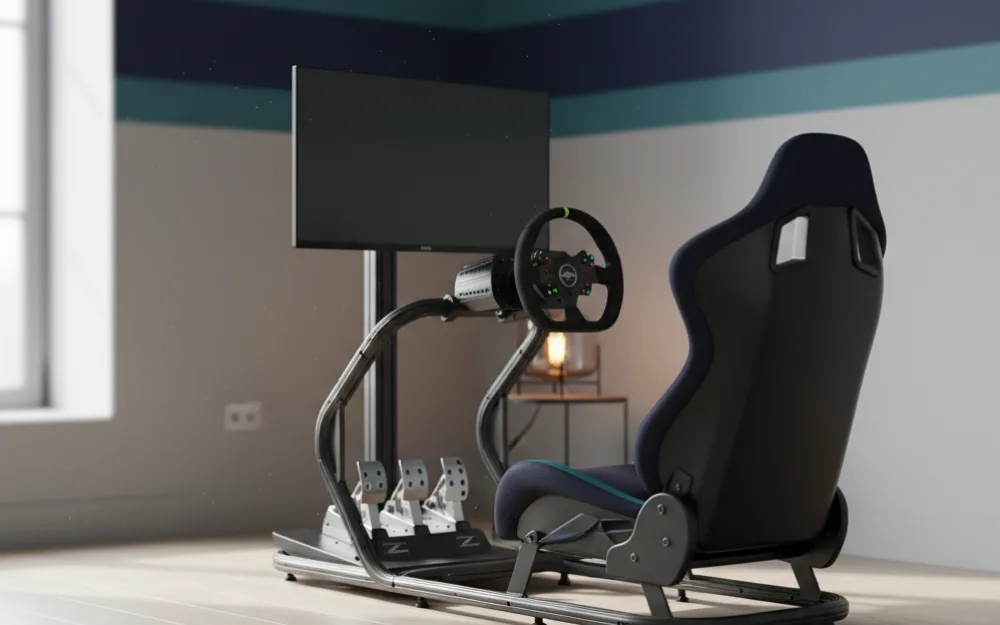

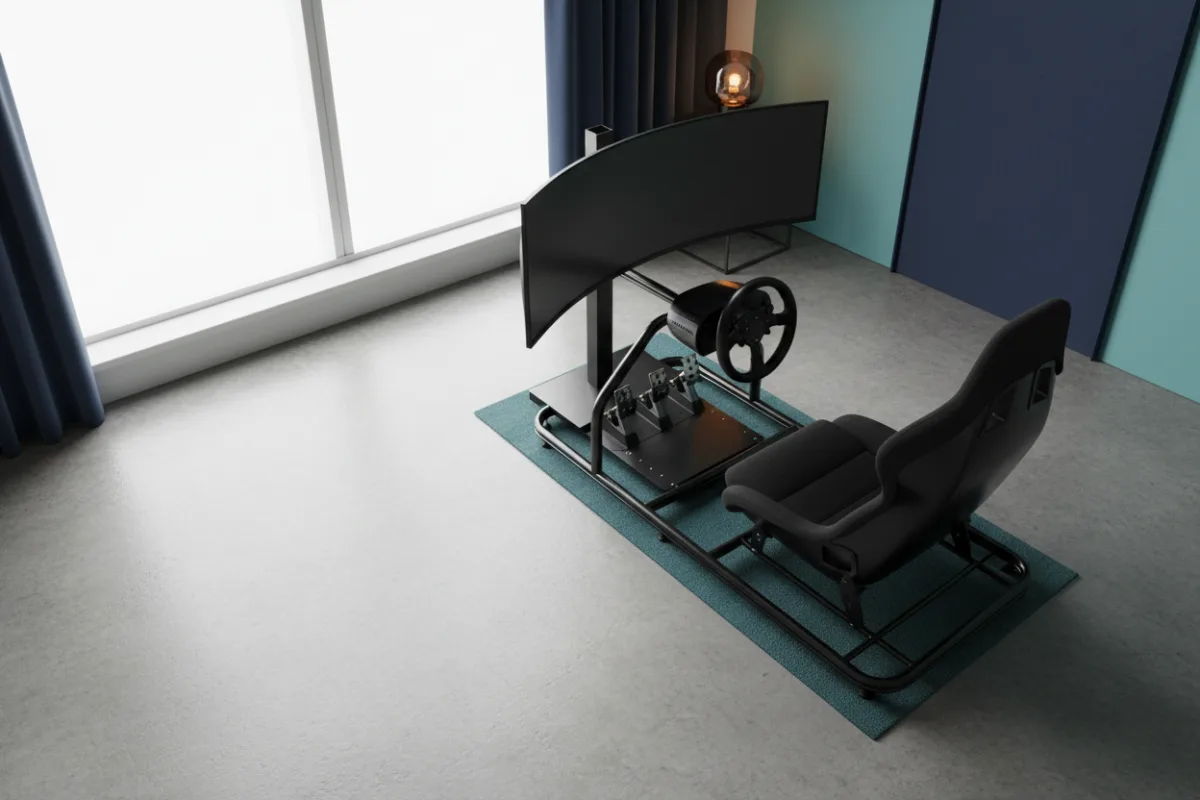

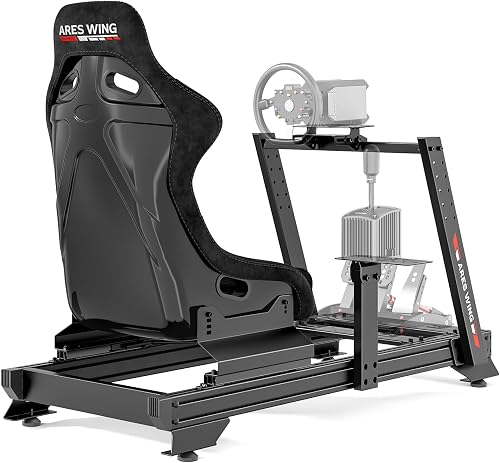
The ARES WING cockpit with seat is an 8040 aluminum profile rig that ships as a complete frame and seat, aimed at drivers who want a rigid open frame base and a chair in one purchase rather than sourcing a seat separately. It leaves the display to you, so this is the rig to look at if you already have a monitor or TV in place and want a stiff, adjustable frame to bolt your wheel, pedals, and shifter onto. The heavier 8040 extrusion is the headline, since a bigger profile has more cross section to resist twist under a strong wheel.
This review weighs ARES WING’s published specifications against the pattern of early owner feedback, which currently runs to a modest count of verified buyer reviews averaging well. You can read how we handle a small review base on how we review. New to open profile rigs? Start with Getting Started.
At a glance
| Spec | ARES WING Cockpit With Seat |
|---|---|
| Frame type | 8040 aluminum profile with T nut channels |
| Seat | Included, faux leather over foam, wing back, armless |
| Weight rating | Up to 287 pounds |
| Seat adjustment | Slides 8.7 inches, tilts plus or minus 6 degrees |
| Wheel adjustment | Tilt minus 8 to 32 degrees, 6 height settings |
| Pedal adjustment | 8 to 53 degrees |
| Listed item weight | About 41 pounds |
| Dimensions | 54.9 by 26.2 by 43.9 inches |
| Compatibility | Logitech, Fanatec, Thrustmaster, Moza |
What it is and where it fits
This is the seat version of the ARES WING line, which matters because the brand also sells a variant built around an integrated monitor mount. This one skips the display arm and puts the money into an 8040 aluminum profile frame and an included seat, so it suits drivers who already have a screen sorted and want a stiff base with a chair in the box. Wheel, pedals, and shifter are sold separately, as they are across this class. If you want the monitor built into the rig instead, our ARES WING cockpit review covers that sibling.
Stability and flex under load
The reason to choose 8040 aluminum profile over the lighter 4040 or 2020 extrusion common on budget rigs is cross section. A larger profile has more material to resist twisting, which keeps the wheel deck steadier when a strong base loads it up, and steadier means more of the force feedback detail reaches your hands instead of being soaked up by a flexing frame. ARES WING markets the frame for stability during intense racing, and the profile choice supports that claim on paper. Early owners describe a rig that stays composed once it is squared and torqued. As with any open frame, the finer point is the pedal deck under a firm brake, so bracing the pedal plate and keeping the T nut fasteners tight is worth the few minutes it takes.
Assembly
An open profile rig lives and dies on assembly, and the T nut channels are the mechanism to understand. Fasteners slide into the extrusion channels and clamp where you set them, which is what gives this style its flexibility, but it also means you square each joint yourself rather than dropping bolts into fixed holes. Early buyers report a straightforward build. Keep a hex set close, start every fastener loose so you can align the frame before you torque anything, then work around the rig snugging joints in stages. Expect part of an afternoon, and the payoff is a frame you can loosen and re square later without starting over.
Adjustability and who fits
Adjustability is a real strength here. The seat slides 8.7 inches and tilts plus or minus 6 degrees, the wheel mount tilts from minus 8 to 32 degrees across 6 height settings, and the pedals adjust from 8 to 53 degrees. That spread lets you set an upright GT posture or a laid back formula position without drilling, and the T nut channels mean you can move mounts anywhere along the rail if the preset range does not land where you want. The seat is rated up to 287 pounds, which is a genuinely useful ceiling for heavier drivers, and the open frame gives taller drivers more room to slide back than a fixed foldable seat allows. The one caveat is the armless wing back seat, which some drivers love for immersion and others miss the support of, so factor your own preference in.
Compatibility and expandability
ARES WING lists the rig across Logitech, Fanatec, Thrustmaster, and Moza hardware, which covers the wheels most buyers in this tier own. The bigger expandability advantage is the profile itself: the T nut channels accept accessories like cup holders, a shifter mount, or a keyboard tray wherever you need them, and a profile frame is the natural base to grow toward triple screens or a button box later. What ships in the box is the frame and the seat, so budget for the display and the wheel, pedals, and shifter on top. For a driver building up over time, an open profile frame gives more room to expand than a closed steel seat rig.
Who should buy it, and who should skip it
| Buy the ARES WING with seat if | Skip it if |
|---|---|
| You already have a display and want a stiff frame with a seat included | You want the monitor mount built into the rig (choose the mount variant) |
| You run a strong wheel and want 8040 profile rigidity | You want a closed steel seat chair rather than an open profile frame |
| You are a taller or heavier driver who needs generous seat travel and a 287 pound rating | You need arms on the seat and dislike an armless wing back |
How it scores
The WSR Score reflects verified buyer ratings gathered and normalized on a consistent scale, not an editorial rubric. You can read what goes into it on How We Review. The review base for this listing is still modest, so read the score alongside the profile choice and the fit range above, which is where an open frame rig like this one either suits you or does not.
Alternatives worth a look
If you want another aluminum profile rig that bundles a seat, the Marada 8040 uses the same heavier extrusion class. For the monitor mount version of this exact frame, see our ARES WING cockpit review. To place an open profile rig against the wider field, start with the best aluminum profile cockpits and our best sim racing cockpits guide. If the term itself is new, our aluminum profile cockpit explainer covers what the extrusion numbers mean, and you can browse more in cockpits and rigs.