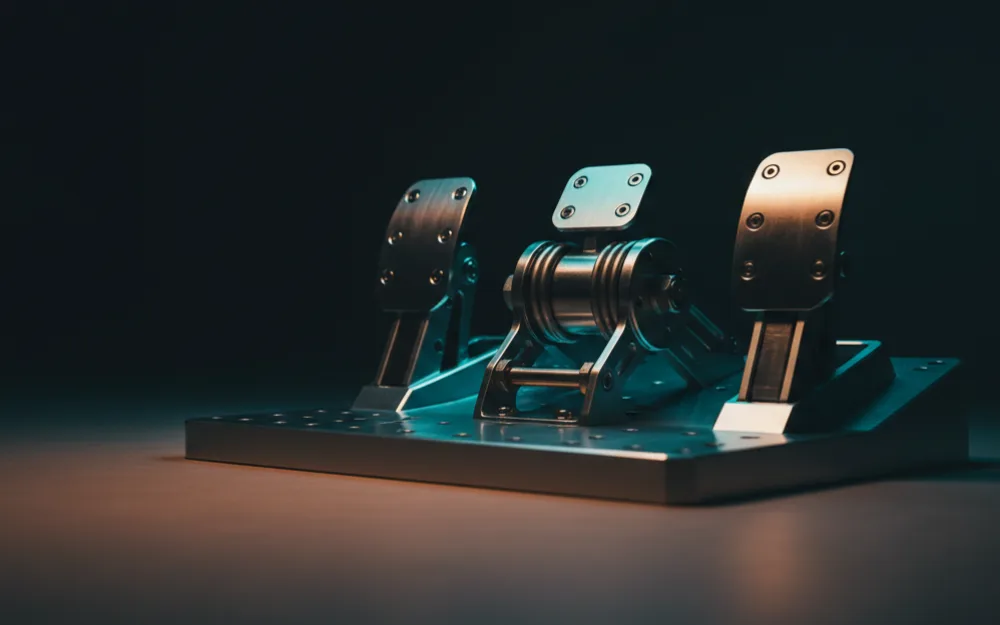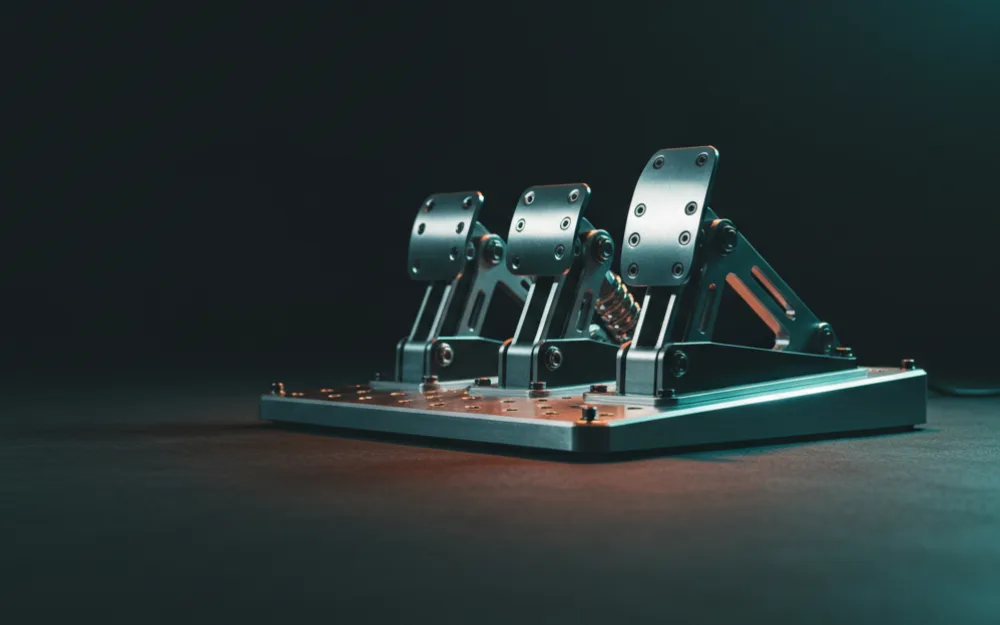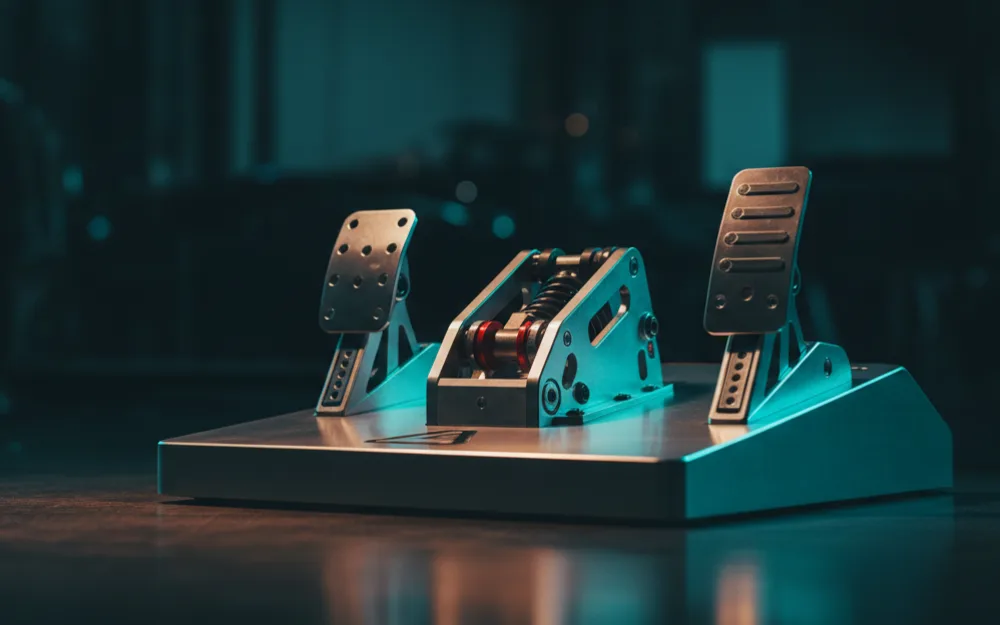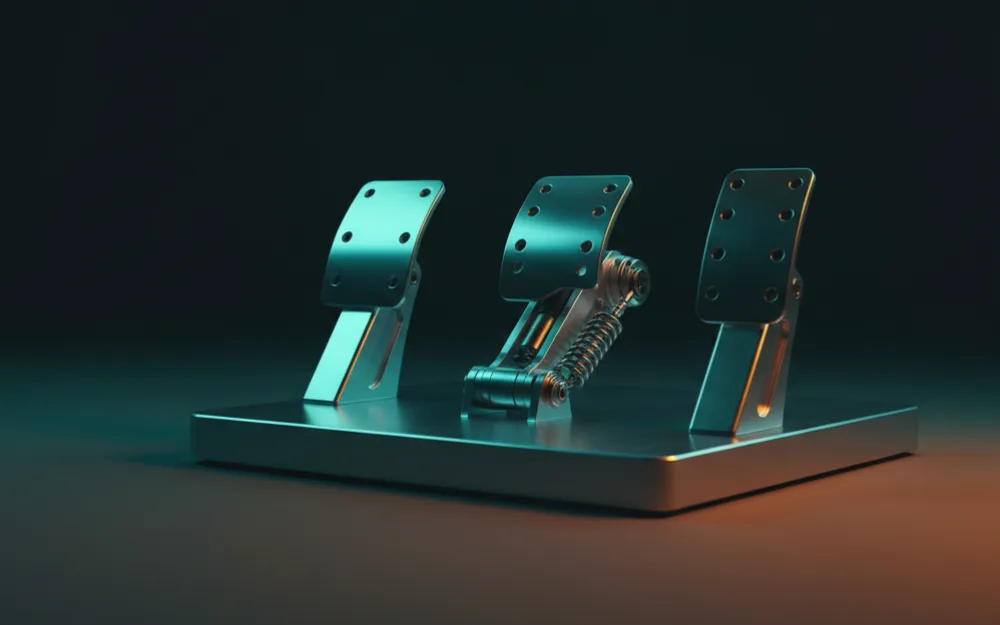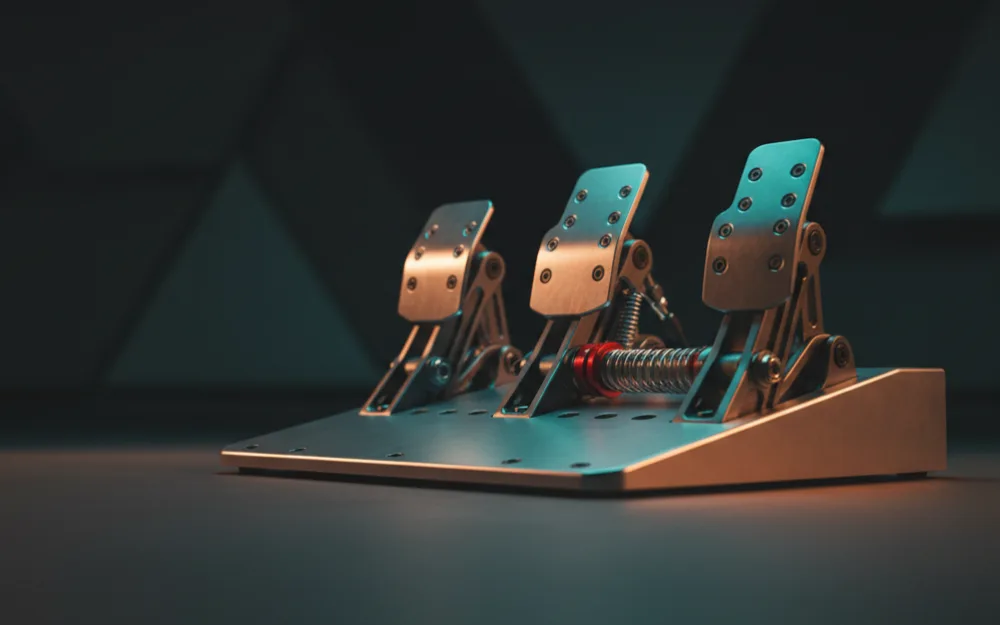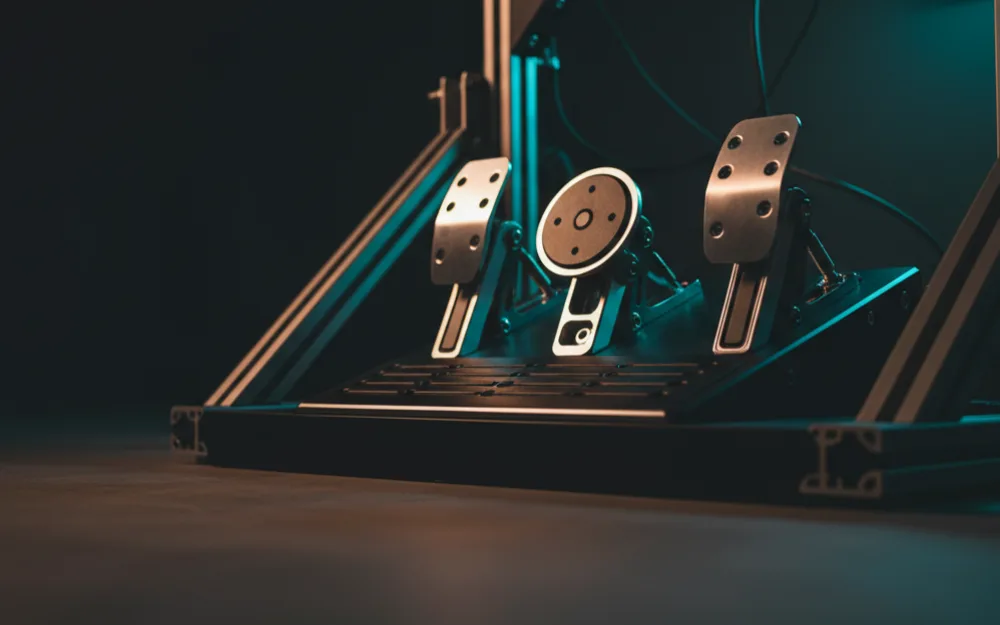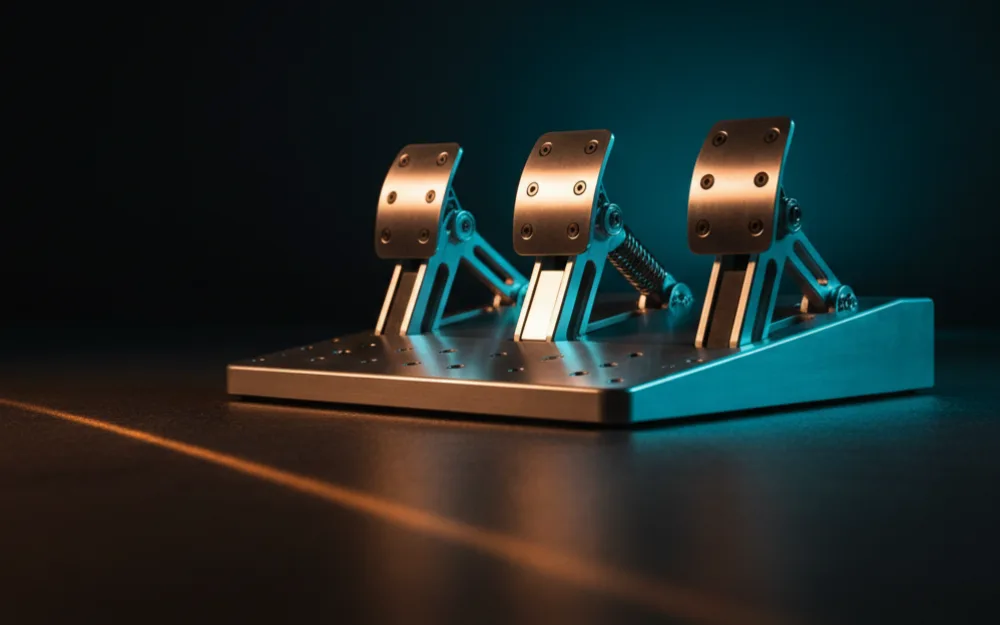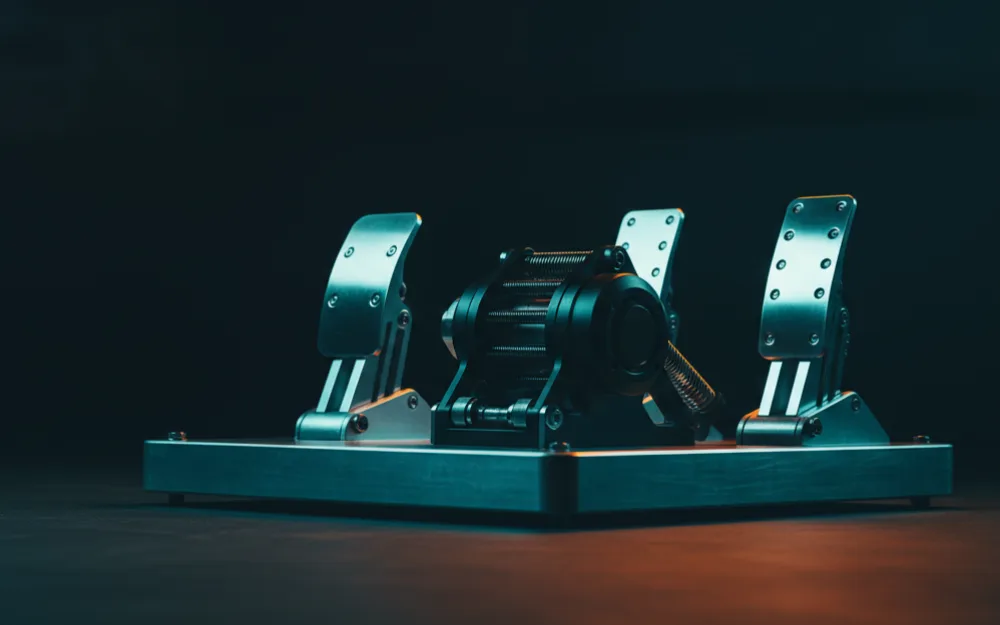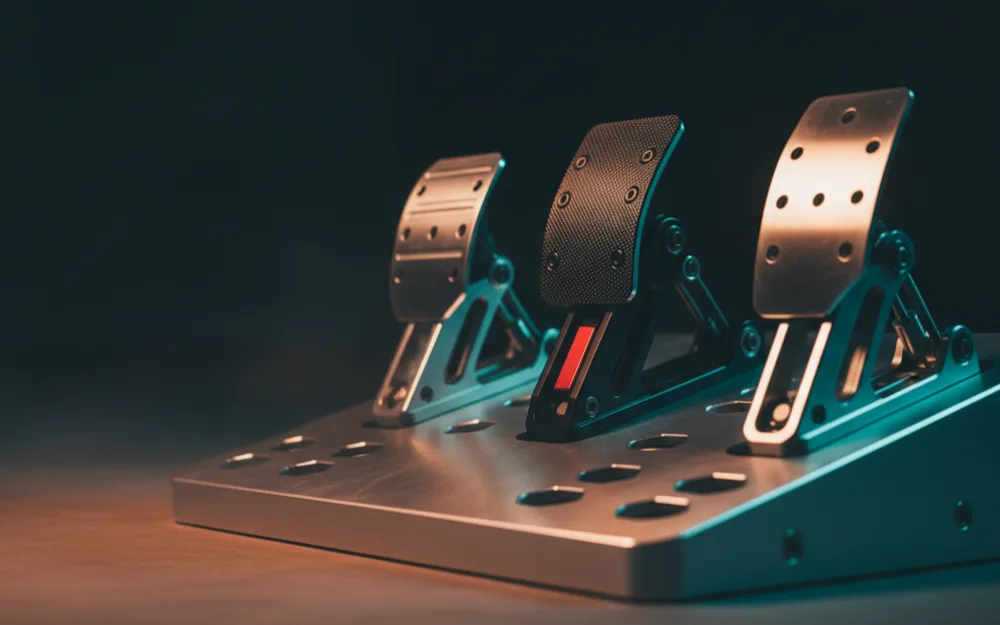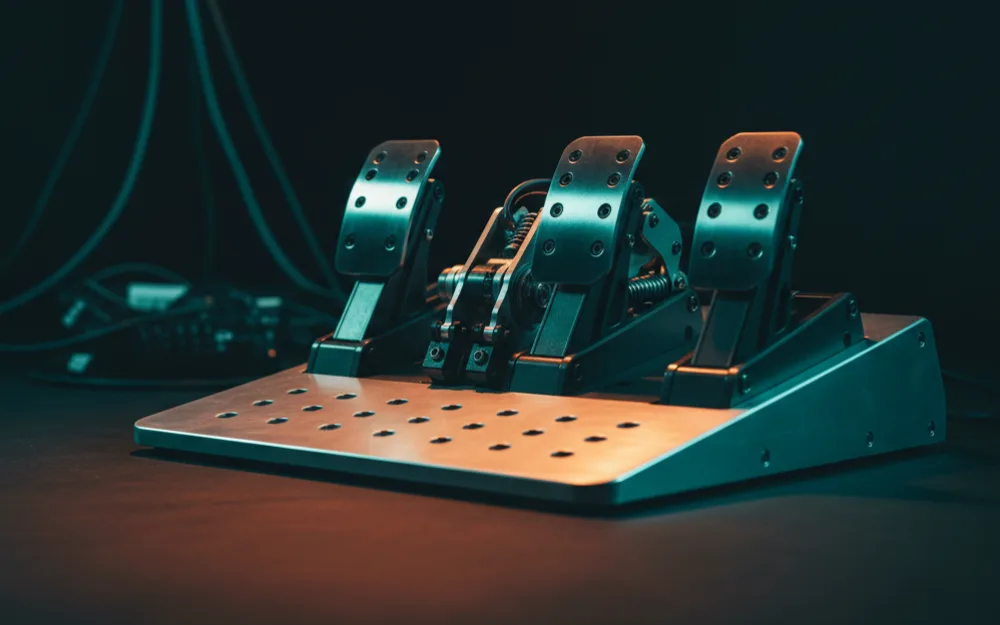

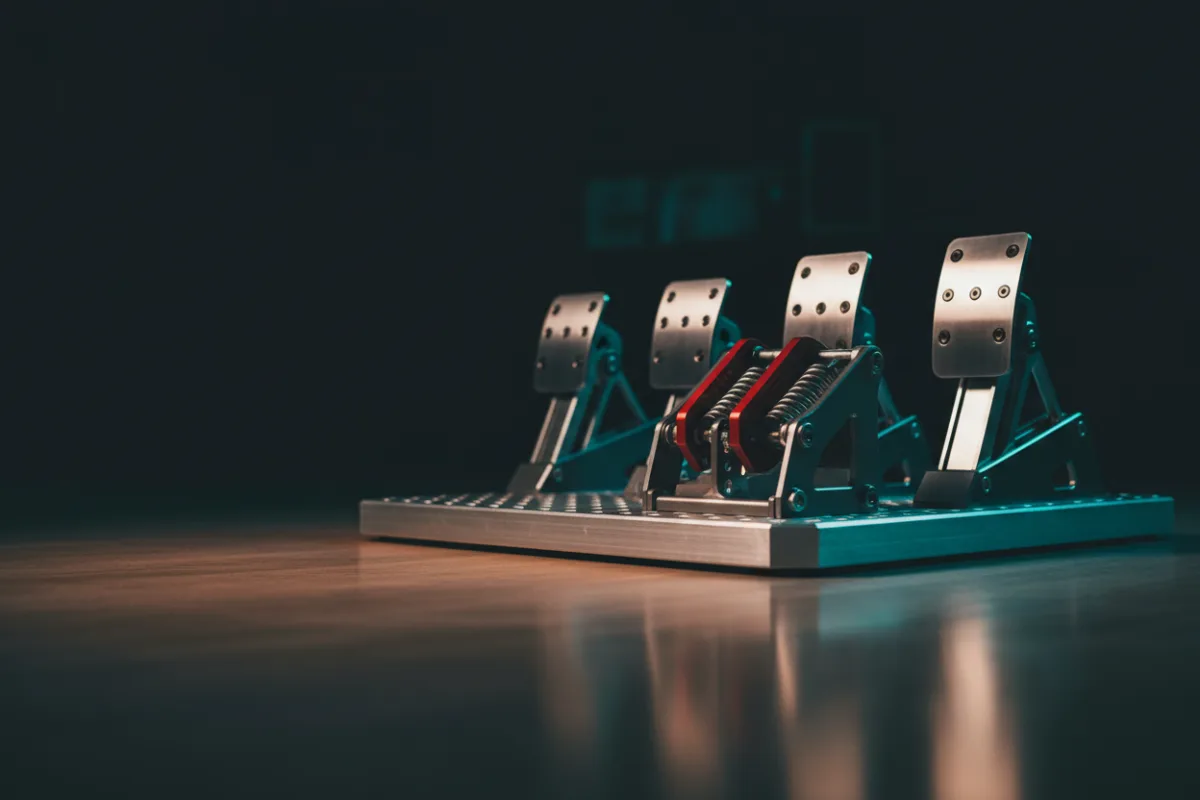

The Thrustmaster Raceline Pedals III LC is the load cell version of Thrustmaster’s modular pedal set, and it aims at the driver who has outgrown a travel based brake but wants to stay inside the Thrustmaster ecosystem. What sets it apart from the standard Raceline Pedals III is the brake: a load cell sensor rated to 220 lb (100 kg) with 24 bit resolution, which measures how hard you press rather than how far. Understanding why that matters starts with how the pedal actually reads your foot.
This review looks at how the Raceline Pedals III LC is built, where its brake earns its keep, and where a different set would serve you better. We compared manufacturer specifications with recurring owner feedback rather than our own driving time, and you can read how we review. If load cell braking is a new idea to you, start with Getting Started.

At a glance
| Spec | Thrustmaster Raceline Pedals III LC |
|---|---|
| Pedals in set | Three (throttle, brake, clutch) |
| Brake sensing | Load cell, 220 lb (100 kg), 24 bit resolution |
| Throttle and clutch | Hall Effect (H.E.A.R.T) sensors |
| Brake adjustment | Four configurations (3 springs plus 1 elastomer buffer), preload dial |
| Connectivity | USB C |
| Construction | 100 percent metal, fully modular |
| Platforms | PC (all wheel bases), PS5, PS4, Xbox Series, Xbox One (with Thrustmaster force feedback base) |
What the load cell brake actually changes
Before we judge the feel, it helps to know what the sensor does. A load cell reads the force you apply to the brake, so you modulate by pressure the way you would in a real car, rather than by the distance the pedal moves. The practical result is repeatability: once your leg learns that a given push equals a given amount of braking, threshold and trail braking become far more consistent lap after lap. Thrustmaster rates this brake to 220 lb (100 kg) with 24 bit resolution, which gives the sensor a wide range to read across, so the difference between a light brush and a hard stab is expressed in fine steps rather than coarse jumps. That range is the reason a load cell pedal rewards a firmer setup than a spring pedal ever could.
How reviewers describe the brake
Owners who race with the Raceline Pedals III LC report a brake that feels firm and progressive once it is dialed in, which is the point of the design. The set ships with four brake configurations, three springs plus a single elastomer buffer, and a preload dial that trims the resting pressure by roughly 11 lb (5 kg) either way. That combination lets you move from a soft, early biting pedal to a stiff one that only gives up its travel under real force. Reviewers who come from a spring pedal consistently describe the adjustment as the feature that finally let them brake by feel instead of by memorized pedal position. The throttle and clutch use Hall Effect sensors, which are contactless and therefore resist the drift and wear that plague older potentiometer pedals, so the two lighter pedals should stay accurate long after the springs have taken their set.
Build and modularity
The chassis is fully metal and fully modular, which is the quiet strength here. Pedal faces and positions can be moved to suit your leg length and seating angle, and the metal frame gives the brake something solid to react against, since a load cell pedal is only as honest as the structure it is bolted to. A flexing plastic base would soften the very pressure the sensor is trying to read, so the metal build is not a luxury on a load cell set, it is a requirement. The set weighs in on the heavier side for its class, which owners generally take as a sign that the frame will hold up to hard braking rather than walk across the floor.
Compatibility and setup
This is the part to read carefully, because the Raceline Pedals III LC has a compatibility rule that trips people up. On PC it connects over USB C and works with any racing wheel base. On console, PS5, PS4, Xbox Series, and Xbox One, it needs to be paired with a Thrustmaster force feedback wheel base to function, so it is not a universal console pedal you can bolt to any brand of wheel. If you own a Thrustmaster wheel already, this is a natural upgrade. If you are on console with a different brand of base, confirm compatibility before you commit. Software adjustment for dead zones and the equalizer runs through the T598 wheel’s Race Dash screen or the My Thrustmaster Panel software on PC, so your tuning options depend partly on which Thrustmaster hardware you already own.
Who should buy it, and who should skip it
| Buy the Raceline Pedals III LC if | Skip it if |
|---|---|
| You want a load cell brake and already run a Thrustmaster force feedback base | You are on console with a non Thrustmaster wheel base |
| You want three metal pedals with a clutch and deep brake adjustment | You only need two pedals and want to spend less |
| You value modular positioning and contactless throttle and clutch sensors | You want a hydraulic brake with a heavier ceiling than a spring and elastomer stack |
How it scores
The WSR Score reflects verified buyer ratings gathered and normalized on a consistent scale, not an editorial rubric. You can read what goes into it on How We Review. The Raceline Pedals III LC currently rests on a modest ownership record, so its score is an early read rather than the settled verdict a long selling set would carry. That is worth keeping in mind: the design is sound and the specification is genuine, but the sample of buyer ratings behind the number is still small.
Alternatives worth a look
If you like the modular Thrustmaster platform but are not ready for a load cell, our Thrustmaster Raceline Pedals III Modular review covers the spring braked version that you can upgrade later. For a broader view of load cell options, including sets that reach beyond the Thrustmaster ecosystem, start with the best load cell pedals, and if your budget is tighter, our best load cell pedals under $300 guide covers the affordable field. Another set worth weighing is the MOZA ecosystem option in our MOZA CRP2 review. You can also browse more options in pedals.