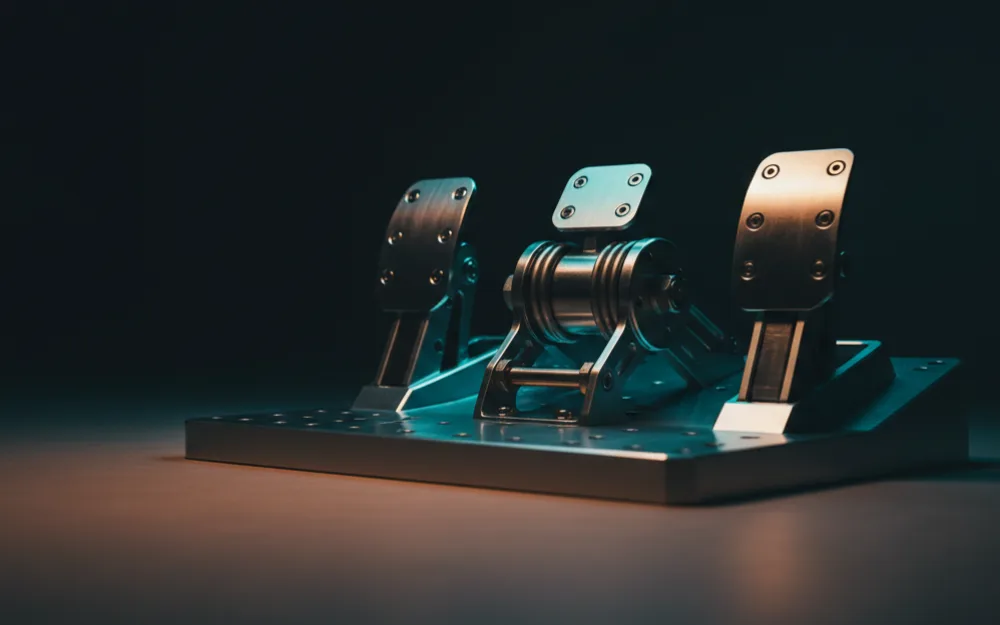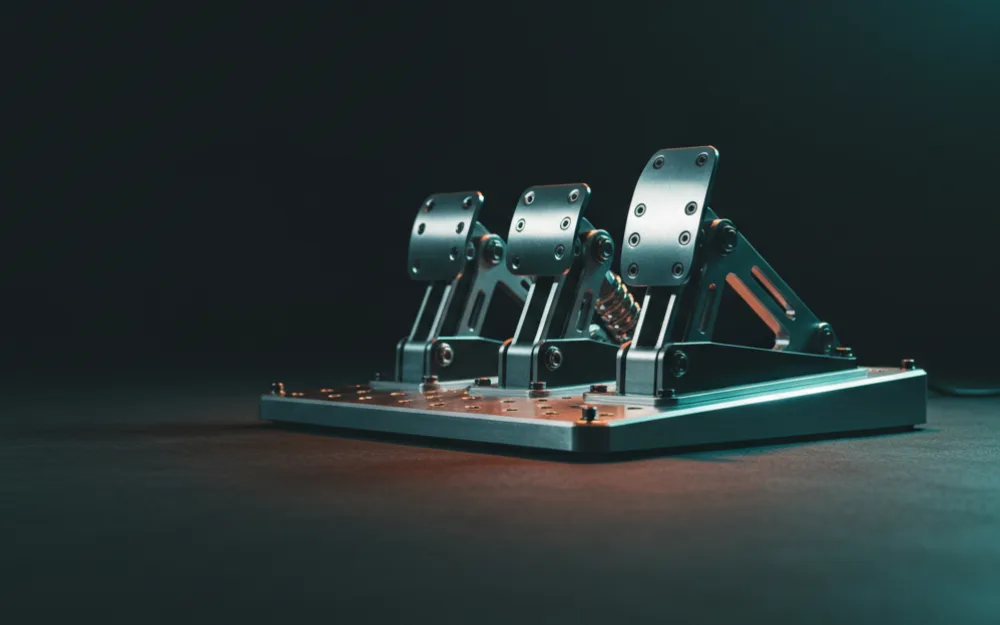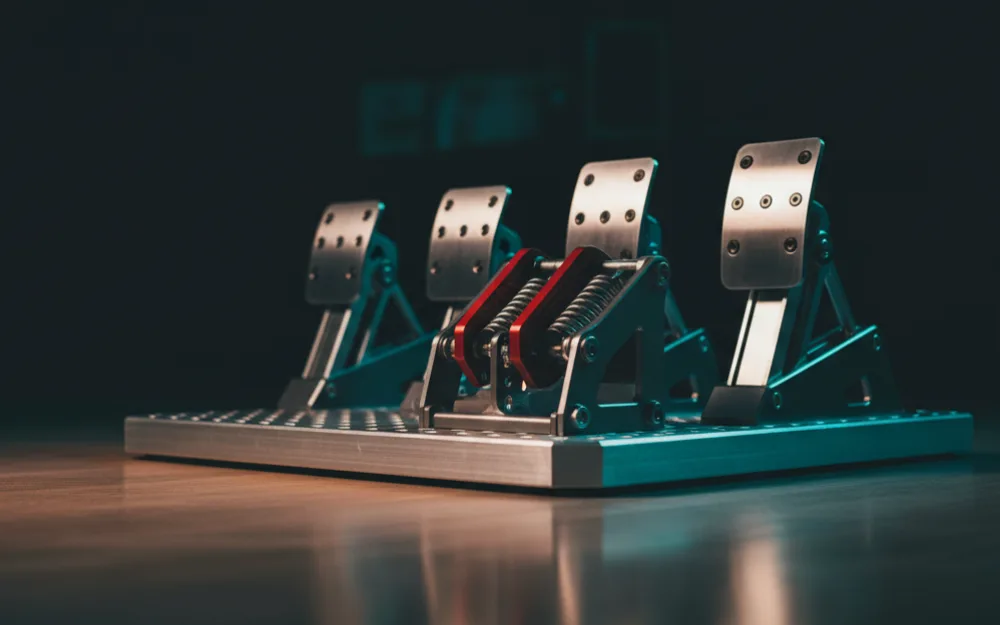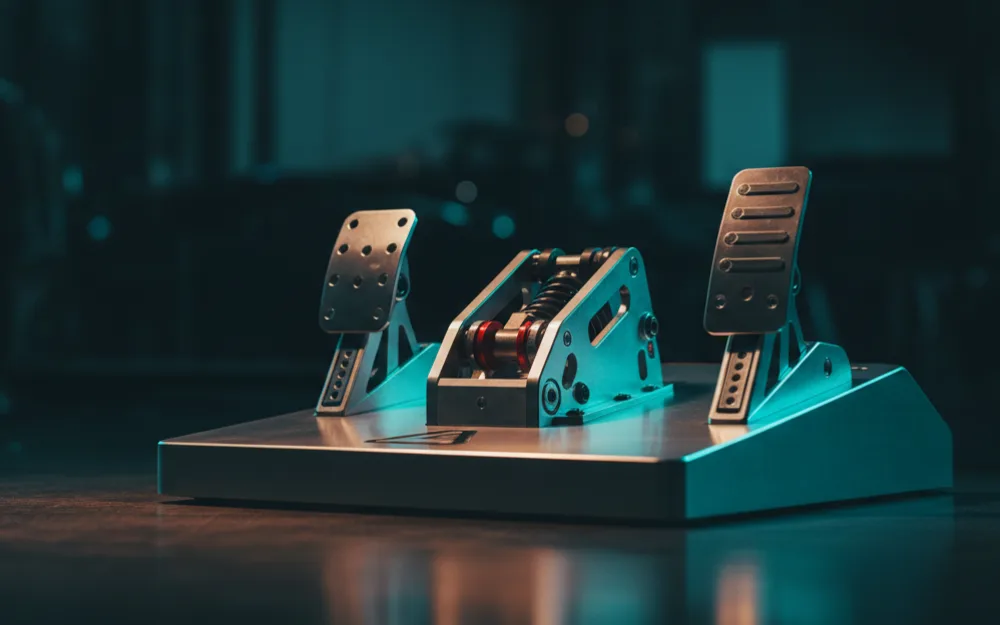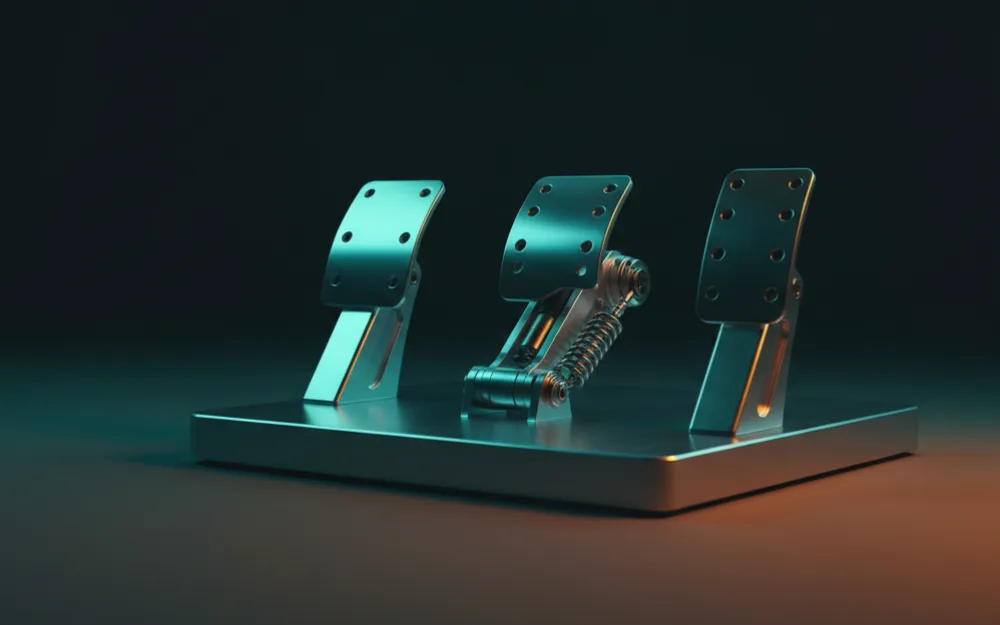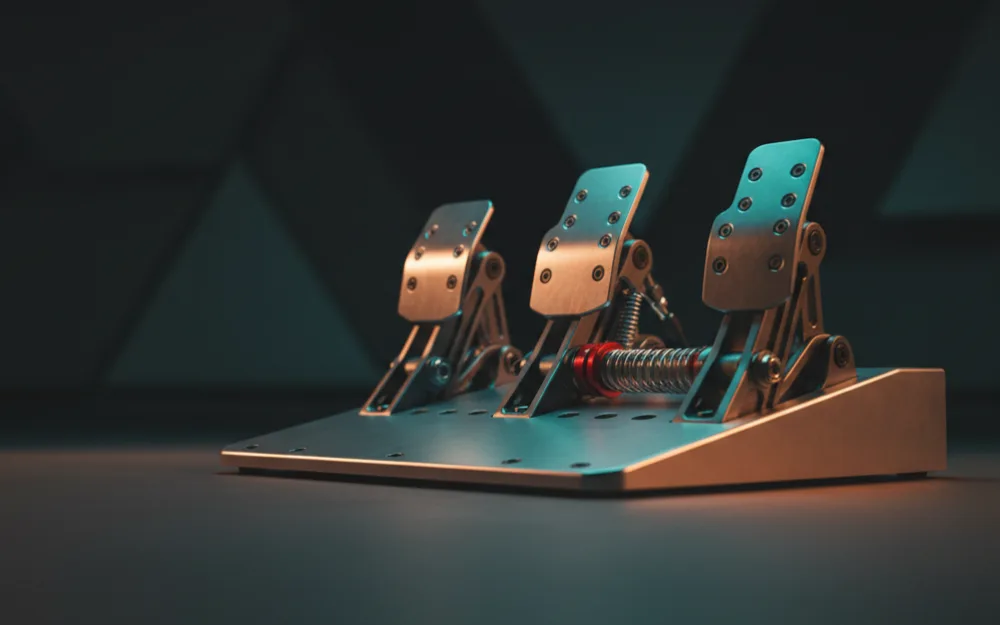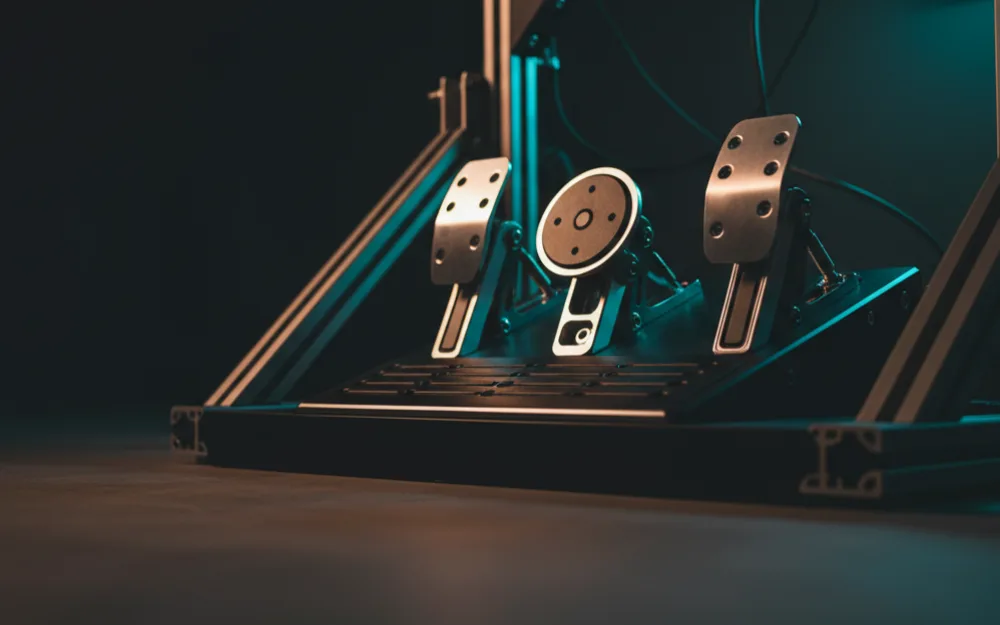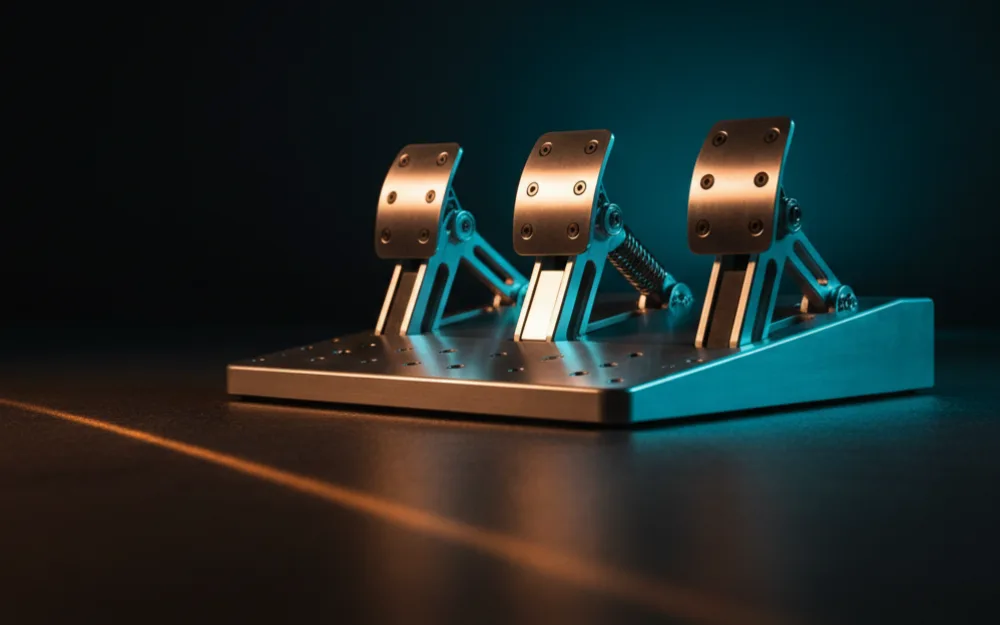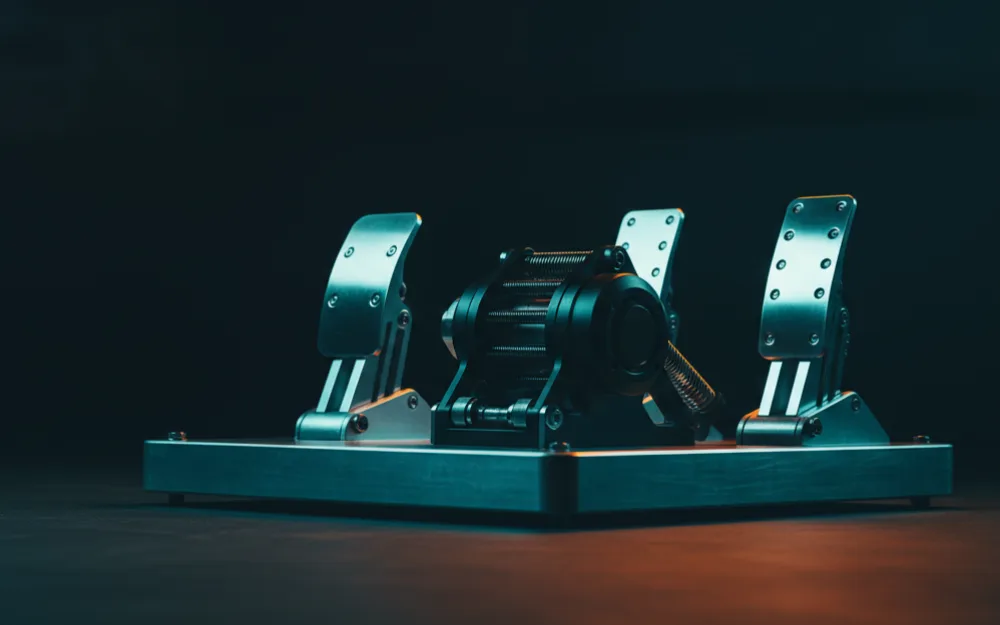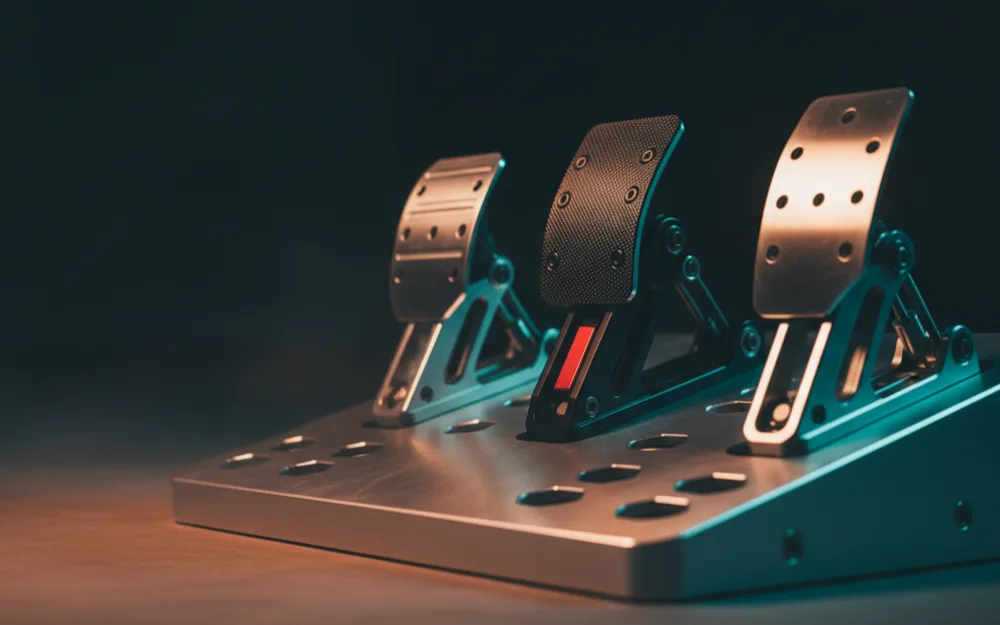

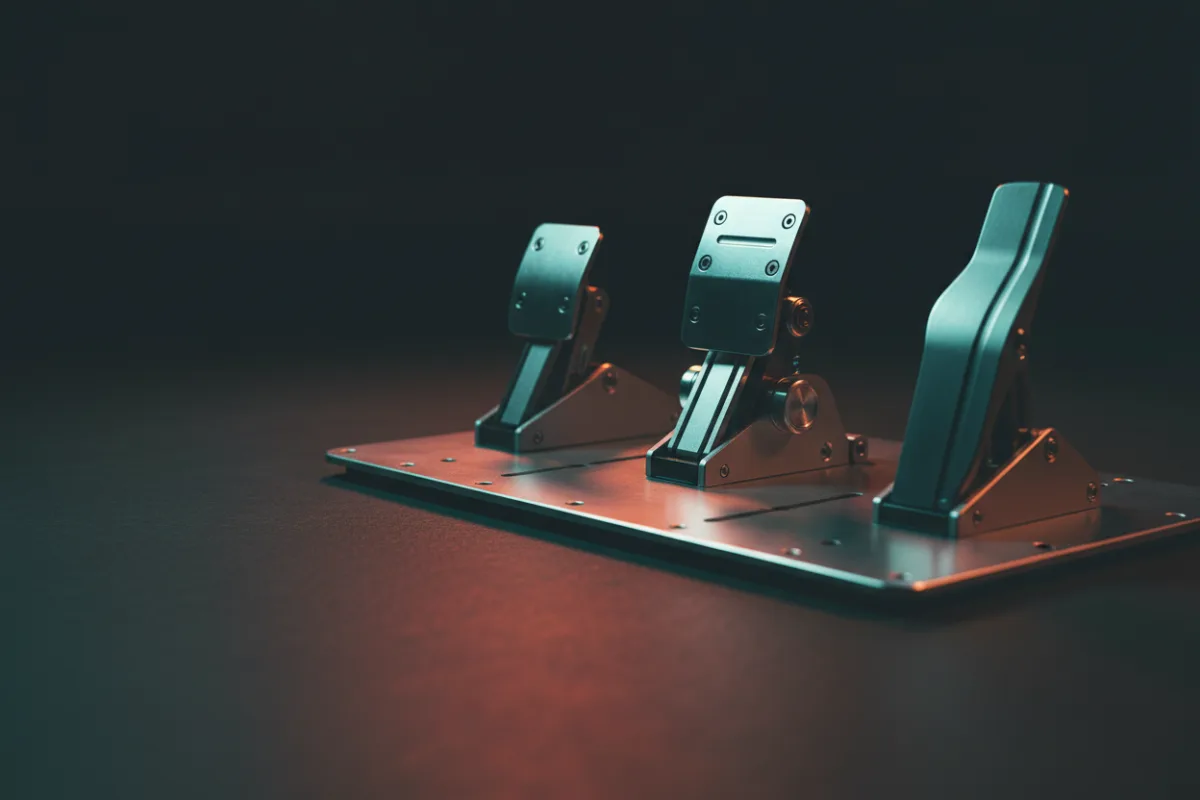

The Fanatec CSL Elite Pedals V2 is a three pedal set built around a dual-stage load cell brake, pairing an elastomer stack with a load cell sensor rated well past the force any driver’s leg is going to generate. Fanatec sells it inside the CSL line, the tier built to sit below the brand’s ClubSport hardware while keeping the same core principle intact: brake by pressure, not by how far the pedal travels. That dual-stage design is the place to start before judging how it feels.
This review looks at how the CSL Elite Pedals V2 is built, what its dual-stage brake changes, and who is better served by a simpler two pedal set. We compared manufacturer specifications with recurring owner feedback, and you can read how we review.

What it is and where it sits
Out of the box this is a full three pedal set (clutch, brake, throttle), which matters because a lot of load cell pedals sell brake and throttle only and leave the clutch as a separate purchase. Fanatec’s CSL Elite line sits in the brand’s entry-to-mid tier, built to connect to a Fanatec base over RJ12 as the recommended route, or run as a standalone USB device on PC. Console reach depends on the base attached: PS5 and PS4 compatibility needs a PlayStation-licensed Fanatec base, and Xbox Series X, Xbox Series S, and Xbox One need an Xbox-licensed Fanatec wheel. Without one of those in the chain, this is a PC pedal set.
Build and load cell feel
The dual-stage brake combines an elastomer stack with a load cell sensor, and understanding what that measures is worth a detour: a load cell reads force, not travel, which is why braking on one becomes a matter of pressure control rather than how far your foot moves. Fanatec rates measured foot force at up to 90 kg on the pedal plate, while the load cell sensor itself carries headroom rated past 200 kg, so the reading stays consistent even under a very hard stomp instead of flattening out near the top of its range. Elastomer springs ship in 65, 75, and 85 Shore hardness, swappable without tools, plus an alternate metal spring for a stiffer preload, so brake firmness is a setting rather than a fixed curve. Our guide to elastomer versus spring pedal tuning covers what each swap actually changes. Clutch and throttle run on contactless Hall sensors, which read position magnetically instead of through physical contact, so they resist the wear that eventually loosens a cheaper potentiometer. Owners who run the CSL Elite line describe the dual-stage brake as firm without feeling artificial, with the elastomer swap giving them a real way to dial in how much leg force it takes to reach lockup.
Mounting and compatibility
The set can be configured down to two pedals if the clutch is not needed, and pedal position adjusts sideways along the heel rest to match your stance. Detachable rubber pedal covers protect the plates during setup. RJ12 into a Fanatec base is the recommended connection, since it routes pedal data through the base’s own processing, while standalone USB works on PC only. Fanatec backs the set with a three year manufacturer warranty. As with any load cell pedal, a 90 kg rated plate needs a rig or deck that will not flex, or the sensor ends up measuring frame movement as much as your actual foot pressure.
Pros and cons
What works:
- Full three pedal set (clutch, brake, throttle) out of the box, not brake and throttle only
- Dual-stage load cell brake with tool-free elastomer swaps and an alternate metal spring for extra preload
- Contactless Hall sensors on clutch and throttle resist long-term wear
- Backed by a three year manufacturer warranty
What to weigh:
- Full console support needs a PlayStation- or Xbox-licensed Fanatec base or wheel, and a USB cable alone will not do it
- RJ12 ties the best experience to already owning a Fanatec base
- A 90 kg rated brake plate needs a genuinely rigid mount to pay off
Who it is for
This fits a driver already inside, or planning to build, the Fanatec ecosystem who wants a complete three pedal set with a tunable dual-stage brake rather than adding a clutch pedal later as an afterthought. It also suits anyone who prefers tuning brake firmness through physical elastomer swaps over software sliders alone. Pair it with our Fanatec CSL DD review if the whole setup is being built around this brand, and see the wider field in best load cell pedals.
Who should skip it
Skip it if console play without a Fanatec base is the plan, since the RJ12 connection and the full feature set assume Fanatec hardware upstream. Skip it too if a simple brake and throttle pair covers your needs right now; a two pedal load cell set costs less to get into. For the wider category, our best sim racing pedals guide covers options at every tier, and pedals has the full list.