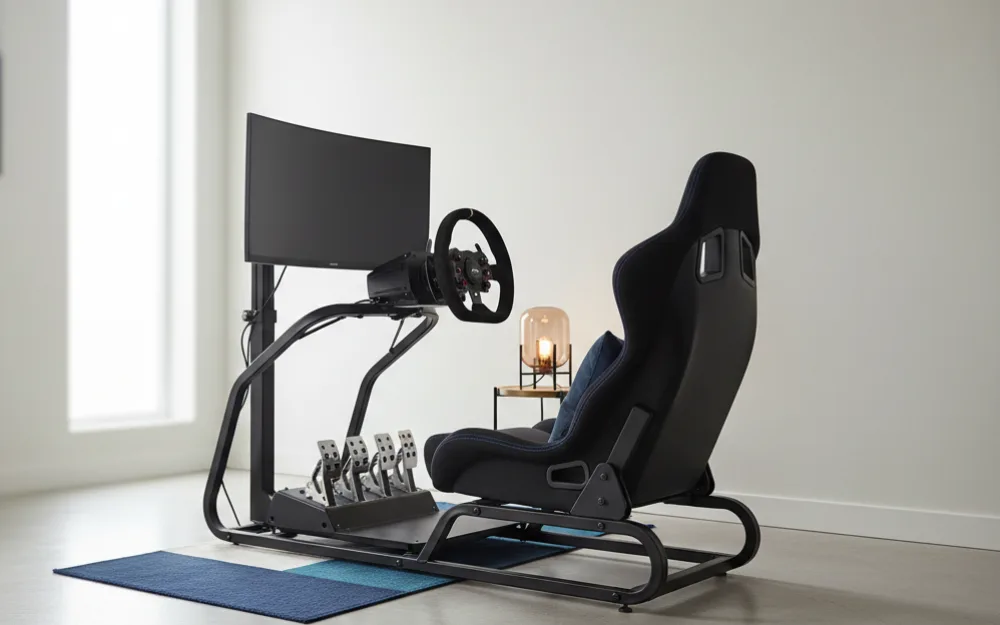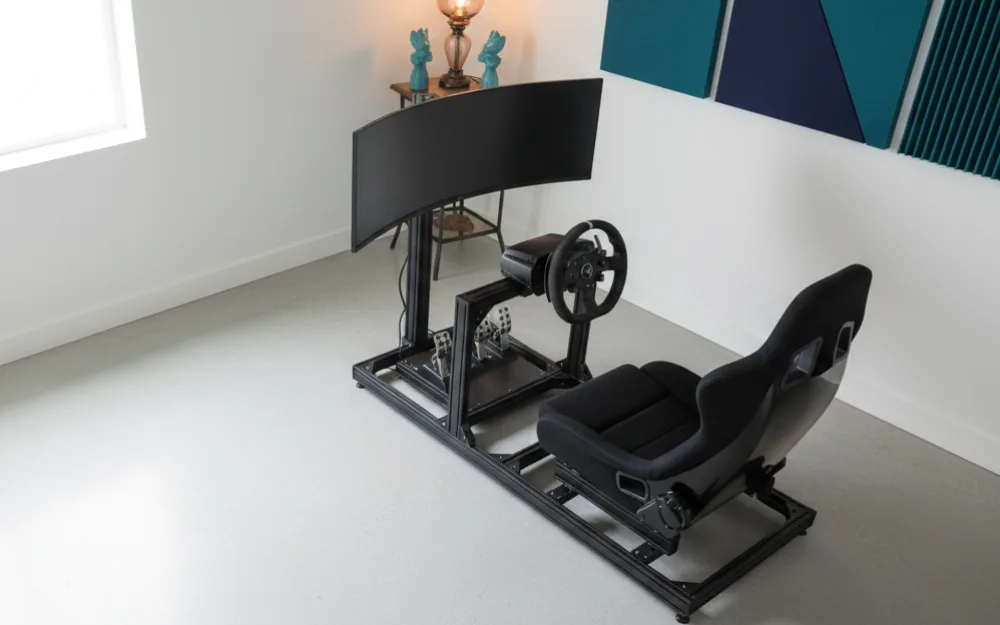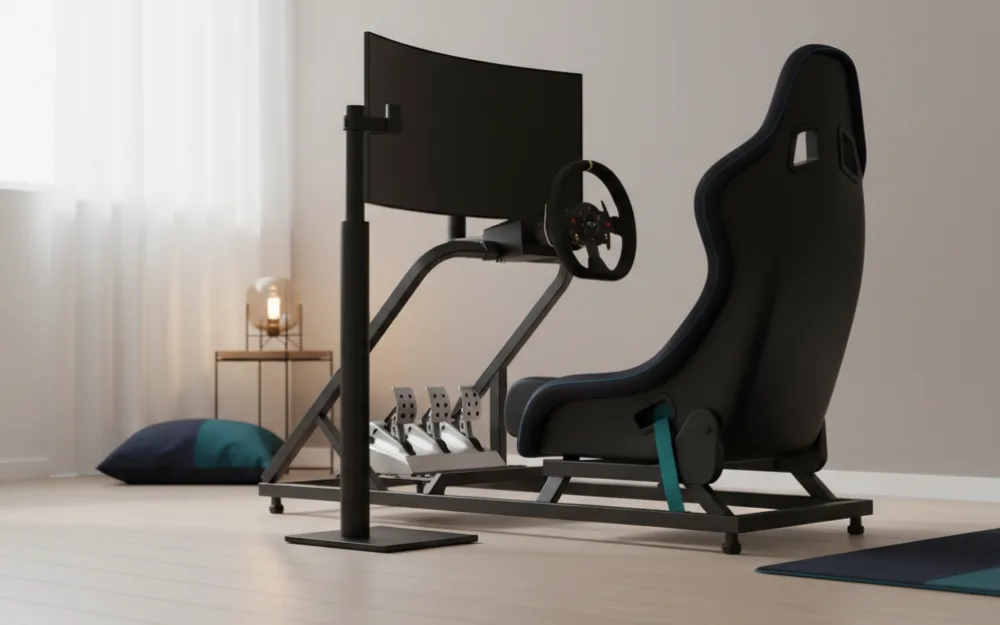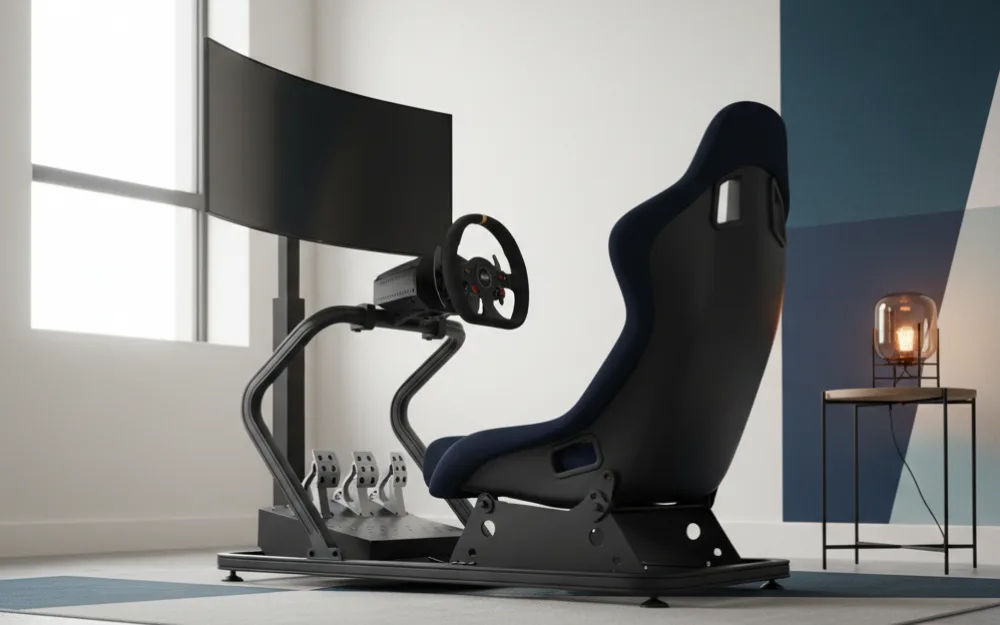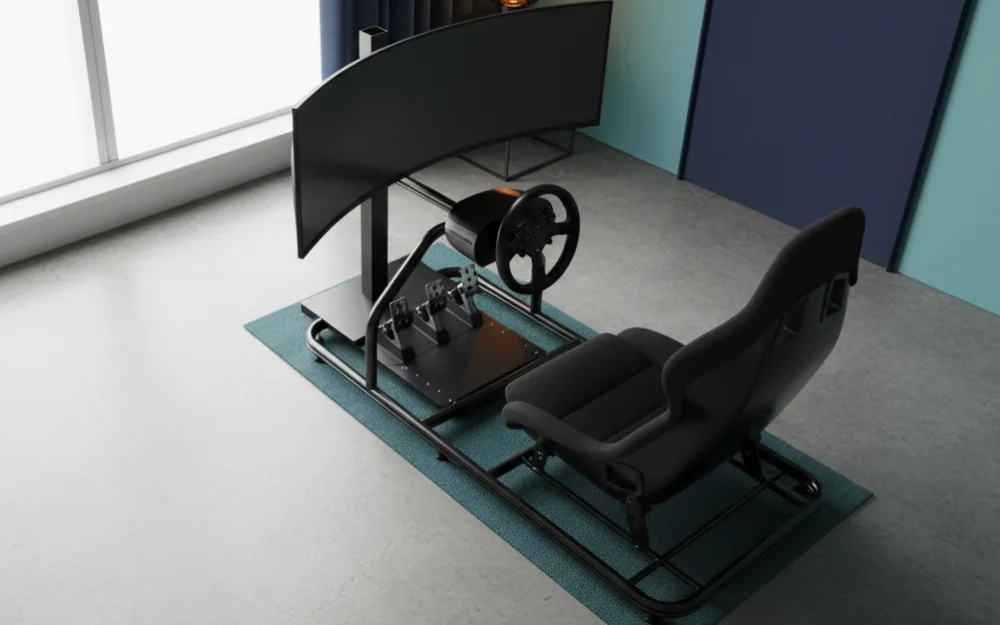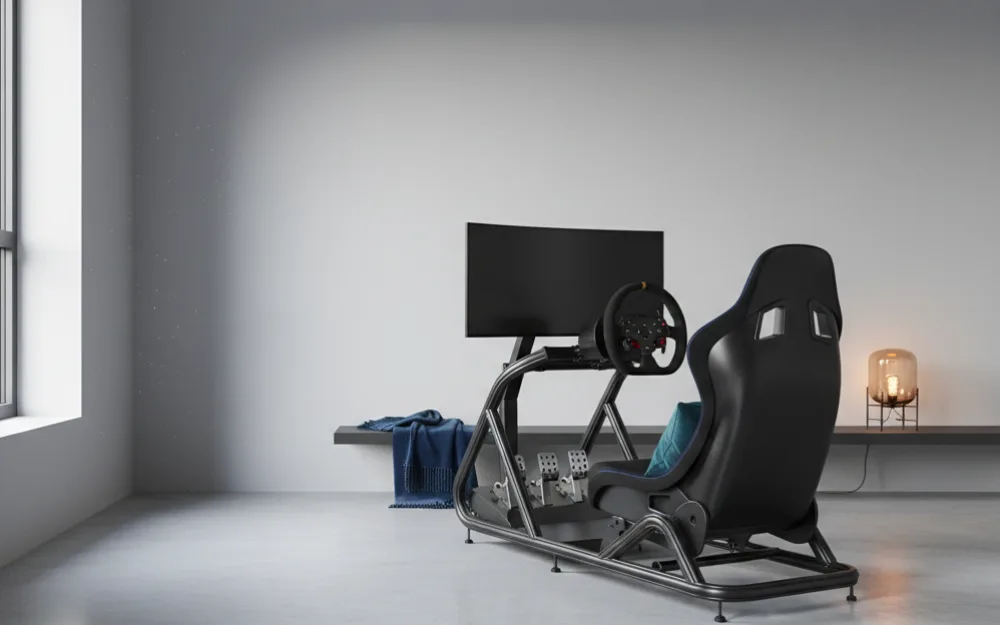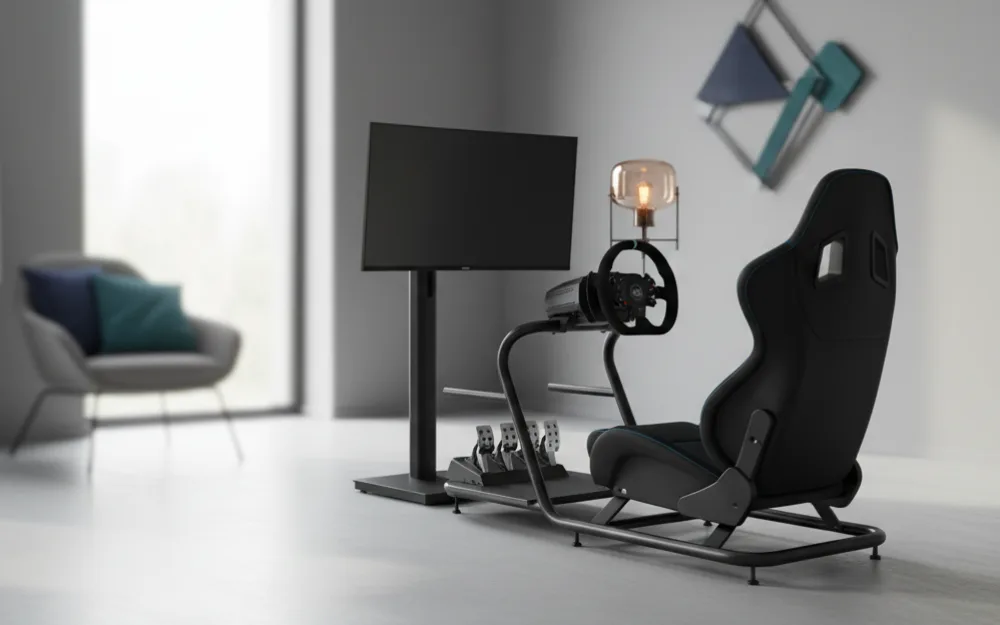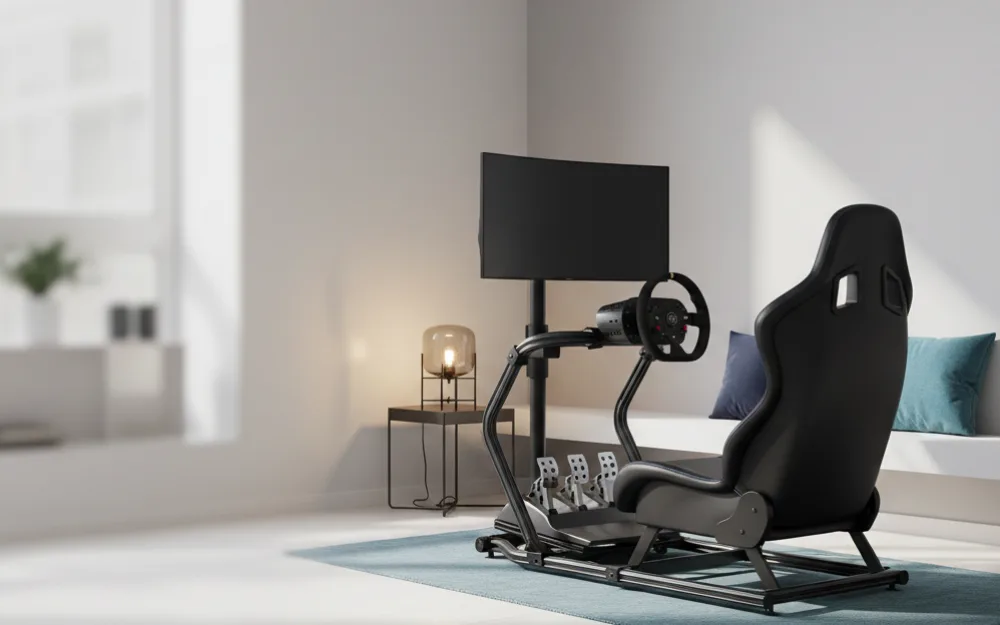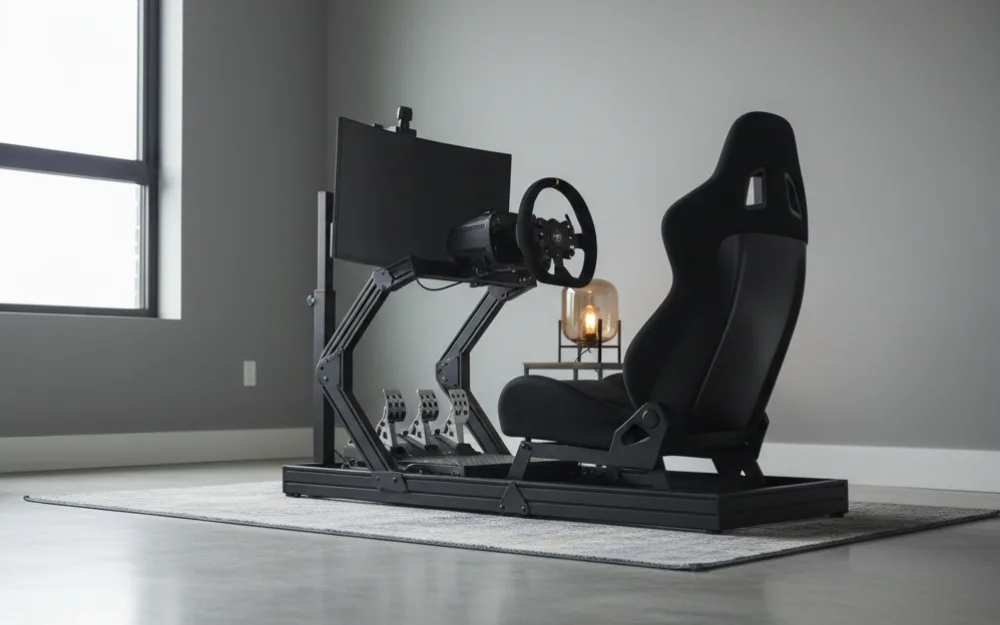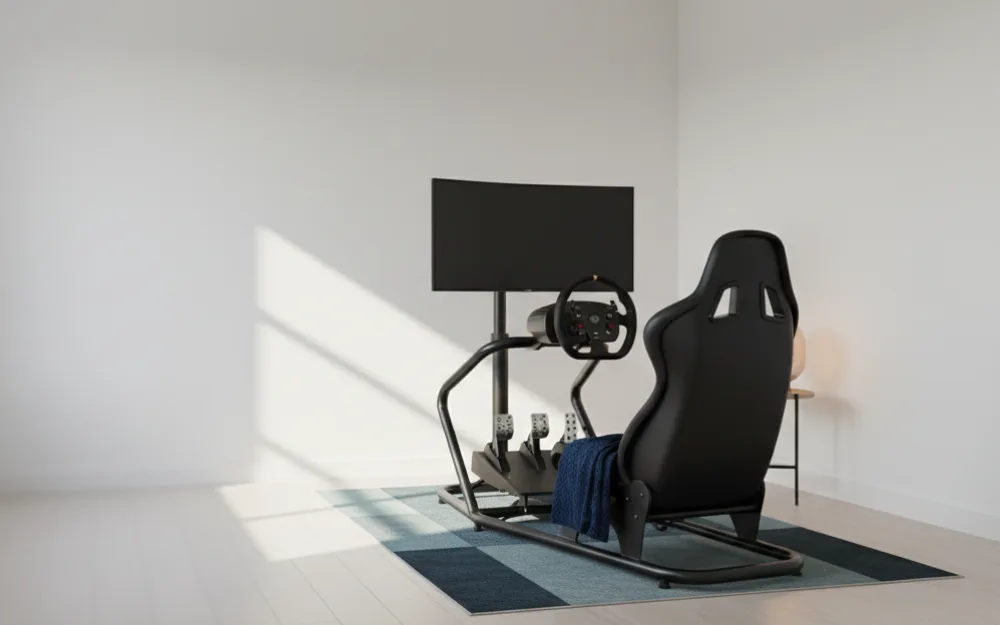

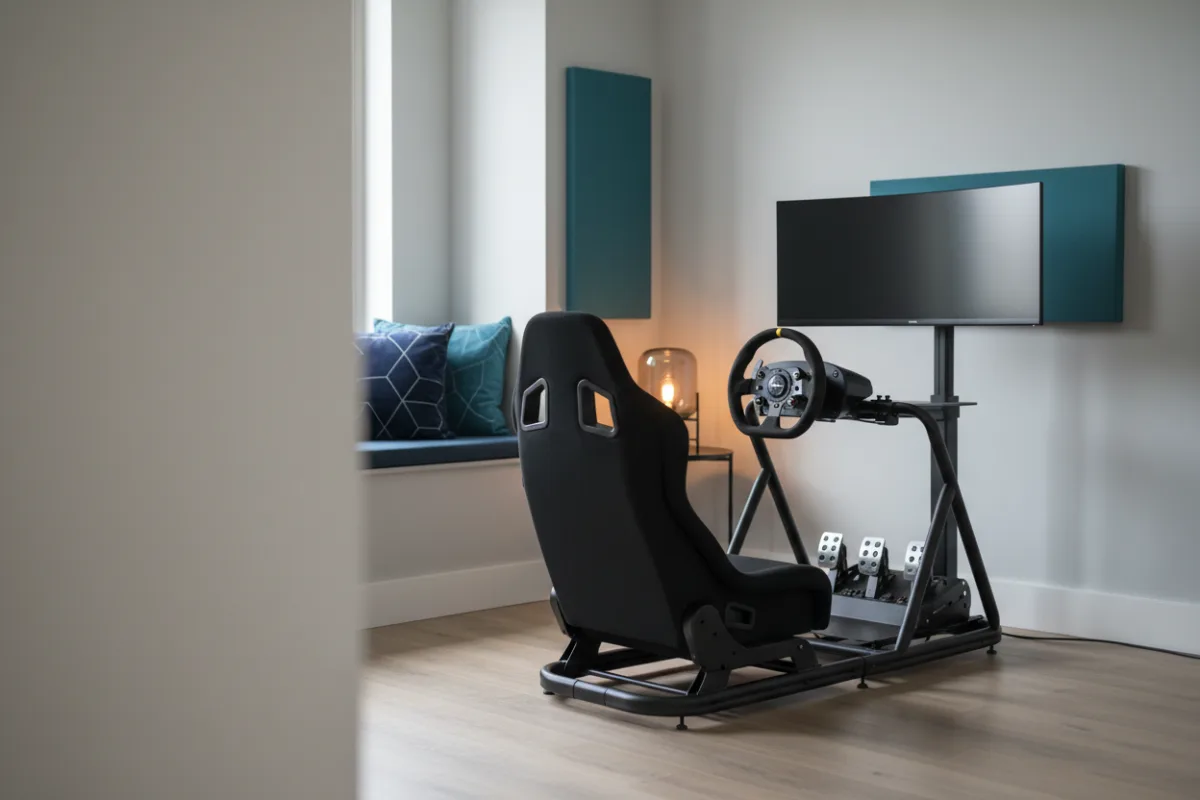

The Next Level Racing GT Lite and the Playseat Challenge X are the two folding cockpits most new racers cross shop, and they solve the same problem in different ways. Both fold flat and store against a wall, both suit entry and mid gear, and both put you in a real driving position for a modest outlay. The difference is in the seat itself: the GT Lite fixes a fabric seat to a tube frame, while the Challenge X suspends its seat in the frame like a hammock. That one design choice drives almost everything else. This comparison lays out which suits which driver.
We compared maker specifications with recurring owner feedback for both rigs, and you can read how we review. If you are new to cockpits, start with Getting Started.

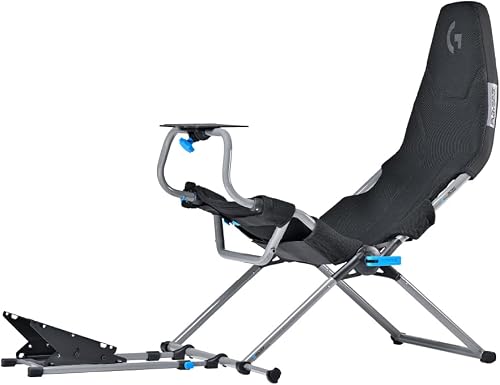
At a glance
| Feature | NLR GT Lite | Playseat Challenge X |
|---|---|---|
| Seat design | Fabric seat on a fixed tube frame | Fabric seat suspended in the frame |
| Weight | About 32 pounds | About 25.6 pounds (11.6 kg) |
| Folded storage | Folds flat | Folds flat, smallest footprint |
| Feel | Firmer, more fixed | Softer, more give |
| Shifter mount | Included | Included |
| Best for | A locked in fixed position | Comfort and the tightest storage |
Stability and feel under load
Both rigs use folding tube frames, so both stay steady with belt and gear driven wheels and both start to show flex with a strong direct drive base. The seat is where they part ways. The GT Lite holds your body more firmly because the seat is fixed to the frame, which gives a more planted sense of brake pressure. The Challenge X suspends the seat, so there is more body movement under a firm brake, which many drivers find more comfortable but which can soften the feel of exactly how hard you are pressing a load cell. If you chase the most locked in feel, the GT Lite edges it. If you prioritize comfort over a tight hold, the Challenge X leans your way.
Assembly and storage
Both are afternoon builds with a hex set, and neither requires drilling thanks to pre-drilled or pre-formed mounts. The Challenge X frame goes together quickly with clearly labeled parts and is the lighter of the two, so it is a quick build and the easier rig to move once done. Both fold flat, but the Challenge X collapses to the smaller package and is the one that tucks behind a door most easily. If storage is the single reason you are buying a folding cockpit, the Challenge X wins that narrow contest.
Fit and comfort
Both use breathable fabric that stays cool over long stints, and both adjust the wheel and pedal relationship for a range of heights. Owner feedback suggests the suspended seat of the Challenge X often accommodates taller drivers a little more forgivingly, while the fixed seat of the GT Lite gives shorter and average drivers a firmer, more repeatable position. Heavier drivers should weigh the trade directly: the suspended seat gives more, which reads as comfort to some and as too soft to others. Neither is a hard bucket, so if you want a rigid shell, look at a full cockpit with a fixed seat instead.
Expandability
Both are self contained folding cockpits rather than platforms. Neither becomes a triple monitor bench or takes a motion base, and both are tuned around entry and mid gear. If your plan is to grow into triples or a strong direct drive setup, buy neither as a long term home and instead treat them as a good first rig you will later replace with aluminum profile. Their shared strength is getting you into a real seat now without a large footprint.
Which one should you buy
| Choose the GT Lite if | Choose the Challenge X if |
|---|---|
| You want a firmer, more fixed seating position | You want the smallest possible storage footprint |
| You are average or shorter height | You are taller or prioritize comfort over a tight hold |
| You value a planted feel for load cell braking | You want the lightest rig and the quickest build |
The verdict
There is no wrong answer here, only a fit to your room and your body. The GT Lite is the pick for a firmer, more locked in position and load cell feel, while the Challenge X is the pick for maximum comfort and the tightest storage. Both are honest first cockpits that outclass a bare wheel stand. Who should skip both: if you already run a strong direct drive base and heavy load cell pedals, neither folding frame will feel fully rigid, and an aluminum profile rig is the better buy; if you are heading toward triple monitors, buy a cockpit that takes a monitor mount instead. Match the seat design to how you sit and where the rig has to live, and either one serves you well.
Where to go next
For the full detail on each, read our GT Lite review and our Playseat Challenge X review. To see how they stack up against the rest of the affordable field, start with the best sim racing cockpits under $500.