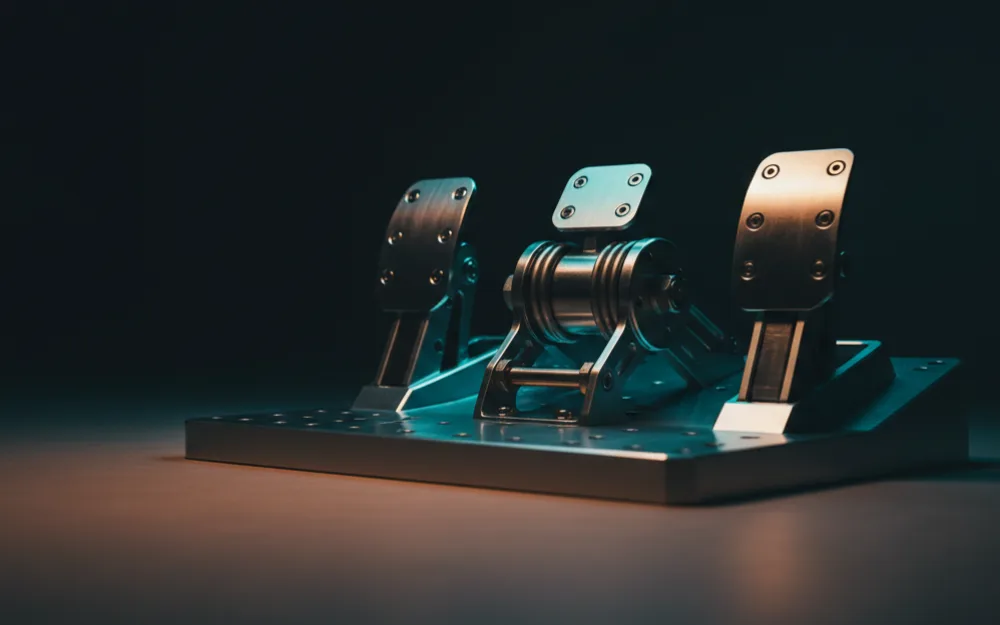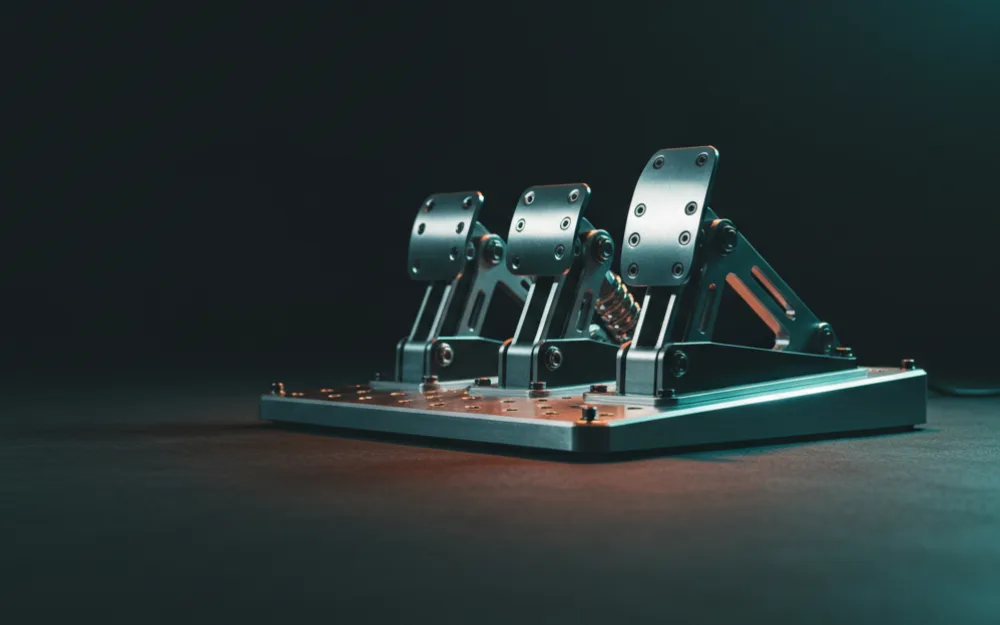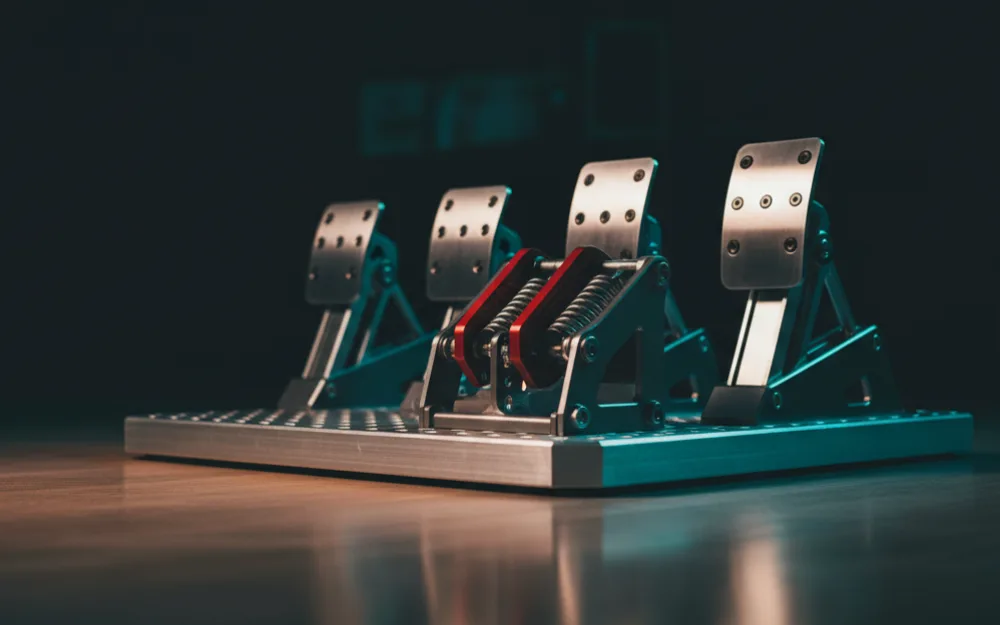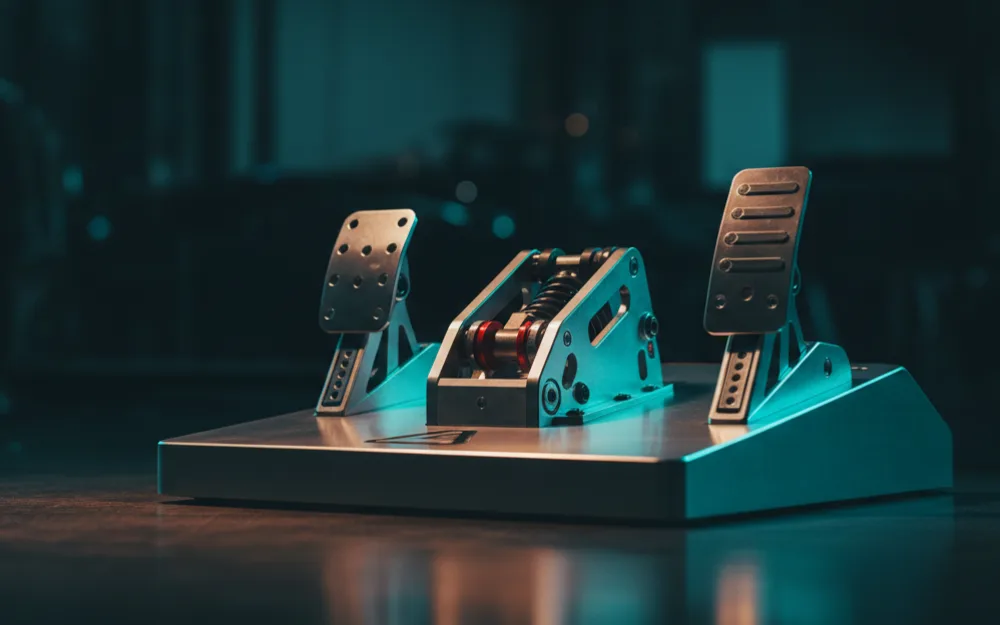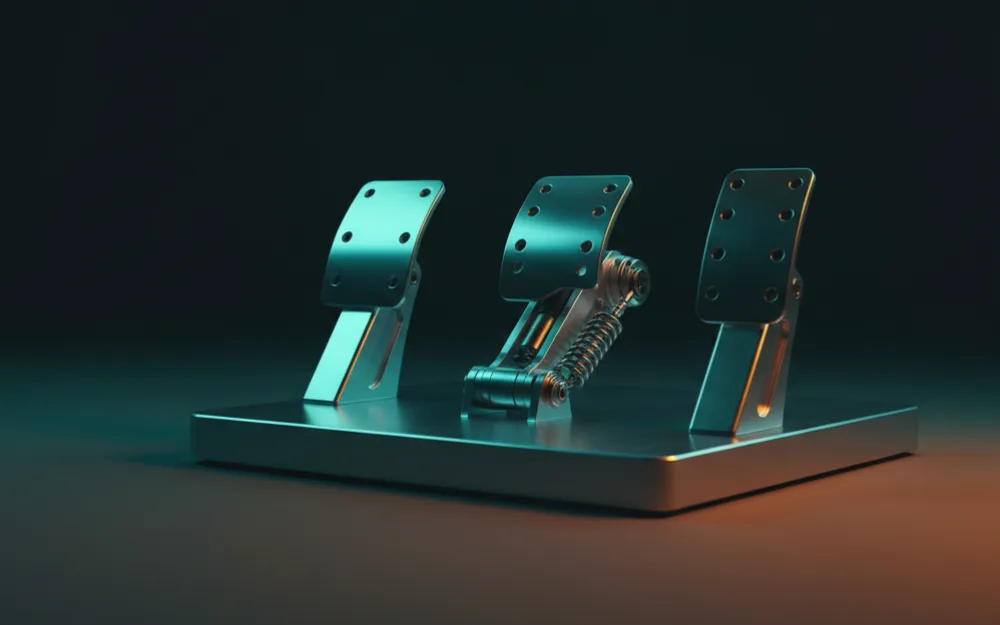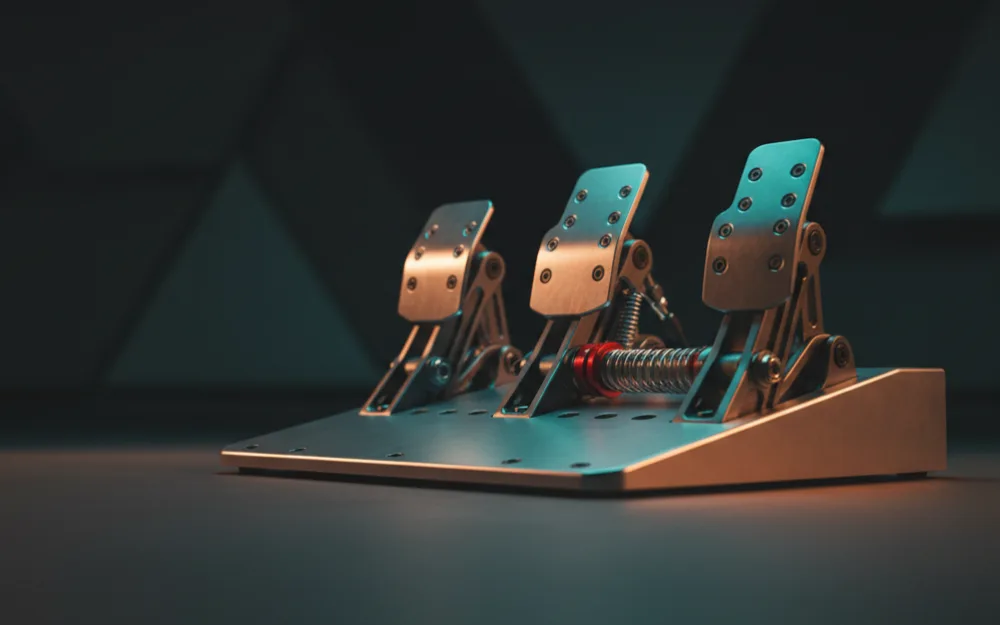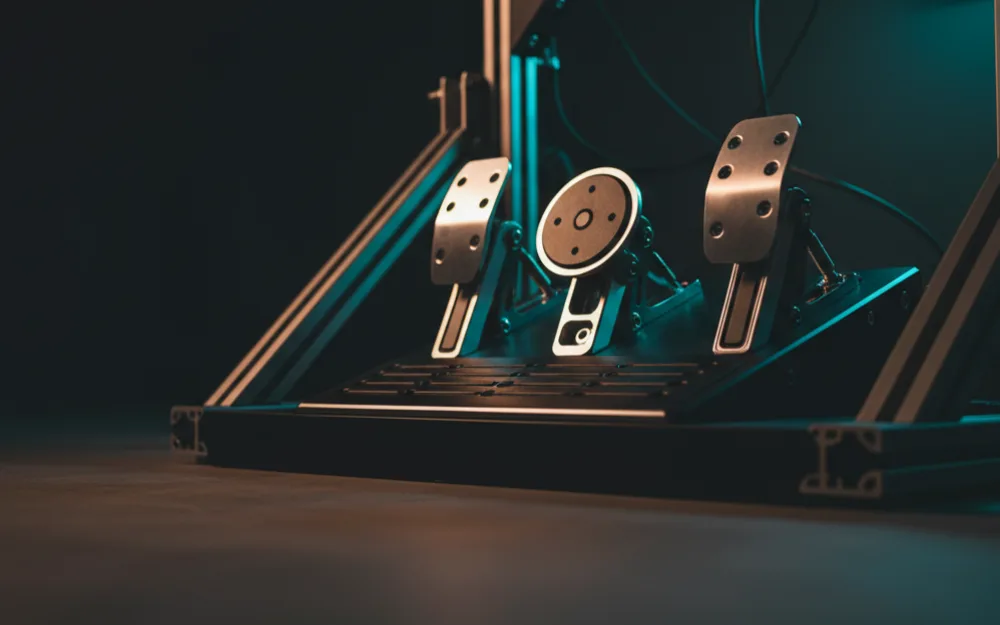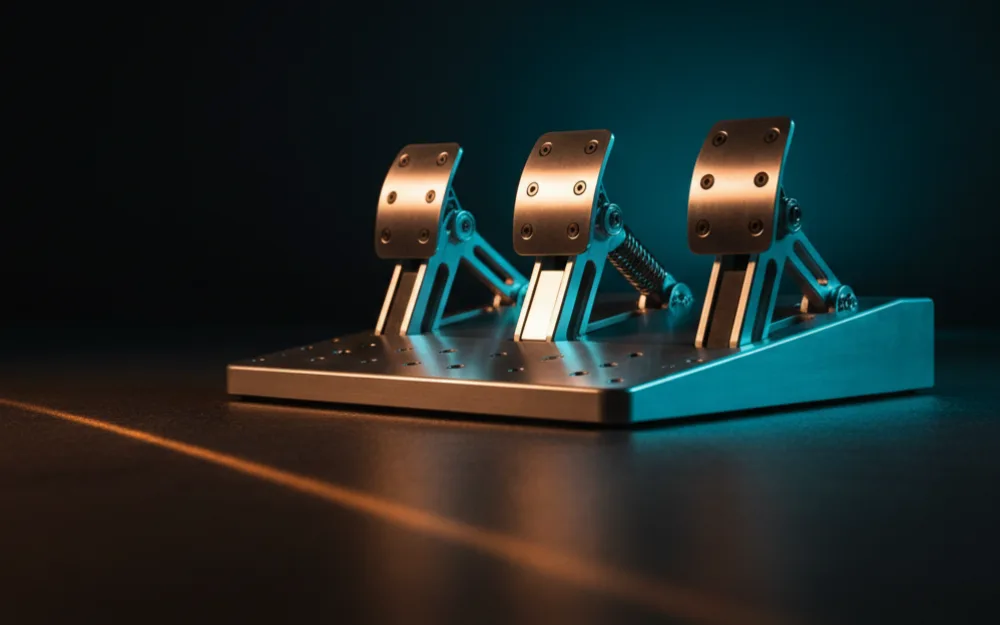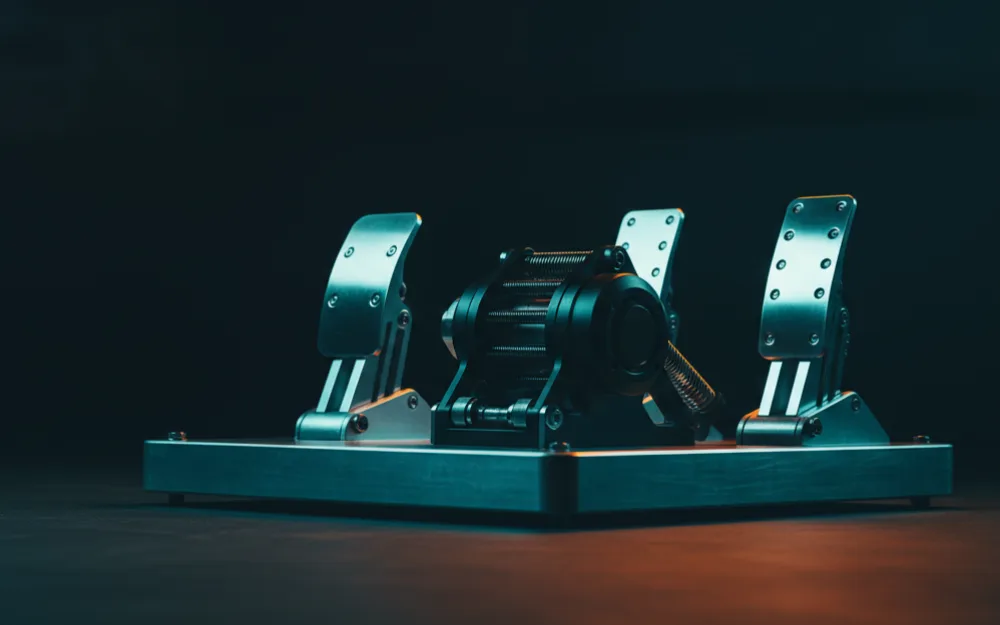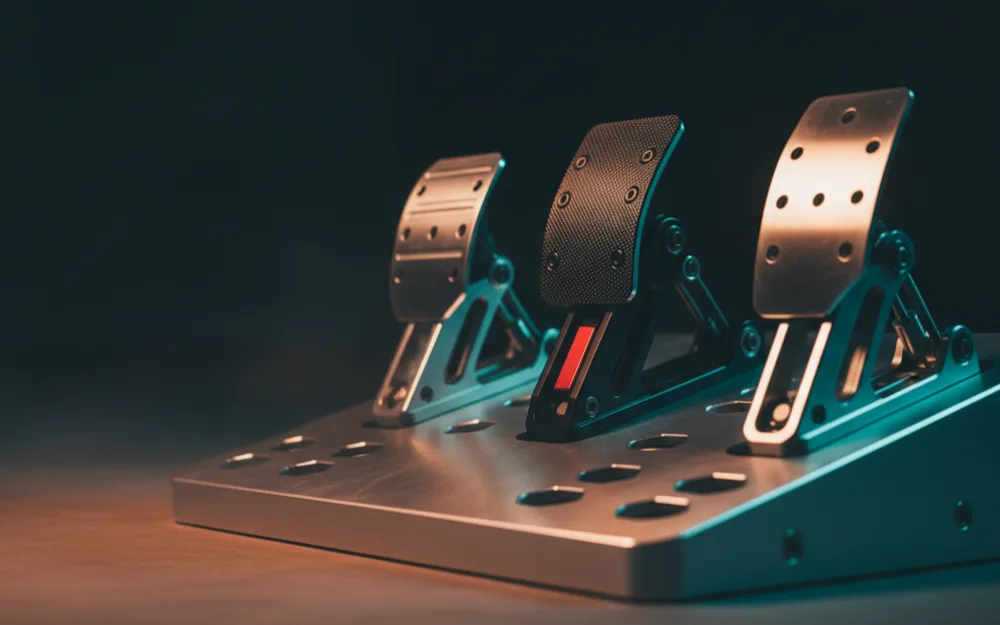

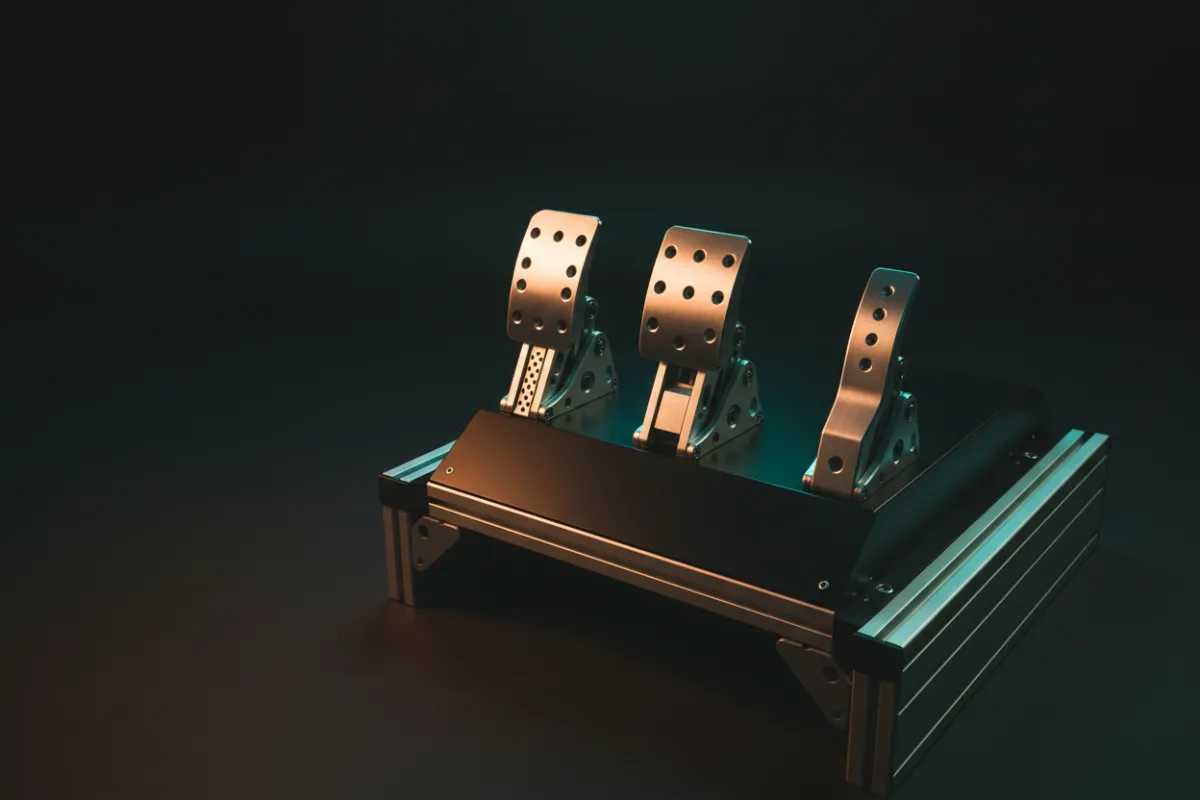

The difference between a two pedal and a three pedal set comes down to one thing: the clutch. A two pedal set gives you throttle and brake, which is everything you need for the vast majority of modern racing. A three pedal set adds a clutch so you can practice manual H pattern launches and heel and toe downshifts, which matters for classic cars, rally, trucks, and anyone who wants the full manual experience. Most sim racers are well served by a good two pedal set. Reach for three pedals when the clutch is part of the driving you actually want to do.
This guide is for the driver weighing whether that third pedal is worth the extra cost and space. We compared how each configuration is used, what owners report in practice, and who each one suits. You can read how we review, and if you are new to the terms, start with Getting Started.
Quick answer
| You mostly | Pick this |
|---|---|
| Race modern GT, formula, and prototype cars with paddle shifters | Two pedal |
| Want the simplest, cleanest setup | Two pedal |
| Drive classic cars, rally, or trucks with a manual gearbox | Three pedal |
| Want to learn heel and toe and H pattern launches | Three pedal |
| Plan to add an H pattern shifter later | Three pedal |
What each pedal actually does
Every set has a throttle and a brake, and those two do most of the work of driving fast. Braking technique, trail braking, and throttle control on corner exit are where lap time lives, and neither needs a clutch. The clutch pedal earns its place only when the car in the sim uses a manual gearbox that you shift with a stick. In that case the clutch lets you engage the gearbox smoothly off the line and blip the throttle on downshifts, the classic heel and toe move. In a modern race car with paddle shifters, the software handles the clutch for you at the start, and your left foot brakes instead. That is why so many top level sim racers run two pedals: the cars they race do not ask for a third.
When the third pedal changes the experience
There are whole categories of driving where the clutch is the point. Vintage touring cars and muscle cars, most rally stages, and truck simulation all lean on a manual gearbox, and owners who love those disciplines describe the clutch and shifter as the part that makes the car feel alive. A clean, smooth launch off the line becomes a skill you own rather than an animation the game plays. If any of that is why you race, a two pedal set will always feel like it is missing something. Note that a clutch pedal is only half the manual experience: to shift gears yourself you will also want an H pattern shifter, so budget for both if this is your goal.
Many entry wheels already bundle three pedals, and dedicated three pedal add on sets exist for platforms that support them. The Thrustmaster T3PA is one common way to add a third pedal to a compatible Thrustmaster base.

Side by side
| Two pedal | Three pedal | |
|---|---|---|
| Includes | Throttle and brake | Throttle, brake, and clutch |
| Best for | Modern paddle shift cars | Manual gearbox cars, rally, trucks |
| Left foot braking | Natural and encouraged | Possible, but the clutch sits where your left foot goes |
| Setup complexity | Simpler | More pedals to space and calibrate |
| Needs a shifter to fully use | No | Yes, for H pattern gears |
Where your budget does the most good
There is a spending question hiding inside the pedal count debate. For a fixed budget, you can put money toward a third pedal, or you can put that same money toward a better brake on a two pedal set. For most drivers the better brake wins, because braking is where lap time and consistency are made, and a firmer, more repeatable brake improves every single corner. A clutch, by contrast, only helps in the specific cars that use a manual gearbox. So if you are not sure you will drive those cars often, a strong two pedal set is usually the smarter place to spend, and you can always add pedals or a clutch later if your interests change. Owners who moved from a basic brake to a firmer one consistently describe it as the upgrade they felt most, more than any change in pedal count.
A note on left foot braking
One practical detail catches new drivers by surprise. In a modern car with paddles, most sim racers brake with the left foot for faster reactions. On a three pedal set the clutch occupies that left position, so left foot braking means either ignoring the clutch or remapping your feet. Plenty of owners simply leave the clutch unused for modern racing and treat it as there when they want it. That is a fine approach, and it is worth knowing before you decide the third pedal is a burden. It costs you nothing to have a clutch you rarely touch, beyond the price and the space.
Who should pick two pedals
Choose two pedals if you race mostly modern cars with paddle shifters, want the simplest setup, or care most about braking precision and left foot braking. This is the right call for the majority of iRacing, GT, and formula drivers, and it lets you put your budget toward a better brake, a load cell for example, rather than a clutch you would rarely press.
Who should pick three pedals
Choose three pedals if you drive classic cars, rally, or trucks, if you want to learn heel and toe downshifting, or if you plan to run an H pattern shifter for a full manual experience. If any of that describes the racing you enjoy, the clutch is not a luxury, it is the feature. Just remember to plan for a shifter alongside it so the pedal has something to work with.
Where to go next
To choose the pedals themselves, start with best sim racing pedals. If braking feel is your priority, our comparison of load cell vs potentiometer pedals explains why the sensor behind the brake matters more than the pedal count for most drivers. If your budget is tight, you can set the pedal count question aside for now and put the money toward a firmer brake first, adding a clutch later only if the manual cars pull you in. And if you are still assembling a first kit, the best sim racing wheel and pedal sets shows which bundles already include three pedals in the box.